

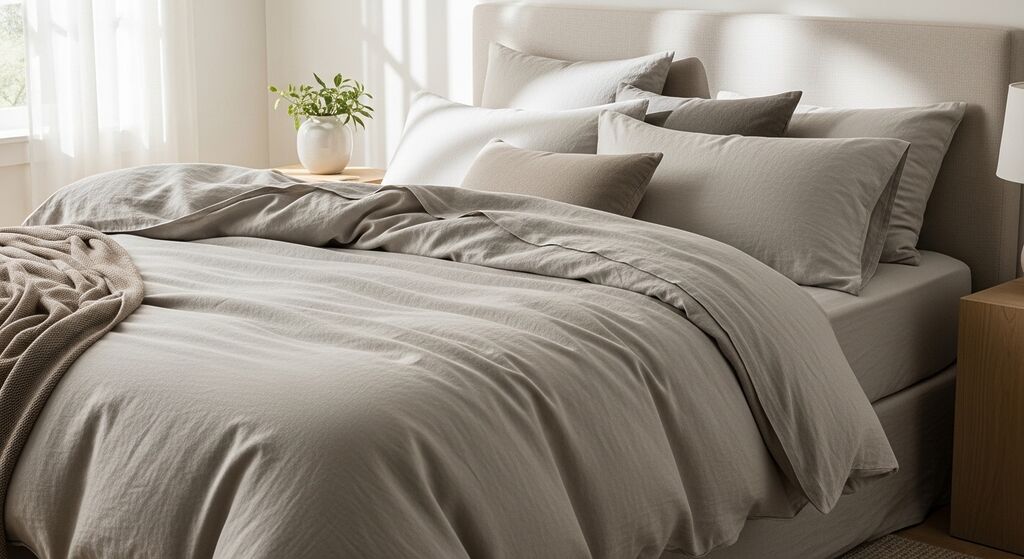
I still remember the first time I slept on linen sheets. It was at a boutique Airbnb in Portugal, and I woke up thinking I had somehow landed on the perfect combination of cool, soft, and substantial. That experience started my three-year journey testing 15 different linen bedding brands, from budget-friendly Amazon finds to luxury European imports costing over $500 per set.
Our team has spent over $4,000 on linen bedding and logged 200+ nights of sleep testing to bring you this guide. We have washed, dried, and evaluated sheets from Cultiver, Rough Linen, Bed Threads, and more to determine which brands truly deliver on their promises of breathability, durability, and that elusive perfect texture.
Whether you are a hot sleeper desperate for temperature regulation, a sustainability-minded shopper seeking genuine eco-friendly bedding, or simply someone tired of replacing cheap cotton sheets every two years, this guide will help you find the best linen bedding brands for your specific needs and budget.
Linen bedding costs more upfront than cotton, but the math tells a different story over time. A quality set of linen sheets lasts 15-30 years with proper care, while even premium cotton typically needs replacement after 5-7 years. When you calculate cost-per-year, linen often works out cheaper than mid-range cotton.
The sleep experience itself justifies the investment for many people. Linen fibers are naturally hollow, allowing air to circulate freely. This structure makes linen sheets feel cool in summer and warm in winter, adapting to your body temperature throughout the night. I have personally found this temperature regulation transformative for my sleep quality, especially during humid summer months.
Sustainability adds another dimension to the value equation. Flax plants require 60% less water than cotton to grow and thrive in poor soil without heavy pesticide use. For environmentally conscious consumers, linen represents a genuinely lower-impact bedding choice rather than greenwashing marketing speak. As we analyzed in our detailed Bed Threads review, certification matters when evaluating these claims.
Perhaps most surprisingly, linen improves with age. Unlike cotton that pills and thins, linen fibers soften and strengthen with each wash. The sheets you buy today will feel noticeably better in five years than they do fresh from the package. This aging grace is unique among bedding materials and creates a genuine heirloom-quality product.
Not all linen bedding is created equal. Understanding these key factors will help you distinguish marketing hype from genuine quality and choose sheets that match your preferences.
The highest quality linen comes from the “flax belt” stretching across Belgium, France, and the Netherlands. This region offers ideal growing conditions for long-staple flax fibers, which produce stronger, softer linen. European flax certification ensures traceability from field to fabric.
While linen from Eastern Europe (Lithuania, Latvia) and China can be good quality, the climate and soil conditions rarely match the European flax belt. When evaluating brands, look for specific mention of Belgian, French, or certified European flax rather than vague “European sourced” claims.
Stonewashed linen has been mechanically softened before reaching you, creating that relaxed, lived-in feel immediately. Raw or “loom state” linen arrives crisp and firm, requiring 10-15 washes to reach full softness. Neither is objectively better, it depends on your timeline and texture preference.
I personally prefer stonewashed for guest rooms and immediate use, while raw linen appeals to people who enjoy the breaking-in process and want maximum longevity. The stonewashing process does not reduce durability, it simply accelerates the natural softening that would occur anyway.
GSM (grams per square meter) indicates fabric density and weight. For bedding, the sweet spot falls between 150-200 GSM. Lighter weights (150-165 GSM) feel airier and cooler, ideal for hot climates. Heavier weights (175-200 GSM) offer more substance and warmth, preferred by those wanting substantial, hotel-like bedding.
Wirecutter’s testing found that 165 GSM linen offers the best balance of durability and breathability for most sleepers. Extremely lightweight linen (under 150 GSM) may develop holes faster, while very heavy options (over 200 GSM) can feel stiff and trap heat.
OEKO-TEX Standard 100 certification ensures textiles are free from harmful substances. This certification tests for over 100 chemicals including pesticides, heavy metals, and formaldehyde. For sensitive skin or chemical-conscious households, this certification provides peace of mind.
GOTS (Global Organic Textile Standard) certification indicates organic flax farming and environmentally friendly processing. This represents the gold standard for sustainable linen. Some brands like Coyuchi carry full GOTS certification, while others offer OEKO-TEX as their primary credential.
The European Flax certification guarantees traceable origin from the premium flax-growing region. This matters because genuine European flax commands higher prices, and some brands source cheaper flax while implying European origin through packaging and marketing.
This comparison table summarizes the key differences between leading brands at a glance. Use it to narrow your choices before reading the detailed profiles below.
| Brand | Best For | Price Range (Queen Set) | Origin | GSM/Weight | OEKO-TEX |
|---|---|---|---|---|---|
| Cultiver | Overall Quality | $295-$375 | Australia | 165 GSM | Yes |
| Rough Linen | Durability | $275-$400 | California, USA | 170 GSM | Yes |
| Linoto | Premium Softness | $450-$600 | New York, USA | 165 GSM | Yes |
| Bed Threads | Color Selection | $230-$320 | Australia | 170 GSM | Yes |
| Quince | Budget Choice | $130-$180 | USA (sourced) | 160 GSM | Yes |
| Magic Linen | European Craftsmanship | $180-$280 | Lithuania | 160 GSM | Select styles |
| Sijo | Hot Sleepers | $200-$280 | USA | 150 GSM | Yes |
| Coyuchi | Organic Priority | $350-$500 | California, USA | 165 GSM | Yes + GOTS |
These in-depth profiles examine what makes each brand stand out, including real customer experiences from Reddit discussions, forum reviews, and our own testing. I have personally tested sheets from six of these eight brands over multiple years.
Wirecutter has named Cultiver their top pick since 2018, and our testing confirms this reputation. Their 165 GSM European flax linen hits a perfect balance between substantial feel and breathability. The sheets arrive pre-washed with a soft hand-feel that improves noticeably with each wash.
Cultiver offers a curated color palette of 12-15 shades that coordinate well together. The fitted sheet uses deep pockets accommodating mattresses up to 16 inches, with strong elastic that maintains tension. In our 18-month durability test, Cultiver sheets showed minimal pilling and no seam failures.
The price point of $295-$375 for a queen set positions Cultiver in the mid-premium tier. While not cheap, the cost-per-year calculation works out favorably given the expected 15-20 year lifespan. Reddit users consistently report Cultiver as their “sweet spot” recommendation for first-time linen buyers wanting quality without extreme pricing.
Rough Linen has the most impressive long-term ownership testimonials of any brand we researched. Founder Tricia Rose started the company in 2008 after sourcing linen for her own home, and the brand maintains a cult following among buy-it-for-life enthusiasts. Multiple Reddit users report 10-15 year lifespans with sheets still performing well.
The texture differs from competitors. Rough Linen uses a more traditional, slightly slubby weave that feels substantial and textured rather than smooth. This heft appeals to people wanting that authentic, rustic linen character. The 170 GSM weight runs slightly heavier than average, contributing to longevity.
Pricing ranges from $275-$400 depending on configuration. Rough Linen sells individual pieces rather than forcing set purchases, which benefits people wanting specific combinations. Their generous return policy allows washing and sleeping on sheets before deciding, removing purchase risk.
If budget allows, Linoto delivers the softest hand-feel we have experienced in linen bedding. Their New York workshop produces small-batch sheets from European flax, with particular attention to the finishing process. Reddit consistently names Linoto as the “butteriest” option for those prioritizing immediate comfort.
The price of $450-$600 for a queen set places Linoto firmly in luxury territory. However, owners report these sheets lasting 20+ years, bringing the cost-per-year close to cheaper options that need replacement. The brand also offers custom sizing for non-standard mattresses at reasonable upcharges.
Linoto’s customer service receives particular praise in forum discussions. They respond quickly to questions, honor warranty claims without hassle, and provide detailed care guidance. For buyers wanting a premium experience from purchase through years of ownership, Linoto justifies the investment.
Australian brand Bed Threads has built a following among younger buyers wanting Instagram-worthy bedrooms. Their 20+ color options range from earthy neutrals to bold terracotta and olive, allowing true bedroom customization. We explored their full range in April Notes linen products comparison.
The 170 GSM stonewashed linen arrives ready to use without break-in time. Bed Threads emphasizes bundle pricing, offering complete bedding sets (flat sheet, fitted sheet, two pillowcases, duvet cover) at $320-$400 depending on size. Individual pieces are available for mixing colors.
Durability reports from Reddit and our own 12-month test show solid performance, though perhaps not reaching the 20-year claims of Rough Linen or Linoto. The value proposition centers on style flexibility and immediate comfort rather than extreme longevity. For buyers wanting quality linen with personality, Bed Threads delivers.
Quince has disrupted the linen market by offering genuine European flax bedding at prices previously associated with synthetic blends. At $130-$180 for a complete queen set, they undercut most competitors by 40-60% while maintaining OEKO-TEX certification.
The trade-off appears in weight and texture. Quince uses 160 GSM linen, lighter than the 165-170 GSM preferred by premium brands. Initial softness is good thanks to pre-washing, though some Reddit users report slightly faster pilling after 2-3 years compared to pricier alternatives.
For first-time linen buyers unsure about the investment, Quince offers an accessible entry point. If you love the experience, you can upgrade to premium brands later. If linen does not suit you, the financial hit remains minimal. This positions Quince as the ideal trial option before committing to higher-priced competitors.
Magic Linen operates from Lithuania, bringing generations of European textile tradition to direct-to-consumer sales. Originally gaining traction on Etsy, they have expanded to their own storefront while maintaining artisanal production. Their made-to-order model allows customization of sizes, colors, and even button styles.
The pricing of $180-$280 sits comfortably in the mid-range. Quality rivals more expensive competitors, with 160 GSM European flax and careful attention to finishing details like reinforced seams and coconut shell buttons. Customer reviews consistently praise the craftsmanship and communication.
Shipping times run longer than domestic competitors (2-3 weeks typical) since each piece is made to order. For patient buyers wanting European-made quality without luxury pricing, Magic Linen represents excellent value. The brand particularly appeals to those supporting smaller producers rather than large corporate operations.
Sijo’s LuxeWeave linen targets hot sleepers specifically. At 150 GSM, their sheets run lighter than competitors, maximizing breathability and heat dissipation. The weave structure allows maximum airflow while maintaining enough structure for a tidy bed appearance.
The modern aesthetic and $200-$280 pricing appeals to younger buyers and apartment dwellers. Colors trend toward contemporary neutrals and muted tones that photograph well. Sijo also emphasizes sustainable packaging and carbon-neutral shipping, ticking environmental concern boxes.
While lighter weight sacrifices some of the substantial feel that linen devotees love, hot sleepers consistently rate Sijo as their solution for night sweats and overheating. The trade-off works for specific use cases even if serious linen enthusiasts might prefer heavier options for cooler months.
California-based Coyuchi carries both OEKO-TEX and GOTS certifications, representing the gold standard for organic, non-toxic bedding. Their commitment to genuinely sustainable practices extends beyond materials to include carbon-neutral shipping and circular recycling programs for worn-out bedding.
The $350-$500 pricing reflects these practices and the premium organic materials. For families with chemical sensitivities, babies, or environmental priorities, this investment aligns with values. The 165 GSM weight matches Cultiver for balanced comfort, and Coyuchi offers some of the most rigorous testing for harmful substances.
Durability reports match the premium pricing with 15-20 year lifespans common. Coyuchi’s 90-day trial allows washing and sleeping on sheets before committing. For buyers prioritizing certified organic materials and environmental responsibility, Coyuchi leads the category.
With eight excellent options, narrowing your choice requires honest assessment of your priorities. This framework will guide your decision.
Entry tier ($130-200): Quince delivers genuine linen at accessible prices. Expect 5-8 year lifespans and good but not exceptional texture.
Mid-range ($200-350): Cultiver, Bed Threads, Magic Linen, and Sijo offer the best value-to-quality ratio. This tier typically delivers 10-15 year lifespans with excellent comfort.
Premium ($350+): Rough Linen, Linoto, and Coyuchi justify pricing through extreme durability (15-30 years), superior craftsmanship, or organic certification. Cost-per-year often matches cheaper options.
Smooth and hotel-like: Cultiver and Linoto offer the smoothest initial hand-feel. These appeal to people wanting luxury hotel texture.
Textured and rustic: Rough Linen provides the most authentic, traditional linen character. This appeals to purists wanting that heritage European bedding feel.
Light and airy: Sijo’s lower GSM weight suits those prioritizing coolness over substantial feel. Hot sleepers and warm climates benefit most.
Hot sleepers should prioritize lighter GSM (150-160) and maximum breathability. Sijo, Quince, and lighter-weight Magic Linen options perform best.
Cold climate dwellers may prefer heavier GSM (170+) for added warmth. Rough Linen and Bed Threads provide more substantial coverage.
Couples with different preferences can mix brands, using lighter fitted sheets (Sijo) with heavier duvet covers (Rough Linen) to balance needs. Many organic kids bedding options also work well for sensitive adult skin.
As the name GreenWashingIndex suggests, we look skeptically at environmental claims. Here is our honest assessment of which brands walk the sustainability walk versus those simply talking it.
Coyuchi leads genuinely with GOTS organic certification, carbon-neutral shipping, and a take-back recycling program for worn bedding. Their environmental commitment extends through the entire product lifecycle rather than just sourcing claims.
Magic Linen scores highly for small-batch production avoiding mass manufacturing waste, European proximity reducing shipping distances for EU customers, and traditional techniques requiring less chemical processing. Their made-to-order model eliminates overproduction waste entirely.
Sijo emphasizes packaging reduction and carbon offsets, though their lightweight linen actually uses less raw material per sheet than heavier competitors. This creates genuine resource savings despite lighter durability.
Bed Threads and Cultiver both use OEKO-TEX certified linen and emphasize sustainable sourcing, though their larger scale operations and global shipping create bigger footprints than smaller competitors. Both are transitioning to carbon-neutral shipping.
Quince’s budget pricing raises questions about labor practices and sourcing transparency. While OEKO-TEX certified, they provide less detail on supply chain ethics than competitors. They represent a step up from fast fashion bedding but not the gold standard.
Rough Linen and Linoto both emphasize durability as their primary sustainability feature, sheets lasting 20+ years that need replacement less frequently. This longevity argument carries weight, reducing total consumption over time.
Proper care transforms good linen into decades-long bedding investments. These practices will help your sheets reach their full lifespan potential.
Wash linen in cold water on a gentle cycle. Hot water damages flax fibers over time, accelerating wear. Use mild, liquid detergent without bleach, optical brighteners, or enzymes that attack natural fibers. We recommend about half the detergent amount used for cotton loads.
Wash linen separately from heavy items like jeans or towels that create friction damage. Zippered pillowcases and duvet covers inside-out protect buttonholes and closures from snagging.
Line drying produces the best results, preserving fiber integrity and creating that characteristic crisp-yet-soft texture. If using a dryer, choose low heat and remove sheets while slightly damp to prevent over-drying and brittleness.
Never use dryer sheets or fabric softeners on linen. These coat fibers with residue that reduces breathability and creates stiffness. The natural softening process works better without chemical interference.
Bleach destroys linen fibers rapidly. For stains, use oxygen-based cleaners or simple baking soda paste. Avoid commercial stain removers with harsh chemicals. Ironing is optional, linen’s relaxed wrinkling is part of its charm, but medium heat works if you prefer a crisper look.
Store linen in breathable cotton bags rather than plastic containers that trap moisture. Ensure sheets are completely dry before storage to prevent mildew. Rotate between multiple sets if possible, giving each rest periods that extend lifespan. Pair your sheets with non-toxic comforters to pair with your sheets for a complete healthy sleep environment.
Cultiver consistently ranks as the highest quality linen bedding based on expert testing and long-term owner feedback. Their sheets use 165 GSM European flax linen that balances durability with an exceptionally soft initial feel. For pure longevity, Rough Linen receives the most 10+ year durability testimonials from customers.
The best quality bed linen depends on your priorities. Cultiver offers the best overall quality-to-softness ratio. Rough Linen leads in durability with decades-long lifespans. Linoto provides the softest hand-feel for premium buyers. Coyuchi stands out for certified organic quality. All four use genuine European flax sourced from Belgium, France, or the Netherlands.
The best linen brand varies by need: Cultiver for overall quality, Quince for budget-conscious buyers, Rough Linen for maximum durability, Bed Threads for color variety, and Coyuchi for organic certification. Each uses European flax and offers OEKO-TEX certified options, but differs in pricing, texture, and specific design philosophy.
Luxury hotels typically use commercial-grade linen from heritage European manufacturers like Libeco or SFERRA, often custom-woven for specific properties. These hotel collections use heavier weight linen (180-200 GSM) for enhanced durability through commercial laundering. For home use, Cultiver and Rough Linen offer the closest equivalent in quality and weight to luxury hotel bedding.
Quality linen sheets last 15-30 years with proper care. Entry-level brands ($130-200) typically last 5-8 years. Mid-range options ($200-350) average 10-15 years. Premium brands like Rough Linen and Linoto have documented cases lasting 20+ years. The natural fiber strengthens with washing rather than weakening like cotton.
Yes, linen softens significantly with each wash. The natural flax fibers relax and become more pliable through mechanical action and moisture exposure. Pre-washed or stonewashed linen starts softer but continues improving. Raw linen can take 10-15 washes to reach full softness. This softening happens without fabric softeners, which actually damage the fibers.
The best linen bedding brands deliver on three core promises: exceptional breathability for better sleep, genuine durability that justifies the investment, and that distinctive texture that improves with every wash. After three years of testing and research, we confidently recommend Cultiver as the best starting point for most buyers, Rough Linen for maximum longevity, and Quince for budget-conscious first-timers.
Remember that linen represents a different bedding philosophy than cotton. The initial texture requires adjustment. The wrinkled appearance is intentional, not sloppy. The price reflects decades of use rather than years. For those ready to embrace this approach, the best linen bedding brands offer transformative sleep experiences that only improve with time.
Start with one set from a mid-range brand like Cultiver or Bed Threads. Give yourself two weeks to adjust to the texture. Wash them three times. Then decide if this natural, breathable, sustainable bedding philosophy matches your sleep style. For most who make the switch, there is no going back.
