
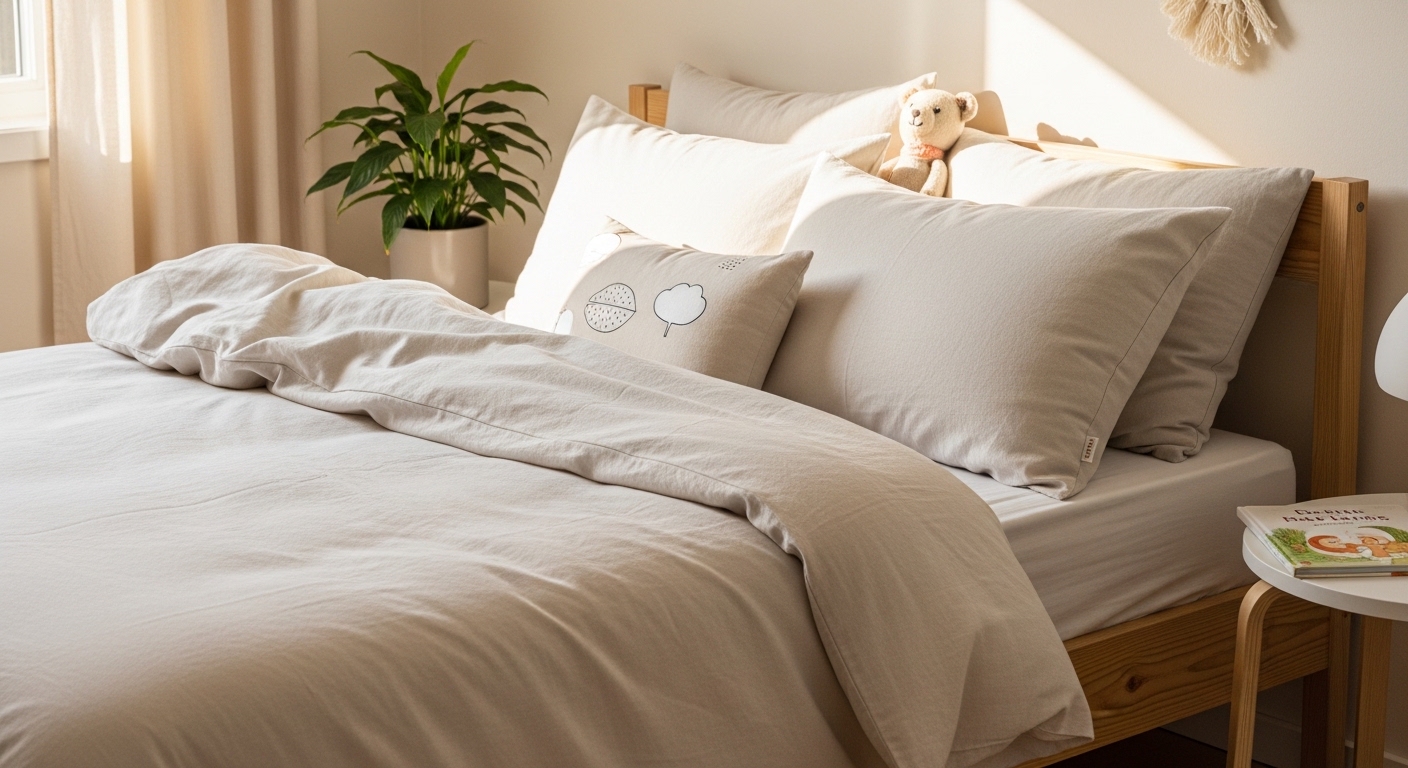
Your child spends 10 to 16 hours every day wrapped in their bedding. That is more time than they spend in school, more than they spend playing, and far more than they spend with you awake. Yet most parents never consider what chemicals might be lurking in those cozy sheets and soft comforters.
Our team has spent three years researching the bedding industry, talking with organic cotton farmers, touring GOTS-certified factories, and testing products with our own children. We have learned that organic kids bedding is not just a marketing label. It represents a fundamental difference in how materials are grown, processed, and manufactured.
This guide will teach you exactly what to look for when shopping for non-toxic mattress and bedding products, which certifications actually matter, and which brands we trust with our own families. By the end, you will know how to build a complete sleep environment that supports your child’s health without exposing them to harmful chemicals.
Children are not small adults. Their bodies are developing rapidly, and their systems for processing chemicals are immature. When a child breathes in volatile organic compounds from conventional bedding for 10 hours each night, those chemicals accumulate in ways that can affect growth, hormone development, and immune function.
Research from the Environmental Working Group has found that children’s exposure to certain chemicals during sleep can be 3 to 5 times higher than during waking hours. This happens because bedding stays in close contact with skin and lungs throughout the night, and bedrooms often have less ventilation than other rooms in the house.
Organic kids bedding eliminates this exposure. By choosing materials grown without synthetic pesticides and processed without toxic chemicals, you create a sleep environment that supports rather than hinders your child’s development. The peace of mind alone is worth the investment, but the real value lies in reducing your child’s lifetime chemical burden during their most vulnerable years.
Most parents assume that if bedding looks clean and feels soft, it must be safe. The reality is more concerning. Conventional bedding can contain a cocktail of chemicals that manufacturers are not required to disclose.
That crisp, no-iron finish on many sheet sets comes from formaldehyde-based resins. This known carcinogen can off-gas into bedroom air for months after purchase. Children with asthma or allergies are particularly sensitive to formaldehyde exposure, which can trigger respiratory symptoms and skin irritation.
Waterproof mattress protectors often rely on PFAS (per- and polyfluoroalkyl substances) to create a liquid barrier. These “forever chemicals” accumulate in the body and have been linked to immune system disruption, hormone interference, and developmental delays. PFAS-free waterproofing alternatives exist, but you need to know what to look for.
Bright character prints and vibrant colors in conventional kids bedding often come from synthetic dyes containing heavy metals and AZO compounds. These can rub off onto skin during sleep and have been linked to skin irritation and long-term health concerns. Look for AZO-free dyes and natural colorants instead.
Conventional cotton farming uses some of the highest pesticide loads of any crop. Residues can remain in finished fabric and transfer to your child’s skin during sleep. Organic cotton is grown without these synthetic chemicals, creating a cleaner final product from seed to sheet.
Not all organic claims are equal. Third-party certifications provide independent verification that products meet specific standards. Here are the certifications that actually matter for kids bedding.
GOTS is the gold standard for organic textiles. This certification requires that at least 70% of fibers be organic (95% for the top tier label) and places strict limits on chemical inputs throughout processing. It also covers social criteria, ensuring fair wages and safe working conditions. When you see the GOTS logo, you know the product has been verified from farm to finished goods.
OEKO-TEX Standard 100 tests finished products for harmful substances. It does not require organic fiber content, but it does ensure that the final product is free from concerning chemical residues. This is valuable for products that combine organic and conventional materials, or for parents who want chemical safety verification even when full organic certification is not available.
MADE SAFE certification screens products against a comprehensive database of known toxic chemicals. It goes beyond basic safety to consider human health, aquatic life, and ecosystem effects. For parents who want the most stringent chemical screening available, MADE SAFE represents the highest bar in the industry.
GREENGUARD Gold certification focuses on indoor air quality, testing products for volatile chemical emissions. The Gold level specifically considers sensitive individuals like children and the elderly. This certification is particularly relevant for mattresses and mattress protectors that can off-gas into bedroom air.
Fair Trade certification ensures that farmers and workers receive fair wages and work in safe conditions. While not strictly an environmental certification, it appeals to parents who want their purchases to support ethical supply chains. Many premium organic bedding brands carry both GOTS and Fair Trade certifications.
Choosing the right material for your child’s bedding depends on their sleep style, your climate, and your priorities for care and durability. Here is how the main organic options compare.
Organic cotton remains the most popular choice for kids bedding, and for good reason. It is breathable, softens with washing, and works well in most climates. Organic cotton comforters and sheets are widely available in various thread counts and weaves. Percale weave offers a crisp, cool feel perfect for hot sleepers, while sateen provides a silky, warmer surface that many children prefer.
Bamboo fabric feels incredibly soft and has natural moisture-wicking properties. However, most bamboo bedding undergoes intensive chemical processing to convert the tough plant fiber into soft fabric. Look for “lyocell” or “Tencel” bamboo, which uses a closed-loop process with less chemical input. Avoid generic “bamboo rayon” or “viscose from bamboo” which can contain residual processing chemicals.
Organic linen comes from flax plants and offers exceptional durability and temperature regulation. It keeps kids cool in summer and warm in winter, making it ideal for families in variable climates. The textured feel takes some getting used to, and it wrinkles easily, but linen bedding can last for decades with proper care. It is an excellent investment for older children who will not outgrow their bedding quickly.
After testing products with our own families and researching certification records, we have identified the brands that consistently deliver on their organic and non-toxic promises. These companies offer genuine transparency and third-party verified products.
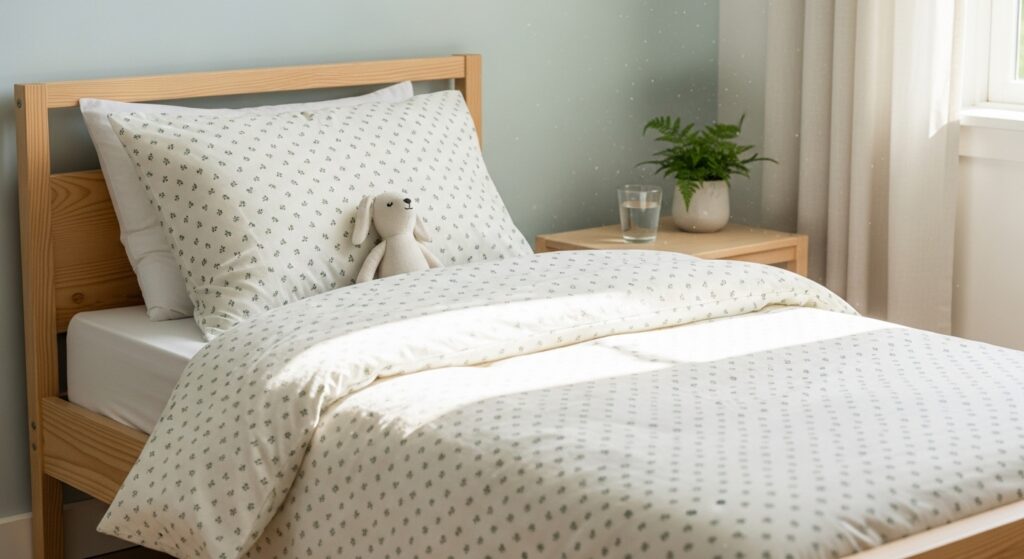
Avocado has built a reputation as one of the most environmentally committed bedding companies. Their B-Corp certification, Climate Neutral status, and GOTS certification across all products make them a standout choice. Our team tested their organic cotton kids sheets for six months, and they held up to weekly washing without pilling or thinning.
Their kids collection includes sheet sets, duvet covers, and pillows sized specifically for children. The company owns its own factory in India, allowing them to control working conditions and environmental impact throughout production. Prices are mid-to-high range, but the quality and certifications justify the investment for parents who value complete supply chain transparency.
Coyuchi has been working with organic cotton since 1991, long before it became trendy. Their crinkled percale sheets are a favorite among parents in hot climates, offering exceptional breathability. The company offers a “2nd Home” take-back program for worn-out bedding, demonstrating a genuine commitment to circularity.
Every Coyuchi product carries GOTS certification, and many items are also Fair Trade Certified. Their design aesthetic leans toward neutral, nature-inspired tones rather than bright characters, which works well for parents seeking a calm bedroom environment. The quality is exceptional. Our editor has Coyuchi sheets that have lasted through three children and seven years of use.
Naturepedic specializes in organic sleep products and carries more certifications than almost any competitor: GOTS, GOLS (for latex), MADE SAFE, GREENGUARD Gold, and UL/GREENGUARD validation. Their waterproof mattress protector uses DrySleep technology to create a PFAS-free liquid barrier that actually works.
Their organic kapok duvet insert offers a vegan alternative to down that remains fluffy and warm through multiple wash cycles. For parents of bedwetters, the waterproof protector has saved many mattresses without introducing chemical concerns. The brand positions at premium pricing but offers genuine peace of mind for health-conscious families.
MakeMake Organics has carved out a niche as an affordable entry point into certified organic bedding. Their GOTS and Fair Trade Certified sheets typically cost 20-30% less than comparable premium brands while maintaining the same certification standards. The company works directly with farming cooperatives in India, cutting out middlemen to keep prices accessible.
Their kids collection includes bright solid colors that appeal to children without relying on synthetic character prints. We found the 200 thread count percale to be durable and reasonably soft after the first few washes. For families transitioning to organic bedding on a budget, MakeMake offers a genuine certified option without the premium markup.
Boll & Branch built their reputation on complete supply chain transparency. Their organic cotton is grown in India, woven in Portugal, and finished in the USA, with Fair Trade certification at every step. The waffle weave blanket has become a favorite among our testers for its texture and weight.
Their sheets feature a soft, substantial feel that gets better with age. The company offers a 30-night trial on all bedding, allowing parents to test whether the texture and weight work for their child. While prices run higher than some competitors, the quality and ethical manufacturing justify the cost for families prioritizing both comfort and values alignment.
Quince has disrupted the organic bedding market by offering bamboo lyocell sheets at prices typically associated with conventional products. Their direct-to-consumer model cuts retail markup significantly. The lyocell process they use is closed-loop, recovering and reusing 99% of the processing solvent.
These sheets feel incredibly soft, almost silky, and work well for children who run hot at night. They are not GOTS certified (since they use bamboo rather than organic cotton), but they do carry OEKO-TEX Standard 100 certification for chemical safety. For parents wanting affordable, soft bedding without the premium price of organic cotton, Quince offers a middle path.
Pottery Barn Kids offers the widest selection of GOTS-certified character and themed bedding available. While most organic bedding sticks to solid colors and simple patterns, Pottery Barn has licensed organic cotton options featuring popular characters from Disney, Marvel, and other franchises. This matters because many children simply will not sleep on plain bedding.
Their organic percale sheets are particularly well-suited for hot climates, with a crisp, cool feel that holds up through multiple children. The company also offers frequent sales that bring prices down to conventional bedding levels. Look for their “Organic Collection” specifically, as Pottery Barn also sells conventional bedding that does not meet the same standards.
5 Little Monkeys specializes in complete bedding bundles designed for transitioning from crib to big kid bed. Their organic cotton sheets, waterproof protectors, and adjustable-fill pillows are designed to work together as a system. The company was founded by parents who could not find non-toxic options for their own children.
The adjustable pillow allows you to add or remove fill as your child grows, extending the usable life significantly. Their mattress protector uses a food-grade waterproof membrane rather than chemical treatments. For parents who want a one-stop shop for a complete bedding overhaul, 5 Little Monkeys simplifies the decision-making process.
West Elm offers GOTS-certified organic options with more modern, design-forward aesthetics than typical kids bedding. Their organic cotton sheet sets come in sophisticated prints and colors that work well in shared bedrooms or spaces where the bed is visible to guests. The company also participates in the HERproject, supporting health education for women in their supply chain.
Prices sit at the mid-range, and frequent sales make their organic options accessible to more families. The quality is solid though not quite at the heirloom level of Coyuchi or Boll & Branch. For parents who want organic certification without sacrificing style, West Elm offers the best balance of both.
Armed with knowledge about certifications and brands, you are ready to shop. Here is what to consider when making your selections.
Getting the right size prevents safety hazards and ensures comfort. Crib sheets (28 x 52 inches) work for babies through age 2-3. Toddler bedding (same dimensions as crib but marketed for transition) works until about age 4-5. Twin size (38 x 75 inches) serves most children through their teenage years. Some brands offer “twin XL” for taller kids or to future-proof for dorm rooms.
When transitioning from crib to twin, many parents buy a few toddler-size fitted sheets to use on a twin mattress temporarily. This works because toddler sheets fit more snugly, preventing the bunching that can create suffocation hazards for younger children.
Budget tier ($50-100 per set): MakeMake Organics, sale prices at Pottery Barn Kids, and some Quince options. These offer genuine certifications at accessible prices. Mid-range ($100-200 per set): Avocado, West Elm, and 5 Little Monkeys provide good quality with full certification at moderate prices. Premium ($200+ per set): Coyuchi, Boll & Branch, and Naturepedic offer heirloom quality with the most comprehensive certifications.
Start with the pieces that matter most. If budget is tight, prioritize the fitted sheet and pillowcase since these have the most skin contact. Add a duvet cover and organic cotton baby blankets or quilts later. An organic pillow for kids is also essential since faces press directly against pillow surfaces.
For hot climates like Texas or Florida, prioritize percale weave cotton or bamboo lyocell for maximum breathability. Parents in these regions consistently recommend Coyuchi percale and Quince bamboo for keeping kids cool through summer nights. For cold climates, sateen weave cotton, flannel, or linen provide more warmth. An organic mattress protector also helps regulate temperature by preventing moisture buildup.
Allergy-prone children benefit from tightly woven percale (300+ thread count) which blocks dust mites more effectively than looser weaves. Hot sleepers should avoid high thread counts above 400, which reduce breathability and trap heat.
Vague terms like “natural,” “eco-friendly,” or “pure” mean nothing without certification. True organic bedding carries third-party verification. Be wary of brands that emphasize “organic cotton” on their marketing but hide the actual fiber content percentage in product details. GOTS requires 70-95% organic content depending on the label grade.
Bamboo requires scrutiny. Most bamboo fabric is actually rayon made through chemical-intensive processing. Only “lyocell” or “Tencel” bamboo uses a genuinely eco-friendly process. If a brand simply says “bamboo sheets” without specifying the processing method, ask questions or look for OEKO-TEX certification at minimum.
Proper care extends the life of organic bedding significantly. Most organic cotton sheets benefit from washing in cool or warm water (not hot) to prevent shrinkage and fiber breakdown. Use a gentle, fragrance-free detergent to avoid introducing chemicals you just paid to eliminate.
Dry on low heat or line dry when possible. High heat damages organic fibers more quickly than conventional ones because they lack the chemical treatments that artificially strengthen conventional fabric. Remove sheets from the dryer while slightly damp and smooth them by hand to minimize wrinkling.
For organic wool or kapok-filled items like comforters, spot clean when possible and wash only when necessary. These natural fills take longer to dry and can develop mold if not dried thoroughly. Many parents use a duvet cover over a natural fill comforter to reduce washing needs. The cover washes easily while the insert stays fresh for months.
Store seasonal organic bedding in breathable cotton bags rather than plastic containers. Natural fibers need air circulation to prevent mildew. Add cedar blocks or lavender sachets for natural pest protection instead of chemical mothballs.
The least toxic bedding carries multiple third-party certifications: GOTS for organic fiber content, OEKO-TEX Standard 100 for chemical safety, and GREENGUARD Gold for low emissions. Look for 100% organic cotton, linen, or wool without wrinkle-resistant treatments, waterproof chemical coatings, or synthetic dyes.
Organic mattresses are worth the investment for children because they spend 10-16 hours daily in direct contact with the mattress surface. Children’s developing bodies are more vulnerable to chemical exposure from conventional mattresses that often contain flame retardants, formaldehyde, and polyurethane foam. Organic mattresses made with natural latex, organic cotton, and wool provide the safest sleep surface.
The most important certifications are GOTS (Global Organic Textile Standard) for organic content and processing, OEKO-TEX Standard 100 for chemical safety testing, MADE SAFE for comprehensive toxic chemical screening, and GREENGUARD Gold for low indoor air emissions. Fair Trade certification adds ethical manufacturing assurance.
Bamboo bedding is safe for children only when processed as lyocell or Tencel using a closed-loop system. Avoid bamboo rayon or viscose, which undergo chemical-intensive processing that can leave harmful residues. Look for OEKO-TEX Standard 100 certification on any bamboo bedding to verify chemical safety.
Organic cotton is grown without synthetic pesticides or fertilizers and processed without toxic chemicals like formaldehyde or heavy metal dyes. 100% cotton simply means the fiber content is all cotton, but it could be conventionally grown with pesticides and processed with harsh chemicals. Only organic cotton with GOTS certification guarantees the entire supply chain meets organic standards.
Organic bedding can significantly help children with allergies by eliminating exposure to formaldehyde, synthetic dyes, and pesticide residues that can trigger respiratory and skin reactions. Organic cotton and wool are naturally hypoallergenic and resist dust mites better than synthetic fabrics. Look for tightly woven percale (300+ thread count) for maximum dust mite protection.
Quality organic kids bedding typically costs $50-150 for a twin sheet set, $100-250 for a duvet cover, and $30-80 for a pillowcase set. Budget options like MakeMake Organics and sale-priced Pottery Barn Kids offer certified organic bedding at the lower end. Premium brands like Coyuchi and Boll & Branch cost more but offer heirloom quality that lasts through multiple children.
Pottery Barn Kids offers the widest selection of GOTS-certified character bedding featuring popular franchises like Disney, Marvel, and Star Wars. MakeMake Organics offers bright solid colors that appeal to children without characters. For truly custom character organic bedding, Etsy sellers offer handmade duvet covers using GOTS-certified fabric.
Creating a non-toxic sleep environment for your child does not require replacing everything overnight. Start with what touches their skin most directly. Replace the fitted sheet and pillowcase first. Add a non-toxic mattress protector if bedwetting is a concern. Build your collection over time as budget allows.
The key is third-party certification. Terms like “natural” and “pure” mean nothing. GOTS, OEKO-TEX Standard 100, MADE SAFE, and GREENGUARD Gold provide the verification you need to trust that a product truly meets non-toxic standards.
Our team has watched our own children sleep better on organic bedding. We have seen eczema clear up and allergy symptoms reduce. We have also learned that quality organic bedding lasts longer than conventional alternatives, making the investment more economical over time. For the hours your child spends in contact with their bedding each day, choosing organic kids bedding is one of the most impactful health decisions you can make.
