
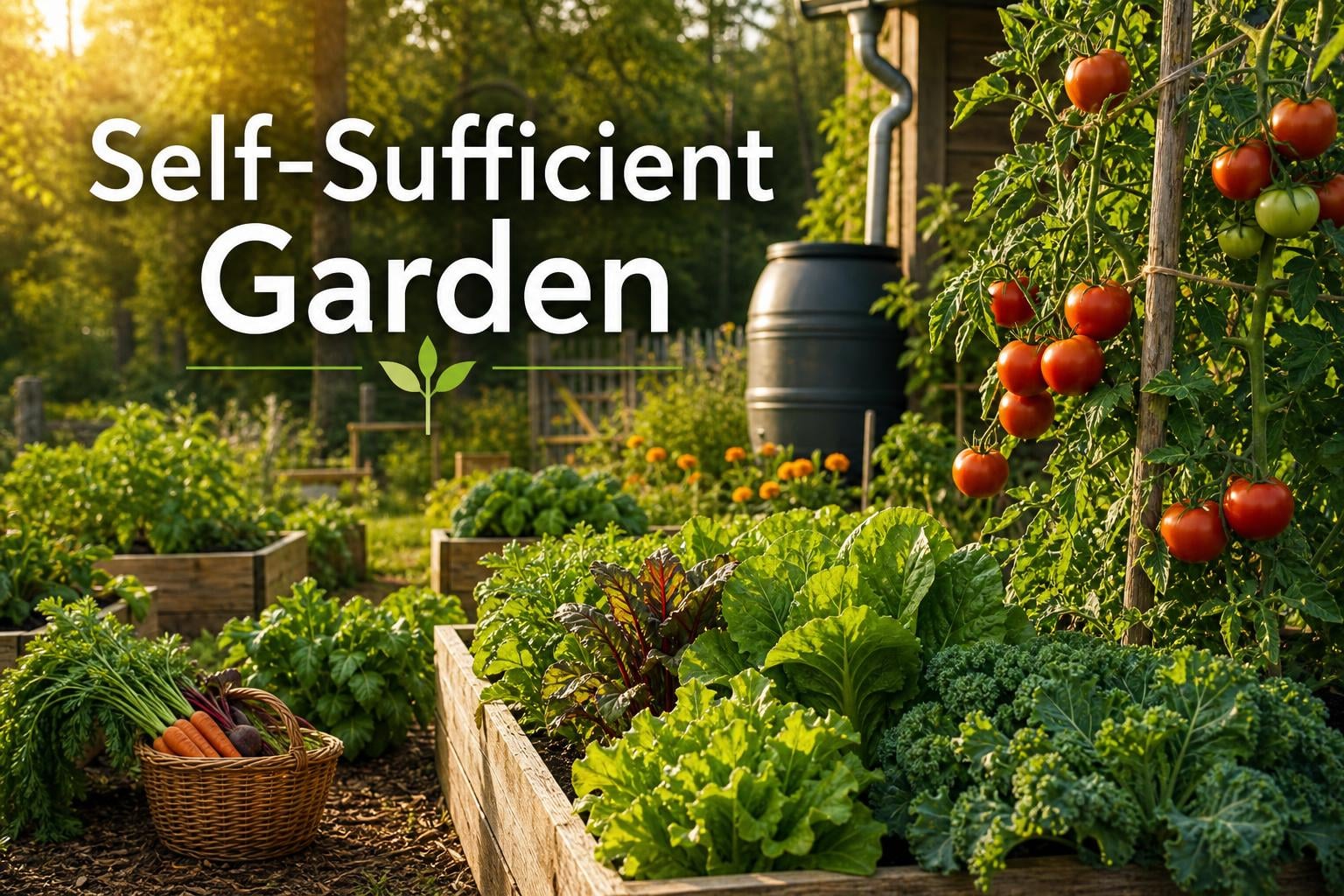
Food prices have climbed steadily through 2026, and grocery receipts that used to feel routine now prompt a second look. More people are connecting the dots between what sits on store shelves and how fragile that supply chain can be. A self-sufficient garden answers both problems at once. It puts food production back in your hands and trims your reliance on systems you cannot control.
I have been growing food for over a decade across three different USDA hardiness zones, and each season reinforces the same lesson. The garden teaches patience, rewards planning, and delivers flavors no supermarket can match. Whether you have a quarter-acre backyard or a sunny apartment balcony, the path to food self-sufficiency starts with a single planting bed.
My own setup currently feeds a family of three from roughly 600 square feet of raised beds plus a 12-by-16 greenhouse. Last summer we harvested over 200 pounds of tomatoes, 80 pounds of potatoes, and enough winter squash to last until March. Those numbers did not happen overnight. They came from years of building soil, learning which crops thrive here, and adopting techniques like succession planting and composting that I will walk you through in this guide.
This article covers everything you need to start your own self-sufficient garden this spring. You will find a step-by-step planning process, specific crop recommendations with named varieties, essential growing techniques, small-space strategies, and answers to the most common questions beginners ask. By the end, you will have a clear roadmap for turning your growing space into a reliable food source.
Here is what we will cover:
Grocery costs have risen sharply since 2023, with produce prices among the hardest hit categories. According to USDA food price tracking, fresh vegetables saw double-digit percentage increases over the past two years. When a single pound of organic tomatoes costs more than a starter plant that will produce ten pounds, the economics speak for themselves. A self-sufficient garden is one of the few investments that actually pays you back.
Beyond money, food security has become a genuine concern for many households. Supply chain disruptions, extreme weather events affecting commercial farms, and recalls of contaminated produce have all made headlines in recent months. Growing even a portion of your own food builds a buffer against these uncertainties. You know exactly what went into the soil, what touched the plants, and how fresh everything is when it reaches your kitchen.
Climate awareness adds another layer. Commercial agriculture relies heavily on synthetic fertilizers, long-distance transport, and single-use packaging. Every tomato you grow at home skips the refrigerated truck, the plastic clamshell, and the petroleum-based fertilizer. Your food travels ten feet instead of a thousand miles, and the soil in your yard captures carbon instead of releasing it.
There is a particular confidence that comes from sitting down to a meal you grew yourself. Pulling carrots you planted from seed, snapping pole beans off a trellis you built, slicing into a winter squash that ripened on vines you watered through a dry August. Each harvest reinforces a sense of capability that store-bought food simply cannot deliver.
Families who garden together report stronger bonds and better eating habits. Children who help grow vegetables are far more likely to eat them. My own daughter went from refusing salad to requesting kale chips after she started harvesting leaves from her own section of the garden. That shift in relationship with food is one of the most rewarding byproducts of self-sufficient gardening.
The garden also creates a tangible connection to your community. Surplus tomatoes get shared with neighbors. Extra seedlings find homes in friends’ yards. Seed swaps introduce you to local gardeners who become mentors and trading partners. Food self-sufficiency is not about isolation. It is about building resilient local networks that reduce dependence on distant systems.
The advantages of growing your own food extend well beyond the dinner plate. A well-designed self-sufficient garden delivers financial returns, health improvements, environmental benefits, and mental wellness. Let me break down each category so you understand exactly what you stand to gain.
A single packet of tomato seeds costs roughly the same as one pound of grocery store tomatoes. That packet contains enough seeds to grow 30 or more plants, each producing 10 to 20 pounds of fruit over a season. The math becomes obvious once you run the numbers. Even accounting for soil, water, and time, homegrown produce costs a fraction of what you pay at retail.
Perennial crops amplify this advantage. Asparagus planted once will produce for 15 to 20 years. Rhubarb, berry bushes, and fruit trees keep delivering harvests long after the initial investment. Apple trees that cost thirty dollars as saplings can produce hundreds of dollars worth of fruit annually once established. These long-lived plants form the backbone of a cost-effective self-sufficient garden.
Food preservation extends your savings through winter. Canning, freezing, and dehydrating allow you to capture surplus harvests at peak season when they are essentially free. A chest freezer full of frozen peppers, shredded zucchini, and tomato sauce keeps your grocery bills low for months after the growing season ends.
When you grow your own food, you control every input. No mystery pesticides, no synthetic growth promoters, no wax coatings applied for shelf appeal. You decide whether to use organic pest control methods, which soil amendments go into your beds, and when to harvest for peak ripeness rather than shipping durability.
Traceability becomes effortless. If a food safety issue arises, you know exactly where the produce came from because it grew steps from your door. No recalling the source farm, no wondering about contamination during transport. That peace of matter matters more than ever as commercial food recalls continue to make news.
Every meal grown at home avoids the carbon emissions of long-distance transport, refrigeration, and packaging. A backyard tomato generates a tiny fraction of the greenhouse gases produced by one shipped from across the country. Multiply that across a full growing season of vegetables and the environmental savings become meaningful.
Biodiversity flourishes in a diverse home garden. Planting heirloom varieties, interplanting flowers with vegetables, and avoiding broad-spectrum pesticides creates habitat for pollinators and beneficial insects. My garden hosts more bee species than I can count, plus ladybugs, lacewings, and parasitic wasps that keep pest populations in check naturally.
Water conservation also improves dramatically. Drip irrigation delivers water directly to root zones instead of spraying it into the air. Mulch reduces evaporation. Rain barrels capture free water from your roof. A well-managed self-sufficient garden uses far less water per pound of food produced than commercial agriculture.
Planning is where most beginners stumble, but it is also where the foundation for success gets built. A thoughtful plan prevents the feast-or-famine cycle that plagues new gardeners who plant everything at once and then face a gap in production. Follow these steps to design a garden that produces reliably from spring through fall.
Most vegetables need six to eight hours of direct sunlight daily. Track sun patterns across your yard at different times of day and through the growing season. A spot that looks sunny in April might be shaded by deciduous trees once they leaf out in June. South-facing slopes offer the best exposure in most regions.
Identify your USDA hardiness zone, which determines your frost dates and growing season length. Zone 5 gardeners face a shorter season than zone 8 growers and need to plan accordingly. Your local extension office provides frost date averages specific to your county. If you want to extend your season, consider greenhouse cooling systems for year-round growing that help regulate temperatures in protected environments.
Base your crop list on what your family actually eats. Growing fennel when nobody likes it wastes space and effort. Start with high-yield staples that form the bulk of your diet. Potatoes, tomatoes, beans, onions, and leafy greens deliver the most food value per square foot for most households.
Group crops by their growing season. Cool season vegetables like peas, spinach, and radishes thrive in spring and fall. Warm season vegetables like tomatoes, peppers, and squash need heat and should go in after all frost danger passes. Planning both windows doubles your harvest from the same space.
Sketch your garden on graph paper or use a free garden planner tool. Note where each crop will go, leaving room for paths between beds so you can weed and harvest without compacting soil. Raised beds work well for beginners because they warm up faster in spring and drain better than in-ground plantings.
Practice crop rotation by avoiding planting the same family in the same spot two years running. Tomatoes, peppers, and potatoes are all nightshades and share diseases. Moving them each season breaks pest and pathogen cycles while balancing nutrient demands on your soil.
Healthy soil is the single most important factor in garden success. Before planting anything, get a soil test from your local extension office. The results tell you pH, nutrient levels, and organic matter content so you can amend intelligently rather than guessing. Most vegetables prefer a pH between 6.0 and 7.0.
Add compost generously every season. Two to three inches of finished compost worked into beds before planting improves structure, water retention, and nutrient availability. Using organic fertilizers for self-sustaining soil feeds the microbial life that makes nutrients available to plants naturally. If you want to track conditions precisely, smart soil sensors for garden monitoring measure moisture, temperature, and nutrient levels in real time.
Choosing the right crops separates a productive garden from a disappointing one. Self-sufficient gardeners prioritize calorie-dense staples that store well, produce heavily, and feed families through winter. Here are the crops that consistently deliver the most food value per square foot of growing space.
These are the backbone of food self-sufficiency. They produce abundant calories, store for months without processing, and form the foundation of winter meals.
Potatoes top the list for calorie production per square foot. A ten-foot row can yield 20 to 30 pounds. Varieties like Kennebec, Yukon Gold, and German Butterball store for months in a cool, dark place. Plant seed potatoes in trenches and hill them as they grow for maximum yields.
Sweet potatoes outperform regular potatoes in warmer zones, producing up to 144,000 calories per 100 square feet in ideal conditions. Beauregard and Centennial are reliable varieties. They need a long warm season but store beautifully at room temperature for six months or more.
Winter squash combines high yields with exceptional storage life. Butternut, acorn, and delicata squash harvested before frost will keep in a cool room for three to six months. Waltham Butternut is a personal favorite for its productivity and disease resistance. Each vine produces four to eight fruits weighing two to four pounds each.
Dry beans like Black Turtle, Pinto, and Vermont Cranberry provide protein and store indefinitely. Pole beans produce more per square foot than bush types because they grow vertically. Plant them along trellises or cornstalks using the Three Sisters method practiced by indigenous gardeners for centuries.
Onions and garlic are kitchen essentials that store for months. Garlic goes in during fall and harvests the following summer, needing very little attention in between. Hardneck varieties like German Extra Hardy produce both scapes and bulbs. Onions started from sets in early spring mature by late summer and cure for winter storage.
Cabbage and kale deliver massive nutrition from compact plants. A single savoy cabbage head feeds several meals. Kale produces continuously from spring through late fall in most zones, and some varieties survive winter with row cover protection. Lacinato kale, also called dinosaur kale, is my most reliable producer year after year.
These crops produce repeatedly through the season when managed with succession planting. They keep the harvest basket full rather than delivering everything at once.
Root vegetables including carrots, beets, turnips, and radishes can be sown every two to three weeks for a steady supply. Detroit Dark Red beets pull double duty because both roots and greens are edible. Easter Egg radishes mature in just 30 days, making them perfect for filling gaps between slower crops.
Cut-and-come-again greens like leaf lettuce, Swiss chard, and arugula regrow after each harvest. You can cut outer leaves every week from the same plants for months. Mix varieties for color and flavor diversity. My favorite blend includes Red Sails lettuce, Bright Lights chard, and wild arugula.
Indeterminate tomatoes keep producing until frost kills the vines. Cherry types like Sungold and Sweet Million are particularly prolific. Each plant can yield hundreds of fruits over a season. Slice them for sandwiches, roast them for sauce, or dry them for concentrated flavor in winter soups.
Here is a quick comparison of the most important staple crops for self-sufficient gardeners. This chart helps you prioritize based on growing difficulty, storage method, and yield potential.
For growers looking to extend their productive season further, investing in a greenhouse for food self-sufficiency can add months of growing time on both ends of the season. A simple hoop house or permanent greenhouse lets you start seedlings earlier and harvest tender crops well past first frost.
Techniques matter as much as crop selection. The following methods form the core toolkit of any self-sufficient grower. Each one closes a loop, reducing external inputs and keeping resources cycling within your garden ecosystem.
A composting system is the heart of a self-sufficient garden. Every kitchen scrap, coffee ground, and autumn leaf becomes future soil. Instead of buying bagged amendments each spring, you build your own from materials that would otherwise go to landfill.
The basic formula mixes carbon-rich browns (dry leaves, straw, shredded paper) with nitrogen-rich greens (vegetable scraps, grass clippings, coffee grounds) at roughly a three-to-one ratio by volume. Keep the pile moist like a wrung-out sponge and turn it every few weeks. Finished compost appears in three to six months depending on temperature and how actively you manage the pile.
I maintain three bins: one being filled, one cooking, and one finished and ready to spread. This rotation guarantees a steady supply. Even a simple wire bin or enclosed tumbler produces usable compost. The key is consistency rather than perfection. Every handful of homemade compost replaces a purchased product and improves your soil for free.
Succession planting prevents the boom-and-bust cycle that frustrates new gardeners. Instead of sowing an entire row of radishes on the same day and getting a single overwhelming harvest, you plant small sections every two weeks. This staggered approach delivers a manageable, continuous supply from the same square footage.
The same principle applies across seasons. When spring peas finish in June, replace them with summer bush beans. When those taper off in August, sow fall spinach or lettuce in the same space. A single bed can produce three different crops in one season with careful timing, multiplying your total harvest without expanding your garden.
Keep records of what gets planted when and how long each crop takes to mature. Over a few seasons you build a personalized planting calendar that accounts for your specific climate and microclimate. This record-keeping is what separates gardeners who rely on the grocery store from those who feed themselves year-round.
Water is a limiting factor in most gardens, and municipal water bills add up fast over a growing season. Rain barrels attached to your downspouts capture free irrigation that plants actually prefer over chlorinated tap water. A single 55-gallon barrel fills from less than half an inch of rain on a typical roof section.
For larger setups, consider multiple barrels connected in series or a cisternet system. Drip irrigation lines deliver collected rainwater directly to root zones with minimal waste. Mulch around plants reduces evaporation dramatically, meaning you water less often even in hot weather. In dry climates, combining these techniques can reduce garden water use by 50 percent or more.
If your property includes a pond or water feature, sustainable water management extends there too. Sustainable pond aeration methods keep water healthy without grid power, and eco-friendly pond filters for garden water management create closed-loop systems that integrate with your garden irrigation.
A self-sufficient garden produces more than you can eat fresh at peak season. Without preservation skills, that abundance becomes waste. Learning a few basic techniques extends your harvest across the entire year and multiplies the value of every plant you grow.
Canning captures summer flavors for winter meals. Water bath canning works for high-acid foods like tomatoes, pickles, and fruit preserves. Pressure canning is required for low-acid vegetables like green beans and potatoes. Start with something simple like tomato sauce or dill pickles and build confidence from there.
Freezing is the easiest preservation method for beginners. Blanch vegetables briefly in boiling water, cool them in ice water, drain, and freeze in portion-sized bags. Peppers, corn, broccoli, and shredded zucchini all freeze beautifully. Tomatoes can be frozen whole on a tray and transferred to bags, then peeled and cooked straight from frozen.
Dehydrating concentrates flavor and reduces storage space. A food dehydrator handles herbs, fruit leather, dried tomatoes, and jerky. Sun-drying works in hot, dry climates. Dried herbs from your garden cost pennies compared to jarred spices and deliver incomparably fresh flavor.
Root cellaring is the oldest preservation method and still one of the best. Potatoes, carrots, beets, turnips, onions, winter squash, cabbage, and apples all store for months in a cool, humid, dark space. Even a basement corner or insulated garage can function as a root cellar with some creative temperature management.
Saving seeds closes the self-sufficiency loop completely. Instead of buying new seed packets each year, you save seeds from your best plants and adapt them to your specific growing conditions over time. Heirloom and open-pollinated varieties breed true, meaning the seeds you collect produce plants just like their parents.
Start with easy savers like beans, peas, lettuce, and tomatoes. Allow the healthiest fruits to fully ripen on the plant, then extract, dry, and store seeds in a cool, dry place. Label everything with the variety name and date. Within a few seasons, you will have a personal seed library of varieties perfectly suited to your garden.
Organic growing is not just a label. It is a philosophy that treats soil as a living ecosystem rather than an inert growing medium. When you feed the soil instead of the plant, you produce food that is denser in nutrients and free from synthetic chemical residues. The difference shows up on the plate.
Vegetables grown in living soil with active microbial communities have access to a broader spectrum of minerals than those raised on synthetic fertilizer alone. Some studies suggest organically grown produce contains higher levels of antioxidants and beneficial compounds, partly because plants produce these compounds in response to natural environmental stress rather than being coddled by chemical inputs.
Freshness compounds these benefits. Produce from a self-sufficient garden goes from plant to plate in minutes rather than days or weeks. Vitamin content begins declining the moment a vegetable is harvested, so food eaten the same day it is picked delivers maximum nutritional value. No grocery store produce department can match that timeline.
The flavor difference is immediately obvious. Store-bought tomatoes bred for shipping durability often taste like wet cardboard. A Sungold cherry tomato picked warm off the vine bursts with sweetness that no commercial equivalent approaches. Once you experience this difference, returning to mass-produced produce feels like a genuine compromise.
You do not need a backyard to grow meaningful amounts of food. Renters, apartment dwellers, and condo owners can build surprisingly productive gardens using containers, vertical structures, and creative space optimization. The same principles apply; you simply work with a smaller footprint.
Container gardening is the most accessible entry point. Five-gallon buckets with drainage holes grow full-sized tomato plants. Half-barrel planters handle potatoes, peppers, and bush beans. Window boxes produce cut-and-come-again salad greens. Large outdoor planters for container gardening give you the soil volume needed for root crops and compact fruit bushes even on a small patio.
Vertical gardening multiplies your growing area upward. Trellises support pole beans and cucumbers. Hanging baskets hold trailing cherry tomatoes and strawberries. Wall-mounted planters create living herb walls. A sunny balcony with vertical structures can produce as much food per square foot of floor space as a ground-level garden.
Microgreens and sprouts deserve special mention for apartment gardeners. These nutrient powerhouses grow in shallow trays on a windowsill in just 7 to 14 days. Radish sprouts, broccoli microgreens, and sunflower shoots deliver intense flavor and concentrated nutrition in a footprint no bigger than a dinner plate. They are the fastest, highest-return crop for indoor growers.
Research increasingly confirms what gardeners have always known intuitively. Working with soil measurably reduces stress hormones. A landmark study published in the Journal of Health Psychology found that gardening lowers cortisol levels more effectively than reading. The combination of physical activity, outdoor exposure, and meaningful purpose creates a uniquely restorative experience.
Soil itself contains beneficial microorganisms that may boost mood. Mycobacterium vaccae, a common soil bacterium, has been shown in animal studies to increase serotonin production and reduce anxiety. Getting your hands dirty literally exposes you to these mood-enhancing microbes. Gardeners who skip gloves report feeling better after a session in the dirt, and there is science behind that sensation.
Sunlight exposure during gardening boosts vitamin D production and helps regulate circadian rhythms for better sleep. The rhythmic, repetitive tasks of weeding and planting function like moving meditation, giving the mind a break from digital overload. After an hour in the garden, the mental noise of emails and notifications fades into the background.
Gardening provides genuine exercise without the monotony of a gym. Digging beds, hauling compost, and turning soil engage major muscle groups. Squatting to weed and reaching to harvest build flexibility and balance. A productive afternoon in the garden can burn 200 to 400 calories while accomplishing something tangible.
The physical demands scale with your garden’s ambition. A few containers require minimal effort, while a quarter-acre plot provides consistent moderate exercise throughout the growing season. This built-in activity helps maintain mobility and strength, particularly for older gardeners. Many people in their seventies and eighties credit gardening as the habit that keeps them moving.
You need a digging spade, a garden hoe, hand trowel, pruning shears, a watering can or hose with spray nozzle, and durable gloves. Add a rake for bed preparation and a wheelbarrow for moving soil and compost. Seed starting trays with a humidity dome help if you grow transplants indoors. These tools total under $100 if purchased new and last for years.
Plan on 4 to 8 hours per week during peak growing season for a modest 200 to 400 square foot garden. Spring planting and fall cleanup add concentrated effort, while mid-summer maintenance settles into a rhythm of watering, weeding, and harvesting. Larger plots require proportionally more time. The 3-hour gardening rule suggests spending at least 3 hours per week for a productive food garden, but most successful gardeners exceed that minimum during summer months.
The 80/20 rule in gardening means that 80 percent of your harvest comes from 20 percent of your crops. Focus your energy on high-yield staples like potatoes, tomatoes, beans, and squash rather than spreading effort across marginal crops. This principle also applies to pests: 80 percent of damage typically comes from 20 percent of pest species, so identify and target the worst offenders rather than treating everything.
The 70/30 rule suggests that roughly 70 percent of your garden should be dedicated to reliable staple crops you depend on for calories and storage, while 30 percent goes to experimental, specialty, or fun crops. This balance keeps your food supply stable while leaving room to try new varieties each season without risking your core harvest.
Yes. Multiple studies have shown that gardening reduces cortisol, the body’s primary stress hormone. A study in the Journal of Health Psychology compared gardening to reading as stress-relief activities and found that gardeners experienced greater cortisol reduction and reported better mood improvement. The combination of physical activity, nature exposure, sunlight, and contact with beneficial soil microbes all contribute to this effect.
Absolutely. Container gardening on a sunny balcony or patio can produce substantial food. Use 5-gallon buckets for tomatoes and peppers, window boxes for salad greens, and vertical trellises for beans and cucumbers. Microgreens and sprouts grow indoors on a windowsill in 7 to 14 days. While full calorie self-sufficiency is difficult in an apartment, you can meaningfully supplement your produce supply and build skills for when you have more space.
For vegetable self-sufficiency for a family of four, most experts recommend roughly one-quarter to one-half acre of intensively managed growing space. This varies significantly by climate, soil quality, and skill level. Beginners should start with 200 to 400 square feet and expand each season. Full food self-sufficiency including grains and animal protein typically requires 1 to 2 acres minimum. Remember that intensive methods like raised beds, succession planting, and vertical growing dramatically increase yield per square foot.
Heirloom seeds come from open-pollinated plant varieties passed down through generations, typically at least 50 years old. Unlike hybrid seeds, heirlooms breed true, meaning seeds saved from this year’s harvest produce the same variety next year. This seed-saving ability is essential for self-sufficiency because it eliminates the need to buy new seeds annually. Heirlooms also preserve genetic diversity and often offer superior flavor compared to commercial hybrids bred for shipping rather than taste.
Building a self-sufficient garden is one of the most practical steps you can take toward food security, financial savings, and a more sustainable lifestyle. The current moment makes the case more clearly than any article can. Food prices remain high, supply chains carry hidden risks, and the environmental cost of conventional agriculture keeps climbing. Every meal you grow at home is a small act of independence that pays dividends in health, savings, and satisfaction.
You do not need to transform your entire yard overnight. Start with a single raised bed this spring. Plant three or four staple crops you actually enjoy eating. Learn to compost. Master one preservation method. Add a little more each season as your confidence and skills grow. Self-sufficiency is a multi-year journey, not a weekend project, and that is exactly what makes it so rewarding.
Quick-Start Checklist for Your First Season:
Your self-sufficient garden starts with a single seed and a willingness to learn. This spring is the perfect time to begin. The soil is waiting, the days are lengthening, and the rewards will keep arriving with every harvest you bring to the table.
