

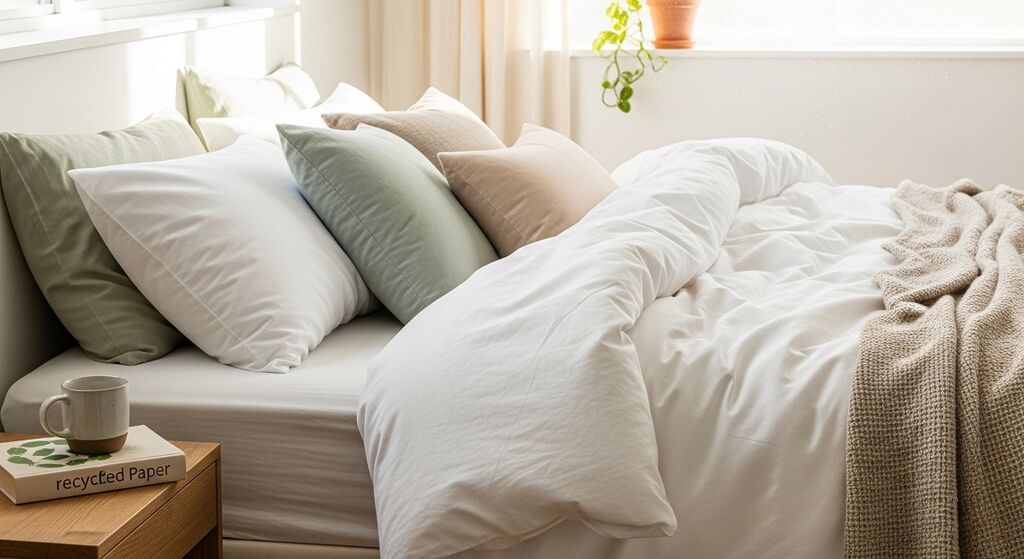
Finding the best sustainable bedding brands has become more important than ever. Our team has spent months researching certifications, testing materials, and analyzing supply chains to bring you this comprehensive guide. Whether you are shopping for your first set of organic sheets or looking to upgrade your entire bedroom, this guide will help you make informed choices that benefit both your sleep and the planet.
Conventional bedding often hides uncomfortable truths. Many sheets contain synthetic fibers derived from petroleum, chemical flame retardants, and formaldehyde-based finishes. These materials can off-gas volatile organic compounds (VOCs) while you sleep, potentially affecting your health over time. Sustainable bedding eliminates these concerns while supporting ethical manufacturing practices.
In this guide, you will learn how to identify truly eco-friendly bedding versus greenwashing claims. We have analyzed twelve leading brands, decoded common certifications, and gathered real user experiences from forums and reviews. By the end, you will know exactly what to look for when shopping for sheets that align with your values.
Sustainable bedding refers to bed sheets, duvet covers, pillows, and sleep accessories made from organic, natural, or recycled materials using environmentally responsible manufacturing processes. These products minimize chemical use, reduce water consumption, and lower carbon emissions compared to conventional alternatives.
The difference between marketing terms matters significantly. “Organic” specifically refers to materials grown without synthetic pesticides or fertilizers, typically certified by standards like GOTS. “Eco-friendly” is a broader term suggesting environmental benefits but without standardized requirements. “Non-toxic” indicates the absence of harmful chemicals but does not necessarily mean organic or sustainably produced.
Conventional cotton production uses approximately 16% of the world’s insecticides and 7% of pesticides, despite covering only 2.5% of global agricultural land. A single set of conventional cotton sheets requires roughly 2,700 liters of water to produce, enough drinking water for one person for nearly three years.
Organic cotton reduces water usage by 91% compared to conventional cotton because farmers rely on rainwater and soil moisture retention rather than intensive irrigation. The elimination of synthetic chemicals also protects groundwater sources and soil health, creating a more sustainable agricultural cycle.
Organic and natural bedding materials breathe better than synthetic alternatives. Natural fibers like cotton, linen, and Tencel wick moisture away from your body and allow air circulation, helping regulate your temperature throughout the night. This breathability proves especially valuable for hot sleepers who struggle with night sweats.
People with allergies or chemical sensitivities often notice immediate improvements when switching to certified organic bedding. Without synthetic dyes, formaldehyde finishes, or pesticide residues, these sheets eliminate common irritants. Many users report fewer skin reactions and respiratory issues after making the switch.
Third-party certifications provide the only reliable way to verify sustainability claims. With greenwashing rampant in the bedding industry, knowing which certifications to trust will save you from marketing traps. Here is what each major certification actually guarantees.
GOTS represents the gold standard for organic textiles worldwide. This certification requires at least 95% organic fiber content and sets strict limits on the remaining 5%. The standard covers the entire supply chain, from farming to finished product, ensuring both environmental and social criteria are met throughout manufacturing.
Facilities must meet wastewater treatment requirements, prohibit toxic inputs like heavy metals and formaldehyde, and follow International Labour Organization standards for worker treatment. When you see the GOTS label, you know the product has been verified by independent inspectors at multiple production stages.
OEKO-TEX focuses specifically on product safety rather than organic production methods. This certification tests for harmful substances including pesticides, heavy metals, formaldehyde, and phthalates. Products are tested by independent laboratories and must meet strict limit values for numerous chemicals.
Unlike GOTS, OEKO-TEX does not require organic materials. A conventional cotton sheet treated to eliminate harmful chemicals could achieve OEKO-TEX certification. For the highest assurance, look for products that carry both GOTS and OEKO-TEX labels.
GREENGUARD Gold certification emphasizes indoor air quality by testing for VOC emissions. Products must demonstrate low chemical emissions that contribute to healthier indoor environments. The Gold level includes additional health-based criteria for sensitive individuals like children and the elderly.
This certification proves particularly valuable for people with asthma, allergies, or chemical sensitivities. The rigorous testing protocols ensure certified products meet strict limits for over 360 VOCs and total chemical emissions.
MADE SAFE takes a comprehensive approach by screening products against a list of over 6,500 prohibited substances. This certification bans not only known toxins but also substances with emerging concerns. The screening process evaluates ingredients for bioaccumulation, persistence, and aquatic toxicity.
Fewer bedding brands currently carry MADE SAFE certification compared to GOTS or OEKO-TEX. When you find this label, it indicates exceptional commitment to non-toxic production across the entire supply chain.
Fair Trade certification ensures workers receive fair wages and safe working conditions throughout the supply chain. B Corporation certification evaluates companies holistically, assessing their impact on workers, communities, customers, and the environment. Brands with B Corp status have legally committed to balancing profit with purpose.
While these certifications do not specifically guarantee organic materials, they indicate brands prioritizing ethical business practices. Many sustainable bedding companies pursue multiple certifications to demonstrate comprehensive commitment.
GOTS offers the most comprehensive assurance for organic textiles, covering both environmental and social standards. OEKO-TEX provides confidence about chemical safety. GREENGUARD Gold focuses on indoor air quality. MADE SAFE represents the strictest chemical screening. For maximum confidence, prioritize products combining GOTS with one or more additional certifications.
The material you choose affects comfort, durability, environmental impact, and care requirements. Understanding the properties of each sustainable fiber helps you select bedding suited to your specific needs and climate.
Organic cotton remains the most popular sustainable bedding material for good reason. It offers softness, breathability, and easy care while supporting healthier farming practices. Long-staple organic cotton produces particularly smooth, durable sheets that resist pilling over time.
Weave selection significantly affects feel and performance. Organic percale uses a one-over-one weave creating a crisp, cool feel similar to high-end hotel sheets. This weave excels for hot sleepers and warm climates. Organic sateen uses a three-over-one weave producing a silky, lustrous surface with a slightly warmer feel, ideal for those who prefer cozy bedding.
Many of our favorite organic cotton comforters come from brands using these same premium long-staple fibers. The material consistency creates cohesive sleep systems.
Linen, made from flax plants, offers exceptional breathability and moisture-wicking properties. The material becomes softer with each wash while maintaining structural integrity for years. Linen production requires minimal irrigation and pesticides, making it one of the most environmentally friendly textile options available.
The textured, slightly rumpled appearance of linen appeals to those seeking relaxed, natural aesthetics. While linen feels crisp initially, it quickly softens and develops a characteristic drape. Hot sleepers particularly appreciate linen’s superior temperature regulation compared to cotton.
For a detailed look at one standout linen brand, check our linen bedding review covering their signature stonewashed sheets.
Tencel, a branded form of lyocell made from eucalyptus wood pulp, represents textile manufacturing innovation. The closed-loop production process recycles 99% of the solvent used to transform wood pulp into fibers. The resulting material feels silky smooth, resists wrinkles better than cotton, and offers excellent moisture management.
Eucalyptus grows rapidly without irrigation or pesticides, making Tencel’s raw material highly sustainable. The manufacturing process uses significantly less water than cotton processing. However, the chemical-intensive production requires careful management, which quality manufacturers handle through responsible facility operations.
Hemp bedding deserves more attention than it currently receives. Hemp grows densely, crowding out weeds without herbicides, and actually improves soil health through phytoremediation. The fibers produce exceptionally durable textiles that soften over time without losing strength.
Hemp sheets offer natural antimicrobial properties and superior breathability. While currently more expensive than cotton due to limited processing infrastructure, hemp represents one of the most sustainable fiber options available. Several emerging brands now offer hemp bedding blends combining sustainability with accessibility.
Bamboo bedding requires careful evaluation. While bamboo grows rapidly without pesticides, most “bamboo sheets” actually contain rayon made through chemical-intensive processing. The Federal Trade Commission has specifically warned against bamboo-based rayon marketed as environmentally friendly.
True mechanically processed bamboo linen exists but remains rare and expensive. Most bamboo sheets undergo viscose processing using sodium hydroxide and carbon disulfide, chemicals harmful to workers and the environment. If you prefer bamboo-derived sheets, look specifically for lyocell processing methods that use closed-loop systems, or stick with mechanically processed options.
Our research aligns with forum discussions where users express confusion about bamboo sustainability claims. Reddit users frequently question whether bamboo sheets truly qualify as eco-friendly, and the answer depends entirely on manufacturing methods.
Organic wool bedding offers natural temperature regulation, moisture wicking, and fire resistance without chemical treatments. Wool fibers create microclimates that keep you warm in winter and cool in summer. Look for certifications like GOTS or Responsible Wool Standard to ensure ethical sourcing.
Peace silk and organic silk provide luxurious options for those seeking protein-based fibers. These materials require careful sourcing to ensure ethical production. Silk sheets offer unique temperature properties and hypoallergenic benefits, though they require more delicate care than plant-based alternatives.
Hot sleepers should prioritize linen, Tencel, or organic percale cotton for maximum breathability and cooling. Cold sleepers may prefer sateen weave cotton or flannel for warmth retention. Combination sleepers who experience temperature fluctuations often find Tencel most comfortable due to its adaptive moisture management.
Allergy sufferers benefit from tightly woven organic cotton or silk, which naturally resist dust mites. Those with chemical sensitivities should prioritize GOTS-certified materials with additional OEKO-TEX verification.
After evaluating dozens of brands against certification standards, material quality, transparency, and customer feedback, we have identified twelve standout options. Each brand offers distinct advantages depending on your priorities, budget, and aesthetic preferences.
Avocado has established itself as a leader in the sustainable bedding space through comprehensive certifications and premium materials. The brand holds GOTS, GOLS (for latex products), GREENGUARD Gold, MADE SAFE, and B Corporation certifications, demonstrating commitment across environmental and social dimensions.
Their bedding collection features 100% GOTS-certified organic cotton in percale and sateen weaves, plus organic linen options. Avocado manufactures in their own Los Angeles factory, maintaining strict oversight of working conditions and environmental practices. Their direct-to-consumer model eliminates retail markups while maintaining quality control.
Pricing sits in the premium tier, with sheet sets starting around $200 for queen sizes. However, the durability and certifications justify the investment for many shoppers. Our Avocado bedding review provides deeper analysis of their materials and construction quality.
Coyuchi pioneered organic bedding in the United States, operating since 1991 with a focus on California coastal aesthetics. The brand helped establish organic cotton standards in America and maintains deep relationships with organic farming cooperatives in India.
All Coyuchi products carry GOTS certification, and the company emphasizes natural, undyed options alongside their color collection. Their linen bedding deserves particular attention, featuring relaxed textures that embody the brand’s natural philosophy. The 2-Day Linen collection offers a pre-washed, instantly soft feel without break-in periods.
Coyuchi prices reflect their premium positioning, with sheet sets typically ranging from $250 to $400. The brand also operates a unique renewal program, accepting used Coyuchi bedding for recycling or resale, extending product lifecycles.
Boll and Branch built its reputation on transparent supply chains and fair trade practices. The brand works directly with organic cotton farmers in India, ensuring fair wages and eliminating middlemen. Their factory workers receive fair trade premiums above standard wages.
The signature sheets use long-staple organic cotton in percale and sateen weaves. Boll and Branch emphasizes single-ply yarn construction, arguing this creates stronger, smoother sheets than multi-ply alternatives. Their white glove customer service includes generous return policies that reduce purchase anxiety.
Mid-range pricing makes Boll and Branch more accessible than luxury competitors while maintaining quality standards. Sheet sets typically cost between $150 and $250 depending on weave and size.
Parachute has expanded from a bedding startup to a comprehensive home brand while maintaining sustainability commitments. Their European flax linen and organic cotton collections offer minimalist aesthetics suited to modern interiors.
The brand emphasizes OEKO-TEX Standard 100 certification for chemical safety across their entire product line. While not all Parachute bedding is organic, they clearly label GOTS-certified options for shoppers prioritizing organic materials. Their linen bedding particularly impresses with consistent quality and reasonable pricing.
Parachute occupies a middle market position, with linen sets around $200 and organic cotton options slightly higher. The brand’s retail stores allow tactile evaluation before purchasing, addressing a common concern among sustainable bedding shoppers.
Quince has disrupted the sustainable bedding market by offering organic and linen options at significantly lower prices than competitors. The brand achieves this through direct relationships with manufacturers and minimal marketing overhead.
Their organic cotton percale and sateen sheets carry GOTS certification, while linen options use European flax. Quince sheets receive consistently positive reviews for softness and durability at their price point. The brand has made sustainable bedding accessible to shoppers previously priced out of the market.
Quince sheet sets typically cost between $80 and $120, roughly half the price of comparable organic options from established brands. This positioning has made them particularly popular among younger consumers and first-time organic bedding buyers.
Pact focuses on accessible organic basics across clothing and home categories. Their bedding collection features 100% GOTS-certified organic cotton at prices significantly below specialty competitors. The brand’s mission centers on democratizing access to organic products.
The organic cotton sheets come in percale and sateen weaves with simple, solid color options. While Pact does not match the luxury feel of premium competitors, they deliver genuine organic materials at budget-friendly prices. Forum discussions frequently mention Pact as an entry point into organic bedding.
Pact sheet sets typically cost between $60 and $100, making organic bedding accessible to nearly any budget. Some users note the sheets feel thinner than premium alternatives, but the organic certification remains authentic.
Sijo has carved out a niche focusing on temperature-regulating materials and minimalist design. Their Tencel and linen collections specifically target hot sleepers and those in warm climates. The brand emphasizes the science behind sleep temperature and material breathability.
The Sijo AiryWeight Eucalyptus Tencel collection uses 100% Tencel lyocell derived from eucalyptus wood pulp. OEKO-TEX certification ensures chemical safety. Independent testing confirms these sheets wick moisture effectively and maintain cooler sleep surfaces than cotton alternatives.
Pricing falls in the mid-range, with Tencel sets around $150 and linen slightly higher. Sijo offers particular value for shoppers prioritizing temperature regulation who find traditional linen too textured or expensive.
West Elm has expanded its sustainable offerings significantly, making organic bedding accessible through mainstream retail channels. Their Organic Cotton and Belgian Flax Linen collections carry GOTS and OEKO-TEX certifications respectively.
The advantage of West Elm lies in accessibility. Shoppers can evaluate materials in person at retail locations before purchasing. Regular sales and promotions make organic bedding more affordable than specialty brands. The aesthetic range spans from traditional to contemporary, suiting diverse preferences.
Regular pricing sits in the mid-range, but frequent 20-40% sales bring West Elm into budget-friendly territory. Quality reviews remain generally positive, though some users report inconsistency compared to dedicated sustainable bedding brands.
Under The Canopy has produced organic bedding since 1996, predating the current sustainability trend. The brand emphasizes comprehensive GOTS certification across all products and reasonable pricing that makes organic bedding attainable for mainstream consumers.
Their sheet collections feature percale and sateen weaves in organic cotton, plus linen options. Under The Canopy also produces specialty items like organic shower curtains and towels, allowing coordinated organic home textiles. The brand’s longevity demonstrates sustained commitment to organic principles.
Pricing remains competitive with Quince and West Elm sale prices, typically $80-120 for sheet sets. This positioning has helped Under The Canopy maintain market presence despite increased competition.
The Citizenry partners with artisans worldwide to produce small-batch, ethically crafted bedding. While not all products carry organic certifications, the brand emphasizes natural materials, fair wages, and transparent supply chains.
Their linen collection stands out, featuring Portuguese linen crafted by family-run mills. The textured, substantial feel appeals to those seeking bedding with character and artisanal quality. The Citizenry provides detailed stories about each production partner, building trust through transparency.
Pricing reflects the artisanal, small-batch nature of production, with linen sets typically $250-350. The brand suits shoppers prioritizing craft heritage and unique aesthetics alongside sustainability values.
Naturepedic built its reputation on certified organic mattresses before expanding into bedding. Their sheets and protectors emphasize the same purity standards as their mattresses, targeting customers with chemical sensitivities and health concerns.
All Naturepedic bedding carries GOTS certification with additional OEKO-TEX and MADE SAFE verification for many products. The brand specifically markets to parents seeking safe bedding for children and people with allergies or respiratory conditions. Their waterproof protectors manage to remain organic, a rare combination.
Premium pricing reflects the extensive certifications and specialized positioning. Sheet sets range from $200-300, but the multi-certification assurance provides confidence for those prioritizing purity above all else.
Birch, a Helix Sleep subsidiary, focuses on natural and organic materials in straightforward designs. Their organic cotton sheets complement the brand’s natural latex mattress offerings, creating cohesive sleep systems.
GOTS certification covers their organic cotton bedding, while their natural wool protectors carry relevant textile certifications. Birch emphasizes the connection between mattress and bedding materials for holistic sleep environments. Their direct-to-consumer model keeps pricing reasonable despite organic certifications.
Birch sheet sets typically cost $150-200, positioning them between budget and luxury tiers. The brand particularly appeals to shoppers already invested in natural mattresses who want complementary bedding.
For pure certification coverage, Avocado and Naturepedic lead with multiple third-party verifications. Coyuchi offers the strongest heritage and established organic supply chains. Quince and Pact provide the most accessible entry points for budget-conscious shoppers. Sijo excels for temperature regulation needs. The Citizenry stands out for artisanal quality and unique aesthetics.
Selecting sustainable bedding requires balancing multiple factors including budget, sleep preferences, climate, and values. This buying guide helps you navigate these decisions confidently.
Sustainable bedding requires higher upfront investment than conventional alternatives. Quality organic cotton sheet sets typically range from $100 to $300, while linen and specialty materials cost more. However, durability often justifies the price difference over time.
Calculate cost per use by dividing the purchase price by expected lifespan. A $200 sheet set lasting five years costs approximately $0.11 per night. A $50 conventional set lasting two years costs $0.07 per night but exposes you to pesticides and chemicals throughout that period. Many shoppers find the modest premium worthwhile for health and environmental benefits.
Start with one set of quality sheets rather than outfitting your entire home immediately. Add pieces over time as budget allows. Prioritize items touching your skin directly, like fitted sheets and pillowcases, over duvet covers that typically layer over other materials.
Hot sleepers should prioritize linen, Tencel, or percale weave cotton for maximum cooling. These materials wick moisture and allow air circulation that prevents overheating. Sijo’s Tencel collection and Coyuchi’s linen both excel for this demographic based on user feedback.
Cold sleepers benefit from sateen weave cotton or flannel options. The denser weave traps warmth while maintaining breathability. Boll and Branch’s sateen and Avocado’s organic flannel collections suit cooler sleepers well.
Combination sleepers experiencing temperature fluctuations often prefer Tencel due to its adaptive properties. The material responds dynamically to body temperature changes throughout the night. Those with partners having different temperature needs might consider dual-zone solutions or natural wool toppers that regulate for both.
Your local climate significantly affects bedding performance. Humid environments demand highly breathable materials like linen that resist moisture retention. Dry climates allow more flexibility, though natural fibers remain preferable for skin health. Consider having different sheets for seasonal changes if your climate varies dramatically.
Layering provides versatility across seasons. Start with quality organic cotton or linen sheets, add non-toxic comforters appropriate to the season, and adjust with organic mattress toppers for additional comfort or warmth as needed.
Marketing often emphasizes thread count as a quality indicator, but this metric misleads more than it informs. Thread count measures threads per square inch, but manufacturers can inflate numbers using multi-ply yarns or creative counting methods.
Quality matters more than quantity. Single-ply, long-staple organic cotton with a 200-400 thread count often feels smoother and lasts longer than 800-thread count multi-ply sheets using shorter fibers. Focus instead on fiber quality, weave type, and certifications.
Percale weaves typically use 200-400 thread counts, while sateen weaves range 300-600. Higher thread counts in percale often feel heavy and less breathable. Trust your tactile evaluation rather than numbers on packaging.
Greenwashing pervades the bedding industry, making critical evaluation essential. Watch for vague terms like “natural,” “eco-friendly,” or “green” without specific certifications backing claims. True sustainable bedding carries third-party verifiable labels.
Bamboo requires particular scrutiny. Most bamboo sheets are actually rayon produced through chemically intensive processes. Unless specifically labeled as mechanically processed bamboo linen or lyocell, treat bamboo claims skeptically.
“Organic” claims without GOTS certification should raise questions. While some small producers may use organic practices without certification, major brands should invest in verification. The absence of certification often indicates either lack of organic standards or unwillingness to pay for verification.
Be wary of brands emphasizing sustainable packaging while ignoring product composition. Recycled cardboard boxes matter less than pesticide-free cotton. Evaluate the actual bedding materials before considering secondary sustainability features.
Proper care extends sustainable bedding lifespan significantly. Wash organic cotton and linen in cold water using mild, biodegradable detergents. Avoid fabric softeners, which coat fibers and reduce breathability while introducing chemicals. Tencel requires gentler handling, often benefiting from delicate cycles and line drying.
Line drying preserves fiber integrity and reduces energy consumption compared to machine drying. When machine drying is necessary, use low heat settings and remove sheets slightly damp to prevent over-drying. Linen especially benefits from air drying, which enhances its characteristic texture.
Rotate between multiple sheet sets to distribute wear evenly. With proper care, quality organic bedding lasts 5-10 years, significantly outlasting conventional alternatives. This longevity improves both environmental impact and cost effectiveness.
The most eco-friendly bedding combines certified organic materials with ethical manufacturing. GOTS-certified organic cotton and linen rank highest for overall sustainability. Linen requires minimal water and pesticides to grow, while organic cotton eliminates harmful agricultural chemicals. For maximum environmental benefit, choose bedding that carries both GOTS and Fair Trade certifications, ensuring responsible production from farm to finished product.
Gen Z has largely abandoned top sheets in favor of duvet-only bedding setups. This trend emphasizes simplicity and ease of bed-making. Duvet covers that can be washed frequently replace the traditional flat sheet and blanket combination. Many young consumers find this European-style approach more practical and aesthetically pleasing than layered American bedding traditions.
Luxury hotels typically use high-thread count percale cotton sheets, often specifically manufactured for hospitality use. Many premium hotels now incorporate sustainable options, with chains like Marriott and Hilton offering organic cotton bedding in select properties. The crisp, cool feel of percale weave provides the fresh, luxurious sensation guests expect. Some boutique hotels partner with sustainable brands like Coyuchi or Boll and Branch for eco-friendly luxury accommodations.
Oprah has featured Cozy Earth bamboo sheets on her annual Favorite Things list multiple times, praising their softness and temperature-regulating properties. However, shoppers should note that Cozy Earth sheets use bamboo viscose rather than organic materials, and they lack GOTS certification. While Oprah’s endorsement speaks to comfort, those prioritizing certified organic materials may prefer alternatives like Avocado or Coyuchi.
Organic bedding justifies its higher price through multiple benefits. You avoid exposure to pesticides, synthetic dyes, and chemical finishes present in conventional bedding. Organic farming practices protect soil health and water resources. The durability of quality organic materials often exceeds conventional alternatives, improving cost-per-use calculations. For households with children, allergy sufferers, or anyone prioritizing health and environmental responsibility, the investment proves worthwhile.
The best sustainable bedding brands 2026 combine certified organic materials with transparent manufacturing and ethical business practices. Whether you choose Avocado for comprehensive certifications, Quince for accessible pricing, or Coyuchi for heritage quality, prioritizing GOTS-certified products ensures genuine sustainability.
Remember that sustainable bedding represents an investment in both personal health and environmental responsibility. The higher upfront cost pays dividends through improved sleep quality, reduced chemical exposure, and support for regenerative agricultural practices. Start with one quality set of sheets from a certified brand, care for them properly, and expand your collection over time.
For families with children, consider exploring organic kids bedding options that extend these benefits to the most vulnerable sleepers. Small changes in our purchasing habits collectively drive significant positive impact across the textile industry.
