

Camping holidays seem like the perfect escape from modern life. Fresh air, starry nights, and a return to simpler times. But after spending 15 years analyzing environmental claims and outdoor recreation impacts, I’ve learned that camping comes with significant drawbacks most people never consider.
The main disadvantages of camping holidays include unpredictable weather that can ruin trips, lack of basic comfort and amenities, high costs for quality gear, safety concerns from wildlife encounters, and significant environmental impact that contradicts camping’s eco-friendly image.
What frustrates me most is how the outdoor industry markets camping as an environmentally friendly choice while ignoring the hidden costs of gear production, chemical treatments in waterproofing, and the cumulative damage campsites cause to natural ecosystems. Let’s examine these disadvantages honestly.
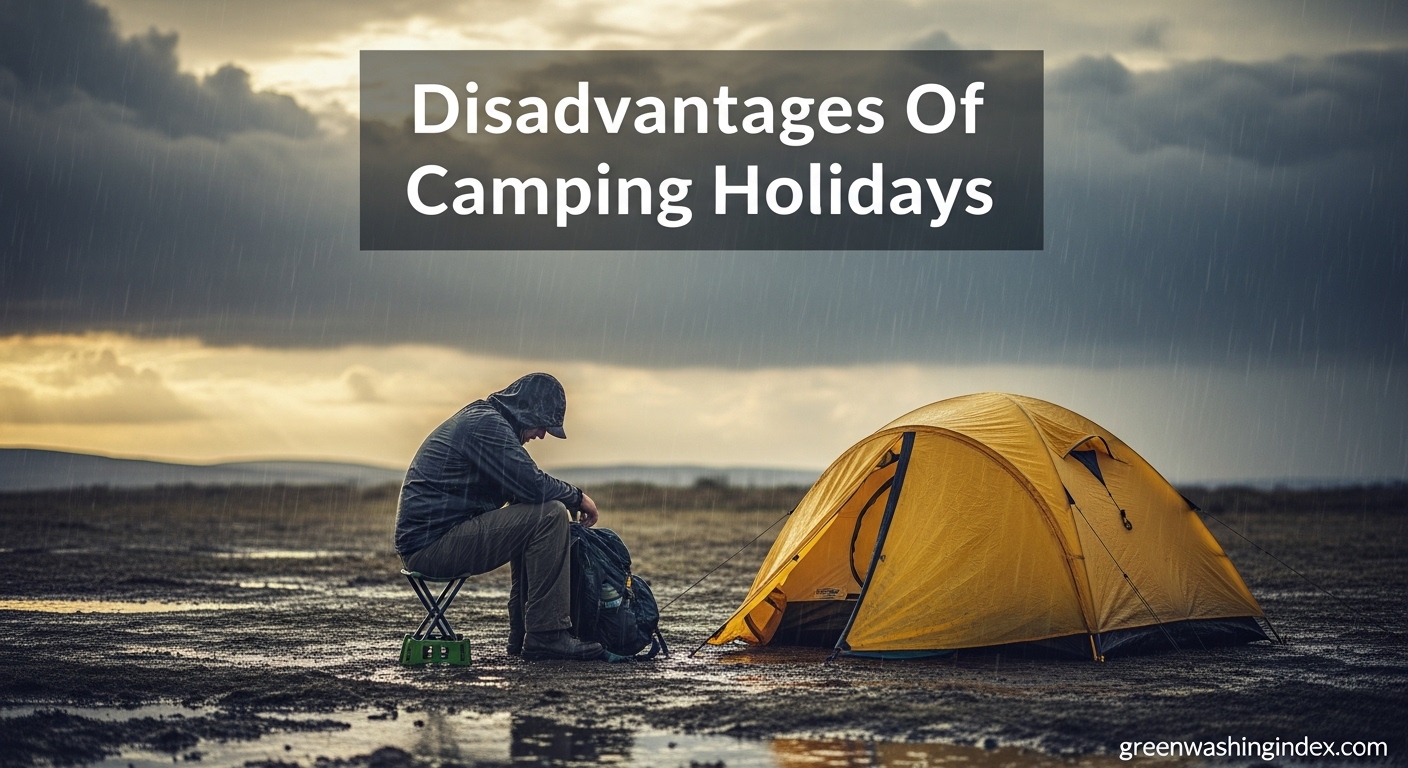
Weather ruins more camping trips than any other factor. I’ve seen families pack up after one night of relentless rain, their vacation dreams washed away by conditions no forecast predicted.
Real Example: A 2022 study of campground cancellation data found that 34% of campers leave early due to weather, with most receiving no refund for unused nights.
Tent camping offers minimal protection. Temperatures swing wildly from scorching days to near-freezing nights. Rain creates mud, humidity, and general misery. Wind can damage tents and make fires impossible.
Even RV camping cannot fully eliminate weather vulnerability. High winds create dangerous driving conditions. Extreme temperatures challenge heating and cooling systems. Storms can knock out power and water hookups.
Unlike hotels where weather only affects outdoor activities, camping makes weather the central experience. When conditions turn bad, there’s nowhere to escape.
Camping is marketed as an eco-friendly vacation choice. The reality is more complicated. Research shows recreational camping causes significant localized environmental damage that accumulates over time.
Studies from the Leopold Wilderness Research Institute demonstrate that established campsites show measurable soil compaction from concentrated foot traffic. This compaction reduces water infiltration, increases erosion, and prevents plant regrowth.
The Appalachian Trail Conservancy found that popular camping areas develop expanding zones of bare soil. Vegetation loss accelerates erosion, and recovery takes decades even after camping pressure stops.
What’s particularly troubling is the “megasite” phenomenon. Individual campsites gradually expand and merge, creating large areas of complete vegetation destruction. These damaged zones may never fully recover.
Camping displaces wildlife from their habitats. Research published in the NCBI demonstrates that recreational camping causes wildlife to alter natural behaviors, avoid preferred feeding areas, and experience increased stress hormones.
Food storage issues attract animals to campsites, creating problematic human-wildlife interactions. Bears conditioned to human food often require relocation or destruction. Smaller animals become dependent on campsite scraps, losing natural foraging skills.
Even “Leave No Trace” camping cannot eliminate disturbance. Human presence alone affects wildlife behavior patterns. Noise, light at night, and movement displace animals from preferred habitats.
Camping generates waste in environments with limited disposal infrastructure. Human waste must be properly managed or it contaminates water sources. Trash often escapes despite best intentions, becoming litter that persists for years.
Campfires release particulate matter and carbon emissions. In areas with heavy camping use, air quality measurably decreases during peak seasons. Firewood collection sometimes damages live tree stands when deadfall is depleted.
Quick Reality Check: A single weekend of camping by a family of four can generate 20-30 pounds of waste, including packaging, food scraps, and hygiene products. In remote areas with limited trash service, this waste often travels hundreds of miles for disposal, increasing its carbon footprint.
For those seeking environmentally friendly camping practices, the solution requires more than following basic guidelines. It demands examining every aspect of camping impact and making conscious choices to minimize damage.
This is the disadvantage nobody discusses. The outdoor gear industry has mastered greenwashing – making products appear environmentally friendly when they’re not.
Most camping equipment relies on per- and polyfluoroalkyl substances (PFAS) for waterproofing. These “forever chemicals” persist indefinitely in the environment and accumulate in human tissue.
A 2016 Greenpeace investigation found hazardous chemicals in outdoor gear from major brands. Tents, jackets, and boots contained PFAS and other toxic treatments. These chemicals wash off during use and manufacturing, contaminating water sources.
What’s concerning is how brands market themselves as environmentally conscious while using these chemicals. The greenwashing creates a false sense of environmental responsibility.
Producing camping equipment requires significant energy and resources. A single polyester tent generates approximately 20-30 kg of CO2 emissions during manufacturing. Add sleeping bags, pads, stoves, and other equipment, and a new camper’s gear investment creates a carbon footprint comparable to flying round-trip to Europe.
Research from Shift JH reveals that outdoor gear production accounts for the majority of camping’s carbon impact. The use phase (actually camping) represents a small fraction compared to manufacturing.
Yet the marketing focuses on “sustainable” materials and recycling initiatives while ignoring the fundamental problem: buying new gear, even “eco-friendly” versions, creates significant emissions.
Terms like “sustainable,” “eco-friendly,” and “green” appear on outdoor gear with no standard definition or verification. TerraDrift’s analysis of sustainable outdoor gear found these terms everywhere but found genuinely sustainable products rare.
Greenwashing Definition: Greenwashing is the practice of making misleading claims about the environmental benefits of a product or practice. In the outdoor industry, this includes exaggerating recycled content, ignoring chemical treatments, and obscuring manufacturing impacts.
Bluesign certification provides some verification for chemical safety in textiles, but adoption is far from universal. Fair Wear certification addresses labor standards but says nothing about environmental impact. Most “green” claims rely entirely on self-reported data.
Synthetic camping gear sheds microplastics during use. Tents flap in the wind, releasing microplastic fibers. Synthetic clothing sheds during wear and washing. These particles persist indefinitely and accumulate in ecosystems.
Zero competitors mention microplastic pollution from camping gear in their content. The research exists, but outdoor brands and media avoid discussing it because it undermines the eco-friendly camping narrative.
Beyond environmental concerns, camping creates genuine discomfort that affects trip quality. Some people enjoy roughing it, but many find the experience physically taxing.
Even the best camping mattresses cannot match a real bed. Sleeping on the ground creates pressure points and requires compromise. Quality camping mattresses help but cost hundreds of dollars and still fall short of home comfort.
Temperature regulation while sleeping outdoors is difficult. Summer nights can be uncomfortably warm, while spring and fall camping requires careful layering. Many campers report poor sleep quality throughout their trips.
Campground bathrooms vary dramatically. Some private campgrounds maintain clean facilities with hot showers. Many public campgrounds provide minimal maintenance with cold water only.
Backcountry camping requires digging cat holes or packing out waste. This creates hygiene challenges most urban dwellers never experience. Hand washing becomes difficult without running water.
I’ve seen campers drive 30 minutes to find a hotel shower mid-trip. The bathroom reality alone ends many camping aspirations.
Camping restricts meal options significantly. Without refrigeration, fresh foods last only 1-2 days. Meal preparation takes 2-3 times longer than at home.
Quality camping stoves improve the experience but add cost and complexity. Cooking over campfires is romantic but impractical for most meals. Wind, rain, and fire restrictions can eliminate the option entirely.
Camping introduces risks that don’t exist at hotels or resorts. Understanding these risks is essential for informed decision-making.
Bear encounters require specific knowledge and equipment. In some regions, bear-proof canisters are mandatory. Improper food storage creates dangerous situations for both campers and animals.
Smaller creatures cause problems too. Raccoons and rodents raid coolers and food stores. Snakes pose risks in certain regions. Insects are unavoidable – mosquitoes, ticks, and other biting bugs can transmit diseases.
Forum discussions reveal recurring stories of close encounters, property damage from wildlife, and trips cut short due to animal activity.
Remote camping means delayed emergency response. Cell service is unreliable in wilderness areas. GPS devices help but require battery power and clear satellite views.
Medical issues that would be minor at home become serious when camping hours from help. Basic first aid knowledge becomes essential, yet many campers lack adequate preparation.
Campgrounds experience theft problems. Equipment left unattended can disappear. Tents provide no security for valuables. Many campers report returning from hikes to find gear missing.
The social environment of campgrounds also creates discomfort. Noise from neighboring sites often continues past quiet hours. Some campers report feeling unsafe with intoxicated or aggressive neighbors.
The myth that camping saves money deserves examination. While campground fees cost less than hotels, the required equipment investment is substantial.
| Expense Category | Budget Option | Quality Option | Luxury Option |
|---|---|---|---|
| Tent | $150-250 | $400-700 | $1,000+ |
| Sleeping Bags (2) | $100-150 | $250-400 | $600+ |
| Sleeping Pads (2) | $60-100 | $150-250 | $400+ |
| Camp Stove | $40-80 | $120-200 | $300+ |
| Cooler | $40-80 | $150-300 | $500+ |
| Camp Chairs (2) | $30-50 | $80-150 | $250+ |
| TOTAL ENTRY COST | $420-710 | $1,150-2,000 | $3,000+ |
Reality Check: That $700 budget setup needs replacement in 3-5 years. Quality gear lasts longer but costs more upfront. After five camping trips totaling $500 in campground fees, a family with quality gear has invested $2,000+ for a vacation option that requires significant labor and discomfort.
Our analysis of the best camping gear found that genuinely durable, environmentally responsible equipment costs significantly more. The cheap options wear out quickly, creating waste and requiring replacement.
Camping demands substantial time investment beyond the trip itself. Preparation, packing, setup, and breakdown all consume hours that other vacation types don’t require.
For a two-night camping trip, the time overhead easily exceeds 10 hours. This excludes travel time to and from the destination. That same time investment could book a hotel reservation in 30 minutes.
Camping presents significant barriers for people with disabilities or mobility limitations. Uneven terrain, steps to bathrooms, and narrow tent doors create exclusion that most camping enthusiasts rarely consider.
Accessible campsites exist but are limited in number and require advance planning. Even designated accessible sites often have challenges. The rough nature of camping inherently creates barriers.
This disadvantage receives minimal attention in outdoor media. The camping community focuses on expansion and participation while ignoring accessibility concerns.
After examining these disadvantages, the answer depends on your priorities. Camping offers connection to nature, self-sufficiency experiences, and memories that no hotel can provide. But these benefits come with real costs.
If environmental impact is your priority, camping requires conscious choices. Choosing existing campsites rather than creating new ones minimizes vegetation damage. Buying used gear or choosing verified sustainable options reduces manufacturing impact. Following responsible outdoor practices helps preserve natural areas.
For those who decide camping isn’t for them, alternatives exist. Glamping provides outdoor experiences with comfort. Day trips eliminate overnight impact. Cabin rentals offer nature proximity without roughing it.
The key is making an informed decision rather than accepting camping’s eco-friendly mythology at face value. Understanding these disadvantages allows realistic expectations and better choices.
The main disadvantages of camping include unpredictable weather dependency, lack of basic comfort and amenities, high costs for quality gear, safety concerns from wildlife encounters, and significant environmental impact through soil compaction, vegetation damage, and waste generation. Additionally, camping requires substantial time investment for planning, setup, and breakdown.
Camping damages the environment through soil compaction from concentrated foot traffic, vegetation loss that leads to erosion, wildlife disturbance that alters natural behaviors, waste generation that pollutes natural areas, and campfire emissions that reduce air quality. Research shows established campsites create expanding zones of ecological damage that may take decades to recover.
Camping gear requires a substantial initial investment of $1,000-3,000 for a family. However, after this upfront cost, camping can be cheaper per night than hotels. The calculation depends on how often you camp and whether you already own equipment. For occasional trips, hotels may be more economical when factoring gear costs.
Camping safety risks include wildlife encounters (bears, snakes, insects), weather emergencies (storms, extreme temperatures), delayed emergency response due to remote locations, food storage requirements to avoid attracting animals, and potential theft from unsecured campsites. Proper preparation and knowledge significantly reduce these risks.
Tent camping disadvantages include sleeping discomfort from uneven ground and thin padding, temperature regulation challenges, vulnerability to weather, limited privacy, lack of security for valuables, condensation buildup, and exposure to insects and animals. Tents also require time to set up and take down.
Camping is less environmentally friendly than commonly believed. While it can foster nature appreciation, camping causes soil compaction, vegetation destruction, wildlife disturbance, and waste accumulation. The manufacturing of camping gear creates significant carbon emissions, and many products contain toxic chemicals like PFAS. Conscious campers can minimize but not eliminate these impacts.
Camping gear problems include high initial costs, toxic chemical treatments (PFAS in waterproofing), significant carbon footprint from manufacturing, durability issues with budget options, microplastic shedding from synthetic materials, and widespread greenwashing where products are marketed as eco-friendly without verification.
Camping affects wildlife by displacing animals from their habitats, altering natural behaviors including feeding and migration patterns, creating problematic human-wildlife interactions through food conditioning, increasing stress hormones in animal populations, and fragmenting habitat through repeated human presence in previously undisturbed areas.
Camping holidays offer genuine rewards but also come with significant disadvantages that deserve honest discussion. The environmental impact alone challenges camping’s eco-friendly reputation. Greenwashing in the outdoor gear industry complicates ethical consumer choices for outdoor enthusiasts.
Understanding these disadvantages allows better decisions. Some will accept the tradeoffs for the benefits camping provides. Others will seek alternatives that better align with their values and comfort preferences. What matters is making informed choices rather than accepting camping mythology at face value.
After 15 years of analyzing environmental claims and outdoor recreation impacts, I believe honest discussion about camping’s downsides leads to better outcomes. When we understand the true costs of our recreation choices, we can make decisions that align with our values and minimize our impact on the natural world we claim to love.
