
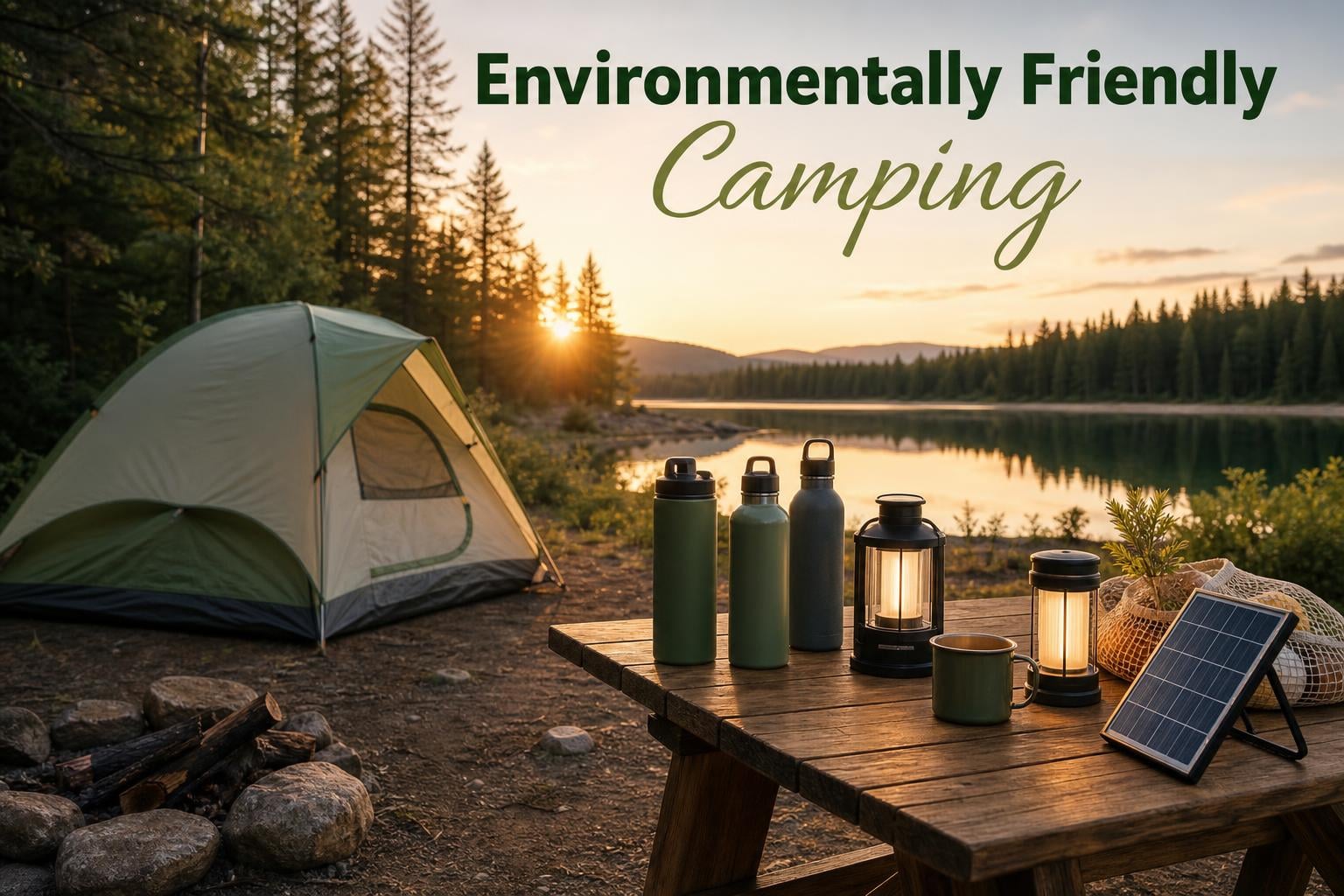
Spending a night under the stars should not come at the expense of the very wilderness that makes that experience worth having. Yet every year, popular camping destinations show the wear: trampled vegetation, littered fire rings, scattered trash, and wildlife habits disrupted by careless food storage. Environmentally friendly camping is the practice of enjoying the outdoors in ways that protect the land, water, and creatures you came to visit.
Whether you are pitching a tent at a developed campground or hiking miles into the backcountry, the choices you make before and during your trip determine how much of an impact you leave behind. The good news is that sustainable camping is not difficult once you understand the core principles. It simply requires a bit more thought, slightly different gear, and a willingness to follow a few proven guidelines.
Eco-friendly camping, also known as sustainable camping, green camping, or zero waste camping, is an approach to outdoor recreation that minimizes environmental damage through mindful gear selection, responsible waste disposal, low-impact campsite practices, and respect for wildlife and natural systems. The goal is simple: enjoy nature without degrading it, so the same forests, lakes, and trails remain vibrant for the next person and the next generation.
In this guide, you will find everything from pre-trip planning and eco-friendly camping gear checklists to detailed instructions on human waste disposal, sustainable campfire management, and the science behind biodegradable soap. We also address the greenwashing that runs rampant in outdoor gear marketing, helping you identify products that genuinely reduce your carbon footprint versus those that just slap a green leaf on the packaging.
What You Will Learn in This Guide:
If you have ever wondered whether your outdoor adventures are helping or hurting the planet, this guide will give you the tools and confidence to become a genuinely eco-conscious camper. Understanding the disadvantages of camping holidays is a great starting point for seeing why sustainable practices matter so much.
Outdoor recreation has surged in popularity over the past several years. Record numbers of people are visiting national parks, state forests, and dispersed camping areas. While this enthusiasm for nature is encouraging, it comes with a cost. Heavily trafficked trails suffer from soil erosion, alpine meadows get trampled, and popular lakeshores accumulate microplastic pollution from degraded gear and food packaging.
The outdoor industry also has a significant environmental footprint. Most performance gear, from sleeping bags to rain jackets, is made from petroleum-based synthetic materials. Manufacturing and transporting that gear generates greenhouse gas emissions. Then there is the transportation to the campsite itself, with most campers driving gasoline-powered vehicles to reach remote areas.
None of this means you should stop camping. It means you should camp smarter. Every decision, from the gear you buy to where you pitch your tent, either contributes to the problem or becomes part of the solution. Environmentally friendly camping is about stacking as many positive choices as possible into your trip.
The benefits go beyond environmental protection. Campers who practice sustainable outdoor practices often report deeper connections to the places they visit. They spend less money over time by investing in durable, repairable gear rather than cheap disposable items. They also tend to eat better, since sustainable meal planning favors real food over individually wrapped snacks. And they become advocates, sharing knowledge with friends and family who want to do better on their own trips.
A successful green camping trip begins long before you reach the trailhead. The planning phase is where you make the decisions that have the largest cumulative effect on your environmental impact. Everything from your destination to your meal plan to how you get there plays a role.

Where you camp shapes the kind of impact you have. Developed campgrounds in national and state parks are designed to concentrate human use in durable areas, which actually protects surrounding wilderness from overuse. These sites typically offer established fire rings, food storage lockers, and proper waste facilities, all of which make it easier to camp responsibly.
Dispersed camping, which means camping outside of designated campgrounds on public land, offers more solitude but demands more from the camper. There are no facilities, no trash cans, and no rangers checking that you followed the rules. If you choose dispersed camping, you need to be fully prepared to pack out everything you bring in and follow backcountry waste disposal protocols.
Look for campgrounds and destinations that have earned recognized eco-certifications. Programs like LEED certification for facilities, Green Seal for operations, or participation in the National Environmental Education Foundation’s Public Lands Alliance signal that a site takes sustainability seriously. Many campgrounds now publish their environmental commitments online, covering everything from recycling programs to solar-powered facilities to local wildlife protection initiatives.
Consider visiting lesser-known areas during off-peak times. Overcrowding at iconic destinations like Yosemite Valley or Acadia’s Sand Beach causes measurable damage to vegetation and degrades the visitor experience. Camping in shoulder seasons or at less-publicized locations spreads the impact across a wider area and gives overused ecosystems time to recover.
If you are looking for a practical camping packing checklist that incorporates Leave No Trace principles, we have a separate guide that breaks down exactly what to bring for short trips.
Your gear is one of the biggest areas where you can reduce your environmental footprint, but it is also where greenwashing is most prevalent. Outdoor brands love to market their products with vague terms like “eco-conscious” or “earth-friendly” without providing any evidence. Learning to tell the difference between genuine sustainability and marketing spin is essential.
Start with a simple principle that experienced campers and forum communities consistently emphasize: the most sustainable gear is the gear you already own. Replacing a perfectly functional tent or sleeping bag with a new one made from recycled materials actually generates more environmental impact than continuing to use what you have. Buy new eco-friendly gear only when your old gear is genuinely worn out.
When you do need to buy, look for specific certifications rather than vague marketing language. Bluesign certification means a product was manufactured with responsible chemical use and resource productivity. Fair Trade certification ensures safe working conditions and fair wages. The Global Recycle Standard verifies recycled content claims. Brands like Patagonia, with its Worn Wear repair program, and Arc’teryx, with its ReBIRD take-back initiative, back up their sustainability messaging with actual programs that extend gear lifespan.
Consider renting gear instead of buying, especially if you camp infrequently. REI and other outdoor retailers offer rental programs that let you use high-quality equipment without the full purchase cost or the manufacturing footprint. This approach makes particular sense for big-ticket items like tents, sleeping pads, and backpacks that you might only use once or twice a year.
For a comprehensive look at gear options, our sustainable camping gear essentials guide covers everything from recycled sleeping bags to reusable cookware. If you need specific shelter options, our review of eco-friendly camping tents highlights models made with sustainable materials. And for sleep comfort, check out our guides to sustainable sleeping bags and eco-conscious camping mattresses.
Building a zero waste camping kit takes time, but here are the essentials that make the biggest difference. Each item replaces a source of single-use waste or environmental harm.
Meal planning is where many campers generate the most preventable waste. Preparing meals at home and repackaging food into reusable containers eliminates most single-use packaging before you even leave your kitchen. Chop vegetables, pre-measure spices into tiny jars, and transfer bulk items into silicone bags or lightweight containers.
Choose real food over individually wrapped snacks whenever possible. Trail mix made from bulk ingredients, fresh fruit with peels that serve as natural packaging, and meals cooked from scratch all generate less waste than pre-packaged camping meals. If you do use freeze-dried meals, look for brands that use recyclable packaging.
Plan your route to minimize driving distance and avoid unnecessary fuel consumption. If multiple people are going, arrange a carpool or coordinate meeting at a central location. Every gallon of gas saved reduces greenhouse gas emissions associated with your trip.
Research the specific rules and conditions at your destination before you arrive. Check for active fire bans, required food storage methods, trail closures, and any special regulations protecting local wildlife or vegetation. Knowing these details in advance prevents unintentional damage and keeps you on the right side of regulations.
Not all camping styles have the same environmental impact. Understanding the trade-offs of each type helps you choose the approach that best matches your sustainability goals and comfort level.
Tent camping at a developed campground is one of the lower-impact options available. Modern tents, especially those made with recycled materials or bluesign-certified fabrics, have a relatively small footprint per night. When you camp on designated tent pads or previously disturbed ground, you prevent further damage to vegetation.
The trade-off is that tent camping requires more personal gear, each item with its own manufacturing footprint. The key is investing in durable, repairable equipment that lasts for many seasons rather than cheap gear that ends up in a landfill after one or two trips. For comfortable seating around camp without excess bulk, sustainable camping chairs made from recycled materials are a solid option.
Car camping lets you bring more gear and food, which can reduce waste by enabling better meal prep and proper food storage. You can carry larger water containers, eliminating the need to buy bottled water at the campsite. The vehicle also serves as secure food storage in bear country.
The environmental downside is fuel consumption. Driving a large vehicle to a campsite generates significantly more carbon emissions than hiking in with a backpack. If you car camp, choose closer destinations, drive a fuel-efficient vehicle, and consolidate trips rather than making multiple weekend runs to the same area.
RVs have the largest environmental footprint of any camping style. They consume substantial fuel, require hookup infrastructure, and their manufacturing process involves significant resource use. However, RVs do offer some sustainability advantages: they enable longer trips with fewer total travel days, and modern RVs increasingly incorporate solar panels and efficient systems.
If you already own an RV, the most sustainable choice is to use it for years rather than trading up frequently. Maintain the black water tank and gray water systems properly to prevent contamination of soil and groundwater. Stay in designated RV sites with proper hookups rather than boondocking in sensitive areas.
Backcountry camping, which means hiking or paddling to a campsite away from roads and facilities, has the lowest per-camper infrastructure footprint. You carry everything you need and leave with everything you brought. There are no buildings, no plumbing, and no electricity.
This is also where environmental stewardship matters most. Backcountry sites are often in fragile, slow-recovering ecosystems. Alpine tundra, desert cryptobiotic soil crust, and riparian zones can take decades to recover from damage that takes seconds to inflict. If you camp in the backcountry, you need to understand and follow advanced Leave No Trace practices, including proper waste disposal, minimum-impact fire techniques, and campsite selection on durable surfaces.
Dispersed camping on national forest or Bureau of Land Management land offers the ultimate in solitude and self-reliance. There are no fees, no reservations, and no facilities. You are responsible for every aspect of your environmental impact.
Because dispersed sites lack hardened tent pads and established fire rings, the potential for damage is higher. Always camp on existing disturbed ground at least 200 feet from lakes and streams. Use a camp stove instead of building a ground fire unless there is an existing fire ring. And pack out absolutely everything, including all food waste and micro-trash.
How you set up camp determines whether your stay protects or damages the surrounding environment. A few simple decisions made during the first hour at your site can prevent impacts that would otherwise last for years.

The Leave No Trace Center for Outdoor Ethics outlines seven principles that form the foundation of environmentally friendly camping. These are not arbitrary rules but evidence-based practices developed through decades of research on visitor impact.
One of the most important and frequently cited guidelines in sustainable camping is the 200-foot rule. This principle states that you should camp, wash dishes, and dispose of human waste at least 200 feet, roughly 70 adult steps, from any water source including lakes, streams, rivers, and springs.
The 200-foot distance provides a natural filtration buffer. Soil and vegetation between your campsite and the water absorb and break down contaminants before they reach the aquatic ecosystem. This protects fish, amphibians, and insects from soap residue, food particles, and bacterial contamination. Camping too close to water also damages the fragile riparian zone, the band of vegetation along shorelines that prevents erosion and provides critical wildlife habitat.
The same logic applies to trails. Pitch your tent at least 50 feet from designated trails so other hikers and campers are not forced to walk through your site. This preserves the trail corridor and maintains the sense of solitude that backcountry visitors seek.
Modern camping no longer needs to rely on disposable batteries or propane canisters. Portable solar panels have become lightweight enough for backpacking trips and powerful enough to charge phones, headlamps, and other small devices. In open, sunny environments like deserts and high alpine zones, solar chargers perform exceptionally well.
In heavily forested areas where sunlight is limited, solar chargers are less reliable. In those conditions, hand-cranked devices and efficient battery-powered headlamps remain practical. The key is to avoid disposable batteries entirely by using rechargeable systems that you can top up at home between trips.
For lighting, LED headlamps and solar camping lanterns use a fraction of the energy required by older incandescent options. Some lanterns now feature built-in solar panels that charge during the day and provide hours of light at night, eliminating the need for any external power source.
Your shelter is one of the most important gear decisions you will make. Traditional tents remain the most practical option for most campers, and modern models increasingly use recycled fabrics and bluesign-certified materials. When choosing a tent, prioritize durability and repairability over weight savings, since a tent that lasts ten seasons has a much lower lifetime footprint than one that needs replacing every two years.
Hammock tents offer an alternative that eliminates ground impact entirely. By suspending your shelter above the ground, you avoid compressing soil and damaging fragile vegetation. The trade-off is that hammocks require trees of the right size and spacing, and they may not be practical in above-tree-line or desert environments. Use wide, tree-friendly straps to prevent bark damage.
Tarp shelters made from recycled or long-lasting materials offer the lightest possible footprint. They require skill to pitch properly but provide excellent shelter in mild conditions. Our guide to eco-friendly camping tents covers sustainable shelter options in detail.
For sleep comfort, eco-conscious camping mattresses and sustainable camping pillows are available from brands that prioritize recycled materials and responsible manufacturing.
Once you are at camp, the daily habits you adopt determine your actual environmental impact. This is where the details matter most, from how you wash dishes to how you store your food at night.

The pack it in, pack it out philosophy means that everything you bring into the wilderness comes back out with you. This includes obvious items like food wrappers and plastic bottles, but also less obvious ones like fruit peels, eggshells, and coffee grounds. Even organic waste items that will eventually decompose should be carried out, because they attract wildlife, alter soil chemistry, and take far longer to break down than most people assume.
Set up a simple sorting system at your campsite with separate bags for recyclables, compostable food scraps, and landfill waste. Check what recycling facilities are available at or near your campground before your trip so you know what to separate. If you are backcountry camping, plan to carry everything out regardless.
Before leaving your campsite, do a thorough sweep. Walk the entire area in a grid pattern, picking up any micro-trash that may have fallen: twist ties, fruit stickers, bits of foil, and the plastic loops from six-pack rings. A good practice is to pick up any trash left by previous campers as well. This is environmental stewardship in action.
Proper human waste disposal is one of the most important skills for any camper, yet it is something many people feel uncomfortable discussing. The method you use depends on where you are camping and local regulations.
In most forested and soil-rich environments, a cat hole is the standard method for solid waste disposal. Dig a hole 6 to 8 inches deep and at least 200 feet from water sources, trails, and campsites. After use, fill the hole completely and disguise it with natural materials. Use minimal toilet paper or switch to natural alternatives like smooth stones, leaves, or a backcountry bidet system, which many experienced backpackers now prefer because it eliminates paper waste entirely.
If you do use toilet paper, pack it out in a designated waste bag rather than burying it. Buried toilet paper is frequently dug up by animals, takes years to decompose in dry climates, and is one of the most common forms of backcountry litter.
In alpine environments, deserts, narrow canyons, and other areas where digging a cat hole is impractical or prohibited, you should use a WAG bag, which stands for Waste Allocation Gel bag. A WAG bag contains a puncture-resistant outer bag, an inner bag with a gel that solidifies waste and neutralizes odors, toilet paper, and a hand sanitizer packet. You simply use the bag, seal it, and carry it out with you.
Many popular backcountry destinations now require WAG bags by regulation. Check local rules before your trip. Even where they are not required, using a WAG bag is the most responsible option in fragile environments where soil is too thin or too rocky for proper burial. Always pack out the sealed bag and dispose of it in an appropriate facility.
Washing dishes at camp requires careful technique to avoid contaminating water sources. Set up your washing station at least 200 feet from any lake or stream. Use a small amount of biodegradable soap and hot water, scraping food particles into your trash bag before washing. Strain the dirty dish water through a mesh screen or bandana to catch food particles, which go into your trash.
Dispose of the strained gray water by scattering it broadly over the ground well away from water sources and your campsite. Never pour dish water into a stream or lake, even if you used biodegradable soap. The broad scattering method allows soil microorganisms to break down the soap and remaining food particles before they can reach any water source.
There is a widespread misconception that biodegradable soap is safe to use directly in rivers and lakes. This is incorrect, and understanding why is important for anyone who camps near water.
Biodegradable soap is designed to break down eventually in the presence of soil, oxygen, and sunlight. In a natural water body, however, those conditions do not exist. The cold, low-oxygen environment of a lake or stream dramatically slows decomposition. The soap persists long enough to cause eutrophication, a process where nutrients, particularly phosphorus, trigger excessive algae growth. This algae bloom depletes oxygen in the water, which can kill fish and other aquatic organisms.
The rule is simple: biodegradable soap should never go directly into any water source. Always wash yourself and your dishes at least 200 feet from the nearest water, and scatter the used water on the ground where soil bacteria can properly break down the soap. For a detailed guide on camp hygiene, see our article on biodegradable soap for camping, which covers specific product recommendations and proper use techniques.
Choose concentrated soaps that come in small bottles to minimize packaging waste. Dr. Bronner’s pure-castile liquid soap is a popular choice because it is highly concentrated, genuinely biodegradable, and versatile enough for dishes, body washing, and even clothing. Campsuds is another well-regarded option. Use any soap sparingly, as a few drops are usually sufficient for most tasks.
Campfires are deeply woven into camping culture, but they also represent one of the most potentially destructive activities you can undertake in the outdoors. Wildfires cause enormous environmental damage, destroy habitat, and threaten lives and property. Even small, poorly managed fires can sterilize soil, damage tree roots, and leave permanent scars on the landscape.
Before building any fire, check current fire restrictions for your area. Fire bans are issued based on drought conditions, temperature, wind, and fuel moisture. They are not suggestions. Violating a fire ban can result in criminal charges and enormous financial liability if a fire escapes. Check with local land management agencies for current conditions and permit requirements before your trip.
If fires are allowed, the most sustainable approach is to use existing fire rings in established campgrounds. Keep your fire small, no wider than the diameter of your pot or pan if you are cooking. Only use dead and downed wood that you can break by hand, and never cut branches from living trees. Purchasing local firewood near your campsite prevents the spread of invasive insects and tree diseases that can devastate entire forests.
An even better option is to skip the fire entirely and cook on an eco-friendly camping stove. Liquid fuel stoves with refillable bottles generate far less waste than disposable canister stoves, and they give you precise temperature control for cooking. For group cooking and car camping, two-burner propane stoves are efficient and the canisters can often be recycled at specialized facilities. For backpackers, alcohol stoves and wood-burning stoves offer ultra-light, low-waste alternatives.
Water conservation matters even when you are camping near abundant water sources. Filter only what you need, and avoid letting taps or containers run unnecessarily. If you are filtering water from a stream, use a system like a LifeStraw, squeeze filter, or pump filter rather than buying water in disposable bottles. These filters provide safe drinking water with zero packaging waste.
Be conscious of your fuel use as well. A windscreen on your stove dramatically improves efficiency, meaning you boil water faster and use less fuel per trip. Plan meals that require minimal cooking time, such as rehydrating freeze-dried meals or quick-cooking grains, to stretch your fuel supply further and reduce the number of canisters or fuel bottles you consume over a season.
Encountering wildlife is one of the great thrills of camping, but human interaction, even well-intentioned, can harm animals in serious ways. Feeding wildlife, even accidentally by leaving food out, trains animals to associate humans with food. This leads to aggressive behavior, property damage, and ultimately the killing of animals that have become dangerous.
Store all food, scented items, and trash in animal-proof containers. In bear country, this means using bear canisters or bear hangs following local requirements. Rodent-proof food storage matters everywhere, even at developed campgrounds where squirrels and raccoons are the primary concern. Never leave food unattended on a picnic table or inside a tent.
Observe animals from a distance using binoculars or a camera with a zoom lens. Stay on marked trails to avoid disturbing nesting sites, dens, or feeding areas. Keep dogs leashed in areas where wildlife is present, as off-leash dogs can chase, injure, and stress wild animals. During sensitive times like mating season or when animals are raising young, give them extra space.
For most campers, transportation to and from the campsite represents the single largest source of greenhouse gas emissions associated with a trip. A long drive in a low-mileage vehicle can generate more carbon than everything else about your camping trip combined. Addressing this aspect of your trip is one of the most effective ways to practice environmental stewardship.
Choose destinations closer to home when possible. A campsite an hour away can be just as rewarding as one five hours away, especially if it means you can camp more frequently. When you do travel further, combine your camping trip with other activities or errands in the same region to avoid making a separate trip later.
Carpool with other campers whenever feasible. If you are meeting friends at a campground, coordinate to travel in as few vehicles as possible. Some outdoor clubs and online communities organize group trips with shared transportation, which dramatically reduces per-person emissions. If public transit serves your destination, consider using it, particularly for trips to national parks that offer shuttle systems.
If you are in the market for a vehicle and camping is a primary use case, factor fuel efficiency into your decision. A hybrid or high-MPG vehicle that can still handle forest service roads is an excellent choice for environmentally conscious campers. Electric vehicles are increasingly viable for camping trips as charging infrastructure expands, and many national park gateway communities now offer charging stations.
The activities you choose during your camping trip can deepen your appreciation for nature while either helping or harming the ecosystems around you. Choosing low-impact activities and engaging in conservation-minded behavior turns your trip into something that actively benefits the outdoors.

Bird watching is one of the gentlest outdoor activities you can practice. Armed with a pair of binoculars and a field guide, you can spend hours observing avian behavior without any physical impact on the environment. Birders tend to be quiet, patient, and observant, qualities that naturally minimize disturbance to wildlife and habitat.
Nature photography offers a similar low-impact way to engage deeply with your surroundings. A camera encourages you to look closely at details you might otherwise walk past: the pattern of lichen on a rock, the architecture of a spider web, the texture of tree bark. The key rule for eco-conscious photographers is to never alter the environment for a shot. Do not move rocks, break branches, or trample vegetation to get a better angle.
Journaling and sketching are quiet activities that help you process and remember your outdoor experiences. They require no gear beyond a notebook and pen, generate zero waste, and produce a personal record that deepens your connection to place over time.
Hiking is the primary activity for most backcountry campers, and how you hike matters just as much as how you camp. Sustainable hiking means moving through the landscape in ways that protect trails, vegetation, and wildlife.
Your responsibility as an eco-conscious camper does not end when you pack up the car. The choices you make after your trip can extend your positive impact and help protect the places you love for future visits.
Social media has become a powerful force shaping where people travel, and not always for the better. When exact locations of fragile or previously unknown natural areas are shared widely online, visitor numbers can surge beyond what the site can sustainably handle. This phenomenon, sometimes called social media loving places to death, has damaged alpine meadows, desert slot canyons, and other sensitive environments.
Consider sharing general locations rather than precise GPS coordinates for sensitive areas. Tag the nearest town or park rather than the exact viewpoint. If you do share specific locations, pair the post with information about responsible visitation: where to park, how to minimize impact, and why the area deserves care.
After a trip, take time to clean and inspect your gear. Patch small holes in tents and sleeping pads before they become large ones. Re-waterproof rain jackets and tent flies. Tighten loose seams and replace worn zippers. A few minutes of maintenance can add years to the life of your equipment.
When gear has truly reached the end of its useful life for you, consider whether it can serve someone else. Many summer camps, scout troops, and outdoor education programs gladly accept gently used gear. Some brands, including Patagonia through Worn Wear and Arc’teryx through ReBIRD, have take-back programs that repair and resell used items. Donating functional gear keeps it out of landfills and makes the outdoors more accessible to people who cannot afford new equipment.
Share what you have learned about environmentally friendly camping with friends, family, and fellow outdoor enthusiasts. Invite someone who has never camped before and model sustainable practices on the trip. The more people who understand and practice Leave No Trace principles, the healthier our public lands will be.
Look for opportunities to give back to the places you visit. Many parks and public land agencies run volunteer trail maintenance days, invasive species removal events, and cleanup projects. Organizations like the Leave No Trace Center for Outdoor Ethics, the Sierra Club, and local trail associations welcome volunteers of all skill levels. Even a single day of volunteer work per year makes a measurable difference.
For those interested in camping without electricity, whether at a remote site or by choice, the essentials remain straightforward. Bring solar-powered lighting, a hand-cranked or battery-free radio for weather alerts, and a quality cooler or insulated food storage system. A portable stove eliminates the need for electrical cooking equipment. A fully charged power bank can handle emergency phone use. With these items, going without electricity is not just possible but deeply rewarding, offering a quieter, more connected outdoor experience.
Eco-friendly camping, also known as sustainable camping, green camping, or zero waste camping, is the practice of enjoying the outdoors while minimizing environmental impact through mindful gear selection, responsible waste disposal, low-impact campsite practices, and respect for wildlife. The goal is to leave natural areas exactly as you found them, or better, so they remain healthy and beautiful for future visitors.
The 200-foot rule states that you should camp, wash dishes, and dispose of human waste at least 200 feet, roughly 70 adult steps, from any water source such as a lake, stream, or spring. This distance provides a natural filtration buffer that prevents soap, food particles, and bacteria from contaminating aquatic ecosystems and protects fragile shoreline vegetation from trampling.
To camp without electricity, bring solar-powered lanterns or headlamps, a portable camping stove for cooking, a well-insulated cooler for food storage, a hand-cranked emergency radio, and a charged power bank for emergency phone use. Reusable water bottles with a filter system eliminate the need for refrigeration or electrical water purification, making off-grid camping comfortable and self-sufficient.
Yes, absolutely. By following Leave No Trace principles, choosing sustainable camping gear, packing out all waste, using biodegradable soap correctly, minimizing fuel consumption, and respecting wildlife, you can enjoy the outdoors with minimal environmental impact. The most sustainable approach is to use durable gear you already own, camp at established sites, and reduce your transportation footprint.
Essential eco-friendly camping gear includes reusable water bottles with a portable filter, solar-powered chargers and lanterns, biodegradable soap, reef-safe sunscreen, non-toxic bug spray, reusable food containers and cutlery, durable trash bags for packing out waste, and WAG bags or a trowel for waste disposal. Look for gear made from recycled materials and certified by programs like Bluesign or Fair Trade.
Leave No Trace is the foundational framework for environmentally friendly camping. Its seven principles cover planning ahead, camping on durable surfaces, disposing of waste properly, leaving natural objects undisturbed, minimizing campfire impacts, respecting wildlife, and being considerate of other visitors. Together these principles provide a complete system for enjoying the outdoors without degrading it.
A WAG bag (Waste Allocation Gel bag) is a portable, sealable system for packing out human waste. Each kit contains a puncture-resistant outer bag, an inner bag with gel that solidifies and deodorizes waste, toilet paper, and hand sanitizer. Use WAG bags in alpine environments, deserts, narrow canyons, and other areas where digging a cat hole is impractical, prohibited, or would damage fragile soil ecosystems.
Look for specific third-party certifications rather than vague marketing claims. Bluesign certification covers responsible chemical use and manufacturing. Fair Trade certification ensures safe labor conditions. The Global Recycle Standard verifies recycled content claims. Brands that offer repair programs, take-back initiatives, and transparent material sourcing information are more likely to be genuinely sustainable than those that simply use green imagery and buzzwords in their advertising.
Environmentally friendly camping is not a single action or a one-time gear purchase. It is an ongoing practice of making thoughtful choices that add up over a lifetime of outdoor adventures. Every trip is an opportunity to refine your approach, learn something new, and reduce your impact a little further.
The principles in this guide, from Leave No Trace fundamentals to the nuances of biodegradable soap science, form a complete framework for camping sustainably. You do not need to implement everything at once. Start with the highest-impact changes: eliminate single-use plastics, pack out all your waste, and learn proper disposal techniques. Build from there as each practice becomes second nature.
Remember that perfection is not the goal. A camper who follows most of these principles most of the time has a dramatically smaller footprint than someone who follows none of them. What matters is consistency, willingness to learn, and a genuine commitment to leaving the outdoors better than you found it. That is what being an eco-conscious camper truly means.
Key Takeaway Points
The more we all practice environmentally friendly camping, the longer these wild places will remain worth visiting. Pack smart, tread lightly, and enjoy every minute out there.
