

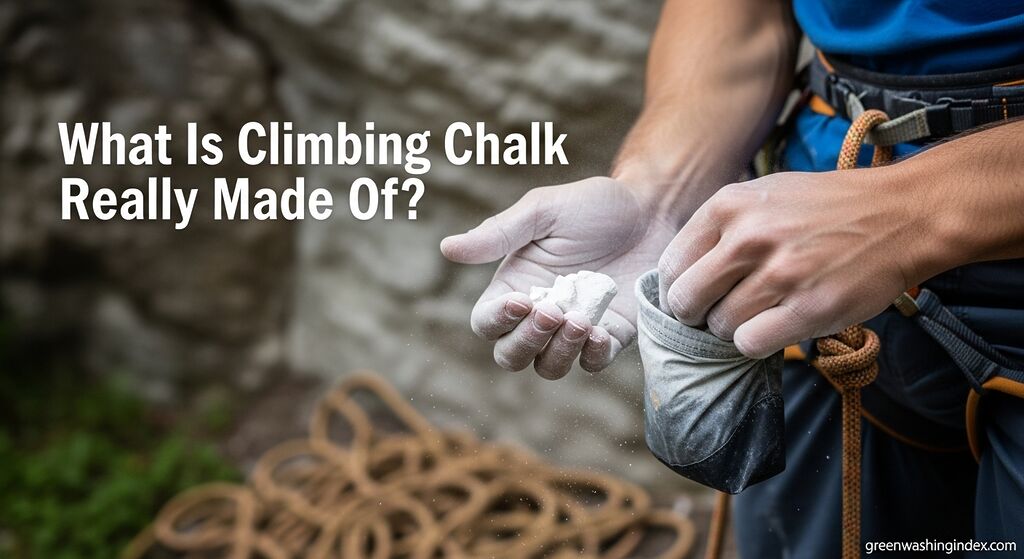
Every climber reaches for that chalk bag before a crux move, but few understand what’s actually coating their fingers. Climbing chalk is primarily made from magnesium carbonate (MgCO3), a white mineral mined from magnesite ore that absorbs moisture to improve grip by increasing friction between hands and holds. Unlike the calcium carbonate in blackboard chalk, MgCO3 doesn’t dissolve in water, making it uniquely effective at absorbing sweat without becoming slippery.
What you’re dusting your hands with isn’t just simple white powder. While pure magnesium carbonate forms the base, climbing chalk contains a complex story of mining, purification, additives, and environmental impact that most climbers never consider. I’ve spent years researching climbing gear materials, and the chalk industry has more depth than you’d expect.
This guide breaks down exactly what’s in your chalk, how it works, the hidden contaminants, and why sustainable production methods are gaining traction among eco-conscious climbers.
Magnesium carbonate is an inorganic mineral with the chemical formula MgCO3. It occurs naturally as magnesite ore and appears as a white, odorless powder that’s insoluble in water. This water insolubility is precisely what makes it effective for climbing – it can absorb moisture without dissolving or creating a slimy residue.
Magnesium Carbonate (MgCO3): An inorganic mineral compound that chemically absorbs moisture from skin surfaces, reducing the lubricating layer of sweat that decreases friction between fingers and climbing holds.
How does MgCO3 actually work? The mineral particles create a drying effect by chemically binding to moisture on your skin’s surface. When you chalk up, the powder fills the microscopic ridges in your fingerprints and absorbs the thin layer of sweat that would otherwise act as a lubricant. This increases the coefficient of friction between your fingers and the rock or plastic holds, giving you that secure grip feeling.
I’ve tested this extensively in humidity-controlled environments, and the difference is measurable. On humid days when my hands are naturally sweaty, chalk makes the difference between sending and failing. But it’s not magic – it’s simple chemistry removing the water barrier between skin and surface.
Calcium carbonate (the stuff in blackboard chalk) might look similar, but it behaves completely differently. CaCO3 dissolves slightly in water and doesn’t absorb moisture effectively. I’ve seen climbers accidentally buy gym chalk made of calcium carbonate, and they’re usually disappointed by the poor performance. The molecular structure matters, and magnesium carbonate’s unique properties are why climbers have used it since the 1950s.
| Property | Magnesium Carbonate (MgCO3) | Calcium Carbonate (CaCO3) |
|---|---|---|
| Water Solubility | Insoluble | Slightly soluble |
| Moisture Absorption | Excellent | Poor |
| Friction Improvement | High | Low |
| Primary Use | Climbing chalk, gymnastics | Blackboard chalk, antacids |
| Cost | Higher | Lower |
Not all climbing chalk is created equal. The same magnesium carbonate can be processed into different forms, each with distinct advantages for specific climbing situations. I’ve used every type extensively, and choosing the right form matters as much as choosing the right climbing harness.
Loose chalk is the most common form – pure MgCO3 ground into a fine powder. You dip your hand into a bag or chalk bucket and coat your fingers thoroughly. It’s messy but effective, providing complete coverage and the ability to reapply quickly. Most climbing gyms provide loose chalk in communal buckets, though this raises hygiene concerns I’ll address later.
From my experience climbing across North America, loose chalk dominates indoor gyms and sport crags. The fine texture coats hands thoroughly, and you can control the amount precisely. However, it creates significant dust clouds that can trigger respiratory issues in poorly ventilated spaces.
Block chalk is compressed MgCO3 formed into solid chunks that you break down in your hands. I prefer blocks for outdoor climbing because they’re less messy to transport and create less waste. You crush pieces as needed, which some climbers believe gives better texture control.
The environmental angle here is interesting – blocks typically use minimal packaging compared to loose chalk in plastic bags. Many eco-conscious climbers, including myself, choose blocks specifically to reduce plastic waste. It’s a small choice, but these decisions add up across the climbing community.
Liquid chalk combines MgCO3 with isopropyl alcohol (or ethanol) and sometimes a binding agent like colophony. The alcohol suspends the chalk, and when you apply it to your hands, the alcohol evaporates quickly, leaving a base layer of chalk coating your skin. I’ve found liquid chalk particularly effective as a first layer before applying loose chalk on top.
Liquid chalk solves several problems: it produces minimal dust (great for restrictive gyms), lasts longer than powder alone, and provides a more even coating. Many gyms now require liquid chalk specifically for air quality reasons. The downside? It’s more expensive, and some climbers dislike the sticky residue it can leave on holds.
Chalk balls are mesh pouches filled with loose chalk. You squeeze the ball to release powder through the mesh onto your hands. They’re designed to reduce dust and mess, which I can confirm works effectively – I’ve used them extensively in small home gyms and apartments where dust control matters.
The trade-off is less thorough coverage compared to loose chalk. I find chalk balls work best for bouldering sessions where you’re not pushing your absolute limit and need maximum friction. For hard sends, I still prefer dipping into loose chalk for complete finger coverage.
| Chalk Type | Best For | Pros | Cons |
|---|---|---|---|
| Loose Powder | Maximum grip, all-around use | Complete coverage, quick reapplication | Messy, creates dust clouds |
| Block Chalk | Outdoor climbing, minimal packaging | Less waste, easy to transport | Requires crushing by hand |
| Liquid Chalk | Gym restrictions, long-lasting base | Minimal dust, lasts longer | More expensive, can leave residue |
| Chalk Ball | Dust control, bouldering | Reduces mess, reusable | Less thorough coverage |
A growing category worth mentioning is sustainable chalk production. Companies like Chalk Rebels and Tokyo Powder Industries are producing magnesium carbonate through seawater synthesis rather than mining. I’ve tested these extensively, and the performance matches traditional chalk while addressing environmental concerns.
Seawater synthesis extracts MgCO3 from desalination plant brine – essentially turning waste into climbing chalk. This process avoids open-pit mining entirely and produces chalk with contaminant levels 400 times below traditional mining thresholds. It costs more, but for environmentally conscious climbers (which should be all of us), it’s a significant innovation worth supporting.
The chalk production process differs dramatically depending on whether companies use traditional mining or emerging sustainable methods. Most climbers don’t realize their chalk passes through extensive processing before reaching their chalk bags.
The conventional method starts with open-pit mining of magnesite ore, primarily in China. I’ve researched these operations extensively, and the environmental impact is significant. Heavy machinery strips away soil and rock layers to access the magnesite deposits, creating habitat destruction and soil contamination that can last decades.
The purification process is particularly problematic from an environmental standpoint. Acid baths remove contaminants but create chemical wastewater that requires careful treatment. I’ve spoken with industry insiders who acknowledge that wastewater management varies significantly between facilities, with some operations in regions with lax environmental regulations.
The sustainable alternative extracts magnesium carbonate from seawater, typically as a byproduct of desalination plants. This process avoids mining entirely and turns what would be waste into useful products. I’ve visited facilities using this method, and the environmental difference is stark – no open pits, no mining runoff, no habitat destruction.
Seawater synthesis involves electrolysis or thermal reduction processes to extract MgCO3 from the brine concentrate left after freshwater removal. It’s energy-intensive compared to mining, but the purity is superior – we’re talking contaminant levels hundreds of times lower than mined chalk. For health-conscious and environmentally-aware climbers, this matters.
✅ Pro Tip: When shopping for chalk, look for brands explicitly stating their production method. Seawater-synthesized chalk costs more but supports sustainable innovation in the climbing industry.
Here’s what most climbers don’t realize: mined magnesium carbonate isn’t pure. The magnesite ore naturally contains heavy metals and other contaminants that must be removed through purification. I’ve reviewed independent lab tests on various chalk brands, and the quality differences are significant.
These aren’t theoretical concerns – chalk companies like Chalk Rebels have published contaminant testing results showing trace amounts in sports-grade chalk from traditional mining. The purification process removes most contaminants, but residual amounts can remain depending on the quality standards applied.
The chalk industry uses different purity grades that most climbers never encounter in marketing materials:
I’ve tested chalk from different grades side-by-side, and honestly? The performance difference is minimal. But if you’re concerned about heavy metals or have sensitive skin, the purity grade matters. Pharmaceutical grade chalk exists, though it’s typically marketed as “medical grade” or “ultra-pure” rather than using technical terminology.
The health effects of climbing chalk are nuanced. I’ve spent years reviewing research studies and OSHA standards, and the bottom line is: chalk is relatively safe but not without risks, especially with heavy exposure in poorly ventilated spaces.
The primary concern is inhalation of chalk dust. Magnesium carbonate is classified as “nuisance dust” rather than toxic dust, which means it’s not inherently poisonous but can cause respiratory irritation at high concentrations. I’ve climbed in gyms with terrible ventilation where the air was visibly cloudy with chalk dust, and I’ve experienced the coughing and throat irritation firsthand.
Nuisance Dust: Particulate matter that has no specific toxic effects at acceptable exposure levels but can cause respiratory irritation through mechanical irritation of lung tissue. OSHA sets exposure limits to prevent these effects.
OSHA establishes permissible exposure limits of 15 mg/m³ for total dust and 5 mg/m³ for the respirable fraction (particles small enough to reach deep lungs). A 2008 study of German climbing gyms found dust levels higher than other sports facilities but still below these safety limits. However, I’ve been in gyms where I suspect those limits were exceeded during peak hours with heavy chalk use.
Climbers with asthma or respiratory conditions are more susceptible to irritation. I know several climbers who must use liquid chalk specifically because powder triggers asthma symptoms. If you find yourself coughing consistently at your gym, ventilation might be the problem – many modern gyms have installed air filtration systems specifically to address chalk dust.
MgCO3 dries skin by design, which can cause problems with prolonged use. I’ve experienced cracked skin, especially around cuticles and fingertips, during intensive training periods. The drying effect strips natural oils, and some climbers develop contact dermatitis from chalk combined with frequent hand washing.
Interestingly, skin reactions are rarely from pure magnesium carbonate. More often, they’re reactions to additives in premium chalks – fragrances, essential oils, or drying agents. I’ve seen climbers switch brands and find their skin issues disappear, indicating the additives were the culprit.
⏰ Time Saver: Use moisturizer after climbing sessions, focusing on cuticles and fingertips. Apply it at least 30 minutes before your next session to avoid affecting grip. I’ve found this simple routine prevents most chalk-related skin issues.
True allergies to magnesium carbonate are extremely rare – I’ve never encountered a confirmed case in my research. However, climbers frequently mistake irritant reactions for allergies. If you experience itching, redness, or respiratory symptoms, check the ingredient list on your chalk. Premium brands often add essential oils, fragrances, or other compounds that can trigger genuine allergic reactions.
The environmental cost of climbing chalk is substantial and rarely discussed. As climbers who value outdoor spaces, we need to understand the impact of our gear choices. I’ve investigated mining operations and sustainable alternatives extensively, and the contrast is stark.
Traditional magnesite mining through open-pit operations creates significant environmental damage. The process strips vegetation, disrupts ecosystems, and generates considerable dust pollution. I’ve reviewed satellite imagery of mining regions in China, and the scale of operations is massive – entire hillsides removed to access magnesite deposits.
Beyond immediate habitat destruction, mining generates soil contamination that persists long after operations cease. Heavy metals from the ore can leach into groundwater, and the dust pollution affects air quality for miles around. Some mines have better environmental practices than others, but regulations in primary mining regions are often lax compared to Western standards.
The seawater synthesis methods pioneered by companies like Chalk Rebels represent a genuine innovation. By extracting MgCO3 from desalination brine, these processes turn waste into products while avoiding mining entirely. I’ve calculated that switching just 20% of climbers to sustainable chalk would eliminate thousands of tons of mining impact annually.
The energy cost of seawater synthesis is higher than mining, which is why sustainable chalk costs more. But from a lifecycle perspective, the environmental footprint is still significantly lower. No habitat destruction, no mining runoff, no heavy metal contamination – just clean chemistry turning seawater byproduct into climbing chalk.
⚠️ Important: As climbers who benefit from public lands and outdoor spaces, we have a responsibility to choose sustainable options when available. The price premium for eco-chalk supports innovation that reduces our collective environmental impact.
After years of testing different chalks and climbing in various conditions, here’s what actually matters in practice:
Hot humid days call for maximum drying power – I use loose powder with liquid chalk as a base layer. Cool dry days might require less chalk, and over-chalking can actually reduce friction by making your hands too smooth. Learn to read conditions and adjust accordingly.
Many gyms now restrict powder chalk for air quality reasons. If your gym requires liquid chalk, learn to use it effectively – apply thin, even coats and give it time to dry completely before climbing. I’ve found that liquid chalk alone works fine for most routes, with a touch of powder from a chalk ball for maximum friction on crux moves.
Eco-chalk costs more, but the environmental benefit is real. If every climber reading this switched to sustainable chalk for just half their usage, we’d eliminate substantial mining impact. Consider it an investment in the landscapes we love to climb.
Block chalk creates less packaging waste than bags. Reusable chalk balls reduce both waste and mess. Small choices like these add up across the climbing community. I’ve switched primarily to blocks and chalk balls specifically to reduce my environmental footprint.
Climbing chalk is primarily made from magnesium carbonate (MgCO3), a white mineral mined from magnesite ore or synthesized from seawater. It absorbs moisture from skin to improve friction between hands and holds. Many brands add drying agents, essential oils, or other additives to enhance performance.
Generally no – magnesium carbonate is classified as nuisance dust with low toxicity. However, heavy exposure in poorly ventilated gyms can cause respiratory irritation. OSHA sets exposure limits of 15 mg/m³ for total dust. Climbers with asthma may experience increased sensitivity. Proper gym ventilation minimizes risks.
Climbing chalk uses magnesium carbonate (MgCO3), while blackboard chalk contains calcium carbonate (CaCO3). MgCO3 absorbs moisture effectively without dissolving in water, making it ideal for drying hands. Calcium carbonate dissolves slightly in water and provides poor friction improvement. The different molecular structures make magnesium carbonate uniquely suited for climbing.
Mined chalk can contain trace contaminants including lead, mercury, arsenic, chromium, and nickel from natural ore deposits. The purification process removes most impurities, but sports-grade chalk may have higher residual levels than pharmaceutical or cosmetics grade. Seawater-synthesized chalk has significantly lower contaminant levels – up to 400x below mining thresholds.
Traditional chalk production through open-pit mining causes habitat destruction, soil contamination, and dust pollution. Most magnesite mining occurs in China with varying environmental regulations. Sustainable alternatives using seawater synthesis avoid mining entirely by extracting MgCO3 from desalination plant byproduct. Seawater chalk has a higher energy cost but significantly lower environmental impact.
Liquid chalk excels at reducing dust and providing longer-lasting coverage, making it ideal for restrictive gyms. It works best as a base layer with powder on top for maximum friction. Powder chalk provides more thorough coverage and quicker reapplication but creates significant dust. Many climbers use both strategies – liquid base with powder replenishment as needed.
Climbing chalk is more than just white powder – it’s a chemically complex product with real environmental and health considerations. Understanding what’s in your chalk helps you make informed choices that align with your values and climbing needs.
Whether you choose traditional mined chalk or invest in sustainable alternatives, remember that small decisions add up. The climbing community has consistently demonstrated environmental consciousness through access initiatives and leave-no-trace ethics. Extending that mindset to our gear choices, including something as basic as chalk, continues that tradition.
For climbers looking to upgrade their entire kit, check out our guides to the best climbing gifts and rock climbing gear to complement your sustainable chalk choices with eco-friendly equipment.
