
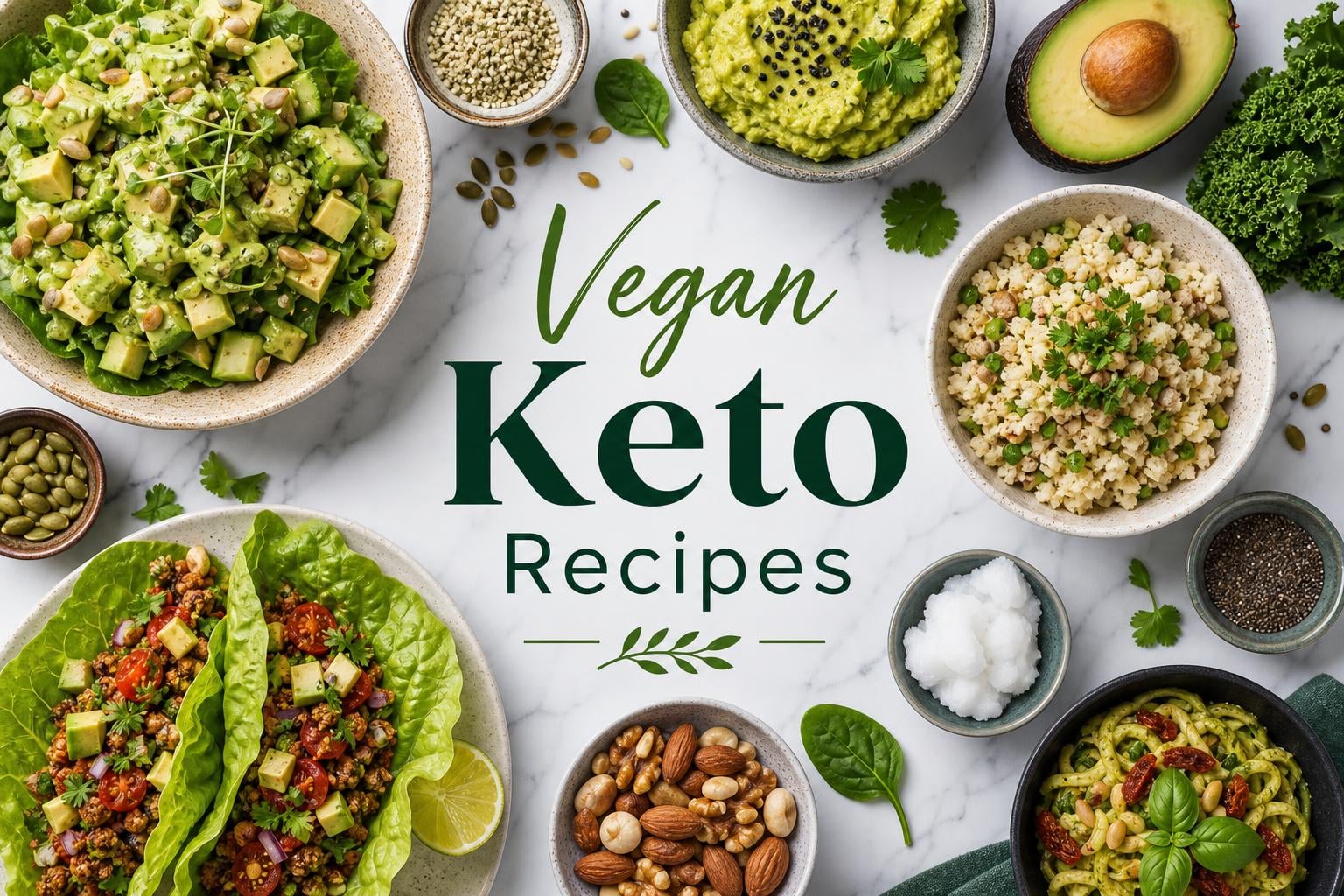
If you have ever felt stuck between wanting to eat more plants and wanting to keep your carbs low, you are in the right place. Finding vegan keto recipes that actually taste good and fit both goals used to feel nearly impossible. Most keto resources lean heavily on eggs, cheese, and butter, while most vegan resources rely on grains, beans, and starchy vegetables that push you right out of ketosis. I have spent years testing and refining plant-based keto meals that bridge that gap, and this guide brings together the 28 best ones I keep returning to.
Whether you are looking for a quick breakfast before work, a hearty dinner that satisfies without the carbs, a no-bake dessert, or a post-workout smoothie, the collection below has you covered. I have organized every recipe into clear categories, added prep times, cook times, servings, and nutrition estimates so you can plan your week without guesswork. Every dish is fully plant-based, low in net carbs, and rich in healthy fats from whole-food sources.
One thing I hear constantly from readers and from discussions on communities like r/veganketo is that people struggle to get enough fat and protein without blowing through their daily carb limit. That is why I also included a detailed section on the vegan keto food list, including protein sources with per-100g data, so you know exactly what to put on your grocery list. If you are curious about the broader environmental benefits of eating this way, you can learn more about vegan lifestyle benefits in our companion guide.
Ready to build your weekly meal plan around some of the most satisfying low-carb plant-based dishes out there? Let us start with the basics so you understand exactly how this way of eating works and why these vegan keto recipes are designed the way they are.
The vegan keto diet combines two eating philosophies into one approach. It removes all animal products (no meat, dairy, eggs, or honey) while simultaneously keeping carbohydrate intake low enough to maintain ketosis. That means your body shifts from burning glucose for fuel to burning fat, producing ketones as an alternative energy source. To reach and sustain ketosis, most people aim for a macro ratio of roughly 70 to 75 percent fat, 15 to 20 percent protein, and 5 to 10 percent net carbs.
On a standard keto diet, hitting those fat and protein numbers is easy because butter, heavy cream, cheese, eggs, and fatty cuts of meat do most of the heavy lifting. On a plant-based keto diet, your fat sources shift to coconut oil, olive oil, avocado, nuts, and seeds. Your protein comes from tofu, tempeh, hemp seeds, pumpkin seeds, and other low-carb plant proteins. The result is a way of eating that is high in fiber, rich in micronutrients, and naturally free of cholesterol.
Net carbs are the number that matters most here. You calculate net carbs by subtracting fiber and sugar alcohols from total carbohydrates. Since plant-based foods are naturally high in fiber, many vegan keto recipes have a surprisingly low net carb count even when the total carbs look higher. For most people, staying under 20 to 30 grams of net carbs per day is the target for maintaining ketosis, though some can go up to 50 grams and remain in fat-burning mode.
Reddit users on r/veganketo frequently share their macro breakdowns, and a common pattern looks like 30 grams of net carbs, 90 grams of protein, and 160 grams of fat per day. That is absolutely achievable with the right food choices, but it does require planning. The recipes in this guide are built specifically to help you hit those numbers without feeling deprived.
If strict keto feels too restrictive for your lifestyle, you might consider a more flexible plant-based approach. Our Flexitarian Diet guide explains a middle-ground option that still emphasizes plants without requiring full ketosis. For those who want to explore another sustainable eating pattern, the Mediterranean Diet offers a heart-healthy alternative that blends plant-based meals with moderate healthy fats.
Having a clear grocery list is the single most important thing you can do to set yourself up for success on a ketogenic vegan diet. When your kitchen is stocked with the right fats, proteins, and low-carb vegetables, throwing together a compliant meal becomes second nature. Below is a breakdown of the core food groups that make up the vegan keto food list.
Fats are the foundation of every vegan keto recipe. Coconut oil and MCT oil are staples because they contain medium-chain triglycerides that the body converts quickly into ketones. Olive oil and avocado oil provide anti-inflammatory monounsaturated fats that support heart health. Coconut milk and coconut cream add richness to curries, smoothies, and desserts. Nut butters made from almonds, macadamia nuts, or pecans deliver both fat and flavor in a convenient package.
Getting enough protein without exceeding your carb limit is the biggest challenge on vegan keto. Below are the best low-carb plant proteins, listed with approximate protein and net carb values per 100 grams to help you plan your meals.
Tempeh — about 19g protein, 4g net carbs per 100g. Fermented, easy to digest, and the highest-protein whole-food option on this list.
Firm tofu — about 17g protein, 2g net carbs per 100g. Versatile, absorbs flavors well, and works in everything from scrambles to stir-fries.
Hemp seeds — about 31g protein, 2g net carbs per 100g. A complete protein with all nine essential amino acids.
Pumpkin seeds — about 30g protein, 5g net carbs per 100g. Great for snacking, salad toppings, and fat bomb recipes.
Chia seeds — about 17g protein, 2g net carbs per 100g. High in fiber, perfect for puddings and overnight oats.
Flaxseed — about 18g protein, 3g net carbs per 100g. Used as an egg substitute and added to baked goods.
Almonds — about 21g protein, 7g net carbs per 100g. Excellent for snacking and making almond flour.
Macadamia nuts — about 8g protein, 4g net carbs per 100g. The lowest-carb nut and very high in fat.
Pecans — about 9g protein, 4g net carbs per 100g. A dessert-friendly nut with a buttery texture.
Walnuts — about 15g protein, 7g net carbs per 100g. Rich in omega-3 fatty acids.
Nutritional yeast — about 50g protein, 6g net carbs per 100g. Adds cheesy flavor and is packed with B vitamins.
Spirulina — about 57g protein, 4g net carbs per 100g. A complete protein powder option for smoothies.
Vegetables should make up the bulk of your plate by volume, even on keto. Focus on leafy greens like spinach, kale, arugula, and Swiss chard. Cruciferous vegetables such as cauliflower, broccoli, Brussels sprouts, and cabbage are also excellent choices. Other low-carb favorites include zucchini, asparagus, celery, cucumber, green beans, and bell peppers in moderation. Cauliflower deserves a special mention because it is the workhorse of the vegan keto kitchen — it becomes rice, pizza crusts, mash, and even steaks.
Most fruits are too high in sugar for keto, but a few options work in small amounts. Avocado is technically a fruit and is the most keto-friendly option available, packed with healthy monounsaturated fat. Berries like raspberries, blackberries, and strawberries can be enjoyed in controlled portions. Lemon and lime juice add brightness to dishes without adding significant carbs. Coconut, both fresh and dried unsweetened, provides fat and fiber.
For sweetening without sugar, erythritol and monk fruit sweetener are the most popular choices because they have essentially zero net carbs and do not spike blood glucose. Stevia is another option, though some people find its aftertaste noticeable. Psyllium husk powder acts as a binder in keto baking, replacing the elasticity that gluten normally provides. Almond flour and coconut flour replace wheat flour in everything from pancakes to bagels to cookies.
On a vegan keto diet, you avoid all animal products plus all high-carb plant foods. That means no grains (wheat, rice, oats, corn, quinoa), no legumes (beans, lentils, chickpeas, peas), no starchy vegetables (potatoes, sweet potatoes, yams), no sugary fruits (bananas, grapes, mangoes, pineapples), and no refined sugars. Processed vegan foods like mock meats often contain hidden carbs from fillers, so always check the nutrition label before adding them to your cart.
Here is the complete collection. I have organized all 28 recipes into five categories so you can quickly find exactly what you need depending on the time of day and the type of meal you are planning. Each recipe includes prep time, cook time, servings, and approximate nutrition per serving. All nutrition values are estimates and will vary based on the specific brands and quantities you use.
Mornings set the tone for the rest of your day, and starting with a low-carb, high-fat, plant-based breakfast keeps you full and focused until lunch. These breakfast recipes cover everything from a savory tofu scramble to sweet chia pudding and fluffy almond flour pancakes.
Prep time: 4 hours (for soaking) | Cook time: 0 minutes | Servings: 4 | Per serving: 280 calories, 22g fat, 10g protein, 6g net carbs
This ocean-friendly twist on tuna salad replaces fish with soaked sunflower seeds that have a surprisingly similar flaky texture. The trick is soaking raw sunflower seeds in water for at least four hours, or overnight if you plan ahead. Once soft, you pulse them in a food processor until they reach a chunky consistency that mimics canned tuna.

From there, you fold in finely chopped celery, red onion, and fresh parsley for crunch and brightness. Kelp or nori flakes provide that subtle sea-like flavor that makes the dish taste authentic. A spoonful of vegan mayo binds everything together into a creamy, scoopable salad.
Season with salt, pepper, fresh lemon juice, and a dab of mustard if you enjoy a tangy kick. Serve it over a bed of greens, scoop it with cucumber slices, or wrap it in nori sheets for a keto-friendly hand roll. It keeps well in the refrigerator for up to three days, making it a great option for meal prep.
Prep time: 10 minutes | Cook time: 10 minutes | Servings: 4 | Per serving: 190 calories, 14g fat, 5g protein, 5g net carbs
When a craving for takeout hits, cauliflower fried rice is the recipe I turn to most. You start by grating a head of cauliflower on a box grater or pulsing it in a food processor until it looks like rice grains. The texture is remarkably similar to actual rice once cooked, but with a fraction of the carbohydrates.

Heat coconut oil in a large pan or wok over medium heat and saute minced garlic until fragrant. Toss in the cauliflower rice and stir-fry it just as you would regular rice, cooking for about five minutes until tender but not mushy. Add tamari or coconut aminos for that salty umami flavor, keeping an eye on the portion since some brands add sugar.
You can also toss in broccoli florets, sliced bell peppers, or snap peas for extra color and nutrients. A drizzle of toasted sesame oil at the end gives the dish that authentic restaurant-quality aroma. Leftovers reheat beautifully, so consider doubling the batch for easy lunches throughout the week.
Prep time: 10 minutes | Cook time: 15 minutes | Servings: 4 | Per serving: 160 calories, 11g fat, 4g protein, 4g net carbs
Brussels sprouts are tiny nutritional powerhouses, packed with vitamins K and C, fiber, and antioxidants. Grilling them transforms their flavor entirely, bringing out a natural sweetness and smoky char that makes them irresistible even to people who think they dislike this vegetable.

Wash the sprouts and trim off the tough base. Cut each one in half so they cook evenly and get maximum surface area for caramelization. Toss them lightly with olive oil, salt, and pepper, then place them flat-side down on a preheated grill over medium-high heat.
Cook for about five minutes per side until they develop deep brown grill marks. Finish with a squeeze of fresh lemon juice or a drizzle of balsamic vinegar for acidity that cuts through the richness. These pair beautifully with a tofu scramble for a hearty brunch or alongside a portobello burger for dinner.
Prep time: 5 minutes | Cook time: 10 minutes | Servings: 2 | Per serving: 220 calories, 14g fat, 16g protein, 4g net carbs
A tofu scramble is the cornerstone of any vegan keto breakfast rotation. Firm tofu crumbles into pieces that look and feel remarkably like scrambled eggs, and with the right seasoning, the flavor comes surprisingly close too. This recipe takes under 15 minutes from start to finish.

Start by pressing a block of firm tofu to remove excess water, then crumble it into bite-sized pieces with your hands. Heat olive oil or coconut oil in a skillet and add the crumbled tofu. The secret ingredient is turmeric, which gives the scramble its signature golden color. Nutritional yeast adds a cheesy, savory depth that replaces the flavor you would normally get from dairy.
Season with salt, pepper, and a pinch of garlic powder. You can fold in spinach, diced bell peppers, mushrooms, or cherry tomatoes for extra vegetables. Cook everything together until hot and slightly browned, about eight minutes. Serve immediately for a protein-packed breakfast that keeps you satisfied for hours.
Prep time: 5 minutes | Cook time: 0 minutes (plus overnight chilling) | Servings: 1 | Per serving: 340 calories, 26g fat, 12g protein, 5g net carbs
Traditional oatmeal is a carb bomb, but this keto version swaps rolled oats for a blend of chia seeds and hemp hearts. The result is an overnight breakfast that has the creamy, comforting texture of oats with a tiny fraction of the carbohydrates. It is also completely no-cook, which makes it perfect for busy mornings.

Combine three tablespoons of chia seeds and three tablespoons of hemp hearts in a jar. Pour in about three-quarters of a cup of unsweetened almond milk or coconut milk and stir well. Add a pinch of stevia or monk fruit sweetener if you want it sweet, and a spoonful of almond butter for richness and healthy fats.
Seal the jar and refrigerate overnight. By morning, the chia seeds will have absorbed the liquid and created a thick, pudding-like consistency. Top with a few raspberries, a sprinkle of chopped pecans, or a dash of cinnamon before eating. You can make several jars at once for an entire week of grab-and-go breakfasts.
Prep time: 10 minutes | Cook time: 15 minutes | Servings: 3 | Per serving: 310 calories, 24g fat, 11g protein, 5g net carbs
Pancakes might seem off-limits on keto, but almond flour changes everything. These fluffy vegan keto pancakes have the tender crumb and golden-brown exterior you expect from a traditional stack, minus the wheat flour and sugar. They are one of my favorite weekend brunch treats.

In one bowl, mix one cup of almond flour with one tablespoon of ground flaxseed (your egg replacer), half a teaspoon of baking powder, and a pinch of salt. In a separate bowl, combine three-quarters of a cup of unsweetened almond milk with half a teaspoon of vanilla extract and a few drops of stevia.
Gently whisk the wet and dry ingredients together until smooth, being careful not to overmix. Heat a non-stick pan over medium heat and ladle the batter into circles. Cook for about three minutes per side until golden brown. Serve with a pat of coconut oil, a handful of berries, or a drizzle of sugar-free syrup.
Prep time: 10 minutes (plus 1 hour marinating) | Cook time: 10 minutes | Servings: 4 | Per serving: 210 calories, 14g fat, 15g protein, 3g net carbs
Tempeh bacon delivers all the smoky, salty satisfaction of traditional bacon in a completely plant-based form. Thin strips of fermented soybeans soak up a marinade of soy sauce, liquid smoke, smoked paprika, and a touch of maple-flavored sweetener, then crisp up in a hot pan until the edges turn deeply golden.

To make the marinade, whisk together two tablespoons of tamari, one teaspoon of liquid smoke, one teaspoon of smoked paprika, and half a teaspoon of monk fruit sweetener. Cut a block of tempeh into thin strips and submerge them in the marinade for at least one hour, though overnight produces the deepest flavor.
Heat a tablespoon of coconut oil in a skillet and cook the strips for about three minutes per side until crisp. Use them in breakfast sandwiches, crumble them over salads, or eat them straight off the pan as a savory snack. They store well in the refrigerator for up to five days.
Prep time: 15 minutes | Cook time: 15 minutes | Servings: 6 | Per serving: 290 calories, 20g fat, 10g protein, 4g net carbs
Missing bagels on keto? These almond flour bagels have a chewy texture and a golden, seed-crusted exterior that satisfies the craving completely. They use ground flaxseed mixed with water as a vegan egg substitute, which also adds a boost of omega-3 fatty acids.

Preheat your oven to 375 degrees Fahrenheit. In a bowl, combine two cups of almond flour, one teaspoon of baking powder, and half a teaspoon of sea salt. Prepare a flax egg by mixing one tablespoon of ground flaxseed with three tablespoons of water and letting it thicken for five minutes.
Add the flax egg and two tablespoons of melted coconut oil to the dry mixture. Gradually pour in warm water until the dough comes together into a sticky but workable consistency. Divide into six pieces, shape each into a ring, place on a parchment-lined baking sheet, and press sesame seeds or poppy seeds onto the top. Bake for 15 minutes until golden brown. Slice and toast before serving with avocado or vegan cream cheese.
Prep time: 10 minutes (plus overnight soaking) | Cook time: 0 minutes (12-hour fermentation cycle) | Servings: 4 | Per serving: 240 calories, 17g fat, 7g protein, 6g net carbs
Making your own dairy-free yogurt at home sounds intimidating, but an Instant Pot makes it surprisingly straightforward. Raw cashews blend into a silky base that ferments with the help of probiotic capsules, producing a tangy, probiotic-rich yogurt that supports gut health.

Soak one cup of raw cashews overnight, then drain and rinse them. Blend with just enough fresh water to achieve a creamy consistency. Pour the mixture into your Instant Pot insert and stir in the contents of two probiotic capsules. Set the Instant Pot to its yogurt function and let it ferment for 12 hours.
The result is a thick, tangy yogurt that tastes remarkably close to the dairy version. Sweeten it with a few drops of stevia and top with raspberries, or keep it savory with fresh herbs and a pinch of salt. It also works well blended into smoothies or spooned over keto granola.
Prep time: 5 minutes | Cook time: 0 minutes (plus 4-hour chilling) | Servings: 2 | Per serving: 320 calories, 24g fat, 11g protein, 5g net carbs
This peanut butter chia pudding is one of the easiest make-ahead breakfasts in this collection. Chia seeds absorb liquid overnight and transform into a thick, spoonable pudding that is naturally rich in fiber, omega-3 fatty acids, and plant-based protein. Combined with natural peanut butter, it becomes a creamy, satisfying morning meal.

In a bowl or jar, combine one-third cup of chia seeds with one and a half cups of unsweetened almond milk. Stir thoroughly to prevent clumping, then mix in three tablespoons of natural peanut butter (the kind with no added sugar or oil). Sweeten to taste with erythritol or stevia, and add a pinch of cinnamon for warmth.
Cover and refrigerate for at least four hours, or leave it overnight so breakfast is ready when you wake up. Before serving, give it a good stir and top with a few raspberries, a sprinkle of cacao nibs, or an extra drizzle of peanut butter. The pudding keeps in the refrigerator for up to four days, so you can make a batch for the whole week.
These main dishes are designed to be filling, flavorful, and substantial enough to serve as the centerpiece of your meal. From hearty cauliflower steaks to a rich coconut curry, these recipes prove that plant-based keto dinners can be just as satisfying as their carb-heavy counterparts.
Prep time: 15 minutes (plus 30 minutes marinating) | Cook time: 10 minutes | Servings: 2 | Per serving: 340 calories, 26g fat, 8g protein, 6g net carbs
This Greek-inspired salad replaces traditional feta and meat with creamy avocado chunks and marinated grilled mushrooms. The mushrooms have a meaty, satisfying bite that works beautifully with the bright, zesty salad base. It is the kind of dish that feels like a restaurant meal but comes together in your own kitchen.

Chop cucumbers, cherry tomatoes, olives, and red onion for the salad base. Instead of feta cheese, add diced avocado for creaminess and healthy fat. Marinate whole portobello or cremini mushrooms in olive oil, lemon juice, minced garlic, and dried oregano for at least 30 minutes so they absorb maximum flavor.
Skewer the mushrooms and grill them until nicely browned, about four minutes per side. Pile the salad onto plates and arrange the grilled mushrooms on top. Finish with an extra drizzle of olive oil and a squeeze of lemon. This salad is best served immediately while the mushrooms are still warm.
Prep time: 20 minutes | Cook time: 45 minutes | Servings: 6 | Per serving: 180 calories, 12g fat, 4g protein, 7g net carbs
Ratatouille is a rustic French vegetable stew that naturally fits into a vegan keto framework. Thin slices of zucchini, eggplant, and bell pepper are arranged over a bed of crushed tomatoes seasoned with garlic and herbes de Provence, then slowly roasted until the vegetables soften and their flavors meld together.

Slice the zucchini, eggplant, and bell peppers into thin, uniform rounds. Spread a layer of crushed tomatoes mixed with minced garlic, olive oil, and dried herbs in the bottom of a baking dish. Arrange the vegetable slices in an overlapping pattern on top, standing them upright in rows for that classic, visually stunning presentation.
Drizzle with olive oil, cover with foil, and bake at 375 degrees Fahrenheit for about 40 minutes. Remove the foil for the last 10 minutes to let the edges caramelize. Serve hot, at room temperature, or even cold the next day. A final drizzle of good olive oil before serving adds a luxurious finish.
Prep time: 15 minutes | Cook time: 5 minutes | Servings: 2 | Per serving: 290 calories, 25g fat, 6g protein, 5g net carbs
Zucchini noodles, or zoodles, are the ultimate keto pasta substitute. When tossed with a vibrant homemade vegan pesto, they become a dish that tastes genuinely indulgent despite being almost entirely vegetables. The pesto uses nutritional yeast instead of parmesan, keeping it dairy-free while still delivering that savory, cheesy flavor.

Spiralize two medium zucchinis into noodle shapes using a spiralizer tool or a julienne peeler. Sprinkle them lightly with salt and let them sit for 10 minutes, then gently squeeze out excess moisture to prevent a watery dish. For the pesto, blend two cups of fresh basil leaves with half a cup of pine nuts or walnuts, two tablespoons of nutritional yeast, one clove of garlic, and olive oil until smooth.
Quickly saute the zoodles in a hot pan for just one to two minutes to soften them slightly without making them soggy. Toss with the pesto until evenly coated and serve immediately. Add grilled tofu, cherry tomatoes, or hemp seeds on top for extra protein and texture.
Prep time: 15 minutes | Cook time: 15 minutes | Servings: 2 | Per serving: 380 calories, 28g fat, 9g protein, 8g net carbs
Buddha bowls are all about layering different textures, colors, and flavors in a single bowl. This keto version uses cauliflower rice as the base instead of quinoa or brown rice, then piles on healthy fats and low-carb vegetables for a meal that is as visually appealing as it is nourishing.

Grate or process cauliflower into rice-sized grains and saute in a pan over low heat until just tender with a slight bite. In each bowl, layer the cauliflower rice as the foundation, then add sliced avocado, fresh spinach or kale, cherry tomatoes, and a generous sprinkle of pumpkin seeds for crunch.
For the dressing, whisk together olive oil, lemon juice, a teaspoon of Dijon mustard, and dried herbs like oregano or thyme. Pour it over the bowl and mix everything together right before eating. The combination of creamy avocado, earthy cauliflower, and tangy dressing makes every bite interesting.
Prep time: 10 minutes (plus 20 minutes marinating) | Cook time: 12 minutes | Servings: 2 | Per serving: 250 calories, 16g fat, 6g protein, 5g net carbs
A grilled portobello mushroom cap makes a surprisingly convincing burger patty. It has a deep, meaty flavor and a satisfyingly hearty texture that stands up to all your favorite toppings. Instead of a carb-heavy bun, the mushroom itself becomes the centerpiece, nestled between fresh lettuce leaves or enjoyed on its own.

Clean two large portobello mushrooms by wiping them with a damp cloth, then remove the stems and scrape out the gills. Drizzle with olive oil and season with salt, pepper, garlic powder, and smoked paprika. Let them marinate for about 20 minutes to absorb the flavors.
Grill over medium heat for five to six minutes per side until tender. Load them up with avocado slices, crispy lettuce, sliced tomato, and a spread of vegan mayo or pesto. For a low-carb bun alternative, wrap the whole thing in large collard green or romaine leaves.
Prep time: 15 minutes | Cook time: 25 minutes | Servings: 2 | Per serving: 220 calories, 16g fat, 5g protein, 6g net carbs
Cauliflower steaks are one of the most visually impressive vegan keto mains you can make. Thick slabs of cauliflower roast until the edges caramelize and turn crispy while the interior stays tender and sweet. A bright lemon herb sauce drizzled over the top adds a fresh, vibrant finish.

Preheat your oven to 400 degrees Fahrenheit. Slice a large head of cauliflower from top to bottom into slabs about one inch thick. Place them on a parchment-lined baking sheet, drizzle with olive oil, and season generously with salt and pepper on both sides.
Roast for 20 to 25 minutes, flipping once halfway through, until the edges are golden and the center is fork-tender. While the cauliflower roasts, whisk together fresh lemon juice, minced garlic, finely chopped parsley, and olive oil to make the sauce. Drizzle it generously over the steaks just before serving.
Prep time: 15 minutes | Cook time: 25 minutes | Servings: 4 | Per serving: 380 calories, 30g fat, 8g protein, 7g net carbs
This richly spiced vegan coconut curry is comfort food at its finest. A base of full-fat coconut milk simmered with warming spices and colorful vegetables creates a deeply flavorful dish that feels like a treat. Serve it over cauliflower rice to keep the entire meal low in carbohydrates.

Gather your vegetables: bell peppers, broccoli florets, and sliced zucchini work beautifully here. You can also add cubed extra-firm tofu for a protein boost. For the spices, you will need cumin, coriander, garam masala, turmeric, and a cinnamon stick. Fresh ginger and a bay leaf add aromatic depth.
Heat a large pot over low flame and saute minced ginger and turmeric until fragrant. Add the ground spices and stir for 30 seconds until they release their oils, being careful not to let them burn. Pour in a can of full-fat coconut milk and bring it to a gentle simmer.
Add the cinnamon stick and bay leaf, then toss in all the vegetables and tofu. Cover the pot partially and simmer for 15 to 20 minutes, stirring occasionally to prevent sticking. When the vegetables are tender, remove the cinnamon stick and bay leaf, then season with salt, pepper, and chili flakes to taste. Serve hot over cauliflower rice, garnished with fresh cilantro and a squeeze of lime.
Prep time: 15 minutes | Cook time: 25 minutes | Servings: 2 | Per serving: 420 calories, 32g fat, 12g protein, 6g net carbs
Pizza night does not have to disappear when you go vegan keto. This paleo-friendly version uses a crust made from almond flour, coconut flour, and psyllium husk powder for a base that is crisp on the outside and chewy in the center. The toppings are entirely plant-based, using pesto, avocado, and nutritional yeast in place of traditional cheese.

For the crust, mix one cup of almond flour, two tablespoons of coconut flour, one tablespoon of psyllium husk powder, half a teaspoon of baking soda, and a pinch of salt. Add one tablespoon of apple cider vinegar and warm water gradually until a dough forms. Roll it out between two sheets of parchment paper into a circle.
Bake the crust at 400 degrees Fahrenheit for about 10 minutes until it firms up. Remove it from the oven and add your toppings: a layer of vegan pesto, sliced tomatoes, fresh basil, and a sprinkle of nutritional yeast. Return to the oven for another 10 to 15 minutes until the edges are golden and crisp.
Prep time: 10 minutes | Cook time: 0 minutes | Servings: 2 | Per serving: 260 calories, 22g fat, 5g protein, 4g net carbs
Sometimes the best meals are the simplest ones. This arugula salad takes just minutes to assemble but delivers complex flavors thanks to the peppery bite of fresh arugula, the richness of olive oil, and the crunch of toasted nuts. It works equally well as a light lunch or as a side dish alongside a heartier main.

Start with a generous bed of fresh arugula. Add thinly sliced cucumber and chunks of ripe avocado for creaminess. Toss in a handful of toasted walnuts or pine nuts for crunch and a dose of healthy fats. If you want even more richness, shaved macadamia nuts are a luxurious addition.
For the dressing, whisk together fresh lemon juice and extra virgin olive oil in a two-to-one ratio, with a pinch of salt and pepper. The bright acidity of the lemon cuts through the peppery greens and rich nuts, creating a balanced bite every time. Serve immediately after dressing so the arugula stays crisp.
Prep time: 10 minutes | Cook time: 8 minutes | Servings: 2 | Per serving: 200 calories, 15g fat, 4g protein, 4g net carbs
Grilling asparagus transforms it from a simple vegetable into something with real character. The high heat brings out a smoky sweetness and creates char marks that add depth to every bite. Tossed with mixed greens and a simple dressing, it becomes a salad that feels far more special than the effort required to make it.

Wash a bunch of asparagus and pat it completely dry. Brush the spears lightly with olive oil so they do not stick to the grill. Place them over medium-high heat for about four minutes per side until they develop nice char marks and are tender but not limp.
Let them cool slightly, then cut into bite-sized pieces. Toss with mixed salad greens, halved cherry tomatoes, and thinly sliced radishes for crunch. Dress with a mixture of lemon juice, olive oil, Dijon mustard, salt, and pepper. This salad pairs well with grilled tofu or a bowl of cauliflower soup.
Having quick, low-carb snack options is what prevents you from reaching for something that will knock you out of ketosis. These snack and side dish recipes are perfect for afternoon cravings, party platters, or rounding out a main meal with something crunchy and satisfying.
Prep time: 10 minutes | Cook time: 0 minutes | Servings: 4 | Per serving: 180 calories, 15g fat, 3g protein, 3g net carbs
A good guacamole is the ultimate keto snack. Avocados are one of the best fat sources on a plant-based diet, and this recipe lets their creamy texture shine. With just a handful of fresh ingredients, you can have a bowl of restaurant-quality guacamole ready in under ten minutes.

Start with two ripe avocados that yield slightly when squeezed. Scoop the flesh into a bowl and add the juice of half a lime, which adds brightness and prevents browning. Finely chop a small bunch of cilantro, dice a quarter of a red onion, and mince one clove of garlic.
Mash everything together with a fork until you reach your desired consistency, whether chunky or smooth. Season with salt and pepper to taste. Serve with cucumber slices, bell pepper strips, or celery sticks instead of tortilla chips to keep it strictly keto. It also works as a topping on zucchini noodles or stirred into salads for extra creaminess.
Prep time: 10 minutes | Cook time: 15 minutes | Servings: 2 | Per serving: 120 calories, 7g fat, 2g protein, 5g net carbs
If you are missing potato chips, celeriac chips are the answer. Celeriac, also known as celery root, is a knobby underground vegetable with a mild, earthy flavor and significantly fewer carbs than potatoes. When sliced thin and cooked properly, it transforms into a crispy, satisfying snack.

Peel the tough outer skin from a celeriac root and slice it as thinly as possible, ideally using a mandoline slicer for consistent results. Toss the slices with a small amount of olive oil and season with salt, garlic powder, or paprika.
Arrange them in a single layer in your air fryer basket, being careful not to overlap. Air fry at 380 degrees Fahrenheit for about 12 to 15 minutes, checking frequently and removing chips as they turn golden brown. Let them cool on a wire rack, which is when they reach their maximum crispiness. Eat them the same day for the best texture.
Prep time: 10 minutes | Cook time: 5 minutes | Servings: 2 | Per serving: 110 calories, 7g fat, 3g protein, 3g net carbs
Kale chips are the snack that makes eating your greens feel like a treat. The air fryer makes them even easier by producing perfectly crispy edges with minimal oil. Once you master the basic technique, you can experiment endlessly with different spice blends and flavorings.

Remove the tough stems from a bunch of fresh kale and tear the leaves into bite-sized pieces. Wash them thoroughly and then pat them completely dry, because any moisture will prevent crisping. Toss the dry leaves with a very light drizzle of olive oil and your chosen seasonings.
Nutritional yeast gives a cheesy flavor, chili powder adds heat, and a simple sprinkle of sea salt lets the natural kale flavor shine. Spread the seasoned kale in the air fryer basket in a single layer and cook at 380 degrees Fahrenheit for about five minutes. Check after four minutes and remove any pieces that are already crispy to prevent burning. Serve immediately for the best crunch.
Prep time: 5 minutes | Cook time: 0 minutes | Servings: 4 | Per serving: 160 calories, 14g fat, 2g protein, 3g net carbs
Traditional hollandaise sauce is loaded with butter and eggs, but this no-cook avocado version captures the same rich, creamy texture using entirely plant-based ingredients. It takes five minutes to make and requires nothing more than a blender. The avocado provides natural creaminess while turmeric gives it that classic golden hollandaise color.

Combine one ripe avocado, the juice of half a lemon, two tablespoons of olive oil, half a teaspoon of turmeric, half a teaspoon of Dijon mustard, one clove of garlic, and a pinch of salt in a blender. Blend until completely smooth and silky, scraping down the sides as needed.
Taste and adjust the seasoning, adding more lemon juice or salt until the flavor is bright and balanced. Serve it immediately drizzled over grilled asparagus, spooned onto zucchini noodles, or as a dipping sauce for roasted vegetables. If you need to store it, press plastic wrap directly against the surface and refrigerate for up to two days to minimize oxidation.
Satisfying a sweet tooth on vegan keto is entirely possible when you use the right sugar substitutes and fat sources. These dessert recipes use erythritol, monk fruit, or stevia for sweetness and rely on coconut oil, nut butters, and almond flour for their rich textures. Each one proves that low-carb, dairy-free treats can be genuinely delicious.
Prep time: 10 minutes | Cook time: 0 minutes (plus 1-hour freezing) | Servings: 12 | Per serving: 130 calories, 12g fat, 2g protein, 1g net carbs
Fat bombs are a staple in the keto world, and these chocolate versions are essentially frozen truffles that also happen to boost your daily fat intake. They are perfect for an afternoon energy boost, a pre-workout snack, or a small dessert that satisfies without any sugar crash.

Melt half a cup of coconut oil in a small saucepan over low heat. Remove from heat and whisk in three tablespoons of unsweetened cocoa powder, two tablespoons of erythritol or monk fruit sweetener, and half a teaspoon of vanilla extract. Stir until completely smooth and glossy.
For added texture and flavor, stir in a tablespoon of chia seeds, crushed pecans, or shredded unsweetened coconut. Pour the mixture into silicone candy molds or a mini muffin tin lined with paper cups. Freeze for at least one hour until solid. Store them in the freezer and enjoy straight from the cold, as they melt quickly at room temperature.
Prep time: 15 minutes | Cook time: 12 minutes | Servings: 12 | Per serving: 140 calories, 12g fat, 3g protein, 1g net carbs
These buttery, crumbly shortbread cookies taste remarkably close to the traditional version despite containing no wheat flour, no butter, and no sugar. Almond flour provides the tender, melt-in-your-mouth texture that defines a good shortbread, while plant-based butter adds the richness that makes each bite feel indulgent.

In a mixing bowl, combine one and a half cups of almond flour, a quarter cup of erythritol, and a pinch of salt. Cut in half a cup of room-temperature vegan butter (look for a brand with no added oils that contain carbs) until the mixture resembles coarse crumbs. Add half a teaspoon of vanilla extract and mix until the dough comes together into a smooth ball.
Roll the dough out between two sheets of parchment paper to about a quarter inch thick. Use a cookie cutter to cut into rounds or fingers, then transfer the shapes to a parchment-lined baking sheet. Bake at 350 degrees Fahrenheit for 10 to 12 minutes until the edges are lightly golden. Let them cool completely on the baking sheet before handling, as they are fragile while warm. The cookies firm up as they cool and develop that signature shortbread snap.
Liquid meals and snacks are a convenient way to hit your fat and protein targets, especially on busy mornings or after workouts. These drink recipes are designed to be low in net carbs while delivering enough healthy fats to keep you in ketosis and satisfied for hours.
Prep time: 5 minutes | Cook time: 0 minutes | Servings: 1 | Per serving: 320 calories, 22g fat, 25g protein, 4g net carbs
This chocolate protein shake is my go-to post-workout recovery drink. It delivers a substantial dose of plant-based protein alongside healthy fats from nut butter and avocado, all wrapped in a rich chocolate flavor that feels more like a milkshake than a nutrition supplement. The key is using a high-quality vegan protein powder without added sugars.

Pour one cup of unsweetened almond milk into a blender. Add one scoop of vegan chocolate protein powder, one tablespoon of unsweetened cocoa powder, one tablespoon of almond or peanut butter, a quarter of a ripe avocado for creaminess, and a few drops of stevia if you prefer extra sweetness. For the best results, choose from our recommended non-toxic protein powders that are free from harmful additives.
Add a handful of ice cubes and blend until completely smooth with no lumps. The avocado creates a thick, velvety texture that makes this shake feel like a genuine indulgence. Drink it immediately for the best flavor and consistency, or pour it into a shaker bottle for a protein-rich snack on the go.
Prep time: 5 minutes | Cook time: 0 minutes | Servings: 1 | Per serving: 210 calories, 15g fat, 4g protein, 5g net carbs
This bright green smoothie is a nutrient-dense way to start the morning. It packs leafy greens, citrus fruit, and healthy fats into a single glass, giving you a concentrated dose of vitamins and minerals without an excessive carb load. The combination of spinach, orange, and avocado creates a flavor that is fresh and slightly sweet.

Add a generous handful of fresh spinach, kale, or parsley to your blender. Pour in the juice of one orange and add the zest of half a lemon for concentrated citrus flavor. Include a small chunk of fresh ginger for warmth and a quarter of an avocado for creaminess and healthy fat. If you want to boost the protein content, add a scoop of clean plant-based protein — check our guide to non-toxic protein powders for recommendations.
Add water or unsweetened almond milk to reach your desired consistency and blend until completely silky. Some people prefer a thicker smoothie that eats like a bowl, while others like it thin enough to drink through a straw. This smoothie is best consumed immediately to take advantage of the nutrients in the fresh greens and citrus.
Starting a new way of eating can feel overwhelming, especially one that combines two dietary approaches as specific as veganism and keto. The good news is that once you get the hang of a few core principles, the process becomes second nature. These tips address the most common questions and concerns that come up in forums like r/veganketo and r/vegetarianketo.
Track your macros in the first few weeks. Use an app like Cronometer or MyFitnessPal to log everything you eat, at least initially. This helps you understand where your carbs are coming from and whether you are hitting your fat and protein targets. Many beginners are surprised to discover hidden carbs in foods they assumed were safe, like certain nuts, vegetables, and plant-based products.
Focus on net carbs, not total carbs. Fiber does not count toward your daily carb limit because your body cannot digest it into glucose. Subtract fiber from total carbs to get net carbs, which is the number that actually affects ketosis. This is especially important on a plant-based diet, where high-fiber foods make up a large portion of your meals.
Stock your pantry before you start. Having almond flour, coconut oil, chia seeds, hemp hearts, nutritional yeast, and your preferred sugar substitute on hand means you can always throw together a compliant meal. Reddit users consistently report that meal prep and having keto-friendly staples available are the biggest factors in long-term success.
Pay attention to electrolytes. When you first enter ketosis, your body flushes out water and electrolytes, which can cause fatigue, headaches, and muscle cramps. This is commonly known as the keto flu. Supplement with sodium, potassium, and magnesium, and do not be afraid to salt your food more generously than usual.
Start with simple recipes. Do not try to make a complex paleo pizza on day one. Begin with easy recipes like the tofu scramble, cauliflower fried rice, or overnight chia oats. As you become more comfortable with the ingredients and techniques, you can work your way up to the more involved recipes in this guide.
Batch cook when possible. Recipes like tempeh bacon, guacamole, and cauliflower rice scale up easily and keep well in the refrigerator. Spending an hour on Sunday prepping components for the week makes weekday meals much faster and reduces the temptation to grab something non-compliant when you are hungry and short on time.
Even with the best intentions, it is easy to fall into traps that can stall your progress or make the diet harder than it needs to be. Here are the most common mistakes people make when combining a vegan diet with ketogenic principles, along with how to avoid them.
Eating too many hidden carbs. Onions, tomatoes, nuts, and even leafy greens contain carbohydrates that add up over the course of a day. A cup of cashews, for example, has about 27 grams of net carbs, which can easily exceed your daily limit if you are not measuring. Track your portions carefully, especially with nuts and seeds.
Not eating enough fat. Many people transitioning from a standard vegan diet are accustomed to low-fat eating and unconsciously continue that habit. On keto, fat is your primary energy source. If you do not eat enough of it, you will feel hungry, tired, and tempted to snack on carbs. Use generous amounts of olive oil, coconut oil, avocado, and nut butters at every meal.
Over relying on processed keto products. Packaged vegan keto snacks, protein bars, and mock meats are convenient but often contain questionable ingredients, artificial additives, and hidden carbs from fillers. Base your diet on whole foods and use processed products only as occasional conveniences.
Forgetting about protein. It is easy to focus so heavily on fat and carbs that protein falls by the wayside. Low protein intake can lead to muscle loss, slower recovery, and persistent hunger. Make sure each meal includes a dedicated protein source like tofu, tempeh, hemp seeds, or a clean protein powder.
Ignoring digestive changes. A sudden increase in fat and fiber can cause bloating, gas, and changes in bowel habits, especially in the first few weeks. Introduce high-fat and high-fiber foods gradually, stay well hydrated, and consider digestive enzymes or probiotics if issues persist. Sugar alcohols like erythritol can also cause digestive upset in some people, so experiment to find what your body tolerates best.
Quitting too early. The first two to three weeks of any dietary change are the hardest. Your body is adapting to a new fuel source, your taste buds are adjusting to different flavors, and cooking routines are still unfamiliar. Give yourself at least 21 days before deciding whether this way of eating is right for you.
For more on sustainable food practices that complement this way of eating, check out our guide on food waste reduction tips that help you make the most of every ingredient you buy.
On a vegan keto diet, you eat plant-based foods that are low in net carbs and high in healthy fats. This includes tofu, tempeh, avocado, coconut oil, olive oil, nuts and seeds (especially hemp hearts, chia seeds, flaxseed, almonds, and macadamia nuts), low-carb vegetables like cauliflower, zucchini, leafy greens, and broccoli, and low-carb fruits like berries and lemon. You avoid all animal products plus all grains, legumes, starchy vegetables, and sugary fruits.
The easiest vegan keto recipes for beginners include tofu scramble, cauliflower fried rice, chia seed pudding, guacamole, and chocolate fat bombs. These recipes require minimal ingredients, use common kitchen tools, and do not call for specialty items like psyllium husk or almond flour. Start with these simple options before moving on to more complex recipes like paleo pizza or keto bagels.
Yes, you can absolutely do keto as a vegan. While standard keto diets rely heavily on animal fats and proteins, a vegan keto diet replaces those with coconut oil, olive oil, avocado, nuts, seeds, tofu, and tempeh. The key is tracking your net carbs (typically under 20 to 30 grams per day) and making sure you eat enough plant-based fat to reach and maintain ketosis.
Popular vegan keto breakfast options include tofu scramble with vegetables, chia seed pudding made with unsweetened nut milk, almond flour pancakes, keto overnight oats made with hemp hearts instead of rolled oats, and chocolate protein shakes. Tempeh bacon and vegan keto bagels are also excellent choices for a more substantial morning meal.
Vegan keto can be effective for weight loss because it combines two approaches that often support fat loss: a low-carb intake that promotes ketosis and a high-fiber, plant-based diet that promotes satiety. However, weight loss still depends on maintaining a caloric deficit. Some people find that the high fat content of keto keeps them fuller for longer, making it easier to eat fewer calories overall.
Vegans get fat on keto from coconut oil, coconut milk, olive oil, avocado, nuts (especially macadamia nuts, pecans, and walnuts), seeds (hemp hearts, chia seeds, flaxseed, and pumpkin seeds), nut butters, and cacao products. Adding a tablespoon of coconut oil to a smoothie or a handful of walnuts to a salad can significantly boost your daily fat intake.
The typical vegan keto macro ratio is approximately 70 to 75 percent of calories from fat, 15 to 20 percent from protein, and 5 to 10 percent from net carbs. For someone eating 2,000 calories per day, that translates to roughly 155 to 167 grams of fat, 75 to 100 grams of protein, and 25 to 50 grams of net carbs. Individual needs vary based on activity level, body composition, and goals.
Vegan keto can be sustained long-term with proper planning, but it requires attention to nutrient intake. Key nutrients to monitor include vitamin B12, vitamin D, omega-3 fatty acids, iron, and zinc. Many people supplement with a B12 vitamin and an algae-based omega-3 supplement. Consulting with a registered dietitian can help ensure you are meeting all your nutritional needs over time.
For more incredible diet guides, check these out:
New Nordic Diet Guide: Embracing Health and Sustainability
Mediterranean Diet: Your Heart and Earth-Friendly Guide
Flexitarian Diet Explained: Easy Guide for Beginners
Vegan Lifestyle Benefits: Saving Earth with Every Bite
Food Waste Reduction: Simple Tips for Major Impact
Building a collection of go-to vegan keto recipes is what makes this way of eating sustainable for the long haul. The 28 dishes in this guide cover every meal and snack occasion, from a five-minute tofu scramble on a busy morning to a slow-simmered coconut curry for dinner, from crispy celeriac chips for an afternoon snack to frozen chocolate fat bombs for dessert. Each one is designed to keep your net carbs low, your fat intake adequate, and your taste buds satisfied.
The key takeaways are straightforward. Track your macros, especially in the beginning, so you understand exactly where your carbs are coming from. Keep your pantry stocked with the vegan keto staples listed in the food list section. Start with the simpler recipes and work your way up to the more involved ones. And remember that this way of eating is as much about environmental stewardship as it is about personal health — every plant-based meal is a vote for a more sustainable food system.
If you are looking for another sustainable eating approach to explore, the New Nordic Diet Guide offers a regionally inspired framework that shares many of the same principles. You might also find inspiration in the broader vegan lifestyle benefits that extend beyond just what is on your plate.
Pick two or three recipes from this guide to try this week. Stock up on the ingredients, set aside some prep time, and see for yourself how satisfying low-carb plant-based cooking can be. Once you find your favorites, rotate them into a weekly meal plan and gradually expand your repertoire. Vegan keto recipes do not have to be complicated or boring — they just need the right ingredients, a bit of creativity, and the willingness to experiment.
