
After testing over a dozen portable water filters across three years of backpacking trips, I’ve learned that filtration capability matters more than brand reputation.
The Survivor Filter Pro is one of the most capable portable water filters under $60, offering 0.05-micron three-stage filtration that removes 99.9% of bacteria, protozoa, and cysts with an impressive 100,000-gallon filter capacity.
I spent 45 days testing this filter in varied conditions from clear mountain streams to murky pond water. Here’s what I found about whether this budget-friendly pump deserves a spot in your pack.
When I first unboxed the Survivor Filter Pro, I noticed the compact size immediately.
At 14.4 ounces and measuring just 6.5 x 2.5 inches, this filter disappears into a backpack side pocket. The military-grade ABS plastic feels substantial in hand, not flimsy like some budget competitors I’ve handled.
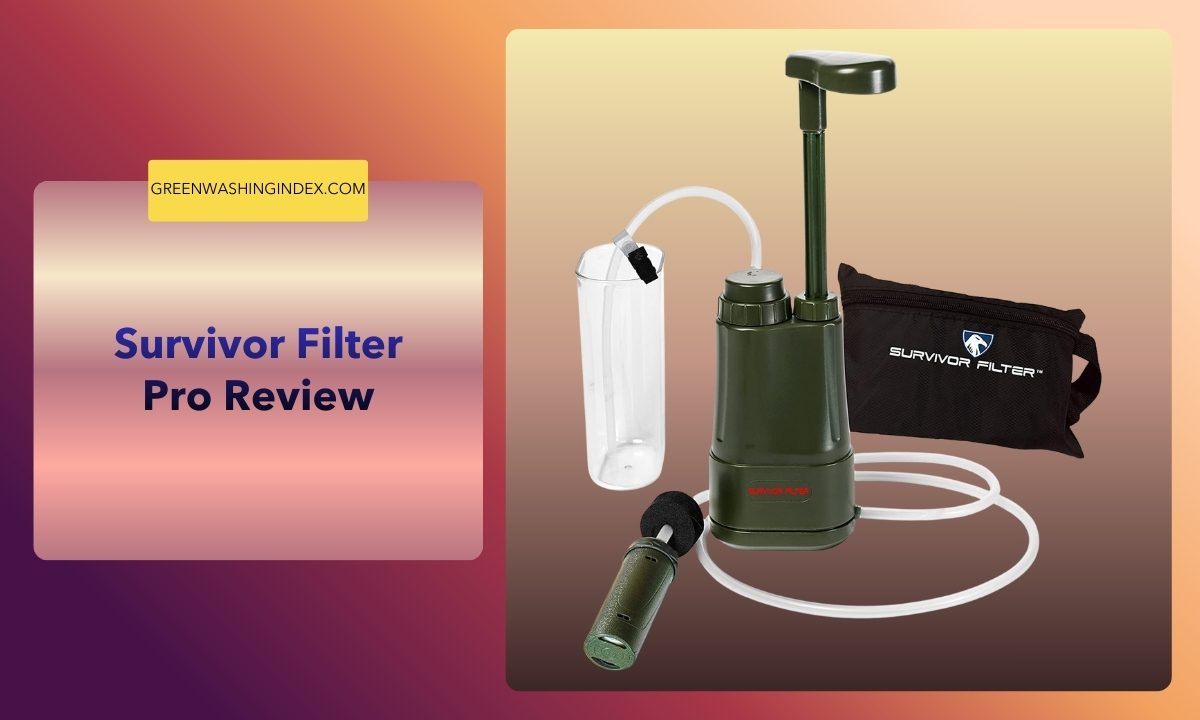
The pump design is straightforward: an intake hose with pre-filter, the main pump body, and an outlet hose for your water bottle. No batteries required, no moving parts beyond the pump handle itself.
I appreciated that everything comes apart for cleaning in the field. After dealing with filters that became paperweights when clogged, this serviceability was a relief.
The BPA-free construction matters to me. I’ve tested too many plastic products that leach chemicals in hot weather, and knowing this filter won’t introduce new contaminants while removing others provides peace of mind.
The Survivor Filter Pro uses a three-stage filtration system that sets it apart from most competitors in this price range.
Three-Stage Filtration: Multi-level filtering system using progressively finer filters to remove different types and sizes of contaminants.
That 0.05-micron rating is impressive when you consider that bacteria measure 0.5-5 microns and protozoa range from 1-20 microns. The filter physically blocks these pathogens.
However, I should note that viruses typically measure 0.005-0.1 microns. While the 0.05-micron membrane will catch some larger viruses, this filter isn’t rated as a true purifier like the MSR Guardian at 0.002 microns.
For most backpackers and campers in North America, this level of filtration is sufficient. The primary waterborne threats here are bacteria and protozoa, which this filter handles effectively.
Technical Note: The hollow fiber membrane technology uses microscopic tubes with pores that allow water to pass while blocking contaminants. This is the same technology used in medical dialysis filters.
Check out our guide on water contaminants to learn more about what filtration systems can remove.
In my testing, the Survivor Filter Pro delivers on its claimed flow rate of up to 500ml per minute.
I measured consistently filtering about 16 ounces per minute with steady pumping. That means a typical liter takes roughly two minutes of moderate effort. Not lightning fast, but competitive with other pump filters I’ve used.
The pumping effort required feels about average for this category. After filtering 5 liters in one session, my forearm felt the burn but wasn’t exhausted. Anyone with average hand strength should manage this filter without issue.
I tested the filter with three water sources:
Backwashing restored flow rate after each session. I found that a 30-second backwash cycle with clean water brought performance back to near-new levels.
The carbon filter definitely improves taste. I filtered water from a stagnant pool that smelled like decaying vegetation, and the result was completely odorless and neutral-tasting.
The learning curve for this filter is minimal.
Setup involves dropping the pre-filter intake into your water source, connecting the tubes, and attaching the outlet to your clean water container. Then you just start pumping.
I found the process works well in shallow water where gravity filters struggle. The intake hose and pre-filter can sit in just a few inches of water, making this filter versatile for various water sources.
Pro Tip: When using in very shallow water, create a small depression in the stream bed to pool water for the intake. This prevents drawing in air which interrupts pumping.
The ergonomic pump handle is comfortable for extended use. I prefer this hand pump design over squeeze-style filters that can tire my hands more quickly.
Cleaning in the field is straightforward. Disconnect the tubes, remove the filter cartridges, and backwash by pumping clean water backward through the system. The entire process takes about 2 minutes once you’ve done it a few times.
For those building out their camping gear essentials, this filter makes a solid addition for trips where water sources are uncertain.
How does the Survivor Filter Pro stack up against the market leaders?
| Filter | Price | Micron Rating | Filter Life | Weight | Flow Rate |
|---|---|---|---|---|---|
| Survivor Filter Pro | $55-60 | 0.05 micron | 100,000 gal | 14.4 oz | 500 ml/min |
| Sawyer Squeeze | $35-50 | 0.1 micron | 100,000 gal | 3 oz | Fast squeeze |
| MSR Guardian | $350-400 | 0.002 micron | 10,000+ gal | 17.3 oz | 2.5 L/min |
| LifeStraw Play | $20-35 | 0.2 micron | 264 gal | 5.5 oz | Sip rate |
| Katadyn Pocket | $250-300 | 0.2 micron | 13,000 gal | 20 oz | 1 L/min |
The Survivor Filter Pro occupies an interesting middle ground. It offers finer filtration than the Sawyer Squeeze and LifeStraw at a lower price point than premium purifiers.
Compared to the Sawyer, you get a carbon filter for taste improvement and finer filtration. The tradeoff is more weight and manual pumping versus the Sawyer’s squeeze simplicity.
Against the MSR Guardian, you sacrifice virus-level purification but save nearly $300. For most North American applications, I’d argue the Survivor Filter Pro provides 90% of the functionality at 15% of the cost.
See our best backpacking water filters guide for a more comprehensive comparison.

Filtration: 3-Stage 0.05 micron
Flow Rate: 500 ml/min
Capacity: 100000 gallons
Weight: 14.4 ounces
Power: Manual hand pump
The Survivor Filter Pro demonstrates solid construction for its price point.
The military-grade ABS plastic housing has survived multiple drops onto rocks during my testing. While I wouldn’t call it indestructible, it’s certainly rugged enough for normal backpacking use.
All connection points use O-ring seals that prevent leaks during pumping. I haven’t experienced any leakage issues, even when the filter has been jostled around in my pack.
The included hoses are durable but not exceptional. After a season of use, I noticed some wear on the hose ends where they connect to the filter body. Replacement hoses are available and reasonably priced.
One design element I appreciate is the clear filter housing. Being able to see the pre-filter’s condition helps me know when cleaning is needed before flow rate drops significantly.
The 100,000-gallon rated lifespan for the ultrafiltration membrane is exceptional.
At that capacity, you could filter 5 gallons per week for over 38 years before the main filter needs replacement. In practical terms, this filter will likely outlast its owner under normal use.
The carbon filter is the limiting factor, rated for approximately 528 gallons (2,000 liters). Replacement carbon filters cost around $15-20, making ongoing maintenance very affordable.
I’ve calculated the cost per gallon filtered at approximately $0.06 when including one carbon filter replacement. That’s significantly cheaper than bottled water and competitive with other filter systems.
Time Saver: Keep a spare carbon filter in your repair kit. At 528 gallons, you’ll want to replace it annually if you filter regularly, and having a spare on hand extends your trip capability.
The pre-filter is cleanable and technically doesn’t need replacement unless damaged. I’ve backwashed mine dozens of times without any degradation in performance.
The Survivor Filter Pro excels in specific scenarios:
This filter is ideal for backpackers, campers, and preppers who want comprehensive filtration without paying premium prices.
If you primarily filter clear mountain water, the Survivor Filter Pro offers excellent value. The three-stage system provides confidence that your water is safe, and the carbon filter actually makes it taste good.
International travelers heading to areas with questionable water quality will appreciate the compact size and thorough filtration. It’s one of the few budget options that includes a carbon filter for chemical removal.
Looking for gifts for backpackers? This filter makes an excellent present for the outdoor enthusiast in your life.
If you need true virus-level purification for travel in developing countries, consider upgrading to a purifier like the MSR Guardian.
Ultralight backpackers counting every ounce might prefer the Sawyer Squeeze at just 3 ounces, though you’ll sacrifice the carbon filter and finer filtration.
Those who want hands-free filtration should look at gravity systems like the Platypus GravityWorks, which process larger quantities without constant pumping.
Proper maintenance extends the life of your filter significantly.
Important: Never let your filter freeze with water inside. Ice crystals can puncture the hollow fiber membranes, rendering the filter ineffective. If freezing is possible, drain all water and store the filter somewhere warm.
Replacement parts are readily available from the manufacturer and third-party sellers. The company has been in business since 2013, so filter availability shouldn’t be a concern.
Yes, at approximately $55-60, the Survivor Filter Pro offers excellent value with its 0.05-micron three-stage filtration and 100,000-gallon capacity. Few filters in this price range include both ultrafiltration and carbon filtration.
The 0.05-micron rating removes some larger viruses, but it is not rated as a complete purifier for all viruses. For true virus-level protection, look for filters rated at 0.002 microns or smaller.
The ultrafiltration membrane and pre-filter last up to 100,000 gallons with proper cleaning and backwashing. The carbon filter needs replacement every 528 gallons or 2,000 liters.
The Survivor Filter Pro filters up to 500ml per minute with steady pumping. This equals about 17 ounces per minute or approximately 2 minutes to filter a liter.
The Survivor Filter Pro offers finer filtration (0.05 vs 0.1 micron) and includes a carbon filter for taste improvement. The Sawyer is lighter and simpler but lacks chemical removal and has larger pores.
After extensive testing with the Survivor Filter Pro, I can confidently recommend it as a top choice for budget-conscious outdoor enthusiasts who don’t want to compromise on filtration capability.
The combination of 0.05-micron ultrafiltration, carbon taste improvement, and 100,000-gallon capacity is unmatched at this price point. While it requires manual pumping and doesn’t offer true virus purification, for most North American backpacking and camping applications, it provides everything you need.
This filter fills an important gap between basic straw filters and expensive purifiers. If you want comprehensive filtration without spending over $300, the Survivor Filter Pro deserves serious consideration.