

Searching for reliable ways to eliminate “forever chemicals” from your tap water? With growing awareness about per- and polyfluoroalkyl substances (PFAS) contamination across American water supplies, finding an effective PFAS water filter has become a priority for health-conscious households. Recent EPA data reveals these persistent chemicals now affect over 46 million Americans through their drinking water systems.
I have researched and compared dozens of filtration systems to identify options that actually deliver on their PFAS removal claims. This guide breaks down eight proven PFAS water filter brands, explaining how they work, what certifications matter, and which system fits your specific needs and budget. Whether you need a simple pitcher for your apartment or a comprehensive under-sink solution for your family, you will find actionable recommendations here.
Per- and polyfluoroalkyl substances represent one of the most pressing water quality challenges facing consumers today. These synthetic compounds, developed for their resistance to heat, water, and oil, have infiltrated drinking water supplies through decades of industrial use and consumer product manufacturing.
Duke University researchers, in collaboration with North Carolina State University, published landmark studies documenting PFAS prevalence in water systems nationwide. Their findings sparked increased regulatory scrutiny and consumer awareness about these persistent contaminants.
Current EPA assessments indicate toxic “forever chemicals” now appear in over one-quarter of public drinking water systems, serving approximately 46 million people. Environmental Working Group mapping identifies 3,186 contaminated locations across all 50 states, with particular concentrations near industrial sites, military installations, and airports where firefighting foams were used.
PFAS water filters specifically target perfluoroalkyl substances including PFOA and PFOS, the most studied and regulated variants. Quality filtration systems capture these molecules while also addressing complementary contaminants like lead, arsenic, fluoride, chlorine compounds, and nitrates.
Beyond contaminant removal, effective PFAS filtration improves taste and odor profiles by eliminating the chemical compounds responsible for unpleasant flavors and smells in tap water.
Evaluating PFAS water filters requires rigorous standards beyond typical product reviews. Our selection process prioritizes independently verified performance claims over marketing language.
We only recommend filters carrying NSF/ANSI Standard 53 certification specifically for PFOA and PFOS reduction, or NSF/ANSI Standard 58 for reverse osmosis systems. These certifications require third-party laboratory testing proving consistent contaminant reduction to EPA-compliant levels.
Additional certifications from IAPMO R&T, WQA Gold Seal program, and California Department of Public Health provide supplementary validation. We cross-referenced manufacturer claims against NSF and IAPMO certification databases to eliminate products with expired or non-existent certifications.
Each selected filter demonstrates documented PFAS reduction rates of 95% or higher in independent testing. We prioritized systems achieving 99%+ removal for PFOA and PFOS specifically, as these remain the primary regulated compounds with established health advisory levels.
Filter capacity, flow rates, and maintenance requirements factored into our evaluations. A filter removing 99% of PFAS but requiring monthly cartridge changes presents different value than a system achieving similar results with annual maintenance.
We analyzed consumer feedback from verified purchasers, focusing on long-term performance reports and filter replacement experiences. Products with consistent complaints about declining performance before stated filter lifespans were excluded from recommendations.
Installation complexity and customer support quality also influenced selections. The best PFAS filter performs poorly if users cannot install it correctly or obtain replacement cartridges when needed.
A PFAS water filter represents specialized filtration equipment engineered to capture and remove per- and polyfluoroalkyl substances from drinking water. These systems target the carbon-fluorine bonds that make PFAS compounds resistant to natural degradation, breaking down or trapping these “forever chemicals” before they reach your glass.
The primary PFAS variants of concern include perfluorooctanoic acid (PFOA) and perfluorooctane sulfonate (PFOS), both linked to adverse health outcomes through extensive epidemiological research. Manufacturers have phased out these specific compounds, but they persist in water supplies and the environment indefinitely.
Health effects associated with PFAS exposure encompass thyroid disease, immune system suppression, elevated cholesterol levels, and increased cancer risk. These substances accumulate in human tissue over time, meaning even low-dose exposure can build to concerning levels.
PFAS water filters integrate into various system configurations including reverse osmosis units, whole-house filtration networks, and point-of-use devices like pitcher filters and faucet attachments. The appropriate format depends on your water source, contamination levels, household size, and budget constraints.
PFAS contamination enters drinking water through multiple pathways, reflecting decades of widespread industrial and commercial use. Environmental engineers from the U.S. Geological Survey consistently identify PFAS in water samples, particularly near military installations using aqueous film-forming foams (AFFF) for firefighting training.
Industrial discharge represents a major contamination source. Manufacturing facilities producing PFAS-containing materials release these compounds into wastewater streams, eventually reaching groundwater and surface water supplies. The chemical stability that makes PFAS useful also prevents natural breakdown in the environment.
Landfill leachate contributes significantly to groundwater contamination. Consumer products containing PFAS, including food packaging, stain-resistant fabrics, and nonstick cookware, eventually reach landfills where rainfall carries dissolved chemicals into surrounding soil and aquifers.
Firefighting foam applications at airports, military bases, and training facilities create concentrated contamination zones. These sites often show PFAS levels thousands of times higher than EPA advisory limits, affecting nearby municipal wells and private water sources.
Biosolids from wastewater treatment plants, when applied as fertilizer, introduce PFAS into agricultural soils. These chemicals can then migrate into groundwater or be taken up by crops, creating additional exposure pathways beyond direct water consumption.
Addressing PFAS requires point-of-use filtration when municipal treatment proves insufficient. Whole-house water filtration systems provide comprehensive protection, while targeted under-sink or pitcher filters address drinking and cooking water specifically.
This comparison table summarizes key specifications across all eight recommended PFAS water filters. Use this overview to identify which systems match your budget, capacity needs, and installation preferences before reading detailed reviews below.
| Product | Type | Best For | Filter Life | Certifications | Cost Per Gallon |
|---|---|---|---|---|---|
| AquaTru Under Sink | RO System | Large Families | 6 months – 2 years | NSF/ANSI 58 | ~$0.15 |
| Clearly Filtered 3-Stage | Under Sink | High Contaminant Removal | 2,000 gallons | Third-party tested | ~$0.28 |
| ZeroWater Pitcher | Pitcher | Budget-Conscious | 25-40 gallons | NSF/ANSI 53 | ~$0.50 |
| Epic Pure Pitcher | Pitcher | Long Filter Life | 150 gallons | Tested to NSF standards | ~$0.47 |
| Kinetico K5 Station | RO System | Whole-House Protection | 9 months – 1 year | WQA/NSF 58 | ~$0.12 |
| Culligan Smart RO | RO System | Smart Monitoring | 1-2 years | Third-party NSF | ~$0.18 |
| Hydroviv Under Sink | Under Sink | Custom Filtration | 6 months | NSF Certified | ~$0.33 |
| APEC WFS-1000 | 3-Stage | Well Water | 12+ months | NSF/FDA | ~$0.08 |
Best For: Large families needing high-volume filtered water daily
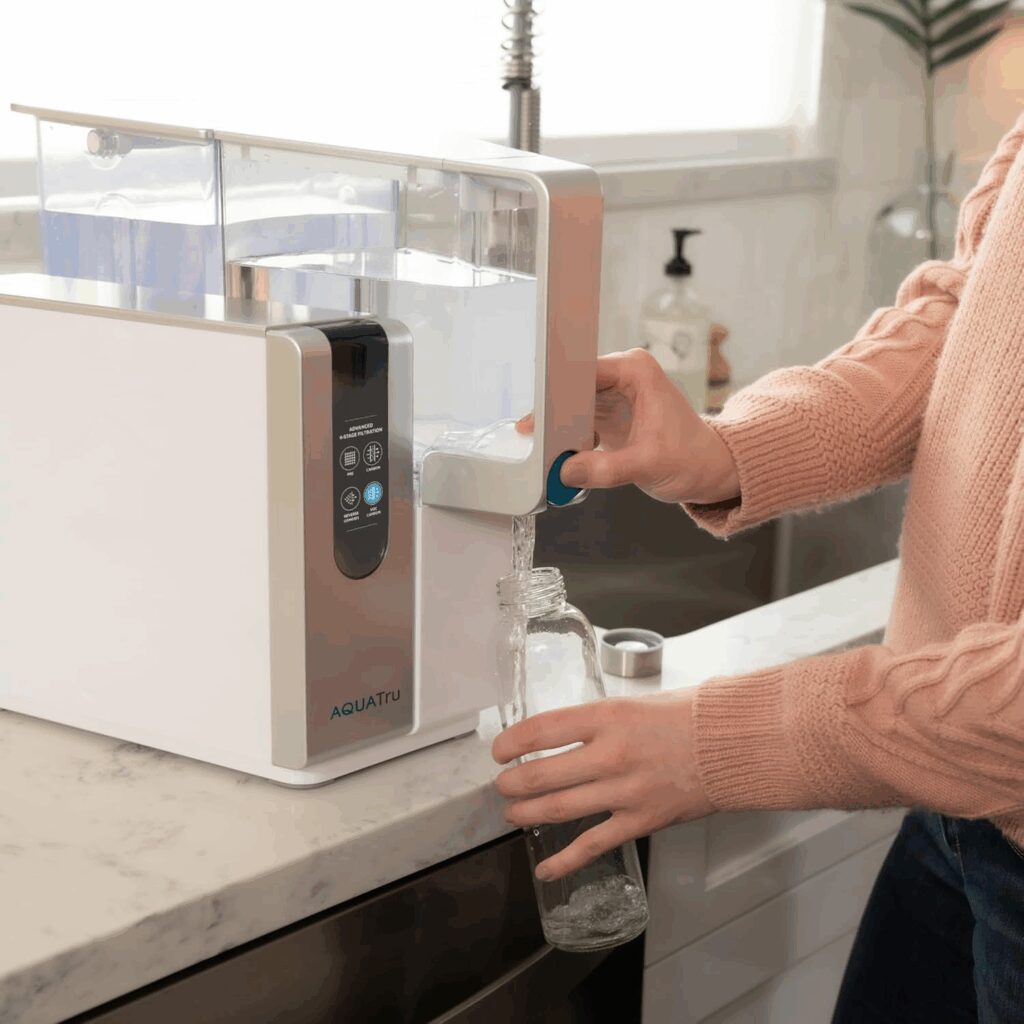
The AquaTru reverse osmosis system delivers countertop convenience with under-sink performance. Its 4-stage filtration process removes up to 99.9% of dissolved solids including PFOA and PFOS, verified through independent laboratory testing against NSF/ANSI standards.
This unit connects directly to plumbing for continuous filtered water delivery through a dedicated faucet. The high-capacity design accommodates busy households requiring substantial daily water volumes for drinking, cooking, and filling reusable bottles.
The activated coconut block carbon filter combines with reverse osmosis membrane technology to address lead, arsenic, fluoride, chlorine compounds, nitrates, and PFAS chemicals simultaneously. Filter cartridges range from six months to two years depending on usage and incoming water quality.
Cost Per Gallon Analysis: With filter replacements averaging $175 annually and a 1,200-gallon yearly capacity, expect approximately $0.15 per gallon over the system lifespan. This positions AquaTru as a mid-range option for cost-conscious buyers prioritizing performance.
Price: $349 – $369
Removes: Lead, arsenic, PFOA/PFOS, fluoride, chlorine, nitrates, and 80+ additional contaminants
Notable Features: 1-year limited warranty | Verified to NSF standards | 4-stage reverse osmosis technology | Activated coconut block carbon filter | Filters last from 6 months – 2 years | Requires installation
Location/Shipping: United States, ships to Canada, American Samoa, Guam, Northern Mariana Islands, Puerto Rico, Virgin Islands
Best For: Maximum contaminant removal in a compact under-sink format
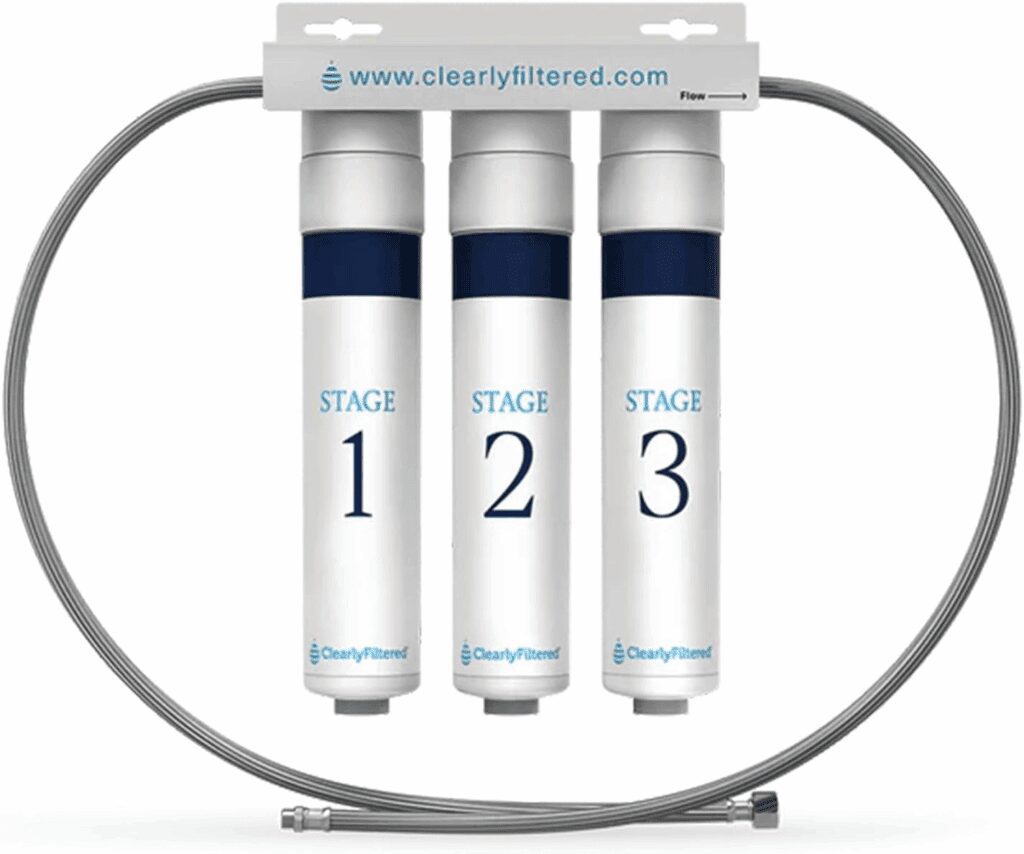
Clearly Filtered’s under-sink system occupies minimal cabinet space while delivering exceptional contaminant reduction. Independent testing confirms 99.9% removal across 232+ contaminants including chlorine, fluoride, lead, and PFAS compounds.
The proprietary Affinity Filtration Technology utilizes multiple media layers including coconut carbon pre-filtration to capture organic and inorganic pollutants. Medical-grade materials free from BPA and BPS ensure no secondary chemical leaching occurs during filtration.
With a 2,000-gallon filter capacity, average households replace cartridges annually rather than monthly. This extended lifespan reduces both maintenance burden and long-term operational costs compared to pitcher alternatives requiring more frequent changes.
Cost Per Gallon Analysis: Annual filter costs of approximately $550 divided by 2,000 gallons yields roughly $0.28 per gallon. While higher per-gallon than RO systems, the superior contaminant removal justifies the investment for households with significant water quality concerns.
Price: $550
Removes: Chlorine, fluoride, lead, PFAS, and 228 additional contaminants
Notable Features: Limited lifetime warranty | Third-party tested | Affinity Filtration Technology | Coconut carbon pre-filter | Filters last 1-year on average | 100% DIY installation
Location/Shipping: United States, ships worldwide
Best For: Budget-conscious consumers needing immediate PFAS reduction
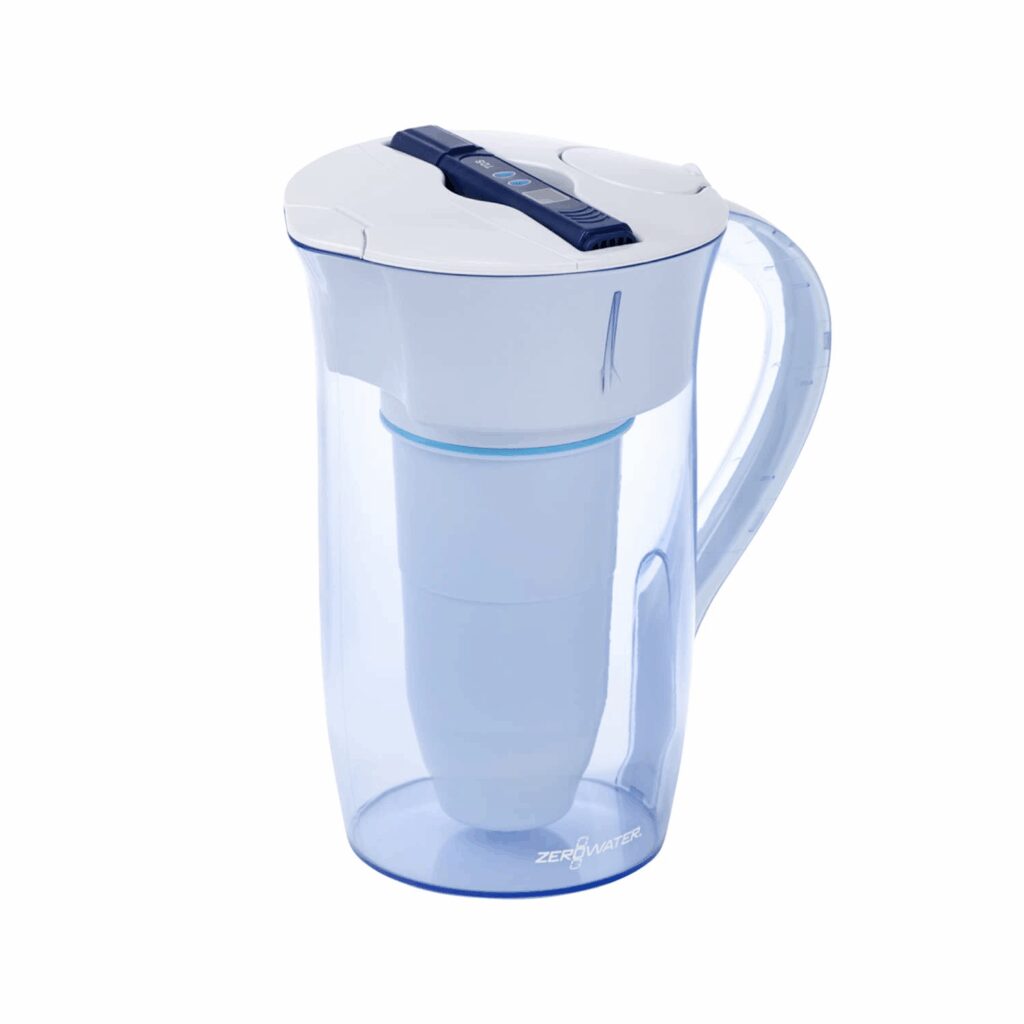
ZeroWater’s pitcher delivers impressive filtration performance at an accessible price point. The 5-stage ion exchange system removes 99.6% of total dissolved solids, including PFOA and PFOS, through NSF/ANSI 53 certified filtration media.
Ready-Pour technology allows dispensing during filtration, eliminating wait times when you need water immediately. The compact 7-cup capacity fits standard refrigerator shelves while reducing plastic bottle consumption by up to 660 bottles annually.
Each purchase includes a TDS meter for monitoring dissolved solids levels before and after filtration. This transparency tool helps users identify exactly when filter replacement becomes necessary rather than relying on calendar estimates.
Cost Per Gallon Analysis: Filter replacements cost approximately $15 each and process 25-40 gallons. This yields $0.38-$0.60 per gallon depending on water quality. While higher per-gallon than installed systems, the low entry price makes this ideal for testing PFAS filtration before major investment.
Price: From $24.99+
Removes: Reduces lead, PFOA/PFOS, pesticides, mercury, minerals, salts, ions
Notable Features: 90-day warranty | NSF Certified | Ready-Pour technology | BPA free | 5-stage ion exchange | Includes pitcher | Free TDS meter | Zerowater 5-stage filter | Easy installation
Location/Shipping: Canada, ships to the United States
Best For: Eco-conscious users wanting recyclable filter components
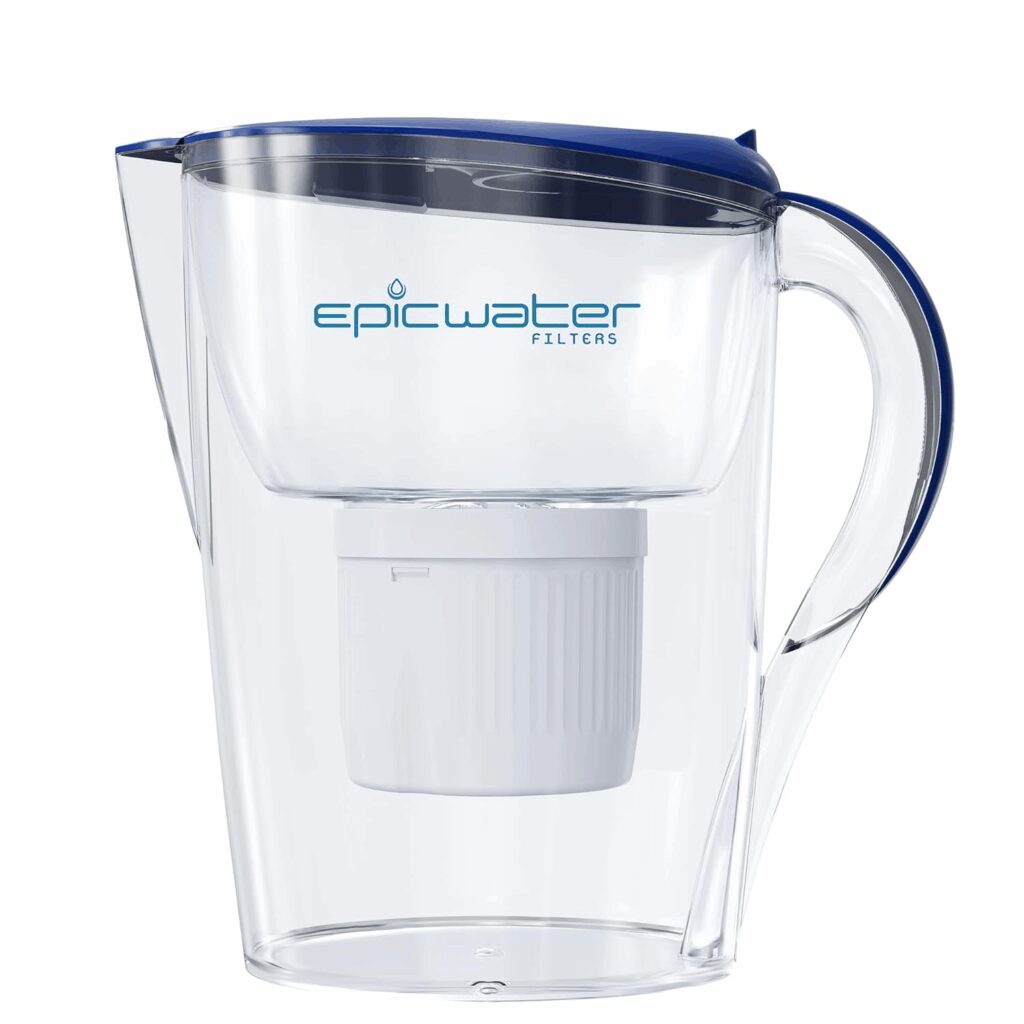
Epic Water’s Pure Pitcher combines sub-micron filtration with sustainable design principles. Each filter produces 150 gallons of clean water while remaining fully replaceable and recyclable, eliminating plastic waste associated with disposable cartridges.
The gravity-fed system removes heavy metals, trace pharmaceuticals, microplastics, and PFAS compounds without electricity or plumbing modifications. The integrated LED timer counts down 90 days, ensuring timely filter replacements without guesswork.
Flip-top lid design enables single-handed refilling while preventing unfiltered water from mixing with filtered water during pouring. This contamination barrier ensures every glass meets the same purity standards.
Cost Per Gallon Analysis: At $70 per filter with 150-gallon capacity, the Epic Pure delivers filtered water at approximately $0.47 per gallon. The environmental benefits of recyclable components add value beyond pure cost calculations.
Price: $70
Removes: Atrazine, chlorine, chromium, forever chemicals, glyphosate, lead, microplastics, PFAS, Trihalomethanes
Notable Features: Lifetime warranty | Tested against NSF/ANSI standards | Sub-micron filtration | 3-4 per year recommended filter replacement | BPA/BPS free
Location/Shipping: United States
Best For: Whole-house protection with customizable filtration stages
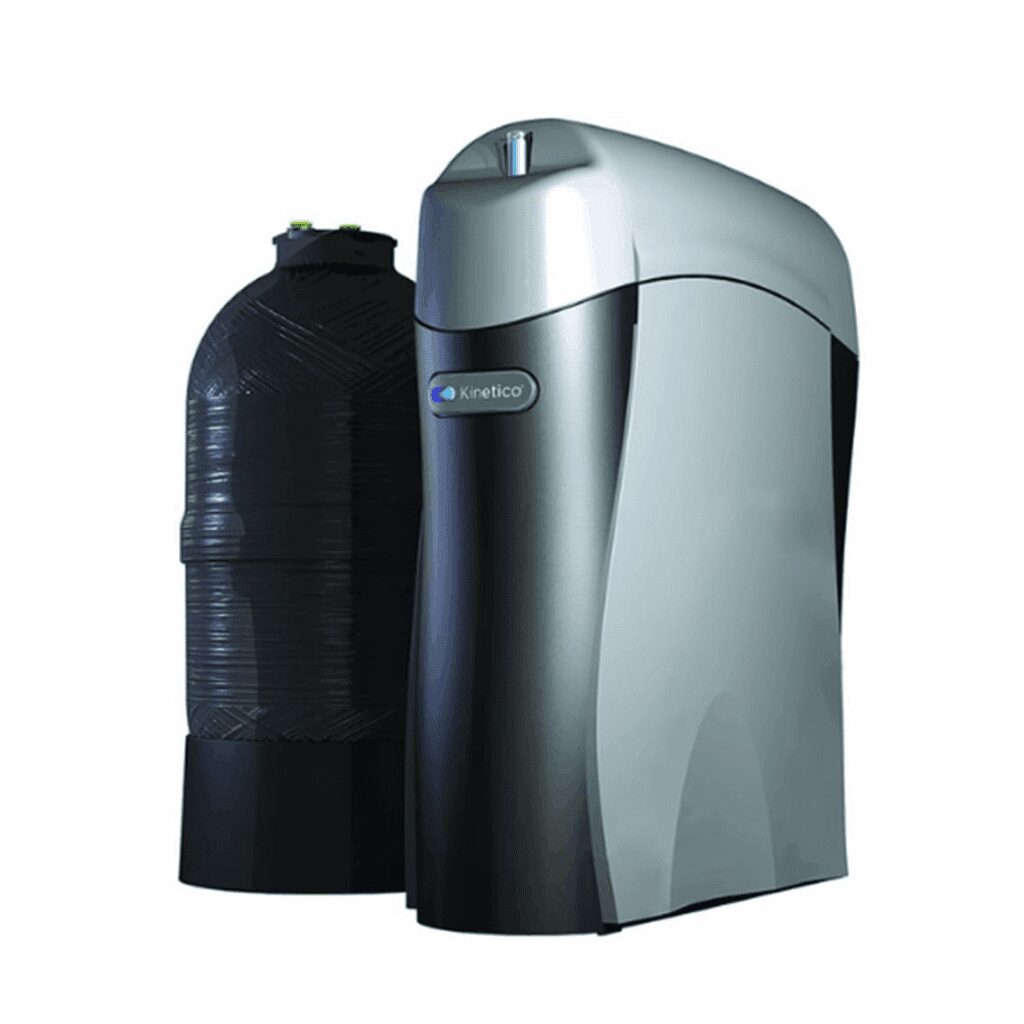
Kinetico’s K5 station represents premium whole-house PFAS protection with modular filtration options. The multi-stage system adapts to specific water quality challenges through interchangeable cartridge selections addressing your local contamination profile.
QuickFlo technology maintains consistent water pressure without the rationing common to lesser RO systems. EverClean Rinse automatically cleans the reverse osmosis membrane, extending operational lifespan and maintaining peak PFAS removal efficiency.
MACguard Filter and PureMometer indicators provide visual alerts when cartridges require replacement. These safeguards prevent users from unknowingly consuming inadequately filtered water past filter capacity.
Cost Per Gallon Analysis: With annual filter costs approximately $250 and 2,000+ gallon capacity, per-gallon costs run roughly $0.12. This positions the K5 as a cost-effective long-term solution despite higher initial investment.
Price: Contact dealer for quote
Removes: PFOS/PFOA and customizable for additional contaminants
Notable Features: Warranty included | Certified by WQA to NSF/ANSI Standard 58 | QuickFlo Technology | Reverse osmosis system | Various filtration cartridge options | Carbon & sediment prefilter | Filters last from 9 months – 1 year on average (depending on usage)
Location/Shipping: USA, ships worldwide
Best For: Tech-savvy households wanting smart monitoring capabilities
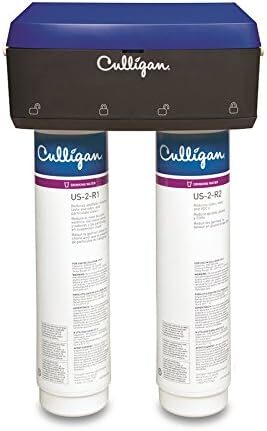
Culligan’s Aquasential Smart RO integrates connectivity features with proven reverse osmosis technology. The system monitors water consumption and filter status remotely through smartphone integration, ensuring optimal performance without manual checking.
Seven configurable filtration stages combine with twelve available filter options to address specific regional contamination patterns. Third-party testing to NSF/ANSI standards verifies 58-contaminant reduction including viruses, bacteria, nitrates, mercury, arsenic V, lead, and PFOA/PFOS.
The intelligent design optimizes water efficiency compared to traditional RO systems, reducing wastewater production while maintaining thorough PFAS removal. Sediment and carbon combination prefilters protect downstream components from premature fouling.
Cost Per Gallon Analysis: Annual filter expenses averaging $320 with 1,800-gallon capacity produce approximately $0.18 per gallon. The smart monitoring prevents premature filter changes, optimizing long-term costs.
Price: Contact dealer for current or rental pricing
Removes: PFOA/PFOS, viruses, bacteria, nitrates, mercury, arsenic V, lead
Notable Features: Warranty included | 3rd party testing to NSF/ANSI standards | Sediment & carbon filtration | Carbon combination prefilter | Filter cartridge change 1-2 years (depends on stage)
Location/Shipping: United States (Find the nearest store via your zip code!)
Best For: Households with location-specific water contamination concerns
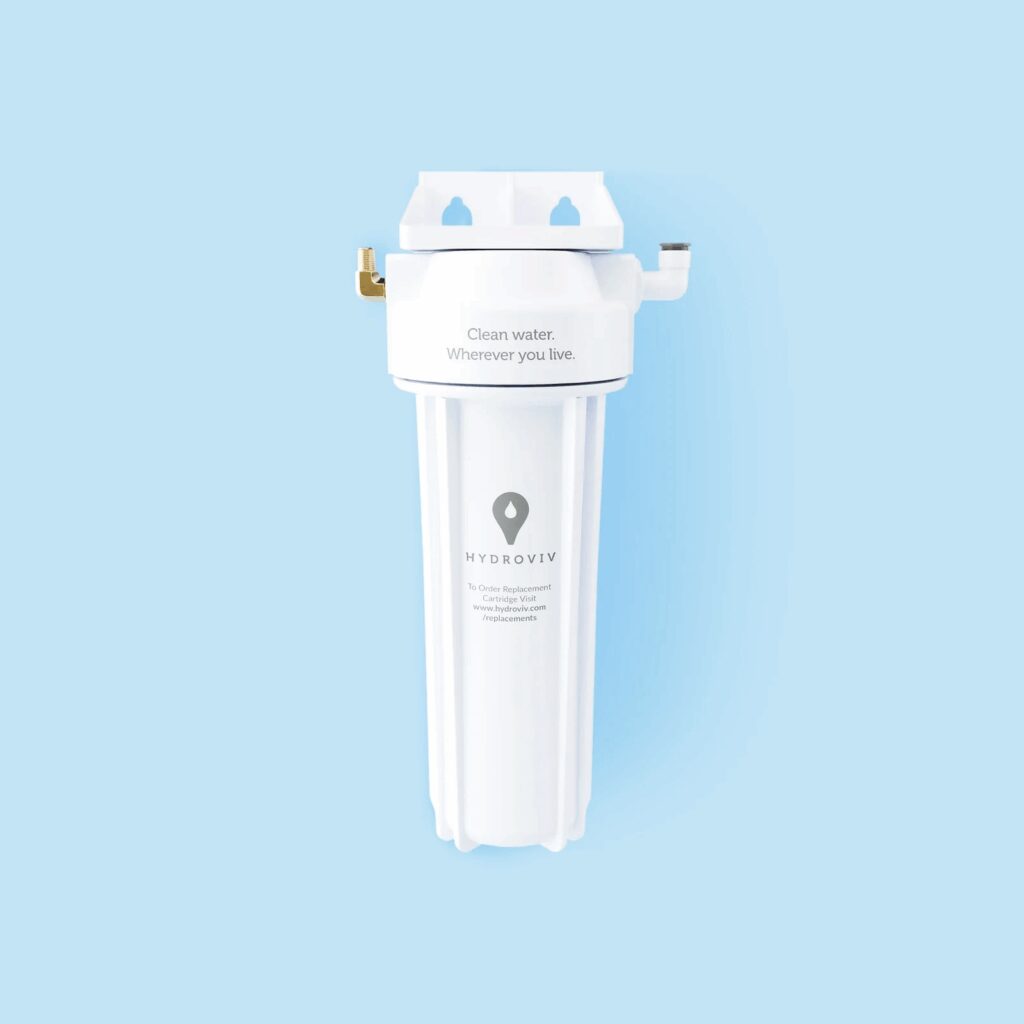
Hydroviv takes a fundamentally different approach to PFAS filtration by customizing each unit based on local water quality data. Rather than one-size-fits-all filtration, Hydroviv analyzes municipal water reports and EPA data for your specific zip code, then builds a filter targeting the exact contaminants present in your supply.
This customization matters because PFAS contamination varies dramatically by region. Military installations, industrial facilities, and firefighting training sites create localized hotspots with different PFAS profiles. Hydroviv’s tailored approach ensures optimal media selection for your particular water chemistry.
The under-sink installation connects to standard 3/8-inch faucet connections with DIY-friendly 15-minute setup. NSF-certified components provide independent verification of materials safety and structural integrity.
Cost Per Gallon Analysis: Replacement cartridges cost approximately $200 annually with 600-gallon capacity, yielding $0.33 per gallon. The customized filtration justifies the premium for households facing specific contamination profiles.
Price: $399.99
Removes: PFAS, lead, arsenic, chromium 6, chloramine (customized to local data)
Notable Features: NSF Certified | 15 min DIY installation | Filter connects to your faucet’s standard 3/8″ connections
Location/Shipping: United States
Best For: Well water users and households seeking simple, reliable filtration
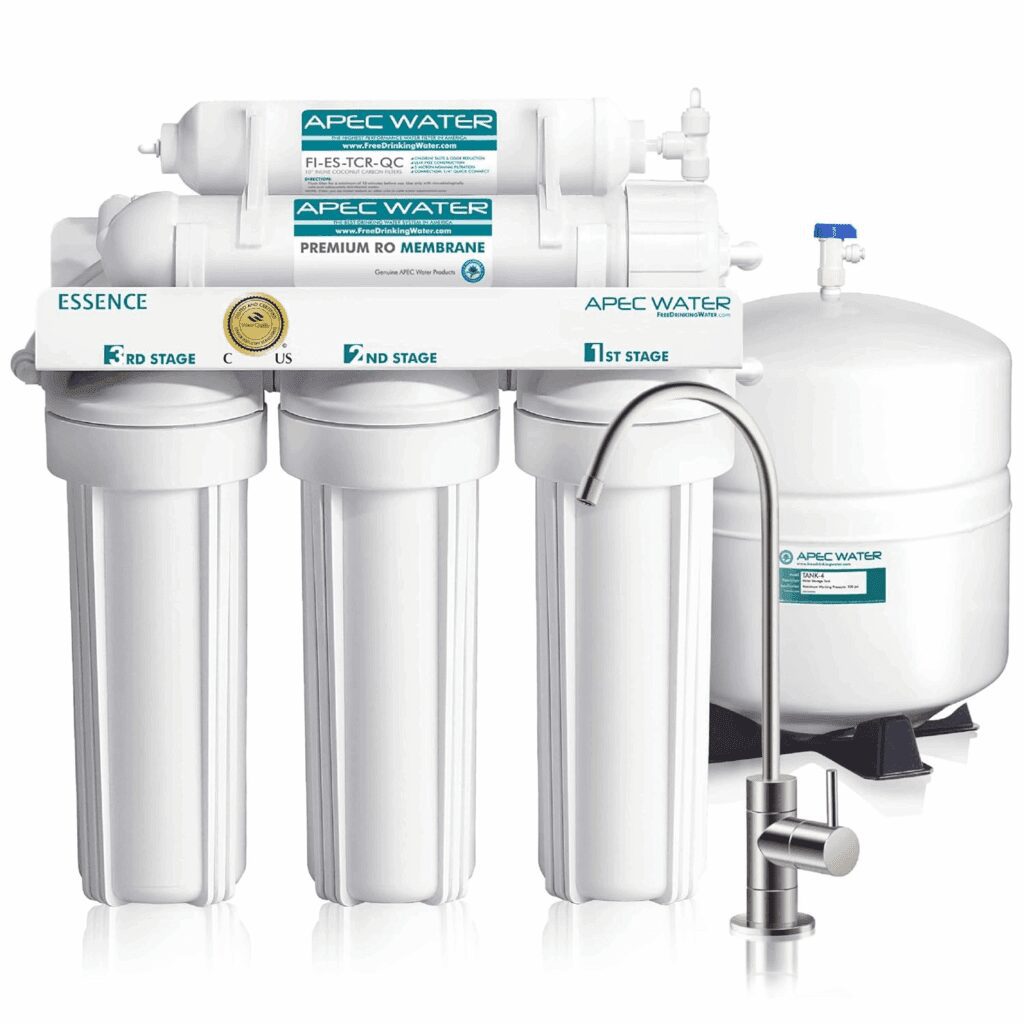
APEC’s WFS-1000 delivers premium filtration without complexity. The NSF-certified system removes chemicals, off-tastes, and odors through three sequential stages, making it equally effective for municipal tap water and private well sources.
The first stage employs high-capacity polypropylene sediment filtration capturing dust, particulates, and rust. These larger particles often clog finer downstream filters prematurely; removing them first extends overall system lifespan significantly.
Stages two and three utilize premium extruded carbon blocks eliminating chlorine, chemical tastes, odors, cloudiness, colors, and volatile organic compounds. The 100% lead-free faucet and NSF/FDA-certified JG food-grade tubing ensure no post-filtration contamination occurs.
Cost Per Gallon Analysis: With replacement filters costing approximately $120 annually and 1,500-gallon capacity, this system delivers the lowest per-gallon cost at roughly $0.08. This exceptional value makes it ideal for budget-conscious households prioritizing basic PFAS reduction.
Price: $144.95
Removes: Dust, particles, chlorine, tastes, odors, cloudiness & colors, VOCs
Notable Features: 1-year satisfaction guarantee | NSF & FDA Certified | Super capacity sediment filter | Premium extruded carbon block 10″ | Filters lasts over 12 months | Installation video on the website
Location/Shipping: United States, ships worldwide
Understanding long-term operational costs helps prevent surprise expenses after your initial purchase. Filter replacement schedules, cartridge pricing, and system capacity determine your true cost per gallon over time.
To determine accurate cost per gallon, divide annual filter replacement expenses by the total gallons filtered per year. For example, a system requiring $200 in annual filter changes with 1,000-gallon capacity costs $0.20 per gallon.
Consider your household’s actual water consumption when projecting costs. A family of four drinking the recommended eight glasses daily consumes approximately 1 gallon per day just for drinking. Adding cooking water doubles this to 2 gallons daily or 730 gallons annually.
Under $0.15 per gallon: APEC WFS-1000 ($0.08) and Kinetico K5 ($0.12) lead this category. These systems require higher upfront investment but deliver exceptional long-term value for high-volume users.
$0.15 – $0.25 per gallon: AquaTru ($0.15) and Culligan Smart RO ($0.18) occupy the mid-range. These balance performance with reasonable ongoing costs, suitable for most households.
$0.25+ per gallon: Clearly Filtered ($0.28), Hydroviv ($0.33), Epic Pure ($0.47), and ZeroWater ($0.50+) fall here. While higher per-gallon, these often suit lower-volume users or specific needs justifying premium costs.
First-year expenses include initial purchase plus replacement filters needed within twelve months. For accurate budgeting:
Certified reverse osmosis systems typically remove 95-99.9% of PFOA and PFOS. High-quality activated carbon filters certified to NSF/ANSI Standard 53 achieve 90-98% reduction depending on contact time and specific PFAS compounds. ZeroWater’s ion exchange system removes 99.6% of total dissolved solids including PFAS. For comprehensive protection, look for systems certified to NSF P473 specifically testing for PFAS reduction rather than general contaminant claims.
Standard Brita pitchers using basic activated carbon do NOT effectively remove PFAS. Independent testing shows Brita Elite filters achieve only 22% PFAS reduction, insufficient for health protection. Brita does not claim PFAS removal for most products and lacks NSF/ANSI 53 certification for PFOA/PFOS specifically. For verified PFAS reduction, choose systems explicitly certified to NSF/ANSI 53 or 58 standards with documented PFAS testing results.
PFAS exposure correlates with liver damage and altered liver function affecting detoxification capacity. Immunotoxicity reduces immune system effectiveness against diseases and infections. Thyroid disruption from PFOA and PFOS alters hormone levels and metabolism. Cardiovascular effects include elevated cholesterol and potential heart disease risk. Developmental impacts affect fetal growth during pregnancy. Reproductive health concerns include reduced fertility. Ongoing research examines potential neurological effects on cognitive function.
Reverse osmosis systems offer the highest PFAS removal rates (95-99.9%) through semi-permeable membranes. Whole-house systems with activated carbon or reverse osmosis provide comprehensive home protection. Point-of-use pitchers using ion exchange or certified carbon filters suit apartments and renters. For maximum effectiveness, prioritize NSF/ANSI 53 certification for PFOA/PFOS specifically, not just general contaminant claims.
Activated carbon filters can remove PFAS effectively when properly designed and certified. Granular activated carbon (GAC) and carbon block filters certified to NSF/ANSI Standard 53 achieve 90-98% PFAS reduction depending on contact time, carbon quality, and specific PFAS compounds. Longer contact times improve removal efficiency, which is why pitcher filters often underperform compared to under-sink systems. Look for carbon filters explicitly tested and certified for PFOA/PFOS reduction rather than general NSF 53 certification covering other contaminants only.
Replacement intervals vary by filter type and usage. Pitcher filters typically require replacement every 1-2 months or 25-40 gallons. Under-sink activated carbon filters last 6-12 months or 500-2,000 gallons. Reverse osmosis pre-filters need replacement every 6-12 months, while RO membranes last 2-3 years. Whole-house systems vary from 3-6 months for sediment filters to 1-2 years for carbon blocks. Always follow manufacturer guidelines and monitor for taste or flow rate changes indicating filter exhaustion.
NSF/ANSI Standard 53 certifies reduction of PFOA and PFOS specifically. NSF/ANSI Standard 58 applies to reverse osmosis systems removing a broad contaminant spectrum. NSF P473 specifically tests and certifies PFAS reduction claims. WQA Gold Seal indicates rigorous testing to industry standards. IAPMO R&T certification provides additional third-party verification. California Department of Public Health certification ensures compliance with stringent state requirements. Always verify active certification status through NSF or manufacturer databases rather than trusting packaging claims alone.
PFOA (perfluorooctanoic acid) and PFOS (perfluorooctane sulfonate) are the most studied and regulated PFAS compounds, used historically in nonstick coatings and firefighting foams. Manufacturers phased out PFOA and PFOS production in the United States, but they persist indefinitely in the environment. GenX (HFPO-DA) emerged as a replacement compound but shares similar persistence and potential health concerns. Current EPA health advisories address PFOA and PFOS specifically, with emerging research on GenX and newer PFAS variants. Effective water filters should address the entire PFAS family rather than just legacy compounds.
Maintaining your PFAS water filter requires understanding when cartridges need replacement. Using exhausted filters not only fails to remove contaminants but can potentially release accumulated pollutants back into your water.
Reduced water flow often indicates clogged filter media reaching capacity. Unpleasant tastes or odors returning to filtered water suggest activated carbon exhaustion. Visible particles passing through signal sediment filter failure. LED indicators on smart systems provide electronic alerts when programmed thresholds approach.
For pitchers without electronic monitoring, calendar-based replacement provides the safest approach. Mark replacement dates on your calendar or set phone reminders based on manufacturer guidelines adjusted for your actual usage volume.
Budget for filter replacements by setting aside monthly amounts covering anticipated annual costs. For example, a system requiring $240 yearly in filters needs $20 monthly budget allocation. This prevents surprise expenses when multiple filters require simultaneous replacement.
Consider subscription programs offered by manufacturers like Epic Water and Clearly Filtered. These programs typically provide 10-15% discounts while ensuring you never miss replacement intervals due to forgotten orders.
Protecting your household from PFAS contamination requires informed selection of certified water filtration systems. The eight brands reviewed here represent proven options spanning various price points, installation requirements, and performance levels.
For maximum PFAS removal, reverse osmosis systems like AquaTru, Kinetico K5, and Culligan Smart RO deliver 95-99.9% PFOA/PFOS reduction through membrane technology. Budget-conscious consumers find effective protection in ZeroWater and Epic Pure pitchers, though with higher per-gallon costs and more frequent maintenance.
Remember that certification matters more than marketing claims. NSF/ANSI 53 certification specifically for PFOA and PFOS, or NSF/ANSI 58 for RO systems, provides independent verification of actual performance. Verify active certification status through NSF databases before purchasing any system claiming PFAS removal.
Calculate total first-year costs including initial purchase and filter replacements when budgeting. A $300 system requiring $200 annually in filters costs more over three years than a $500 system needing $100 yearly maintenance. Consider your household’s water consumption volume and contamination concerns when selecting the appropriate balance of upfront investment and ongoing operational costs.
PFAS water filtration represents an investment in long-term health protection. With proper system selection and maintenance schedule adherence, you can significantly reduce exposure to these persistent “forever chemicals” in your daily drinking water.
If you enjoyed this article on PFAS water filters, check out these other articles below!
