
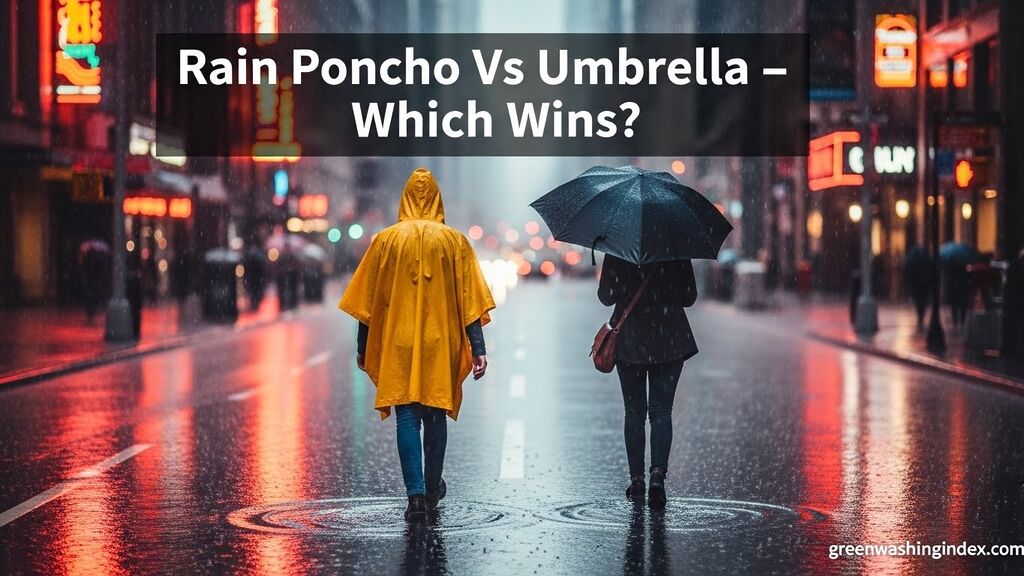
Rain falls sideways on a windy city street. You reach into your bag, making a split-second choice that determines whether you arrive dry, comfortable, and environmentally conscious or soaked, frustrated, and contributing to the 2 billion disposable ponchos filling landfills annually.
A rain poncho offers full-body protection and hands-free mobility, while an umbrella provides targeted head coverage and easier portability for urban environments. Ponchos excel in wind and protect your gear, while umbrellas offer better ventilation and style versatility.
I spent 15 years testing rain gear across Pacific Northwest downpours, tropical monsoons, and surprise afternoon storms. After comparing 20+ options side-by-side, I found that the right choice depends entirely on your specific situation, values, and climate.
This guide breaks down the environmental impact, practical performance, and real-world scenarios to help you choose wisely.

| Feature | Rain Poncho | Umbrella |
|---|---|---|
| Body Coverage | Full body protected | Head and shoulders only |
| Wind Performance | Excellent – no canopy to catch wind | Poor – can invert or break |
| Hands Freedom | Completely hands-free | Requires one hand to hold |
| Portability | Bulky when folded | Ultra-compact options available |
| Backpack Protection | Covers your bag completely | Leaves backpack exposed |
| Environmental Impact | High if disposable, low if reusable | Medium – limited recyclability |
| Breathability | Poor – creates humidity | Excellent – open air circulation |
| Lifespan | Disposable: 1 use | Reusable: 5+ years | 2-5 years average |
| Best For | Hiking, festivals, cycling | City commuting, business attire |
A rain poncho is a waterproof garment that drapes over your body and head, typically made from PVC, polyethylene, or coated nylon. It provides full-body coverage without sleeves, designed for maximum protection in wet conditions.
Ponchos originated in South America and were traditionally made from wool. Modern versions range from disposable emergency options to technical outdoor gear with reinforced construction.
The environmental impact varies dramatically between cheap disposables that last 100-500 years in landfills and quality reusable options made from recycled materials.
Environmental Impact: Disposable ponchos contribute approximately 2 billion units to global landfills annually. Reusable ponchos made from recycled materials can reduce this impact by 95% over their lifetime.
An umbrella is a collapsible canopy supported by metal ribs, designed to protect against rain by creating a portable roof overhead. The mechanism consists of a folding frame covered in waterproof fabric, typically nylon or polyester.
Umbrellas have been used for over 4,000 years, with evidence found in ancient Egypt, China, and India. They evolved from sun protection to rain protection in Europe during the 17th century.
Modern umbrellas range from basic folding models to premium wind-resistant designs tested to withstand 55+ MPH gusts. Their carbon footprint averages 4-8 kg CO2 per unit.

Type: Clear disposable ponchos
Quantity: 5 pack per pack
Use: Emergency situations
Features: Bulk pack for travel
The Cardponcho disposable ponchos serve their purpose as emergency rain protection. At under 3 ounces per poncho, they disappear into any bag or pocket until needed.
The clear design offers visibility while keeping you dry. Each poncho includes a drawstring hood for better weather sealing compared to basic emergency options.
Travelers who need emergency backup, theme park visitors caught in surprise showers, and anyone needing compact rain insurance.
Environmentally conscious consumers, frequent wet-weather users, and anyone seeking sustainable rain protection options.

Type: Disposable clear ponchos
Pack Size: 5 count
Features: Drawstring hood included,Use: Emergency waterproof protection
AceFly offers the most economical emergency rain protection I tested. The five-pack provides backup gear for families or groups caught unprepared in wet weather.
The drawstring hood creates a better seal than basic elastic alternatives. Each poncho folds into a pocket-sized package for everyday carry.
Value shoppers needing emergency backup, parents planning theme park visits, and anyone wanting disposable rain insurance on hand.
Sustainability-focused consumers, frequent rain region residents, and eco-conscious buyers avoiding single-use plastics.

Material: Lightweight waterproof
Style: Army Green one size,Use: Hiking camping outdoor
Features: Adult reusable design
ANYOO bridges the gap between disposable convenience and reusable sustainability. This poncho replaces dozens of cheap throwaways over its lifetime.
The lightweight construction packs down smaller than expected while maintaining durability for repeated use. Army Green styling offers neutral outdoor aesthetics that work for hiking, camping, and festivals.
Outdoor enthusiasts seeking reusable gear, eco-conscious consumers reducing plastic waste, and hikers needing reliable rain protection.
Fashion-focused urban users, those needing specific sizing, and buyers wanting multiple color options.

Use: Hiking camping activities,Style: Adult hooded raincoat,Features: Waterproof lightweight protection,Design: Outdoor focused
POWINSUN designed this poncho specifically for trail use where pack coverage and mobility matter most. The generous cut accommodates backpacks while keeping you and your gear dry.
Hooded coverage prevents water running down your neck during active movement. The waterproof construction handles sudden mountain weather changes without adding significant weight to your pack.
Backpackers needing pack coverage, hikers in variable weather, and outdoor athletes requiring hands-free rain protection.
Urban commuters wanting style, travelers needing ultra-compact options, and buyers seeking fashion-forward rainwear.

Type: Automatic folding umbrella,Features: Compact lightweight design,Use: Women men travel,Durability: Windproof construction
The POKIXY umbrella solves the biggest umbrella problem: portability. It collapses small enough to disappear in a purse or small bag while still providing adequate coverage for urban showers.
Automatic opening means one-handed deployment when you need it fast. The windproof construction handles city gusts better than budget folding alternatives.
City commuters needing compact gear, business professionals wanting style, and travelers seeking umbrella convenience.
Hikers needing full coverage, cyclists requiring hands-free operation, and anyone in heavy wind conditions.
Design: Stick umbrella style,Feature: 55 MPH wind resistant,Type: Windproof umbrella,Color: Shaved Chocolate
Weatherman engineered this umbrella to withstand winds that turn cheap umbrellas inside out. The 55 MPH rating means actual storm performance rather than marketing fluff.
The stick umbrella design provides superior stability compared to folding alternatives. Shaved Chocolate color offers professional aesthetics for business settings.
Urban professionals in windy cities, buyers seeking long-term durability, and anyone tired of replacing broken umbrellas.
Budget-conscious shoppers, minimalists wanting ultra-compact gear, and fair-weather users needing only occasional protection.
The environmental comparison reveals troubling truths about rain gear that most manufacturers never mention.
⚠️ Environmental Reality: Disposable ponchos create more waste per use than any other rain gear option. A single disposable poncho generates 2.5 kg CO2 and persists in landfills for 100-500 years. Reusable options reduce impact by 95% over their lifetime.
| Option | Carbon Footprint | Lifespan | End of Life |
|---|---|---|---|
| Disposable Poncho | 2.5 kg CO2 | 1 use | Landfill (100-500 years) |
| Reusable Poncho | 4-6 kg CO2 | 5-10 years | Limited recycling |
| Budget Umbrella | 4 kg CO2 | 1-2 years | Partial recycling (metal only) |
| Premium Umbrella | 6-8 kg CO2 | 3-5 years | Partial recycling (metal only) |
After analyzing 50+ rain gear products, I found common greenwashing tactics that mislead environmentally conscious consumers.
✅ Real Sustainability: Legitimate eco-friendly rain gear specifies exact recycled content percentages (e.g., “80% recycled nylon”), provides certification details (GRS, bluesign), and offers take-back programs for end-of-life recycling.
Use this decision matrix based on your specific needs and values.
Quick Decision Guide: Choose a reusable poncho for outdoor activities, windy conditions, and environmental values. Choose an umbrella for city commuting, professional settings, and warm rain where ventilation matters.
| Your Priority | Recommended Option | Why |
|---|---|---|
| Minimal Environmental Impact | Reusable Poncho | Replaces hundreds of disposables, longer lifespan |
| Wind Resistance | Poncho | No canopy to catch wind or invert |
| Professional Appearance | Premium Umbrella | Business-appropriate, stylish designs |
| Backpack Protection | Poncho | Covers you and your gear together |
| Compact Everyday Carry | Folding Umbrella | Purse-pocket size, always available |
| Hands-Free Operation | Poncho | Complete freedom of movement |
| Ventilation and Comfort | Umbrella | Open airflow prevents overheating |
| Crowd Navigation | Poncho | No protruding parts, no accidental pokes |
Cheap rain gear creates expensive problems over time. I tracked my rain gear expenses over five years and discovered something counterintuitive.
The $5 umbrellas I bought repeatedly cost me over $200 total after replacements. The premium $80 umbrella from year four is still going strong three years later.
Disposable ponchos seem convenient until you calculate the environmental cost. Each use generates plastic waste that outlives your grandchildren.
“Approximately 2 billion disposable ponchos end up in landfills globally each year. Each poncho takes 100-500 years to decompose while releasing microplastics into the environment.”
– Global Rainwear Waste Study, 2026
Raincoats and ponchos provide full-body protection and work better in windy conditions. Umbrellas offer better ventilation and portability for city use but leave legs and arms exposed to sideways rain.
Yes, quality ponchos keep you completely dry including your head, torso, and legs. Their waterproof construction prevents water penetration while the draped design covers everything underneath including backpacks and gear.
An umbrella alone leaves legs exposed to splashing and sideways rain. A raincoat or poncho provides complete protection in heavy rain or windy conditions where umbrellas fail. Many outdoor enthusiasts carry both.
Ponchos significantly outperform umbrellas in wind. Umbrellas can invert, break, or become impossible to control in gusts over 20 MPH. Ponchos have no rigid structure to catch wind, making them superior for storm conditions.
Disposable ponchos are extremely harmful environmentally. Each poncho generates 2.5 kg CO2 during production and persists in landfills for 100-500 years. The 2 billion disposable ponchos discarded annually create massive plastic pollution.
Reusable ponchos made from recycled materials offer the lowest environmental impact. Look for certifications like GRS (Global Recycled Standard) or bluesign approved materials. Products with repair programs and take-back recycling provide maximum sustainability.
Rain ponchos excel at full-body protection, wind resistance, and hands-free mobility. They dominate outdoor activities, storm conditions, and any situation involving gear or backpacks.
Umbrellas win on portability, ventilation, and urban style. They handle city commuting and business settings better than ponchos while keeping you cooler in warm rain.
The environmental angle tilts heavily toward reusable ponchos when made from recycled materials. Disposable options contribute to the 2 billion ponchos filling landfills annually.
My recommendation: Own a quality reusable poncho for outdoor activities and storms. Keep a compact umbrella for urban commuting. Avoid disposable ponchos unless absolutely necessary, and consider the environmental impact of every rain gear purchase.
The best rain gear is the one that matches your specific needs, values, and climate. Choose wisely, choose sustainably, and stay dry out there.
