

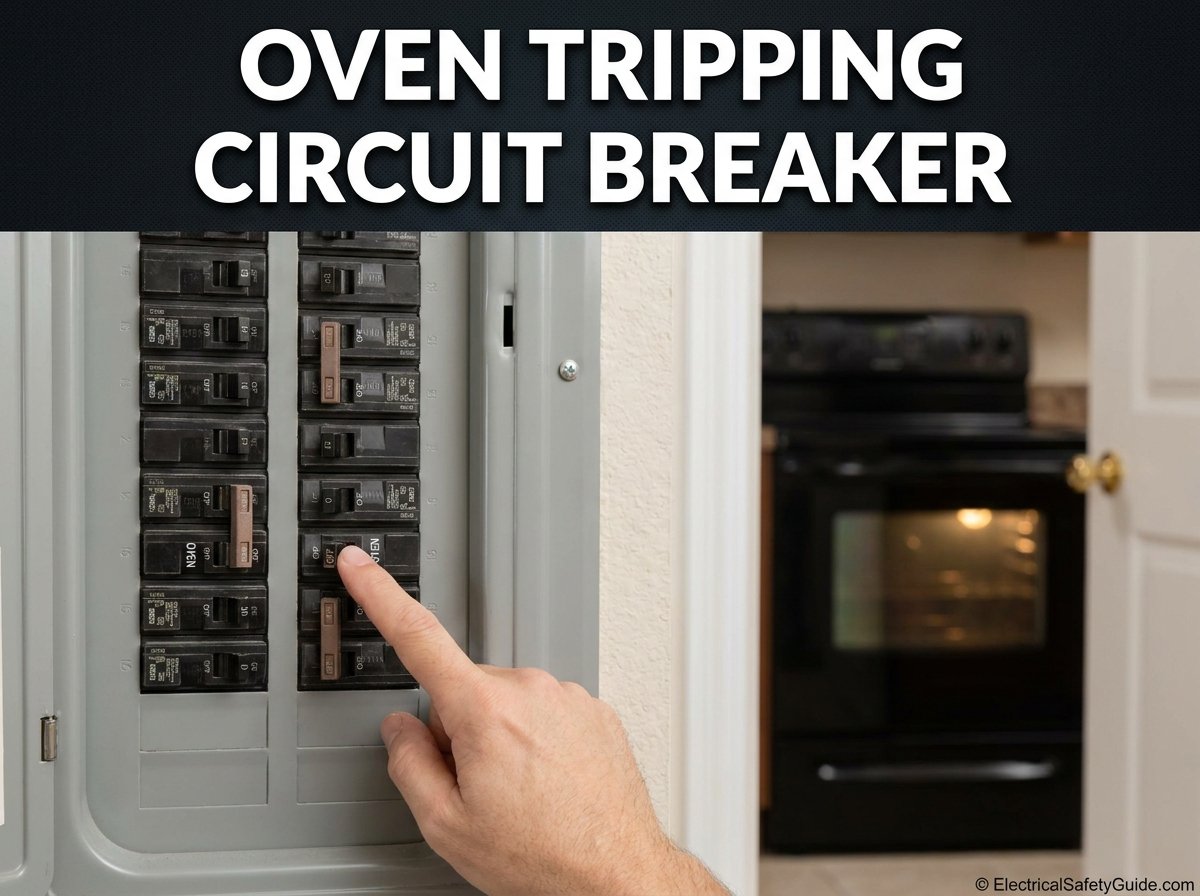
You set your oven to preheat for dinner. Five minutes later, the kitchen goes dark. Your oven tripping the circuit breaker is more than just an annoyance—it is a warning sign that something is wrong with your electrical system or the appliance itself.
Circuit breakers exist to protect your home. When they trip, they cut off electrical flow to prevent overheating, fires, or damage to your appliances. Understanding why your electric oven keeps tripping the breaker can save you from costly repairs and keep your family safe. In this guide, I will walk you through the five most common causes, how to diagnose them, and when you absolutely must call a professional.
Before diving into detailed explanations, here is a quick reference table to help you identify your specific problem:
| Problem | Symptoms | Likely Cause |
|---|---|---|
| Trips immediately when turning on | Instant shutoff, happens every time | Short circuit or ground fault |
| Trips during preheating | Happens after 5-10 minutes of heating | Faulty heating element or overload |
| Trips only with certain settings | Bake works, broil trips (or vice versa) | Specific heating element failure |
| Trips intermittently | Sometimes works, sometimes trips | Loose connections or moisture |
| Trips when using other appliances | Kettle + oven = trip | Circuit overload |
If you recognize your symptoms above, jump to that section for detailed troubleshooting steps.
After reviewing dozens of forum discussions and repair manuals, five issues consistently cause ovens to trip circuit breakers. Understanding each helps you pinpoint the problem faster.
Circuit overload happens when your oven draws more electrical current than your circuit can safely handle. Electric ovens are power-hungry appliances, typically requiring 20-50 amps depending on size and features.
Many older homes have ovens sharing circuits with other kitchen appliances. Running your microwave, toaster oven, and electric kettle on the same circuit as your oven creates an overloaded circuit scenario. When the combined wattage exceeds the breaker’s rating, it trips to prevent overheating.
Modern electrical codes require dedicated circuits for electric ovens. If your home was built before the 1990s, your oven might share a circuit. Check your breaker panel. If turning off one breaker cuts power to multiple kitchen outlets, you likely have a shared circuit.
Your oven has two main heating elements: the bake element at the bottom and the broil element at the top. Over time, these elements degrade, develop cracks, or short internally. A failing heating element can draw excessive current or create a direct short to ground.
Visible signs of element failure include blistering, cracks, burn marks, or areas that glow brighter than others. However, internal shorts are invisible. You might notice your oven trips the breaker only when using the broil function but works fine on bake. This pattern clearly points to the broil element.
Testing requires a multimeter. Disconnect power, remove the element, and test for continuity between the terminals and the element’s metal housing. Any continuity reading means the element is shorted and must be replaced. New heating elements cost $50-150 depending on your oven model.
A short circuit occurs when a hot wire touches a neutral wire, ground, or another component it should not contact. This creates a sudden surge of current that instantly trips your breaker. Unlike overloads that develop gradually, short circuits typically cause immediate trips the moment you turn the oven on.
Common causes include damaged wire insulation from heat degradation, loose connections vibrating against metal frames, or rodents chewing through wires. You might see burn marks near terminal blocks or smell a distinct electrical burning odor.
Short circuits are dangerous and require immediate attention. Do not repeatedly reset your breaker trying to “test” if the problem persists. Each reset risks overheating wires and potential fire.
Ground faults happen when electricity escapes its intended path and flows directly to ground. In ovens, moisture is the primary culprit. After cleaning your oven with liquid cleaners or if steam accumulates from heavy cooking, moisture can reach electrical components.
Forum users frequently report tripping issues after deep cleaning or during humid summer months. The moisture creates a path for electricity to leak to ground, triggering GFCI breakers or standard breakers with ground fault detection.
If your oven trips after cleaning, leave the door open for 24 hours to dry completely. Remove the back panel and inspect for moisture around the terminal block and control board. A hair dryer on cool setting can help speed drying, but ensure power is disconnected first.
The terminal block is where your oven connects to your home’s wiring. Over years of heating and cooling cycles, the connections can loosen, corrode, or burn. Loose connections create resistance, generating heat and potentially arcing, which trips breakers.
Less commonly, a failing oven fan motor can trip breakers. The cooling fan keeps your oven’s control board and external surfaces from overheating. When the motor bearings wear out, the motor draws excessive current trying to start or run, overloading the circuit.
Terminal block replacement costs $100-200 including labor. Fan motor replacement typically runs $150-300. These repairs require professional expertise due to high-voltage connections.
Follow these diagnostic steps to identify the cause of your oven tripping circuit breaker. Work through them in order, stopping immediately if you encounter burning smells, visible sparks, or exposed damaged wiring.
Turn off all other appliances on the same circuit. Unplug everything sharing that breaker. Try running your oven alone. If it works without other devices, you have a circuit overload. Consider having an electrician install a dedicated circuit for your oven.
Try bake mode only, then broil only, then convection if available. If one specific function trips the breaker every time, that heating element or component is likely faulty. This narrows your problem significantly.
Unplug your oven and remove the back panel. Look for burn marks, melted plastic, or loose wires at the terminal block. Check heating elements for visible cracks or blistering. If you see obvious damage, you have found your problem.
For deeper diagnosis, use a multimeter to test continuity and resistance. Test heating elements for continuity between terminals and to ground. Test wires for continuity breaks. Compare resistance readings to manufacturer specifications. If you are not comfortable with electrical testing, call a professional.
If tripping started after cleaning or during humid weather, moisture is likely your culprit. Leave the oven open and disconnected for 24-48 hours. Use fans to circulate air. Many users report the problem resolves once everything dries completely.
Electrical repairs are not DIY projects for everyone. Know when to step back and call qualified help. If you smell burning plastic or see sparks, stop immediately. These are signs of active electrical faults that could start fires.
Never repeatedly reset a tripping breaker hoping the problem goes away. Breakers trip because something is wrong. Forcing continued operation risks overheating wires hidden in your walls, creating fire hazards you cannot see until it is too late.
Call an electrician if your problem involves the electrical panel, wiring in walls, or if you need a dedicated circuit installed. Call an appliance repair technician for problems inside the oven itself like heating elements, control boards, or internal wiring. Understanding home circuit breaker safety helps you make this decision.
Typical repair costs range from $100-300 for appliance repairs to $800-4000 for electrical panel upgrades or dedicated circuit installation. Get multiple quotes for major electrical work.
Preventing your oven from tripping the breaker is easier than fixing it after problems start. Here are proven strategies from electricians and appliance technicians:
Repeated tripping can damage your oven’s control board and heating elements over time. Each power interruption stresses electrical components. Additionally, the surges that occur when power restores can fry sensitive electronics in modern ovens with digital displays and smart features.
Standard circuit breakers can typically trip 100 or more times before mechanical wear affects performance. However, if your breaker trips frequently it is a symptom of an underlying electrical problem, not an indication the breaker itself has failed. Focus on fixing the cause, not replacing the breaker.
Preheating draws maximum power as both heating elements work to reach target temperature quickly. If your heating element is weak, damaged, or if your circuit is undersized, the heavy load during preheating reveals the problem. At lower temperatures or during maintenance heating, power draw is lower so the breaker holds.
Yes, frequent breaker trips indicate an electrical fault that could lead to fire. The breaker is doing its job protecting you, but the underlying cause needs immediate attention. Do not ignore repeated tripping, and never tape a breaker in the ON position or bypass safety features.
An oven tripping the circuit breaker is frustrating but solvable. The five main causes—circuit overload, faulty heating elements, short circuits, ground faults, and defective terminal blocks or fans—cover nearly every scenario you will encounter.
Start with simple diagnostics like checking for shared circuits and testing different oven functions. Know your limits. Electrical work requires expertise and proper safety precautions. When in doubt, call a licensed electrician or certified appliance repair technician. Your safety is worth more than any repair cost.
With proper diagnosis and timely repairs, you will have your oven back to reliable operation, cooking meals for your family without the interruption of tripped breakers.