

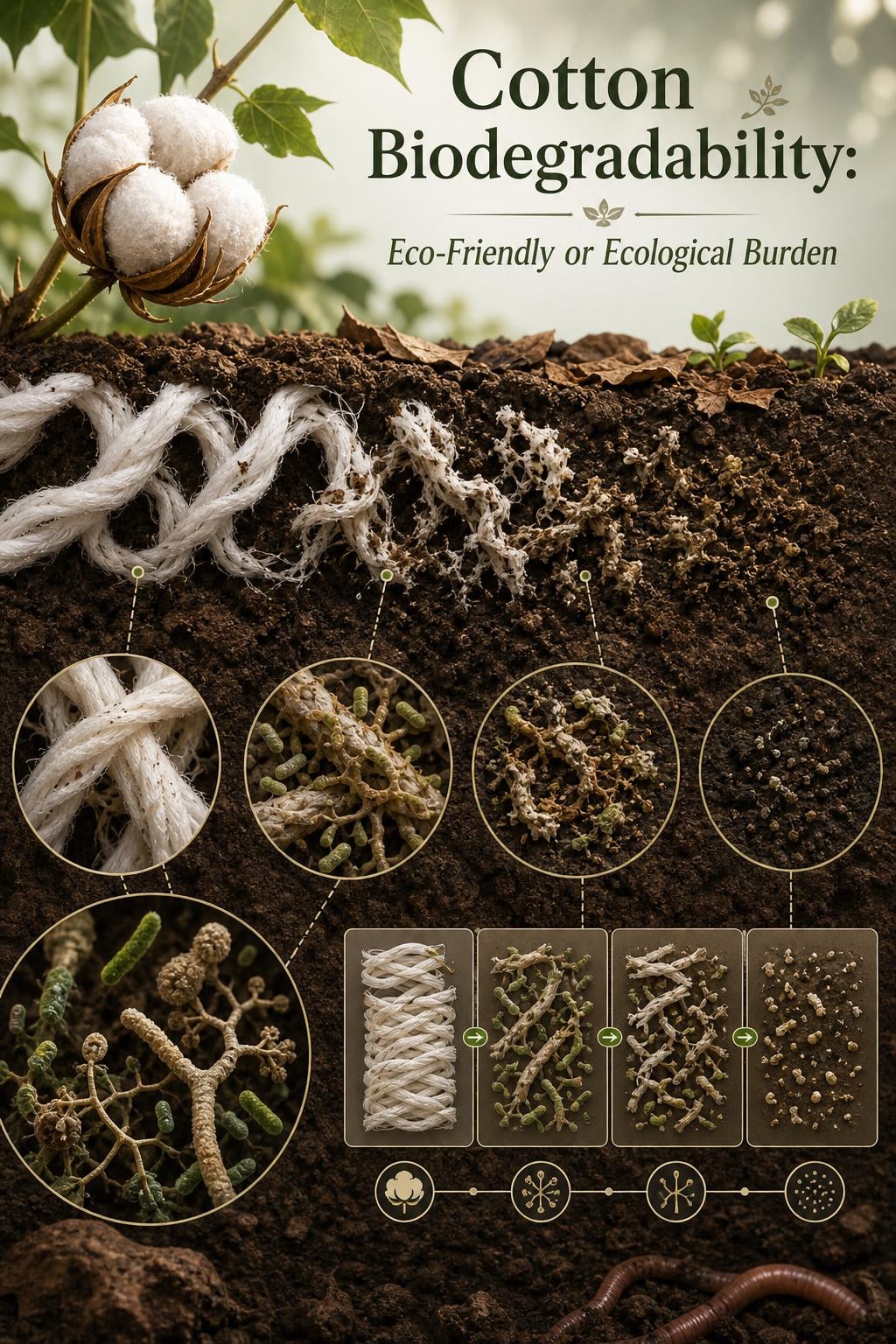
The average American discards roughly 70 pounds of textiles every year, and only about 15 percent of that material ever reaches a recycling facility. The rest heads to landfills, where it can sit for decades or even centuries depending on what it is made of. Cotton biodegradability has become a central question in the sustainable fashion conversation because this single fiber accounts for nearly a quarter of global textile production. People want to know whether the cotton in their closets will return cleanly to the earth or whether it carries hidden environmental costs that outweigh its natural origins.
Research from institutions including North Carolina State University and Cotton Incorporated has produced specific, peer-reviewed data on how cotton breaks down across different environments. That data matters now more than ever, given that synthetic microplastic pollution from petroleum-based fibers has reached an estimated 5.25 trillion particles in the world’s oceans. Understanding cotton biodegradability in 2026 means looking past marketing claims and examining what actually happens when cotton fibers encounter soil, compost, wastewater, and landfill conditions.
This guide breaks down the science of cotton decomposition with real timeframes, identifies the factors that speed up or slow down the process, and compares cotton directly against polyester and other synthetic fibers. Whether you are trying to compost old t-shirts at home or evaluating which certifications actually mean something on a clothing label, the answers below draw on current research rather than vague promises.
What you will learn in this guide:
Cotton begins as a plant in the mallow family, producing fluffy bolls of cellulose fiber that have been spun into textiles for thousands of years. Unlike polyester, nylon, or other petroleum-based fibers, cotton is built from plant-based cellulose that microorganisms can naturally process. That biological foundation is what makes cotton biodegradability possible in the first place. But the path from seedling to finished garment involves agricultural inputs, processing chemicals, and transportation that all carry environmental weight.
Conventional cotton farming is resource-intensive. A single kilogram of lint cotton can require between 7,000 and 10,000 liters of water when grown under traditional irrigation methods, though rain-fed cotton and modern drip irrigation systems have reduced that figure substantially in many regions. Cotton also accounts for an estimated 16 percent of global insecticide use despite occupying only about 2.5 percent of the world’s arable land. Those inputs have real downstream effects on soil health, water quality, and biodiversity in farming communities.
Once harvested, raw cotton travels through gins that separate the fiber from seeds, then to spinning mills where it becomes yarn, and finally to textile factories where it is woven or knitted into fabric. Along the way, the fiber may be bleached, dyed with synthetic or natural colorants, treated with wrinkle-resistant finishes, coated with flame-retardant chemicals, or blended with polyester and elastane for stretch. Each of those processing steps can affect how the finished textile behaves at end of life.
This is where the conversation gets complicated. Raw cotton fiber is undeniably biodegradable, and that has been confirmed repeatedly in controlled scientific studies. But a finished cotton garment may contain dyes, chemical finishes, and synthetic thread that change its decomposition profile significantly. The fluffy white fiber that comes off the plant is not the same material as the printed, treated, and blended shirt hanging in a retail store. Understanding that distinction is the first step toward evaluating cotton biodegradability honestly, and you can read more about how everyday cotton products like cotton balls are indeed biodegradable when they remain untreated.
None of this means cotton is an environmental villain. It means the question of whether cotton is eco-friendly cannot be answered with a simple yes or no. The answer depends on how the cotton was grown, what was added to it during manufacturing, and what happens to it when the consumer is finished wearing it. Those variables matter enormously, and they are where the real sustainability conversation begins. For a broader look at reducing your environmental impact across daily habits, our guide on how to reduce your carbon footprint offers practical next steps.
For readers who want a deeper scientific foundation, this study on the biodegradability of cotton and polyester fabrics published on ResearchGate offers detailed experimental data on how different fabric treatments affect decomposition rates. That research underscores why cotton biodegradability is best understood as a spectrum rather than a binary label.
This is the question people search for most often, and the answer comes with specific numbers attached. Cotton biodegradability timeframes vary depending on environmental conditions, but controlled testing has produced clear benchmarks that researchers reference consistently. The key variable is whether the cotton has access to oxygen, moisture, and the microorganisms that drive decomposition.
In an active compost environment with proper aeration and moisture, 100 percent pure cotton fabric typically breaks down within one to five months. That timeframe puts cotton on roughly the same biodegradation schedule as an oak leaf, which researchers use as a natural reference point for cellulosic decomposition. Studies conducted at NC State University found that cotton fabric samples achieved complete mass loss within a 28-day aquatic biodegradation test, meaning essentially nothing remained after four weeks under the right microbial conditions.
Longer-duration tests reinforce these findings. A 102-day study examining cotton biodegradation in soil environments showed approximately 60 percent degradation within the test period, with the curve continuing toward complete breakdown. Cotton Incorporated research has documented similar rates across multiple test conditions, confirming that raw cotton fiber decomposes readily when microorganisms have access to the cellulose structure.
Compare those numbers to polyester, which can take 200 years or more to fully decompose. Nylon and polypropylene show similarly prolonged degradation timelines. A cotton-polyester blend fabric presents a particular problem: the cotton portion biodegrades normally, but the polyester component persists as synthetic microfibers long after the natural fiber has disappeared. Researchers have observed this directly in blended fabric tests, where the cotton visibly degrades while the synthetic fibers remain intact.
It is worth noting that biodegradation rates drop sharply in modern landfills. Landfills are engineered to seal waste off from oxygen and moisture, which suppresses the microbial activity needed for decomposition. Under those anaerobic conditions, even natural materials like cotton can persist for decades. This is why diverting cotton textiles to composting or recycling streams matters far more than simply assuming they will break down wherever they end up.
Cotton occupies a complicated position in the sustainability conversation. It is one of the few major textile fibers that genuinely biodegrades under natural conditions, which gives it a structural advantage over every synthetic alternative on the market. But that advantage does not erase the environmental costs associated with growing, processing, and disposing of cotton at industrial scale. A fair assessment requires looking at both sides without rushing to declare cotton either a hero or a problem.

The strongest argument for cotton centers on what happens at the end of its useful life. Unlike polyester, nylon, and other petroleum-based fibers, cotton is composed of cellulose that soil microorganisms can process through enzyme-mediated hydrolysis. That means cotton fibers actually feed back into natural biological cycles rather than accumulating as persistent waste. When cotton biodegrades, it returns carbon and organic matter to the soil rather than shedding microplastics into waterways.
Cotton also compares favorably to artificial cellulosic fibers like viscose and lyocell in biodegradation testing. While those materials are plant-derived, the chemical processing they undergo can slow their decomposition rate relative to raw cotton. For consumers looking for biodegradable textiles with the strongest natural decomposition profile, cotton remains a leading option when it is untreated and unblended.
The case against cotton is not that it fails to biodegrade. The case is that biodegradability alone does not offset the environmental costs of conventional cotton production, and that finished cotton textiles often behave very differently than raw fiber at end of life. These are the counterpoints that complicate the sustainability narrative.
The honest takeaway is that cotton biodegradability is real and scientifically documented, but it is not a magic solution. A conventionally grown, chemically treated, polyester-blended cotton shirt that ends up in a sealed landfill will not simply vanish into the earth. The environmental benefit of cotton’s biodegradability depends on how the fiber was grown, what was done to it during manufacturing, and whether the consumer directs it to a composting or recycling stream at end of life. Those conditions are not afterthoughts; they are the determining factors.
Also Read: Stop Using Paper Towels: Easy Eco-Friendly Swaps!
Not all cotton textiles biodegrade at the same rate, and the difference comes down to what is in the fabric beyond raw cotton fiber. Three factors have the largest impact on cotton biodegradability: fabric blends, chemical finishes, and synthetic dyes. Understanding these variables explains why a 100 percent organic cotton t-shirt behaves very differently at end of life than a cotton-polyester blend with chemical treatments.
Many garments sold as cotton today are actually cotton-polyester blends. Brands use blends to add stretch, improve durability, and reduce manufacturing costs. A typical t-shirt might contain 60 percent cotton and 40 percent polyester, or a pair of jeans might combine cotton with elastane for flexibility. These blends create a serious end-of-life problem because the two fiber types decompose at completely different rates.
When a cotton-polyester blend enters a compost or soil environment, the cotton portion biodegrades normally within months. But the polyester component remains behind as intact synthetic fibers that will not break down for centuries. This means blended fabrics cannot truly be called biodegradable, even when they contain a majority of natural fiber. The polyester residue also contributes to microplastic pollution as the cotton surrounding it degrades and releases the synthetic fibers into the environment.
Consumers who attempt to compost cotton clothing at home frequently discover this problem only after the fact. A shirt that appeared to be 100 percent cotton on casual inspection may contain synthetic thread in the seams, a small percentage of elastane for stretch, or a polyester blend in the label that was overlooked. If you are interested in composting cotton textiles, our guide to whether you can compost natural fiber yarns covers how to identify fibers that will break down completely.
Modern textiles are engineered with a surprising array of chemical treatments that fundamentally alter their properties. Wrinkle-resistant finishes use formaldehyde-based resins to cross-link cellulose molecules, which has the side effect of making the fabric far more resistant to microbial breakdown. Stain-repellent coatings often rely on fluorinated compounds that persist in the environment. Flame-retardant treatments, required for certain children’s sleepwear and upholstery applications, can slow cotton biodegradation significantly.
Research has documented these effects directly. In biodegradability studies comparing treated and untreated cotton fabrics, samples finished with resin showed measurably slower degradation rates than untreated controls. The same studies found that fabric softeners had the opposite effect, actually accelerating cotton biodegradation by modifying the fiber surface in ways that made it more accessible to microbial enzymes. These findings highlight how sensitive cotton biodegradability is to the specific chemical profile of the finished textile.
The dyeing process represents another variable in cotton biodegradability. Conventional textile dyeing relies heavily on azo dyes, which are synthetic colorants derived from petroleum. Some azo dye compounds have been restricted or banned in certain jurisdictions due to concerns about toxicity and environmental persistence. When dyed cotton fabric enters a compost or soil environment, these dye compounds can interfere with the microbial communities responsible for breaking down the cellulose fiber.
This is why the question of whether dyed cotton is biodegradable does not have a straightforward answer. Lightly dyed cotton with plant-based or low-impact dyes will still decompose, though potentially at a slightly reduced rate. Heavily dyed fabric with multiple synthetic dye layers and chemical mordants may decompose more slowly and release dye compounds into the surrounding soil as it breaks down. Formaldehyde-free dyes and certified organic processing standards address these concerns by restricting the types of colorants and fixatives used during manufacturing.
The practical implication is that consumers who want maximum biodegradability should look for undyed, unbleached, and untreated cotton when possible. Products like 100 percent natural cotton cheesecloth demonstrate how pure, unprocessed cotton behaves at end of life when no chemical treatments have been applied. For everyday clothing, choosing garments with low-impact dyes and avoiding permanent-press or stain-resistant finishes will help preserve the fiber’s natural biodegradability.
The strongest argument for cotton biodegradability becomes clear when you compare it directly against what happens when synthetic textiles reach end of life. Polyester, nylon, acrylic, and polypropylene are all petroleum-based fibers that do not biodegrade in any meaningful timeframe. Instead, they fragment into smaller and smaller pieces known as microplastics, which accumulate in soil, freshwater, and ocean ecosystems indefinitely.
The scale of synthetic fiber pollution is difficult to overstate. An estimated 14 million metric tons of plastic enter the world’s oceans every year, and a significant portion of that total comes from textile microfibers shed during washing. A single load of synthetic laundry can release hundreds of thousands of microfibers into wastewater systems, and conventional treatment plants capture only a fraction of them. The rest pass through into rivers, lakes, and coastal waters where they enter the food chain.
Research on human exposure has produced sobering findings. Studies estimate that the average person consumes roughly 5 grams of microplastic per week, equivalent to the weight of a credit card, through contaminated food and water. Microplastics have been detected in human blood, lung tissue, and placentas, raising significant but still poorly understood health concerns. The ubiquity of synthetic clothing in modern wardrobes means that textile shedding is one of the largest contributors to this exposure pathway.
This is where cotton biodegradability offers a genuine environmental advantage. Cotton microfibers also shed during washing, and they enter the same wastewater streams. But unlike polyester microfibers, cotton microfibers are cellulose-based and biodegrade readily in wastewater treatment plants, freshwater bodies, and marine environments. NC State University research has demonstrated that cotton microfibers achieve near-complete biodegradation in aquatic test conditions within the same 28-day timeframe observed in soil testing, while polyester microfibers show virtually no degradation over the same period.
Consumer awareness of the microplastic issue has grown substantially. Survey data indicates that approximately 38 percent of consumers now recognize the connection between synthetic clothing and microplastic pollution, up from 27 percent several years prior. That growing awareness is driving demand for natural fiber alternatives and creating market pressure on brands to disclose fiber shedding rates and explore biodegradable material options. Cotton biodegradability is not just an abstract environmental property; it is increasingly a factor in purchasing decisions.
For consumers looking to reduce their contribution to synthetic microfiber pollution, choosing cotton and other natural fibers over polyester is one of the most effective steps available. Products that use cotton’s biodegradability as a core feature, such as cotton-based products certified to biodegrade, demonstrate how the fiber’s natural properties can replace synthetic alternatives in everyday household applications.
Cotton biodegradability is not a single number; it is a range that depends heavily on the environmental conditions where decomposition occurs. The key factors are the presence of oxygen, moisture levels, temperature, and the abundance of microorganisms capable of breaking down cellulose. Understanding how cotton behaves in each environment helps explain why the same fabric can vanish in months under one set of conditions and persist for decades under another.
Aerobic biodegradation occurs when microorganisms have access to oxygen, which is the condition under which cotton decomposes most efficiently. In healthy soil with adequate moisture and microbial activity, cotton fabric breaks down through enzyme-mediated hydrolysis as bacteria and fungi consume the cellulose fiber. Active compost accelerates this process because composting environments maintain elevated temperatures, high microbial diversity, and consistent moisture levels that are optimal for cellulose decomposition.
This is the scenario where cotton biodegradation timeframes of one to five months apply. The oak leaf comparison comes from this context: researchers use oak leaves as a benchmark for natural cellulosic decomposition because they break down on a similar timeline under the same conditions. When cotton matches or beats the oak leaf benchmark, it confirms that the fiber is behaving as a normal biological material rather than resisting decomposition.
Modern landfills are engineered to isolate waste from the surrounding environment, which means they are designed to keep out oxygen and limit moisture infiltration. These conditions severely restrict microbial activity, creating an anaerobic environment where even naturally biodegradable materials decompose at a fraction of their normal rate. Under sealed landfill conditions, cotton can persist for years or decades because the microorganisms responsible for cellulose breakdown cannot function effectively without oxygen.
This is an important nuance that often gets lost in marketing claims. A cotton shirt deposited in a conventional landfill will not biodegrade within the timeframes cited for compost or healthy soil. The landfill environment effectively preserves waste rather than processing it, which is why diverting textiles to composting facilities or recycling programs produces a dramatically different environmental outcome than placing them in the trash. The decomposition rate of any material depends on where it ends up, not just on what it is made of.
One of the most important findings from recent cotton biodegradability research involves what happens to cotton microfibers in water. Every time cotton clothing is washed, small amounts of fiber shed into the wastewater stream. For synthetic fabrics, these shed microfibers are a major source of aquatic microplastic pollution. For cotton, the question is whether those shed microfibers persist or biodegrade in aquatic environments.
NC State University research has addressed this question directly across multiple aquatic environments. In wastewater treatment plant conditions, freshwater, and saltwater, cotton microfibers showed significant biodegradation over test periods while polyester microfibers showed essentially none. The 28-day test showing complete mass loss for cotton was conducted in aquatic conditions, confirming that cotton fibers shed during washing do not accumulate as persistent pollution the way synthetic microfibers do. This finding is particularly significant because it means choosing cotton over polyester reduces microplastic contamination at every stage of the garment’s life cycle, including during routine laundering.
The research also found that cotton biodegradation rates in aquatic environments can be influenced by water temperature, microbial population density, and whether the fibers have been treated with chemical finishes. Untreated cotton microfibers biodegraded most rapidly, while chemically finished cotton showed somewhat slower but still significant decomposition. This reinforces the broader pattern: cotton’s natural cellulose structure is biodegradable across environments, but processing additions can moderate that biodegradability.
The way cotton is grown has a direct bearing on its overall environmental profile, even though biodegradability is determined primarily by the fiber’s cellulose structure rather than its cultivation method. Conventional and organic cotton both biodegrade, but they differ substantially in their upstream environmental impacts, including pesticide use, water consumption, soil health effects, and chemical residue levels in the finished fiber.
Conventional cotton farming relies heavily on synthetic pesticides, herbicides, and chemical fertilizers to maximize yield and control pests. These inputs have documented environmental consequences. Pesticide runoff can contaminate surface water and harm aquatic organisms, while fertilizer runoff contributes to nutrient pollution and algae blooms that deplete oxygen levels in rivers and coastal waters. Repeated application of agricultural chemicals can also degrade soil health over time, reducing organic matter content and disrupting the soil microorganism communities that support long-term fertility.
For cotton biodegradability specifically, the concern with conventional farming is that chemical residues may persist in the finished fiber. Pesticide and herbicide residues have been detected in some conventionally grown cotton textiles, and these compounds can potentially interfere with microbial activity during decomposition. While the cellulose structure itself remains fully biodegradable, the chemical load associated with conventional farming adds another layer of environmental impact that extends from the cotton field through to end of life.
Organic cotton production eliminates synthetic pesticides and fertilizers, relying instead on biological pest control, composting, crop rotation, and other practices that maintain soil health without chemical inputs. The environmental benefits are measurable: organic cotton farming typically uses less water than conventional methods because healthier soils retain moisture more effectively, and it eliminates the pesticide runoff that harms aquatic ecosystems. Organic cotton also tends to carry fewer chemical residues into the finished textile, which supports cleaner biodegradation at end of life.
But the organic label only carries weight when it is backed by credible third-party certification. The most widely recognized standard is the Global Organic Textile Standard, known as GOTS certification. GOTS requires that textiles contain a minimum percentage of certified organic fibers and sets restrictions on the chemical inputs used during processing, including dyes, finishes, and processing aids. For consumers, the GOTS label provides assurance that the entire supply chain, from field to finished garment, has been verified against an independent standard.
OEKO-TEX Standard 100 is another certification worth understanding, though it addresses a different concern. Rather than certifying organic production, OEKO-TEX tests finished textiles for a comprehensive list of harmful substances, currently screening for over 350 restricted chemicals. A garment with OEKO-TEX certification has been tested to ensure that it does not contain residues of concern at levels that could harm human health. Many sustainable fashion advocates recommend looking for both GOTS and OEKO-TEX labels, as they address complementary aspects of textile safety and environmental responsibility.
Forum discussions among sustainable fashion communities consistently identify GOTS as the most trusted certification for organic cotton claims. Consumers express frustration with brands that use vague terms like natural or eco-friendly without third-party verification, and many recommend treating uncertified organic claims with skepticism. The practical guidance is straightforward: look for specific certification labels, understand what each one verifies, and treat certifications as a baseline requirement rather than a guarantee of perfect sustainability.
It is also worth noting that organic cotton biodegrades at the same fundamental rate as conventional cotton because the cellulose structure is identical. The advantage of organic is not faster decomposition; it is a cleaner overall environmental footprint with fewer chemical inputs and residues. Choosing certified organic products, such as slippers made with organic cotton in sustainable products, supports farming practices that are better for soil, water, and agricultural communities.
Also Read: DIY Face Masks: Your Guide to Eco-Friendly Creations
Cotton’s environmental challenges are significant, but they are not static. Agricultural researchers, textile engineers, and circular economy innovators are developing approaches that reduce cotton’s resource footprint, extend the useful life of cotton textiles, and create better end-of-life pathways. These innovations do not eliminate the need for conscious consumption, but they do meaningfully improve the sustainability profile of cotton as a fiber.

Regenerative agriculture represents a shift beyond simply reducing harm toward actively improving soil and ecosystem health. Practices include cover cropping, no-till or reduced-tillage planting, crop rotation, and integrating livestock into crop systems. These methods build soil organic matter, improve water retention, and sequester biogenic carbon in the soil rather than releasing it as atmospheric carbon dioxide. For cotton specifically, regenerative approaches can reduce irrigation requirements, improve resilience to drought and pest pressure, and lower dependence on synthetic inputs.
Water-saving irrigation technology has also advanced significantly. Drip irrigation systems deliver water directly to the root zone rather than broadcasting it across the field, substantially reducing evaporation and runoff. Sensor-based irrigation management uses soil moisture data to apply water only when and where it is needed, cutting total water use while maintaining or improving yields. These technologies are increasingly accessible to cotton farmers in major growing regions, and adoption rates continue to climb as the cost of water and the impact of drought make efficiency a business priority.
Biological pest control is replacing chemical pesticide applications on an increasing number of cotton farms. This approach uses beneficial insects, companion planting, and other ecological strategies to manage pest populations without broad-spectrum chemical interventions. Integrated pest management programs monitor fields and apply targeted controls only when pest populations reach economically damaging thresholds, rather than spraying on a fixed schedule. The result is reduced chemical loading on the land, less runoff into waterways, and a healthier foundation for soil microbial communities.
Textile recycling is emerging as a critical tool for reducing the environmental impact of cotton at end of life. Mechanical recycling processes sort post-consumer cotton textiles by color and fiber type, shred them back into fiber, and re-spin that fiber into new yarn. This approach avoids the land, water, and chemical inputs required to grow virgin cotton while diverting material from landfills. The challenge is that mechanical recycling shortens the fibers with each cycle, which limits how many times a given fiber can be recycled before it becomes too short to spin.
Chemical recycling technologies are being developed to address this limitation. These processes break cotton cellulose down to a molecular level and rebuild it into new fiber, potentially allowing for indefinite recycling without quality loss. While chemical recycling of cotton is not yet deployed at industrial scale, pilot programs and investment from major textile manufacturers suggest it will become a meaningful part of the circular fashion economy in the coming years.
Composting represents another circular pathway that takes direct advantage of cotton biodegradability. Industrial composting facilities can process cotton textiles alongside food scraps, yard waste, and other organic materials, converting them into soil amendment in a matter of months. Home composting is also viable for pure cotton items, though it requires proper technique and realistic expectations about decomposition timeframes. The key is ensuring that cotton directed to composting is free of synthetic blends, heavy chemical finishes, and components like zippers or elastic that will not break down.
If you have old cotton clothing that is too worn to donate or recycle, composting is a viable end-of-life option for pure cotton items. The process requires some preparation, but it takes direct advantage of cotton biodegradability and returns the fiber’s nutrients to the soil rather than sending it to a landfill. Here is a step-by-step approach to composting cotton textiles at home.
Check the care label to confirm that the garment is 100 percent cotton. Even a small percentage of polyester, elastane, or other synthetic fiber means the item will not fully biodegrade, and the synthetic component will contaminate your compost with microfibers. Remove all non-cotton components including buttons, zippers, elastic waistbands, polyester thread, and care labels. When in doubt, do not compost the item.
Cotton biodegradation occurs at the surface of the fiber, so increasing the surface area accelerates the process. Cut the garment into strips and then into small squares roughly two to three inches across. Smaller pieces decompose faster because more fiber surface is exposed to soil microorganisms. This step is especially important for heavier fabrics like denim, which decompose more slowly than lightweight cotton due to their tighter weave and greater mass.
Place the cotton pieces into an active compost pile or bin that already contains a mix of green materials like food scraps and brown materials like dried leaves. Cotton counts as a brown, or carbon-rich, material. Bury the pieces within the pile rather than leaving them on top, as the interior of the pile maintains higher temperatures and greater microbial activity. Water the pile if it becomes dry, as moisture is essential for the microorganisms that drive decomposition.
Expect the cotton to take anywhere from one to five months to fully decompose in a home compost system, depending on pile temperature, moisture levels, and how frequently the pile is turned. Industrial composting facilities, which maintain higher temperatures and more controlled conditions, can process cotton in a shorter timeframe. If you have access to a commercial compost facility that accepts textiles, that option will generally produce faster and more complete results than home composting.
For smaller cotton items beyond clothing, the same principles apply. Our guides on composting cotton swabs and other everyday cotton products provide additional detail on identifying and processing compostable cotton goods. The key across all cotton composting is verifying purity, maximizing surface area, and maintaining active compost conditions.
The environmental performance of cotton at every stage of its life cycle, from field to disposal, is shaped by consumer choices. What we buy, how long we keep it, how we care for it, and where it goes when we are finished with it all determine whether cotton biodegradability translates into actual environmental benefit. Individual decisions aggregate into market signals that influence how brands design products, how farmers grow cotton, and how waste systems handle textiles.

Every clothing purchase sends a signal about what consumers value. When buyers consistently choose garments made from certified organic cotton, recycled materials, or certified biodegradable textiles, brands respond by shifting their sourcing and product development toward those materials. This is not theoretical; consumer demand for sustainable cotton has already driven major apparel companies to adopt organic and recycled cotton programs, publish supply chain transparency reports, and seek third-party certifications that would have been considered unnecessary a decade ago.
The most effective consumer strategy is to treat sustainability claims as a starting point for inquiry rather than an endpoint. A brand that markets its cotton as sustainable should be able to point to specific certifications, name its suppliers, and provide information about its manufacturing processes. Vague terms like eco-friendly, natural, or green carry no standardized meaning and require no verification. Specific certifications like GOTS, OEKO-TEX Standard 100, and the Recycled Claim Standard provide independently verified assurance that products meet defined environmental criteria.
Purchase power also means buying less and buying better. The most environmentally impactful garment is one that is never produced, and extending the useful life of existing clothing is one of the most effective individual actions available. Choosing durable, well-constructed cotton garments and wearing them for years produces a lower environmental footprint than frequently replacing cheaper items, even if those cheaper items are made from organic cotton.
Beyond cotton, several other natural fibers offer strong biodegradability profiles. Hemp produces a durable fiber with minimal irrigation and pesticide requirements, and it biodegrades readily in soil and compost. Linen, made from flax, offers similar properties with a long history of textile use. These fibers do not replace cotton so much as complement it, giving consumers multiple natural fiber options across different garment types and price points.
Secondhand clothing is another high-impact choice that requires no new resource extraction. Buying pre-owned cotton garments extends their useful life and delays the environmental costs of disposal. Thrift stores, online resale platforms, and clothing swaps all provide access to quality secondhand items at lower cost than new equivalents. For parents concerned about chemical residues in children’s clothing, secondhand items also have the advantage of having been washed multiple times, which reduces residual chemical concentrations from manufacturing.
Repair is an undervalued sustainability strategy. Mending a torn seam, replacing a button, or patching a hole extends a garment’s life without any additional material input. Cotton is one of the easier fibers to repair because it takes thread well, responds to patching, and does not require specialized equipment. Building basic mending skills is one of the most practical steps a consumer can take toward a more sustainable wardrobe.
Finally, responsible disposal matters. When a cotton garment reaches the end of its wearable life, the options extend well beyond the trash bin. Donation extends the garment’s useful life if it is still wearable. Textile recycling programs accept worn-out cotton items for fiber recovery. Composting handles pure cotton items that are too degraded for other uses. The key is choosing the disposal pathway that matches the garment’s condition, rather than defaulting to the landfill.
Cotton is highly biodegradable under the right conditions. In active compost with proper aeration and moisture, 100 percent pure cotton fabric typically breaks down within one to five months. NC State University aquatic testing demonstrated complete mass loss for cotton microfibers within a 28-day test period. Cotton biodegrades through the same microbial processes that break down other plant materials, and its decomposition rate is comparable to an oak leaf under equivalent conditions.
Natural plant-based fibers including cotton, hemp, linen (flax), and ramie are fully biodegradable when they are not blended with synthetic fibers or treated with chemical finishes. Among animal-derived fibers, wool and silk also biodegrade. The key qualifier is that these fibers must be unblended and minimally processed to retain full biodegradability. A cotton-polyester blend is not 100 percent biodegradable because the polyester component will persist after the cotton decomposes.
Many brands have shifted to cotton-synthetic blends to add stretch, improve durability, and reduce manufacturing costs. Elastane or spandex is commonly added for stretch in fitted garments, while polyester blends are used to reduce shrinkage and lower material costs. This trend creates end-of-life problems because the synthetic components do not biodegrade and complicate textile recycling. Consumers looking for 100 percent cotton can still find it, particularly in basics like t-shirts and sheets, but it requires checking fabric content labels carefully.
100 percent cotton is biodegradable and does not shed persistent microplastics, which gives it a clear environmental advantage over synthetic fibers. However, conventional cotton farming carries significant environmental costs including high water consumption, pesticide use, and soil degradation. Choosing certified organic cotton reduces these upstream impacts. The most environmentally friendly cotton garments are those made from certified organic fiber, processed with minimal chemical finishes and low-impact dyes, kept in use for as long as possible, and composted or recycled at end of life.
Dyed cotton remains biodegradable, but the dye can affect the decomposition rate. Low-impact and plant-based dyes have minimal effect on biodegradation. Conventional azo dyes and petroleum-based colorants can slow microbial activity and potentially release dye compounds into the soil as the fabric breaks down. Heavily dyed fabric with multiple dye layers and chemical mordants will decompose more slowly than undyed cotton. For maximum biodegradability, undyed or naturally dyed cotton is the best choice.
Cotton biodegrades readily in aquatic environments. NC State University research demonstrated that cotton microfibers achieved complete mass loss in 28-day tests conducted in wastewater, freshwater, and saltwater conditions. This means cotton fibers shed during washing do not persist as aquatic pollution the way polyester microfibers do. Polyester showed virtually no biodegradation over the same test period, confirming that cotton offers a significant advantage in reducing aquatic microplastic contamination.
Organic and conventional cotton biodegrade at the same fundamental rate because both are composed of the same cellulose fiber structure. The advantage of organic cotton is not faster decomposition but a cleaner overall environmental profile. Organic cotton is grown without synthetic pesticides or fertilizers, which means fewer chemical residues enter the environment during farming and fewer chemical residues are present in the finished fiber when it eventually biodegrades.
Yes, 100 percent pure cotton clothing can be composted at home. Remove all non-cotton components like buttons, zippers, polyester thread, and elastic. Cut the fabric into small pieces to increase surface area. Add the pieces to an active compost pile with a mix of green and brown materials, burying them within the pile. Expect decomposition to take one to five months depending on compost conditions. Industrial composting facilities can process cotton faster due to higher temperatures and more controlled conditions.
Cotton biodegradability is real, scientifically documented, and measurable across soil, compost, and aquatic environments. The fiber’s cellulose structure decomposes through natural microbial processes on timeframes comparable to plant materials like oak leaves, and it does not produce the persistent microplastic pollution associated with synthetic alternatives. That is a genuine and important environmental advantage, particularly as awareness of microplastic contamination grows and research continues to document the ubiquity of synthetic fiber pollution in global ecosystems.
But cotton biodegradability is not a simple verdict that cancels out every other environmental concern. Conventional cotton farming carries substantial costs in water use, pesticide application, and soil degradation. Chemical finishes, synthetic dyes, and fabric blends can all slow or prevent the decomposition of finished cotton textiles. Modern landfills suppress biodegradation regardless of what material enters them. These complications mean that the environmental performance of any given cotton garment depends on how it was grown, what was added to it, and what happens to it at end of life.
The path forward is not to abandon cotton or to treat it as automatically sustainable. It is to make informed choices at every stage: choosing certified organic cotton when possible, avoiding chemical treatments and synthetic blends when biodegradability matters, extending the useful life of garments through repair and reuse, and directing worn-out textiles to composting or recycling rather than landfills. Cotton biodegradability is a powerful environmental property when it is supported by the right practices at every step of the supply chain and the consumer journey. Understanding how it works, and acting on that understanding, is what turns a natural fiber into a genuinely sustainable choice.
