
The average American household goes through roughly two rolls of paper towels every single week. Multiply that across 130 million households and you get a sense of why the United States accounts for nearly half of the $12 billion global paper towel market. If you have ever wanted to stop using paper towels but felt overwhelmed by where to begin, you are in the right place.
The switch is more practical than most people expect. Households that have made the transition report saving between $175 and $240 per year while dramatically cutting their kitchen waste. The key is building a simple system: the right cloth alternatives, a storage setup that makes grabbing a reusable option just as easy as reaching for a paper towel, and a straightforward laundry routine that keeps everything fresh.
This guide walks through the entire process step by step. You will learn which alternatives work best for different tasks, how to handle the messy situations like raw meat cleanup and bacon grease, and how to get reluctant family members on board. Whether you want to quit cold turkey or phase them out gradually, the strategies here are field-tested by households that have been paperless for years.
Reducing paper towels is also just one piece of broader eco-friendly kitchen practices that make a measurable difference. Once you build the habit, it tends to stick.
Americans use more paper towels than any other country on earth. According to Statista, roughly 318 million consumers in the United States purchase paper towels annually, and the market keeps growing year over year. That single-use convenience carries a real environmental and financial cost that most people never see.

Paper towels are a single-use product made from trees, water, and energy, and once used they head straight to a landfill. The Environmental Paper Network documents that manufacturing disposable paper products drives deforestation in boreal forests, which serve as critical carbon sinks. When those forests disappear, the carbon they once stored gets released back into the atmosphere.
The water footprint is significant as well. Producing a single roll of paper towels requires an estimated 37 gallons of water, and the manufacturing process consumes substantial energy through pulping, drying, and transporting finished products. Each stage burns fossil fuels before the product ever reaches a grocery store shelf.
The disposal problem may be the most overlooked piece. When paper towels end up in landfills, they decompose anaerobically and release methane, a greenhouse gas roughly 80 times more potent than carbon dioxide over a 20-year period according to IPCC AR6 climate data. Even the cardboard tubes from paper towel rolls can be diverted from landfill through proper composting of cardboard tubes.
The financial math is straightforward. A typical household spending $15 to $20 per month on paper towels shells out between $180 and $240 annually. Over five years, that is close to $1,200 spent on products that get used once and thrown away.
Contrast that with a starter set of reusable alternatives. A collection of Swedish dishcloths, cloth napkins, bar mop towels, and flour sack towels runs roughly $40 to $60 total upfront. Most of these items last one to three years with proper care, meaning your per-use cost drops to pennies compared to any disposable option.
Families who have tracked their spending report breaking even within the first three months and then banking pure savings after that. Reddit users on r/Frugal who purchased bulk microfiber cloths to replace a $22 monthly paper towel habit noted savings appearing in the very first billing cycle. The money saved can go toward anything from groceries to an actual vacation fund.
Also Read: Mattress Disposal: Easy Steps for Eco-Friendly Solutions
Before buying anything, take a week to observe how and when you reach for paper towels. Most people are surprised by the patterns they discover.

Keep a simple tally on your phone or a sticky note near where the paper towel roll sits. Mark every time you grab one and jot down what you used it for. Drying hands, wiping the counter, soaking up a spill, blowing your nose, cleaning a window.
After a week of tracking, you will have a clear picture of which tasks dominate your paper towel use. That data tells you exactly which cloth alternatives to prioritize and how many you need.
The single most effective tactic reported across households who successfully quit is also the simplest: put the paper towels out of sight. Move them from the counter to a cabinet, a closet, or the garage. If they are not visible, the reflexive grab disappears within days.
Replace the paper towel holder with a stack of cloth alternatives in the same spot. Your hand reaches for the same location out of habit, and now it finds a reusable cloth instead. This environmental design matters more than willpower.
Most people find that within two to three weeks the cloth habit becomes automatic. What felt like extra effort at first becomes the new normal, and reaching for a paper towel starts to feel strange.
Also Read: Paper Bags Recycle: A Must-Know Sustainability Guide
The right alternatives depend on the tasks you identified during your awareness week. Different materials excel at different jobs, and most paperless kitchens use a combination of several types rather than relying on just one.
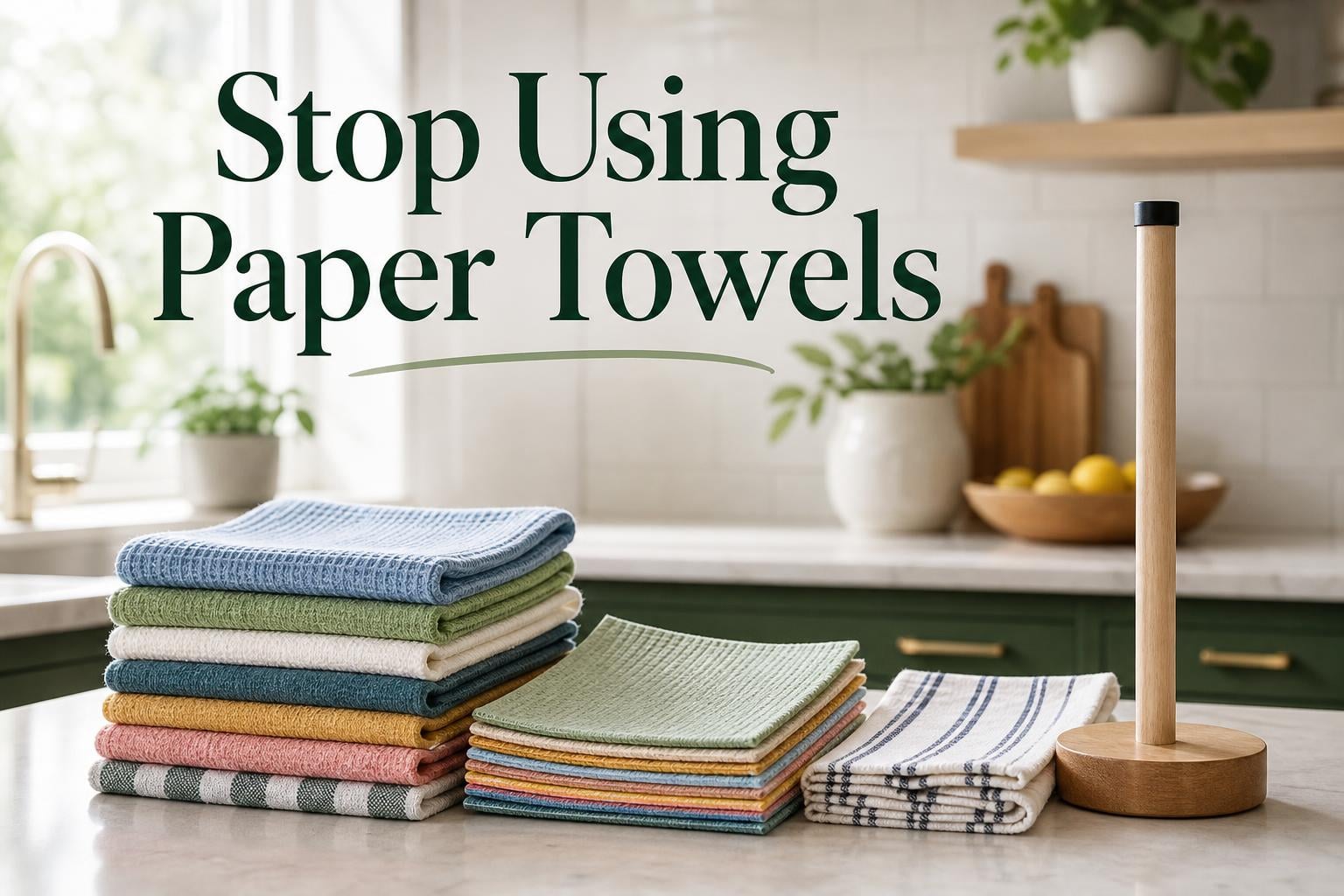
Swedish dishcloths are the most recommended single alternative across every major guide and they have become mainstream in recent years. Made from a blend of cellulose and cotton, these flat, sponge-like cloths absorb up to 20 times their weight in liquid and dry quickly between uses, which prevents the bacterial growth that makes traditional sponges smell.
One Swedish dishcloth replaces approximately 17 rolls of paper towels over its lifespan, according to multiple manufacturers and verified by long-term users. They are machine washable, and at end of life they are fully compostable since they are plant-based. A pack of four typically covers a household for six months or more.
Use them for wiping counters, cleaning spills, washing dishes, and general surface cleaning. They work wet or dry, and many people find them more effective than paper towels for most kitchen tasks.
Unpaper towels are flannel or cotton cloths designed to mimic the look and feel of paper towels. Many styles snap together and roll directly onto a standard paper towel holder, which makes the transition feel seamless for households used to tearing off sheets.
Brands like Marley’s Monsters popularized the format, but you can also make your own from flannel fabric. They are highly absorbent, get softer with each wash, and come in patterns that hide stains so they look clean even after heavy use. A set of 24 typically covers a family of four for a full laundry cycle.
For step-by-step instructions on making your own, check out these zero waste DIY projects that include unpaper towel tutorials.
Beyond Swedish dishcloths and unpaper towels, several other cloth types round out a complete paperless kitchen. Each material has strengths that make it suited to particular tasks.
For more detailed paper towel usage tips that pair these alternatives with money-saving strategies, our dedicated guide breaks down each option further.
The households with the most success do not treat all cloths equally. They use a tier system that keeps clean cloths clean and reserves worn ones for the dirtiest jobs.
When a Tier 1 cloth gets too worn or stained for display, it graduates to Tier 2. When a Tier 2 cloth gets ragged, it moves to Tier 3. This system means you always have the right cloth for the job without feeling wasteful.
Pairing cloth alternatives with other green cleaning habits creates a complete zero-waste routine that goes far beyond just paper towels.
Also Read: Greenhouse Cooling Tricks: Your Ultimate Guide
The laundry question is the number one practical concern people have about switching. The good news is that with a simple system, the extra laundry load is minimal and the odor problem is entirely solvable.
Most households find they need to run one additional load of laundry per week for their cloth collection. That is the entire added effort. Designate a small bin or wet bag under the sink for dirty cloths and simply dump them in the wash when the bin fills up.
Wash cloths in hot water to kill bacteria effectively. A temperature of 140 degrees Fahrenheit or higher sanitizes cloth without requiring bleach. If your machine has a sanitize cycle, use it for the weekly cloth load. Add a half cup of white vinegar to the rinse cycle as a natural deodorizer and fabric softener alternative.
Avoid fabric softener and dryer sheets on kitchen cloths. They coat fibers with a waxy residue that reduces absorbency over time. Air drying on a line or drying rack extends cloth life and saves energy, but a dryer on medium heat works fine too.
The key to odor-free cloths is letting them dry between uses. Do not bunch up a wet cloth and toss it in a bin. Rinse it, wring it out thoroughly, and drape it over the faucet or a hook so air can circulate. A cloth that dries fully will not develop that sour smell.
Swedish dishcloths are especially good in this regard because their flat design and cellulose content let them dry hard and flat, naturally inhibiting bacterial growth. For cloth towels that have developed a smell, a soak in hot water with vinegar and baking soda usually restores them.
Stains are inevitable in a kitchen, which is why many experienced households choose patterned or dark-colored cloths for daily use. Patterns camouflage coffee stains, turmeric, and tomato sauce so cloths look presentable even after months of service.
One of the biggest advantages of cloth over paper is that natural fiber cloths are compostable at the end of their useful life. Cotton, linen, and flannel break down in a home or municipal compost system. Swedish dishcloths are fully compostable since they are cellulose-based.
For synthetic cloths like microfiber that are not compostable, look into textile recycling programs. Many communities now offer textile recycling pickup or drop-off locations that accept worn-out fabrics regardless of material.
You can also learn more about eco-friendly dishwashing practices that complement your cloth routine and reduce water usage further.
Most people who try to quit paper towels hit the same set of obstacles. Knowing what to expect and having a plan for each challenge makes the difference between success and another abandoned resolution.

This is the number one objection people raise, and it deserves a thorough answer. The fear is that reusable cloths spread bacteria around the kitchen instead of throwing it away. The reality is that proper cloth management is just as hygienic as disposable towels, and in some cases more so.
The foundation of a hygienic cloth system is preventing cross-contamination. Use a color-coded system so that cloths used for raw meat areas never touch food prep surfaces. For example, designate red cloths for bathroom and meat cleanup, blue for counters and general cleaning, and white for dishes and food contact surfaces. This is the same protocol restaurants follow under health department regulations.
Change out kitchen cloths daily or whenever they become visibly soiled. A cloth that dries between uses and gets washed in hot water weekly poses no meaningful health risk. Food safety experts note that the risk of cross-contamination comes from improper technique, not from the cloth material itself.
This is the single most common specific question across every forum, comment thread, and FAQ on the topic. What do you do with bacon grease, raw chicken juices, and other genuinely gross messes without paper towels?
The tier system handles this elegantly. Keep your oldest, most worn Tier 3 cloths specifically for grease and raw meat cleanup. Pour excess bacon grease into a jar for disposal rather than soaking it into a cloth. For the remaining residue, a dedicated grease cloth wipes it up and then goes straight to the wash.
Many households keep a small roll of bamboo paper towels hidden for the worst messes like pet vomit or raw meat packaging. This is not failure. It is a reasonable, pragmatic compromise. The goal is to cut paper towel use by 90 percent, not to achieve impossible purity. Even keeping a roll for true emergencies while replacing daily use with cloths represents a massive reduction in waste and spending.
Getting spouses, children, and roommates on board is often harder than making the switch yourself. Partners who have used paper towels their entire lives may see the change as an inconvenience imposed on them.
The most effective approach is to make the new system easier than the old one. If cloth alternatives are right where the paper towels used to be and paper towels are in a far cabinet, family members will naturally grab what is closest. Do not announce a ban or make it a power struggle. Just quietly rearrange the kitchen and let inertia do the work.
For kids, make it engaging. Let them pick out patterned unpaper towels in their favorite colors. Give each family member a designated cloth napkin with their name or initial. Gamify the transition with a chart tracking paperless days. Children respond well to feeling like participants rather than subjects of a new rule.
When guests visit and notice the absence of paper towels, keep it casual. A simple explanation that you are cutting waste and saving money is usually met with curiosity rather than judgment. Many people report that guests ask follow-up questions and end up inspired to try it themselves.
A good storage system makes paperless living feel effortless. Fold clean cloths into a basket or drawer in the same spot where paper towels used to live. Swedish dishcloths can stand upright in a small container next to the sink. Hang cloth napkins on hooks or roll them into a basket on the table.
For dirty cloths, a small lined bin under the sink or a wet bag hanging on a hook works well. Some households keep a mesh laundry bag on the back of the pantry door specifically for kitchen textiles so they are easy to grab and toss in the wash.
Also Read: Eco-Friendly Paper Towels: A Composting Guide You Need
Having a concrete plan turns intention into lasting change. Here is a practical 30-day roadmap that households have used to transition successfully.
Week 1: Awareness. Everyone in the household tracks paper towel use without changing anything. This builds shared awareness of the scale of consumption and gets family members thinking about it before any change happens.
Week 2: Stock up. Order or gather your alternatives. Swedish dishcloths, bar mop towels, cloth napkins, and a set of unpaper towels. Set up the storage basket and the dirty-cloth bin. Move paper towels to a less accessible location.
Week 3: Full switch. Go paperless for all daily tasks. Keep hidden paper towels only for genuine emergencies. Assign each family member a cloth napkin and let kids pick their patterns.
Week 4: Evaluate and adjust. Review what worked and what did not. Buy more of whichever cloth type you reach for most. Refine your laundry routine if needed.
Your switch can ripple outward. When friends notice your cloth system and ask about it, that conversation plants a seed. Sharing your cost savings and experience makes the change feel achievable rather than extreme.
Consider joining or starting a local sustainability group. Community connections provide accountability, shared tips, and sometimes bulk purchasing power for cloth alternatives. Online communities on Reddit, including r/Anticonsumption and r/ZeroWaste, offer support and practical advice from people years into the journey.
Most people report that grabbing a cloth instead of a paper towel becomes automatic within two to three weeks. The key is putting paper towels out of sight and placing cloth alternatives in the same spot the roll used to occupy. After a month, the new habit feels completely normal.
Reserve your oldest, most worn cloths as Tier 3 gross-task rags specifically for grease and raw meat cleanup. Pour excess bacon fat into a jar for solid disposal, then wipe the remaining residue with a dedicated grease cloth that goes straight to the wash. Many households also keep a small roll of bamboo paper towels hidden as a backup for the worst messes.
Yes, when managed properly. Wash cloths in hot water weekly, let them dry fully between uses, and use a color-coded system to prevent cross-contamination. This mirrors the protocol that restaurants and food service operations follow under health department regulations.
A practical starter collection includes 24 unpaper towels or bar mop cloths, 6 to 10 cloth napkins, 4 to 6 Swedish dishcloths, and a set of flour sack towels for dish drying. This quantity lets you go a full week between washes without running out.
The average household spends between $175 and $240 per year on paper towels. A starter set of reusable cloths costs $40 to $60 upfront and lasts one to three years. Most families break even within three months and bank the savings every month after that.
The secret is letting cloths dry completely between uses. Rinse, wring out thoroughly, and drape over a faucet or hook so air circulates. A cloth that dries fully will not develop odor. For cloths that already smell, soak them in hot water with white vinegar and baking soda before washing.
In most European and Japanese households, cloth kitchen towels and dishcloths are the standard. Paper towels are far less common and often viewed as an unnecessary American convenience. Many Europeans find it odd that Americans use disposable sheets for routine cleaning that a simple cloth handles perfectly well.
Deciding to stop using paper towels is one of the highest-impact, lowest-effort changes you can make for both your wallet and the planet. The $175 to $240 in annual savings, the dramatic reduction in household waste, and the satisfaction of breaking a throwaway habit all add up to a switch that pays for itself within months.
Key Takeaway Points:
The transition takes about three weeks to feel natural and a month to become second nature. Once you experience how simple and effective a well-organized cloth system is, you will wonder why you ever relied on disposable sheets in the first place.
