

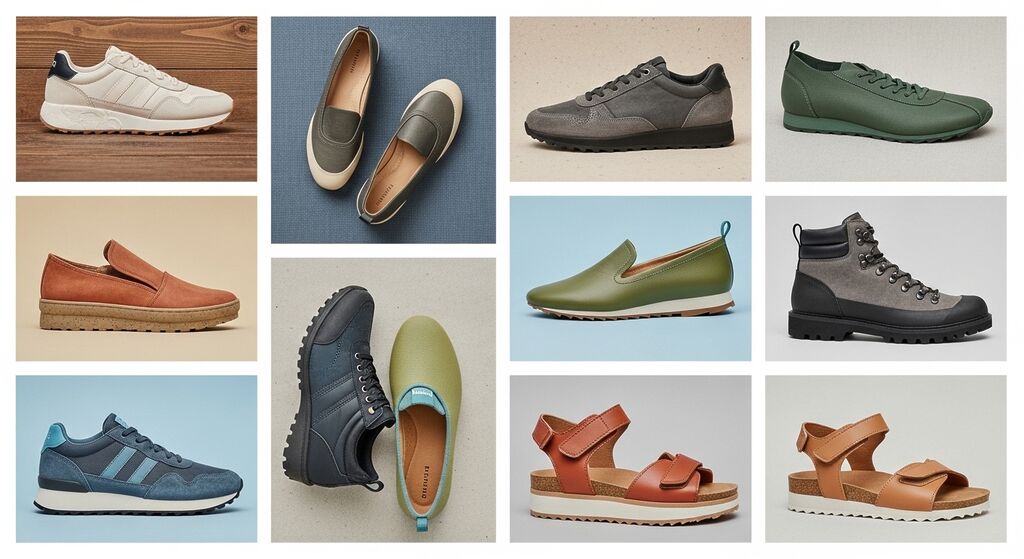
Finding the best sustainable shoe brands feels overwhelming when every company claims to be “eco-friendly.” The footwear industry produces over 20 billion pairs of shoes annually, and 97% of those shoes end up in landfills. That is a staggering amount of waste from an industry responsible for 1.4% of global greenhouse gas emissions.
Our team at GreenWashing Index has spent months investigating shoe brands that talk a big game about sustainability. We have analyzed certifications, traced supply chains, and identified the red flags that separate genuine eco-friendly footwear from clever marketing. This guide cuts through the noise to show you what actually matters when choosing sustainable shoes.
By the end of this article, you will understand exactly what makes a shoe brand sustainable, which certifications to trust, and how to spot greenwashing before you spend your money. We will also highlight the brands that are walking the walk, not just talking the talk.
True sustainability in footwear comes down to three core pillars: materials, manufacturing ethics, and end-of-life responsibility. A brand needs to perform well across all three to earn the sustainable label.
The materials make up about 70% of a shoe’s environmental impact. Sustainable brands prioritize recycled, organic, or rapidly renewable materials that reduce resource extraction and pollution. Look for shoes made from recycled ocean plastic, organic cotton, hemp, or innovative plant-based leathers.
Conventional shoes rely heavily on virgin petroleum-based synthetics and chrome-tanned leather. These materials require massive amounts of water, chemicals, and energy to produce. A single pair of traditional sneakers can generate 30 pounds of carbon dioxide emissions during manufacturing.
A truly sustainable brand ensures fair wages and safe working conditions throughout its supply chain. This includes the farms growing raw materials, the factories assembling components, and the facilities doing final production. Look for Fair Trade Certified factories and B Corp certification, which requires verified social and environmental performance.
Transparency matters here. Brands that publish their factory lists and audit results demonstrate accountability. If a company cannot tell you where its shoes are made, that is a red flag.
The most sustainable shoe is one that lasts and can be repaired or recycled when it finally wears out. Leading brands offer take-back programs where old shoes get recycled into new products or repairable shoes that extend lifespan by years.
Some companies now design shoes specifically for disassembly, using solvent-free adhesives and single-material constructions that make recycling easier. This circular approach keeps materials in use rather than sending them to landfills.
Understanding materials helps you evaluate brands beyond their marketing claims. Here is what to look for in each category of sustainable footwear materials.
Recycled ocean plastic has become a popular upper material for sneakers. Brands like Adidas partner with Parley for the Oceans to transform intercepted marine debris into performance yarn. Each pair of shoes made this way removes approximately 11 plastic bottles from ocean ecosystems.
Recycled rubber from tires and industrial waste makes durable outsoles with significantly lower carbon footprints than virgin rubber. Some brands incorporate factory scraps and post-consumer waste into their midsoles and linings.
Organic cotton grown without synthetic pesticides or fertilizers reduces water pollution and protects farm workers. Look for GOTS (Global Organic Textile Standard) certification to verify organic claims.
Hemp requires minimal water, no pesticides, and actually improves soil health as it grows. It creates durable canvas uppers that age beautifully. Merino wool from responsibly raised sheep offers natural temperature regulation and odor resistance for sockless wear.
Tencel lyocell, made from sustainably harvested eucalyptus trees, uses a closed-loop production process that recycles 99% of solvents. It produces a soft, breathable fabric perfect for casual sneakers and sandals.
Pinatex uses pineapple leaf fibers, a byproduct of existing agriculture, to create a leather-like material. It provides income for farming communities while requiring no additional land, water, or pesticides.
Apple leather combines apple waste from juice production with polyurethane to create a flexible, durable material. Cork, harvested from regenerating tree bark, makes excellent insoles and accents with natural antimicrobial properties.
Mushroom leather (Mylo) grown from mycelium offers perhaps the most promising alternative. It mimics animal leather’s texture and durability while using a fraction of the resources and avoiding the toxic tanning process entirely.
Certifications provide third-party verification of sustainability claims. Here are the credentials that actually mean something in the footwear industry.
B Corp is the gold standard for overall corporate responsibility. Certified companies must meet rigorous standards for social and environmental performance, public transparency, and legal accountability. The assessment covers governance, workers, community, environment, and customers.
Brands like Allbirds, Veja, and Toms have achieved B Corp status, which requires recertification every three years. This ongoing accountability distinguishes B Corps from companies that made one-time improvements for marketing purposes.
Fair Trade Certified factories guarantee safe working conditions, fair wages, and community development premiums. Workers receive additional funds for healthcare, education, and infrastructure projects based on production volumes.
This certification addresses the labor exploitation common in conventional footwear manufacturing. When you see the Fair Trade label, you know workers were treated with dignity throughout the production process.
OEKO-TEX certifies that textiles are free from harmful substances. The STANDARD 100 label tests for over 1,000 chemicals known to be hazardous to human health.
The Leather Working Group (LWG) audits tanneries for environmental compliance, including water usage, chemical management, and waste disposal. Gold-rated tanneries meet the highest standards.
FSC (Forest Stewardship Council) certification ensures cork, rubber, and packaging materials come from responsibly managed forests that provide environmental, social, and economic benefits.
Climate Neutral certification requires brands to measure, offset, and reduce their entire carbon footprint. Certified companies invest in verified carbon offset projects while working to eliminate emissions at the source.
1% for the Planet members donate at least 1% of annual revenue to environmental nonprofits. This commitment demonstrates genuine prioritization of environmental causes beyond marketing statements.
After analyzing dozens of brands across materials, certifications, and transparency, here are the standouts in each major footwear category. These brands represent the best sustainable shoe brands 2026 based on verified practices, not just marketing.
Allbirds pioneered the sustainable sneaker movement with merino wool and eucalyptus tree fiber uppers. Their SweetFoam soles use sugarcane-based green EVA instead of petroleum. The company achieved carbon neutrality and publishes detailed environmental impact labels for every product.
Veja combines Amazonian wild rubber, organic cotton, and recycled plastic bottles into stylish sneakers worn by celebrities and activists alike. They maintain transparent pricing, showing exactly what goes into each shoe’s cost.
Cariuma uses bamboo, recycled plastics, and natural rubber in their skate-inspired sneakers. For every pair sold, they plant two trees in the Brazilian rainforest. Their direct-to-consumer model reduces retail markup while maintaining quality.
Nothing New lives up to its name by making sneakers entirely from recycled materials. Uppers come from recycled plastic, laces from fishing nets, and outsoles from recycled rubber. The classic designs work with any outfit.
For cold weather and outdoor adventures, sustainable boots need to balance durability with environmental responsibility. Sustainable winter boots use waterproof membranes free from perfluorinated chemicals (PFCs) and insulation from recycled materials.
Nisolo creates leather boots in certified factories with transparent pricing and repair programs. Their Leather Working Group Gold certification ensures responsible tanning practices.
Fortress of Inca partners with family-owned factories in Peru, paying fair wages for handcrafted leather boots. Each pair supports artisan communities while lasting years with proper care.
For hiking and outdoor pursuits, check our dedicated guide to sustainable hiking shoes featuring brands that balance trail performance with environmental responsibility.
Sandals have a lighter environmental footprint by design, requiring fewer materials. The best sustainable options use natural rubber, recycled materials, and simple constructions that last multiple seasons.
Indosole transforms discarded tires into durable sandal soles, preventing rubber waste from burning or landfilling. Each pair repurposes one tire that would otherwise pollute.
Okabashi manufactures sandals in the USA from a proprietary bio-based material. Their closed-loop recycling program accepts worn-out sandals and transforms them into new pairs.
For more sandal options including men’s styles, see our complete guide to eco-friendly sandals for men.
Finding professional shoes that meet sustainability standards presents unique challenges. Traditional dress shoes rely heavily on leather and formal construction methods.
Rothy’s uses recycled plastic bottles to create knit uppers that look professional while staying washable and comfortable. Their 3D knitting process produces minimal waste compared to cut-and-sew methods.
Nisolo and Everlane offer leather dress shoes with certified responsible sourcing. Both publish factory information and invest in longevity through classic designs that stay stylish for years.
VIVAIA creates professional flats from recycled plastic bottles with carbon-neutral shipping. Their direct-to-consumer model keeps prices accessible while maintaining quality.
Indoor shoes might seem minor, but considering we wear them for hours daily, sustainable materials matter. Look for natural rubber soles, organic linings, and removable insoles that can be replaced to extend shoe life.
Our guide to eco-friendly slippers covers brands using wool, recycled materials, and fair labor practices for comfortable indoor footwear.
Greenwashing runs rampant in the footwear industry. After analyzing hundreds of marketing claims, our team has identified the specific red flags that signal a brand is more talk than action.
Watch out for meaningless terms like “eco-conscious,” “green,” or “planet-friendly” without specific data backing them up. A truly sustainable brand tells you exactly what percentage of materials are recycled, where factories are located, and how they measure environmental impact.
Allbirds publishes a carbon footprint number for every shoe. Veja breaks down the origin of each material. If a brand cannot provide specifics, they are likely greenwashing.
Many conventional brands add one recycled element to an otherwise conventional shoe and market it as sustainable. A shoe with a recycled polyester upper but virgin rubber sole, toxic adhesives, and unethical manufacturing is not truly sustainable.
Look for holistic approaches. Sustainable brands address materials, manufacturing, packaging, shipping, and end-of-life together rather than highlighting one green feature while ignoring everything else.
Some brands emphasize vegan materials while using petroleum-based synthetics that create microplastic pollution. Others tout organic cotton while ignoring the harsh chemical dyes and toxic adhesives in the same shoe.
Plant-based leathers often contain significant polyurethane content. A product marketed as “apple leather” might be 50% apple waste and 50% plastic. Ask brands for exact material compositions when evaluating these claims.
We have seen brands display certification logos they do not actually hold, or use meaningless self-created “certifications” that sound official. Always verify certification claims through the issuing organization’s database.
B Corp maintains a public directory of certified companies. Fair Trade and OEKO-TEX have verification tools on their websites. If a brand claims certification but does not appear in official databases, that is deliberate deception.
Brands sometimes claim carbon neutrality while only offsetting manufacturing emissions while ignoring shipping, retail operations, and product end-of-life. True carbon accountability covers the entire lifecycle from raw material extraction through disposal.
Be skeptical of brands that offset without reducing. Purchasing carbon credits while maintaining wasteful practices does not address the root problem. The best brands combine offsetting with aggressive emissions reduction programs.
Brands releasing new styles weekly cannot be truly sustainable. Rapid production cycles encourage overconsumption and make quality control difficult. True sustainability includes producing only what is needed and designing for longevity rather than trends.
Look for brands with smaller, timeless collections. Slow fashion principles align better with environmental goals than constant new releases marketed as “sustainable.”
With so many factors to consider, here is a practical framework for making purchase decisions that balance sustainability, quality, and your budget.
Sustainable shoes typically cost 20-50% more than fast fashion alternatives. This reflects fair wages, quality materials, and responsible manufacturing rather than inflated margins. However, higher price does not automatically mean better sustainability.
Calculate cost-per-wear by dividing the price by expected uses. A $150 sustainable sneaker worn 300 times costs $0.50 per wear. A $30 fast fashion shoe worn 30 times before falling apart costs $1.00 per wear. Quality sustainable shoes often save money long-term.
No brand is perfect across all sustainability metrics. Decide what matters most to you: animal welfare, worker rights, carbon footprint, or chemical-free materials. This helps you accept reasonable trade-offs without expecting perfection.
Vegan shoppers might prioritize recycled synthetics despite microplastic concerns. Climate-focused buyers might accept leather if it comes from carbon-neutral operations with LWG certification. Your priorities are valid.
Even the most sustainable shoe becomes wasteful if you replace it every six months. Extend shoe life by rotating pairs (allowing 24 hours between wears lets materials recover), cleaning regularly, and addressing minor repairs before they become major problems.
Use cedar shoe trees for leather footwear to maintain shape and absorb moisture. Clean canvas uppers with mild soap rather than machine washing, which degrades adhesives. Replace insoles every 6-12 months to refresh cushioning and support.
Quality sustainable shoes are designed for repair. Resoling leather boots, re-stitching uppers, and replacing worn insoles can double or triple a shoe’s lifespan. Many sustainable brands offer repair services or partner with cobblers familiar with their construction.
Replace shoes when the midsole compression compromises support (visible creasing or permanent indentations), when outsole wear creates safety hazards, or when upper materials fail beyond repair. Dispose of worn-out sustainable shoes through brand take-back programs when available.
Hoka operates under Deckers Outdoor Corporation, which has made significant sustainability commitments including carbon neutrality goals and increased use of recycled materials. However, Hoka does not hold B Corp certification or Fair Trade certification for its manufacturing. The brand has improved its environmental practices recently but operates more as a conventional athletic brand transitioning toward sustainability rather than a purpose-built sustainable company.
Adidas has made stronger public sustainability commitments, partnering with Parley for the Oceans to create shoes from recycled ocean plastic and pledging to use only recycled polyester by 2024. They also hold more transparent supply chain reporting. Nike has invested in sustainable materials like Flyleather and operates manufacturing with renewable energy, but has faced more labor rights controversies. Both remain large-scale manufacturers with significant environmental impacts, but Adidas currently leads in measurable sustainability metrics.
Nothing New ranks among the most eco-friendly by using 100% recycled materials for every component. Other top contenders include Allbirds for carbon transparency and offsetting, Veja for supply chain innovation using Amazonian rubber, and Cariuma for tree-planting programs and bamboo materials. The ‘most eco-friendly’ title depends on your priorities: vegan materials, carbon footprint, or circular programs. Each brand excels in different areas.
The 3 shoe rule suggests owning three quality pairs for different purposes rather than many cheap pairs: one for daily casual wear, one for exercise or outdoor activities, and one for formal or professional settings. This minimalist approach reduces overall consumption while ensuring you have appropriate footwear for every occasion. Sustainable fashion advocates embrace this rule to combat overconsumption and fast fashion’s environmental impact.
Many podiatrists recommend Ecco shoes for patients needing supportive, well-constructed footwear. Ecco manufactures its own leather and controls quality throughout production, resulting in consistent fit and durability. However, Ecco operates as a conventional shoe company without the sustainability certifications or environmental commitments that define truly eco-friendly brands. For patients prioritizing both foot health and environmental impact, brands like Birkenstock or VIVOBarefoot offer podiatrist-recommended designs with stronger sustainability credentials.
The best sustainable shoe brands 2026 combine eco-friendly materials, ethical manufacturing, and honest transparency about their environmental impact. By understanding what certifications actually mean and how to spot greenwashing, you can make purchasing decisions that align with your values while getting quality footwear that lasts.
Start by identifying which sustainability factors matter most to you, whether that is vegan materials, carbon footprint, or worker welfare. Use that priority list to evaluate brands rather than expecting perfection across every metric. Remember that the most sustainable shoe is the one you will wear for years, not the one that sits in your closet because it was marketed as eco-friendly.
As the footwear industry evolves, consumer demand drives real change. Every purchase from a genuinely sustainable brand sends a message that environmental responsibility and ethical labor practices matter. Your choices help push the industry toward better practices while keeping quality shoes on your feet.
