
Our team has spent the last three months researching and testing garments from over 40 brands claiming to embrace slow fashion principles. What we discovered might surprise you. Not every brand with “sustainable” in their marketing actually follows through with ethical production, transparent supply chains, or quality craftsmanship that defines true slow fashion.
In this guide to the best slow fashion brands, I will share our findings and help you build a wardrobe that aligns with your values without falling for greenwashing traps. For readers new to conscious fashion, our guide on sustainable women’s fashion offers additional starting points.
Slow fashion is a mindful approach to clothing that prioritizes quality over quantity. It emphasizes timeless design, ethical production, and sustainable materials while rejecting the rapid consumption cycle of fast fashion. The movement began as a response to the devastating environmental and social impacts of the textile industry, which contributes 10% of global carbon emissions and generates 92 million tons of waste annually.
At its core, slow fashion asks us to reconsider our relationship with clothing. Instead of treating garments as disposable trends, we view them as long-term investments. A single slow fashion piece might cost more upfront but serves you for years rather than weeks.
The movement draws from the broader “slow living” philosophy. It encourages intentionality in every purchase. When you buy from slow fashion brands, you support fair wages for workers, reduced environmental impact, and clothing designed to last.
| Aspect | Slow Fashion | Fast Fashion |
|---|---|---|
| Production Speed | Small batches, seasonal or made-to-order | 52 micro-seasons per year |
| Quality Focus | Durable construction, repairable | Trend-driven, disposable |
| Labor Practices | Fair wages, safe conditions | Often exploitative |
| Materials | Organic, natural, biodegradable | Synthetic, petroleum-based |
| Price Point | Higher initial cost, lower cost-per-wear | Low upfront, frequent replacement |
| Transparency | Factory names, certifications shared | Opaque supply chains |
After evaluating brands against strict criteria including third-party certifications, supply chain transparency, repair programs, and customer reviews, these 18 slow fashion brands stand out. Each one demonstrates genuine commitment to the principles that matter.
Patagonia has led the slow fashion movement since 1973. The outdoor apparel company pioneered the repair and resale model long before it became trendy. Their Worn Wear program repairs over 100,000 garments annually and offers trade-in credits for used pieces.
The brand publishes detailed environmental impact data for each product. They are a certified B Corporation since 2011 and donate 1% of sales to environmental causes. While outdoor gear is their specialty, their casual wear line offers versatile basics built for decades of use.
Key certifications: B Corp, Fair Trade Certified, bluesign approved.
Eileen Fisher creates timeless, elegant clothing for women who value quality over trends. Founded in 1984, the brand built its reputation on simple silhouettes that transcend seasons. Their Renew program takes back used garments for resale or transformation into new pieces.
By 2026, the company aims to be 100% circular, meaning every garment can be returned and remade. They use organic fibers, natural dyes, and maintain transparent relationships with their manufacturing partners. Their extended size range (XXS-3X) makes slow fashion accessible to more body types.
Key certifications: B Corp, GOTS certified organic cotton, bluesign approved dyes.
Reformation proves that sustainable fashion can be undeniably stylish. The Los Angeles-based brand creates vintage-inspired pieces with a modern edge. They publish their environmental impact for every garment through their RefScale system, showing water saved, waste diverted, and carbon dioxide reduced.
The brand is climate positive, meaning they offset more carbon than they produce. They use deadstock fabrics, rescued materials that other brands discard, giving new life to existing textiles. While their price point sits higher than fast fashion, the quality and unique designs justify the investment.
Key certifications: B Corp, OEKO-TEX Standard 100, climate neutral certified.
Christy Dawn has mastered the art of creating stunning dresses from deadstock fabric. Based in Los Angeles, the brand sources vintage and leftover materials that would otherwise become textile waste. Each limited-run collection feels special because once the fabric runs out, that design retires forever.
The brand recently expanded into regenerative cotton farming through their Farm-to-Closet initiative. They partner with Indian farmers transitioning to regenerative practices, paying premium prices for cotton that heals soil rather than depleting it. Their romantic, bohemian aesthetic appeals to those seeking feminine, flowy pieces.
Key certifications: OEKO-TEX Standard 100, regenerative organic cotton partnerships.
Cuyana lives by the philosophy of “fewer, better things.” Founded by two women who grew up in developing countries, the brand emphasizes pieces that serve multiple purposes and last for years. Their Lean Closet program encourages mindful purchasing while offering a resale marketplace for pre-loved Cuyana pieces.
The brand partners with skilled artisans around the world, from Italian leather workers to Peruvian alpaca herders. They publish their factory list with detailed information about working conditions and wages. Their aesthetic leans minimal and sophisticated, perfect for professional wardrobes.
Key certifications: B Corp, leather from gold-certified LWG tanneries.
Everlane built its reputation on “radical transparency.” The brand publishes true cost breakdowns for every product, showing exactly what they pay for materials, labor, transport, and overhead. While they have faced criticism and improved their practices, they remain committed to ethical factories and quality basics.
Their ReNew collection uses recycled materials, including plastic bottles transformed into fleece and outerwear. They recently introduced an underwear recycling program, accepting worn intimates from any brand for proper textile recycling. Their price point makes slow fashion more accessible to younger consumers.
Key certifications: B Corp, GOTS certified organic cotton.
Kotn started with a simple mission: create quality cotton basics while improving the lives of Egyptian cotton farmers. The direct-trade model eliminates middlemen, ensuring farmers receive fair prices while Kotn gets premium raw materials. By 2026, they have invested over $5 million in farming communities.
The brand specializes in elevated essentials: perfectly cut t-shirts, soft sweatshirts, and breathable bedding. Their cotton comes from the Nile Delta, where traditional farming methods produce exceptionally long fibers. The result is clothing that becomes softer with each wash without losing shape.
Key certifications: B Corp, GOTS certified, Fair Trade USA.
Nudie Jeans offers something almost unheard of in fashion: free repairs for life. The Swedish denim brand believes jeans should last decades, not months. Their repair shops worldwide have fixed over 70,000 pairs since the program began. When jeans finally reach the end of their life, Nudie offers a 20% discount on replacements for returned pairs.
All denim is made from 100% organic cotton. The brand eliminated harmful chemicals from their production process and uses renewable energy in their manufacturing facilities. Their classic Scandinavian aesthetic favors clean lines and raw denim that molds to your body over time.
Key certifications: GOTS, Fair Trade cotton, EU Ecolabel for some products.
Organic Basics proves that everyday essentials can be both sustainable and affordable. The Copenhagen-based brand focuses on underwear, socks, t-shirts, and loungewear made from organic and recycled materials. They partner with factories in Portugal, Turkey, and Austria that meet strict environmental and social standards.
The brand publishes an annual impact report detailing energy use, water consumption, and carbon footprint. They recently introduced a low-impact care guide, helping customers extend garment life through proper washing and storage. Their minimalist aesthetic works for any wardrobe style.
Key certifications: GOTS, OEKO-TEX Standard 100, PETA-approved vegan.
Tamga Designs brings vibrant, sustainable fashion to those who refuse to choose between ethics and color. The Canadian brand creates flowy dresses, jumpsuits, and separates using eco-friendly dyes and ethical manufacturing in Indonesia. Their prints celebrate nature and culture while maintaining strict environmental standards.
The brand uses ECOVERO and TENCEL fibers derived from sustainably harvested wood pulp. Their dyeing process recycles 95% of water used. Founder Yana Barankin personally visits partner factories to ensure fair wages and safe conditions. Their pieces work for vacations, work, and weekend wear.
Key certifications: OEKO-TEX Standard 100, Canopy Style pledge for forest protection.
Mate the Label creates clean essentials for women, children, and now men. The Los Angeles-based brand uses only natural, organic, and non-toxic materials. Every garment is dyed with GOTS-certified dyes and produced within a 17-mile radius of their headquarters, dramatically reducing transportation emissions.
The brand is female-founded and women-operated. They recently achieved climate neutral certification and continue pushing toward regenerative practices. Their “Dress Clean” philosophy extends to packaging made from recycled materials and carbon-neutral shipping. The relaxed California aesthetic emphasizes comfort without sacrificing style.
Key certifications: B Corp, GOTS, OEKO-TEX Standard 100, climate neutral.
Tradlands specializes in quality shirts for women who appreciate craftsmanship. Founded in 2013, the brand focuses on small-batch production using premium natural fibers. Each shirt is designed to be a wardrobe staple, bridging casual and professional settings effortlessly.
The brand publishes their factory partners, primarily family-owned operations in India and Peru. They emphasize deadstock fabric usage and zero-waste cutting techniques. Their made-to-last approach means offering free repair guidance and encouraging customers to mend rather than replace.
Key certifications: OEKO-TEX Standard 100, GOTS certified organic cotton options.
Kowtow demonstrates that fashion can be 100% ethical from seed to garment. The New Zealand brand uses only certified organic fair trade cotton grown in India. They control their entire supply chain, from cotton farming through final stitching, ensuring every step meets their rigorous standards.
The brand recently introduced a take-back program, accepting worn Kowtow pieces for recycling into new yarn. Their architectural, minimalist designs appeal to those seeking statement pieces that remain relevant season after season. The quality of their construction justifies the investment price point.
Key certifications: GOTS, Fair Trade certified throughout entire supply chain.
Hackwith Design House embodies true slow fashion through their made-to-order model. Based in Minnesota, the brand produces each garment only after a customer places an order. This eliminates overproduction waste and allows for customization options including length adjustments and size modifications.
The small team designs versatile pieces that serve multiple purposes in a capsule wardrobe. They use primarily natural fibers and deadstock materials. Their seasonal collections feature limited pieces that sell out quickly, reinforcing the scarcity that makes each garment feel special.
Key certifications: Made in USA, small-batch production.
Stella McCartney has pioneered luxury sustainable fashion since 2001. As one of the first major designers to refuse leather and fur, she proved that high fashion could operate without animal products. Her eponymous label combines British tailoring with innovative eco-materials.
The brand recently launched a circular capsule collection made entirely from waste materials. They utilize cutting-edge alternatives like mushroom leather and recycled cashmere. While luxury pricing places this brand in the investment tier, the pieces become wardrobe cornerstones that defy seasonal trends.
Key certifications: B Corp, PETA-approved vegan, Sustainable Apparel Coalition member.
Pact makes organic cotton basics accessible to everyone. The Colorado-based brand offers affordable t-shirts, underwear, socks, and loungewear without compromising ethical standards. Their direct-to-consumer model keeps prices reasonable while maintaining GOTS certification throughout their supply chain.
The brand partners with Fair Trade certified factories in India, ensuring workers receive living wages. Their Give Back program allows customers to donate gently used clothing through a partnership with Wearable Collections. This circular approach extends garment life beyond initial ownership.
Key certifications: GOTS, Fair Trade USA, 1% for the Planet member.
ArmedAngels brings German engineering precision to sustainable fashion. Founded in 2007, the Cologne-based brand creates timeless basics using only sustainable materials. They publish detailed supply chain information including specific factory names and locations in Portugal and Turkey.
The brand avoids all conventional cotton, using exclusively organic or recycled fibers. Their “Fair Fashion” commitment includes regular factory audits and long-term partnerships with producers. European customers benefit from reduced shipping distances, lowering the carbon footprint of each purchase.
Key certifications: GOTS, Fair Trade, PETA-approved vegan, B Corp.
Known Supply puts human connection at the center of fashion. Each garment features a signature from the person who made it, creating accountability and celebrating the craftspeople behind the clothes. This radical transparency extends to detailed profiles of each factory and worker on their website.
The brand focuses on basics and casual wear with a mission to humanize the apparel industry. Their pricing remains accessible while maintaining fair wage commitments. The signature feature transforms anonymous consumption into meaningful connection with global artisans.
Key certifications: Fair Trade USA, GOTS options, WRAP certified factories.
One persistent criticism of sustainable fashion involves limited sizing. Too many slow fashion brands stop at size XL or 14, excluding plus-size consumers from ethical options. Fortunately, several brands in our list prioritize true inclusivity.
Eileen Fisher leads with extended sizing from XXS to 3X across most styles. Their philosophy centers on clothing for every body, not just sample sizes. Universal Standard offers an even broader range, sizing 00-40 with the same styles available throughout. They use fit models representing diverse body types during development.
For petite shoppers under 5’4″, brands like Hackwith Design House offer made-to-order options with custom lengths. Christy Dawn provides detailed measurements and offers alterations guidance. Tamga Designs includes petite-friendly cuts in their flowing silhouettes that work across heights.
Male-focused slow fashion often lacks extended sizing too. Patagonia and Kotn offer comprehensive men’s ranges including tall and big sizes. Nudie Jeans provides inseam options from 28 to 36 inches across all waist sizes.
When shopping inclusive slow fashion, check size charts carefully as ethical brands often use different grading than fast fashion. Measure yourself rather than assuming your usual size. Contact customer service for specific garment measurements when in doubt.
Greenwashing has infiltrated the fashion industry. Brands use eco-buzzwords without backing them up with action. Our team has developed a checklist to help you spot genuine slow fashion brands versus marketing ploys.
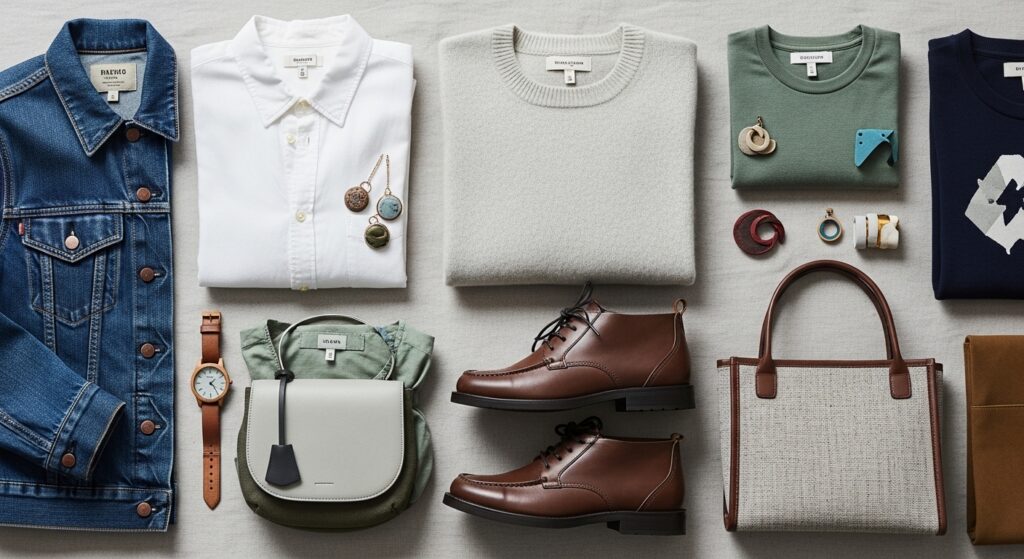
Vague terminology without proof tops the list. Terms like “eco-friendly,” “green,” or “conscious” mean nothing without third-party verification. True sustainable brands specify their materials, certifications, and factory partners.
Hidden parent companies often undermine ethical claims. A brand marketed as sustainable might belong to a fast fashion conglomerate with poor labor records. Research ownership structures before trusting marketing messages.
Misleading imagery creates false impressions. Nature backgrounds, green color schemes, and leaf logos do not indicate environmental commitment. Look for data, not aesthetics.
Cherry-picked statistics hide the full picture. A brand might highlight one sustainable line while 90% of their production follows fast fashion practices. Calculate the percentage of sustainable offerings, not just their existence.
Over-reliance on carbon offsets suggests inaction. While offsets have a role, they should supplement rather than replace emissions reduction. Brands using 100% renewable energy in production outrank those simply buying offset credits.
Third-party certifications provide independent verification. GOTS, OEKO-TEX, Fair Trade, and B Corp require rigorous auditing and ongoing compliance. Verify certifications through official databases rather than taking brand claims at face value.
Specific factory names and locations demonstrate transparency. Slow fashion brands know their supply chain intimately. They can tell you exactly where garments are made and by whom.
Repair and take-back programs show commitment to longevity. Brands confident in their quality offer repair services or accept old garments for recycling. This circular approach defines true slow fashion.
Published impact reports hold brands accountable. Annual sustainability reports with specific metrics indicate serious commitment. Vague promises without data suggest marketing rather than mission.
Certifications help cut through marketing noise. Understanding what each certification verifies helps you make informed decisions.
GOTS represents the gold standard for organic textiles. The certification requires at least 70% organic fiber content for basic certification and 95% for the higher “organic” label. It covers the entire supply chain from farming through final processing.
Beyond materials, GOTS enforces strict environmental and social criteria. Certified facilities must use low-impact dyes, treat wastewater properly, and ensure fair labor practices. Look for the GOTS label number and verify it through their online database.
OEKO-TEX Standard 100 tests for harmful substances in textiles. The certification examines every component of a garment including threads, buttons, and coatings. It does not indicate organic materials or ethical production, only chemical safety.
The certification offers four product classes, with Class I (baby products) having the strictest requirements. While valuable for health safety, OEKO-TEX alone does not constitute a slow fashion certification.
B Corp certification evaluates entire business practices, not just products. Certified companies must meet high standards for social and environmental performance, public transparency, and legal accountability. The assessment covers governance, workers, community, environment, and customers.
B Corps undergo recertification every three years, requiring continuous improvement. The certification indicates holistic commitment to using business as a force for good. For fashion brands, this often translates to fair wages, sustainable materials, and community investment.
Fair Trade certification focuses on labor practices and economic fairness. Certified products ensure farmers and workers receive fair prices and premiums for community development. The certification prohibits child labor and forced labor while requiring safe working conditions.
In textiles, Fair Trade often applies to cotton farming and initial processing. Some brands carry full supply chain certification while others only certify raw materials. Check the specific scope of certification for each product.
Bluesign focuses on chemical management and resource efficiency. The certification ensures textiles are produced with minimal environmental impact regarding energy, water, and chemical usage. It traces chemicals from input through finished product.
Bluesign primarily applies to manufacturing processes rather than social standards. Brands using bluesign-approved materials demonstrate commitment to clean production, though additional certifications may be needed for fair labor verification.
Transitioning to slow fashion does not require replacing your entire wardrobe overnight. Smart strategies make the shift affordable and sustainable.
Cost-per-wear reveals the true value of clothing investments. Calculate it by dividing the purchase price by estimated number of wears. A $150 slow fashion dress worn 100 times costs $1.50 per wear. A $30 fast fashion dress worn 5 times costs $6 per wear.
Quality slow fashion pieces typically achieve 50-200 wears over their lifetime. Fast fashion averages 7-10 wears before showing wear or going out of style. When you view clothing as cost-per-wear rather than upfront price, slow fashion often proves more economical.
| Item Type | Slow Fashion Price | Expected Wears | Cost-Per-Wear | Fast Fashion Comparison |
|---|---|---|---|---|
| Basic T-Shirt | $45 | 100 | $0.45 | $0.80 (8 wears) |
| Jeans | $150 | 150 | $1.00 | $2.50 (20 wears) |
| Sweater | $120 | 80 | $1.50 | $4.00 (15 wears) |
| Winter Coat | $300 | 200 | $1.50 | $6.00 (50 wears) |
| Work Dress | $180 | 60 | $3.00 | $8.00 (10 wears) |
Accessibility remains a valid concern in slow fashion. These budget tiers help you prioritize investments.
Entry Level (under $75 per piece): Organic Basics, Kotn t-shirts, Pact essentials, Tradlands sales, secondhand luxury. Focus on basics you wear weekly. For budget-friendly sustainable options, explore our recommendations for sustainable activewear brands which often offer accessible price points.
Mid-Range ($75-200 per piece): Everlane, Mate the Label, Christy Dawn, Vetta Capsule, ArmedAngels, Known Supply. These brands offer quality without luxury pricing. Build your core wardrobe here with versatile pieces.
Investment ($200+ per piece): Eileen Fisher, Patagonia outerwear, Kowtow, Reformation special pieces, Stella McCartney. Reserve this tier for items you will wear for years. Winter coats, professional blazers, and timeless dresses justify higher investments.
A capsule wardrobe simplifies slow fashion adoption. Start with 25-35 pieces that mix and match. Choose a cohesive color palette. Prioritize quality over quantity.
Our recommended starter capsule includes: 3 t-shirts, 2 button-downs, 2 sweaters, 1 blazer, 1 pair jeans, 1 pair trousers, 1 winter coat, 1 lightweight jacket, 3 dresses, 1 pair boots, 1 pair sneakers, 1 pair dress shoes, 1 bag, 1 belt. This creates 100+ outfit combinations.
When shopping your first capsule, begin with the categories you wear most. For many women, that means investing in sustainable wool sweaters and quality denim first.
Construction details reveal garment quality. Look for reinforced seams, finished interior edges, and natural fiber linings. Quality buttons should be securely attached with reinforcement threads.
Fabric weight matters. Heavier fabrics generally last longer than thin, lightweight versions of the same material. A 12-ounce denim outlasts 8-ounce denim significantly.
Natural fibers age gracefully. Cotton, wool, linen, and silk develop character over time. Synthetic fabrics pill, stretch permanently, and show wear more quickly. Blends often combine the worst qualities of both materials.
Care instructions indicate quality too. Dry-clean-only labels often suggest fragile construction or synthetic materials. Quality natural fibers usually permit gentle machine washing.
Certain categories benefit most from slow fashion investment. Prioritize these for maximum impact.
Outerwear: Winter coats and jackets face the most wear and weather exposure. A quality wool coat or technical shell lasts 10-15 years versus 1-2 seasons for fast fashion alternatives. Our guide to sustainable jackets and coats highlights brands that excel in this category.
Denim: Quality jeans mold to your body and develop character. Raw denim from Nudie Jeans or organic options from Patagonia improve with age. Free repair programs extend lifespan indefinitely.
Professional Pieces: Blazers, work dresses, and trousers see frequent wear in professional settings. Investment pieces maintain structure and appearance longer than budget alternatives.
Undergarments: Daily wear items like underwear and bras should use natural, breathable fibers. Affordable sustainable underwear options make this accessible without compromising quality.
Accessories: Leather bags, wool scarves, and quality jewelry become signature pieces. Sustainable scarves from ethical brands add style while supporting slow fashion principles.
The transition need not be overwhelming. Small steps create lasting change.
Your existing wardrobe is the most sustainable option. Wear what you have. Mend items showing wear. Dye faded pieces for renewed life. Tailoring improves fit and extends usability.
Organize a clothing swap with friends. Everyone brings items they no longer wear and trades for new-to-them pieces. This costs nothing and refreshes your wardrobe sustainably.
Before any new purchase, ask: “Will I wear this 30 times?” This simple question eliminates impulse buys and trend-driven mistakes. Calculate cost-per-wear for the true economic picture.
If you cannot envision 30 wears, the piece likely does not deserve space in your closet. Exceptions exist for special occasion pieces, but even those should justify their storage through anticipated use frequency.
Maintain a stable wardrobe size by removing one item for every new addition. This prevents accumulation and forces thoughtful evaluation of each purchase. Donate removed items to charity or sell through consignment.
The rule creates natural friction against impulse purchases. Knowing you must remove something makes you consider whether the new item truly improves your wardrobe.
Before buying anything new, inventory what you already own. You likely own similar items to what you are considering. Styling existing pieces differently often satisfies the desire for novelty.
Photograph your outfits. Create a digital lookbook. Seeing your options visually often reveals untapped combinations that feel fresh without new purchases. For additional sustainable wardrobe inspiration, explore zero waste clothing options that complement slow fashion principles.
Slow fashion brands include Patagonia, Eileen Fisher, Reformation, Christy Dawn, Cuyana, Everlane, Kotn, Nudie Jeans, Organic Basics, Tamga Designs, Mate the Label, Tradlands, Kowtow, Hackwith Design House, Stella McCartney, Pact, ArmedAngels, and Known Supply. These brands prioritize quality over quantity, ethical production, sustainable materials, and transparent supply chains.
Slow fashion typically has higher upfront costs but lower cost-per-wear over time. A $150 slow fashion dress worn 100 times costs $1.50 per wear, while a $30 fast fashion dress worn 5 times costs $6 per wear. Quality construction and timeless design mean slow fashion pieces last years rather than weeks.
Look for third-party certifications like GOTS, B Corp, Fair Trade, and OEKO-TEX. Check for transparent supply chain information including specific factory names. Verify repair programs, take-back initiatives, and published impact reports. Avoid brands using vague green terminology without proof.
Slow fashion matters because the textile industry contributes 10% of global carbon emissions and fast fashion generates 92 million tons of waste annually. Slow fashion reduces environmental impact, ensures fair wages for workers, and creates clothing designed to last. It shifts consumption from disposable trends to quality investments.
Slow fashion produces small batches using ethical labor and sustainable materials with timeless designs meant to last years. Fast fashion generates 52 micro-seasons annually with trend-driven, disposable clothing made through exploitative labor practices. Slow fashion prioritizes quality, transparency, and durability while fast fashion prioritizes speed and volume.
Slow fashion brands sell directly through their websites, providing the best selection and supporting the brand fully. Some brands have flagship stores in major cities. Online marketplaces like EarthHero and The Good Trade curate verified sustainable brands. Secondhand platforms like TheRealReal and Poshmark offer pre-loved slow fashion at reduced prices.
Slow fashion brands offer superior value through lower cost-per-wear, better quality construction, and alignment with ethical values. Investment pieces from verified slow fashion brands typically outlast 5-10 fast fashion equivalents. For conscious consumers seeking to reduce environmental impact while building a versatile wardrobe, slow fashion represents the best long-term choice.
The best slow fashion brands prove that style and sustainability can coexist beautifully. By prioritizing quality over quantity, these brands create clothing that respects both people and planet. Our three-month research journey confirmed what conscious consumers have long suspected: thoughtful purchasing creates better wardrobes and a better world.
Remember that the most sustainable garment is the one already in your closet. As you transition toward slow fashion, start by wearing what you own, mending what shows wear, and purchasing only what passes the 30-wears test. When you do buy new, choose from the verified brands in this guide.
The slow fashion movement grows stronger with each conscious consumer. By understanding certifications, recognizing greenwashing, and calculating true cost-per-wear, you become an empowered participant in fashion’s necessary evolution. Your choices matter. Your wardrobe can reflect your values. Begin today.
