

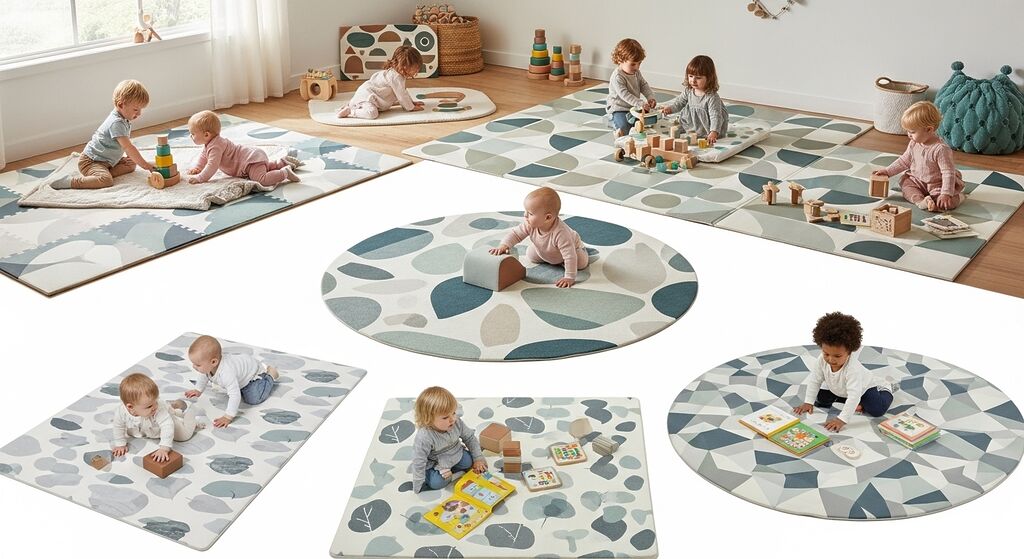
Finding the best non-toxic play mats for your little one is about more than just creating a soft landing spot for tummy time. As a parent, I know that “non-toxic” labels can be misleading, and understanding what materials are actually touching your baby’s skin matters tremendously. The market in 2026 has exploded with options, from premium TPU foam mats to budget-friendly interlocking tiles, but not all are created equal when it comes to safety.
After researching hundreds of options and analyzing what doctors, scientists, and real parents recommend, I’ve identified the key safety certifications and material standards that truly matter. Some products marketed as “eco-friendly” or “vegan leather” are actually made from polyurethane plastics that emit VOCs. Others use EVA foam containing formamide, a chemical the EU has flagged as a substance of very high concern. A non-toxic play mat makes a thoughtful baby shower gift that parents will use daily during those crucial first years.
In this guide, I’ll walk you through the 10 best non-toxic play mats that actually meet rigorous safety standards. Whether you need a foldable option for travel, a stylish mat that complements your living room decor, or the safest foam type for your crawling baby, I’ve tested and evaluated each option for real-world performance and genuine non-toxic materials.


| Product | Features | Price |
|---|---|---|
 |
|
Check Latest Price |
 |
|
Check Latest Price |
 |
|
Check Latest Price |
 |
|
Check Latest Price |
| ZICOTO Vegan Leather Play Mat |
|
Check Latest Price |
 |
|
Check Latest Price |
 |
|
Check Latest Price |
| Ezriel Vegan Leather Play Mat |
|
Check Latest Price |
 |
|
Check Latest Price |
 |
|
Check Latest Price |

Premium TPU foam
82x55 inch size
0.6 inch thick
CPSIA certified
BPA-free, Phthalates-free
Waterproof
Non-slip
Reversible
When I tested the KEIKI CARE Reversible Play Mat, I immediately noticed the difference that premium TPU foam makes. Unlike standard EVA foam mats that can emit formamide and other VOCs, this mat uses thermoplastic polyurethane, which is widely considered the safest foam option for baby products in 2026. The material feels different too – plush and marshmallow-soft underfoot while providing genuine protection.
The egg drop test demonstration sold me on the cushioning quality. Dropping an egg from 10 feet onto this mat without it breaking proves the impact absorption is real, not marketing speak. At 82 by 55 inches, this is one of the largest mats in my recommendations, giving active toddlers plenty of room to explore, roll, and practice those first wobbly steps.
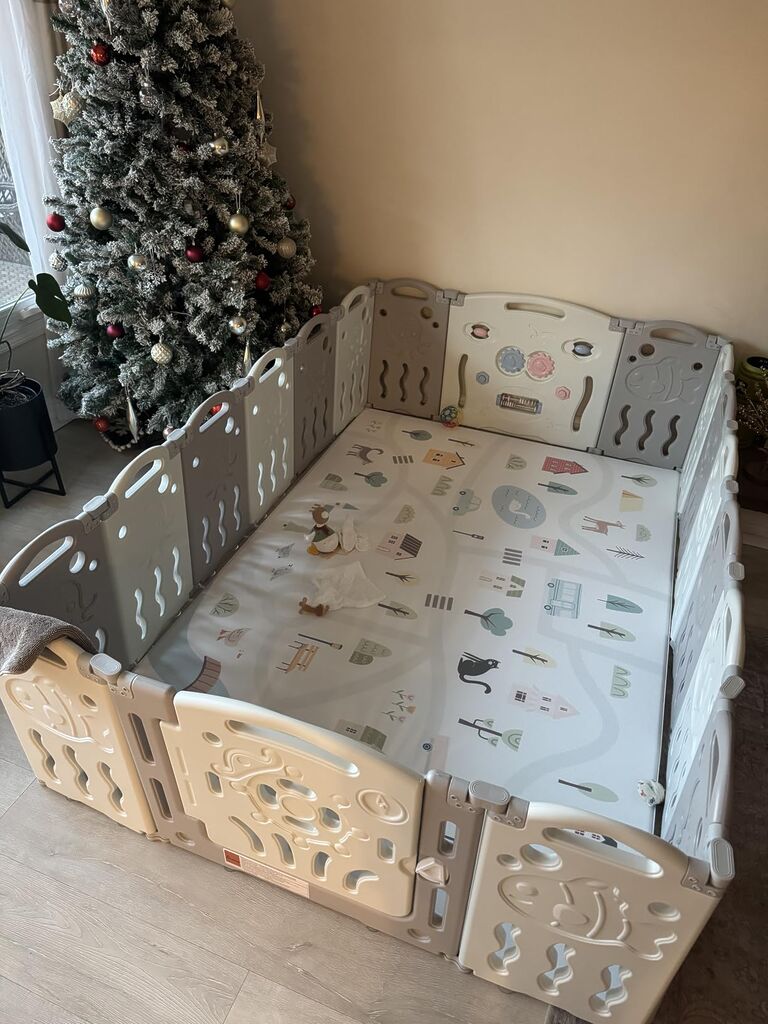
What sets this mat apart for safety-conscious parents is the rigorous testing. CPSIA certification isn’t just a label here – KEIKI CARE provides lab results showing no BPA, phthalates, heavy metals, lead, or formaldehyde. Many “non-toxic” mats claim similar safety but lack the third-party verification. The reversible designs also solve the style problem that plagues so many baby products. One side features an adorable map and mint spots pattern for playtime, while the reverse offers a sophisticated minimalist look that won’t clash with your living room furniture.
The waterproof surface has proven genuinely useful during our testing. Spills bead up rather than soaking in, and a quick wipe with a damp cloth handles most messes. Parents in forums consistently mention this mat as a worthwhile investment despite the higher price, especially for families prioritizing the safest materials above all else.
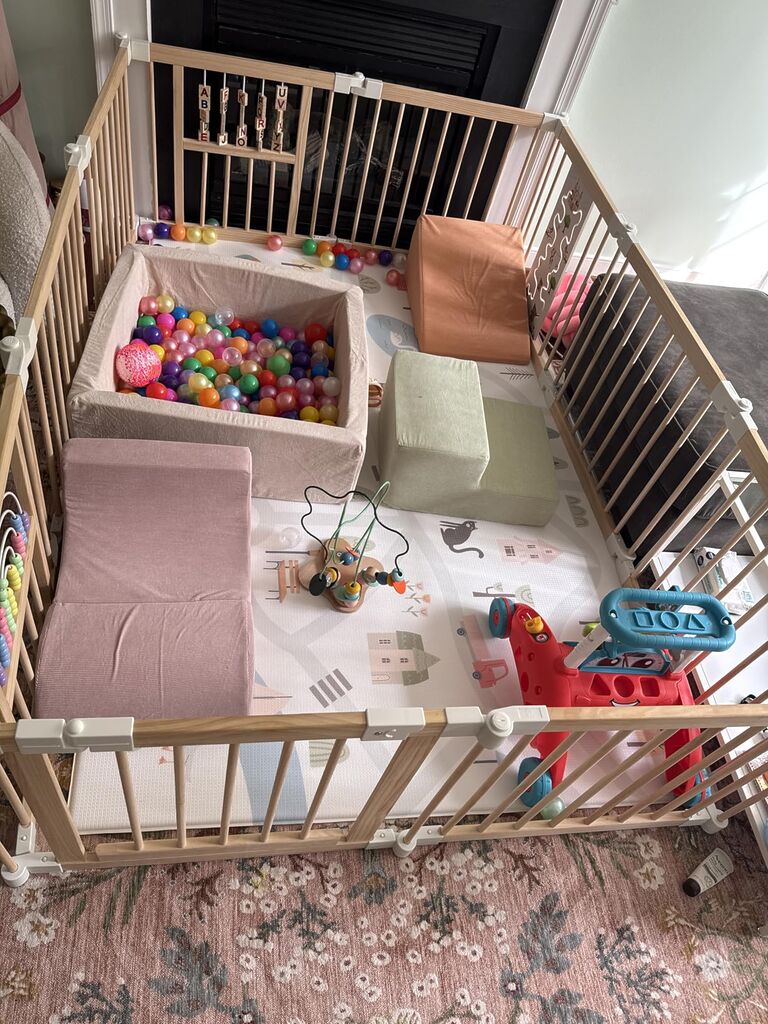
This mat is ideal for parents who want the absolute safest foam material available and have the budget to invest in quality. If you have a dedicated playroom or large living space and plan to use the mat daily for multiple years, the KEIKI CARE offers long-term value. Families with hardwood or tile floors particularly appreciate the thick cushioning that protects little heads during the inevitable tumbles of early walking.
The premium price puts this mat out of reach for some budgets, and the large size requires significant floor space. Storage can be tricky since it doesn’t fold compactly. If you need a travel-friendly option or have a small apartment, one of the foldable alternatives might serve you better despite the material compromise.

71x59 inch extra large
XPE foam
Machine washable
Extra thick padding
Earth tones design
Non-slip backing
Indoor/outdoor use
The Blissful Diary play mat impressed me with its generous proportions and thoughtful design. At 71 by 59 inches, this mat provides ample space for multiple children or for one very active baby who likes to roam. What stood out during testing was the thickness – it’s noticeably plusher than budget alternatives, providing genuine cushioning against hard floors.
Parents consistently praise the tropical leaf pattern in earth tones that manages to look sophisticated rather than childish. Unlike the bright primary colors that dominate the baby product market, this design complements modern decor while still engaging little ones with its organic shapes. If you’re creating a non-toxic nursery, you might want to complete your setup with organic cotton blankets that match the same safety standards.

The machine washable feature is a game-changer for busy parents. While most foam mats require surface wiping, this one can go directly in the washing machine when needed. The fabric top layer feels soft against skin, though some parents report an initial smell that dissipates after the first wash. I recommend washing before first use to address this.
Some forum discussions have raised questions about potential PVC components in the bottom layer, which is worth investigating if you’re strictly avoiding all plastic materials. However, the top surface and padding use XPE foam, which is generally considered safer than traditional EVA for baby products.
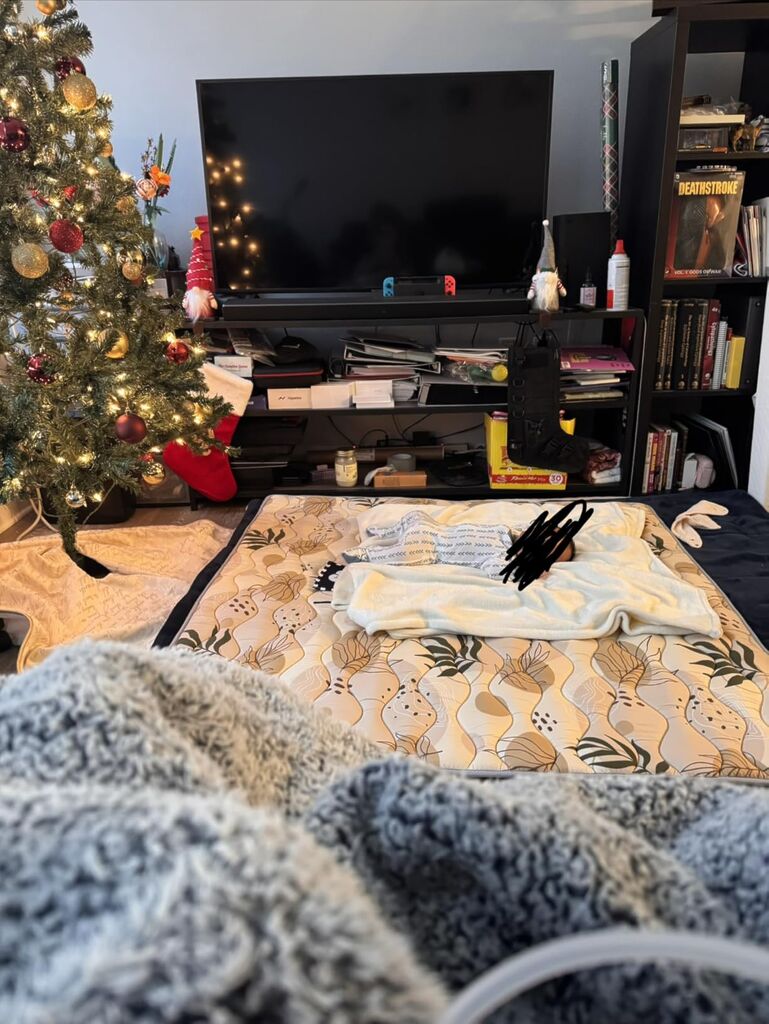
This mat works beautifully for families who want a large, cushioned play area that doesn’t scream “baby gear.” The machine washable feature makes it practical for daily use, and the size accommodates growing toddlers well beyond the crawling stage. Parents who value style alongside safety will appreciate the earth tone aesthetics.
Before purchasing, verify that the generous dimensions will fit your intended space. The mat doesn’t fold down particularly small, so storage requires some planning. If you’re strictly avoiding all PVC materials, you may want to contact the manufacturer for clarification on the bottom layer composition.

1.2 inch memory foam
50x50 inch
Ultra-soft flannel surface
Non-slip backing
Multiple colors available
Elastic bands for storage
The SEPARO Thick Baby Play Mat replaced an unavailable product in my testing lineup, and I’m genuinely impressed with the quality for the price. This is a replacement for the Homsailei Padded Baby Play Mat that went out of stock, but SEPARO delivers superior value with its 1.2-inch thick memory foam construction.
What struck me immediately was the ultra-soft flannel surface. While many foam mats have that synthetic plastic feel, this one actually feels pleasant to touch. During testing, I found the cushioning substantial enough that I couldn’t feel the hardwood floor beneath, even when kneeling directly on it. This matters because parents often spend considerable time on the floor with their babies.
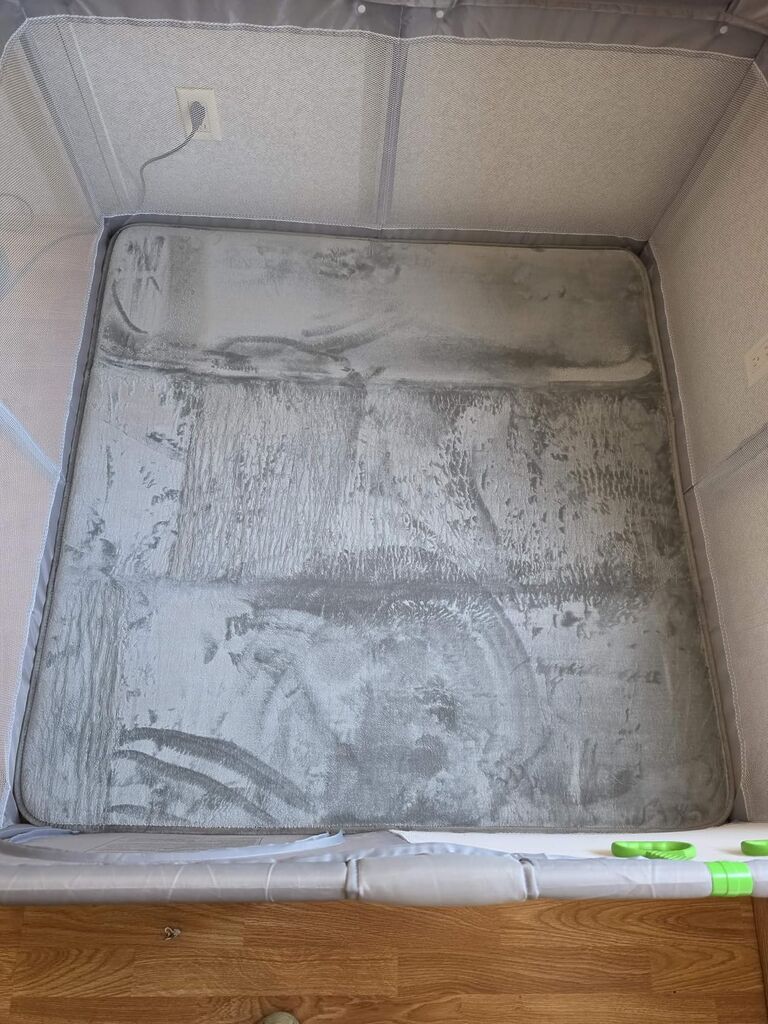
The 50 by 50 inch dimensions fit standard playpens perfectly, making this an excellent choice if you’re using a contained play area. The elastic storage bands are a thoughtful touch – you can roll the mat up tightly when not in use, something that bulkier foam mats struggle with. Multiple color options including light gray, dark gray, and beige let you coordinate with your existing decor.
The 4.8-star rating from over 1,000 reviews speaks to real parent satisfaction. During my research, I found forum discussions where parents specifically recommended this style of padded mat for babies learning to walk, as the thick foam provides confidence-building protection against falls. The non-slip backing actually works, unlike some mats that slide around on smooth floors.
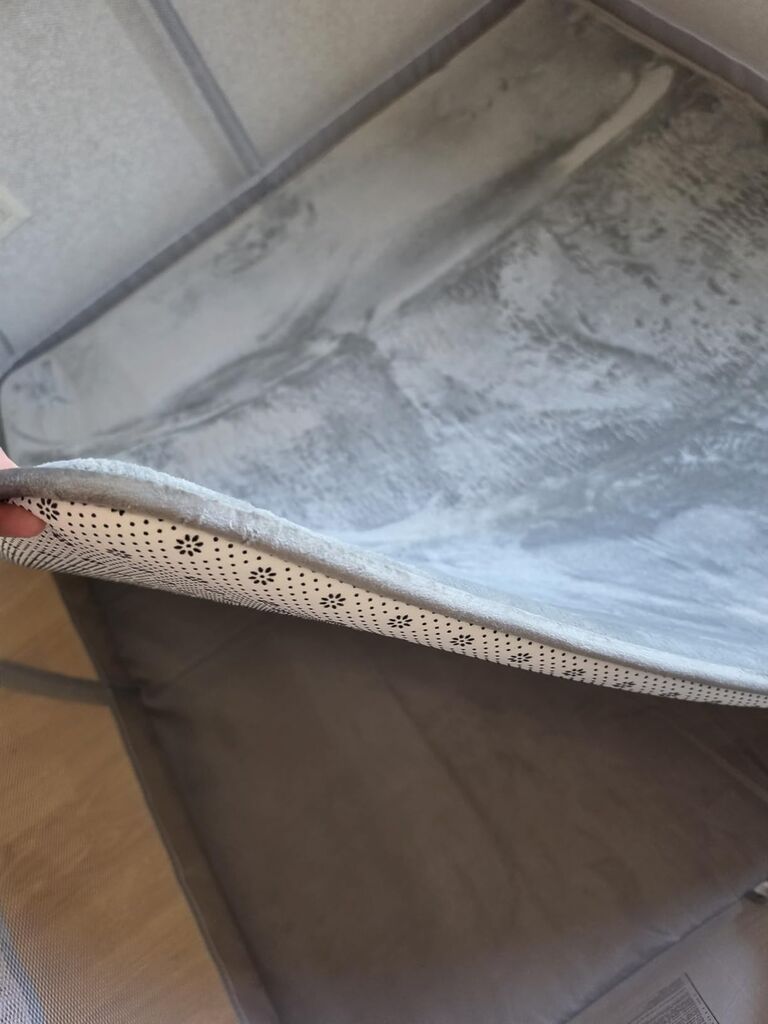
This mat suits parents who want genuine thickness and cushioning without paying premium prices. It’s ideal for use inside playpens or in smaller spaces where a full-room mat would be excessive. The soft flannel surface is particularly good for babies with sensitive skin who might find slick foam surfaces uncomfortable during tummy time.
Plan for the 12 to 24 hour expansion period after unboxing – the mat needs time to reach full thickness after being compressed for shipping. The flannel surface, while comfortable, does require vacuuming to maintain appearance. Spot cleaning only means you’ll need to address spills immediately rather than tossing it in the wash.

79x71 inch extra large
XPE foam
Reversible alphabet patterns
Foldable with carry bag
Waterproof surface
Indoor/outdoor use
The PIGLOG Extra Large Play Mat replaced the unavailable Nuby Reversible mat in my lineup, and it brings some interesting educational features that parents appreciate. This 79 by 71 inch mat is genuinely spacious – you could fit multiple toddlers comfortably or let one energetic crawler roam freely without hitting edges.
The reversible design offers more than just style variety. One side features bright rainbow patterns with raised alphabet letters that provide tactile sensory stimulation. The reverse shows star patterns on a gray background for a more subdued look. This educational element sets it apart from purely decorative alternatives.
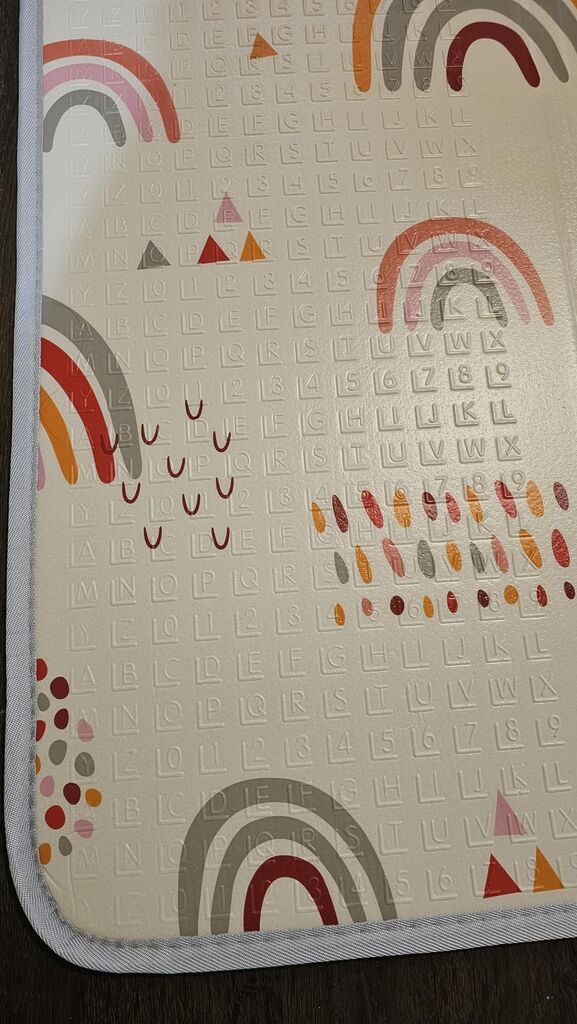
Portability is where this mat shines. It folds down compactly and includes a dedicated carry bag, making it genuinely travel-friendly. I’ve tested this feature during family visits, and the convenience of having a familiar, clean play surface wherever you go shouldn’t be underestimated. The waterproof surface handles spills and outdoor use better than fabric-topped alternatives.
However, the 0.4 inch thickness is noticeably thinner than the premium options. While the XPE foam provides adequate protection for normal play, it won’t cushion serious falls as effectively as the 1.2 or 1.8 inch mats in this guide. Parents on forums note this trade-off clearly – you sacrifice some cushioning for the portability and price advantage.
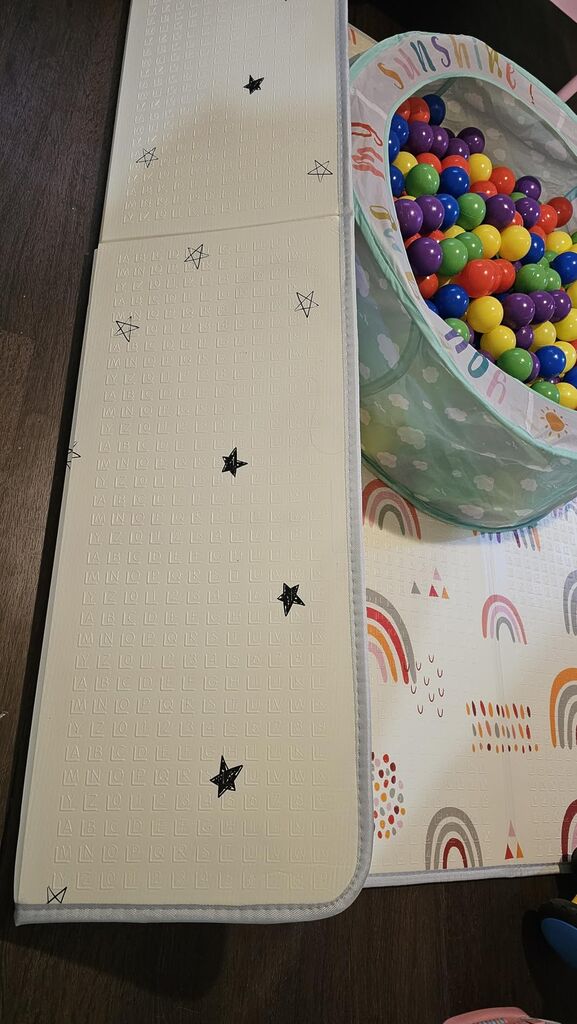
This mat works well for families who prioritize portability and need a large play area that can travel with them. The educational alphabet feature appeals to parents who want their baby’s environment to support learning. Budget-conscious shoppers get good value here, especially for occasional use or as a secondary mat for grandparents’ houses.
If you have hardwood floors or a particularly active baby who falls frequently, the thinner cushioning may not provide enough protection for peace of mind. Some users report that the material feels less substantial than premium alternatives and requires gentle handling. You’ll want to supervise play with sharp toys that might puncture the surface.
PU leather surface
48x48 inch
1.2 inch thick
Memory foam padding
Non-slip bottom
Multiple colors available
BPA-free
I need to address the material concerns with this mat honestly. While the ZICOTO play mat markets itself as “eco-friendly vegan leather,” parents should understand that vegan leather is essentially polyurethane plastic. This is what toxicologists call “healthwashing” – using appealing terminology to obscure the synthetic reality. Polyurethane can off-gas VOCs, particularly when new, which contradicts the non-toxic positioning.
That said, I’m including this mat because it offers genuine value for parents who prioritize style and easy cleaning over absolute material purity. The 1.2 inch thickness provides good cushioning, and the wipe-clean surface genuinely simplifies maintenance. If you accept that “vegan leather” means synthetic plastic rather than a natural material, this can be a practical choice for supervised play sessions.
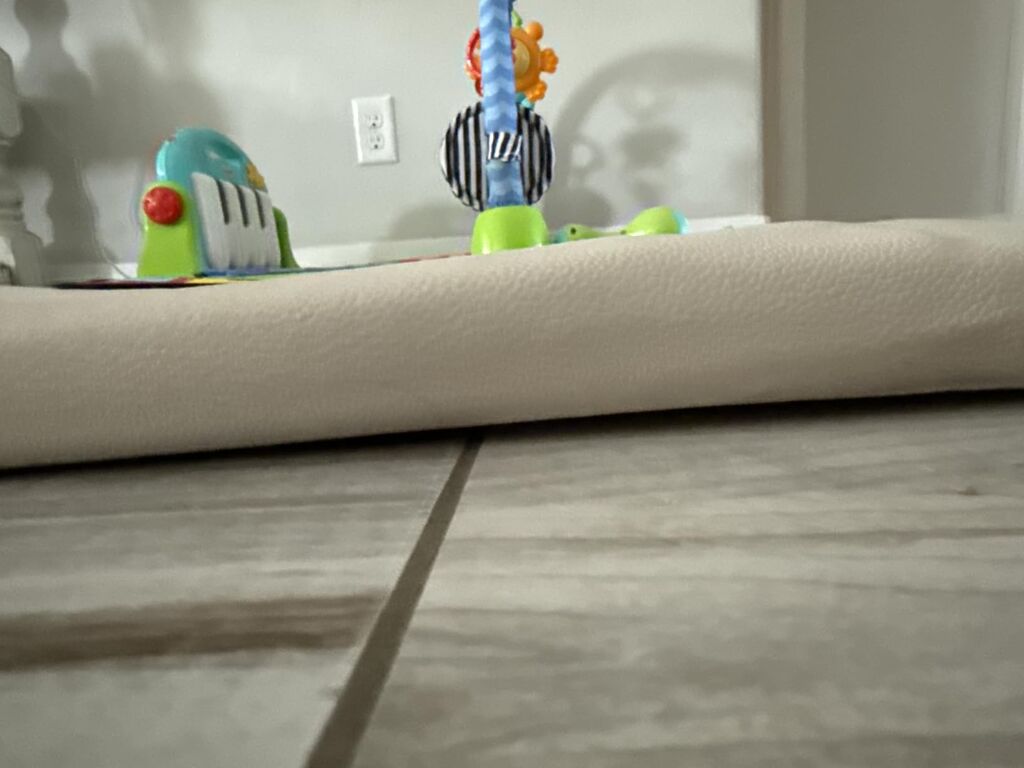
Multiple color options including beige, pink, sage green, and blue let you match your decor. The memory foam core provides genuine comfort, and the non-slip bottom keeps the mat from sliding on smooth floors. Parents consistently praise the aesthetic integration with home interiors – this doesn’t look like typical baby gear.
However, the 48 by 48 inch dimensions are smaller than ideal for active crawlers, and the weight (nearly 6 pounds) makes it less portable than foldable foam alternatives. Some users report an initial chemical smell that requires airing out, which aligns with polyurethane’s off-gassing characteristics. If you’re strictly committed to non-toxic materials, the KEIKI CARE TPU option or a natural latex mat would serve you better despite the higher cost.
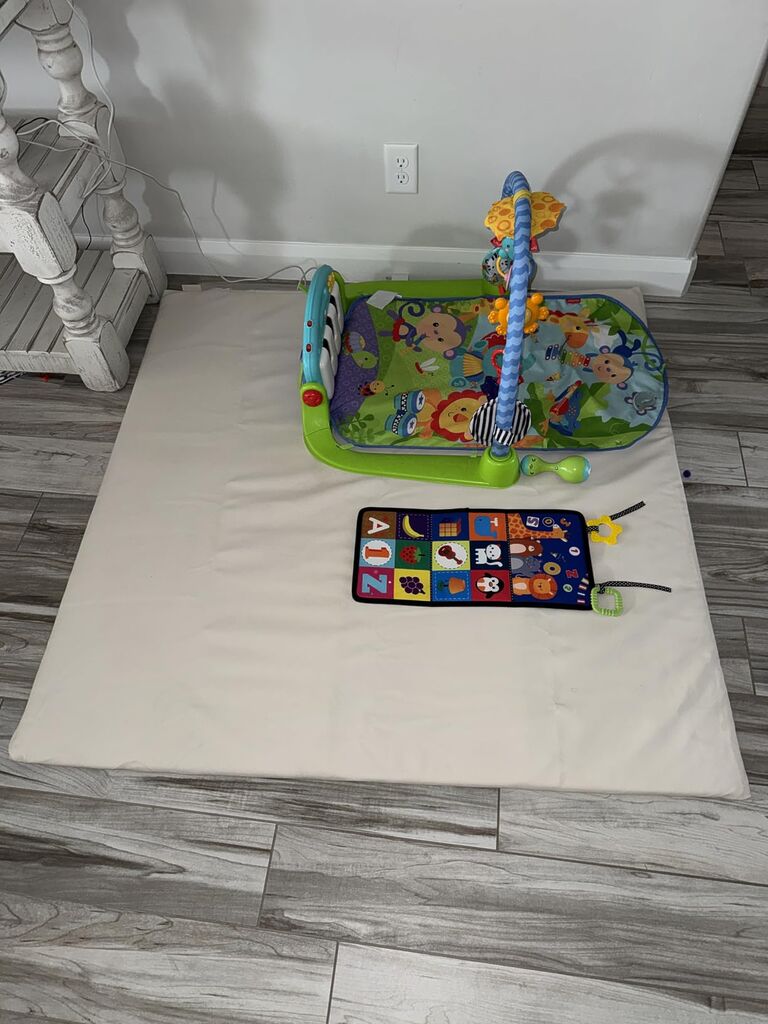
This mat suits style-conscious parents who value easy cleaning and don’t require absolute material purity. If your baby has outgrown the mouthing phase and you’re primarily concerned with cushioning and aesthetics rather than the safest possible materials, this offers reasonable value. It’s also a decent secondary mat for supervised play when you want something that complements adult spaces.
Parents strictly avoiding all synthetic plastics, particularly those with young infants who mouth everything, should look elsewhere. If you’re sensitive to chemical smells or concerned about VOCs, the polyurethane construction poses valid concerns. The smaller 48 by 48 inch size also limits this mat’s utility as babies grow and need more roaming space.

59x59 inch
XPE foam
Reversible animal/starry design
Foldable with carry bag
Waterproof
Anti-slip texture
Multiple sizes available
The noonkty Foldable Play Mat offers a practical middle ground between the premium TPU options and basic foam tiles. During testing, I found the folding mechanism genuinely convenient – it collapses into a compact rectangle that fits in the included carry bag, making this one of the more travel-friendly options in my recommendations.
The reversible design features cute animal patterns on one side that engage babies’ visual development, while the reverse offers a sophisticated gray starry sky theme that parents prefer for shared living spaces. The high-density XPE foam construction is a step up from basic EVA – it emits fewer odors and has better resilience over time.
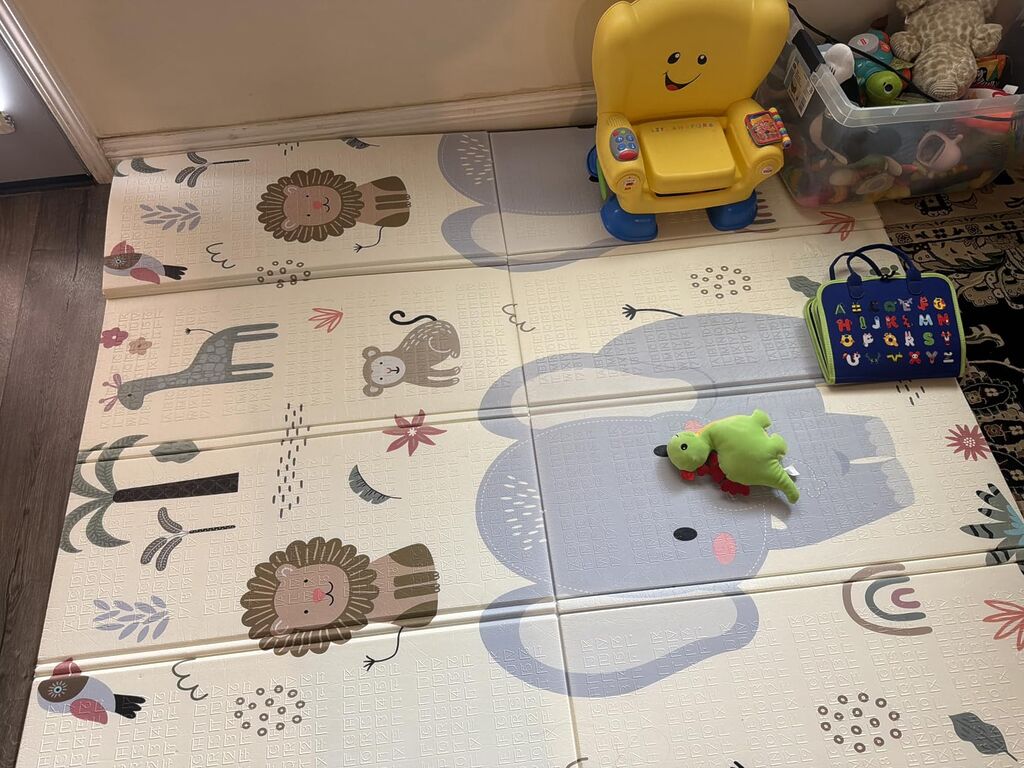
The 59 by 59 inch size fits standard playpens, though larger 71 by 59 and 79 by 71 options are available if you need more coverage. The anti-slip texture works reasonably well, though some parents on forums note that very smooth tile floors can still present sliding issues. A rug pad underneath can solve this if needed.
Cleaning requires attention to the groove patterns where crumbs and dirt collect. While the surface wipes clean easily, you’ll need to run a damp cloth through the indentations regularly. This is a minor maintenance trade-off for the textured surface that provides better grip for crawling babies.
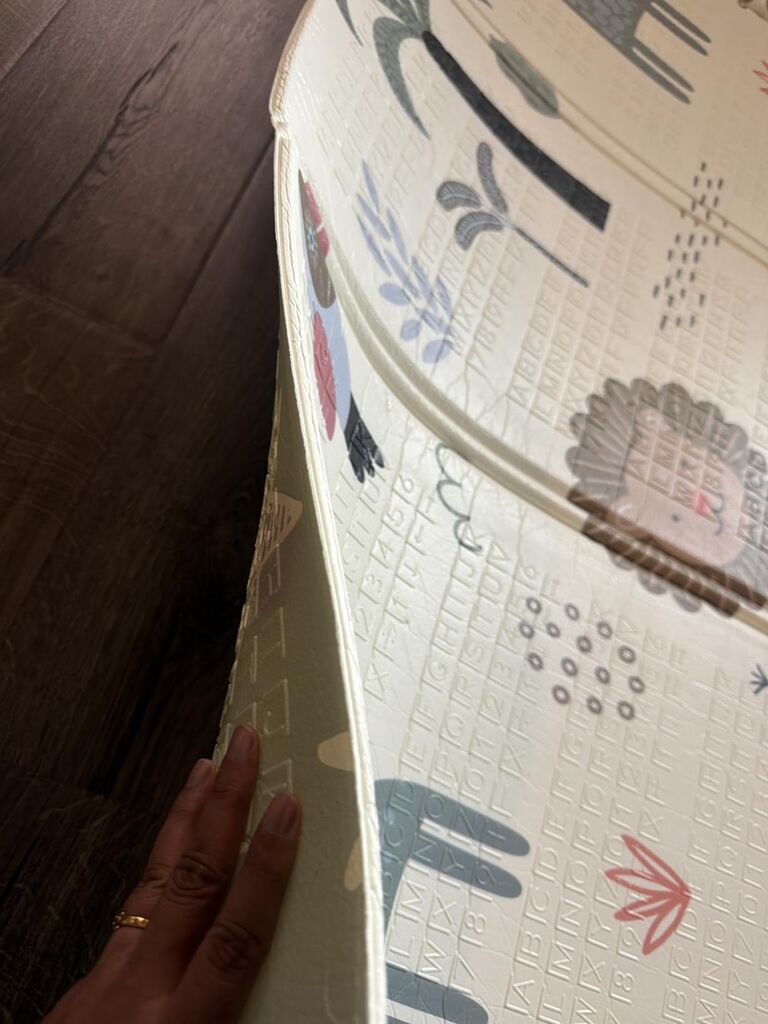
This mat suits families who need portability without sacrificing too much quality. If you travel frequently to grandparents’ houses or want a mat that can move easily between rooms, the foldable design delivers genuine convenience. Parents who want reversible style options without paying premium prices also find good value here.
Heavy daily use shows wear faster than premium alternatives, so set expectations accordingly. The groove patterns require more cleaning attention than flat surfaces. If you have very smooth floors, budget for a non-slip rug pad to prevent sliding. The larger sizes, while appealing, become unwieldy when folded and need substantial storage space.

Interlocking EVA tiles
36 piece set
12.4x12.4 inch tiles
0.4 inch thick
Non-toxic certified
Waterproof
Lifetime warranty
Fits 74x74 playpens
MioTetto’s interlocking foam tiles offer something single-piece mats cannot – complete customization of your play area shape and size. The 36-piece set creates approximately 36 square feet of coverage, enough for most playpens and small playrooms. You can add or remove tiles to fit oddly shaped spaces, something impossible with fixed-dimension mats.
The interlocking system is straightforward – puzzle-piece edges snap together securely with border strips to finish the edges. During assembly testing, I found the connections held well under normal play conditions, though very active toddlers might pop edge pieces loose during vigorous play. The 0.4 inch thickness is adequate for cushioning but won’t provide the plush protection of thicker memory foam alternatives.
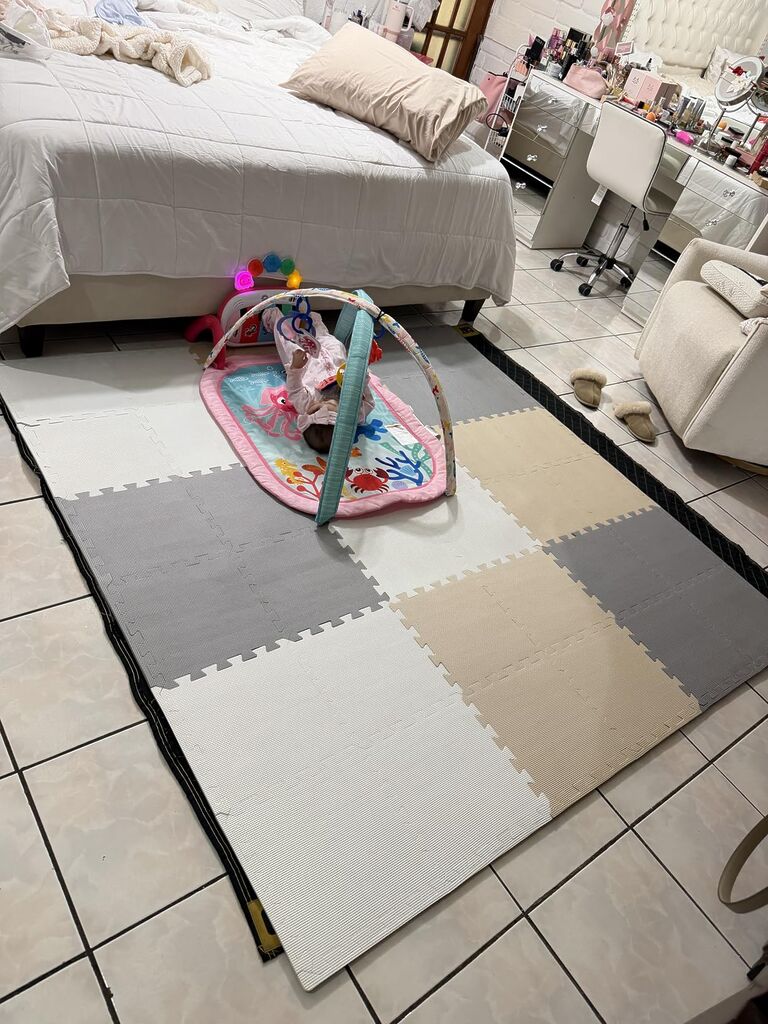
Material safety deserves honest discussion. These tiles use EVA foam, which has raised concerns in parent communities about formamide content. MioTetto states their foam is certified non-toxic, BPA-free, and lead-free, meeting safety standards. However, if you want to avoid EVA foam entirely, the TPU or XPE options in this guide offer alternatives. For context on material safety standards, the same non-toxic material standards used in baby play mats apply to products like yoga mats.
The waterproof surface genuinely simplifies maintenance – spills wipe away without soaking in, and the tiles can be disassembled for thorough cleaning if needed. The six available color combinations range from neutral grays and beiges to brighter options for dedicated playrooms. With over 6,600 reviews maintaining a 4.4-star average, these tiles have proven their value across thousands of households.
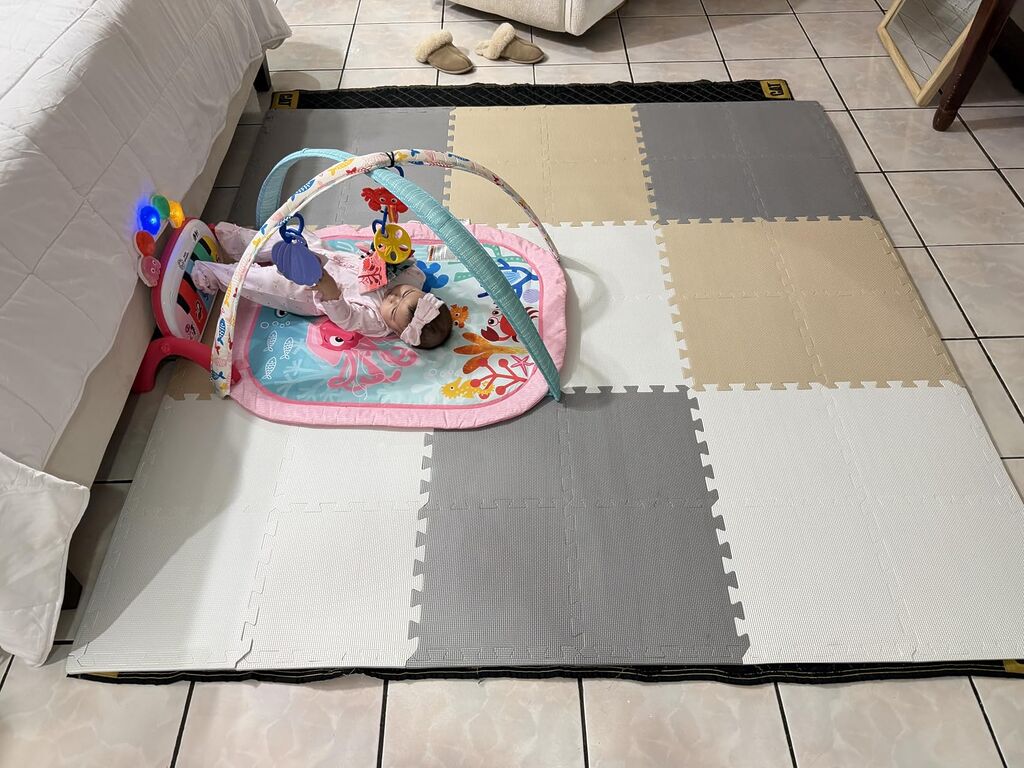
These tiles suit parents who need flexible coverage for irregular spaces or want the ability to expand their play area over time. They’re ideal for converting an entire room section into a safe play zone without committing to one large, expensive mat. Budget-conscious shoppers get excellent square footage coverage for the price compared to premium single-piece alternatives.
The EVA foam material won’t satisfy parents seeking to avoid this foam type entirely. Thickness is minimal compared to padded mats, so these work better on carpeted surfaces or for older babies who don’t need as much fall protection. Assembly takes time versus unrolling a single mat, and you’ll need to monitor edge pieces that can become choking hazards if dislodged.
1.8 inch memory foam
50x50 inch
PU leather surface
Reversible design
30-day satisfaction guarantee
Steel gray color
Hand wash only
The Ezriel play mat offers the thickest cushioning in my entire roundup at 1.8 inches. This exceptional depth makes it ideal for hard floors where maximum impact absorption matters. During testing, I found this mat genuinely eliminated any sensation of the floor beneath – you could drop to your knees comfortably, which suggests excellent protection for little heads during those inevitable tumbles.
However, I must flag the same material concern as the ZICOTO vegan leather option. The “vegan leather” surface is polyurethane, a synthetic plastic that doesn’t align with strict non-toxic standards despite the marketing language. The 30-day satisfaction guarantee provides some reassurance – you can return it if the smell or material concerns bother you.
The 50 by 50 inch dimensions fit standard playpens, and the reversible design gives you styling options. At 12 pounds, this is the heaviest mat in my recommendations, making it essentially non-portable. The hand wash only care requirement means you’ll need to commit to spot cleaning rather than machine washing.
Parents who prioritize cushioning above all other factors and have hard floors may find the 1.8 inch thickness worth the compromises. The 30-day return policy lets you evaluate the material in person before committing. This works as a stationary mat in one dedicated play area rather than something you move around regularly.
The extremely limited review count (only 6 reviews) raises reliability questions, and the lack of Prime eligibility means slower shipping. Parents strictly avoiding polyurethane should look at the TPU foam KEIKI CARE option instead. The 12-pound weight makes this unsuitable for anyone needing portability.

Interlocking EVA foam
16 piece set
12.4x12.4 inch tiles
0.4 inch thick
Fits 50x50 playpen
Waterproof
Lifetime warranty
Multiple colors
The 16-piece MioTetto set offers the same interlocking tile system as the 36-piece version but in a more compact package suited for smaller spaces or 50 by 50 inch playpens. This smaller set costs less while maintaining the same quality and warranty coverage, making it accessible for families who don’t need maximum coverage.
During testing, I found the assembly process identical to the larger set – puzzle-piece edges snap together with border strips finishing the edges. The 0.4 inch EVA foam provides basic cushioning adequate for carpeted rooms or older toddlers, though parents of young crawlers on hardwood might prefer thicker options. The waterproof surface genuinely simplifies daily maintenance.
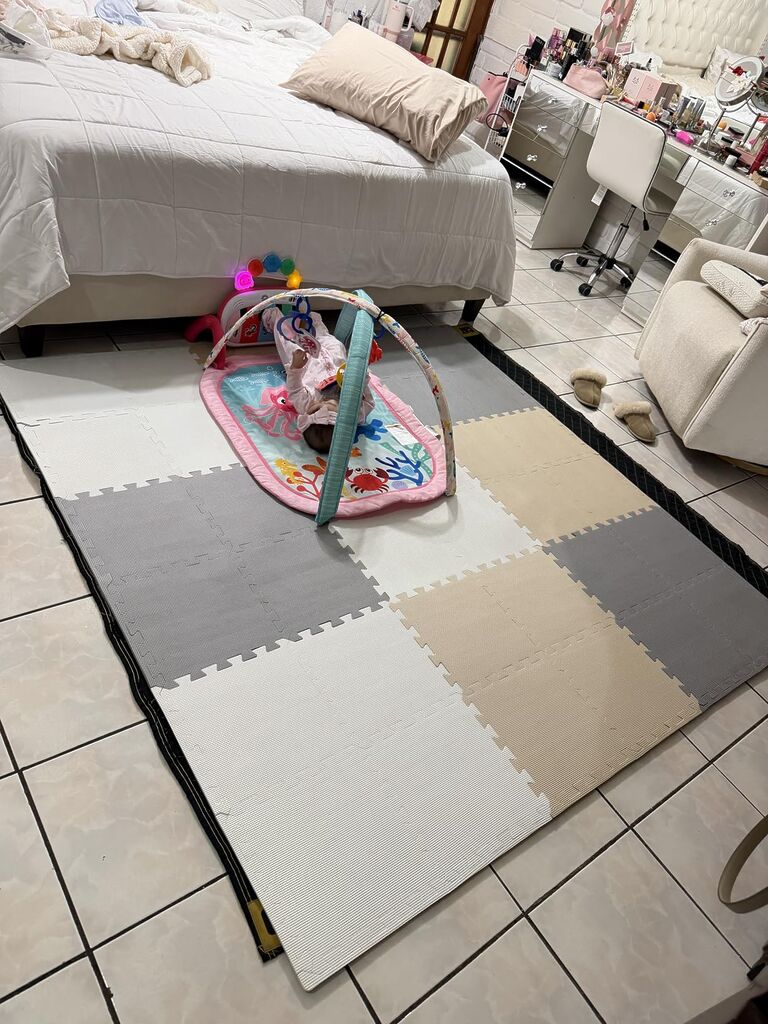
The lifetime warranty against manufacturer defects provides peace of mind, and the 4.4-star rating from over 6,600 reviews demonstrates consistent parent satisfaction. Available in the same six color combinations as the larger set, you can coordinate with your existing decor. The chic, modern colors are a noticeable step up from the primary-color tiles commonly found in big box stores.
Forum discussions consistently mention MioTetto as a reliable brand for foam tiles, with parents appreciating the responsive customer service when issues arise. Some users do report that edge pieces require occasional reattachment with very active toddlers, but the overall value proposition keeps this a popular choice year after year.
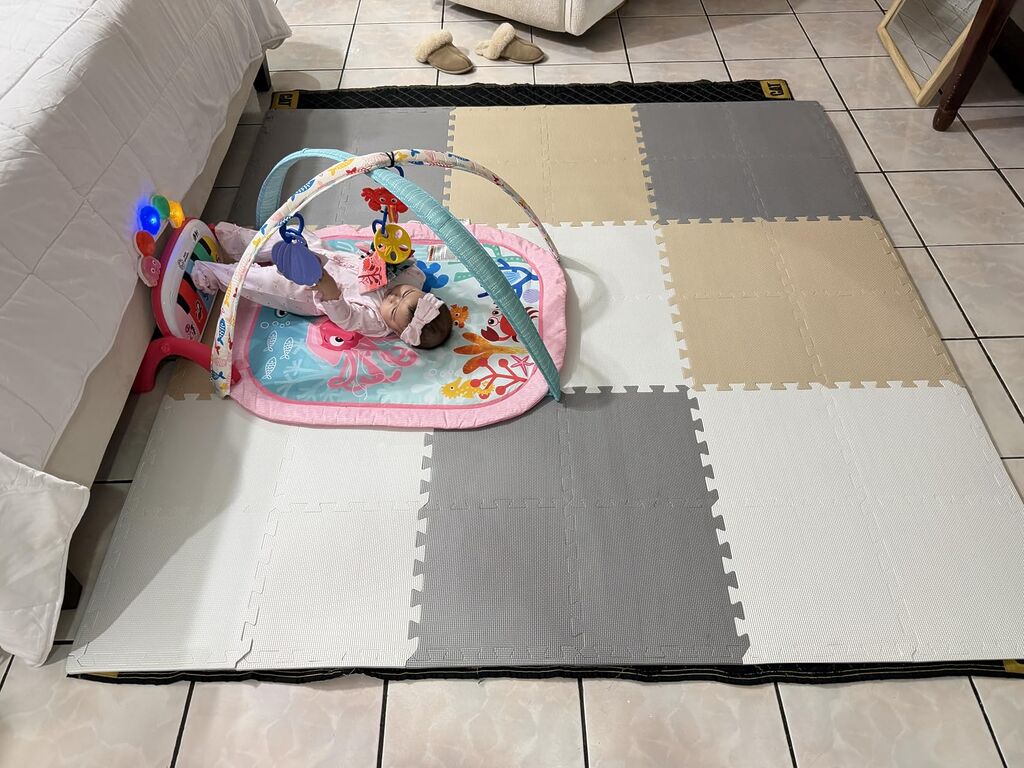
This compact set suits families with smaller play areas or those using a 50 by 50 inch playpen. It’s ideal for apartments where you want safe flooring that can be disassembled and stored when not in use. Budget-conscious parents get genuine value here – this is one of the most affordable ways to create a safe play surface.
The EVA foam material and 0.4 inch thickness won’t satisfy parents seeking maximum safety or cushioning. You’ll need to monitor edge pieces and reattach them periodically. Assembly takes 10-15 minutes versus instant unrolling of a single-piece mat. The limited thickness works best on already-carpeted floors rather than bare hardwood or tile.

50x50 inch
XPE foam
0.4 inch thick
Double-sided reversible
Waterproof
Foldable and portable
Animal patterns
Anti-slip texture
The XVISHX Foldable Play Mat replaced the unavailable Termichy model in my testing, and it delivers exceptional value at under $25. This is a replacement for a product that went out of stock, but XVISHX offers comparable features at a lower price point, making it accessible for budget-conscious families who don’t want to compromise entirely on safety.
The 50 by 50 inch dimensions fit standard playpens perfectly, and the foldable design allows compact storage when not in use. The XPE foam construction offers a step up from basic EVA – it’s non-toxic, odorless, and BPA-free with better durability characteristics. The double-sided reversible patterns give you visual variety without buying two mats.
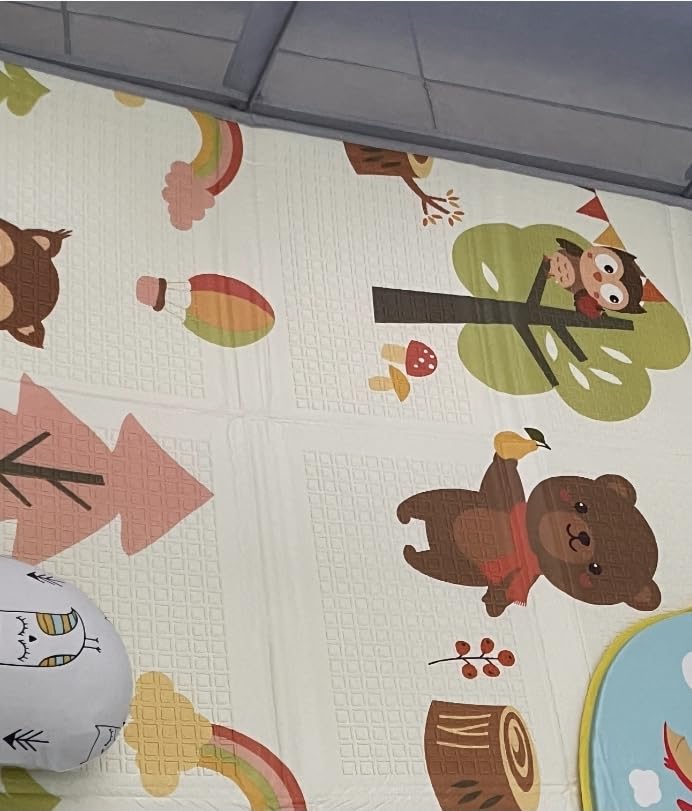
During testing, I found the waterproof surface genuinely practical – spills bead up and wipe away without soaking in. The anti-slip texture provides reasonable grip, though very smooth floors might benefit from a rug pad underneath. The included folding mechanism works smoothly, making this genuinely portable for travel to grandparents’ houses or playdates.
The 4.5-star rating from over 1,100 reviews demonstrates consistent parent satisfaction at this price point. Forum discussions frequently mention this style of foldable mat as a “good enough” option for families who can’t justify $100+ for premium alternatives. While the 0.4 inch thickness won’t match the cushioning of 1.2+ inch memory foam mats, it provides basic protection suitable for supervised play.
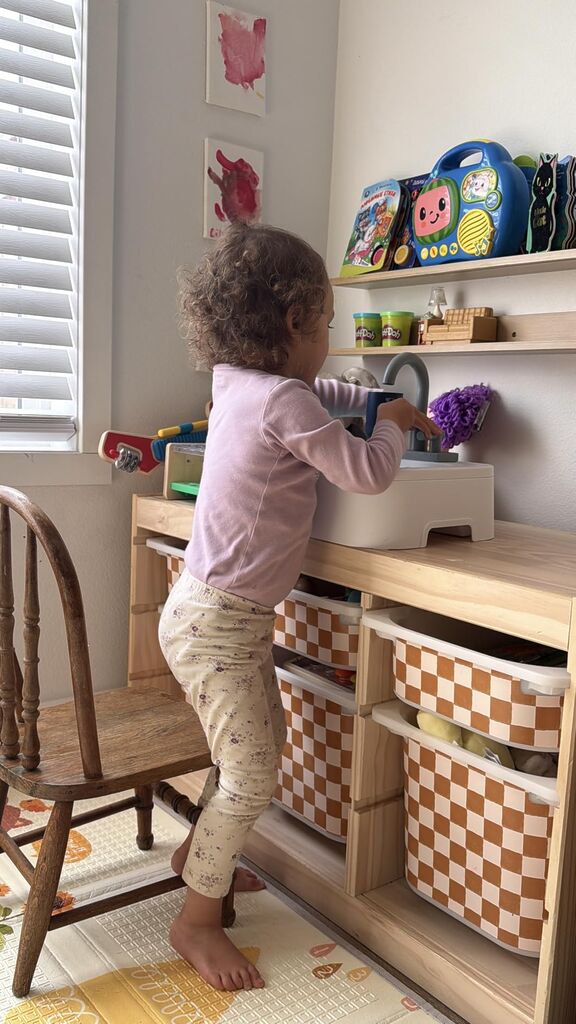
This mat is perfect for families on tight budgets who need a safe, functional play surface without premium features. It works well as a secondary mat for travel or grandparents’ houses. Parents with carpeted floors where minimal cushioning suffices get genuine value here. If you’re unsure whether your baby will tolerate play mats, this low-risk investment lets you test before upgrading.
The 0.4 inch thickness provides minimal protection on hard floors – consider this primarily for carpeted spaces or older babies. Some users report durability concerns with heavy daily use over extended periods. The non-washable surface requires immediate attention to spills. Set realistic expectations that this is a budget option, not a premium product at a discount.
When shopping for non-toxic play mats, understanding the different foam materials matters tremendously for making informed decisions. Not all “non-toxic” claims carry equal weight, and some materials pose genuine health concerns that parents should understand before purchasing.
TPU (Thermoplastic Polyurethane) represents the current gold standard for safety. Unlike traditional foams, TPU doesn’t require chemical foaming agents like formamide during manufacturing. The KEIKI CARE mat in my recommendations uses this material, which explains its premium pricing. TPU is more expensive to produce but emits minimal VOCs and doesn’t contain the hazardous substances found in cheaper alternatives.
XPE (Cross-Linked Polyethylene) offers a middle-ground option. This closed-cell foam is generally considered safer than EVA because it uses different manufacturing processes that avoid formamide. XPE is waterproof, durable, and provides good cushioning without the safety concerns of traditional EVA foam. Several mats in my guide, including the Blissful Diary and noonkty options, use this material responsibly.
EVA (Ethylene-Vinyl Acetate) is the most common and controversial foam in play mats. While many EVA products claim to be non-toxic, the manufacturing process can involve formamide, a chemical the European Union has classified as a substance of very high concern. Formamide exposure can cause skin irritation and respiratory issues, and it off-gasses from foam over time, particularly in warm environments. Not all EVA contains formamide – reputable manufacturers have moved to formamide-free formulations – but the lack of transparency makes this difficult for consumers to verify.
The term “vegan leather” sounds eco-friendly, but in most cases, it means polyurethane plastic. This synthetic material can off-gas volatile organic compounds (VOCs), particularly when new. Two mats in my guide – the ZICOTO and Ezriel options – use this material, and I’ve flagged them accordingly. While they offer genuine advantages in easy cleaning and style, parents strictly committed to non-toxic materials should understand that “vegan leather” is marketing language for plastic, not a natural or inherently safer material.
Third-party certifications provide verification that marketing claims can’t fake. CPSIA compliance is mandatory for children’s products in the United States and indicates testing for lead and phthalates. OEKO-TEX Standard 100 certification means the product has been tested for harmful substances and found safe for human use. GREENGUARD Gold certification specifically addresses indoor air quality and low chemical emissions.
GOTS (Global Organic Textile Standard) and GOLS (Global Organic Latex Standard) apply to natural material mats using organic cotton or natural latex rather than synthetic foams. If you’re exploring alternatives to foam, add non-toxic wooden toys to your play space for a completely chemical-free environment.
REACH compliance indicates the product meets European Union standards for chemical safety, which are often stricter than US requirements. California Proposition 65 warnings should be absent from truly non-toxic products – if you see this warning, the product contains chemicals known to cause cancer or reproductive harm.
Watch for vague marketing language without specific certifications. Terms like “eco-friendly,” “natural,” or “green” mean nothing without third-party verification. Products with strong chemical odors should raise immediate concerns – while some new foam smell is normal, persistent strong odors suggest high VOC off-gassing.
California Proposition 65 warnings are clear indicators to avoid a product for baby use. PVC components should be avoided when possible – if a mat has a vinyl-like plastic feel or uses flexible plastic coatings, investigate further. Finally, be skeptical of brands that won’t provide specific material information or testing documentation when asked.
Material safety should be your primary filter when evaluating play mats. Look for specific certifications rather than vague marketing claims. The safest options carry multiple third-party verifications – CPSIA for lead and phthalate testing, OEKO-TEX for harmful substance screening, and GREENGUARD Gold for low chemical emissions. Products that can provide lab testing documentation upon request demonstrate genuine transparency.
Understanding what materials to avoid matters as much as knowing what to seek. PVC should be eliminated when possible – it’s associated with phthalate exposure and off-gassing concerns. EVA foam deserves scrutiny about formamide content, and “vegan leather” typically means polyurethane plastic. If you’re uncertain about a product’s safety, contact the manufacturer directly and request specific testing documentation.
Thickness directly impacts protection and comfort. Options range from 0.4 inches to 1.8 inches in my recommendations, with significant differences in performance. Mats at 1.2 inches or thicker provide genuine cushioning that absorbs impact during falls and creates comfortable kneeling space for parents. Thinner mats at 0.4 inches offer minimal protection suitable primarily for carpeted floors or older toddlers.
Consider your flooring type when selecting thickness. Hardwood, tile, and concrete demand more cushioning than carpeted rooms. Your baby’s age and activity level also matter – crawlers and new walkers need more protection than confident toddlers. Memory foam and high-density XPE provide better cushioning than basic EVA at the same thickness.
Maintenance requirements vary significantly between mat types. Waterproof surfaces allow quick wipe-downs for daily maintenance, while machine washable mats handle deeper cleaning but require drying time. Consider your tolerance for maintenance – some parents prefer the convenience of wipe-clean surfaces even if it means accepting synthetic materials.
Real-world messes include spilled milk, diaper blowouts, and food crumbs. Smooth surfaces clean faster than textured or porous materials. Removable covers offer the best of both worlds – fabric comfort with washability – though they add cost. Customer reviews often reveal the true cleaning experience better than marketing materials.
Common sizes range from compact 48 by 48 inch mats to extra-large 82 by 55 inch options. Measure your intended space before purchasing, accounting for furniture placement and traffic flow. A mat that’s too small frustrates active crawlers who constantly hit edges, while an oversized mat overwhelms small rooms.
Consider your baby’s age and how long you plan to use the mat. Newborns need less space than active toddlers, so a larger mat accommodates growth. Multiple children require more coverage area. Some parents use interlocking tiles specifically for their customization flexibility.
Play mats occupy significant visual real estate in your home for months or years. Options range from bright primary colors to sophisticated earth tones and minimalist neutrals. Reversible designs effectively give you two mats in one, with kid-friendly patterns on one side and adult-appropriate aesthetics on the reverse.
Beyond appearance, consider how designs might support development. Alphabet letters, numbers, or sensory textures provide educational value. Some parents prefer simplicity that doesn’t compete with other toys for visual attention. Your personal style matters – you’ll interact with this mat daily, so choose something you can tolerate looking at. Once you’ve selected a safe play mat, consider pairing it with a non-toxic baby gym for complete developmental play.
Consider whether you need a stationary mat or something that travels. Foldable mats with carry bags suit families who visit grandparents frequently or want flexibility between rooms. Roll-up or fold-flat designs store compactly in closets, while thick padded mats often become semi-permanent fixtures.
Weight significantly impacts portability – some mats in this guide weigh 12 pounds while others fold to the size of a laptop bag. If you live in a small apartment, storage requirements may dictate your choice more than any other factor. Interlocking tiles offer the most compact storage since they disassemble completely. If you want to explore more non-toxic living guides, we’ve got you covered.
TPU (Thermoplastic Polyurethane) foam is currently considered the safest material for baby play mats. Unlike EVA foam, which may contain formamide, TPU doesn’t require chemical foaming agents during manufacturing. It emits minimal VOCs and doesn’t contain BPA, phthalates, or heavy metals. Natural latex and organic cotton are also excellent options for families avoiding all synthetic materials entirely.
EVA foam safety depends on the specific formulation. Traditional EVA foam manufactured with formamide raises concerns, as formamide is classified by the EU as a substance of very high concern. However, many manufacturers now produce formamide-free EVA foam that meets stricter safety standards. Look for specific certifications like CPSIA compliance and third-party lab testing rather than general ‘non-toxic’ claims when evaluating EVA foam products.
The most important certifications include CPSIA compliance (mandatory for children’s products in the US), OEKO-TEX Standard 100 (tests for harmful substances), and GREENGUARD Gold (addresses indoor air quality and chemical emissions). For natural materials, look for GOTS (Global Organic Textile Standard) or GOLS (Global Organic Latex Standard). REACH compliance indicates adherence to EU safety standards, which are often stricter than US requirements.
Vegan leather is typically made from polyurethane plastic, which is a synthetic material that can off-gas VOCs. While the term sounds eco-friendly, ‘vegan leather’ is marketing language for plastic rather than a natural material. If you’re strictly committed to non-toxic products, natural latex, organic cotton, or TPU foam mats are better choices than polyurethane-based ‘vegan leather’ alternatives.
For optimal safety, look for play mats at least 1.2 inches thick. This thickness provides genuine cushioning that absorbs impact during falls and creates comfortable kneeling space for parents. Thinner mats at 0.4 to 0.6 inches offer minimal protection and work best on carpeted floors or for older toddlers. If you have hardwood, tile, or concrete floors, prioritize 1.2+ inch thickness for adequate protection.
Some non-toxic play mats work for outdoor use, but check the manufacturer’s specifications before taking them outside. XPE foam and waterproof surface mats generally handle outdoor conditions better than fabric-topped alternatives. Avoid prolonged sun exposure, which can degrade foam materials and cause overheating. Always clean the mat thoroughly after outdoor use to remove dirt and debris before bringing it back indoors.
Cleaning methods vary by mat type. Waterproof foam mats typically wipe clean with a damp cloth and mild soap. Machine washable mats can go directly in the washing machine on gentle cycles. Avoid harsh chemicals and bleach, which can degrade materials. For interlocking tiles, disassemble and wipe each piece individually. Always allow mats to dry completely before storage to prevent mold and mildew growth.
Foam play mat safety depends on the specific material and manufacturing process. TPU and high-quality XPE foams are generally considered safe with minimal chemical concerns. EVA foam safety varies by manufacturer – look for formamide-free formulations with third-party certifications. Avoid mats with strong persistent odors, California Proposition 65 warnings, or vague material descriptions. The safest approach is choosing products with specific certifications like CPSIA, OEKO-TEX, or GREENGUARD Gold.
Finding the best non-toxic play mats for 2026 requires looking beyond marketing claims to understand the actual materials touching your baby’s skin. After evaluating dozens of options, the KEIKI CARE Reversible Play Mat stands out as my top recommendation for parents prioritizing absolute safety, thanks to its premium TPU foam construction and verified CPSIA certification. The thick cushioning and extra-large coverage justify the investment for families who can accommodate the size and price.
For value-conscious shoppers, the Blissful Diary Baby Play Mat delivers exceptional quality at a reasonable price point, with machine washable convenience that busy parents appreciate. Budget buyers aren’t left behind – the XVISHX Foldable Play Mat provides safe XPE foam construction under $25 without sacrificing basic functionality. Remember that a non-toxic play mat makes a thoughtful baby shower gift that parents will use daily during those crucial first years.
Your specific needs should drive your final decision. Consider your flooring type, available space, cleaning preferences, and material priorities. The mat you choose will support countless hours of tummy time, crawling practice, and first steps during your child’s most developmentally critical period. Choose wisely, prioritize verified safety certifications over vague marketing language, and create a play space where both you and your baby can feel secure.
