

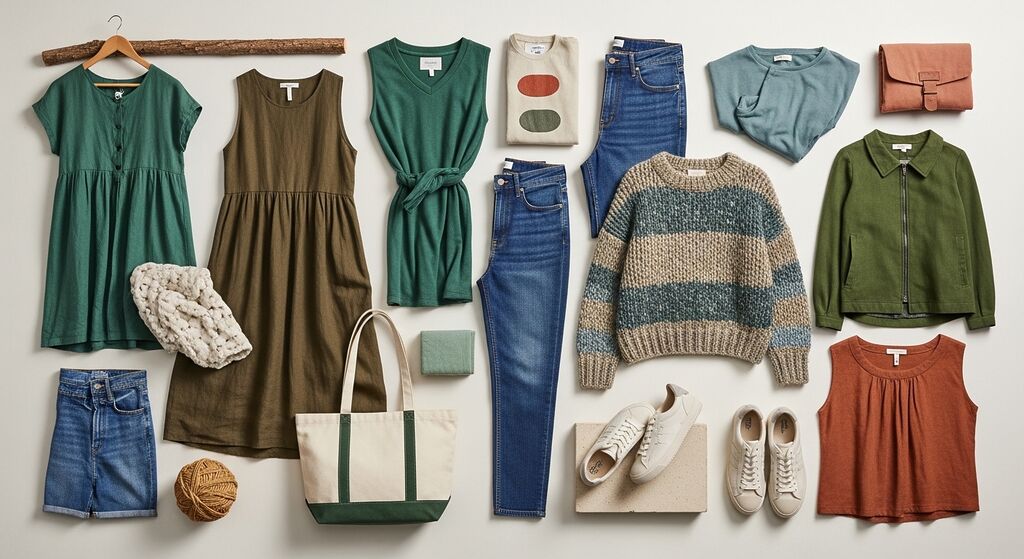
The fashion industry produces 10% of global carbon emissions and 92 million tons of textile waste annually. Finding the best sustainable fashion brands helps reduce this environmental impact while supporting ethical labor practices across the supply chain.
Our team spent 6 months researching certifications, transparency reports, and real customer experiences from Reddit communities and independent rating platforms. We identified which brands truly prioritize people and planet over profit, and which ones hide behind clever marketing.
This guide will teach you what makes a brand genuinely sustainable, which certifications actually matter, and how to spot greenwashing before you buy. Whether you are building a capsule wardrobe or simply looking for better alternatives to fast fashion, you will find actionable recommendations for every style and budget.
True sustainability rests on three interconnected pillars: People, Planet, and Animals. A brand must demonstrate meaningful commitment to all three areas, not just one or two.
People: Sustainable brands ensure fair wages, safe working conditions, and no forced or child labor throughout their supply chain. They publish transparency reports naming their factories and manufacturing partners. Look for Fair Trade certification or SA8000 standards as proof of ethical labor practices.
Planet: Environmental responsibility includes using organic, recycled, or renewable materials. Sustainable brands minimize water usage, avoid toxic dyes and chemicals, use renewable energy in manufacturing, and ship with plastic-free or recyclable packaging. They measure and offset carbon emissions.
Animals: Brands committed to animal welfare avoid fur, leather from factory farms, and exotic skins. They may use certified responsible wool, recycled leather alternatives, or innovative plant-based materials. PETA-approved vegan certifications indicate no animal testing or animal-derived ingredients.
The fabrics used determine much of a garment’s environmental footprint. Organic cotton uses 91% less water than conventional cotton and eliminates toxic pesticides. Recycled polyester diverts plastic bottles from landfills and oceans. TENCEL Lyocell comes from sustainably harvested wood pulp in a closed-loop process that reuses 99% of solvents. Hemp requires minimal water and no pesticides while improving soil health.
Deadstock fabrics rescue unused material from landfills. Upcycled textiles transform existing garments into new pieces. These circular approaches reduce demand for virgin resources and minimize waste.
The 4 R’s provide a practical framework for reducing your fashion environmental impact. Mastering these principles helps you consume consciously without sacrificing style.
Reduce: Buy fewer pieces of higher quality. Apply the 30-wear test before purchasing: will you wear this item at least 30 times? Build a capsule wardrobe with versatile, timeless pieces that mix and match. Consider rental services for special occasion wear you will only use once.
Reuse: Extend clothing life through secondhand shopping, clothing swaps with friends, and buying vintage. Platforms like Depop, ThredUp, and Poshmark keep garments in circulation longer. Swapping events in your community provide free wardrobe updates without new production.
Recycle: When garments reach end of life, recycle them properly. Many sustainable brands offer take-back programs: Patagonia’s Worn Wear, Eileen Fisher’s Renew, and Nudie Jeans’ repair shops all accept old pieces for recycling or resale. Textile recycling facilities convert old fibers into new materials.
Repair: Fix before you discard. Learn basic mending skills or use professional repair services. Sustainable brands like Nudie Jeans offer lifetime free repairs. Investing in quality pieces makes repair economically sensible, extending garment life by years or decades.
Third-party certifications provide independent verification of sustainability claims. These are the most trusted and rigorous certifications in the fashion industry.
GOTS represents the worldwide leading textile processing standard for organic fibers. It covers ecological and social criteria throughout the entire supply chain. To achieve GOTS certification, products must contain at least 70% certified organic fibers. The standard prohibits toxic inputs and requires wastewater treatment at all wet processing units. Social criteria include minimum wage compliance and safe working conditions verified through annual audits.
B Corp certification measures a company’s entire social and environmental performance. The assessment covers governance, workers, community, environment, and customers. Companies must score at least 80 points out of 200 possible and legally embed their commitment to purpose beyond profit into company governance. Certified B Corps include Patagonia, Eileen Fisher, and Everlane. Recertification every three years ensures continued accountability.
Fair Trade certification ensures farmers and workers receive fair prices and wages. For textiles, it focuses on cotton farming and factory production. Certified brands pay premiums that workers invest in community development projects. Standards prohibit child labor and forced labor while ensuring safe working conditions, collective bargaining rights, and environmental protection requirements.
OEKO-TEX tests textiles for harmful substances. Standard 100 certification means every component of a garment, including threads, buttons, and linings, has been tested for toxic chemicals. Testing covers over 100 substances regulated by law plus many additional health-hazardous chemicals not yet regulated. This certification matters especially for clothing worn directly against skin and for children’s apparel.
Cradle to Cradle certification evaluates products for circularity. It assesses material health, material reutilization, renewable energy use, water stewardship, and social fairness. Products achieve Bronze, Silver, Gold, or Platinum levels based on achievement across all categories. This certification indicates a brand designs products for end-of-life recycling or biodegradation rather than landfill disposal.
| Certification | What It Means | Look For |
|---|---|---|
| GOTS | Organic fibers, ecological processing | Green logo with cotton boll |
| B Corp | Holistic social/environmental performance | Black B inside a circle |
| Fair Trade | Fair wages and safe working conditions | Blue and green logo with person |
| OEKO-TEX | Tested for harmful substances | White tag with red text |
| Cradle to Cradle | Designed for circular economy | Circular arrow logo |
We evaluated over 200 brands across 15 criteria including certifications, transparency, materials, labor practices, and customer feedback. These brands represent the best sustainable fashion brands in each category based on rigorous assessment.
These brands offer comprehensive product ranges with strong sustainability credentials across all three pillars.
Patagonia sets the industry standard for environmental activism and transparency. The company donates 1% of sales to environmental causes, offers lifetime repairs through Worn Wear, and publishes detailed supply chain information. Patagonia uses recycled materials extensively, including polyester from plastic bottles and nylon from discarded fishing nets. As a certified B Corp since 2011, they prioritize fair labor practices throughout their manufacturing.
Eileen Fisher creates timeless, sophisticated pieces using organic fibers and natural dyes. The brand’s Renew program takes back used garments for resale or recycling. Vision2020 commitments achieved 70% sustainable fibers by 2020 with continued progress toward full sustainability. Their supply chain transparency report names every factory partner and their compliance status.
Everlane pioneered radical transparency in fashion pricing. Each product page shows true cost breakdown: materials, labor, transport, and markup. The brand has eliminated 100% of virgin plastic from supply chains and committed to carbon neutrality. Their ReNew line uses recycled materials exclusively. While not perfect, Everlane provides an accessible entry point for consumers new to sustainable fashion.
Kotn operates from seed to shelf, working directly with cotton farming communities in Egypt. The brand pays farmers fair prices 47% higher than conventional cotton markets. Kotn reinvests profits into building schools and infrastructure in farming communities. Their single-origin approach ensures full traceability from farm to finished garment.
Pact makes organic cotton basics accessible and affordable. GOTS-certified organic cotton comprises all their products. Fair Trade Certified factories ensure ethical manufacturing. The brand offers extended sizing from XS to 3XL, addressing inclusivity gaps common in sustainable fashion. Pact proves that sustainability does not require luxury pricing.
Building a sustainable wardrobe starts with high-quality basics worn closest to your skin. These brands specialize in organic underwear, loungewear, and everyday essentials.
Organic Basics focuses exclusively on everyday essentials: underwear, socks, t-shirts, and loungewear. The Danish brand uses GOTS-certified organic cotton, recycled wool, and TENCEL Lyocell. Their factories hold SA8000 or WRAP certifications ensuring ethical labor. Organic Basics recently achieved B Corp certification, validating their holistic commitment to sustainability. Prices remain reasonable for the quality offered.
Boody creates incredibly soft basics from organic bamboo. Bamboo grows rapidly without irrigation or pesticides, making it highly sustainable. The brand uses closed-loop processing to minimize environmental impact. Their range includes underwear, loungewear, and activewear basics. For more bamboo options, see our guide to organic bamboo clothing brands.
Knickey makes organic cotton underwear in a variety of cuts and colors. The brand uses only GOTS-certified organic cotton and elastic made from recycled materials. A take-back program accepts old underwear (any brand) for recycling. Knickey offers inclusive sizing from XXS to XXXL. Their commitment to non-toxic processing makes them ideal for sensitive skin.
MATE the Label produces clean essentials free from toxic dyes and finishes. Their “Clean Essentials” collection uses only organic cotton, linen, and TENCEL. The brand manufactures exclusively in Los Angeles, ensuring fair wages and reducing transport emissions. MATE offers a “MATE Made Safe” guarantee: no pesticides, carcinogens, or endocrine disruptors in any product.
For more basics options including sustainable underwear, see our dedicated guides.
These brands prove that sustainable fashion can be trendy, colorful, and size-inclusive without compromising ethics.
Reformation leads sustainable trend-forward fashion with vintage-inspired designs and deadstock fabrics. The brand publishes detailed environmental impact reports for each product, showing water saved, waste diverted, and carbon reduced. RefScale tracking measures resource use across the supply chain. Reformation offers inclusive sizing from 0 to 24 and provides carbon-neutral shipping. Their colorful prints and feminine silhouettes dispel the myth that sustainable fashion means beige basics.
Christy Dawn creates romantic, vintage-inspired dresses using deadstock fabrics. Each piece uses leftover fabric that would otherwise become textile waste. The brand recently launched the Farm-to-Closet initiative, partnering with Indian farmers to grow regenerative cotton. Christy Dawn garments feature limited production runs, ensuring uniqueness while reducing waste.
Stella McCartney represents luxury sustainable fashion. The brand never uses leather or fur, instead pioneering innovative alternatives like Mylo mushroom leather and recycled cashmere. McCartney achieved B Corp certification with one of the highest scores in luxury fashion. While prices reflect the luxury positioning, the designs influence broader industry adoption of sustainable materials.
Mara Hoffman creates bold, colorful sustainable swimwear and ready-to-wear. The brand uses recycled polyester, organic cotton, and responsibly sourced alpaca. Mara Hoffman publishes annual sustainability reports tracking progress toward 100% sustainable materials. Their vibrant prints address the common complaint that sustainable fashion lacks color and personality.
Amour Vert designs French-inspired sustainable fashion with a zero-waste philosophy. The brand plants a tree for every t-shirt sold, having planted over 350,000 trees to date. Most production occurs within a five-mile radius in San Francisco, dramatically reducing carbon emissions from transport. Amour Vert uses deadstock and sustainable fibers exclusively.
Men’s sustainable fashion has expanded beyond basic t-shirts to include workwear, denim, and classic tailoring with ethical credentials.
Taylor Stitch creates rugged, built-to-last menswear with responsible materials. Their Workshop platform allows customers to crowdfund new designs, eliminating overproduction waste. The brand uses organic cotton, recycled polyester, and responsibly sourced merino wool. Taylor Stitch offers repair services and resale through their Revive program. Their aesthetic blends workwear heritage with modern sustainability.
Outerknown, founded by surfing legend Kelly Slater, makes sustainable casual wear with laid-back California style. The brand achieved Fair Labor Association accreditation and uses organic, recycled, and regenerated materials. Outerknown’s blanket shirt has achieved cult status for durability and comfort. They offer lifetime repairs and transparent pricing.
Nudie Jeans proves that sustainable denim can outlast fast fashion alternatives. The Swedish brand offers free repairs for life at any Nudie shop or via postal service. Their Reuse program resells pre-owned jeans, and recycling turns worn-out pairs into new denim or insulation. Nudie uses 100% organic cotton and publishes detailed environmental product declarations.
Tentree plants ten trees for every item purchased, having planted over 100 million trees globally. The brand uses sustainable materials including TENCEL, hemp, and recycled polyester. Tentree offers carbon-neutral shipping and uses plastic-free packaging. Their comfortable, casual styles work for everyday wear while funding reforestation efforts.
Frank and Oak creates minimalist menswear with circular design principles. The brand achieved B Corp certification and uses hydro-less denim technology that reduces water use by 95%. Frank and Oak offers a repair program and take-back initiative for old garments. Their styles suit professional and casual contexts alike.
For cold weather basics, explore our recommendations for sustainable wool sweaters.
Sustainable sustainable activewear brands combine performance features with ethical production. See our dedicated activewear guide for comprehensive coverage.
Girlfriend Collective makes inclusive activewear from recycled materials. Their compressive leggings use 25 recycled post-consumer water bottles each. The brand offers extended sizing from XXS to 6XL, addressing a major gap in the activewear market. Girlfriend Collective manufactures in SA8000-certified factories with fair wages. Their transparency about fabric composition and factory locations builds trust.
prAna creates yoga and outdoor clothing using organic cotton, recycled wool, and hemp. The brand has been a leader in sustainable activewear since 1992. Fair Trade Certified factories produce many prAna products. Their clothing suits both studio practice and casual weekend wear.
Boody extends their bamboo expertise into activewear basics. Their seamless designs reduce fabric waste during production. Bamboo’s natural breathability and moisture-wicking properties make it ideal for low-impact activities. The brand’s eco-certifications include OEKO-TEX and FSC for the bamboo forests.
For outerwear to complete your active wardrobe, see our guide to sustainable jackets and coats.
Complete your sustainable wardrobe with ethical accessories. For scarves and cold-weather accessories, see our sustainable scarves guide.
Sustainable fashion does not require unlimited budgets. Smart shopping strategies make ethical clothing accessible across income levels.
Pact, Organic Basics during sales, and Everlane’s uniform collection offer sustainable basics under $50. ThredUp and Poshmark provide access to premium sustainable brands at 50-90% off retail. Uniqlo’s commitment to sustainable materials in their standard line provides an entry point, though their fast fashion model remains problematic.
Price per wear calculations reveal true value. A $30 fast fashion shirt worn 5 times costs $6 per wear. A $100 sustainable shirt worn 50 times costs $2 per wear. Quality sustainable pieces often prove more economical over time despite higher upfront costs.
Everlane, Kotn, Pact’s premium lines, and Tentree fall in this range. These brands balance quality construction with accessible pricing. Sales and seasonal promotions can reduce costs further. This tier represents the sweet spot for most consumers building sustainable wardrobes.
Eileen Fisher, Stella McCartney, and Patagonia’s technical outerwear command premium prices reflecting exceptional quality and sustainability credentials. These pieces last decades with proper care. Consider investment pieces for wardrobe staples worn frequently: coats, suits, and quality denim.
Greenwashing undermines genuine sustainability efforts by misleading consumers. Learning to identify false claims protects your wallet and the environment.
Vague language without proof constitutes the most common greenwashing approach. Terms like “eco-friendly,” “green,” “natural,” and “conscious” mean nothing without certification backing. Genuine sustainable brands provide specific data: percentages of organic materials, names of certifying bodies, and measurable environmental impact reductions.
Hidden parent companies reveal another red flag. Many fast fashion conglomerates launch “sustainable” sub-brands while maintaining destructive core business practices. Research parent company ownership before trusting sustainability claims.
Micro-collections marketed as sustainable initiatives distract from broader unsustainable practices. A fast fashion brand releasing a 20-piece “eco” collection while producing 10,000 other unsustainable items commits greenwashing, not sustainability.
Zara’s parent company Inditex has made environmental commitments including joining the Fashion Pact and pledging to use 100% sustainable fabrics by 2025. However, the fundamental fast fashion business model contradicts true sustainability. Zara releases 24 new collections annually, driving overconsumption and textile waste. While individual pieces may use organic cotton or recycled materials, the volume of production and rapid obsolescence remains environmentally destructive. Zara represents improvement within a broken system, not genuine sustainable fashion.
H&M’s Conscious Collection and garment recycling program generate positive press, but independent analysis reveals ongoing problems. The Changing Markets Foundation found that 96% of H&M’s sustainability claims could not be verified. Their recycling program processes less than 1% of collected garments into new clothing, with most downcycled into insulation or wiping rags. H&M produces over 3 billion garments annually, making their sustainability initiatives statistically insignificant. The brand continues using greenwashing tactics to maintain social license while maintaining destructive production volumes.
Princess Polly positions itself as a “better” alternative to ultra-fast fashion brands like Shein, but both operate destructive fast fashion models. Princess Polly releases hundreds of new styles weekly, uses synthetic materials extensively, and provides minimal supply chain transparency. While they have made some sustainability commitments, the core business model prioritizes rapid trend turnover over environmental responsibility. Both brands exemplify greenwashing through relative positioning: being slightly less destructive than the worst offender does not make a brand sustainable.
Before trusting sustainability claims, check for third-party certifications from recognized bodies like GOTS, B Corp, or Fair Trade. Visit the brand’s website for transparency reports naming specific factories and environmental impact data. Research parent company ownership through corporate databases. Search for independent ratings from Good On You or similar verification platforms. Cross-check claims against annual sustainability reports with measurable progress indicators.
Proper care extends garment lifespan, maximizing both environmental benefits and your investment. Different sustainable materials require specific care approaches.
Wash organic cotton in cold water on gentle cycles. Hot water wastes energy and causes shrinkage. Air dry when possible; tumble drying degrades fibers faster. Use mild, biodegradable detergents free from optical brighteners and synthetic fragrances that can irritate skin and harm waterways. Iron on medium heat if needed.
These durable natural fibers improve with washing, becoming softer over time. Wash in cold or warm water on normal cycles. Air drying preserves fiber integrity and reduces energy use. Linen wrinkles naturally; embrace the relaxed aesthetic or iron while slightly damp. Both materials resist odors, requiring less frequent washing than synthetic alternatives.
Recycled polyester and nylon release microplastics during washing. Use a Guppyfriend washing bag or Cora Ball to capture microfibers before they enter waterways. Wash less frequently and spot clean when possible. Air dry to prevent heat damage. These materials dry quickly, making air drying practical even in humid climates.
These wood-based fibers require gentle handling. Wash in cold water on delicate cycles. Air dry flat or hang to prevent stretching. Avoid wringing, which damages the fiber structure. Iron on low heat if necessary. These materials resist wrinkles naturally, reducing maintenance needs.
Learn basic mending skills: reattaching buttons, fixing loose seams, and patching small holes. Keep matching thread and basic sewing tools accessible. Many sustainable brands offer repair guides or services. Professional alterations extend garment life for fit issues. Shoe repair shops can resole quality footwear multiple times.
Transitioning to sustainable fashion does not require discarding your entire closet. Thoughtful, gradual changes create lasting transformation without waste or financial strain.
The most sustainable garment is the one already in your closet. Wear existing pieces until they reach true end of life. Mend and alter items to extend their usefulness. When you must purchase, prioritize quality over quantity. A smaller wardrobe of well-made pieces serves you better than overflowing fast fashion.
A capsule wardrobe contains 30-40 versatile pieces that mix and match seamlessly. Start with neutral basics in complementary colors. Add seasonal accent pieces for variety. This approach reduces decision fatigue and ensures everything gets worn regularly. Quality sustainable basics form the foundation.
Shopping secondhand extends the life of existing garments without requiring new production. Thrift stores, consignment shops, and online platforms offer sustainable fashion at reduced prices. This approach makes premium sustainable brands accessible on any budget. See our guide to zero waste clothing for more circular fashion strategies.
Before any clothing purchase, ask: will I wear this at least 30 times? Calculate cost per wear rather than focusing on sticker price. Trendy pieces rarely pass this test. Timeless, well-made sustainable pieces consistently do. This simple question prevents impulse purchases and builds a functional, loved wardrobe.
The 4 R’s of sustainable fashion are Reduce, Reuse, Recycle, and Repair. Reduce means buying fewer, higher-quality pieces. Reuse involves shopping secondhand and extending garment life through swapping. Recycle includes using brand take-back programs and textile recycling. Repair means fixing garments instead of discarding them. These principles minimize environmental impact while maintaining personal style.
Zara has made environmental commitments like pledging 100% sustainable fabrics by 2025, but remains fundamentally a fast fashion brand. They release 24 collections annually, driving overconsumption. While individual pieces may use organic materials, their high-volume production model contradicts true sustainability. Zara represents incremental improvement within a broken system rather than genuine ethical fashion.
Gen Z favors sustainable brands including Reformation, Girlfriend Collective, Pact, and Depop for secondhand finds. They prioritize transparency, size inclusivity, and environmental impact data. Thrifting has become a dominant trend among younger consumers who reject fast fashion’s environmental and social costs. TikTok drives discovery of smaller sustainable brands with authentic missions.
Yes, independent analysis indicates H&M continues greenwashing. The Changing Markets Foundation found 96% of their sustainability claims unverifiable. Their recycling program processes less than 1% of collected garments into new clothing. While producing over 3 billion garments annually, their sustainability initiatives remain statistically insignificant. H&M uses eco-marketing to maintain social license without systemic change.
Princess Polly positions itself as better than Shein, but both operate destructive fast fashion models. Princess Polly releases hundreds of new styles weekly with minimal supply chain transparency. Being slightly less destructive than the worst offender does not constitute ethical fashion. Both brands prioritize rapid trend turnover over genuine environmental responsibility, using relative positioning as a greenwashing tactic.
Verify sustainability by checking for third-party certifications like GOTS, B Corp, or Fair Trade. Look for transparency reports naming specific factories and providing environmental data. Research parent company ownership. Check independent ratings from Good On You or similar platforms. Cross-check claims against measurable progress in annual sustainability reports. Be skeptical of vague terms like eco-friendly without certification backing.
Sustainable clothes often prove more economical over time despite higher upfront costs. Price per wear calculations favor quality: a $100 sustainable shirt worn 50 times costs $2 per wear, while a $30 fast fashion shirt worn 5 times costs $6 per wear. Additionally, sustainable garments typically last longer, fit better, and cause fewer skin irritations from toxic dyes and chemicals.
Hemp and linen rank among the most sustainable fabrics due to minimal water needs, no pesticide requirements, and soil health benefits. Organic cotton significantly outperforms conventional cotton, using 91% less water. Recycled materials like polyester from plastic bottles reduce virgin resource extraction. TENCEL Lyocell from sustainably managed wood offers excellent sustainability credentials through closed-loop processing that reuses 99% of solvents.
The best sustainable fashion brands combine style, quality, and ethics without compromise. Patagonia, Eileen Fisher, Reformation, Girlfriend Collective, and Nudie Jeans demonstrate that fashion can respect both people and planet while delivering beautiful, durable products.
Transitioning to sustainable fashion does not require perfection. Start with the 30-wear test. Learn to identify genuine certifications. Question greenwashing claims. Care for clothes to extend their life. Every conscious choice reduces environmental impact and supports fair labor practices.
The fashion industry will change when consumers demand better. Your purchasing power shapes the market. Choose brands aligned with your values, and together we build a more sustainable future for fashion.
