
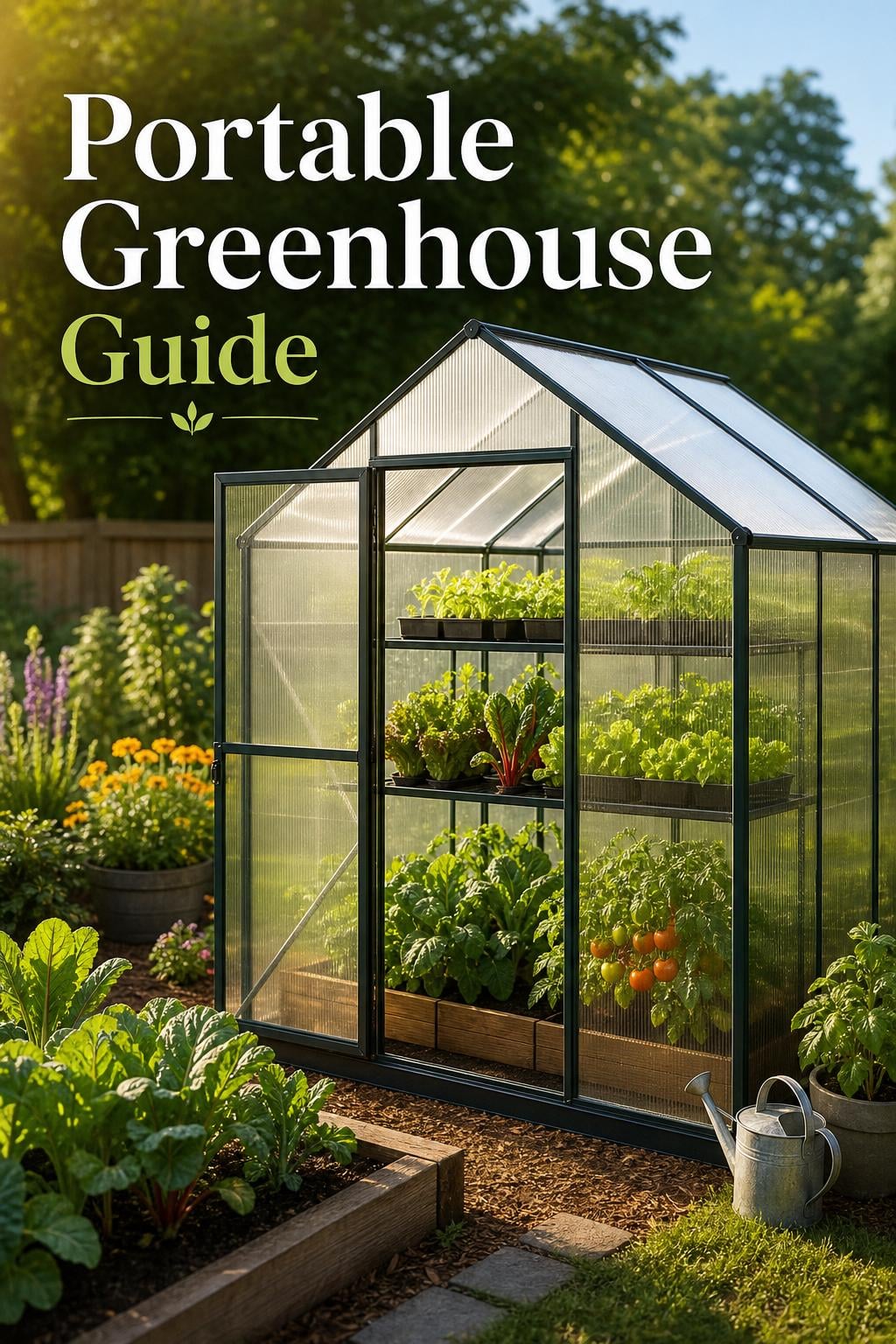
A portable greenhouse gives you the power to control your growing environment without committing to a permanent glass structure. Whether you want to start seeds early in spring, protect tender seedlings from late frost, or keep harvests going well into autumn, these versatile growing shelters make year-round gardening achievable in almost any backyard.
Unlike traditional greenhouses built on concrete foundations, a portable greenhouse can be assembled in an afternoon, relocated as sunlight patterns shift, and packed away when the season ends. They range from compact shelving units small enough for a balcony to walk-in tunnel structures that cover dozens of planting rows. If you are ready to choose one, you can explore our tested recommendations in the 8 Best Portable Greenhouses.
This guide walks through everything you need to know about portable greenhouses in 2026. You will learn about the different types available, what to look for when buying, how to set up and maintain your structure, and which models work best for winter growing, small spaces, and indoor use.
A portable greenhouse delivers several advantages that traditional gardens and permanent greenhouses simply cannot match. The benefits extend well beyond simple frost protection, touching on convenience, cost savings, and the ability to grow plants that would otherwise struggle in your local hardiness zone.
The most immediate benefit is season extension. A portable greenhouse traps solar energy during the day and holds warmth through the night, creating a microclimate that can stay 10 to 15 degrees warmer than the outside air. This means you can start seeds four to six weeks earlier in spring and keep harvesting tomatoes, peppers, and leafy greens weeks after the first frost arrives.
Gardeners in cooler hardiness zones (zones 3 through 6) see the biggest impact. A structure that adds even a few degrees of warmth can shift your effective growing zone by one full level, opening up plant varieties that would normally fail outdoors.
Late spring frosts destroy countless seedlings every year. A portable greenhouse acts as a physical barrier against freezing temperatures, wind chill, and ice crystals that form on exposed foliage. Even a lightweight mini greenhouse with a reinforced PE cover can keep the interior above freezing when outside temperatures dip into the low 30s.
For added protection, you can layer frost cloth inside the structure during particularly cold nights. This double-layer approach provides reliable frost protection for sensitive plants like tomatoes, basil, cucumbers, and flowering annuals that cannot survive a hard freeze on their own.
The defining feature of a portable greenhouse is movement. You can chase the sun in early spring, shift to partial shade during peak summer heat, or wheel the entire structure into a sheltered corner before a storm arrives. Models with built-in wheels or lightweight aluminum frames make repositioning a one-person job.
This mobility also matters if you rent your home or plan to move. A permanent greenhouse stays behind when you relocate, but a portable greenhouse packs into a box and travels with you. For renters, apartment dwellers, and anyone who values flexibility, this is a decisive advantage.
Enclosing your plants physically blocks many common garden pests. Aphids, cabbage worms, rabbits, and deer cannot reach crops that are sealed inside a zippered greenhouse. The controlled environment also reduces splashing rain, which spreads fungal diseases like powdery mildew and blight through exposed foliage.
Better airflow management means you can also regulate humidity levels. By opening ventilation windows during humid weather and closing them during dry spells, you create conditions that discourage mold growth while keeping plants comfortable.
If you have ever wanted to grow orchids, citrus trees, or other warmth-loving plants in a cold climate, a portable greenhouse makes it possible. These structures let you create the specific temperature and humidity ranges that non-native plants and sensitive species require, regardless of your local conditions.
Carnivorous plants, tropical herbs, and exotic flowering species all thrive when you control their environment. A walk-in greenhouse with adjustable vents gives you enough space and climate control to maintain a diverse collection of plants that would never survive outdoors in your region.
For a complete breakdown of greenhouse costs across all types and sizes, see our guide on how much does a greenhouse cost.
Portable greenhouses come in five main categories, each designed for different spaces, budgets, and growing goals. Understanding these types helps you narrow down the options and avoid paying for capacity you will never use. Price ranges below reflect typical retail pricing across popular brands like Outsunny, VEVOR, Quictent, and ShelterLogic.

Mini greenhouses are compact shelving units covered with a clear plastic or reinforced PE cover. They typically stand three to five feet tall with three or four wire shelves arranged vertically. These units are designed for seed starting, propagating cuttings, and protecting a handful of small potted plants.
Most mini greenhouses use a powder-coated steel frame and a zippered roll-up door for access. They are ideal for balconies, patios, decks, and small apartments where floor space is limited. A pop-up greenhouse in this category can be assembled in under 30 minutes with no tools required.
The trade-off is durability. Community discussions on Reddit consistently note that cheap mini greenhouses in the $25 to $70 range are lightly built across all brands. Expect to replace the cover after one or two seasons of UV exposure, and plan to add your own anchoring stakes for wind resistance.
A walk-in greenhouse offers enough interior height for you to step inside and tend plants comfortably. These structures typically measure four to six feet wide and stand six to seven feet tall. The frame is usually iron tubing or powder-coated steel, supporting a reinforced PE cover with one or two zippered doors.
Walk-in models give you room for shelving on both sides and a center path to walk through. They are well-suited to frost protection for larger container plants, overwintering tender perennials, and growing bushy vegetables like peppers and eggplants that need vertical space.
Look for models with ventilation windows on opposite sides to create cross-ventilation. Without proper airflow, a walk-in greenhouse can overheat rapidly on sunny days, even in cool weather. Adjustable vents or mesh panels help regulate internal temperatures without losing the warming effect.
Tunnel greenhouses, also called hoop houses, are large arched structures that cover rows of plants directly in the ground. They range from 10 to 30 feet long and provide serious growing space for vegetable gardens, market growers, and small farms. A typical VEVOR or Quictent tunnel greenhouse covers 100 to 200 square feet.
These structures use heavy-duty galvanized steel hoops driven into the soil, covered with a single or double layer of UV-resistant polyethylene. The large interior volume means temperatures stay more stable than in smaller structures, and you can grow tall crops like indeterminate tomatoes, pole beans, and cucumbers without height restrictions.
Tunnel greenhouses require solid anchoring. Without proper stakes and tie-downs, their large surface area catches wind like a sail. Forum users recommend adding cinder blocks at each corner and using ground anchors rated for the structure’s footprint to prevent storm damage.
Compact greenhouses bridge the gap between portable and permanent. They use rigid polycarbonate panels instead of soft plastic covers, mounted on an aluminum or resin frame. These structures offer excellent light transmission, superior insulation, and a lifespan measured in years rather than seasons.
Polycarbonate panels diffuse light evenly, reducing hot spots that can scorch leaves. Twin-wall panels trap an insulating layer of air, keeping the interior warm enough for winter growing in zones 7 and above. Most compact greenhouses include adjustable rooftop vents and rain gutters for water management.
While technically portable, these structures are heavier and harder to move once assembled. They are best for gardeners who want a semi-permanent growing space that can still be disassembled and relocated if needed. For ready-to-assemble options across different budgets, browse our guide to the best greenhouse kits.
A greenhouse on wheels adds locking casters to a mini or walk-in frame, letting you roll the entire structure across a patio or deck. This design solves one of the biggest frustrations with portable greenhouses: repositioning them as sunlight angles change throughout the growing season.
Wheeled models are popular for balcony gardening, apartment complexes, and anyone growing on hard surfaces where staking into the ground is not possible. The wheels lock in place once positioned, and the compact footprint fits through standard doorways for indoor storage during extreme weather.
For specific model recommendations in each of these categories, see our roundup of the 8 best portable greenhouses we have tested and reviewed.
Use this comparison to match greenhouse types with your available space, budget, and growing goals. The table summarizes the five categories covered above so you can quickly identify which option fits your situation.
Type | Size Range | Price Range | Best For
Mini Greenhouse | 27 to 50 inches tall | $25 to $70 | Seed starting, balconies, small patios
Walk-In Greenhouse | 4 to 6 ft wide, 6 to 7 ft tall | $45 to $100 | Frost protection, overwintering container plants
Tunnel Greenhouse | 10 to 30 ft long | $125 to $300 | Vegetable gardens, market growing, tall crops
Compact Greenhouse | 6 to 8 ft wide, 7 ft tall | $375 to $600 | Year-round growing, polycarbonate durability
Greenhouse on Wheels | 27 to 56 inches tall | $45 to $225 | Balconies, decks, patios, apartment gardening
Selecting the right portable greenhouse comes down to four factors: size, frame and cover materials, ventilation features, and anchoring capability. Each decision affects how well your structure performs and how long it lasts through multiple growing seasons.
Start by measuring the area where you plan to place the greenhouse. Account for the full footprint including any clearance needed around the structure for airflow and access. A unit that looks compact online can overwhelm a small patio in person.
Consider what you intend to grow. Seedlings and herbs fit on shallow shelves in a mini greenhouse. Bushy vegetables like tomatoes and peppers need vertical clearance and wider spacing, making a walk-in or tunnel greenhouse more appropriate. If you plan to grow tall plants directly in the ground, a tunnel hoop house gives you unrestricted height.
Think ahead about expansion. Many gardeners start small and wish they had purchased a larger structure within the first season. If your budget allows, sizing up one level from what seems minimally adequate is usually a wise investment.
The frame determines structural strength and lifespan. Powder-coated steel is the most common material in mid-range portable greenhouses. It resists rust, supports heavy covers, and withstands moderate wind when properly anchored. Iron tubing is cheaper but more prone to corrosion if the coating chips.
Aluminum frames are lightweight and naturally rust-proof, making them ideal for compact polycarbonate greenhouses. They are easier to move but less rigid than steel. PVC pipe frames appear in budget pop-up greenhouse models and work well for lightweight indoor or seasonal use, though they lack the strength for year-round outdoor exposure.
The cover material directly affects light transmission, insulation, and durability. Reinforced PE (polyethylene) covers dominate the portable greenhouse market. They are inexpensive, lightweight, and provide good light transmission for plant growth. However, PE covers degrade under UV exposure and typically need replacement every one to three years depending on thickness and UV treatment quality.
Polycarbonate panels cost more but last significantly longer. Twin-wall polycarbonate provides excellent insulation by trapping air between layers, maintaining warmer interior temperatures with less energy loss. UV-resistant polycarbonate panels resist yellowing and cracking for five to ten years, making them the better long-term investment for serious growers.
PVC canopy covers fall between PE and polycarbonate in both price and durability. They offer better tear resistance than standard PE film but still require replacement more frequently than rigid panels. Always check the UV protection rating on any soft cover, since untreated plastic breaks down rapidly in direct sunlight.
Beyond the frame and cover, several features separate a useful portable greenhouse from a frustrating one. Prioritize these when comparing models:
Ventilation windows: Adjustable mesh vents on opposite walls create cross-ventilation that prevents overheating. Without them, interior temperatures can spike 20 to 30 degrees above ambient on sunny days.
Zippered roll-up door: A door that rolls up and stays open gives you full access for watering and harvesting. Zippered closures should be heavy-duty to survive repeated use.
Shelving units: Adjustable wire shelves let you customize spacing for different plant heights. Look for shelves rated to hold at least 20 pounds per tier to support heavy potted plants.
Anchoring system: Stakes, tie-downs, and guy ropes keep the greenhouse stable in wind. Many included kits are undersized, so plan to supplement with ground anchors or cinder blocks at corners.
Tool-free assembly: The best portable greenhouses snap together without tools, letting you set up or disassemble in under an hour.
For more on indoor growing options that share many of these features, see our tips on creating an indoor greenhouse haven.
Portable greenhouses serve two distinct environments, and the right choice depends on where you plan to grow. Indoor portable greenhouses are typically mini shelving units placed near bright windows or under grow lights. They excel at seed starting, propagating cuttings, and keeping small collections of herbs or succulents thriving through winter.
Outdoor portable greenhouses face weather, wind, and temperature swings that indoor models never encounter. They require UV-resistant covers, solid anchoring systems, and enough structural strength to handle rain, snow loads, and gusting wind. The payoff is greater growing space and the ability to cultivate full-size vegetables and flowering plants.
If indoor growing appeals to you, explore our top picks for the best indoor greenhouse models reviewed for year-round use.
Not everyone has a sprawling backyard for a full-size greenhouse. The good news is that portable greenhouse designs specifically address small-space gardening. Mini greenhouses with vertical shelving, pop-up models that fold flat for storage, and wheeled units that fit on a balcony or fire escape all make growing possible in tight quarters.
For apartment gardening, look for a mini greenhouse or plant house that stands four to five feet tall with three or four shelves. These units occupy roughly two square feet of floor space but provide six to eight square feet of growing area by stacking plants vertically. Position them against a south-facing wall for maximum sunlight exposure.
Balcony gardeners should prioritize wheeled models with locking casters. The wheels let you rotate the greenhouse to follow shifting sun patterns throughout the day, and they make it easy to bring the entire structure indoors during storms or extreme cold snaps.
Even a windowsill can host a small cold frame or cloche-style pop-up greenhouse. These protect individual plants or seedling trays from drafts while letting in natural light. They are the simplest entry point for anyone curious about protected growing without committing to a full structure.
Using a portable greenhouse through winter is possible, but it requires the right structure and preparation. Soft-sided PE and PVC canopy greenhouses provide limited insulation and work best in mild winter climates (hardiness zones 7 and warmer). In colder zones, they extend the season by several weeks but cannot sustain active growth through deep freezes without supplemental heat.
For serious winter growing, compact greenhouses with twin-wall polycarbonate panels are the better choice. The trapped air layer between panels provides meaningful insulation, and the rigid construction handles snow loads that would collapse a soft cover. Look for models with sealed joints and rain gutters to manage winter precipitation.
Frost protection strategies make a big difference regardless of your structure type. Layer frost cloth or bubble wrap over plants inside the greenhouse on the coldest nights. Add water-filled containers or black stone along the interior to absorb heat during the day and release it slowly at night. A small thermostatically controlled heater can keep temperatures above freezing for tender crops, though this adds to operating costs.
Wind is the biggest winter threat to portable greenhouses. Before cold weather arrives, inspect your anchoring system, replace any worn tie-downs, and position the structure in a sheltered spot protected from prevailing winds. Forum users consistently report that inadequate anchoring causes more winter losses than cold temperatures alone.
Proper setup determines whether your portable greenhouse performs well or becomes a source of frustration. Location selection and assembly technique both matter, and getting them right from the start saves time and protects your investment.
Sunlight exposure: Position the greenhouse where it receives at least six hours of direct sunlight daily. South-facing locations are ideal in most regions, since they capture the most consistent light throughout the day and across seasons.
Wind protection: Avoid exposed, breezy spots. Even a well-anchored portable greenhouse suffers in sustained strong winds. Natural windbreaks like fences, hedges, or the side of your house reduce wind load significantly.
Level ground: Place the structure on flat, stable ground. Sloped or uneven surfaces cause the frame to twist, stress the cover material, and create drainage problems. Use pavers or a level patio surface if your yard is sloped.
Drainage and access: Choose a spot where rainwater drains away rather than pooling around the base. Keep the greenhouse close enough to your home for convenient daily visits, since you will check on plants, water, and adjust ventilation frequently.
Before starting assembly, lay out every component and cross-check against the parts list in the manual. Missing pieces are the most common cause of assembly delays, and identifying gaps early lets you contact the manufacturer before you are halfway through building.
Read the instructions fully before connecting any pieces. Many portable greenhouses use a specific assembly sequence, and connecting parts in the wrong order means disassembling and starting over. Most modern kits feature tool-free assembly with push-fit connectors that snap together by hand.
Build from the base up, starting with the floor frame and working toward the roof. Check that the structure is level after completing the base, then again after adding vertical supports. Tighten all connectors firmly but avoid over-tightening, which can crack plastic joints on budget models.
Install the cover on a calm day with no wind. Stretch it evenly over the frame, secure all hook-and-loop straps or ties, and zip the door fully closed. Once the cover is in place, immediately install your anchoring stakes and tie-downs. An unanchored greenhouse can lift off the ground in surprisingly light gusts.
If you are considering a DIY approach, our guide to greenhouse kits covers ready-to-assemble options that simplify the build process.

Regular maintenance keeps your portable greenhouse performing season after season. Soft covers degrade, frames corrode, and ventilation components wear out, but proactive care extends the life of every part. A simple weekly routine prevents most problems before they become expensive.
Set aside time each week to walk around and through your greenhouse. Look for tears in the cover, loose connectors, bent frame tubes, and signs of wear at stress points like door zippers and vent hinges. Small tears in PE covers can be patched with greenhouse repair tape before they spread.
Remove dead leaves, dropped flowers, and broken plant material promptly. Decaying organic matter attracts fungus gnats, harbors disease, and increases humidity to unhealthy levels. A clean greenhouse interior is the first line of defense against pest and disease problems.
Plants inside a greenhouse do not receive rainfall, so watering falls entirely to you. Check soil moisture daily during warm weather, since enclosed spaces dry out faster than open gardens. Consider installing a drip irrigation system on a timer if daily watering becomes difficult to maintain.
Ventilation prevents the heat and humidity buildup that damages plants. Open vents and doors on sunny mornings before temperatures climb, and close them in late afternoon to trap warmth for the night. Automated vent openers that respond to temperature changes are available for compact polycarbonate greenhouses and remove the daily guesswork.
UV exposure is the primary enemy of soft covers. Even UV-resistant reinforced PE covers lose strength after one to three years of direct sun. Watch for yellowing, brittleness, and tearing at stress points as signs that replacement is needed. Ordering a replacement cover before the old one fails completely avoids leaving your plants exposed during cold weather.
At the end of each growing season, perform a deep clean. Remove all plants, soil, and debris, then wash the interior surfaces with mild soapy water. This eliminates overwintering pests, fungal spores, and algae growth that would otherwise resurface the following spring. Inspect the frame for rust, tighten all connectors, and store removable components indoors if you live in an area with harsh winters.
For structures staying outside through winter, remove accumulated snow from the roof after each storm. Even a few inches of wet snow add significant weight that can collapse a portable frame. Keep tie-downs tight and check anchoring points after high winds to catch loosening before it becomes catastrophic.
The short answer is yes, for most home gardeners. A portable greenhouse costs a fraction of what a permanent glass or polycarbonate structure requires, yet it delivers many of the same benefits: season extension, frost protection, pest exclusion, and the ability to grow plants outside their normal hardiness zone range.
The key is matching expectations to the structure type. A $40 mini greenhouse will not last a decade or support year-round growing in zone 4, but it will reliably start your seeds six weeks early and protect container plants through mild autumn nights. A $500 compact polycarbonate greenhouse is a different tool entirely, capable of genuine winter growing and lasting many seasons with proper care.
Community feedback from gardening forums confirms that satisfaction depends heavily on proper anchoring, realistic expectations about cover lifespan, and choosing a structure sized appropriately for your needs. Gardeners who anchor properly and replace covers as needed report consistent, rewarding results across multiple growing seasons.
Yes, portable greenhouses are worth it for most home gardeners. They extend the growing season by four to six weeks on each end, protect plants from frost and pests, and cost far less than permanent structures. The key is choosing the right type for your climate and anchoring it properly to withstand wind.
Most plants stop growing actively below 45 degrees Fahrenheit. A portable greenhouse with a reinforced PE cover typically keeps the interior 5 to 15 degrees warmer than outside air, which protects plants from light frosts down to about 28 degrees. For temperatures below freezing, add frost cloth, water tanks for thermal mass, or a small heater to maintain safe growing conditions.
The best portable greenhouse depends on your space and goals. For seed starting and balconies, a mini greenhouse with shelving works well. For frost protection and overwintering, choose a walk-in model with cross-ventilation. For year-round growing, a compact polycarbonate greenhouse offers the best durability and insulation. You can compare specific models in our tested roundup of the 8 best portable greenhouses.
Yes, you can grow a wide range of plant species in a portable greenhouse. The controlled environment lets you adjust temperature, humidity, and light to suit everything from seedling vegetables to tropical orchids and carnivorous plants. Walk-in and tunnel greenhouses offer enough space for diverse collections, while mini greenhouses work well for propagating cuttings and starting seeds.
Soft polyethylene covers typically last one to three seasons depending on UV treatment quality, thickness, and sun exposure. UV-resistant reinforced PE covers last longer than basic plastic film. Polycarbonate panels, used in compact greenhouses, can last five to ten years before needing replacement. Inspect covers regularly for yellowing and brittleness, and replace them before they fail during cold weather.
Yes, portable greenhouses provide effective frost protection. The cover traps solar heat during the day and retains warmth overnight, keeping interior temperatures above freezing when outside air drops to the low 30s. For added protection during hard freezes, layer frost cloth inside the greenhouse and add thermal mass like water containers that release stored heat slowly through the night.
A portable greenhouse is one of the most versatile tools a gardener can own. It extends your growing season, shields plants from frost and pests, and creates a controlled microclimate that lets you grow species your local hardiness zone would normally rule out. Whether you choose a compact mini greenhouse for seed starting or a polycarbonate compact model for year-round growing, the benefits far outweigh the modest investment.
Choosing the right type, understanding cover and frame materials, anchoring properly, and following a simple maintenance routine are all it takes to get years of productive use from your portable greenhouse. The structure you select should match your space, climate, and growing ambitions, not necessarily the highest price tag.
If you are ready to pick a specific model, head over to our tested and reviewed roundup of the 8 Best Portable Greenhouses. We have hands-on experience with each recommendation and break down exactly which model fits different budgets, spaces, and growing goals.
