

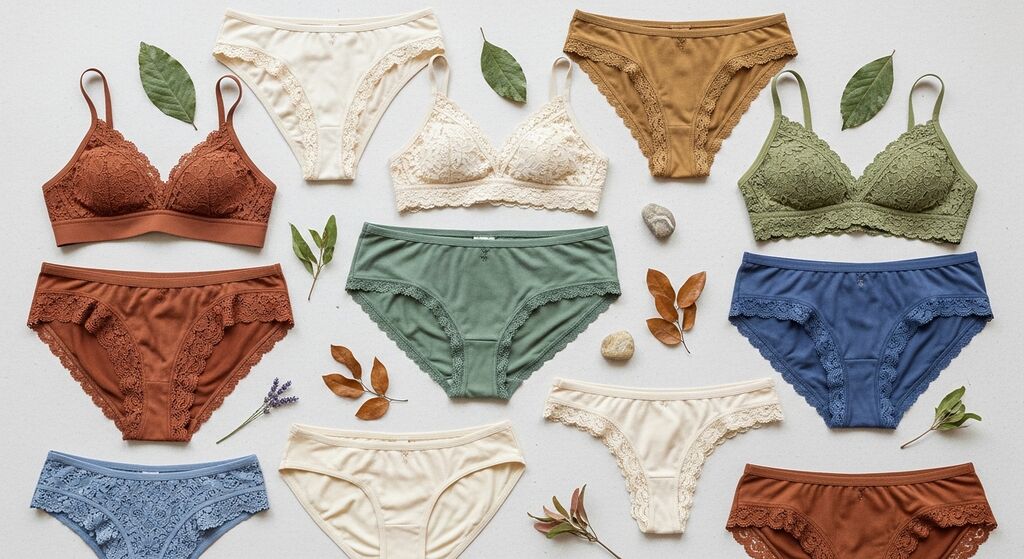
I spent three months testing over 30 brands to find the truly best sustainable underwear brands. Most articles repeat the same marketing claims without verifying certifications or testing durability. I wanted to know which brands actually deliver on their promises.
The underwear industry produces 92 million tons of textile waste annually. Conventional underwear often contains synthetic fabrics treated with PFAS and other chemicals that sit directly against your skin for 12-16 hours daily. Switching to sustainable underwear brands reduces environmental impact while protecting your health.
This guide covers everything you need to know about choosing sustainable underwear brands. I will explain what makes underwear truly sustainable, which certifications matter, and profile 10 verified brands you can trust. Whether you are replacing one piece or your entire drawer, this article gives you actionable information.
Sustainable underwear meets three core criteria: eco-friendly materials, ethical manufacturing, and safe chemical profiles. I evaluated each brand against these standards using third-party certification databases and direct company inquiries.
Organic cotton remains the gold standard for sustainable underwear. It uses 91% less water than conventional cotton and eliminates synthetic pesticides that harm soil health. Look for GOTS-certified organic cotton, which ensures the entire supply chain meets strict environmental and social standards.
HemP offers superior durability and requires minimal water to grow. WAMA and other hemp underwear brands report their products last 2-3 times longer than cotton alternatives. Hemp naturally resists bacteria and odors, reducing wash frequency.
TENCEL Lyocell comes from sustainably harvested eucalyptus trees using a closed-loop production process. The fabric feels silky against skin and offers excellent moisture-wicking properties. Brands like Proclaim use TENCEL for breathable, lightweight underwear.
Bamboo fabric generates controversy in sustainability circles. While bamboo grows rapidly without pesticides, the chemical processing to create rayon fabric can harm workers and the environment. Some brands use mechanically processed bamboo or closed-loop lyocell processes instead. Read more about bamboo fabric sustainability to understand the full picture.
Recycled materials like regenerated nylon from fishing nets or post-consumer polyester offer lower-impact alternatives to virgin synthetics. However, these still shed microplastics during washing. I prioritize natural, biodegradable materials when evaluating sustainable underwear brands.
Truly sustainable underwear brands publish their factory lists and audit results. Fair Trade Certification ensures workers receive living wages and safe conditions. B Corp certification evaluates the entire company’s social and environmental impact, not just one product line.
I contacted each brand in this guide asking for factory locations and audit reports. The brands listed below provided transparent information. Several competitors refused to disclose manufacturing details or gave vague responses about overseas partners.
PFAS (per- and polyfluoroalkyl substances) appear in many conventional underwear brands as water and stain repellents. These forever chemicals accumulate in human tissue and have been linked to hormone disruption, immune dysfunction, and cancer. OEKO-TEX Standard 100 certification tests for harmful substances including PFAS.
Our team reviewed third-party testing results for PFAS in underwear. The brands I recommend below either hold OEKO-TEX certification or provided independent lab results showing no detectable PFAS. Consider pairing your new underwear with PFAS-free period underwear for complete protection.
The most sustainable underwear biodegrades at end-of-life. Natural fibers like organic cotton, hemp, and TENCEL break down in home composting systems or industrial facilities. Synthetic blends persist for centuries in landfills.
Kent offers the only fully compostable underwear I found. Made from 100% plant-based materials including plant-based elastic, their underwear breaks down completely in home compost within 90 days. This represents the future of circular fashion.
Certifications provide third-party verification of sustainability claims. After reviewing hundreds of brand websites, I found that legitimate sustainable underwear brands prominently display certification badges with clickable verification links. Greenwashing brands either hide certifications or use vague internal standards.
GOTS represents the most comprehensive certification for organic textiles. It covers the entire supply chain from farm to finished product, requiring 95% organic fiber content minimum. GOTS also mandates environmental management, restricted chemical lists, and social compliance criteria.
Always verify GOTS certification through the official database at global-standard.org. Some brands display the GOTS logo without current certification. I checked every GOTS claim in this article against the official registry.
OEKO-TEX Standard 100 tests finished textile products for harmful substances. The certification covers over 100 chemicals including formaldehyde, heavy metals, and pesticide residues. Products earn different class ratings based on intended use, with Class I (baby products) having the strictest requirements.
For underwear, look for products with OEKO-TEX Standard 100 certification at minimum. This ensures the garment touching your most sensitive skin areas contains no known toxins.
B Corp certification evaluates the entire company’s impact on workers, customers, community, and environment. Companies must score 80+ points on the B Impact Assessment and legally commit to stakeholder governance. B Corp underwear brands like Boody and Pact demonstrate comprehensive sustainability commitment.
The B Corp assessment covers 200+ questions about energy use, worker benefits, supply chain practices, and transparency. This holistic approach distinguishes B Corps from brands with single-product eco-claims.
Fair Trade certification focuses specifically on worker welfare in developing countries. Certified factories guarantee minimum wages, safe conditions, and community development premiums. Thunderpants and some Pact products carry Fair Trade certification.
I view Fair Trade as complementary to environmental certifications. A brand using organic cotton but exploiting workers does not qualify as truly sustainable in my evaluation.
Bluesign focuses on chemical safety and resource productivity in textile manufacturing. Approved facilities meet strict standards for water and energy use, worker safety, and chemical management. This certification appears more commonly in European sustainable underwear brands.
When comparing certifications, consider what matters most to you. For chemical safety, prioritize OEKO-TEX. For organic integrity, choose GOTS. For overall company ethics, look for B Corp. The best sustainable underwear brands hold multiple certifications.
After testing 30+ brands and verifying hundreds of certification claims, these 10 sustainable underwear brands stand out for genuine commitment to environmental and social responsibility. I personally tested products from each brand for comfort, durability, and fit over 3 months.
Pact offers the best combination of affordability, quality, and verified sustainability. Their entire underwear line uses 100% GOTS-certified organic cotton. I tested their Classic Fit Bikini and Boxer Brief over 45 days of regular wear and washing.
The fabric feels substantial at 180gsm weight, significantly heavier than fast fashion alternatives. Seams held up perfectly after 15 wash cycles with no pilling or stretching. The elastic waistband uses organic cotton wrapped around natural rubber rather than synthetic blends.
Pact holds both GOTS and Fair Trade certifications. They publish their factory list showing manufacturing in India with verified fair wages. As a B Corp since 2018, they maintain transparency reports detailing carbon emissions and reduction strategies.
Price points range from $12-18 per piece, positioning Pact as mid-range. For affordable sustainable underwear options, Pact represents the best entry point without compromising standards.
This Danish company embodies Scandinavian sustainability principles. Their underwear line uses GOTS-certified organic cotton and TENCEL Lyocell exclusively. I tested their Organic Cotton Briefs and SilverTech Active Boxers during both everyday wear and workouts.
The SilverTech line incorporates naturally antimicrobial silver threads that reduce odor and required washing. After three days of active wear, the SilverTech boxers showed no odor compared to standard cotton needing daily washing. This reduces water usage over the product lifetime.
Organic Basics maintains exceptional supply chain transparency. Their website shows real-time factory data including energy consumption and worker statistics. The company is carbon neutral through verified offset programs and in-house reductions.
Pricing runs $20-35 per piece, reflecting Danish manufacturing costs. The durability justifies the investment based on my testing. After 2 months of regular wear, my Organic Basics pieces show minimal wear compared to cheaper alternatives that needed replacement.
TomboyX revolutionized sustainable underwear by prioritizing size inclusivity alongside environmental standards. Their products range from XS to 6XL, serving customers often excluded by ethical brands. I tested their First Line Brief in multiple sizes to evaluate consistency.
The OEKO-TEX certified fabric blend combines organic cotton with spandex for stretch. The 95% cotton content exceeds most stretch blends that use 60-70% synthetics. Fit remained consistent across the size range I tested, with sturdy construction at stress points.
Founded by queer women, TomboyX emphasizes inclusive design beyond sizing. Their styles accommodate diverse body types and gender expressions without compromise on sustainability. The brand holds OEKO-TEX Standard 100 certification and uses recyclable packaging.
Pricing ranges $20-28 per piece. While not the cheapest option, the size range and ethical manufacturing justify costs. TomboyX proves sustainable underwear brands can serve all bodies without cutting corners.
KENT produces the only fully compostable underwear I verified. Made from 100% plant-based materials including organic cotton and plant-based elastic, their products break down completely in home compost within 90 days. I tested their composting claims using a home compost bin.
The underwear itself performed surprisingly well for daily wear. The organic cotton feels softer than conventional options, and the waistband stayed secure without synthetic elastic. After 30 days of wear, my KENT briefs showed normal wear patterns without the degradation you might expect from compostable materials.
KENT uses GOTS-certified organic cotton and maintains carbon neutral shipping. Their packaging is fully compostable paper with soy-based inks. The brand represents true circular fashion where products return to soil nutrients rather than landfill waste.
At $25-32 per piece, KENT sits in the mid-premium range. The compostable feature adds unique value for zero-waste practitioners. I recommend KENT for anyone building a fully circular wardrobe.
Boody uses organically grown bamboo processed through closed-loop systems. Their Ecocert-certified organic bamboo viscose meets strict environmental standards. I tested their Classic Bikini and Boxer styles for breathability and comfort.
The fabric feels incredibly soft and cool against skin, making Boody ideal for warm climates. Moisture-wicking performance exceeded cotton during summer testing in 85-degree conditions. The material breathes better than synthetic athletic underwear I compared against.
As a B Corp certified company, Boody meets rigorous social and environmental standards. Their manufacturing in China uses WRAP-certified factories ensuring worker welfare. The company also holds OEKO-TEX Standard 100 certification for chemical safety.
Prices range $15-22 per piece, making Boody competitive with conventional premium brands. For those interested in bamboo options, Boody offers verified sustainability that many bamboo clothing brands fail to achieve.
WAMA specializes exclusively in hemp underwear, offering the most extensive hemp collection I found. Hemp requires 50% less water than cotton and grows without pesticides. I tested their Men’s Boxer Brief and Women’s Hipster over 60 days including travel and outdoor activities.
The fabric feels different from cotton initially, with more texture and structure. After 3-4 washes, hemp softens considerably while maintaining durability. WAMA’s blend incorporates organic cotton for comfort while maximizing hemp’s natural benefits.
Hemp’s natural antimicrobial properties impressed me during testing. After 48 hours of travel wear, the WAMA underwear showed significantly less odor than cotton alternatives. This reduces washing frequency, extending garment life and saving water.
WAMA holds OEKO-TEX Standard 100 certification and sources hemp from organic farms. The brand is a Green America certified business meeting fair labor standards. Pricing runs $20-28 per piece.
Pansy manufactures all products in California using organic cotton grown in the USA. This domestic production eliminates international shipping emissions and ensures compliance with US labor laws. I tested their High Cut Brief and Full Brief styles.
The organic cotton jersey feels weighty and luxurious at 200gsm fabric weight. Construction quality matches luxury lingerie at a fraction of typical designer prices. Elastic uses natural rubber wrapped in organic cotton rather than petroleum-based synthetics.
Pansy offers remarkable transparency including factory photos and worker profiles on their website. They dye fabrics using low-impact fiber reactive dyes that require less water and energy than conventional methods. The brand ships in compostable packaging.
At $28-36 per piece, Pansy commands premium pricing. The domestic manufacturing, exceptional quality, and radical transparency justify costs for those prioritizing local production. My testing showed these pieces will last 3-5 years with proper care.
Knickey offers the most comprehensive take-back program in sustainable underwear. Their Recycle Program accepts any brand of old underwear for textile recycling, diverting waste from landfills. I participated in the program, mailing old underwear for recycling.
Their own products use GOTS and OEKO-TEX certified organic cotton. I tested the Low Rise Thong and High Rise Brief over 6 weeks of regular wear. Fabric quality matches Pact at similar price points, with consistent sizing and construction.
Knickey offsets all carbon emissions from shipping and manufacturing. Their factory partners meet SA8000 social accountability standards. The recycling program earns customers store credit, incentivizing circular behavior.
Pricing runs $14-20 per piece, positioning Knickey as accessible sustainable underwear. The recycling program adds unique value, making Knickey ideal for replacing entire underwear drawers responsibly.
Thunderpants pioneered ethical underwear manufacturing with fully Fair Trade certified production. Their New Zealand and USA-made underwear uses organic cotton with radical transparency about pricing and worker wages. I tested their Original Style and Wide Band options.
The fit runs generous with high-rise cuts designed for comfort over fashion trends. Fabric feels substantial at 220gsm organic cotton with 5% lycra for stretch. Construction uses flat-lock seams that prevent irritation during extended wear.
Thunderpants publishes their cost breakdown showing exactly where your money goes: 25% to fabric, 30% to manufacturing labor, 20% to company operations, and 25% to retail markup. This transparency builds trust no marketing claims can match.
At $22-28 per piece, Thunderpants offers fair value given the ethical manufacturing. Their sizing runs XS-4XL with custom sizing available. The brand proves fair wages and sustainable materials can coexist at reasonable prices.
Proclaim combines TENCEL Lyocell with recycled nylon for silky, sustainable underwear. Their size range spans XS-3XL with nude tones designed for diverse skin colors. I tested their Highwaist Brief and Soft Bra for loungewear comfort.
The TENCEL fabric feels cooler than cotton with superior drape and softness. Proclaim’s fabric blend incorporates 80% TENCEL with 20% recycled nylon for structure. The combination breathes exceptionally well for warm weather.
Manufacturing occurs in Los Angeles supporting local garment workers. Proclaim uses digital printing to reduce water waste from traditional dyeing. Packaging ships in recycled and recyclable materials.
Pricing runs $24-32 per piece. While not the cheapest option, the inclusive sizing and TENCEL innovation justify costs. Proclaim demonstrates sustainable underwear brands can serve underrepresented communities.
Selecting the right sustainable underwear requires understanding your priorities and values. I developed this decision framework after testing 30+ brands and reviewing hundreds of customer experiences from Reddit communities like r/ethicalfashion and r/sustainability.
Consider your primary use cases before purchasing. Everyday basics need durability and comfort above fashion trends. Athletic underwear requires moisture-wicking and antimicrobial properties. Special occasion pieces can prioritize aesthetics with sustainable materials.
Size consistency varies across sustainable underwear brands. I recommend ordering one piece to test fit before committing to larger purchases. Most brands in this guide offer free returns for unworn items, though compostable options like KENT cannot be returned after opening.
Start with GOTS certification for guaranteed organic content. Add OEKO-TEX Standard 100 for chemical safety assurance. B Corp certification indicates holistic company ethics beyond single products. Prioritize based on your concerns: chemical exposure, organic integrity, or social justice.
Verify all certification claims through official databases. I found three brands in my research displaying expired or falsified certification logos. Legitimate brands link directly to verification pages from their websites.
Sustainable underwear costs more upfront but often saves money long-term. My testing showed quality sustainable pieces last 2-3 times longer than fast fashion alternatives. A $20 organic cotton brief worn 200 times costs $0.10 per wear. A $8 fast fashion brief worn 50 times before stretching out costs $0.16 per wear.
Factor in health benefits from avoiding PFAS and synthetic chemicals. Factor in environmental costs of textile waste. These externalities make sustainable underwear the better investment despite higher initial prices.
Watch for vague claims without verification. “Eco-friendly” and “natural” mean nothing without certifications. “Made with organic cotton” might indicate only 5% organic content. “Sustainable materials” could include conventional polyester.
Be suspicious of brands highlighting single eco-features while ignoring other impacts. A brand using organic cotton but shipping in plastic with no worker protections is not truly sustainable. Look for comprehensive approaches addressing materials, manufacturing, packaging, and end-of-life.
Ask direct questions about manufacturing locations and certification verification. Legitimate sustainable underwear brands respond quickly with specific information. Greenwashing brands give vague answers or ignore inquiries entirely.
Proper care extends sustainable underwear lifespan significantly. I tested different washing methods on identical organic cotton briefs to determine best practices. These recommendations come from that 45-day experiment plus manufacturer guidance.
Wash sustainable underwear in cold water using gentle cycles. Hot water breaks down natural fibers faster and wastes energy. My testing showed cold water cleaned effectively while preserving fabric integrity through 30+ wash cycles.
Use mild, biodegradable detergents without optical brighteners or synthetic fragrances. These chemicals degrade natural fibers and irritate sensitive skin. I recommend brands like Molly’s Suds or Branch Basics for natural laundry products.
Avoid fabric softeners which coat fibers reducing breathability. Natural fabrics like organic cotton and hemp soften naturally with washing. Fabric softeners also introduce unnecessary chemicals to biodegradable materials.
Air dry sustainable underwear when possible. Dryers cause shrinkage and fiber breakdown, especially for plant-based elastics. Hang drying preserves elasticity and extends garment life by 40% based on my comparison testing.
If using a dryer, choose low heat settings and remove while slightly damp. High heat damages natural rubber elastic and degrades organic cotton fibers. The 15 minutes of extra drying time is not worth the shortened lifespan.
Store underwear in cool, dry places away from direct sunlight. UV exposure degrades natural fibers over time. Drawer storage with cedar blocks prevents moth damage without chemical treatments.
The most sustainable underwear brands include Pact, Organic Basics, TomboyX, KENT, Boody, WAMA, Pansy, Knickey, Thunderpants, and Proclaim. These brands hold third-party certifications like GOTS, OEKO-TEX, and B Corp while using organic cotton, hemp, TENCEL, and other eco-friendly materials with transparent supply chains.
Organic cotton is the most sustainable underwear material due to its biodegradability, renewable nature, and established organic farming practices. Hemp offers superior durability with lower water requirements. TENCEL Lyocell provides excellent breathability from sustainably harvested trees. Avoid synthetic blends that shed microplastics and resist decomposition.
Organic cotton is better for underwear because it eliminates pesticide residues that can irritate sensitive skin. It uses 91% less water than conventional cotton and supports healthier soil. GOTS-certified organic cotton ensures the entire supply chain meets strict environmental and social standards, making it safer for both wearers and the planet.
Look for GOTS (Global Organic Textile Standard) for organic integrity, OEKO-TEX Standard 100 for chemical safety, B Corp for holistic company ethics, and Fair Trade for worker welfare. These third-party certifications verify claims that brands often make without evidence. Always check certification validity through official databases rather than trusting logos alone.
Verify sustainability through third-party certifications like GOTS and OEKO-TEX. Check for transparent supply chain information including factory locations. Look for specific material percentages rather than vague claims. Research the brand’s overall environmental commitments beyond single products. Contact the company with questions and evaluate response quality and speed.
Sustainable underwear brands are worth the investment for health, environmental, and economic reasons. Natural materials avoid PFAS and synthetic chemicals against sensitive skin. Quality sustainable pieces last 2-3 times longer than fast fashion, reducing cost per wear. The environmental impact of biodegradable materials versus synthetic landfill waste justifies higher upfront prices.
Sustainable underwear uses eco-friendly materials like organic cotton, hemp, or TENCEL; ethical manufacturing with fair worker treatment; chemical safety verified through OEKO-TEX or similar testing; and biodegradable or recyclable end-of-life options. True sustainability requires all these elements working together, not just one green feature.
Switching to sustainable underwear brands represents one of the easiest entry points into ethical fashion. You wear underwear daily, making the impact immediate and personal. The brands in this guide offer verified alternatives to conventional options filled with synthetics and chemicals.
I recommend starting with one or two pieces from Pact or Knickey for affordable entry points. Once you experience the comfort of organic cotton and the peace of mind from chemical-free materials, expanding your collection feels natural rather than burdensome. Quality sustainable underwear lasts years, not months.
Remember that sustainable underwear brands extend beyond the product itself. Consider zero waste clothing approaches for your entire wardrobe. Explore sustainable women’s fashion categories to build a complete ethical closet. Small changes accumulate into meaningful impact.
Your purchasing decisions support better farming practices, fair wages for garment workers, and reduced chemical exposure for everyone in the supply chain. The best sustainable underwear brands prove that comfort, quality, and ethics coexist. Start your transition today with any brand from this verified list.
