

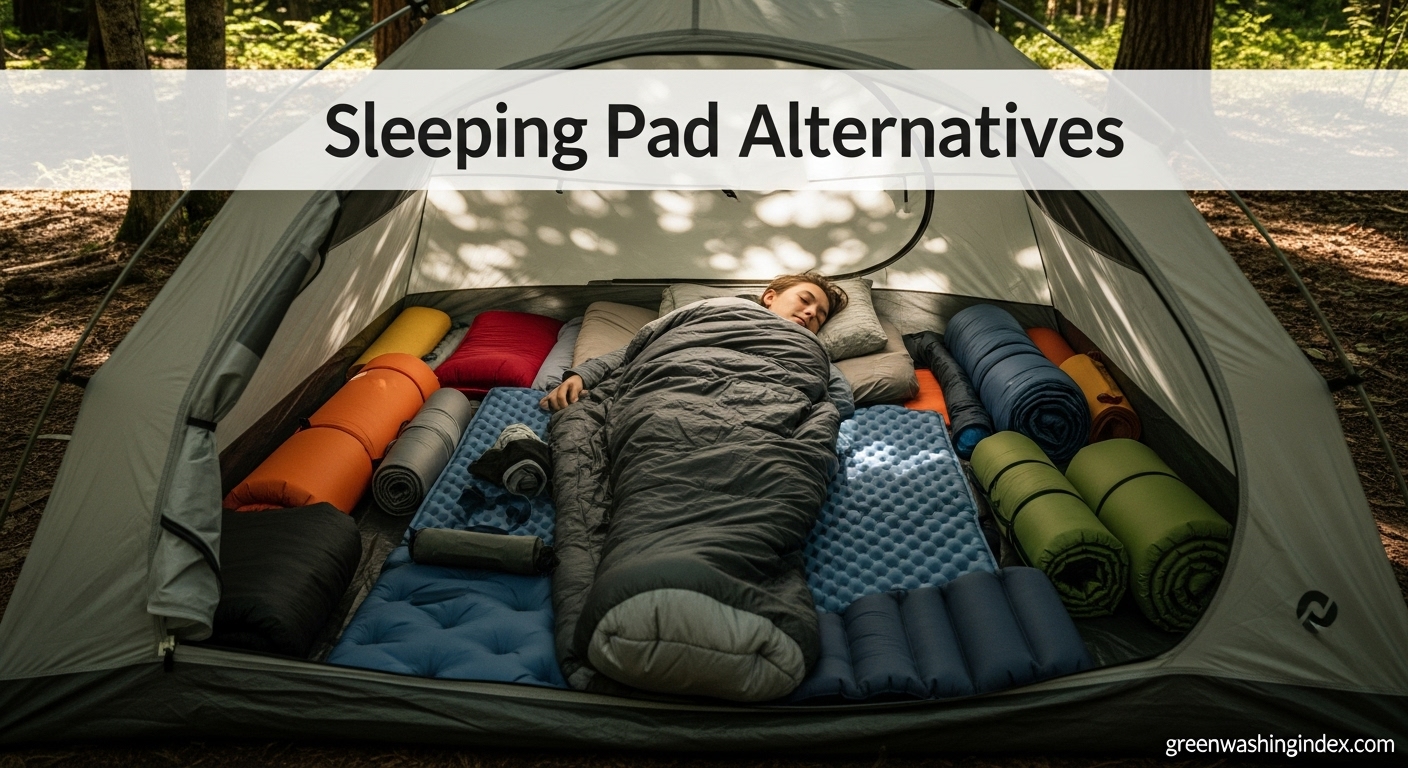
I’ve spent countless nights sleeping on everything from pine boughs to luxury air mattresses. After testing alternatives across five seasons of camping, I learned that traditional sleeping pads aren’t your only option.
Sleeping pad alternatives for camping include yoga mats, gym mats, moving blankets, egg crate foam toppers, carpet padding, foam camping pads, pool floats, air mattresses, self-inflating pads, hammocks, camping cots, double-height air mattresses, insulated camping mats, and closed-cell foam pads.
Each option serves different camping styles, budgets, and comfort needs.
This guide covers all 14 alternatives with honest pros, cons, and temperature ratings so you can choose what works for your next adventure.
Here’s how every sleeping pad alternative stacks up for insulation, comfort, and portability.
| Alternative | R-Value | Best Temp | Weight | Cost | Best For |
|---|---|---|---|---|---|
| Yoga Mat | 1.0-1.5 | 50°F+ | 2-5 lbs | $15-30 | Car camping, mild weather |
| Gym Mat | 2-3 | 40°F+ | 5-15 lbs | $20-50 | Car camping comfort |
| Moving Blanket | 2-4 (layered) | 45°F+ | 5-10 lbs | $10-25 | Budget campers |
| Egg Crate Foam | 1.5-2.5 | 50°F+ | 3-8 lbs | $20-40 | Comfort seekers |
| Carpet Padding | 2-4 | 40°F+ | 1-3 lbs | $10-30 | DIY insulation |
| Foam Camping Pad | 2-3 | 35°F+ | 1-2 lbs | $25-40 | Backpacking |
| Pool Float | 0.5 | 60°F+ | 1-2 lbs | $10-20 | Emergency only |
| Basic Air Mattress | 1-2 | 50°F+ | 5-8 lbs | $15-30 | Car camping with pump |
| Self-Inflating Pad | 3-5 | 30°F+ | 2-4 lbs | $25-80 | All-around camping |
| Hammock | 0 (bottom) | Variable | 1-2 lbs | $15-100 | Forest camping |
| Camping Cot | 1-2 | 40°F+ | 15-25 lbs | $50-150 | Luxury car camping |
| Double-High Air Mattress | 1-2 | 45°F+ | 10-15 lbs | $35-60 | Car camping with power |
| Insulated Mat (R9.5) | 9.5 | 10°F+ | 3-5 lbs | $70-100 | Winter camping |
| 4-Season Foam | 4.3 | 25°F+ | 2-3 lbs | $35-50 | Three-season use |
These household items can save you money while providing decent comfort for car camping and base camp setups.
Yoga mats are the most accessible alternative because you might already own one.
They’re lightweight at 2-5 pounds and closed-cell construction resists moisture.
The insulation is minimal (R-value 1.0-1.5), making them suitable only for mild weather above 50°F.
Pros: Extremely affordable at $15-30, lightweight and portable, easy to clean, dual-use for exercise, can combine multiple mats with duct tape.
Cons: Limited insulation value, narrow width requires taping multiple mats, minimal cushioning, not designed for rugged use, can slip on smooth surfaces.
Car camping in warm weather, beginners testing the waters, emergency backup when your regular pad fails.
You’re camping in temperatures below 50°F or need serious cushioning for side sleeping.
Gym mats provide superior comfort compared to yoga mats thanks to 1-2 inch thickness.
The high-density foam offers better insulation (R-value 2-3) for cooler conditions down to 40°F.
Interlocking tiles let you create custom sleeping surfaces, while folding mats store more compactly.
Pros: Excellent cushioning, wider coverage up to 4’x6′, durable construction, interlocking options, better insulation than yoga mats, dual-use for home exercise.
Cons: Bulky and difficult to transport, heavy at 5-15 lbs, not waterproof without tarp, takes significant storage space, may have initial chemical odor.
Car camping where weight doesn’t matter, base camp setups, campers prioritizing comfort over portability.
You’re backpacking or have limited vehicle storage space.
Moving blankets are the cheapest option on this list at just $10-25 each.
The heavy-duty construction with recycled cotton batting provides surprisingly good insulation when layered (R-value 2-4).
I’ve used moving blankets for impromptu camping trips and found that layering 2-3 creates adequate warmth.
Pros: Most affordable option, extremely durable, multiple uses as ground cover or blanket, layers for increased warmth, no setup required, widely available.
Cons: Heavy at 5-10 lbs per blanket, absorbs moisture easily, no waterproofing, bulky to pack, collects dirt, difficult to clean if heavily soiled.
Budget-conscious campers, cool dry weather camping, emergency backup, car camping with storage space.
You’re camping in wet conditions or need to pack light.
Egg crate foam offers exceptional cushioning that relieves pressure points better than flat foam.
The convoluted design provides air circulation for temperature regulation, making it surprisingly comfortable.
At 3-8 pounds and $20-40, it’s a lightweight and affordable option for comfort-focused campers.
Pros: Excellent cushioning and pressure relief, lightweight at 3-8 lbs, affordable, can be cut to custom size, good air circulation, comfortable sleeping surface.
Cons: Not waterproof and absorbs moisture easily, low durability and tears easily, bulky when rolled, limited insulation (R-value 1.5-2.5), requires waterproof ground cover.
Comfort-focused car campers, side sleepers who need pressure relief, mild weather camping above 50°F.
You’re camping on rough surfaces or in wet conditions.
Carpet padding is a secret weapon for insulation that many campers overlook.
The rebond foam or rubber construction provides excellent R-value for a fraction of the cost of dedicated camping pads.
You can often buy remnants or off-cuts for $10-30 at flooring stores.
Pros: Excellent insulation, very affordable, durable and long-lasting, can be cut to custom size, waterproof options available.
Cons: Heavy and bulky, may have initial odor, not suitable for backpacking, can be difficult to find in stores.
DIY enthusiasts, car camping, campers prioritizing insulation over comfort.
You need a lightweight solution for backpacking trips.
These budget products bridge the gap between household items and dedicated camping gear.
Traditional closed-cell foam pads are the backpacker’s classic choice for reliability.
The accordion-fold design is lightweight, durable, and completely waterproof.
While firmer than air pads, they provide basic insulation (R-value 2-3) without the risk of punctures.
Pros: Lightweight, durable construction, completely waterproof, no puncture risk, affordable, folds compactly.
Cons: Less cushioning than air pads, bulkier when packed, firm feel that some dislike, limited comfort for side sleepers.
Backpacking, rugged use, budget-conscious campers who need reliability.
You prioritize plush comfort or need extra cushioning.
Pool floats are the absolute cheapest option at $10-20, but they’re strictly emergency backups.
The simple inflatable design provides basic cushioning but almost no insulation.
I’ve used a pool float exactly once, and I woke up cold despite it being a mild summer night.
Pros: Very affordable, readily available, compact when deflated, water-resistant surface.
Cons: Poor insulation, puncture-prone and not durable, no comfort features, slippery surface, loses air overnight.
Emergency situations only, backyard camping for kids, testing camping interest before investing.
You plan to camp regularly or in temperatures below 60°F.
Basic air mattresses provide that familiar bed-like feel that many casual campers prefer.
The 10-inch height offers decent comfort, but you’ll need a manual or electric pump.
Check out our camping mattresses guide for more inflatable options.
Pros: Affordable at $15-30, familiar bed-like feel, widely available, good for car camping, raised height for easy entry/exit.
Cons: Requires separate pump, poor insulation from cold ground, puncture risk, bulky and heavy, can be noisy when moving.
Car camping, guests, budget family camping with vehicle access.
You’re backpacking or camping in cold weather without additional insulation.
These premium options approach or match traditional sleeping pad prices but deliver superior performance and convenience.
The WILDOMS self-inflating pad combines foam insulation with air convenience.
At 4 inches thick, it provides substantial cushioning while remaining ultralight for backpacking.
The built-in foot pump and integrated pillow create an all-in-one sleep system.
Pros: Self-inflating convenience, built-in pillow saves weight, good ground insulation, lightweight for backpacking, compact pack size.
Cons: More expensive than basic foam, foot pump requires effort, possible puncture risk with inflatable design.
Backpackers who want comfort without weight, campers who hate manual inflation.
You’re on a tight budget or want completely puncture-proof gear.
Hammocks remove you from rocky, uneven ground entirely for a unique sleeping experience.
The SZHLUX portable hammock includes tree straps and a carry bag for complete convenience.
At just $15-20 and 1-2 pounds, it’s an affordable and lightweight alternative.
Pros: Lightweight and portable, compact when packed, comfortable suspended sleep, elevated off rocky ground, affordable price, includes tree straps.
Cons: Requires trees or anchor points, no insulation from below, learning curve for setup and sleeping position, not suitable for all terrains.
Forest camping, backpackers in wooded areas, weight-conscious campers.
You’re camping above treeline, in deserts, or areas without suitable trees.
Camping cots provide the most bed-like experience of any outdoor sleep option.
This folding cot supports 500 pounds and includes a soft pad for complete comfort.
The elevated design keeps you off cold ground and provides a stable, level sleeping surface.
Pros: Elevated off cold ground, stable level sleeping surface, no inflation required, excellent 500lb capacity, includes soft pad, easy setup.
Cons: Bulky and takes significant space, heavier than other options, higher price point, requires adequate tent height, not suitable for backpacking.
Car camping, base camp, luxury camping, older campers who need easy entry/exit.
You’re backpacking or have limited vehicle storage.
This 18-inch Intex air mattress delivers the most luxurious camping sleep experience.
The built-in electric pump eliminates manual inflation, while the Dura-Beam construction provides stability.
At $40, it’s an investment in car camping comfort that rivals home beds.
For more air mattress options, see our camping mattresses comparison.
Pros: Built-in electric pump for easy inflation, 18-inch height for easy entry/exit, Dura-Beam stability, Comfort-Plush top, suitable for indoor/outdoor use.
Cons: Higher price point, poor insulation from cold ground, heavy and not portable, requires power source, not suitable for backpacking.
Car camping with power access, luxury camping, guest bedding at home.
You’re camping without electricity or need lightweight gear.
This high-performance self-inflating pad delivers winter-ready insulation with R-value 9.5.
The 3.14-inch thickness provides substantial comfort for cold weather camping down to 10°F.
Built-in electric pump and integrated pillow add convenience for a complete sleep system.
Pros: Exceptional R-value 9.5 for winter camping, thick comfort layer, built-in electric pump, integrated pillow, suitable for all-season use.
Cons: Higher price at $80, requires power for electric pump, heavier than basic pads, overkill for warm weather camping.
Winter camping, cold weather backpacking, campers who need maximum insulation.
You only camp in summer or have a tight budget.
The Gear Doctors Oxylus pad offers four-season versatility with R-value 4.3.
This self-inflating design combines foam insulation with air comfort at $37.
It’s an excellent middle-ground option for three-season campers who occasionally venture into colder conditions.
Pros: Good R-value 4.3 for three seasons, self-inflating convenience, reasonable price, foam insulation provides warmth, suitable for varied conditions.
Cons: Heavier than ultralight options, not as warm as dedicated winter pads, self-inflation can be slow, requires care to prevent punctures.
Three-season camping, shoulder season adventures, campers who want versatility.
You’re an ultralight backpacker counting every ounce.
Choosing the right alternative requires understanding temperature ratings and R-values.
R-Value: A measure of thermal resistance. Higher numbers indicate better insulation. R-value 1 is minimal insulation, R-value 5+ is excellent for cold weather camping.
Almost any alternative works for warm weather camping.
Pool floats, yoga mats, and basic air mattresses provide sufficient insulation when nighttime lows stay above 60°F.
Focus on comfort and convenience rather than warmth.
You need moderate insulation for spring, summer, and fall camping.
Gym mats, carpet padding, foam camping pads, and self-inflating pads with R-value 3-5 work well.
Layering a moving blanket under a foam pad boosts warmth significantly.
Cold weather camping requires serious insulation with R-value 5+.
High-R self-inflating pads, layered foam systems, or combinations of毯子 and foam are necessary.
Sleeping directly on snow without adequate insulation is dangerous.
The environmental footprint of your sleep system matters more than many campers realize.
Household items like yoga mats and moving blankets are the most eco-friendly choice because they repurpose existing items.
No new manufacturing is required when you use gear you already own.
This approach aligns with Leave No Trace principles of reducing consumption.
Foam pads and gym mats have moderate environmental impact due to petroleum-based materials.
However, their durability means years of use, spreading the manufacturing impact over many camping trips.
Carpet padding made from recycled materials is another moderate-impact option that diverts waste from landfills.
Air mattresses, pool floats, and self-inflating pads use plastics and chemical treatments that are less environmentally friendly.
These products also have shorter lifespans due to puncture risks and material degradation.
Choosing durable options that last for years reduces your long-term environmental impact.
Combining alternatives creates a sleep system warmer than any single option alone.
Layer a foam pad or carpet padding underneath with a moving blanket on top.
This combination creates air pockets and traps heat effectively.
I’ve used this method for unexpected cold snaps and stayed warm in temperatures 15 degrees lower than anticipated.
Stack two foam pads together for doubled R-value and improved comfort.
A thin closed-cell foam beneath a thicker egg crate creates both insulation and cushioning.
This technique is popular among winter campers who can’t afford expensive high-R pads.
Air mattresses alone are cold because air circulates inside, carrying away body heat.
Add a foam pad or blanket on top of your air mattress to create an insulating layer.
This simple addition transforms a cold air bed into a warm sleep system.
Consider these factors when selecting your sleep system.
Backpackers need lightweight, compact options like foam pads or self-inflating mats.
Car campers can prioritize comfort with gym mats, cots, or air mattresses.
Choose based on how you actually camp, not how you wish you camped.
Check the forecast and choose R-value accordingly.
Summer camping requires R-value 1-2, three-season needs R-value 3-4, winter camping demands R-value 5+.
It’s better to have too much insulation than too little.
Household items cost the least but have limitations.
Budget products balance cost and performance reasonably well.
Premium gear lasts longer and performs better but requires larger upfront investment.
Side sleepers need more cushioning than back sleepers.
Test your sleep system at home before relying on it in the field.
A good night’s sleep is worth the investment if you camp frequently.
For comprehensive camping gear information, check our essential guides.
You can use household items like yoga mats, gym mats, moving blankets, egg crate foam toppers, and carpet padding. Budget options include foam camping pads and basic air mattresses. Premium alternatives include self-inflating pads, camping cots, hammocks, and insulated sleeping mats. Each option has different insulation values, comfort levels, and temperature ratings.
Yes, yoga mats work as basic sleeping pads for warm weather camping above 50°F. They provide minimal insulation (R-value 1.0-1.5) and thin cushioning. For better results, tape multiple mats together with duct tape for wider coverage. Yoga mats are best suited for car camping, emergency backup, or testing camping interest before investing in dedicated gear.
Layering is the key to staying warm without a traditional sleeping pad. Combine carpet padding or a foam pad with moving blankets for added insulation. Create a barrier between your body and the ground using multiple layers. Use natural materials like dry leaves or pine boughs in emergency situations. Always check the forecast and bring more insulation than you think you need.
Air mattresses provide comfort but poor insulation from cold ground. The air inside circulates and carries away body heat, making them cold in temperatures below 50°F. For best results, add a foam pad or blanket on top of the air mattress to create insulation. Air mattresses work well for car camping with access to a pump but are not suitable for backpacking or cold weather camping.
Moving blankets are the cheapest alternative at $10-25 each, providing decent insulation when layered. Pool floats cost $10-20 but offer minimal insulation and durability. Carpet padding remnants cost $10-30 and provide excellent insulation. Yoga mats at $15-30 offer another budget option for warm weather camping. The absolute cheapest option is using household blankets you already own.
Sleeping pads serve two critical functions: cushioning for comfort and insulation from cold ground. The ground conducts heat away from your body up to 25 times faster than air. Without insulation, you’ll feel cold even in warm weather. For summer car camping on soft grass, you might get by with just blankets. For any other situation, some form of ground insulation is necessary for safety and comfort.
After years of testing alternatives across different seasons and terrains, I’ve learned that the best option depends on your specific situation.
For budget car campers, moving blankets layered with carpet padding provide unbeatable value.
Backpackers should invest in a quality foam pad or self-inflating mat that will last for years.
Don’t be afraid to experiment with combinations until you find what works for your sleep style and camping conditions.
The right sleeping pad alternative helps you wake up refreshed and ready for adventure, no matter your budget.
