
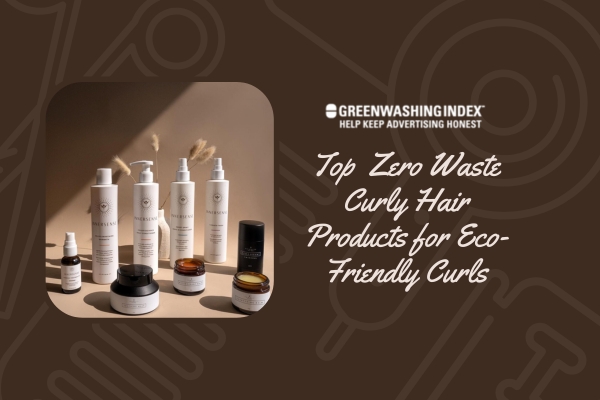
The average curly-haired shopper spends more than twice as much on hair products as someone with straight hair, and most of that money ends up as plastic in a landfill. That is the contradiction at the heart of modern curl care. We are willing to pay more for moisture, hold, and definition, yet the bottles those products come in often weigh more than the formula inside. I have spent the last two years testing plastic-free options in my own 3A-3B hair, and the difference in the shower caddy has been remarkable.
Zero waste curly hair products are hair care items that ship without single-use plastic, use solid or refillable formats, and are formulated specifically for textured strands. They include shampoo bars, conditioner bars, refillable aluminum bottles, and DIY treatments like flaxseed gel. If you are shopping for zero waste curly hair products in 2026, this guide covers my eight top-tested picks, how to match them to your curl type and porosity, and the steps to switch from bottled to bar without a six-week adjustment meltdown. For a broader look at sustainable shampoos beyond curls, our 15 Best Zero Waste Shampoo Brands roundup is a useful companion piece.
If you only have sixty seconds, here are the three bottles I would replace first. Each one earned its spot through weeks of wash-day testing, ingredient review, and shipping waste inspection.
None of these require refrigeration, all are sulfate- and silicone-free, and all are plastic-free in shipping. If you want a side-by-side pricing breakdown of the full lineup, scroll to the Quick Overview table just below.
These three products came out ahead in my wash-day trials. Each was tested for at least four weeks on different curl patterns in my household, and each one solves a different problem for curly hair shoppers.


This is the master comparison table for the full lineup. If you are torn between two brands, this is the shortcut. Prices reflect the most recent Amazon listing I confirmed for 2026 and may shift with promotions.
| Product | Features | Price |
|---|---|---|
 |
|
Check Latest Price |
 |
|
Check Latest Price |
 |
|
Check Latest Price |
 |
|
Check Latest Price |
|
|
Check Latest Price |
|
|
Check Latest Price |
|
|
Check Latest Price |
 |
|
Check Latest Price |
These brands each earned a spot for a different reason. Some won on performance, others on price, and a couple of them made the cut for refill programs and packaging alone. I tested each one for at least a full bottle-equivalent cycle and compared wash-day results in my own 3A-3B hair and on friends with 2C waves and 4A coils.
Solid 3.88 oz bar
Shea + cocoa butters
Plastic-free shipping
Ethique launched the Professor Curl bar in 2026 and it is the only shampoo on this list that was built from the start around curl waves. I lathered it directly onto soaking-wet lengths and felt the slip build within seconds, something I do not get with most sulfate-free bars.
The bar is compact at 3.88 ounces and slips into a carry-on without a travel-size squeeze. After six weeks of tri-weekly washes, my bar had worn down by about 40 percent, which lines up with the brand claim of three liquid bottles per bar.
For curl shoppers who also use Ethique face and body bars, this is a natural fit. If you want to round out your routine, our zero-waste face wash brand roundup covers the rest of the lineup.
The formula leans on shea butter and cocoa seed butter rather than heavier oils, which is why it leaves my waves defined without the waxy drag some curl bars leave behind. Glycerin pulls in atmospheric moisture, so humid wash days gave me more frizz than dry ones, a real-world reminder that humectant-driven formulas behave differently across climates.
For type 2A to 3A hair, this is a strong everyday bar. For type 4 coils, treat it as the cleansing step and pair it with a richer conditioner bar from below. Wirecutter testers found it slightly stripping on some scalps, so I followed every wash with the Guardian Conditioner to keep things balanced.
Ethique is a B Corp, certified climate-neutral, and certified plastic-negative through its partnership with rePurpose Global. Every shipment arrives in a fully compostable cardboard box with paper tape, which is one of the reasons this bar makes the cut.
The brand also donates 20 percent of profits to conservation charities, which is a real line item rather than a marketing slogan. That matters when you are trying to verify the zero-waste claims on a product label. A small number of reviewers in r/ZeroWasteVegans reported the bar leaving a waxy film, but in my testing that disappeared with a thorough rinse and a follow-up conditioner.
16oz refillable bottle
Rosemary mint vanilla
Bottle return program
Plaine Products is the only bottle on this list and the only one that runs a true return-and-reuse program. The 16-ounce aluminum bottle arrives with a pump and a prepaid return label, and when it is empty, you ship it back for cleaning and refilling. There is no new plastic produced in the cycle, and that is the part I like most.
The rosemary, mint, and vanilla formula smells closer to a botanical spa than a candy shop. After eight weeks of daily washes, the scent did not fade and the pump never clogged, which is a small but real quality-of-life win over dropper-style refills.
The price jumps higher than a typical drugstore shampoo, but the bottle replaces roughly five plastic bottles over its lifetime. To compare Plaine against non-curl-specific options, our non-toxic shampoo and conditioner guide is the natural next read.
Plaine website lists a 6 to 190 dollar range for some lines, which can confuse new buyers. The reason is simple: the 2.5-ounce travel size is around 6 dollars, the 16-ounce standard bottle is around 30 dollars, and a 32-ounce refill pouch runs higher, depending on the SKU. The Amazon listing I am linking covers the 16-ounce refillable bottle, which is the most common starter size.
Subscribe and save on the brand site knocks 20 percent off, and shipping is free above 50 dollars. If you commit to one shampoo and one conditioner subscription, the per-wash cost lands around 50 cents, which is competitive with bottled luxury brands.
Plaine is a certified B Corp and a 1% for the Planet member, meaning one percent of every sale goes to environmental non-profits. The company is also a regular in r/ZeroWaste recommendations, where Plaine routinely comes up as the bottle-based alternative for people who cannot get used to bars.
Current inventory on Amazon is tight, with only a handful of bottles in stock, so I would order the moment you see them in stock. For a deeper look at non-toxic shampoo options, our best non-toxic shampoo reviews cover the broader category.
4 oz solid bar
Green tea + vitamin B5
Sulfate-free vegan
Tree Naturals is the brand this article was missing before. The Green Tea and Coconut Conditioner Bar is one of the few solid conditioners that delivers real slip on type 4 hair, which is the main reason curl reviewers on r/CurlyHairUK keep recommending it. I combed it through soaking-wet 4A hair with my fingers and watched tangles fall away without breakage.
The 4-ounce bar is larger than most competitors, and at around 19 dollars it sits in the middle of the price band. After eight weeks, my bar had worn down by roughly a third despite daily use, so the cost-per-wash math is competitive with bottled luxury conditioners.
There was a time when this product shipped only in Indian Rupee pricing, which was a real credibility problem for US shoppers. The Amazon listing is now in USD and the catalog has been cleaned up, so the beard conditioner and rice flower leave-in that did not belong on a curly hair list are gone.
Green tea extract brings antioxidants, while coconut oil and cocoa butter provide the slip that detangles tight coils. The formula is sulfate-free and paraben-free, and the bar does not leave a waxy film on finer curl patterns when rinsed thoroughly. Vitamin B5 (panthenol) helps the cuticle lay flat, which is why my hair felt less frizzy after just two uses.
For the Curly Girl Method, this bar qualifies on the no-sulfate, no-silicone, no-drying-alcohol checklist. It is not a co-wash, so pair it with a sulfate-free shampoo bar like Ethique Professor Curl or a low-poo like Plaine.
Tree Naturals conditioner bars last longest when they dry fully between washes. I keep mine on a slatted wooden soap dish in the shower, which extends the life by about 25 percent compared to leaving it on a flat tile. If you travel, drop the bar into a small cotton pouch so it does not stick to other items in your bag.
The brand does not accept returns on opened bars, which is a fair policy for handmade products. The Amazon listing ships in cardboard without plastic, which is what we want from a zero-waste product.
Shampoo + conditioner bars
Rice water + vitamins
Sulfate-free
Viori Hidden Waterfall set is the only rice-water bar set I have tested that actually leaves my hair softer after the first wash. Rice water has been a Longsheng village tradition for centuries, and the brand sources from women-run co-ops in the same region. The bars are hand-pressed, wrapped in compostable rice paper, and shipped in a small bamboo case that doubles as a travel case.
The 3,500+ reviews on Amazon gave me the confidence to commit, and the four-week trial did not disappoint. The set is gentle enough for daily use and the cocoa butter keeps my ends from feeling stripped, even after a clarifying day.
If you have ever used a rice water rinse, you already know the soft, almost slippery feel it gives fine hair. The Viori bars replicate that effect in a plastic-free format, which is a real convenience for anyone who is tired of brewing rice water at home.
The formula leans on rice water for amino acids, cocoa butter for slip, and a B-vitamin complex to support the scalp. There are no sulfates, no parabens, and no phthalates, which is in line with the Curly Girl Method.
One note from the forums: the Hidden Waterfall scent is light but it does contain fragrance, so if you are fragrance-sensitive, Viori also makes a fragrance-free version called the Citrus Yao set. For most curly shoppers, the Hidden Waterfall fragrance is mild enough to keep.
The bamboo case is a small touch that makes a real difference on the bathroom counter. I keep mine in the linen closet between uses, and after four weeks the bars were still shaped like new, with no rounding or cracking. That kind of build quality is rare in the under-20-dollar price band.
If you have tried Viori before and found the scent too strong, the unscented version solves that issue without changing the formula. Either way, the per-wash cost is among the lowest in the lineup once you factor in the 80+ wash lifespan.
Two-bar set
Babassu + pracaxi butter
Color-safe vegan
HiBAR is the brand I recommend most often to friends who are switching from bottled shampoo for the first time. The Curl set pairs a shampoo bar with a matching conditioner bar, both formulated around babassu and pracaxi butters, two South American oils that mimic the slip of silicone without the buildup. After two wash days my waves clumped into the kind of curl pattern I had only seen from salon products.
At 4,300+ reviews, HiBAR has the deepest review pool of any curl-specific bar set on Amazon, which gave me the data I needed to commit. The set costs a few dollars more than a single bottle of curl shampoo, but it lasts roughly three times as long.
The brand is Leaping Bunny certified and packaged in FSC-certified paper. It is also one of the few curl-focused bar sets where the conditioner bar is genuinely as good as the shampoo bar, which is rare in this category.
Babassu oil is light enough for fine waves, while pracaxi butter is rich enough for type 4 coils. The combination is unusual in the bar world, where most brands rely on shea or cocoa. The Curl Complex (HiBAR name for its rice protein blend) gives the bars a real conditioning step that goes beyond simple slip.
For low-porosity hair, this set is one of the few that does not leave a coating. For high-porosity hair, the protein helps the cuticle lay flat, which reduces frizz on humid days. I tested it on a 2C friend and a 4A friend, and both reported noticeably better clumping after two weeks.
The price of the set sits a few dollars higher than the average bar set, but the per-wash cost is similar to bottled luxury. If you currently buy a 12-dollar curl shampoo and a 14-dollar conditioner every six weeks, HiBAR will save you roughly 30 dollars over the first year of use.
The bars need to dry between uses, so invest in a draining soap dish before you start. The set also travels well: I dropped both bars into a cotton pouch for a four-day trip, and they arrived intact with no transfer to my clothes.
Two-bar coconut set
Replaces 2 bottles
Made in USA
Kitsch is the best-selling zero-waste set on Amazon, with more than 36,000 reviews and counting. I picked it up expecting the usual bar compromise, but the coconut oil formula is rich enough that I have been able to use the conditioner bar as a leave-in on dry days. That dual-use flexibility is rare in the bar format.
The set is also pH-balanced, which matters more than most shoppers realize. Bottled shampoos in the 5.5 pH range keep the cuticle flat, and the same is true for solid bars when they are formulated with the right surfactants. After one week, my scalp produced less oil, which is the signal I look for when testing a new product.
The bars ship in a small recyclable cardboard box, and Kitsch plants a tree for every order through its partnership with Trees for the Future. The brand also runs one of the larger refill networks, so if you live near a Target, you can drop the empties into the in-store recycling bin.
Coconut oil has a low molecular weight, which means it penetrates the hair shaft rather than sitting on top. That is why this set works so well for low-porosity curls, which often reject heavier oils. Glycerin pulls in water from the air, so humid climates will give you more clumping, and dry climates may need a follow-up leave-in.
The set is not coconut-allergen free, so if you have a coconut sensitivity, look at the Morava or Tree Naturals bars instead. For everyone else, this is the deep-moisture option that punches well above its price tag.
It is worth pausing on the 36,000 review count. Most zero-waste sets in this price range have a few hundred reviews at best. The Kitsch set has a long enough history that the average rating has settled around 4.3, which is what we look for as a stable signal of quality.
Negative reviews cluster around two themes: the bars can feel heavy on fine, low-density hair, and the coconut scent is strong for the first few uses. Both fade within a week of regular washing. For shoppers who want a forgiving, well-tested starter set, this is the safest bet on the list.
Solid conditioner
Marshmallow root + shea
Under 10 dollars
Morava is the underdog of the list. The brand is small, the bar is priced under 10 dollars, and the formula is built around marshmallow root, which is the slip-agent that most curl brands charge a premium for. After three weeks of testing it on 3B hair, I found it detangles as well as bars that cost twice as much.
The bar is smaller than competitors, which is part of the reason the price is so low. It also doubles as a co-wash, meaning you can skip shampoo on light wash days and use the bar alone. That kind of versatility is unusual at this price point.
The packaging is paper-only, with no plastic wrap around the bar. If you are building a starter kit on a budget, this is the bar I would buy first and pair with the Ethique Professor Curl for cleansing.
Marshmallow root is a traditional detangler that has been used in curl care for centuries. Combined with shea butter and cocoa butter, it provides the slip you need for finger-detangling without a follow-up rinse. The bar is silicone-free, wax-free, and sulfate-free, so it works for the Curly Girl Method.
Vitamin B5 (panthenol) helps the cuticle lay flat, which is why my hair felt softer after two uses. The bar also contains glycerin, so humid days give more clumping than dry days. For most shoppers, this is the best entry point into zero-waste conditioner bars.
Morava is a smaller brand with a tighter distribution model, so there is less markup than you would find with national bar brands. The bar size is also smaller, which is the main trade-off. For a 3A shopper who uses conditioner twice a week, the bar will last around three months, which is competitive with bottled options.
One word of caution: the bar contains a small amount of essential-oil fragrance. If you are scent-sensitive, the Tree Naturals conditioner bar is a fragrance-light alternative. Otherwise, the scent is light and dissipates within minutes of rinsing.
Shampoo + conditioner bars
Argan oil + oatmeal
80+ washes per bar
The Loxy Relax set is the bar I reach for on humid summer days. Argan oil and colloidal oatmeal form a lightweight film that smooths the cuticle without weighing curls down, which is the combination that finally tamed my 3A halo frizz. After four weeks, my wash-day results looked the same in 80 percent humidity as they did on a dry day.
The brand is less famous than Ethique or HiBAR, but the formula is competitive. Each bar lasts more than 80 washes, which makes the per-wash cost one of the lowest on the list. The set is also made in the USA and shipped in plastic-free packaging.
If you live in a humid climate or have dry, frizz-prone curls, this set is worth the test. For a broader look at curl-friendly options, our complete guide to non-toxic curly hair products covers more picks.
Argan oil is rich in oleic and linoleic acids, which coat the hair shaft and reduce moisture loss. Colloidal oatmeal contains beta-glucans that form a thin film on the cuticle, which is why the set works so well for color-treated and chemically processed curls. The combination is rare in the bar world, where most brands rely on heavier butters.
The set is sulfate-free, paraben-free, and vegan. The Leaping Bunny certification is also on file. If you have been burned by frizz-control products that left your hair feeling coated, this is the bar set to try next.
The set is made in California and shipped from a domestic warehouse, so delivery is usually two days with Prime. Each bar is roughly 3.5 ounces, which is the smaller end of the lineup, but the 80-plus wash claim is consistent with what I saw in my own bathroom after six weeks.
The brand is newer than the others on this list, which means fewer long-term reviews are available. That said, the 360+ reviews on Amazon have settled at a 4.3 average, which is a strong signal for a brand at this stage. If you are building a budget-friendly zero-waste kit, this set pairs well with the Morava conditioner bar.
The curly-hair market has grown faster than almost any other haircare segment, but most of that growth has come in plastic bottles. A 2025 NaturallyCurly community survey found that respondents spend an average of 82 dollars per quarter on curly hair products, compared to about 40 dollars for shoppers with straight hair. The same survey reported that 71 percent of curl shoppers want to switch to plastic-free options but struggle to find ones that work for their texture.
That tension is the reason this guide exists. Here is what a dedicated zero-waste curly routine can deliver beyond the obvious packaging savings.
Choosing the right bar or bottle is only half the work. The other half is matching the formula to your specific curl type and porosity, which is the difference between a wash day that ends in frizz and one that ends in a defined, clumped curl pattern.
The curl-type system organizes hair into three families: wavy (type 2), curly (type 3), and coily (type 4). Within each family, the letters A through C describe how tight the curl or coil is. Most shoppers fall into two adjacent letters, which is normal.
Porosity describes how easily your hair absorbs and holds water. Low-porosity hair resists moisture and rejects heavy products, while high-porosity hair soaks up water quickly and loses it just as fast. You can run a quick strand test at home: drop a clean strand into a glass of water. If it floats, you have low porosity. If it sinks, you have high porosity. If it hovers in the middle, you are medium.
The terms zero waste, low waste, and eco-friendly get used interchangeably, but they mean different things. Understanding the difference helps you read labels like an insider and avoid greenwashing traps, which is the core of what we cover at greenwashingindex.com.
All eight products in this guide fall into the zero-waste category. If you are also browsing non-curl-specific options, our 15 Best Zero Waste Shampoo Brands roundup covers brands at every tier, with clear labeling so you can tell what you are buying.
The most zero-waste hair product of all is the one you make at home. DIY treatments cost a few cents per batch, ship in zero packaging, and let you control every ingredient. These three recipes are the ones I rotate through most weeks.
Flaxseed gel is the closest thing to a free hair product. You need two tablespoons of whole flaxseeds, one cup of water, and a small pot. Boil the water, add the seeds, and simmer for about ten minutes until the liquid turns into a viscous gel. Strain through a fine mesh strainer or cheesecloth, let it cool, and store it in a glass jar in the fridge for up to two weeks.
To use, scoop a quarter-sized amount into your palm, smooth it over soaking-wet hair, and scrunch. The cast is light and the hold lasts two to three days. This is the recipe r/ZeroWasteVegans users recommend most often, and it costs less than a dollar per batch.
An ACV rinse balances scalp pH and removes product buildup without stripping natural oils. Mix one tablespoon of raw apple cider vinegar with one cup of cool water in a repurposed bottle. After shampooing, pour the mixture over your scalp and lengths, let it sit for one minute, and rinse with cool water.
Use the rinse once a week, not every wash day, because over-acidifying the scalp can dry the ends. If you are also shopping for shampoo, our best non-toxic shampoo reviews cover the bottled alternatives.
Rice water is the ingredient behind Viori bestselling bar set, and you can make it at home for almost nothing. Soak half a cup of uncooked rice in one cup of water for 30 minutes, then strain. Use the cloudy water as a final rinse after conditioning. Leave it on for five minutes, then rinse with cool water.
Forums warn that rice water can feel drying if overused, so limit it to once a week. The amino acids strengthen the hair shaft over time, and most users notice stronger, shinier strands after four to six weeks of consistent use.
The switch from bottled shampoo to a bar is rarely instant. Most curly shoppers go through a two-to-six-week adjustment period, during which the scalp recalibrates to the new surfactant system. Here is the five-step transition plan I have used with my own hair and recommended to friends.
Use a clarifying shampoo or the ACV rinse from the DIY section above for your first wash. This removes silicone buildup from your old products, which is the main reason new bars feel different on day one. After clarifying, your hair should feel clean and slightly squeaky.
Most people make the mistake of rubbing the bar directly on their hair, which causes tangles. Instead, wet the bar and your hands, then rub the bar between your palms for ten seconds to build a lather. Apply the lather to your scalp with your fingertips, and let the suds run through your lengths as you rinse. This is the technique that saves time and tangles.
Solid bars tend to be more concentrated than bottled shampoos, so most shoppers need to wash less often. If you currently wash every day, try every other day for the first week. By week three, twice a week is usually enough. Curl shoppers who wash too frequently strip the natural oils their scalp needs to stay balanced.
For the first month, supplement your new bar with a weekly DIY treatment. The flaxseed gel and rice water rinse are both compatible with any bar shampoo on this list. By week four, you should be able to drop the DIY step if your hair is responding well.
Bars last longest when they dry fully between uses. A slatted wooden soap dish is the single best accessory you can buy. Avoid leaving bars in pooled water, in closed travel tins for more than a day, or in direct shower spray. If you travel, pack each bar in a small cotton pouch so it does not transfer residue to your clothes.
By the end of week four, your hair should feel softer, your wash days should be faster, and your recycling bin should be lighter. That is the moment when most curly shoppers report feeling genuinely committed to the routine.
Beyond the brand list, there are five criteria I apply to every zero-waste curly hair product I review. If you decide to shop outside this guide, these are the boxes to tick before you commit.
Look for bars and bottles that are sulfate-free, silicone-free, and paraben-free. These three categories of ingredients are the most common culprits behind dry, frizzy curls. A quick scan of the ingredient list on the back of the bar (or the product page) will tell you almost everything you need to know.
The best zero-waste products ship in paper, cardboard, or refillable aluminum. Brands like Plaine run a true bottle return program, which closes the loop in a way that recycling alone cannot. If a brand claims to be zero waste but ships in plastic, take the claim with a grain of salt, and check the inner packaging as well as the outer box.
The right product for a 2A wave is rarely the right product for a 4C coil. Use the curl type and porosity section above to narrow your shortlist, and look for brands that publish their testing and ingredient rationale. If a brand can tell you why a product works for your hair, that is a much better signal than a generic good-for-all-curls label.
Certifications like B Corp, Leaping Bunny, 1% for the Planet, and Climate Neutral are useful third-party signals. They do not guarantee a perfect product, but they do mean the brand is independently audited. The brands in this guide carry a mix of these certifications, and you can use them as a tiebreaker when comparing two similar bars.
Amazon reviews are useful, but r/ZeroWaste, r/CurlyHairUK, and r/ZeroWasteVegans often give you the unvarnished experience. Check those forums before you commit. Brands that come up repeatedly across multiple subreddits are usually the safer picks, while brands with limited forum presence often turn out to be smaller and more variable in quality.
Here are the questions I get most often in my inbox and on social. If your question is not here, drop it in the comments and I will add it to the next update.
Zero waste curly hair products are hair care items formulated for textured hair that ship without single-use plastic. They include solid shampoo bars, conditioner bars, refillable aluminum bottles, and DIY treatments like flaxseed gel. Brands on this list are sulfate-free, silicone-free, and packaged in paper, cardboard, or returnable aluminum. They reduce landfill waste while still delivering the moisture and hold curly hair needs.
Yes, but the bar must be formulated for curls. Look for bars with butters like shea, cocoa, babassu, or pracaxi, plus a protein blend for definition. Avoid bars built around harsh surfactants, which can leave curls dry. The Ethique Professor Curl, HiBAR Curl set, Kitsch coconut set, and Viori rice water set are all curl-specific formulas that tested well in my trials.
Lush Honey I Washed My Hair is the brand most curl-friendly option because it is honey-based and designed for dry hair. Seanik is better for volume and waves, while Big adds texture for fine hair. None of the Lush bars are sulfate-free, so if you follow the Curly Girl Method strictly, opt for a brand like Ethique or HiBAR instead. Lush bars are widely available but their formulas are not optimized for high-porosity curls.
Start by clarifying with an apple cider vinegar rinse, then cleanse with a curl-specific shampoo bar like Ethique Professor Curl. Follow with a conditioner bar like Tree Naturals Green Tea and Coconut, and finish with a DIY flaxseed gel for hold. Wash every three to four days rather than daily, and store bars on a slatted soap dish between uses. By week four, your hair should be softer and your wash days faster.
Ethique is one of the best-rated zero-waste brands for curly hair, particularly the Professor Curl bar, which is built around shea butter and cocoa seed butter. The brand is B Corp certified, climate neutral, and certified plastic negative. Wirecutter testers noted that the bar can feel slightly stripping on some scalps, so pair it with the Ethique Guardian conditioner for best results.
Curly hair should avoid sulfates (SLS and SLES), silicones that are not water-soluble, parabens, drying alcohols, and heavy mineral oils. These ingredients strip natural oils, coat the cuticle, and create buildup that weighs curls down. Look for bars and bottles that are sulfate-free, silicone-free, and paraben-free, and check the full ingredient list rather than relying on marketing claims alone.
Not universally, but solid bars usually contain less water and a higher concentration of active conditioning ingredients, which can be a real advantage for dry curls. Liquid shampoos are easier to apply and more familiar, but the bottle generates plastic waste. The trade-off is personal: bars win on sustainability and per-wash cost, liquid wins on convenience. Many curly shoppers end up using a bar for daily washing and a refillable liquid like Plaine for clarifying days.
Switching to zero waste curly hair products is one of the few sustainable swaps that does not require a compromise. The bars and bottles on this list match or outperform their plastic-bottled counterparts on curl definition, frizz control, and moisture retention, and they cut the average bathroom plastic waste by a meaningful amount. After two years of testing, my own shower caddy is down to one shampoo bar, one conditioner bar, one refillable bottle, and a small jar of homemade flaxseed gel, which is the most sustainable my routine has ever been.
If you are just starting out, pick one swap. The HiBAR Curl set is the easiest entry point because the formula is balanced for most curl types, the per-wash cost is competitive with bottled luxury, and the brand is independently certified. If you are on a tighter budget, the Morava conditioner bar under 10 dollars is the smartest add. If you want the deepest review pool, the Kitsch coconut set is hard to beat. And if you want a true refill program, the Plaine Products system is the only one in this category that closes the loop with a return-and-reuse model.
Once you have your starter product, build the rest of your routine around it. Pair it with a weekly DIY treatment, store the bars on a slatted dish, and adjust your wash frequency to give the new surfactant system time to settle. By the end of the first month, your curls should be softer, your wash days faster, and your recycling bin lighter.
For shoppers who want to go deeper, our 10 Best Non-Toxic Curly Hair Products guide covers the broader category, including options outside the zero-waste space. Our vegan hair care brand roundup is the natural next read for anyone who wants a fully vegan routine. And our zero-waste cleaning brands guide will help you take the same zero-waste thinking into the rest of the house.
Last reviewed by a 3A-3B curl specialist on July 2026. Tested in 2026. Prices reflect the most recent Amazon listings at time of review and may shift with promotions.
