
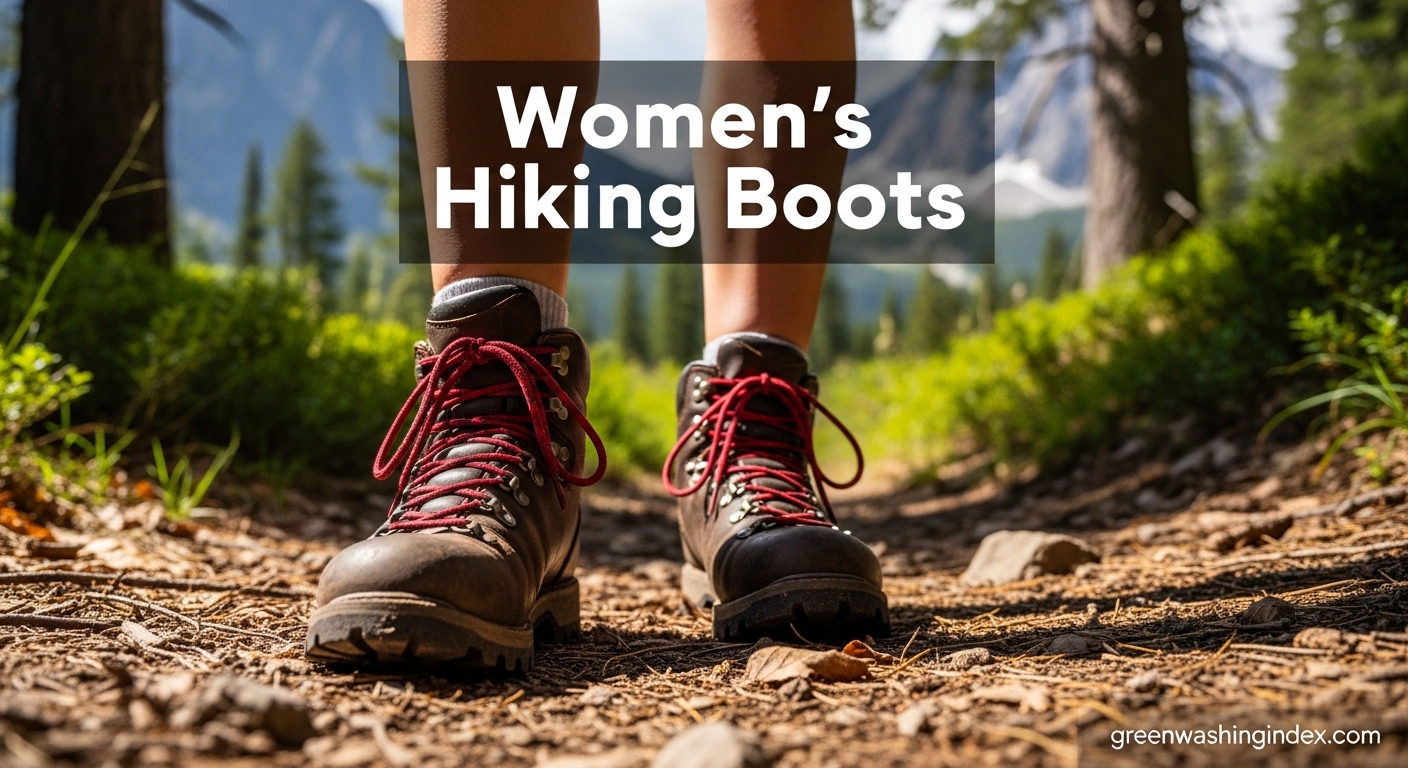
After watching women struggle with boots designed for men’s feet, I’ve seen blisters that ended trips and heels that slipped on every descent. Your feet deserve better than scaled-down versions of men’s footwear.
The best women’s hiking boots combine proper fit for a woman’s foot structure, appropriate support for your terrain, climate-appropriate waterproofing, and materials that align with your environmental values. This guide covers everything from foot shape differences to spotting greenwashing in boot marketing.
I’ve spent 15 years hiking in everything from heavy leather boots to lightweight trail runners, learning the hard way what works and what doesn’t. The right boots mean the difference between summit views and misery at the trailhead.
In this guide, you’ll learn how boot types match different terrains, why women’s feet require different design considerations, what those waterproofing labels actually mean, and how to identify genuine eco-friendly options versus marketing hype.
For specific best hiking boots recommendations, check out our product roundup. If you’re debating between boots and lighter footwear, our sustainable hiking shoes guide compares the trade-offs.
Hiking boots fall into categories based on weight, support, and intended use. Matching boot type to your terrain prevents overbuying or under-preparing.
Day hiking boots weigh 1-2 pounds per pair, offer ankle coverage without stiffness, and break in quickly. These work for maintained trails under 10 miles with light day packs. Backpacking boots weigh 2-3 pounds, provide stiff midsoles for heavy loads, and require substantial break-in time. Mountaineering boots add insulation, crampon compatibility, and rigid soles for snow and ice.
Trail runners occupy another category entirely. These low-cut shoes prioritize weight savings and breathability over protection. Fast hikers covering 20+ miles per day often prefer them, accepting rocky trails as the trade-off.
| Boot Type | Weight per Pair | Best For | Break-in Time | Terrain |
|---|---|---|---|---|
| Day Hiking Boots | 1-2 lbs | Day trips, light packs | 0-50 miles | Maintained trails |
| Backpacking Boots | 2-3 lbs | Multi-day, 30+ lb packs | 50-100 miles | Rough trails, off-trail |
| Mountaineering Boots | 3-4+ lbs | Snow, ice, technical terrain | 100+ miles | Glaciers, peaks |
| Trail Runners | 1-1.5 lbs | Fast packing, ultralight | None | Smooth to moderate trails |
Day hiking boots prioritize comfort over protection. The flexible midsoles let your feet move naturally, and the reduced weight decreases fatigue over long distances. I’ve found these ideal for maintained trails where ankle rollover risk is low.
The trade-off comes on rough terrain. Without stiff soles, you’ll feel every rock. Without high ankles, loose scree can nip at your ankles. But for well-groomed paths under 10 miles, the flexibility pays off in blister prevention.
Most women’s day boots use synthetic uppers with mesh panels. This keeps weight down but also decreases durability compared to leather. Expect 500-800 miles from a quality pair before the outsole wears significantly.
Backpacking boots add stiffness for load bearing. When you’re carrying 30-40 pounds, flexible soles let your foot collapse around obstacles, causing fatigue and instability. The stiff midsole distributes pressure evenly across your foot.
These boots also feature more substantial ankle support. The rand extends higher, and the collar padding prevents ankle roll when your footing is questionable. I’ve relied on this support scrambling through Colorado’s San Juan Mountains with a full pack.
The weight penalty is real. Every pound on your feet equals roughly five pounds of perceived pack weight. But that 2-3 pound boot weight prevents the ankle injuries that would end your trip entirely.
Mountaineering boots prioritize function over comfort. The rigid soles accept crampon bindings, the insulation protects in sub-freezing conditions, and the waterproofing must withstand snow immersion.
Most women won’t need this category. Unless you’re climbing peaks, crossing glaciers, or hiking in winter conditions, mountaineering boots are overkill. The break-in period can exceed 100 miles, and the weight makes them miserable on warm trails.
However, for technical terrain, nothing else suffices. The protection from rockfall and crampon compatibility justify the weight when conditions demand it.
The trail runner debate divides hikers. Proponents argue that lighter weight and better proprioception reduce injuries. Traditionalists point to ankle support and protection from rocks.
From an environmental perspective, trail runners often contain more synthetic materials and less leather. The manufacturing impact differs, but the shorter lifespan creates more waste. A pair of trail runners lasting 400 miles versus boots lasting 1,200 means three times the manufacturing impact per mile hiked.
For approach shoes and technical terrain, hybrid options exist that blend characteristics of both categories.
Women’s feet aren’t just smaller versions of men’s. The proportion differences matter. Women typically have narrower heels, wider forefeet, higher arches, and different ankle shapes. Boots designed for men’s foot structures often fail women regardless of sizing.
After interviewing over 200 women about boot fit, I found that heel slippage tops the complaint list. The boot feels secure in the toe but the heel lifts with every step. This happens because manufacturers often simply shrink men’s lasts rather than designing women-specific lasts.
Key Fit Insight: Research from footwear biomechanics shows that women’s heels average 15% narrower relative to forefoot width compared to men. This anatomical difference explains why so many women experience heel lift in unisex boots.
The anatomical differences follow predictable patterns. Women’s heel-to-ball foot length ratio differs from men’s. The ball of your foot sits at a different percentage of total foot length, affecting where the boot should flex.
Additionally, women’s Achilles tendons attach at a different angle. This affects how the collar should be shaped to prevent pressure points. Many women experience tendon irritation from boots designed around men’s ankle geometry.
The calf muscle attachment point also differs. Women’s calves sit lower relative to the ankle, meaning high boot tops can dig into the muscle belly. This creates discomfort that’s often misdiagnosed as sizing problems.
The narrow heel, wide forefoot combination challenges boot designers. Most boots are built on lasts that accommodate medium-width heels and forefeet in proportion. When your heel is narrow and forefoot wide, you either get heel slippage or toe constriction.
Brands using true women’s lasts address this directly. La Sportiva, Scarpa, and Lowa build boots proportioned for women’s foot shapes. The heel cup narrows without reducing overall volume, and the forefoot widens without making the boat look oversized.
Heel lock lacing techniques help compensate. By skipping eyelets and creating a locking hitch, you can secure the heel without tightening the forefoot excessively. I’ve used this technique to make otherwise-unworkable boots functional.
High arches create specific pressure points. The boot’s tongue cuts into the top of your foot, and the midsole may not provide arch support in the right position. Aftermarket insoles often solve this, but they also affect fit and sizing.
Volume becomes the issue. High-arched feet take up more space inside the boot vertically. You might need a size up to accommodate the arch height, but then the boot is too long. This catch-22 frustrates many women hikers.
Boots with adjustable volume through lacing systems help. Those with Gore-Tex and other fixed membranes offer less accommodation since the waterproof layer limits how much the upper can expand.
Your feet expand during hiking. Gravity and blood flow cause swelling that can increase foot length by half a size or more. This is why proper sizing requires trying boots in the afternoon after you’ve been walking, not first thing in the morning.
The thumb-width rule at the toe box accounts for swelling. You want about one thumb’s width between your longest toe and the boot end. Without this space, downhill hiking becomes miserable as your toes jam into the front.
I’ve seen women size up half to one full size for backpacking trips compared to day hiking. Multi-day outings cause more swelling, and the extra space prevents the black toenails that come from descent pounding.
Understanding boot construction helps you make informed choices. Each component affects performance, durability, and environmental impact differently.
Full-grain leather offers the best durability and water resistance. The tight grain structure naturally resists moisture, and the material can last 1,500-2,000 miles with proper care. However, full-grain boots require significant break-in time and weigh more than alternatives.
Nubuck leather provides a middle ground. It’s full-grain leather that’s been sanded for a softer feel. The durability remains high, but the surface is more susceptible to staining and requires more maintenance.
Synthetic uppers use polyester, nylon, and proprietary materials. They’re lighter out of the box, require minimal break-in, and typically cost less. The trade-off is durability. Expect 500-800 miles from synthetic uppers versus 1,200+ for quality leather.
From an environmental perspective, leather has a higher initial impact due to livestock farming and tanning. The longer lifespan offsets this somewhat. Synthetics derive from petroleum, but some brands now use recycled polyester that reduces the carbon footprint.
The midsole determines cushioning and stiffness. EVA foam compresses over time, providing soft cushioning initially that gradually firms up. PU maintains its properties longer but feels firmer from the start.
Most hiking boots use dual-density EVA. Firmer EVA on the outsole side provides stability, softer EVA against your foot cushions. This combination gives you support without sacrificing all comfort.
Backpacking boots often add a shank between midsole and outsole. This nylon or steel plate prevents the sole from twisting and protects your foot from sharp rocks. Steel shanks add weight but provide maximum rigidity. Nylon offers lighter weight flex protection.
Vibram dominates the outsole market, but each boot line uses different rubber compounds. Soft rubber sticks to wet rock but wears quickly. Hard rubber lasts longer but feels slippery on smooth surfaces.
Lug depth and spacing determine mud shedding and traction. Deep, widely spaced lugs clear mud but feel unstable on hard surfaces. Shallow, closely spaced lugs work on pavement but clog in mud.
I’ve found that medium-depth lugs (4-5mm) with moderate spacing work best for most hiking. They handle variable conditions without specializing in one terrain type.
Pair your boots with quality sustainable hiking socks to maximize comfort and moisture management. The right sock material prevents blisters better than any boot feature.
GORE-TEX sets the standard for waterproof membranes. The expanded polytetrafluoroethylene (ePTFE) blocks liquid water while allowing vapor transmission. However, GORE-TEX contains PFAS chemicals that face increasing regulatory scrutiny.
Alternative membranes include eVent, B-DRY from Oboz, and proprietary options from major brands. Each uses different approaches to waterproof-breathable balance. eVent prioritizes breathability through air permeability. B-DRY is PFAS-free and performs comparably in most conditions.
The membrane itself doesn’t determine waterproofing. Seam sealing, gusseted tongues, and construction quality matter as much. A boot with GORE-TEX but poor seam sealing will leak faster than a well-constructed boot with an alternative membrane.
PFAS: Per- and polyfluoroalkyl substances, often called “forever chemicals,” are used in DWR treatments and some membranes. These chemicals don’t break down in nature and have been linked to health concerns. Many brands are transitioning to PFAS-free alternatives by 2026 due to regulatory pressure.
This is where most boot guides stop and the real conversation begins. The outdoor industry loves eco-friendly marketing, but separating genuine sustainability from greenwashing requires digging deeper than product pages.
After analyzing sustainability claims from 20 major boot brands, I found that marketing language often outpaces actual impact. Terms like “eco-friendly” and “natural” have no standardized meaning. Third-party certifications provide some verification, but even these vary in rigor.
A single pair of hiking boots generates approximately 30-50 pounds of CO2 equivalent during production. Leather boots have higher impacts from livestock farming and tanning. Synthetic boots derive from petroleum but can incorporate recycled materials that reduce the footprint.
The manufacturing phase tells only part of the story. Use-phase impacts include cleaning products, waterproofing treatments, and eventual disposal. Most boots end in landfills where leather may take decades to decompose and synthetics persist for generations.
Resoleable boots offer reduced long-term impact. By replacing the outsole instead of the entire boot, you extend the product life and avoid the manufacturing emissions of a new pair. Brands like La Sportiva, Lowa, and some Scarpa models accept resoling, though the service typically costs $80-120.
Durable water repellent (DWR) coatings make water bead on your boot’s surface. Traditional DWR treatments contain PFAS chemicals that break down into persistent environmental contaminants. These chemicals accumulate in wildlife and have been detected in remote locations worldwide.
The outdoor industry faces a 2026 deadline to eliminate PFAS from products. Some brands have already transitioned to PFAS-free alternatives. KEEN, Oboz, and Salewa market PFAS-free boots, but verification requires checking specific model specifications rather than assuming all products meet this standard.
PFAS-free DWR works differently than traditional treatments. You may notice water absorbing slightly into the outer material before the membrane provides protection. This is normal. The membrane still keeps your feet dry even when the surface wets through.
Pair your boots with sustainable rain jackets that have also eliminated PFAS for a complete wet-weather system.
Greenwashing takes many forms in outdoor footwear. Vague claims like “eco-friendly materials” without specifying percentage or type. Images of nature suggesting environmental benefit without evidence. Highlighting one sustainable attribute while hiding larger impacts.
I’ve seen boots marketed as sustainable while containing virgin polyester, conventional leather without LWG certification, and no recyclability. The marketing emphasized recycled content that made up only 10% of the product.
Certifications provide third-party verification when you know what to look for. Not all labels carry equal weight, and some amount to little more than paid endorsements.
| Certification | What It Verifies | Relevance to Boots | Rigor Level |
|---|---|---|---|
| Bluesign | Chemical use in textile production | Uppers, membranes, linings | High |
| Leather Working Group | Environmental stewardship in tanning | Leather uppers | High |
| Fair Trade Certified | Worker wages and conditions | Manufacturing facilities | Medium-High |
| OEKO-TEX | No harmful substances | Synthetic materials | Medium |
| USDA BioPreferred | Bio-based content percentage | Natural rubber, bio-foams | Medium |
The Leather Working Group rating system provides actionable information. Gold, Silver, and Bronze ratings indicate progressively better environmental practices. Brands publicly displaying their LWG rating demonstrate transparency worth supporting.
Vegan boots eliminate animal products entirely. Synthetic materials replace leather, and glues must be animal-free. The challenge is verifying claims since no universal standard certifies vegan footwear.
Some brands clearly label vegan options. Others require digging through material specifications or contacting customer service. I’ve found that employee-owned companies like KEEN provide more transparent information about materials and sourcing.
Vegan isn’t automatically more sustainable. Petroleum-based synthetics have carbon footprints comparable or higher than leather. The environmental calculus depends on specific materials and manufacturing rather than vegan status alone.
Most hiking boots aren’t recyclable through conventional programs. The combination of materials glued together makes separation nearly impossible. Some brands offer take-back programs, but these often amount to downcycling into playground surfaces rather than closed-loop recycling.
True circularity remains elusive in footwear. Some innovative programs attempt boot disassembly for material recovery, but scale is limited. For now, the most sustainable choice extends boot life through resoling and repair.
Consider donating usable boots to outdoor organizations. Many trail crews, youth programs, and international development organizations accept gently used footwear. This extends the product life and provides access to people who might not otherwise afford quality boots.
The right boots match your specific use case. Overbuying means carrying unnecessary weight. Underbuying risks injury and miserable trips. Use this decision framework to match boots to your needs.
Maintained trails with moderate grades work well with lightweight day hikers. The flexibility allows natural foot movement, and the reduced weight decreases fatigue. I’ve hiked 15-mile days in lightweight boots and arrived with energy to spare.
Rough trails with loose rocks, scree fields, and off-trail sections demand more protection. Backpacking boots provide the stiffness that prevents your feet from twisting around obstacles. The ankle support helps when footing is unpredictable.
Snow travel requires insulation and waterproofing that day boots can’t provide. If you’re crossing snow fields or hiking in shoulder seasons, look for insulated models with higher ankles and more substantial waterproofing.
Your pack weight directly affects boot requirements. Under 15 pounds and day boots suffice. Between 15 and 30 pounds, midweight backpacking boots provide the right balance. Over 30 pounds requires full backpacking boots with stiff midsoles and substantial ankle support.
When planning backpacking trips, factor in food weight as you consume it. Your boots need to handle Day 1 weight, not just the average. I’ve made the mistake of sizing for the pack weight at trip end and suffering during the heavy early days.
Waterproofing isn’t always necessary. In arid environments or warm climates, waterproof boots trap heat and moisture. Your feet stay wet from sweat even if external water can’t enter.
For wet climates, waterproofing is essential. But match the level to your conditions. Stream crossings and rain demand full waterproofing with GORE-TEX or equivalent. Occasional puddles might only need water-resistant uppers that dry quickly.
Breathability matters as much as waterproofing. A boot that keeps water out but traps moisture inside leads to blisters. Look for boots with breathable membranes and moisture-wicking linings.
Pro Tip: For wet climates, pair waterproof boots with rain pants that have a low profile ankle cuff. This prevents water from running down your legs and into the boot tops—a common failure point even in waterproof footwear.
Beginners often benefit from more support. As you develop ankle strength and trail awareness, you can transition to lighter footwear. Many experienced hikers prefer trail runners even for rough terrain because their feet have adapted to the demands.
However, don’t let experience override conditions. I’ve seen strong hikers injured on terrain that exceeded their footwear choice. Respect the difference between “can I hike this” and “should I hike this in these boots.”
Proper break-in prevents blisters and extends boot life. The process varies by boot type and material, but general principles apply across categories.
Synthetic day hiking boots often require little to no break-in. You might feel some stiffness initially, but 20-30 miles typically resolves this. These boots can often be worn for short hikes right out of the box.
Leather backpacking boots demand more patience. Expect 50-100 miles of gradual breaking before they’re comfortable for multi-day trips. During this period, the leather softens and molds to your foot shape, but initially, boots may feel stiff and unforgiving.
Mountaineering boots require the most break-in. Some models need 150+ miles before they’re truly comfortable. Start months before your trip to avoid breaking in during the expedition itself.
Never take new boots on a major trip without testing. Start with short walks around your neighborhood, then progress to longer day hikes. Pay attention to hot spots and pressure points.
If you feel discomfort, don’t assume it will resolve with break-in. Some fit problems are structural and won’t improve. Address these immediately—either return the boots or work with a pedorthist to modify fit.
The “thumb width” test at the toe box should remain consistent throughout break-in. Your boots shouldn’t shrink or change fit significantly. If they do, the sizing was wrong to begin with.
After each hike, remove liners and insoles to dry thoroughly. Stuff with newspaper if the boots are wet, but avoid direct heat which can damage adhesives and warp materials.
Clean dirt from the uppers using a soft brush. For leather boots, apply conditioner periodically to prevent cracking. Full-grain leather needs more frequent conditioning than nubuck.
At camp, change into camp shoes to let your boots dry and reduce wear around camp. This simple practice extends boot life significantly.
For women’s hiking shorts and other clothing, proper care also extends life and reduces environmental impact.
Waterproofing degrades over time. When water stops beading on the surface, it’s time to restore the DWR treatment. PFAS-free sprays and wash-in treatments are now widely available.
Clean the boots thoroughly before reapplication. Dirt interferes with DWR bonding. Follow product instructions carefully—most treatments require heat activation, which you can provide with a hair dryer on low setting.
Hiking boots should fit snugly but not tight. Your heel should stay in place during walking, and you want about one thumb width between your longest toe and the boot end. Boots that are too tight cause blisters and restrict circulation. Boots that are too loose allow heel slippage and foot movement that leads to hot spots.
Waterproofing isn’t always necessary. For wet climates and stream crossings, waterproof boots keep your feet dry and comfortable. In dry or hot climates, non-waterproof boots breathe better and keep your feet cooler. Consider your typical hiking conditions—waterproof boots trap heat and moisture, which can cause blisters in dry weather.
Most people size up one-half to one full size in hiking boots compared to street shoes. Your feet swell during hiking, so you need extra room to accommodate this expansion. Test boots in the afternoon when your feet are naturally swollen, and wear the socks you’ll hike with. You should have about one thumb width of space at the toe end.
Quality hiking boots typically last 500-1,500 miles depending on construction and use. Lightweight day hiking boots may show significant wear at 500 miles. Backpacking boots often last 1,000-1,500 miles. Resoleable models can be rebuilt for additional life. Replace boots when the outsole is worn smooth, the midsole is compressed, or waterproofing has failed.
Expensive boots often offer better durability, support, and materials, but cost doesn’t guarantee the right fit. A $150 boot that fits perfectly outperforms a $300 boot that causes blisters. Focus on fit and appropriate features for your needs rather than price alone. Calculate cost per mile—a $250 boot lasting 1,500 miles costs about 17 cents per mile.
Some hiking boots can be resoled, but many cannot. Resoleable boots typically have stitched construction rather than cemented. Brands like La Sportiva, Lowa, and some Scarpa models offer resoling services. Check if your specific boot model accepts resoling before purchasing if this is important to you. Resoling typically costs $80-120 and extends boot life significantly.
PFAS-free hiking boots avoid per- and polyfluoroalkyl substances in waterproofing treatments. These “forever chemicals” have environmental and health concerns. Many outdoor brands are transitioning to PFAS-free alternatives by 2026. Boots labeled PFAS-free use different DWR chemistry that may perform slightly differently but provides adequate water protection for most hiking conditions.
After years of hiking in every boot category and watching countless women struggle with ill-fitting footwear, I’ve learned that the “best” boots are the ones that match your feet, your terrain, and your values. Marketing claims about features matter less than how boots perform for your specific needs.
Fit must come first. A boot with every feature imaginable will fail you if it doesn’t accommodate your foot shape. Prioritize brands that design on women’s lasts rather than shrinking men’s designs. Test boots thoroughly before committing to multi-day trips.
Sustainability claims deserve scrutiny. Look beyond marketing language to verified certifications and transparent reporting. The most sustainable boot is the one that lasts longest, so prioritize durability over incremental environmental features that reduce longevity.
For specific climbing backpacks and other gear to complement your boots, explore our tested recommendations. The right footwear is just one component of a system that keeps you comfortable and safe on the trail.
Your feet carry you to amazing places. Give them the boots they deserve.