
If you have noticed an unpleasant taste in your tap water or lingering odors in your home, you are not alone. Millions of homeowners deal with chlorine taste, chemical smells, and airborne pollutants that affect daily comfort and health.
Activated carbon filters remove chlorine, volatile organic compounds (VOCs), odors, and hundreds of other chemical contaminants from water and air through adsorption, making them one of the most versatile and effective filtration solutions available.
After spending fifteen years researching water and air quality solutions, I have seen activated carbon filters transform everything from residential drinking water to industrial air treatment systems. These filters work like a microscopic sponge, trapping impurities while allowing clean water or air to flow through freely.
In this guide, I will explain exactly how activated carbon filtration works, what contaminants it removes, the different types available, and how to choose the right system for your specific needs.
Activated carbon filters work through adsorption, not absorption.
Adsorption means contaminants stick to the surface of the carbon like magnets, rather than being soaked up into it. This distinction matters because adsorption creates a highly efficient trapping mechanism for chemical pollutants.
Adsorption vs Absorption: Adsorption is when molecules adhere to a surface (like contaminants sticking to carbon). Absorption is when one substance is taken into another (like a sponge soaking up water). Activated carbon relies on adsorption.
Activated carbon starts as carbon-rich material such as coal, wood, or coconut shells. During the activation process, these materials undergo high-heat treatment in a low-oxygen environment, followed by exposure to steam or chemicals at temperatures over 1,600 degrees Fahrenheit.
This extreme heat creates millions of tiny pores throughout the carbon structure. To understand the scale, imagine a single gram of activated carbon containing enough surface area to cover more than three NBA basketball courts combined. That is over 3,000 square meters of adsorption surface per gram.
The pore structure consists of three distinct sizes:
Activated Carbon: Also called activated charcoal, this is a form of carbon processed to have extreme porosity. One gram has over 3,000 square meters of surface area, making it exceptionally effective at trapping contaminants through adsorption.
The difference between regular charcoal and activated carbon comes down to this pore structure. While charcoal briquettes for grilling have some porosity, activated carbon has been engineered to maximize internal surface area, creating a molecular trap with billions of capture sites.
Activated carbon filtration relies on physical forces rather than chemical reactions to capture contaminants.
As water or air passes through the carbon bed, contaminant molecules encounter the enormous internal surface area of the pores. Van der Waals forces, which are weak attractions between molecules, cause the contaminants to stick to the carbon surface while the clean water or air continues flowing through.
Contact time significantly affects effectiveness. The slower water or air moves through the carbon, the more time contaminants have to encounter and stick to pore surfaces. This is why properly sized filters matter—rushing water through undersized carbon reduces contaminant removal.
Temperature also plays a role. Cooler temperatures generally improve adsorption capacity because molecules move more slowly and spend more time near pore surfaces. However, extremely cold water can slow flow rates too much, creating practical trade-offs.
Key Insight: Activated carbon does not work like a strainer that catches particles. Instead, it attracts and holds chemical contaminants at the molecular level, which is why it can remove dissolved chemicals that particle filters miss completely.
The adsorption capacity depends on the iodine number, a measurement that indicates how porous the carbon is. Higher iodine numbers mean more surface area and better contaminant removal. Quality activated carbon typically has an iodine number above 900 mg/g.
Different applications require different forms of activated carbon.
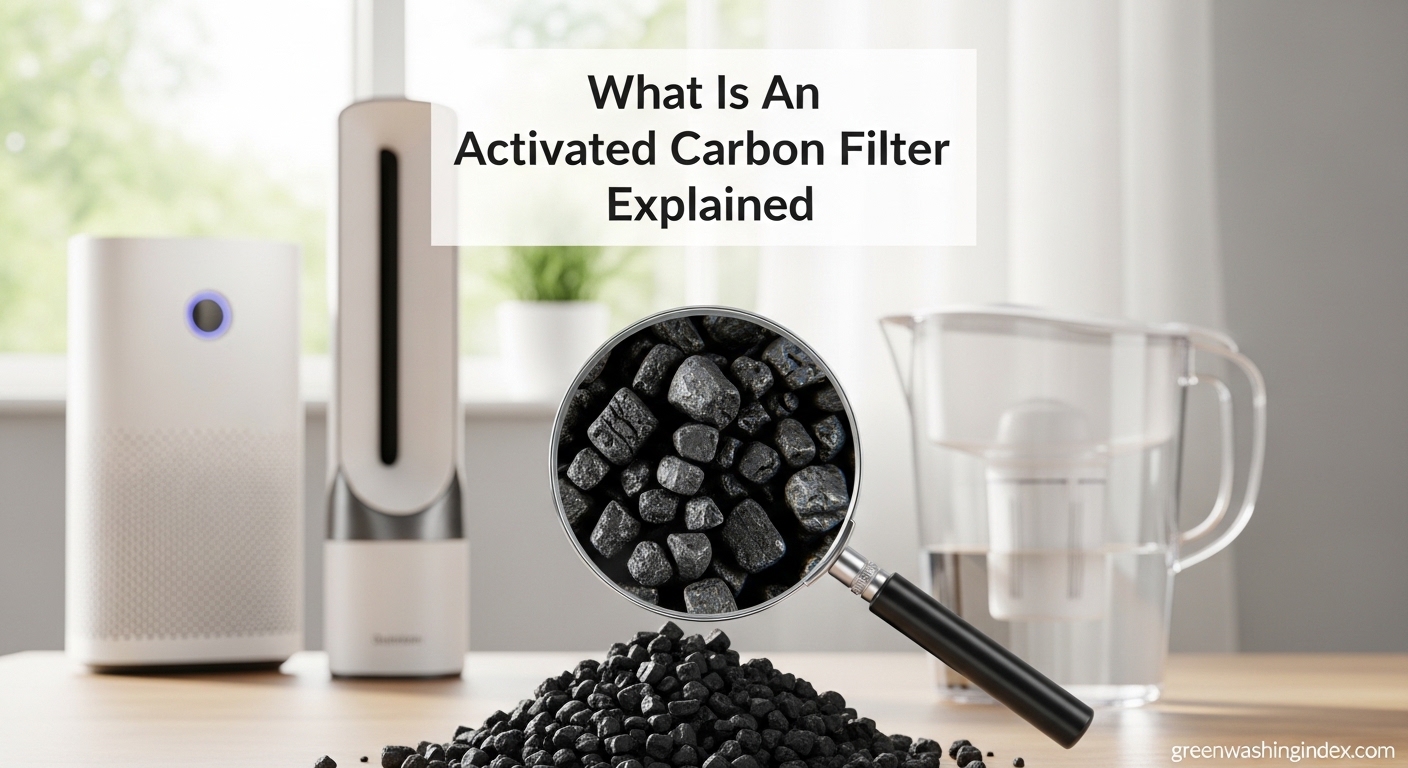
Granular Activated Carbon (GAC) consists of irregular carbon particles roughly the size of coarse sand or gravel. Water flows through the bed of granules, and contaminants adsorb onto the surfaces as they pass. GAC filters are common in whole-house water treatment systems and larger commercial applications.
Powdered Activated Carbon (PAC) consists of much finer particles, typically smaller than 100 mesh. Because of the smaller particle size, PAC has even more external surface area exposed for faster adsorption. However, PAC cannot be used in simple flow-through filters—it requires mixing with water and later filtration to remove the powder itself.
GAC vs PAC: Granular Activated Carbon (GAC) uses pea-sized granules in flow-through systems. Powdered Activated Carbon (PAC) uses fine particles added directly to water for treatment, then filtered out. GAC is practical for home filtration; PAC is used industrially.
Carbon block filters compress activated carbon into a solid block with very small pores. These blocks combine mechanical filtration with carbon adsorption, trapping particulate matter while also removing chemicals. Carbon block filters are common in under-sink water filters and high-end pitcher systems.
Impregnated carbon has been treated with additional chemicals to enhance removal of specific contaminants. For example, silver-impregnated carbon inhibits bacterial growth, while potassium-impregnated carbon targets hydrogen sulfide and mercury. These specialized forms address specific treatment challenges.
Activated carbon cloth weaves carbon fibers into fabric material, creating flexible filter media for air purification masks and specialized applications. The cloth form provides high surface area with low airflow resistance.
| Filter Type | Form Factor | Best For | Applications |
|---|---|---|---|
| Granular (GAC) | Pea-sized granules | High flow rates, whole systems | Whole-house water, industrial treatment |
| Powdered (PAC) | Fine powder | Rapid treatment, specific contaminants | Industrial water, municipal treatment |
| Carbon Block | Compressed solid block | Combined mechanical + chemical | Under-sink filters, countertop units |
| Impregnated | Any form with additives | Targeted contaminant removal | Specialized air/water treatment |
| Carbon Cloth | Woven fabric | Low-resistance air filtration | Masks, specialized air cleaners |
Activated carbon excels at removing organic compounds and chemicals that give water or air unpleasant tastes, odors, or health risks.
For water treatment, activated carbon primarily targets chlorine and chloramine added by municipal water treatment facilities. Carbon removes up to 99% of free chlorine, eliminating the swimming pool taste that many people dislike in tap water.
Volatile Organic Compounds represent another major target. These include benzene, toluene, xylene, and other industrial chemicals that can contaminate water supplies. Activated carbon removes VOCs through the same adsorption process that captures chlorine.
Common pesticides and herbicides also succumb to carbon filtration, including atrazine, lindane, and many others that may leach into groundwater from agricultural applications.
In air treatment, activated carbon targets gaseous pollutants that particle filters like HEPA cannot catch. This includes formaldehyde from building materials, benzene from vehicle exhaust, and countless other VOCs released by household products, cleaners, and furnishings.
Odor control represents a major use case for carbon air filters. Cooking odors, pet smells, tobacco smoke, and musty basement odors all contain organic compounds that carbon adsorbs effectively.
Some specialized carbon filters target specific gases. Impregnated carbon can remove hydrogen sulfide (rotten egg odor), ammonia, and other challenging gases through chemical reactions in addition to physical adsorption.
| Contaminant Category | Examples | Removal Effectiveness |
|---|---|---|
| Chlorine | Free chlorine, chloramine | Excellent (up to 99%) |
| VOCs | Benzene, toluene, formaldehyde | Excellent to Very Good |
| Pesticides | Atrazine, lindane, chlordane | Very Good |
| Odors | Hydrogen sulfide, organic odors | Excellent |
| Herbicides | Various agricultural chemicals | Good to Very Good |
| Solvents | Industrial cleaning chemicals | Very Good |
Understanding limitations is just as important as knowing capabilities. Activated carbon cannot effectively remove dissolved minerals like calcium, magnesium, sodium, or fluoride. These inorganic compounds do not adsorb well to carbon surfaces.
Heavy metals like lead, mercury, and arsenic are only partially removed by standard activated carbon. Specialized impregnated carbons can capture some metals, but dedicated filtration methods like reverse osmosis or specialized media work better for heavy metal removal.
Bacteria, viruses, and cysts pass through carbon filters unchanged. Microorganisms are simply too large to be trapped by adsorption and do not have the molecular properties that make chemicals stick to carbon. For biological contamination, you need UV treatment, reverse osmosis, or ceramic filtration.
Nitrates and sulfates also pass through carbon largely unaffected. These ions require ion exchange or reverse osmosis for effective removal from drinking water.
Important: Activated carbon filters can become breeding grounds for bacteria if not replaced regularly. Once the adsorption sites are full, bacteria can colonize the carbon bed and potentially contaminate filtered water. Always follow replacement schedules.
Activated carbon filtration offers significant advantages but also has constraints that users must understand for effective treatment.
The most noticeable benefit for most users is the dramatic improvement in taste and odor. Chlorine disappears from tap water, making it much more palatable for drinking and cooking. Air filters eliminate cooking smells and musty odors, creating a more pleasant home environment.
Chemical removal capability sets activated carbon apart from particle-only filtration methods. While sediment filters and HEPA filters catch particles, only activated carbon effectively removes dissolved gases and organic compounds. This makes it essential for comprehensive filtration systems.
Activated carbon requires no electricity to operate. Gravity-fed systems work purely on water pressure or simple flow, making them ideal for emergency preparedness and off-grid applications. Even carbon air filters rely only on basic airflow from fans or natural convection.
Cost effectiveness represents another advantage. Activated carbon filters provide substantial contaminant removal for a relatively low initial investment compared to more complex technologies like reverse osmosis or UV treatment.
The finite adsorption capacity means carbon filters eventually saturate and stop removing contaminants. Once the pore surfaces are covered, water or air passes through untreated. This saturation happens gradually, making it difficult to detect when a filter has stopped working.
Flow rate limitations affect practical applications. Effective carbon filtration requires sufficient contact time between the water and carbon. Fast flow rates reduce effectiveness, which is why shower filters and point-of-use systems must balance convenience with performance.
Carbon cannot remove all contaminants types. As noted earlier, dissolved minerals, heavy metals, bacteria, viruses, and nitrates pass through. Users with these specific contaminants need additional treatment methods.
Organic nutrients trapped in carbon can support bacterial growth if filters sit unused for extended periods. This bacterial colonization can actually make water quality worse than untreated water in some cases.
Environmental impact concerns include the sourcing of carbon materials and disposal of spent filters. Coal-based carbon has a higher carbon footprint than coconut shell carbon, and saturated filters loaded with contaminants require proper disposal rather than simple landfilling.
Choosing the right filtration technology requires understanding how different methods compare.
HEPA filters and carbon filters serve completely different purposes. HEPA (High Efficiency Particulate Air) filters capture particles like dust, pollen, mold spores, and some bacteria. They work like a very fine sieve, trapping anything larger than about 0.3 microns.
Activated carbon filters target gases and chemicals that pass right through HEPA filters. Gaseous pollutants are simply too small to be caught by even the finest particle filter. The most effective air purifiers combine both technologies—HEPA for particles and carbon for gases.
Pro Tip: When shopping for air purifiers, look for “true HEPA” (not HEPA-type) plus a substantial activated carbon filter. Many units include only a thin carbon spray-coated foam that provides minimal chemical removal.
Reverse osmosis (RO) forces water through a membrane so tight that only water molecules can pass. RO removes virtually everything else—dissolved minerals, heavy metals, bacteria, viruses, nitrates, and most organic compounds.
However, RO systems cannot effectively remove chlorine and VOCs because these chemicals can damage the membrane. This is why virtually all RO systems include carbon filters as pre-treatment stages. The carbon protects the RO membrane while removing chemicals that RO handles poorly.
RO wastes water during filtration, while carbon filters do not. RO systems typically waste 3-5 gallons for every gallon of purified water produced. Carbon filters pass all incoming water through with minimal waste.
UV (ultraviolet) light kills bacteria and viruses by damaging their DNA, rendering them unable to reproduce. UV treatment is highly effective for biological contamination but does nothing for chemicals, tastes, or odors.
Carbon and UV serve complementary purposes. Carbon removes chemicals while UV addresses microorganisms. Many advanced water treatment systems use carbon filtration followed by UV sterilization for comprehensive purification.
The most effective water and air treatment systems combine multiple technologies to address different types of contaminants. A typical whole-house water system might include sediment filtration, carbon filtration, and possibly UV treatment. Advanced air purifiers combine pre-filters, HEPA, substantial carbon beds, and sometimes UV or ionization.
| Technology | Best At Removing | Does NOT Remove | Requires Electricity |
|---|---|---|---|
| Activated Carbon | Chemicals, chlorine, odors, VOCs | Minerals, bacteria, viruses, nitrates | No |
| HEPA | Dust, pollen, mold, particles | Gases, chemicals, odors, VOCs | Yes (for fan) |
| Reverse Osmosis | Almost everything (minerals, metals, microbes) | Some gases, very small molecules | Yes (for pump) |
| UV Purification | Bacteria, viruses, microbes | Chemicals, particles, minerals | Yes |
Proper maintenance ensures your activated carbon filter continues removing contaminants effectively.
Most residential carbon water filters last 2-6 months depending on usage and water quality. Whole-house systems with large carbon beds may last 6-12 months before requiring media replacement. Air purifier carbon filters typically need replacement every 3-6 months of regular use.
Water quality heavily affects lifespan. Homes with high chlorine levels or significant chemical contamination saturate filters faster than those with relatively clean source water. Usage volume also matters—filtering 100 gallons per day depletes carbon much faster than filtering 10 gallons per day.
The return of chlorine taste or odor indicates the carbon is exhausted and no longer removing chemicals effectively. This is often the first and most obvious sign that replacement is needed.
Decreased flow rate can indicate carbon block filters are clogged with sediment. This may happen even before the carbon adsorption capacity is fully used, especially if pre-filtration is inadequate.
For air filters, the return of odors that were previously eliminated suggests carbon exhaustion. If cooking smells linger longer or musty odors return, the carbon likely needs replacement.
Time Saver: Set calendar reminders for filter replacements rather than relying on taste or performance indicators. By the time you notice degraded water or air quality, the filter has likely been underperforming for weeks.
Most residential carbon filters cannot be washed effectively. Water washing can remove loose sediment but does not restore adsorption capacity—the contaminants remain bonded to the carbon surface. In fact, washing can damage carbon block filters and reduce their effectiveness.
Some whole-house carbon systems can be backwashed to remove accumulated sediment, but this does not regenerate the carbon. Backwashing simply removes physical debris clogging the bed; it does not restore adsorption capacity.
Industrial carbon can be regenerated through high-heat treatment that bakes off captured contaminants, restoring adsorption capacity. However, this requires specialized equipment reaching temperatures over 1,500 degrees Fahrenheit and is not practical for residential filters.
Spent carbon filters contain concentrated contaminants adsorbed from your water or air. Landfill disposal is standard for residential filters, but some manufacturers offer take-back programs for proper recycling or disposal.
Large-scale carbon regeneration facilities can process spent industrial carbon, but collecting and transporting residential filters to these facilities is rarely practical. The environmental impact of shipping small filters often outweighs the benefits of regeneration.
The environmental impact of activated carbon filtration involves both the sourcing of materials and the disposal of spent filters.
Coconut shell-based carbon represents a more sustainable option than coal-based carbon because coconut shells are a renewable byproduct of the coconut industry. The carbon footprint of coconut carbon is significantly lower, and the material itself is considered more environmentally friendly.
Carbon regeneration at industrial scale reduces waste but requires substantial energy input. The high temperatures needed for thermal reactivation consume significant energy, though less energy than producing new carbon from raw materials.
Filter housings made from recyclable materials reduce environmental impact compared to single-use plastic designs. Choosing systems with replaceable carbon cartridges rather than disposable entire units minimizes plastic waste over the life of the filtration system.
Activated carbon filters are used for removing chemicals, odors, and impurities from water and air. Common applications include home water filtration to remove chlorine taste, air purification to eliminate VOCs and cooking odors, industrial water treatment, aquarium filtration, and even emergency poison treatment in medical settings.
Activated carbon filters work through adsorption, where contaminant molecules stick to the vast internal surface area of the carbon pores. As water or air flows through, van der Waals forces attract and trap chemical contaminants while clean water or air passes through. One gram of activated carbon has over 3,000 square meters of surface area for capturing impurities.
Activated carbon removes chlorine, chloramine, volatile organic compounds (VOCs), pesticides, herbicides, industrial solvents, unpleasant tastes and odors, and some pharmaceuticals. It effectively targets organic compounds and chemicals but does not remove minerals, salts, bacteria, viruses, nitrates, or fluoride.
Yes, activated carbon filters are highly effective for their intended purposes. They remove up to 99% of chlorine, significantly reduce VOCs and odors, and improve water taste dramatically. However, they are not effective against dissolved minerals, heavy metals, bacteria, or viruses. For comprehensive filtration, combine carbon with other technologies.
Residential carbon water filters typically last 2-6 months, while whole-house carbon systems may last 6-12 months. Air purifier carbon filters usually need replacement every 3-6 months. Lifespan depends on usage volume and contaminant levels—higher usage or more contaminated sources shorten filter life.
No, residential activated carbon filters cannot be washed to restore their effectiveness. Washing may remove loose sediment but does not remove contaminants adsorbed onto the carbon surface. In fact, washing can damage carbon block filters. Once a carbon filter is saturated, it must be replaced.
No, activated carbon filters do not effectively remove bacteria, viruses, or other microorganisms. In fact, the trapped organic matter can provide food for bacteria to grow within the filter if not replaced regularly. For biological contamination, use UV treatment, reverse osmosis, or ceramic filtration instead of or in addition to carbon.
Activated carbon (also called activated charcoal) has been processed to create an extremely porous structure with massive surface area for adsorption. Regular charcoal, like grill briquettes, has some porosity but far less surface area. The activation process creates millions of microscopic pores that give activated carbon its remarkable filtration capabilities.
Replace your carbon filter when you notice the return of chlorine taste or odor in water, reduced flow rate, or lingering odors in air purification. Follow manufacturer guidelines as a baseline, typically 2-6 months for residential water filters and 3-6 months for air filters. High-usage homes may need more frequent replacement.
No, standard activated carbon filters do not remove fluoride from water. Fluoride is an inorganic ion that does not adsorb well to carbon surfaces. For fluoride removal, you need specialized filtration methods such as reverse osmosis, activated alumina, or bone char filters designed specifically for fluoride reduction.
Yes, activated carbon is extremely effective at removing chlorine from water. It can remove up to 99% of free chlorine, eliminating the chemical taste and odor that many people dislike in tap water. This is one of the primary reasons carbon filters are used in residential water treatment systems.
No, standard activated carbon filters do not effectively remove lead from water. Lead is a heavy metal that requires specialized treatment such as reverse osmosis, distillation, or filters specifically designed and certified for lead removal. Check for NSF/ANSI Standard 53 certification for lead reduction if this is a concern.
Carbon and HEPA filters serve different purposes. HEPA filters capture particles like dust, pollen, and mold spores, while carbon filters remove gases, chemicals, and odors. Neither is better—they target different pollutants. The most effective air purifiers combine both technologies for comprehensive air cleaning.
Industrial activated carbon can be regenerated through high-heat treatment, but residential filters cannot be practically regenerated at home. The temperatures required (over 1,500 degrees Fahrenheit) and specialized equipment make DIY regeneration impossible and unsafe. Spent residential filters must be replaced.
In filtration applications, activated carbon has no side effects—it does not add anything to water or air. However, if used medically (as activated charcoal), side effects can include constipation and black stools. For filtration, the main concern is bacterial growth in saturated filters if not replaced regularly.
Yes, activated carbon is safe for drinking water filtration when the filter is certified by reputable organizations like NSF International. Look for NSF/ANSI Standard 42 certification for aesthetic effects (taste and odor) and Standard 53 for health effects. Quality filters do not add carbon particles or contaminants to filtered water.
Activated carbon filters are highly effective at removing volatile organic compounds (VOCs) from both air and water. The organic molecules that make up VOCs adsorb strongly to carbon surfaces. Effectiveness varies by specific compound, but quality carbon filters can remove 70-90% or more of common VOCs when properly sized and maintained.
No, activated carbon filters do not remove viruses. Viruses are too small to be trapped by carbon pores and do not have the molecular properties that cause adsorption to carbon surfaces. For virus removal, use reverse osmosis, UV treatment, or ultrafiltration systems designed for microbiological contamination.
GAC stands for Granular Activated Carbon, a form of activated carbon consisting of irregular granules roughly the size of coarse sand. In water treatment, GAC is used in flow-through tanks where water passes through the carbon bed. It is commonly used in whole-house filtration systems, commercial water treatment, and industrial applications.
Yes, activated carbon and activated charcoal are the same material. The terms are used interchangeably. Activated charcoal is the older term more commonly used in medical and consumer contexts, while activated carbon is the technical term used in water treatment and industrial applications. Both refer to carbon processed for extreme porosity.
Activated carbon filters represent one of the most effective and versatile solutions for removing chemical contaminants from both water and air. Their ability to eliminate chlorine, VOCs, odors, and hundreds of organic compounds makes them essential components of any comprehensive filtration system.
When selecting a carbon filter, consider your specific contaminants of concern, flow rate requirements, and replacement schedule. For drinking water, look for NSF-certified carbon block filters that combine mechanical and chemical filtration. For air purification, choose units with substantial carbon beds rather than token carbon-foam sheets.
Remember that no single filtration technology solves every problem. The best systems combine activated carbon with complementary technologies like HEPA, reverse osmosis, or UV treatment to address the full spectrum of potential contaminants.
After evaluating dozens of filtration systems over the years, I consistently find that properly maintained activated carbon filters provide the most noticeable improvement in daily water and air quality. The elimination of chemical tastes and odors transforms the user experience, while the removal of VOCs and other contaminants provides peace of mind about long-term health impacts.
