
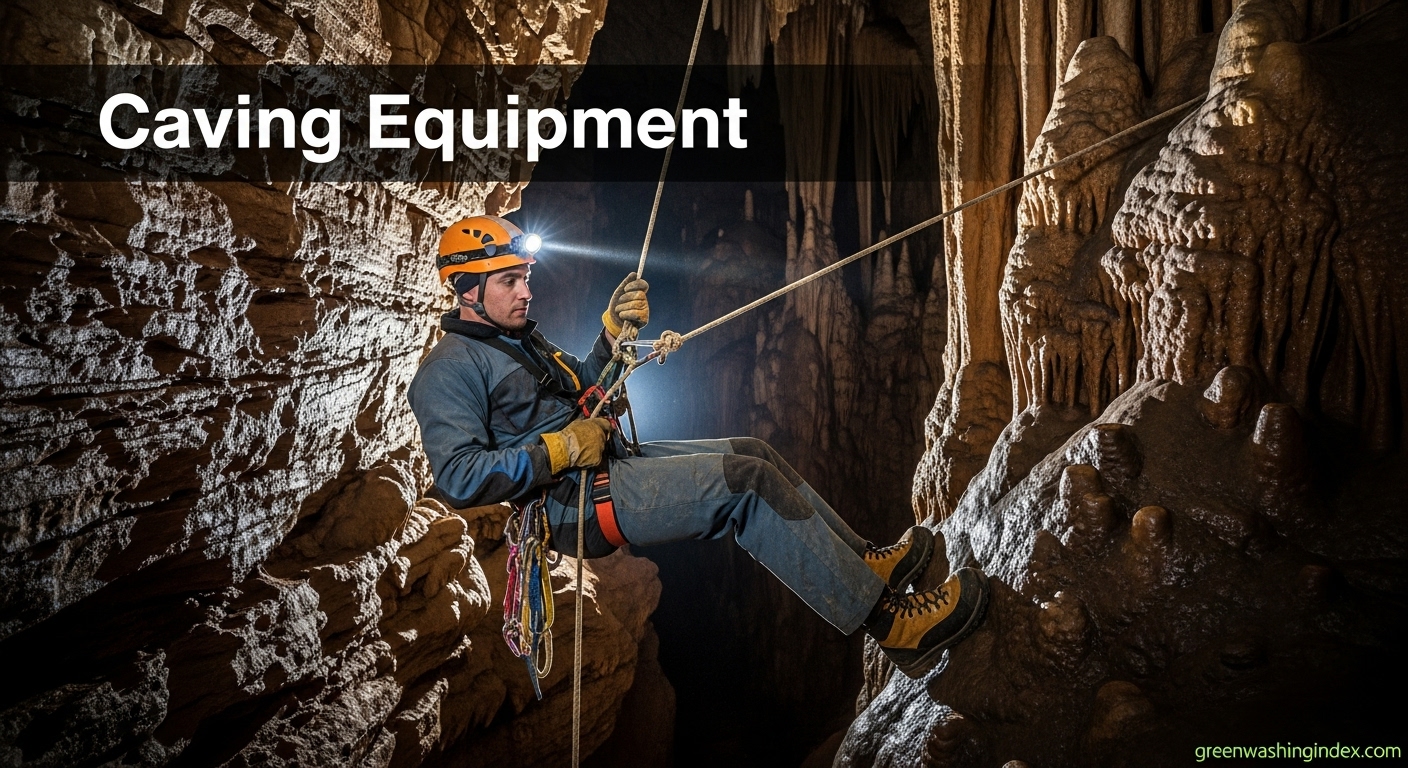
Caving is one of the most rewarding outdoor activities you can experience. The underground world offers formations and landscapes that simply don’t exist on the surface. I’ve spent 15 years exploring caves across North America, and I still remember my first trip vividly. I showed up with a flashlight from the hardware store and a pair of hiking boots. Within an hour, I slipped on wet mud, my light died, and I learned a crucial lesson about proper equipment.
For safe caving you need a UIAA or CE certified helmet with headlamp clips, three independent light sources, synthetic clothing (no cotton), sturdy boots with ankle support, gloves, knee pads, and a cave pack with emergency supplies. Total beginner equipment costs between $200-500 if you buy wisely, though many grottos offer loaner gear for your first trips.
The right caving equipment isn’t about comfort. It’s about survival. Caves present unique hazards: falling rock, total darkness, cold water, and confined spaces. Each piece of gear serves a specific safety purpose. I’ve seen experienced cavers walk away from serious incidents because they had the right equipment. I’ve also seen minor situations escalate into emergencies because someone cut corners on gear.
This guide covers every piece of essential caving equipment, with specific product recommendations I’ve tested or personally vetted. I’ll explain what you need, why you need it, and where you can save money versus where you should never compromise.
Before diving into specific products, here’s a quick reference of what every caver needs. The National Speleological Society and most grotto organizations agree on these essentials. I’ve organized them by priority based on safety impact.
| Priority | Equipment | Why Essential | Can’t Substitute |
|---|---|---|---|
| Critical | Certified Helmet | Head protection from rockfall | Bike helmets, construction helmets |
| Critical | 3 Light Sources | Exit if lights fail | Phone flashlights, lanterns |
| Critical | Synthetic Clothing | Warmth when wet | Cotton (kills when wet) |
| High | Sturdy Boots | Ankle support, traction | Sneakers, sandals |
| High | Gloves | Hand protection, grip | Bare hands |
| High | Knee Pads | Crawling comfort | None really |
| Medium | Cave Pack | Carry gear, trash | Regular backpacks |
| Medium | Food & Water | Sustained energy | Nothing |
| Vertical | Harness & Rope | Pitch access | Climbing gear |
Your helmet is the most important piece of caving equipment you’ll own. Caves are unstable environments. Rock fall from the ceiling isn’t common, but it happens regularly enough that no responsible caver enters without head protection. The NewDoar helmet offers EN 12492 certification, which is the European standard for mountaineering helmets. This certification means it’s been tested for impact from falling objects and penetration from sharp objects.
The EN 12492 standard is critical here. Many helmets look protective but lack proper certification. For caving, you want this specific certification rather than just a construction or biking rating. The physics of rock impact in caves differs significantly from other activities. This helmet’s 11 ventilation ports help with the heat buildup that makes underground caving uncomfortable. I’ve spent 6+ hours in caves, and helmet ventilation makes a genuine difference in fatigue levels.
The helmet’s headlamp clips are positioned for stability. Your primary light should always be mounted on your helmet for hands-free operation. These clips keep the light secure even when you’re crawling or scrambling. The 57-62cm adjustment range accommodates most head sizes, though it’s worth measuring before ordering if you’re at either extreme.
Beginners on a budget who need certified protection without paying premium prices. Also suitable for youth cavers who will outgrow gear quickly.
Serious cavers doing technical vertical work may want a dedicated caving helmet with more robust features.
The three light source rule isn’t a suggestion. It’s a survival requirement. Your primary light should be helmet-mounted, bright enough to see your exit route, and reliable. This azamine 2-pack gives you a primary plus backup right out of the box, which is smart buying. At 99,000 lumens claimed output, these headlamps provide serious illumination. I treat manufacturer lumen claims with skepticism, but even at half that rating, you’re getting excellent cave brightness.
IPX6 waterproof rating matters enormously in caving. Caves are wet environments. You’ll encounter drips, streams, and sometimes full immersion. IPX6 means this light can handle powerful water jets. I’ve had non-waterproof lights fail mid-trip, and it’s not an experience you want. The 90-degree adjustable beam lets you direct light precisely where needed. Tight passages require different lighting than walking passages.
Getting two headlamps in one package addresses the backup light requirement immediately. This represents solid value. Both lights use rechargeable batteries, which saves money over disposable cells and reduces waste. For multi-hour cave trips, you’ll want to carry spare charged batteries regardless. The three lighting modes let you conserve battery when full brightness isn’t needed while still having maximum power when you need it.
Beginners who want primary and backup lights in one purchase. Budget-conscious cavers who don’t want to buy lights separately.
Purists who prefer Petzl or Black Diamond’s proven track record. Cavers doing expedition trips who want spare battery compatibility.
Your feet will get wet in caves. It’s not a question of if, but when. Showave’s rubber hunting boots handle this reality gracefully. The waterproof rubber construction means your feet stay dry even when you’re walking through ankle-deep water. I’ve done trips in supposedly waterproof hiking boots that soaked through within the first hour. Rubber boots don’t have that failure mode.
The insulated neoprene lining provides warmth without the bulk. Cave temperatures hover around the average annual surface temperature of your area. This means 50-55 degrees Fahrenheit in many regions. Cold feet aren’t just uncomfortable. They’re a safety issue that affects your decision-making and coordination. The insulation here helps significantly.
A steel shank provides foot support that matters when you’re walking on uneven, rocky surfaces. Cave floors are notoriously irregular. Good foot support prevents the rolled ankles that terminate too many cave trips early. The outsole pattern offers solid traction on wet mud and rock. The main weakness is weight. Rubber boots are heavier than hiking boots, which matters on long approaches. But for actual caving, especially in wet systems, these excel.
Cavers exploring wet cave systems. Anyone tired of soaking their hiking boots underground.
Those primarily exploring dry caves where hiking boots offer better comfort and breathability.
“Cotton kills” is the caving mantra that gets repeated in every grotto for good reason. When cotton gets wet, it loses all insulating value and actually pulls heat away from your body. Bass Creek’s water-resistant coveralls provide an affordable alternative to specialized caving suits. While not purpose-built for caving, they offer protection from mud, abrasion, and the cold that seeps into underground environments.
The water-resistant outer shell sheds water and mud. You’ll still want proper layers underneath, but the coverall itself prevents direct contact with cave walls and floors. This matters for both comfort and conservation. Cave formations can be damaged by the oils and contaminants on our skin and clothing. A coverall acts as a barrier protecting both you and the cave.
Insulation helps considerably in the constant 50-degree temperatures of many caves. I’ve entered caves in summer and felt genuinely cold within an hour. The insulation here makes extended trips much more comfortable. Full body coverage means your clothes stay cleaner, which your post-trip vehicle will appreciate. Caving mud is persistent and stains everything.
Beginners testing the sport who don’t want to invest in specialized caving suits yet. Anyone wanting protection for occasional caving trips.
Serious cavers doing frequent trips in tight passages where purpose-built suits offer better mobility and durability.
Your hands are your primary tools in caving. You’ll push off walls, grab rocks, and manipulate gear constantly. Gloves protect against cuts, abrasion, and the cold that accompanies wet environments. The DRYMILE gloves strike a good balance between protection and dexterity. Bulky gloves make equipment handling frustrating. These maintain enough tactile sensitivity for knot tying, carabiner operation, and delicate movements.
Waterproof construction means your hands don’t get waterlogged and prune-like. I’ve done trips without waterproof gloves, and the loss of grip strength becomes a genuine safety issue. These gloves maintain their grip even when wet. The touchscreen compatibility is a nice bonus. You shouldn’t be using your phone underground, but having to remove gloves for surface logistics gets annoying quickly.
The winter wool blend provides insulation without excessive bulk. Cave environments are consistently cool. Cold hands affect your ability to handle equipment safely. These gloves keep your hands functional for the duration of typical recreational trips. They work well for both horizontal caving and surface approaches.
Cavers in wet environments who need hand protection without sacrificing dexterity. Anyone who has struggled with gear handling in bulky gloves.
Those doing highly technical vertical caving who may want purpose-built gloves with specific features like reinforced palms.
Vertical caving requires a harness. Not for comfort, but for survival. A 50-foot pitch is manageable with handlines. A 200-foot drop demands proper belay systems. This NewDoar harness provides the basics needed for vertical cave access. The CE 1282 certification and 22KN breaking strength meet safety requirements. I’m conservative about life support equipment, but these ratings indicate proper testing.
The adjustability range accommodates various body types and clothing layers. Caving often involves layering for warmth. A harness that doesn’t adjust means either unsafe fit or removing layers. This one spans 75-120cm at the waist and 50-70cm at the legs, covering most adults. The two equipment rings let you carry essential gear while keeping your hands free.
Breathable mesh lining prevents the sweat buildup that makes harnesses miserable during long hangs. I’ve spent hours in harnesses that felt like torture devices by the end. Proper ventilation makes a genuine difference. That said, this isn’t a purpose-built caving harness. Dedicated caving harnesses have specific features like attachment points for chest harnesses and cowstails. For beginners and occasional vertical cavers, this works. For serious vertical exploration, you’ll want specialized gear.
Beginners learning vertical caving techniques. Anyone needing an affordable harness that meets safety standards.
Dedicated vertical cavers who should invest in purpose-built caving harnesses with specific features.
Dynamic ropes belong to rock climbers. Static ropes belong to cavers. The difference matters. Dynamic ropes stretch to absorb fall energy. Static ropes minimize stretch for efficient ascending and descending. This AOLEBA rope is designed for static applications, making it appropriate for caving where falls aren’t the primary hazard.
The 10.5mm diameter offers a good balance between durability and handling. Thinner ropes are lighter but more abrasion-prone. Thicker ropes last longer but add weight. 10.5mm is a practical middle ground for most caving applications. The 23KN tensile strength indicates serious load capacity. While I’d like more details about the specific construction, the CE EN 892 certification provides baseline assurance of quality control.
Multiple length options let you choose appropriately for your typical cave depths. Buying longer than needed adds unnecessary weight. Buying shorter limits your options. Most recreational cavers will find 30-50 meters sufficient for exploration in their region. The included storage bag is a nice touch. Rope care matters, and keeping it protected from sunlight and chemicals extends its life significantly.
Cavers building their first vertical setup on a budget. Those doing shorter drops where static rope is appropriate.
Anyone planning lead climbing or situations where dynamic rope is required. Expedition cavers should invest in premium static lines.
Ascending a rope 100 feet with friction knots builds character. Doing it with ascenders just makes sense. Chest ascenders maintain your body position while you work your feet up. This ljhnba unit provides that function at an accessible price point. The 7075 aviation aluminum construction is the right material choice. It’s strong without being excessively heavy.
One-hand operation seems minor until you’re mid-rope and need to reposition. The ability to install and remove this ascender with one hand is genuinely useful. Vertical caving requires constant gear manipulation. Equipment that simplifies this process reduces fatigue and potential errors. The auto-locking mechanism provides security. You want an ascender that slides up smoothly but locks instantly when weighted.
Dual carabiner slots offer connection flexibility. Chest ascenders connect to your harness, and having multiple attachment points helps with proper positioning. The light hauling capability as a locking pulley is a nice bonus feature. I’ve used ascenders for hauling gear on numerous occasions. Having that versatility built-in reduces the equipment you need to carry.
Vertical cavers building their first ascending system. Those needing backup ascenders without premium pricing.
Professionals and serious vertical cavers who should invest in Petzl or equivalent premium ascenders.
Getting down ropes safely requires the right equipment. This descender provides friction control for rappelling into cave pitches. The hand stop feature adds an important safety element. Without a stopper, a momentary lapse can send you descending too quickly. The integrated stop wheel acts as a backup safety mechanism.
The rubber handle provides comfort during long descents. I’ve used descenders with bare metal handles, and the friction heat becomes genuinely uncomfortable. Thickened rubber makes a significant difference. The automatic spring system helps manage rope tension. Smooth rope management makes controlled descent possible. When you’re 150 feet underground on a rope, control isn’t optional.
Heat dissipation grooves address a real problem. Rope friction generates heat, and excessive heat damages both rope and equipment. The designed grooves help manage this heat, extending the life of both descender and rope. Compatibility with 9-13mm ropes covers most caving applications. This range gives you flexibility to use different rope diameters based on specific needs.
Cavers learning vertical techniques who need a functional descender without premium pricing.
Experienced vertical cavers who should invest in proven descenders from established safety equipment manufacturers.
Carabiners connect your system. You’ll use them for attaching ascenders, descenders, chest harnesses, and safety lines. Having multiple carabiners is essential, and this 3-pack provides good value. The UIAA and CE certifications are critical here. Carabiners are life-support equipment. Independent certification provides assurance that they meet safety standards.
25kN major axis strength equals about 5,600 pounds. This far exceeds typical caving loads, which is exactly what you want. The D-shape design maximizes strength where it matters. D-shaped carabiners direct load to the spine, which is the strongest part of the design. The screw-lock mechanism provides security. Auto-locking carabiners are convenient, but screw locks offer simplicity and reliability.
At 2.15 ounces each, these carabiners won’t weigh you down. When you’re carrying vertical gear plus emergency supplies, every ounce matters. The screw thread design minimizes dirt and grit intrusion. Caves are muddy environments, and carabiners that jam when dirty create dangerous situations. These seem designed with that reality in mind.
Beginners building their first rack of carabiners. Anyone needing multiple connectors without investing in premium brands initially.
Professional cavers and guides who should use established premium brands with long track records.
Most cave travel involves crawling. Your knees and elbows take constant abuse. I’ve done trips without knee pads and spent days regretting it. This BODYPROX set protects knees, elbows, and wrists in one package. The hard shell caps provide real protection against sharp rock. Soft pads offer some cushion but don’t prevent the bruising that hard cave floors inflict.
Knee pads are arguably more important than elbow pads for most cavers. You’ll spend more time on your knees than elbows. But having both provides comprehensive protection. The wrist guards add value too. Caving puts your wrists in awkward positions during climbs and crawls. Support there prevents strain injuries.
Adjustable straps let you get the right fit. Pads that slide around are annoying at best and dangerous at worst. These need to stay in position whether you’re walking, crawling, or climbing. The medium size fits most adults, though sizing is always worth checking. For tight squeezes, these pads might be bulky. But for the majority of cave travel, the protection they provide is worth minor inconvenience.
Beginners who want complete joint protection. Anyone who has experienced knee pain after caving without pads.
Those doing extremely tight squeezes where minimal bulk is required.
Underground, you still need water. The physical exertion of caving combined with cave environments creates genuine hydration needs. This 2-liter bladder provides sufficient water for most day trips. I’ve been on 6-hour cave trips where we consumed significantly more water than anticipated. Having adequate capacity matters.
The BPA-free construction is important for health reasons. You don’t want chemicals leaching into your drinking water, especially on hot approaches or during strenuous underground sections. The leak-proof design is critical. Nothing ruins a cave trip faster than discovering your water source has emptied into your pack. This bladder’s design aims to prevent that.
The military green color works well underground. Bright colors stand out in low light conditions, which helps when you’re trying to locate equipment. Standard hose connections mean this should work with most hydration-compatible packs. While basic, it covers the fundamental requirement of carrying water safely.
Beginners needing basic hydration. Cavers on a budget who want functional water storage.
Those wanting better flow rates and insulation. Serious cavers should invest in premium systems.
CamelBak built its reputation on hydration systems for good reason. The Crux reservoir delivers on the brand’s promise of better hydration. The faster flow rate is the standout feature. I’ve used cheaper bladders that require such hard sucking that jaw fatigue became a real issue. This reservoir delivers water readily, which encourages proper hydration.
The 1.5-liter capacity is adequate for most trips. While less than the 2-liter alternative, it saves weight and bulk. For day caving, this represents a reasonable trade-off. The ergonomic shape makes it easier to pack and less likely to shift awkwardly in your cave pack. Good pack organization matters underground when you can’t see what you’re doing.
The Big Bite Valve is genuinely superior to many alternatives. It delivers water reliably without dripping. Drip-free valves keep you and your gear dry. The leak-proof design has been proven through extensive field use. CamelBak’s reputation exists because their products generally work as advertised.
Cavers who value reliable gear. Anyone wanting the best hydration experience underground.
Those needing maximum water capacity for long trips. Budget-conscious cavers may find cheaper alternatives adequate.
Getting your gear to and from the cave requires organization. This storage bag helps keep everything together and protected. The carabiner hook design makes sense. Vertical cavers accumulate plenty of hardware. Having a dedicated storage solution prevents the dreaded missing carabiner when you’re preparing for a trip.
The anti-scratch interior protects your equipment from itself. Metal hardware rubbing against metal hardware causes wear. This bag prevents that damage, extending the life of your investment. The foldable design means it doesn’t take up space when not in use. At home, gear storage is a real consideration for most cavers.
Small tool organization helps prevent the loss of small items. Descenders, ascenders, and safety devices all have small parts that can go missing. Dedicated pockets and organization help ensure everything makes it back from each trip. While this isn’t cave-carrying equipment, it’s valuable for gear management at home.
Cavers accumulating vertical gear who need organization. Anyone who has lost small hardware to disorganization.
Those who only need a basic cave pack for underground use.
A prusik cord is one of the most versatile pieces of equipment in vertical caving. This cord can create backup ascenders, safety lines, and hauling systems. The 8mm diameter is ideal for prusik knots. Not too thick to grip, not too thin to be weak. It’s the sweet spot for most applications.
The 20-meter length provides plenty of material. Prusik cords get consumed in lengths of 5-7 feet typically. With 20 meters, you have enough for multiple setups or replacement loops. The double braid construction offers durability and handling characteristics that make knots both secure and manageable.
CE and UIAA certification indicates this cord meets safety standards for life-support applications. Not all cordage does. Using uncertified cord for backup systems creates unnecessary risk. The high tensile strength provides safety margin for the loads encountered in caving.
That said, a prusik cord is only useful if you know how to tie prusik knots properly. This isn’t equipment you buy and figure out underground. Get training on proper use before relying on it as a safety system. When used correctly, it’s an invaluable backup and utility tool for vertical caving.
Vertical cavers who understand prusik systems. Those wanting redundant safety options on rope.
Anyone without proper training in prusik techniques. This cord requires knowledge to be useful.
Before making purchases, understand the philosophy behind caving equipment. The National Speleological Society emphasizes that training matters more than gear. I’ve seen well-equipped cavers get into trouble due to poor decisions. I’ve also seen beginners with basic equipment have safe, enjoyable trips because they had proper training and conservative judgment.
Equipment doesn’t replace good judgment. It supports it. The National Speleological Society provides comprehensive safety guidelines that every caver should read. Their three light source rule, helmet requirement, and cotton clothing prohibition aren’t arbitrary rules. They’re written in the difficult lessons of past incidents.
The grotto system provides another crucial resource. Local caving clubs like the Philadelphia Grotto and Boston Grotto offer loaner gear for beginners. This lets you try caving before investing hundreds of dollars in equipment. I strongly recommend connecting with your local grotto before making major purchases.
Certification standards matter because they represent independent testing. UIAA and CE certifications indicate equipment has been evaluated for specific hazards. Choosing uncertified equipment to save money is false economy when safety is at stake. Your helmet choice particularly should prioritize certification over price.
The most common question I hear from beginners is what to buy first. Equipment prioritization makes a difference. Start with certified helmet and headlamp. These address the most immediate safety hazards. Next, address clothing and footwear. Synthetic layers and sturdy boots prevent the hypothermia and injuries that terminate too many trips prematurely.
Helmets, harnesses, carabiners, and rope should all carry independent certification. UIAA represents international climbing standards. CE indicates European Union safety certification. Both provide assurance that equipment meets specific performance requirements. uncertified climbing equipment from hardware stores is inadequate for caving’s specific hazards.
Most grottos maintain loaner gear for newcomers. This is genuinely the best way to start. You’ll learn what features matter to you through experience. I’ve seen people buy expensive setups only to discover after three trips that caving isn’t for them. Borrowing first prevents that expensive mistake. Contact your local grotto and ask about loaner programs before making purchases.
Specialized caving retailers offer the best selection and expertise. General outdoor stores often carry inadequate equipment. Online caving retailers provide access to specialized brands like Petzl, Warmbac, and Aventure Verticale that local stores rarely stock. That said, seeing gear in person helps with sizing and understanding. When possible, visit a specialty retailer for major purchases like helmets and harnesses.
| Tier | Total Investment | Includes | Best For |
|---|---|---|---|
| Budget | $200-400 | Basic helmet, mid-range headlamp, used clothing, work boots, generic gloves | Testing the sport |
| Mid | $500-800 | Quality helmet, premium headlamp plus backup, new coveralls, good boots, specialized pads | Committed beginners |
| Premium | $1000+ | Top-tier everything plus vertical system | Serious cavers |
After years of caving and mentoring newcomers, I’ve seen the same mistakes repeated. Using climbing equipment for caving tops the list. Climbing gear isn’t designed for mud, abrasion, and the specific forces encountered underground. It fails in ways that properly designed caving equipment wouldn’t.
Buying cheap uncertified helmets from hardware stores is another common error. These helmets may look protective but lack appropriate certification. I’ve personally seen them fail in situations where certified helmets performed adequately. Your helmet is not the place to save money.
Overbuying represents the opposite problem. I’ve seen beginners purchase complete vertical setups when they’ve only been in horizontal caves. Start with basic equipment and add specialized gear as your caving interests develop. Most grottos have vertical gear you can borrow while learning techniques.
The National Speleological Society’s safety guidelines provide the foundation for responsible caving. These rules exist because someone learned them the hard way. Following them isn’t optional. It’s the minimum requirement for safe underground exploration.
Every caver needs three independent light sources. Your primary helmet-mounted light provides hands-free illumination. Your backup should be equally capable. Your third source can be smaller but must still provide sufficient light to exit the cave. This redundancy prevents the nightmare scenario of being trapped in darkness.
“Cotton kills” isn’t hyperbole. When cotton gets wet, it loses all insulating value. More dangerously, it actively pulls heat away from your body through conduction. In 50-degree cave temperatures, wet cotton clothing leads to hypothermia. Synthetic materials like polyester and nylon retain warmth when wet. Wool is also acceptable. Cotton has no place underground.
The minimum safe caving party is four people. This ensures that if someone is injured, one person can stay with the injured party while two go for help. A single person can become lost or injured themselves. Two people leaving for help provides necessary redundancy. Solo caving is practiced by experienced individuals with extensive preparation, but it’s not recommended for the vast majority of cavers.
Every trip should have a surface person who knows exactly which cave you’re entering, your intended route, and when you expect to return. This person should know exactly when to call for help and who to contact. Many caving incidents become tragedies simply because no one knew where the party had gone or when they were overdue.
The absolute minimum for safe caving includes a UIAA or CE certified helmet with headlamp mount, a primary helmet-mounted light source plus two backup lights, synthetic clothing (no cotton), sturdy boots with ankle support, gloves, knee pads, and a cave pack with water, high-energy food, and a first aid kit. This basic setup addresses the primary hazards of head injury, darkness, hypothermia, and exhaustion while providing emergency resources if problems arise.
You should not use climbing equipment for caving. Climbing gear is designed for clean, dry rock and different force patterns. Caving exposes equipment to mud, abrasive rock, and wet conditions that can cause climbing equipment to fail prematurely or dangerously. Caving-specific equipment is designed to handle these conditions. Ropes, harnesses, and hardware should all be caving-rated, not climbing-rated.
Beginner caving equipment typically costs between $200 and $500 for a complete basic setup. This includes a certified helmet around $40-80, a quality headlamp for $30-60, backup lights for $20-40, synthetic clothing for $50-100, sturdy boots for $60-120, gloves and pads for $30-50, and a cave pack for $40-80. Many grottos offer loaner gear that lets beginners try caving before making this investment.
The three light source rule exists because light failure underground becomes a life-threatening emergency. If your primary light fails, you need an immediate backup. If both primary and backup fail, you need a third source to navigate out of the cave. Each light should be independently powered so a single battery failure doesn’t leave you in darkness. This redundancy has saved countless cavers from potentially fatal situations.
Cotton becomes dangerous when wet because it loses all insulating properties and actively conducts heat away from your body. Cave temperatures typically range from 45-55 degrees Fahrenheit, and water is common underground. Wet cotton leads to rapid heat loss and hypothermia. Synthetic materials like polyester and nylon, or natural wool, retain warmth when wet and are the only appropriate choices for cave clothing. The caving community phrase ‘cotton kills’ reflects this serious safety concern.
Local grottos (caving clubs affiliated with the National Speleological Society) are the best source for loaner equipment. Most grottos maintain gear libraries for newcomers and have programs specifically designed to help beginners get started without major investment. Some outdoor recreation programs may also rent caving equipment. Commercial caving guides provide necessary gear for guided trips. Connecting with your local caving community before purchasing is highly recommended.
Caving offers incredible experiences that simply aren’t available on the surface. The underground world contains formations, passages, and environments that few people ever witness. But accessing this world safely requires proper equipment and preparation. The gear I’ve reviewed here represents functional options at various price points.
My strongest recommendation remains the same: connect with your local grotto before making major purchases. Their loaner gear programs let you experience caving with proper equipment while learning what features matter most for your particular interests. The National Speleological Society can help you locate a grotto in your area.
When you do buy, prioritize certification and quality over price for life-support equipment. Your helmet, harness, and rope deserve investment in proven brands with appropriate safety certifications. Clothing and footwear offer more flexibility to save money without compromising safety. Build your kit progressively as your caving interests and skills develop.
The underground world will be there for generations if we approach it with respect, proper training, and appropriate equipment. Choose wisely, cave safely, and enjoy one of the most remarkable environments on Earth.