
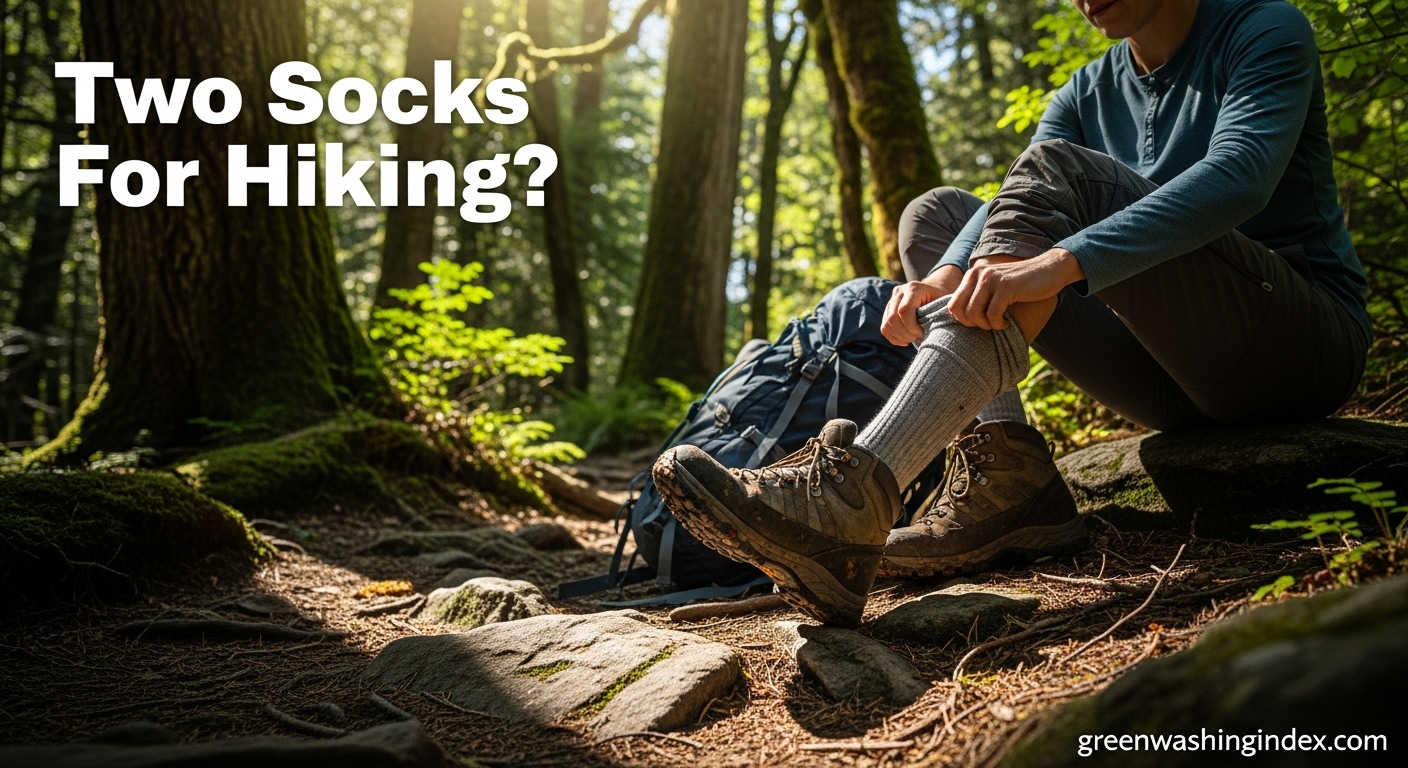
Every hiker knows the misery of blisters. That painful hotspot halfway through a hike can turn an amazing adventure into a miserable march. The debate about wearing two pairs of socks when hiking has been raging for decades in outdoor forums, gear shops, and trailhead parking lots.
Wearing two pairs of socks when hiking can reduce blister incidence by 40-77% according to military research, but it’s not always the right choice. Double socking works by creating a sliding interface between socks rather than against your skin, significantly reducing the friction that causes blisters. However, boot fit, hiking conditions, and material selection all affect whether this technique will help or hurt your feet.
I’ve spent years testing different sock combinations on trails ranging from casual day hikes to multi-day backpacking trips. After researching military studies, analyzing blister prevention research, and testing methods in real-world conditions, I can tell you that the double sock debate isn’t about finding a universal answer. It’s about understanding when this technique works and when it doesn’t.
In this guide, I’ll break down what three military studies actually found, explain the mechanics of how double socking prevents blisters, and give you a clear decision framework for when to use this technique. No myths, no opinions presented as facts—just evidence-based guidance you can trust on the trail.
Military organizations have studied blister prevention extensively because foot problems can take soldiers out of commission. Three key studies provide the most comprehensive data on double sock systems, and the results tell an interesting story.
Quick Summary: Military research shows double sock systems can reduce blister incidence by 40-77% when done correctly with proper materials. However, one study found that quality single socks can outperform poorly designed double sock systems.
The Knapik study from 1996 followed 357 Marine recruits during basic training. Researchers tested different sock combinations and found that a double sock system—a dense wool outer sock with a polyester liner—reduced blister incidence from 69% to 40%. Even more impressive, severe blisters dropped from 24% to 11%. That’s a massive improvement in comfort and performance for people pushing their feet hard every day.
Going back further, the Jagoda study from 1981 examined 221 male Marine lieutenants. Their double sock protocol reduced blister incidence from 59% to just 22%. When combined with foot powder, the results were even better. This study represents some of the earliest systematic evidence that the double sock approach isn’t just an old wives’ tale—it’s a legitimate blister prevention strategy backed by data.
But here’s where it gets interesting. The Van Tiggelen study from 2009 followed 189 Belgian military recruits and found something different. A single padded polyester sock resulted in only 16% blister incidence, while a double sock system actually performed worse at 32.3%. This study proves that double socking isn’t automatically better—the quality and material combination matters enormously.
| Study | Subjects | Single Sock Blisters | Double Sock Blisters | Reduction |
|---|---|---|---|---|
| Knapik (1996) | 357 Marine recruits | 69% | 40% | 42% |
| Jagoda (1981) | 221 Marine lieutenants | 59% | 22% | 63% |
| Van Tiggelen (2009) | 189 Belgian recruits | 16% (padded polyester) | 32.3% (double system) | Single sock performed better |
The key insight from these studies is that material combinations make or break the double sock system. When Knapik’s research used wool outer socks with polyester liners, results were excellent. But when Van Tiggelen tested a different double sock combination against a high-quality single sock, the double system lost. The lesson isn’t that double socking always works or always fails—it’s that how you do it matters tremendously.
Understanding the mechanics helps you see why double socking can be so effective. Blisters form when friction causes your skin layers to separate. This friction happens at three potential points: between your foot and sock, between your sock and boot, and—crucially—between two socks if you’re wearing a double layer system.
Shear Forces: Parallel forces that cause skin layers to separate, leading to blisters. When your foot slides inside your boot, these shear forces distort your skin internally, even if the surface looks undamaged.
The brilliance of double socking lies in creating a sock-sock interface that slides more easily than the skin-sock interface. As one highly upvoted explanation on StackExchange puts it: “The outer sock moves against the inner sock instead of against your foot and less friction is created.” When your foot shifts inside your boot—something that happens thousands of times per hike—the outer sock grips the boot while the inner sock moves with your foot. The sliding happens between the two sock layers, not against your skin.
Think of it like layers of clothing in winter. You can move freely because the layers slide against each other rather than your skin rubbing against the outer jacket. The same principle applies to socks, but instead of warmth, you’re reducing the friction that causes blisters.
This friction reduction only works when the two sock materials have different friction properties. If both socks are made of similar materials, they’ll grip each other and act like one thick sock. The magic happens when you pair a slick synthetic liner with a grippier wool outer sock—the synthetic slides easily against the wool, while the wool grips your boot.
Like any hiking technique, double socking has genuine advantages and real drawbacks. Understanding both helps you make an informed decision rather than following a rule blindly.
| Factor | Double Socks | Single Quality Sock |
|---|---|---|
| Friction Reduction | Excellent when materials differ | Good with quality merino |
| Moisture Management | Better with synthetic liner wicking | Good with merino wool |
| Temperature Regulation | Warmer (two layers) | Better in hot conditions |
| Boot Fit Requirements | Needs roomier boots | Works with any fit |
| Cost | Higher (two pairs needed) | Lower (one pair) |
| Complexity | More complex setup | Simple and straightforward |
| Best For | Blister-prone hikers, new boots | Hot weather, tight boots |
Beyond friction reduction, double socking offers several benefits. The inner liner sock wicks moisture away from your skin, keeping your feet drier than a single sock might manage. Dry feet are less prone to maceration and blister formation. The additional cushioning from two layers can also reduce pressure points, especially on long descents where your toes jam against the front of your boots.
Double socks can help fill space in loosely-fitting boots, preventing the foot sliding that causes blisters. I’ve found this particularly helpful when breaking in new boots that haven’t yet molded to my feet. The extra layers take up volume and provide a more secure fit.
In cold weather, double socking provides obvious insulation benefits. Two thin layers often keep your feet warmer than one thick layer, and you can adjust by removing the outer sock if conditions change. Canadian Forces actually transitioned from single wool socks to two-pair systems partly for this thermal flexibility.
Boot fit is the biggest limitation. If your hiking boots fit snugly with a single sock, adding a second layer can make them uncomfortably tight. Reduced circulation leads to cold feet and potentially more blisters, not fewer. I’ve seen hikers create worse problems by cramming double socks into tight-fitting footwear.
Temperature regulation works against double socking in hot conditions. Two layers mean more insulation, which can lead to excessive sweating. More sweat means more moisture, and moist skin is more vulnerable to friction damage. On summer hikes, I usually skip the double sock system unless I’m specifically prone to blisters.
The complexity factor shouldn’t be dismissed either. You need to manage two pairs of socks on multi-day trips, which means more weight and more laundry. More importantly, getting the layers wrong creates wrinkles that cause pressure points. I’ve had hikers tell me their first attempt at double socking actually caused blisters because the inner sock bunched up.
The decision framework comes down to three key factors: your blister history, your boot fit, and your hiking conditions. Let’s break down specific scenarios.
⏰ Time Saver: Test your double sock system on a short day hike before committing to a multi-day trip. A 3-5 mile hike will reveal any fit issues or discomfort without risking a major adventure.
Doing double socking correctly makes all the difference. Here’s the method that produces the best results:
The biggest error I see is using two socks made of similar materials. Two merino wool socks will bind together and act like one thick sock, eliminating the friction-reduction benefit. The inner sock needs to be slick and synthetic while the outer sock provides cushioning.
Another common problem is improper sizing. Some hikers buy a larger outer sock thinking it needs to accommodate the liner. This creates wrinkles and folds. Both socks should be your normal size—the thin liner takes up minimal space, so your regular size works for both layers.
The research is clear: material combination determines success or failure. Here’s what works based on both the military studies and real-world testing.
The ideal liner is thin, synthetic, and hydrophobic. Polyester and nylon work best because they resist absorbing moisture and create a slick surface that slides easily against wool. Look for running socks or liner socks specifically designed for this purpose. They should fit like a second skin—tight enough to stay in place but not so tight that they restrict circulation.
Cotton is the worst choice for liners. It absorbs moisture and loses its insulating properties when wet. Cotton dries slowly and creates the kind of moist, friction-heavy environment that blisters love.
Merino wool is the gold standard for outer hiking socks. It wicks moisture effectively, regulates temperature, and maintains cushioning when wet. The natural lanolin in wool provides some antimicrobial protection—important when you’re hiking multiple days in the same footwear.
Look for medium cushion wool socks for most hiking conditions. Light cushion works for warm weather, while heavy cushion makes sense for cold conditions or heavy pack loads. The outer sock should have enough loft to create that beneficial space between your foot and boot.
If you’re looking for specific sustainable hiking sock recommendations, brands like Darn Tough and Smartwool offer excellent merino options that work well as the outer layer in a double sock system. Quality matters—the Van Tiggelen study showed that a superior single sock outperformed a poorly designed double sock system.
Companies like WrightSock manufacture socks with the double-layer technology built in. Two layers are knit together as a single unit, eliminating the risk of the inner sock bunching. These can be a good option if you want the benefits without managing two separate pairs of socks.
It depends on your circumstances. Double socks reduce blister incidence by 40-77% in military studies, but they require proper materials and boot fit. If you’re blister-prone or breaking in new boots, double socking helps. If your boots fit tightly or you hike in hot weather, a single quality sock works better.
Yes, when done correctly. Military research shows double sock systems reduce blister incidence from 69% to 40% (Knapik 1996) and 59% to 22% (Jagoda 1981). The key is using different materials: a thin synthetic liner with a wool outer sock creates a sliding interface that reduces friction on your skin.
Wear merino wool or wool-blend hiking socks for most conditions. If using a double sock system, choose a thin synthetic or poly-cotton liner underneath your wool sock. Avoid cotton entirely—it traps moisture, dries slowly, and increases blister risk. Your socks should fit smoothly without wrinkles or compression points.
Start with a thin synthetic liner sock pulled completely smooth with no wrinkles. Add a merino wool hiking sock over the liner, ensuring both layers sit flat. Check boot fit—your toes should wiggle freely. If boots feel tight, skip the double layer. Test this system on short hikes before multi-day trips.
Hikers wear two pairs primarily to prevent blisters through friction reduction. The sock-sock interface slides instead of rubbing against skin. Additional benefits include better moisture wicking, extra cushioning, filling space in loose boots, and added warmth in cold weather. Military organizations have adopted double sock systems based on research results.
Double socks are highly effective for blister prevention when materials differ. The slick inner sock slides against the grippier outer sock, preventing friction from reaching your skin. However, double socks made of similar materials won’t provide this benefit. Quality single socks can also work well—the research shows material choice matters more than layer count.
Use liner socks if you’re prone to blisters, breaking in new boots, carrying heavy loads, or hiking long distances. Skip liner socks if your boots fit tightly, you’re hiking in hot weather, or your current single-sock system works well. Always test liner socks on short hikes before using them for important trips.
Wearing two wool socks isn’t recommended. Two similar materials will grip each other and act like one thick sock, losing the friction-reduction benefit. The double sock system requires a slick synthetic inner layer paired with a grippier wool outer layer. If you only have wool socks, wear one quality pair rather than doubling up.
Double socking isn’t magic and it isn’t myth—it’s a tool. The military research proves that when done correctly, it can dramatically reduce blister incidence. But the Van Tiggelen study reminds us that quality matters more than layer count. A well-chosen single sock outperforms a poorly designed double system.
If you struggle with blisters, double socking with a synthetic liner and wool outer sock is worth trying. Test it on shorter hikes before committing to a major trip. Pay attention to boot fit—if your boots feel tight, this isn’t the right approach for you. But if you have the room and the right materials, double socking can be the difference between finishing your hike and limping back to the trailhead.
The best sock system is the one that keeps your feet comfortable and blister-free. For some hikers, that’s a single quality merino sock. For others, it’s a carefully chosen double layer system. Now you have the research-backed information to decide what works for your feet, your boots, and your adventures.