

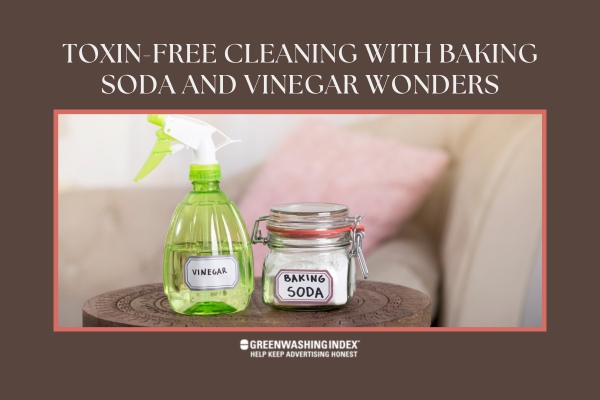
The average household relies on more than a dozen different cleaning products, many packed with synthetic chemicals that linger in your living spaces long after the fresh scent fades. If you have been searching for a simpler way to keep your home spotless without the respiratory irritation, skin problems, or environmental guilt, you are not alone.
Toxin-free cleaning with baking soda and vinegar has become one of the most searched natural cleaning approaches online, and for good reason. These two pantry staples have powered eco-conscious homes for generations, handling everything from greasy stovetops to grimy bathroom tiles. This guide walks you through everything you need to know to clean your home safely, effectively, and without spending a fortune on specialty products.
What you will find in this article is a practical roadmap for incorporating baking soda and vinegar into your regular cleaning routine. You will learn which scenarios call for each ingredient used alone, when combining them makes sense, which surfaces demand extra caution, and how to mix up foolproof cleaning solutions. We also address some of the louder concerns from plumbing professionals and surface care experts so you can clean with full confidence. By the time you finish reading, you will have a working knowledge of these ingredients that goes well beyond the old volcano experiment from science class.
The movement toward toxin-free cleaning has accelerated dramatically in recent years. A growing body of research links prolonged exposure to common household cleaning chemicals with respiratory issues, skin conditions, and disrupted hormone function. This is especially concerning for families with young children or pets who spend more time closer to floors and surfaces where residue collects.

Many commercial cleaners also contain volatile organic compounds that contribute to indoor air pollution long after the product has been used and discarded. Making the switch to natural cleaning alternatives means reducing your chemical footprint inside your home and keeping harmful substances out of local waterways when the water goes down the drain.
Beyond personal health, toxin-free cleaning appeals to anyone trying to live more sustainably. Conventional cleaning products often come in single-use plastic bottles, and their formulas rely on petrochemical-derived ingredients that carry a heavy environmental price tag from production through disposal. Natural cleaning ingredients like baking soda and vinegar are typically purchased in bulk or reusable containers, biodegrade completely, and cost a fraction of what you would spend on specialty green cleaning brands. The shift does not require you to overhaul your entire home overnight. You can start by replacing one or two products at a time, noting how well the natural alternatives perform, and expanding from there.
Healthier Indoor Air:
Environmental Responsibility:
Family and Pet Safety:
Two humble ingredients dominate the world of natural home cleaning, and you almost certainly already have them somewhere in your kitchen. Baking soda, chemically known as sodium bicarbonate, is a mild alkaline powder that neutralizes acids and gently scours surfaces without scratching.
White distilled vinegar contains acetic acid, which dissolves mineral deposits, cuts through grease, and kills many common household bacteria on contact. Each works beautifully on its own, and their combined effect produces a satisfying fizz that helps lift grime from surfaces. Understanding their individual strengths will help you decide whether to reach for one alone or mix them together for a specific cleaning task.
Baking Soda (Sodium Bicarbonate):
Vinegar (Acetic Acid):
These two ingredients are the foundation of most DIY cleaning routines. Together they cover an impressive range of household cleaning challenges, but knowing when to use each one solo versus when to combine them is the key to getting the best results without wasting effort. Check out our Zero Waste Cleaner DIY guide for more recipes that pair these ingredients with other household staples.
Baking soda earns its place in any toxin-free cleaning arsenal through sheer versatility. This fine white powder performs so many different cleaning jobs that most households find they only need one box to handle an enormous portion of their routine cleaning tasks. Its alkaline nature makes it particularly effective at neutralizing acidic stains and odors, while its gentle abrasiveness handles stuck-on grime without the scratching that steel wool or harsh chemical scrubbers can cause.
Baking soda truly shines in situations where you need scrubbing power without chemical strength. Its ability to perform double duty as both a cleaner and a deodorizer means you often only need one product where you might otherwise reach for two. Our article on non-toxic stainless steel cleaners explores how baking soda fits into a broader toolkit for specific surface types.
Vinegar is one of those rare cleaning agents that manages to be simultaneously powerful and completely gentle on the environment. The same acetic acid that gives vinegar its sharp smell and tangy taste makes it extraordinarily effective at dissolving mineral deposits, cutting through fatty residues, and killing a broad spectrum of household germs. When you use vinegar for cleaning, you are tapping into a cleaning method that has been trusted in households around the world for centuries, long before the invention of commercial cleaning products.
The acidity that makes vinegar so effective also demands respect. Never combine vinegar with bleach or any cleaner that contains ammonia, because the reaction releases toxic chloramine gas that can cause serious respiratory harm. Always ventilate the room when cleaning with vinegar, especially in enclosed spaces like small bathrooms.
While vinegar excels at dissolving mineral buildup and cutting grease, it is important to recognize when vinegar alone is the better choice and when you should reach for baking soda instead. For scrubbing baked-on food from cookware, baking soda provides more abrasive power. For cleaning glass and removing hard water deposits, vinegar is the clear winner. Understanding these strengths will help you use both ingredients more effectively.
Making your own cleaning products from baking soda and vinegar puts you in complete control of every ingredient that touches the surfaces in your home. The process requires minimal equipment, costs very little per batch, and produces results that rival commercial cleaners for everyday household tasks. Most DIY cleaning recipes come together in minutes, and you can scale them up or down depending on how much cleaning you need to do.
Getting the baking soda and vinegar ratio right matters more than most guides admit. Too much baking soda and the mixture becomes a paste that sits on surfaces rather than dissolving. Too much vinegar and the solution is too acidic for some materials and leaves behind a strong smell that takes time to fade. The following recipes provide a solid starting point that works across most household cleaning scenarios.
Ratio Guidance for Specific Tasks:
When you add essential oils to your homemade cleaners, you not only improve the scent but can gain additional cleaning benefits. Tea tree oil has natural antimicrobial properties, lemon oil cuts grease effectively, and lavender adds a pleasant relaxing fragrance while still being gentle enough for most surfaces. Add ten to fifteen drops of your chosen oil per quart of finished cleaner. Explore more scent combinations in our guide to eco-friendly cleaning products that incorporates essential oils and natural ingredients.
The shelf life of your homemade cleaners depends largely on how they are stored. Baking soda itself remains effective almost indefinitely in a sealed container, but once mixed with water or vinegar, the cleaning power gradually diminishes over weeks rather than months. For best results, mix small batches that you can use within two to three weeks, and discard any mixture that develops an off smell or shows signs of microbial growth, which can happen if water-based mixtures are left in warm conditions.
One of the most common questions about baking soda and vinegar cleaning is whether they should always be used together. The honest answer is that combining them works beautifully for some cleaning tasks but is actually counterproductive for others. Understanding the chemistry behind each approach will help you get better results from every cleaning session.
When you mix baking soda and vinegar together, a chemical reaction occurs immediately. The alkaline sodium bicarbonate reacts with the acidic acetic acid, producing carbon dioxide gas in the form of vigorous bubbling or fizzing. While this fizzing action can be satisfying and does help physically agitate and lift loose dirt from surfaces, the reaction itself largely neutralizes both ingredients. What you are left with after the fizzing subsides is mostly water with small amounts of sodium acetate, which is a salt. This is not harmful, but it does not carry the specialized cleaning power that either ingredient has when used alone.
While baking soda and vinegar handle most household cleaning tasks beautifully, certain materials react poorly to one or both of these ingredients. Taking a moment to identify which surfaces in your home fall into these categories will save you from expensive damage and the frustration of having to replace scratched or etched surfaces.
For a comprehensive guide to selecting the right cleaner for every surface in your home, see our article on non-toxic disinfectant cleaners which covers surface-specific recommendations in detail.
There is a long-standing home remedy recommendation that pouring baking soda and vinegar down your drain will clean pipes and remove clogs. While this approach is popular and widely shared online, plumbing professionals have raised serious concerns about its actual safety and effectiveness for your plumbing system. Understanding these concerns will help you make informed decisions about how to care for your home drains.
Plumbers report that the fizzing reaction, while visually dramatic, does not actually generate enough force to dislodge significant drain clogs in most cases. More importantly, the repeated use of vinegar and baking soda in drains can contribute to problems over time. Vinegar is acidic, and while household white vinegar at five percent concentration is relatively mild, repeated exposure can accelerate corrosion of certain types of pipe joints and fittings, particularly in older plumbing systems with metal components. Additionally, the baking soda residue that does not fully dissolve can accumulate in pipe elbows and traps, eventually contributing to buildup rather than preventing it.
If your drain is genuinely clogged, the most effective approach is to use a plunger first, followed by a drain snake or auger if the plunger does not work. For routine drain maintenance, flushing with boiling water once a week helps clear soap residue and light buildup without exposing your pipes to acidic or abrasive substances. Commercial enzymatic drain cleaners offer another option that uses bacteria to break down organic matter in drains without the corrosive concerns associated with vinegar. For persistent or recurring drain problems, consulting a licensed plumber is always the safest choice to avoid causing damage that could result in leaks or pipe failure.
You can learn more about sustainable cleaning approaches and their impact on home maintenance in our sustainable spring cleaning guide, which covers eco-friendly practices that protect your home infrastructure as well as the environment.
Baking soda and vinegar are safe for most hard surfaces, but they can cause damage on certain materials. Avoid using vinegar on marble, granite, natural stone, and aluminum, as the acid can etch or discolor these surfaces. Baking soda’s mild abrasiveness can scratch polished stone over time. Always test on a small inconspicuous area first, and use pH-neutral cleaners on delicate natural stone surfaces.
Apple cider vinegar can be used for cleaning, but white distilled vinegar is generally preferred because it has a neutral pH and does not leave colored residue on surfaces. Apple cider vinegar has a higher organic content that could potentially stain light-colored materials and has a stronger smell that may linger after cleaning.
When baking soda (an alkali) meets vinegar (an acid), they undergo an acid-base neutralization reaction that produces carbon dioxide gas. The bubbling you see is carbon dioxide escaping the liquid. This reaction also produces sodium acetate and water, meaning the fizzing largely consumes both cleaning agents, so the mixture is most useful for tasks where the physical agitation helps, such as loosening debris in drains.
Vinegar at five percent concentration has measurable antimicrobial properties and can kill many common bacteria like E. coli and Salmonella. However, it is not effective against viruses like influenza or coronaviruses, and it is not a substitute for hospital-grade disinfectants when sanitization is critical. For everyday household cleaning in non-medical settings, vinegar provides adequate sanitation for most surfaces when used regularly.
Plumbers caution that while the baking soda and vinegar method is popular, the fizzing reaction does not generate enough force to clear serious drain clogs. More importantly, frequent use of vinegar in drains can accelerate corrosion of metal pipe fittings and joints over time. The undissolved baking soda residue can also accumulate in pipe traps and elbows, potentially contributing to buildup rather than preventing it. For routine drain maintenance, flushing with boiling water is generally safer and more effective.
For an all-purpose cleaning spray, mix one quarter cup of baking soda with one quarter cup of vinegar in four cups of water. For heavy-duty scrubbing paste, combine three parts baking soda with one part water. For descaling appliances like coffee makers, use equal parts undiluted vinegar and water. Adjust these ratios based on the cleaning task, remembering that more baking soda provides more abrasive power while more vinegar provides stronger acidity.
Toxin-free cleaning with baking soda and vinegar represents one of the most accessible and affordable paths to reducing chemical exposure in your home. These two ingredients, likely already sitting in your kitchen pantry, handle the vast majority of everyday cleaning tasks with results that compare favorably to commercial products costing many times more. The key to success lies in understanding which ingredient serves each purpose best, when combining them creates a net benefit, and which surfaces demand alternative cleaning approaches to prevent accidental damage.
As you bring these natural cleaning methods into your home routine, you will likely discover that simplicity often outperforms complexity when it comes to household cleaning. A box of baking soda and a bottle of vinegar take up minimal storage space, cost very little per use, and eliminate the need for an entire cabinet full of specialized cleaners. Start with one or two of the recipes and techniques covered here, observe how they perform in your specific household, and expand your natural cleaning toolkit as you gain confidence.
The shift toward toxin-free cleaning is not about achieving perfection or eliminating every trace of chemical exposure from your life. It is about making thoughtful choices that benefit your health, your family, and the environment without requiring drastic sacrifices or lifestyle overhauls. Small consistent changes add up over time, and every time you reach for baking soda instead of a bottle filled with unpronounceable ingredients, you are casting a vote for a cleaner, safer home and a healthier planet.
For more inspiration on building a comprehensive natural cleaning routine, explore our guide to non-toxic cleaning supplies and our Non-Toxic Living category for articles covering every room in the house and every aspect of reducing chemical exposure in your daily life.
