

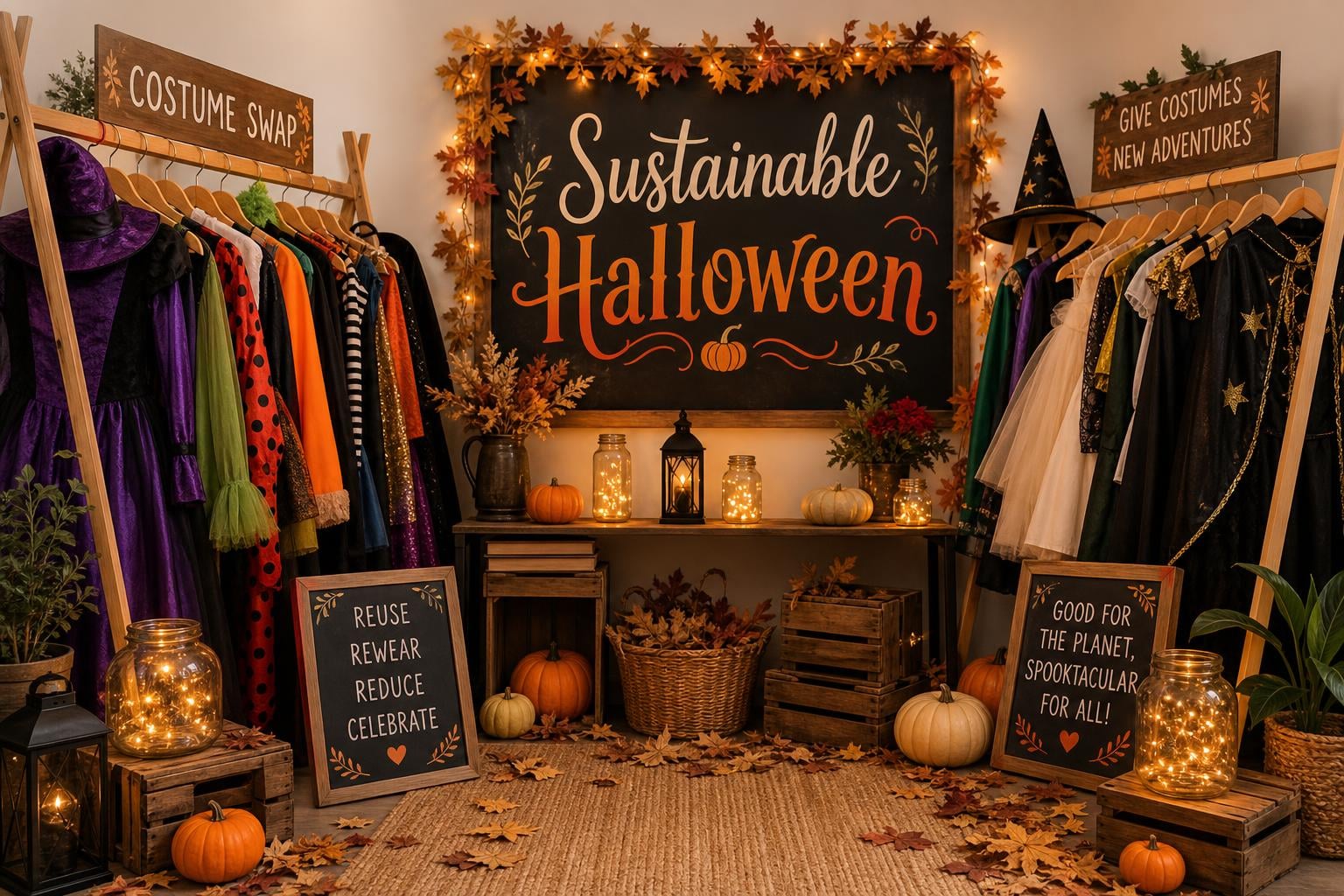
Every October, millions of costumes, decorations, and treat wrappers end up in landfills across the country. The spooky season generates a staggering amount of waste, and the numbers only grow each year. But there is a better way to celebrate.
A sustainable Halloween is an approach to celebrating the holiday that minimizes environmental impact through practices like costume swapping, reusable decorations, compostable materials, and zero-waste party planning. Instead of buying single-use plastic costumes that get worn once and tossed, you can host gatherings where friends exchange outfits, serve treats with minimal packaging, and decorate with natural or repurposed materials.
I have been hosting Halloween costume swap parties for years, and I can tell you that going green does not mean sacrificing any of the fun. In fact, swapping costumes with friends has become my favorite part of the season. The creativity, the laughter, and the satisfaction of doing something good for the planet make the whole experience richer than any store-bought costume ever could.
This guide covers everything you need to throw an unforgettable sustainable Halloween bash in 2026. From planning your costume swap to eco-friendly trick-or-treating, post-halloween composting, and zero-waste party food, I will walk you through every step. I have also included real Halloween waste statistics, forum-tested tips from zero-waste communities, and answers to the most common questions about greening up your spooky season.
If you are looking for ways to green up your entire autumn, a sustainable Halloween is just the beginning. Check out our roundup of sustainable fall activities for more eco-friendly seasonal inspiration.
Let us start with the facts. Halloween costumes are approximately 80% plastic, according to research cited by environmental groups and major news outlets. That means the superhero cape, the witch hat, and the ghost sheet you picked up from the seasonal aisle are largely made from polyester, nylon, and other synthetic materials that will sit in landfills for centuries.

The textile waste from Halloween alone is staggering. One analysis found that the plastic content in UK Halloween costumes sold in a single year was equivalent to roughly 83 million plastic bottles. Now extrapolate that globally, and you start to see the scale of the problem. Most of these costumes are worn exactly once before heading to the trash.
This is where the costume swap party comes in. The concept is beautifully simple. You invite friends, family, or neighbors to bring costumes they no longer wear. Everyone lays their contributions out, and each person goes home with something new to them. No money spent, no new plastic manufactured, no textile waste generated.
The carbon footprint of Halloween extends well beyond costumes, too. Decorations, candy wrappers, party supplies, and single-use treat bags all contribute to a massive seasonal spike in waste. By choosing a sustainable Halloween approach, you are directly reducing your share of that footprint while showing others how easy it can be.
Halloween waste statistics paint a clear picture. Beyond the 80% plastic costume figure, consider that Americans generate approximately 25% more waste during the holiday season between October and January. Halloween kicks off this stretch, and much of what gets bought ends up discarded within days.
Reddit users on the r/ZeroWaste community frequently express guilt about Halloween waste and actively seek alternatives. Many recommend building costumes from clothing that can be worn year-round, shopping at thrift stores, and organizing community swaps through Facebook groups. These grassroots efforts show that the appetite for sustainable Halloween celebrations is real and growing in 2026.
Another angle worth considering is glitter pollution. Many costumes and decorations are covered in glitter, which is essentially microplastic. When these items are washed or disposed of, that glitter enters waterways and contributes to the growing microplastic crisis. Choosing glitter-free costumes and natural alternatives is a small change with real environmental impact.
Also Read: Compost Flies Uncovered: Solve Your Organic Waste Riddle!
Planning a green Halloween costume exchange requires some forethought, but it is far from complicated. The key is choosing the right timing, finding a suitable location, and getting the word out efficiently. Here is how I approach each of these elements when organizing my own swap events.
Scheduling your swap party one to two weeks before Halloween gives everyone time to find and adjust their costumes after the exchange. If you host it too early, people lose momentum. Too late, and they may have already bought something new out of panic.
I always aim for a weekend afternoon. Saturday works best because people can browse costumes at a relaxed pace without rushing home for work or school the next morning. Before locking in the date, I send a quick poll to my group chat so people can weigh in on what works for them.
Weather matters if you plan an outdoor swap. October weather can be unpredictable, so I always have an indoor backup plan. If you live somewhere warm, a park setting can be lovely. In colder regions, a cozy living room or community room keeps everyone comfortable.
Send out digital Halloween invitations rather than paper ones. Tools like Evite, Paperless Post, or even a well-crafted group text reduce paper waste and let you track RSVPs easily. Digital invitations also let you include swap rules, theme details, and reminders all in one place.
Your venue sets the tone for the entire event. Here are the options I have used, along with the pros and cons of each.
Wherever you choose, make sure the space has good lighting so people can see costume details clearly. You will also want a full-length mirror or two for trying things on. A few chairs near the swapping area let people sit while deciding.
Accessibility matters too. Choose a ground-floor venue or one with elevator access. Make sure aisles between costume racks or tables are wide enough for strollers and wheelchairs. Size-inclusive swapping means everyone can participate fully.
Also Read: DIY Composting Toilet Guide: Build Cheap, Eco-Friendly Now!
A successful swap needs a bit of structure. Without guidelines, things can get chaotic fast. The good news is that a few simple rules make the event fair, fun, and stress-free for everyone involved.

Here are the guidelines I send to every guest before my sustainable Halloween party:
Send these rules with your digital invitation a week or two before the event. A quick reminder the day before never hurts either. When everyone knows the expectations, the swap flows smoothly and nobody feels shortchanged.
I also recommend creating a simple swap system. One approach that works well is a ticket system where each costume you bring earns you one swap token. This keeps things fair and prevents anyone from grabbing everything in sight.
Also Read: Eco-Friendly Paper Towels: A Composting Guide You Need
Getting people excited about a costume swap is easier than you might think, especially in 2026 when sustainability is mainstream. The key is framing it as a fun social event rather than a lecture about environmental responsibility. Here are the approaches that have worked best for me.

Nobody wants to feel lectured at a party invitation. Instead of opening with statistics about textile waste, I talk about how much fun it is to try on different costumes with friends. I describe the snacks, the music, the fashion show element. The environmental benefits are a bonus that comes up naturally once people arrive.
That said, sharing the 80% plastic statistic in a casual way does resonate. When friends learn that their old costume essentially becomes permanent plastic waste, it reframes the value of swapping. I usually drop this fact during the party itself, when people are already having a good time and feeling receptive.
Social media has come a long way since generic Facebook posts. Here are the platforms and tactics that actually get responses in 2026.
Not everyone can attend an in-person event. Online costume swapping has emerged as a practical alternative, and Reddit users frequently ask about dedicated platforms for this. While there is no single dominant costume swap website yet, several approaches work well.
Themes give your swap party a focal point and make it feel more like an event than a chore. Some theme ideas that have worked for me include decades night (bring costumes from the 70s, 80s, or 90s), movie characters, spooky classics, or even a color-coordinated costume challenge.
Themes also help people who are not sure what to bring. If the theme is fairy tales, they can search their closet for anything that might fit that vibe. It narrows the scope and sparks creativity.
For kids, a character parade theme works beautifully. Each child brings a costume they have outgrown and picks a new one. Set up a runway where they can model their finds, and the excitement becomes contagious.
Swapping is not the only path to a sustainable costume. Thrift store costumes and DIY Halloween costumes offer fantastic alternatives that keep waste out of landfills while delivering one-of-a-kind looks. Let me walk through the best options.
Thrift stores are treasure troves for Halloween. Goodwill, Salvation Army, and local second-hand shops typically set up dedicated Halloween sections in October. You can find full costumes, vintage clothing that works as costume components, and accessories galore.
The beauty of thrift store costumes is that they often use higher quality materials than cheap packaged costumes. A real wool blazer from the 80s makes a far better detective costume than a thin polyester version from a pop-up Halloween store. Plus, these items can be worn again after Halloween or re-donated.
I recommend shopping early in October for the best selection. Bring a list of costume ideas so you can stay focused rather than getting overwhelmed. Mix and match pieces from different racks to create something truly original.
Some of the best costumes I have ever seen were made entirely from items people already owned. Cardboard boxes become robots. Old bedsheets transform into ghosts or togas. A black turtleneck and some cat ears made from felt turn anyone into a classic Halloween cat.
The Reddit r/halloween community is full of creative DIY costume ideas using repurposed materials. Users share tutorials for everything from cardboard armor to newspaper mache masks. These costumes cost almost nothing, produce zero new waste, and often look more impressive than store-bought versions.
For families, DIY costumes become a fun activity rather than an errand. Kids love the process of designing and building their own costumes. It teaches creativity, resourcefulness, and environmental awareness all at once.
If you want to add color to your costume without synthetic dyes, try natural alternatives. Beet juice creates a deep red stain perfect for vampire effects. Turmeric mixed with a little water produces a vibrant yellow. Coffee grounds steeped in warm water make a convincing aging effect for zombie costumes.
For face paint, commercial options often contain petroleum-derived ingredients and microplastic glitter. Instead, look for eco-friendly face paint brands that use mineral-based pigments and natural oils. You can also make simple face paint at home using coconut oil, cornstarch, and natural food colorings.
Decorations are another major source of Halloween waste. Cheap plastic spiders, synthetic cobwebs, and foam tombstones are designed for one season of use. But with a little creativity, you can create a spooky atmosphere using biodegradable Halloween decorations and items you already have.
Nature provides the best Halloween decorations. Pumpkins, gourds, fall leaves, pine cones, and dried corn stalks are all compostable and widely available from local farms. After Halloween, these items can go straight into your compost bin or municipal green waste collection.
Fall leaves make beautiful garlands. Collect colorful leaves from your yard, press them flat between books for a day or two, then string them together with a needle and thread. Drape them across doorways or along staircases for an instant autumnal feel.
Pine cones arranged in bowls or glass jars create rustic centerpieces. Add a few dried orange slices and cinnamon sticks for a centerpiece that looks elegant and smells amazing. When the season is over, compost everything.
Glass jars are endlessly versatile. Paint spooky faces on them and drop in LED tea lights for homemade lanterns. Fill them with layers of colored sand or candy for decorative displays. After Halloween, wash them out and use them for storage or as drinking glasses.
For more zero-waste party planning inspiration, check out our guide to throwing a spectacular eco-friendly party using fabric banners and reusable materials.
Making your own Halloween props is fun, affordable, and completely waste-free if you use materials headed for the recycling bin. Here are some of my favorite DIY prop ideas.
Get the whole family involved in making props. It turns decoration preparation into a memorable activity rather than a shopping trip. Kids particularly love the hands-on creative process, and they take pride in seeing their creations displayed.
You can also explore DIY gifting and crafting ideas for more inspiration on making beautiful items from repurposed materials.
Also Read: Essential Lean-to-Greenhouse Guide: Build with Confidence!
Party food is another area where small changes make a big environmental difference. Skip the individually wrapped processed snacks and opt for fresh, seasonal, and minimally packaged options. Your guests will appreciate the quality, and the planet will thank you.
I plan my Halloween party menus around seasonal produce and plant-based recipes. Pumpkins, apples, and squash are abundant in October, inexpensive, and delicious. Here are some crowd-pleasing options.
1. Jack-O-Lantern Fruit Bowls
2. Ghostly Banana Pops
3. Pumpkin-Shaped Veggie Tray
4. Witch’s Brew Green Smoothie
5. Monster Mouth Apple Snacks
For candy and sweets at your party, consider choosing organic candy brands that use natural ingredients and recyclable packaging. These options taste just as good and avoid the artificial dyes and excess plastic wrapping found in conventional Halloween candy.
Cleanup is where many otherwise green parties go wrong. Disposable plates, cups, and utensils pile up in trash bags. Here is how I handle cleanup sustainably.
Also Read: 15 Environmental Engineering Internships | Top Choices for Grads
Trick-or-treating generates enormous amounts of waste, from plastic pumpkin buckets to thousands of candy wrappers per household. But with a few mindful choices, you can make eco-conscious trick-or-treating part of your sustainable Halloween without dampening any of the excitement.
The classic pillowcase trick-or-treating approach has stood the test of time for good reason. Pillowcases are sturdy, washable, hold an impressive amount of candy, and cost nothing if you already own spare ones. They also create zero waste.
Cloth tote bags are another excellent option. Canvas bags can be decorated with fabric markers or paint, turning them into a fun pre-Halloween craft activity. Reusable grocery bags work well too, and most households already have several sitting in a closet.
Avoid the cheap plastic pumpkin buckets sold at big box stores. They crack after one or two uses, and they are nearly impossible to recycle. If you already own one, keep using it until it truly falls apart, then dispose of it properly.
If you hand out candy, look for options that come in paper or cardboard packaging rather than plastic film. Some candy brands now offer foil-wrapped chocolates, which are recyclable. Others sell treats in small cardboard boxes.
Non-candy alternatives are increasingly popular and often appreciated by parents. Pencils, stickers, mini notebooks, and small art supplies make great treats that last longer than candy. Just avoid cheap plastic trinkets that break immediately and end up in the trash.
Another option gaining traction is edible candy wrapping. Some companies produce candy wrappers made from rice paper or other edible materials that create zero waste at all. These are still niche but worth watching as availability grows.
For families who want to go further, consider participating in the Teal Pumpkin Project. This initiative encourages households to offer non-food treats for children with food allergies, and many of the suggested alternatives are durable, useful items rather than disposable plastic toys.
Driving from neighborhood to neighborhood for trick-or-treating adds unnecessary carbon emissions to the holiday. Instead, map out a walking route through your own neighborhood. Walking is safer, more social, and produces zero emissions.
If you do travel to another area for better trick-or-treating, carpool with other families. One vehicle carrying four families is far better than four separate cars making the same trip. Plus, kids love trick-or-treating in a group.
Candy wrappers are notoriously difficult to recycle through standard municipal programs. They are made from mixed materials, usually a combination of plastic film and aluminum foil, which most recycling facilities cannot process.
Fortunately, specialized programs exist. TerraCycle offers candy and snack wrapper recycling programs where you collect wrappers and ship them in for proper processing. Some schools and community organizations run wrapper collection drives as fundraisers, so check whether any local programs are operating in your area.
Another approach is to simply reduce the number of wrapped treats you distribute. Homemade cookies, caramel apples, or other unwrapped treats eliminate the wrapper problem entirely, though you should check whether your community allows homemade treats for trick-or-treaters.
A great costume swap party has more going on than just the swap itself. Adding activities keeps energy high and gives people reasons to stick around and socialize. Here are entertainment ideas that align with sustainable Halloween values.
The sustainable Halloween mindset does not end on November 1st. What you do with costumes, decorations, pumpkins, and leftover treats matters just as much as how you acquired them. Here is how to close out the holiday responsibly.
Costumes that did not get claimed at your swap should not go in the trash. Costume donation is one of the simplest ways to extend a costume’s life. Local thrift stores, school drama departments, and community theaters often welcome gently used costumes.
Organizations like Goodwill and Salvation Army accept Halloween costumes year-round. Some communities have specific costume donation drives in early November, timing them for families who cannot afford costumes the following year. Check with local family shelters and after-school programs as well.
For costumes you want to keep, store them properly so they last. Fold them cleanly, place them in labeled storage bins, and keep them in a dry location. Well-stored costumes can be swapped, lent, or reworn for years, which is the ultimate sustainability win.
Pumpkins are organic material, which means they are fully compostable. Yet millions of jack-o-lanterns end up in landfills each year, where they decompose without oxygen and produce methane, a potent greenhouse gas. Composting pumpkins keeps that methane out of the atmosphere and creates nutrient-rich soil.
Here is how to compost pumpkins at home. First, remove any candles, wax residue, and non-organic decorations like paint or glitter. Cut the pumpkin into smaller pieces to speed up decomposition. If you have an existing compost pile or bin, simply toss the pieces in and cover them with brown material like dried leaves or cardboard.
If you do not have a home compost setup, check for municipal composting programs. Many cities now offer pumpkin composting drop-off sites in the weeks after Halloween. Community gardens and urban farming programs also often accept pumpkin donations for their compost piles.
Some communities even host pumpkin smash events, where families bring their jack-o-lanterns to a central location and literally smash them for fun before they get composted. These events are popular with kids and turn sustainability into a celebration.
Before composting, consider other uses for your pumpkin. Roast the seeds for a tasty snack. If the pumpkin was carved recently and has not begun to rot, you can puree the flesh for pumpkin bread, soup, or pie. This extracts maximum value before the remains go to compost.
If you are starting a compost pile with your Halloween pumpkins, you might encounter some challenges like fruit flies. Learn how to manage common composting issues so your pile stays healthy and odor-free.
Store reusable decorations carefully for next year. Cardboard and paper decorations should go in a dry, flat container to prevent bending. Fabric decorations can be folded and stored in bins. Label everything clearly so you know exactly what you have when October rolls around again.
For decorations that are beyond repair, check whether the materials are recyclable. Cardboard tombstones go in paper recycling. Glass jars can be recycled or repurposed for other uses. Synthetic spider webs and plastic decorations generally cannot be recycled, which is all the more reason to avoid buying them in the first place.
Make a habit of assessing your decoration collection each November. If something did not get used this year, consider donating it to a school, community center, or neighbor rather than storing it indefinitely.
Leftover Halloween candy can be donated to food banks, deployed overseas to military personnel, or brought to workplaces for colleagues to enjoy. Check with local shelters about their policies on accepting wrapped candy donations.
For party leftovers, encourage guests to take food home in their own reusable containers. Compost any food scraps that cannot be saved. The goal is to send absolutely nothing edible to the landfill.
A sustainable Halloween is an approach to celebrating the holiday that minimizes environmental impact by swapping costumes instead of buying new ones, using reusable decorations, choosing eco-friendly treats, composting pumpkins, and reducing single-use plastic waste throughout all Halloween activities.
Yes. Research shows that Halloween costumes are approximately 80% plastic, containing materials like polyester and nylon. The plastic in costumes sold in a single year is equivalent to about 83 million plastic bottles. Most costumes are worn only once and then discarded, contributing to long-lasting textile and plastic waste in landfills.
Invite friends and neighbors to bring clean, gently used costumes they no longer wear. Set up a display area where costumes are organized by size and type. Let each participant select a new-to-them costume. Establish simple rules like bringing pre-cleaned items, labeling sizes, and deciding what happens to leftover costumes. Add snacks, music, and activities to make it a fun social event.
Remove any candles, wax, paint, and non-organic materials from the pumpkin. Cut it into smaller pieces to speed up decomposition. Add the pieces to your compost pile or bin and cover with brown materials like dried leaves. If you do not have home composting, check for municipal pumpkin drop-off programs or community garden compost collections in your area.
Eco-friendly Halloween decorations include natural items like pumpkins, gourds, fall leaves, pine cones, and dried flowers, all of which are compostable. They also include repurposed household items like glass jar lanterns, cardboard tombstones, yarn spider webs, and fabric banners. The key is choosing items that are reusable, biodegradable, or made from materials you already own.
Most standard municipal recycling programs cannot process candy wrappers because they are made from mixed materials like plastic film and aluminum foil. However, specialized programs like TerraCycle offer candy wrapper recycling. Some schools and community organizations also run wrapper collection drives as fundraisers during the Halloween season.
Donate them to thrift stores, school drama programs, community theaters, or family shelters. You can also host or attend a costume swap party. If a costume is beyond repair, check whether the fabric can be repurposed into rags, craft materials, or decorations before discarding it.
Reduce Halloween waste by swapping or thrifting costumes instead of buying new, using reusable trick-or-treat bags like pillowcases or cloth totes, choosing candy with recyclable or minimal packaging, making DIY decorations from natural and repurposed materials, composting pumpkins, and donating unwanted costumes and leftover treats after the holiday.
Hosting a sustainable Halloween costume swap party is one of the most rewarding ways to celebrate the season while caring for the planet. Every costume swapped, every pumpkin composted, and every reusable treat bag filled represents real progress toward reducing the enormous waste footprint of this holiday.
The statistics are sobering. With costumes at 80% plastic and millions of jack-o-lanterns heading to landfills each year, the environmental cost of traditional Halloween celebrations is undeniable. But the solutions are accessible, affordable, and genuinely fun. Swapping costumes with friends builds community. Making DIY decorations creates memories. Composting pumpkins returns nutrients to the soil.
Your next steps are simple. Pick a date for your swap party, send digital invitations, and ask each guest to bring one or two clean costumes. Gather some natural decorations from your yard or a local farm. Plan a menu around seasonal produce. And when November 1st arrives, compost your pumpkins and donate any unclaimed costumes to a local thrift store or shelter.
A sustainable Halloween does not require perfection. It requires intention. Every small choice you make, from the trick-or-treat bag you carry to the way you dispose of your jack-o-lantern, contributes to a larger movement toward a greener, healthier planet. And that is something truly worth celebrating.
Key Takeaway Points
