

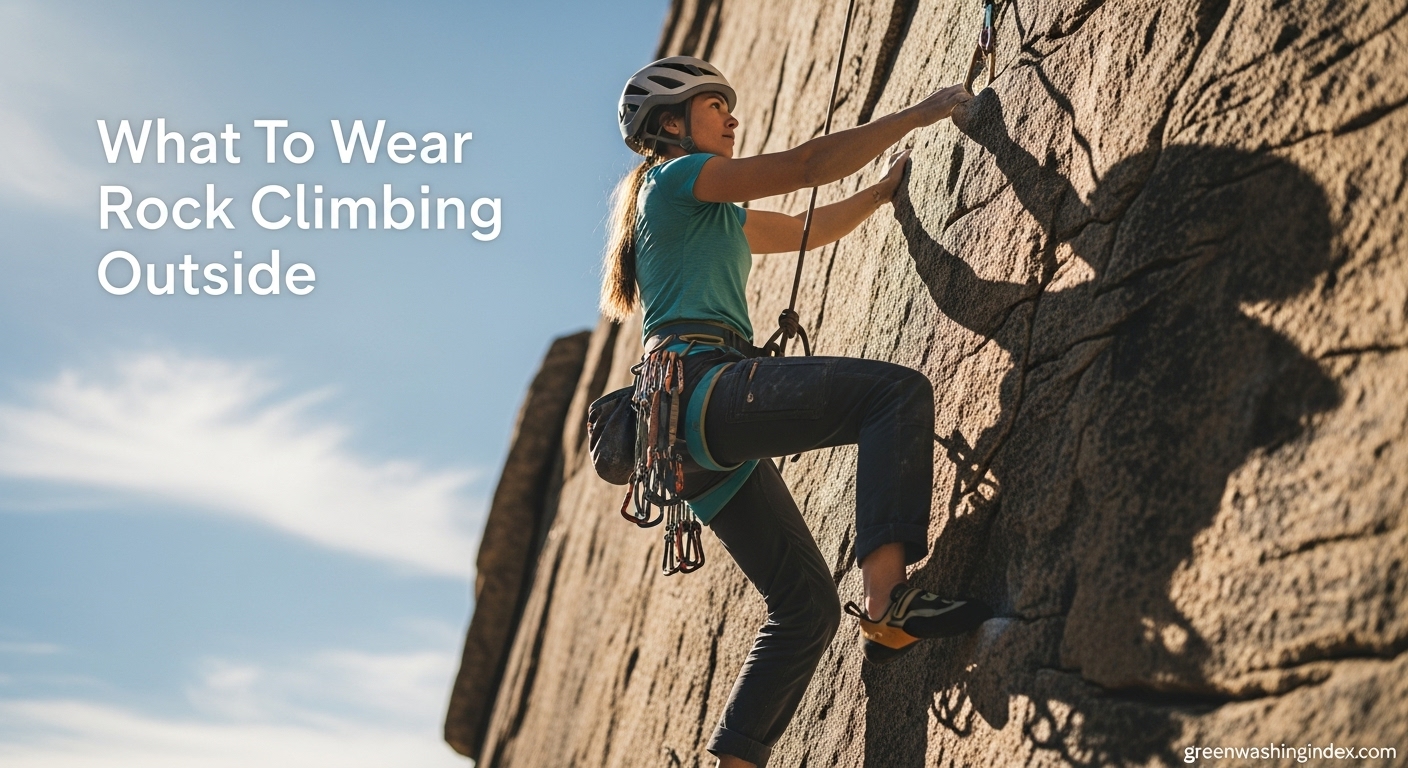
I’ve spent countless days at crags watching climbers struggle with clothing choices. The guy shivering in his cotton t-shirt at the belay station. The beginner overheating in heavy denim. The experienced climber whose expensive “eco-friendly” pants disintegrated after three months.
After eight years of climbing and researching outdoor gear sustainability, I’ve learned that what you wear rock climbing outside matters for both performance and the planet. Most guides tell you what to buy but rarely discuss the environmental impact of those choices.
Wear moisture-wicking, stretchy clothing that allows full range of motion, protects against sun and weather, and dries quickly when you sweat or get caught in rain. The ideal climbing outfit prioritizes comfort, durability, and unrestricted movement over style.
This guide covers everything from basic layering systems to identifying greenwashing in outdoor apparel. You’ll learn how to choose climbing clothing that performs well while minimizing environmental harm.
Quick Summary: Your climbing outfit should balance comfort, mobility, and weather protection. Focus on technical fabrics that manage moisture and provide stretch, plus consider the environmental impact of your choices.
Climbing places unique demands on clothing. You need gear that stretches for high steps, withstands abrasion against rock, and manages sweat during intense physical effort. Unlike gym climbing, outdoor conditions add weather variables that make proper clothing essential for both comfort and safety.
Climbing pants are your most critical piece of clothing. They need to stretch for high steps and drop knees, withstand abrasion from rough rock, and stay comfortable under a harness. Look for pants with at least 10% elastane or spandex for stretch, reinforced knees for durability, and a gusseted crotch for unrestricted movement.
I’ve tested dozens of climbing pants over the years. Forum discussions consistently highlight durability as the #1 concern with many climbers reporting knee blowouts after just a few months. The best climbing pants balance stretch, durability, and environmental responsibility.
For hot weather, choose shorts that hit above the knee but not so short that you’re flashing your belayer on every high step. Many climbers prefer longer shorts or convertibles for sun protection and rock abrasion resistance.
Your top needs to manage moisture and provide unrestricted arm movement. Synthetic blends or merino wool work best. Cotton should be avoided except in perfect weather conditions. Look for flatlock seams that won’t chafe under a harness and sleeves that don’t ride up when reaching overhead.
Sports bras for women climbers need to stay in place during dynamic movement and provide support without restriction. Many climbers prefer racerback styles that won’t interfere with harness or backpack straps.
Climbing-specific underwear may seem excessive but makes a real difference. Look for seamless options that won’t cause chafing under a harness and moisture-wicking fabrics to prevent discomfort during long climbing days. For cold conditions, base layers should be snug but not restrictive.
Avoid cotton underwear at all costs. The “cotton kills” rule applies here too. Once cotton gets wet with sweat, it stays wet, cold, and uncomfortable.
Don’t forget sun protection. A brimmed hat or cap keeps sun off your face and out of your eyes. Sunglasses with good coverage protect your eyes at exposed crags. In cooler conditions, a lightweight beanie makes a huge difference during belay stints.
The best fabric for climbing clothes depends on conditions and priorities. Synthetic fabrics (polyester, nylon) excel at moisture-wicking and durability but shed microplastics. Merino wool offers natural odor resistance and temperature regulation but costs more. Sustainable options include recycled synthetics, organic cotton blends, and innovative materials like hemp that balance performance with environmental impact.
| Fabric Type | Pros | Cons | Environmental Impact |
|---|---|---|---|
| Polyester | Excellent moisture-wicking, quick-drying, durable, affordable | Odor retention, microplastic shedding, petroleum-based | High – derived from fossil fuels, sheds microfibers in wash |
| Nylon | Very durable, excellent stretch, abrasion-resistant | Less breathable than polyester, absorbs some moisture | High – petroleum-based, energy-intensive production |
| Merino Wool | Naturally odor-resistant, temperature-regulating, soft | Expensive, less durable, can shrink if not cared for | Low – renewable, biodegradable, but sheep have methane impact |
| Recycled Polyester | All polyester benefits plus reduced waste, same performance | Still sheds microplastics, limited recycling infrastructure | Moderate – reduces plastic waste but creates microfiber pollution |
| Organic Cotton | Soft, comfortable, biodegradable, no microplastics | Poor moisture management, heavy when wet, limited stretch | Low – no synthetic chemicals, biodegradable, but water-intensive |
| Hemp Blends | Durable, breathable, antimicrobial, low pesticide needs | Can be coarse, limited availability, higher cost | Very Low – fast-growing, minimal chemicals, soil-enriching |
Moisture-Wicking: The ability of fabric to pull sweat away from your skin and spread it across the fabric surface for faster evaporation. This keeps you dry and comfortable during physical activity like climbing.
Forum discussions reveal strong opinions on fabrics. Many climbers report synthetic clothing developing persistent odors after just a few uses. Others swear by merino wool for multi-day trips despite the higher cost. The key is matching fabric to your priorities and conditions.
⚠️ Important: Every time you wash synthetic climbing clothing (polyester, nylon), it releases thousands of microfibers that eventually reach our oceans. A single fleece jacket can shed up to 250,000 microfibers per wash.
Research published in Nature Sustainability and Science Advances has confirmed that synthetic textiles are a major source of microplastic pollution. Your climbing clothes are part of this problem. When you wash that polyester climbing shirt or nylon pants, microfibers break off and bypass water treatment plants, eventually reaching aquatic ecosystems.
Solutions include washing less frequently, using microfiber capture bags, choosing natural fibers when possible, and supporting brands developing biodegradable synthetics. No current climbing clothing eliminates this issue entirely, but awareness is the first step.
Bouldering requires maximum freedom of movement since you’re constantly dynamic and often upside down. Shorts or very stretchy pants work best. You’ll be on the ground a lot, so durable fabric that can handle scraping against rock is valuable. Many boulderers prefer lighter, more casual clothing since there’s no harness to contend with.
The environmental angle here is interesting. Bouldering pads use significant foam and materials, but the clothing itself is minimal. Consider versatile pieces that transition from crag to casual wear to reduce your overall clothing consumption.
Sport climbers need clothing that works with a harness and allows extended time on the wall. Pants with a harness-friendly waistband (no bulky belts) and adequate stretch for high steps are essential. Since you’re hanging at belays, bring a lightweight jacket or extra layer you can easily put on while tied in.
Durability is key here. Forum consensus shows that many lightweight climbing pants wear out at the knees after just a few months of regular use. Heavier fabrics may cost more but last longer, reducing overall consumption and waste.
Traditional climbing demands more from your clothing due to longer routes, more complex gear handling, and variable conditions. You need durability for chimneys and off-widths, pockets for rack management (some trad-specific pants feature gear loops), and layers for multi-pitch environments.
Trad climbers often spend entire days on the wall. Your clothing choices affect not just comfort but safety. Restricted movement from poor clothing choices can lead to pumped arms and dangerous situations.
Ice climbing and alpine routes require a completely different approach. Warmth becomes critical, and the layering system is non-negotiable. You need waterproof breathability, insulation that works when wet, and clothing that accommodates a harness plus additional gear.
The environmental impact is higher here too. More specialized clothing means more items with shorter useful lives. Consider whether you truly need specialized ice climbing gear or if your regular climbing clothing plus smart layering can suffice for moderate conditions.
A layering system is a strategic approach to wearing multiple thin layers rather than one thick garment. This allows you to add or remove layers as conditions change, maintaining comfort across a range of temperatures and activity levels. For climbers, this means staying warm during belays without overheating while climbing.
Quick Summary: The three-layer system (base, mid, outer) provides maximum versatility. Base layers manage moisture, mid layers provide insulation, and outer layers protect from wind and precipitation. Adjust your combination based on conditions and activity level.
💡 Pro Tip: Many climbers make the mistake of bringing too much clothing. A versatile layering system with three quality pieces outperforms a backpack full of redundant items. Focus on layers that work together rather than maximizing quantity.
The key to effective layering is versatility. Each layer should work independently and in combination with others. This approach reduces the total number of items you need while increasing your comfort range across conditions.
Greenwashing: Marketing practices that make products appear more environmentally friendly than they actually are. In outdoor apparel, this includes vague eco-claims, exaggerated benefits of recycled materials, and hiding negative environmental impacts behind positive messaging.
The outdoor industry loves to market sustainability. But how much of it is real? After analyzing dozens of brands and their environmental claims, I’ve found significant variation in what “eco-friendly” actually means.
“Made with recycled materials” sounds great but doesn’t tell the whole story. Recycled polyester still sheds microplastics and often comes from plastic bottles that would have been recycled anyway. The environmental benefit is real but limited.
“Sustainable collection” from major brands might represent less than 5% of their overall production. Meanwhile, they continue manufacturing thousands of petroleum-based garments. This selective sustainability is classic greenwashing.
I’ve seen brands claim “eco-friendly” materials while ignoring production processes, chemical use, and labor conditions. True sustainability requires transparency across the entire supply chain, not just marketing-friendly materials.
| Certification | What It Covers | How Verified | Limitations |
|---|---|---|---|
| bluesign® SYSTEM | Chemical management, resource productivity, emissions | Third-party audit of entire production chain | Focuses on production, not end-of-life or labor |
| GOTS (Global Organic Textile Standard) | Organic fibers, ecological and social criteria | Third-party certification from field to finished product | Only applies to organic materials, not synthetics |
| Fair Trade Certified | Fair wages, safe working conditions, community development | Third-party audit of facilities and labor practices | Labor-focused only, doesn’t address environmental impact |
| OEKO-TEX® Standard 100 | Harmful substance testing, skin safety | Independent laboratory testing | Chemical safety only, doesn’t address production ethics |
| GRS (Global Recycled Standard) | Recycled content verification, chain of custody | Third-party verification of recycled materials | Doesn’t address microfiber pollution from recycled synthetics |
These certifications provide meaningful verification but don’t tell the whole story. A GOTS-certified organic cotton shirt still requires thousands of liters of water to produce. A Fair Trade garment made from virgin polyester still contributes to microplastic pollution. Look for multiple certifications when possible, and remember that no certification is perfect.
Some brands genuinely prioritize sustainability. Patagonia stands out for detailed environmental reporting, repair programs, and honest acknowledgment of their impact. However, even they face criticism for continued growth in production.
Forum discussions consistently mention Patagonia, Edelrid, and smaller brands like Moon Climbing for genuine sustainability efforts. But community members also express confusion about which claims are real versus marketing.
“I can’t tell which eco-friendly claims are real vs marketing. Every brand says they’re sustainable now.”
– Reddit r/climbing community member
Look for brands that publish detailed sustainability reports, acknowledge their shortcomings, and set measurable goals. Vague claims without specific data or third-party verification should be viewed skeptically.
This is the uncomfortable truth: durable clothing often relies on synthetic materials that have higher environmental impact. A pair of climbing pants made from recycled polyester that lasts five years might be better than organic cotton pants that wear out in six months.
Forum complaints about knee blowouts on lightweight climbing pants highlight this issue. Replacing pants every few months increases your overall environmental impact more than buying one durable pair that lasts several seasons.
The most sustainable climbing clothing is what you already own. Thrift store options can work surprisingly well. One Reddit user reported excellent results with $7 thrift store joggers, contradicting the “cotton kills” dogma for moderate conditions.
✅ Pro Tip: Before buying new climbing clothing, check thrift stores, gear swaps, and online marketplaces. Used clothing has zero additional production impact and often costs 10-20% of retail. Many climbing communities organize gear exchanges where you can find quality items at fraction of the cost.
You don’t have to choose between performance and environmental responsibility. Here’s how to make better climbing clothing choices:
Summer climbing demands sun protection and breathability. Lightweight synthetic or merino tops, shorts or lightweight pants, and a hat are essential. UPF-rated clothing provides better sun protection than sunscreen and doesn’t sweat off.
Light colors reflect sunlight and keep you cooler. Some climbers prefer sleeveless tops but risk shoulder sunburn on extended routes. Consider sun sleeves or a lightweight long-sleeve shirt with ventilation.
Cold conditions require your full layering system. Start with a proper base layer, add substantial insulation (fleece or synthetic), and bring a waterproof shell. An insulated belay jacket makes a huge difference during long breaks.
Extremities matter. A thin beanie, light gloves, and neck gaiter can be removed while climbing but add crucial warmth during belays. Avoid cotton entirely in cold conditions. When cotton gets wet with sweat, it loses all insulating value and draws heat away from your body.
Spring and fall climbing often involve temperature swings of 30°F or more. Plan your layering system around this reality. A light base layer, versatile midlayer, and packable shell give you the most flexibility.
For approaches and descents, you might want different clothing than for the climb itself. Many climbers change at the base, adding a light jacket for the approach and switching to climbing-specific layers for the route.
🚫 Critical Warning: Never wear cotton (especially jeans) for serious outdoor climbing. Cotton absorbs water, loses insulating value when wet, and takes forever to dry. In cold conditions, wet cotton contributes to hypothermia risk. “Cotton kills” is a cliche for a reason.
Besides cotton, avoid restrictive clothing that limits your movement. Skinny jeans, stiff fabrics, and clothing without stretch will make climbing harder and less enjoyable. Your clothing should never be the limiting factor in your climbing performance.
Avoid dangling items that can catch on rock or equipment. Long scarves, loose drawstrings, and excessive accessories create safety hazards. Keep your climbing clothing simple and streamlined.
For versatile hiking pants that can work for casual climbing, look for articulated knees and stretch panels. Not all hiking pants work for climbing, but some make excellent budget alternatives.
If you’re just starting, you don’t need to buy a full climbing wardrobe. Many climbers successfully use existing gym clothes or hiking apparel. Athletic shorts, moisture-wicking t-shirts, and light layers work fine for most beginner climbing scenarios.
The one item worth investing in early is proper climbing pants or shorts. Regular athletic pants often lack the durability and stretch for climbing. A good pair of climbing pants makes a noticeable difference in comfort and performance.
Before buying new climbing clothing, check what you already own. Running shorts, yoga pants, and athletic tops often work perfectly well for beginner climbing. Upgrade gradually as you identify specific needs.
Wear moisture-wicking, stretchy clothing that allows full range of motion. Essential items include climbing pants or shorts with stretch, a breathable synthetic or merino top, a light midlayer for belay breaks, and a windbreaker or shell for weather protection. Avoid cotton as it retains moisture and loses insulating value when wet.
You likely already have suitable clothing. Wear athletic shorts or leggings with stretch, a moisture-wicking t-shirt, and comfortable athletic shoes. Bring a light jacket or hoodie for cool periods. Avoid jeans and cotton clothing. Most gym clothes work fine for your first few outdoor climbing experiences.
Jeans are not recommended for serious climbing due to limited stretch and poor moisture management. However, for casual bouldering or top-roping in good conditions, stretchy athletic jeans can work. Traditional denim jeans restrict movement, stay wet when sweaty, and make climbing more difficult than necessary.
Specialized climbing clothing offers benefits but isn’t absolutely necessary. Athletic wear with good stretch and moisture-wicking properties works fine for beginners and casual climbers. As you climb more regularly, investing in proper climbing pants and layers improves comfort and performance but isn’t required to start.
Polyester and nylon blends with elastane provide the best combination of stretch, durability, and moisture management. Merino wool offers excellent odor resistance and temperature regulation but costs more. Recycled synthetics perform identically to virgin materials while reducing waste. Avoid cotton except in perfect conditions.
Cotton absorbs moisture and loses all insulating value when wet. During climbing, cotton clothing becomes saturated with sweat, leaving you cold, clammy, and uncomfortable. In cold conditions, wet cotton contributes to hypothermia risk. Cotton also dries very slowly, meaning wet clothes stay wet all day.
Summer climbing requires lightweight, breathable clothing with sun protection. Wear shorts or lightweight pants, a moisture-wicking short-sleeve or long-sleeve top, and a sun hat. UPF-rated clothing provides better protection than sunscreen. Bring a light layer for shaded belays and altitude changes.
Winter climbing demands a full layering system. Start with a synthetic or wool base layer, add an insulating midlayer (fleece or synthetic), and carry a waterproof shell. An insulated belay jacket provides crucial warmth during breaks. Cover extremities with a thin beanie, light gloves, and neck gaiter. Avoid cotton entirely.
The right climbing clothing makes your time at the crag more comfortable and allows you to focus on the climbing rather than adjusting your gear. But your choices also have environmental consequences that most guides ignore.
After testing dozens of options and analyzing industry sustainability claims, I’ve found that the most sustainable approach balances durability, material impact, and thoughtful consumption. Sometimes that means buying certified recycled materials. Other times it means buying used or repairing what you already own.
The outdoor industry has a long way to go on genuine sustainability. By understanding greenwashing, recognizing meaningful certifications, and making informed choices, you can support brands that are actually making progress while reducing your own environmental footprint.
Climbers spend so much time in nature. It’s worth considering how our clothing choices affect the places we love to climb.
