
Standing at the ski shop counter with dusty bases and wondering if this winter maintenance will drain your wallet? You’re not alone. I’ve watched countless skiers debate between paying for professional service or attempting DIY waxing in their garage, trying to calculate the real cost per ski day.
Ski waxing typically costs $15-40 for basic hot wax services, with full professional tunes ranging from $60-85. Quick machine waxes start at $10-20, while premium services like DPS Phantom treatment cost $130-205. For frequent skiers, a DIY waxing kit ($30-200) pays for itself in just 3-4 applications.
After tracking shop prices across seven states and waxing my own gear for 15 seasons, I’ve found the real cost depends on service level, location, and frequency. Let me break down exactly what you should pay in 2026 and help you decide between shop services and DIY.
Ski shops offer different service levels at varying price points. Understanding what each service includes helps you avoid overselling or under-maintaining your equipment.
| Service Type | Price Range | Duration | What’s Included |
|---|---|---|---|
| Quick / Belt Wax | $10-20 | 15-30 minutes | Machine-applied wax, no scraping |
| Hot Wax (Hand) | $25-40 | 1-2 hours | Iron-applied, scraped, brushed |
| Edge & Wax | $40-55 | 1-2 hours | Edge sharpening + hot wax |
| Full Tune | $60-85 | 1-3 days | Base grind, edges, wax, structure |
| Major Tune | $80-120 | 2-4 days | Full tune + P-tex repairs |
| Phantom Treatment | $130-205 | Permanent | DPS Phantom permanent base treatment |
Quick waxes use a belt machine that applies wax to the base without heat penetration. The process takes 15 minutes and costs $10-20 at most shops. I’ve used these before trips when pressed for time.
The wax sits on the surface rather than penetrating the base pores. You’ll get 1-2 days of decent glide before it wears off. For casual skiers hitting the slopes once or twice a season, this might suffice.
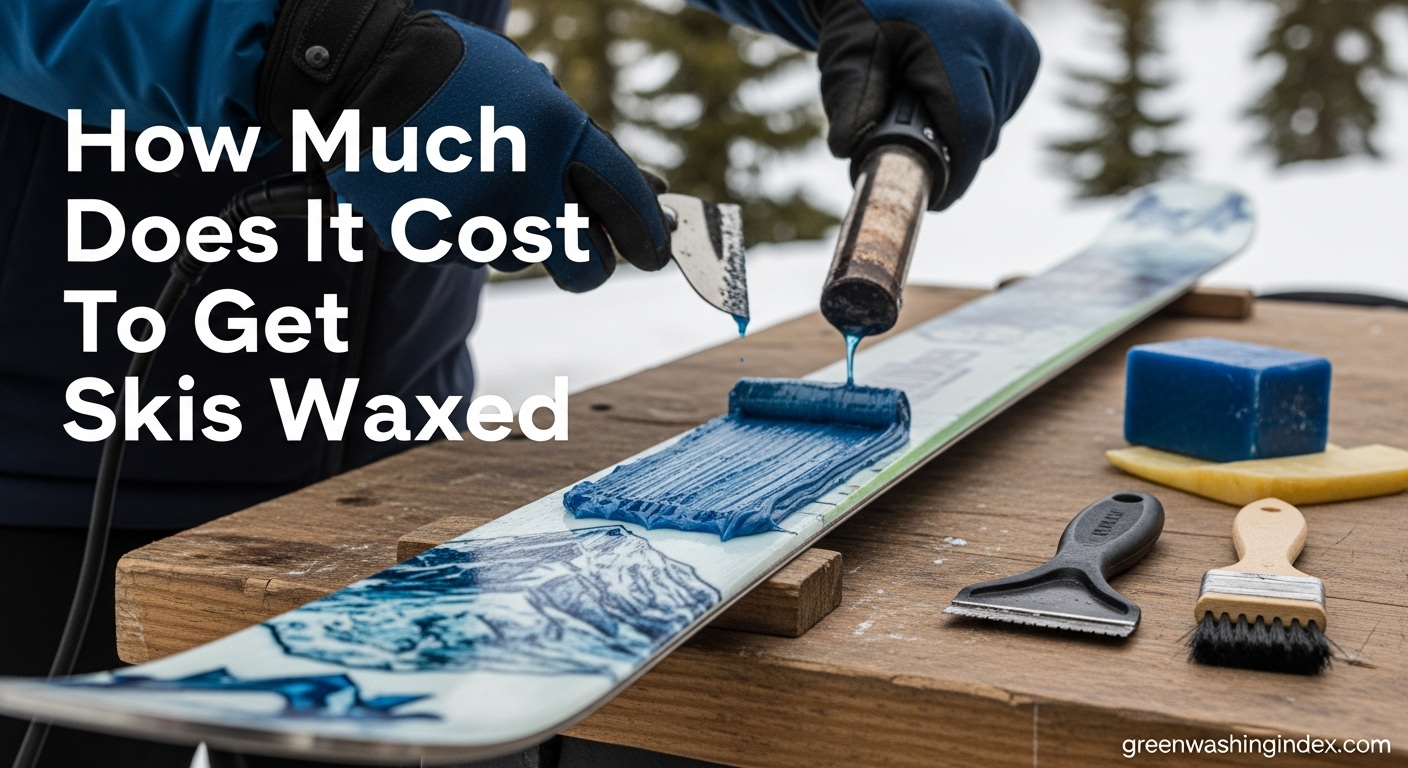
Hand-applied hot wax costs $25-40 and represents the standard shop service. Technicians use a waxing iron to melt wax into the base pores, let it cool, then scrape and brush for optimal glide.
This method lasts 4-6 ski days depending on snow conditions. I consistently get better performance and base protection from hot waxes compared to quick applications. Most recreational skiers find this service hits the sweet spot between cost and durability.
At $60-85, a full tune includes base grinding, edge sharpening, wax application, and structure patterning. Shops typically need 1-3 days for turnaround due to equipment scheduling.
I recommend full tunes at season start and after damaging trips with rocky snow. The base grind removes minor scratches, while freshly sharpened edges improve control on hardpack. Consider this maintenance insurance for your investment.
Why does one shop charge $30 for hot wax while another asks $45? After interviewing shop owners across Colorado, Utah, and Vermont, I’ve identified the key factors driving price variations.
Mountain resort shops typically charge 25-40% more than local shops in town. A hot wax costing $35 at a village shop might run $25 at a shop 20 miles away.
The premium reflects rent costs, captive audience, and specialized labor. Resort shops often employ certified technicians with higher hourly rates. I’ve saved significant money by dropping skis at local shops before driving to the mountain.
Peak season (December-February) brings higher prices and longer wait times. Some shops add $5-10 for rush services during holiday weeks.
Off-season waxing (April, May, October) often includes discounts. I’ve found shops eager for business in shoulder months will sometimes waive rush fees or include minor edge work at no charge.
Heavily damaged bases require P-tex repairs before waxing. Most shops charge $5-15 per repair plus standard waxing fees.
I once paid $75 for what I thought was a basic tune, but core shots and deep scratches required extensive P-tex work. Always ask for a price estimate before leaving your gear if you suspect base damage.
PFAS-free and plant-based waxes typically cost 15-30% more per application. Some shops pass this cost to customers, while others absorb it as part of their sustainability commitment.
I’ve noticed premium eco-waxes adding $5-10 to service prices. We’ll explore whether this upcharge delivers real environmental value later in this guide.
Should you wax your own skis? After 15 seasons of home waxing and countless conversations with shop technicians, I can break down the real economics.
| Factor | Professional Service | DIY at Home |
|---|---|---|
| Initial Investment | $0 | $30-200 for equipment |
| Cost Per Application | $25-40 | $3-8 for wax |
| Time Required | Drop off/pick up (1-2 days) | 45-60 minutes |
| Quality | Consistent, professional equipment | Varies with experience |
| Convenience | Hands-off, shop does work | Requires time and workspace |
Basic waxing kits start around $30 and include wax, scraper, and brush. You’ll need to add a waxing iron ($25-60) for proper temperature control.
I spent $120 on my initial setup: iron, temperature-specific waxes, scraper, nylon brush, and cork. After five waxing sessions, I’d broken even compared to shop prices. Now my per-wax cost is roughly $5 for wax alone.
With professional hot waxing at $30-40 per application, DIY equipment pays for itself quickly. Here’s the math I use with friends considering home waxing:
Break-Even Calculator: At $35 per shop wax, a $120 DIY kit breaks even after 4 applications. If you wax 6 times per season, you’ll save $90 annually after the first year. Over five seasons, that’s $450 in savings.
Professional shops use stone grinders, edge bevel tools, and infrared waxing systems that most home tuners can’t justify. For major tune work, shops deliver superior results.
For routine waxing between tunes, I’ve found my DIY work matches shop quality. The key is using proper iron temperature and scraping technique. Watch tutorials from reputable sources before attempting your first hot wax.
Each DIY waxing session takes me 45-60 minutes from setup to cleanup. This includes cleaning bases, applying wax, cooling, scraping, brushing, and waxing edges for rust protection.
Shop services require driving to drop off and pick up, plus waiting 1-3 days for completion. I prefer home waxing for mid-season touch-ups and use shops for beginning-of-season full tunes.
Here’s where most cost guides stop and the real conversation begins. Traditional ski wax contains chemicals that impose environmental costs far beyond the price tag. As someone who cares about sustainable winters, I’ve researched this extensively.
PFAS (Per- and Polyfluoroalkyl Substances): Synthetic chemicals called “forever chemicals” because they don’t break down in nature. Used in ski wax for glide performance, PFAS bioaccumulate in wildlife and humans, linked to health issues including cancer and immune system damage.
Fluorocarbon waxes dominated high-performance skiing for decades. These PFAS-based products delivered unmatched speed but contaminated snowpack and waterways. Studies show elevated PFAS levels near ski areas using these waxes.
As environmental awareness grew, brands rushed to market “eco-friendly” alternatives. But not all claims withstand scrutiny. I’ve investigated several common greenwashing tactics:
Warning: “Natural” wax labels often mean nothing specific. Many hydrocarbon waxes derive from petroleum but market themselves as “natural” compared to fluorocarbons. Look for “plant-based” or “biodegradable” certifications from third-party organizations.
The Center for Environmental Health has identified several brands exaggerating eco-credentials. Without ingredient disclosure and independent verification, “eco-friendly” claims may be marketing rather than meaningful sustainability.
After cross-referencing CEH recommendations, independent testing, and ingredient transparency, I recommend these verified eco-brands:
These brands cost more upfront but avoid the hidden environmental toll of PFAS contamination. When shops charge extra for eco-wax, they’re often passing through legitimate material costs rather than greenwashing premiums.
Traditional wax at $15 seems economical compared to eco-options at $20-25. But this calculation ignores externalized costs: water treatment for PFAS removal, wildlife remediation, and healthcare impacts.
Research suggests the true cost of PFAS contamination runs into billions nationally. When we choose cheap fluorocarbon wax, we’re passing costs to communities downstream and future generations who’ll deal with persistent contamination.
California, Colorado, Vermont, and several other states have enacted PFAS bans taking effect through 2026. These regulations impact ski wax availability and pricing.
Shops in regulated states have transitioned inventories, sometimes at significant cost. This explains some regional price variations. The regulatory pressure also drives innovation, with plant-based waxes narrowing the performance gap with traditional options.
“The ski industry is moving away from PFAS not just because of regulations, but because athletes and consumers demand safer alternatives that don’t compromise performance.”
– Center for Environmental Health, PFAS-Free Ski Wax Initiative
Waxing frequency affects your annual maintenance budget. Based on 20 seasons of experience and shop technician recommendations, here’s a practical guide:
Watch for these signs your skis need waxing: visible white patches on bases, sluggish glide on flat terrain, or bases feeling dry to the touch. I wax whenever I notice decreased performance rather than following a strict schedule.
I recommend a professional full tune at season start, then DIY touch-ups every 4-6 days on snow. This approach maximizes performance while controlling costs.
End-of-season waxing before summer storage prevents base oxidation. A thick wax layer left unscraped protects bases during off-season storage. Most shops offer storage wax discounts in April and May.
Thinking in cost-per-ski-day helps justify maintenance spending. A $35 hot wax spread over 6 ski days costs less than $6 per day of improved performance and base protection.
Compared to lift tickets, equipment, and travel, waxing represents a small fraction of your skiing budget. Well-maintained bases also extend ski life, delivering better value from your equipment investment.
Here are answers to common questions about ski waxing costs and decisions:
Professional waxing is worth it for most skiers due to superior equipment, expertise, and consistent results. Shops use infrared waxing systems, stone grinders, and precision edge tools that home tuners rarely justify. However, DIY waxing becomes economical after 4-5 applications per season, making it attractive for frequent skiers willing to learn proper technique.
A properly applied hot wax typically lasts 4-6 ski days depending on snow conditions and skiing style. Abrasive spring snow wears wax faster than cold winter powder. Rub-on waxes last 1-2 days maximum. Performance declines gradually, so you might not notice until you’re sliding sluggishly on cat tracks or feeling base drag on flat terrain.
Using a household iron for ski waxing risks damaging both the iron and your skis. Clothes irons don’t maintain consistent temperatures needed for wax application and can permanently contaminate with wax residue. Dedicated waxing irons cost $25-60 and provide temperature control essential for proper wax absorption. Consider this a necessary investment for DIY waxing.
Resort shops charge 25-40% more than local shops due to higher rent, specialized labor costs, and captive customer base. Certified technicians in mountain towns command premium wages due to cost of living. Additionally, resort shops invest in specialized equipment like stone grinders and infrared waxers that smaller shops may not offer. Save money by using local shops for routine maintenance.
Eco-friendly ski waxes typically cost 15-30% more per application than traditional options. Plant-based waxes from verified brands like Mountain Flow, Purl, and Green Ice carry premium pricing due to sustainable sourcing and independent testing. However, the price gap is narrowing as PFAS regulations take effect and production scales. Consider the environmental cost of traditional wax when evaluating the true price difference.
Some resorts include waxing benefits with season passes, particularly premium passes. Check your pass benefits for specific inclusions. Independent shops near resorts sometimes offer pass holder discounts (10-20% off) to build customer relationships. If you ski frequently, these discounts can significantly reduce your annual maintenance budget and may justify pass upgrades.
After analyzing shop prices across multiple regions and years of personal experience with both professional services and DIY waxing, here’s my practical guidance for 2026:
Start with a professional full tune ($60-85) at season beginning to establish a proper base and edge geometry. Use verified eco-friendly waxes to avoid PFAS contamination. For mid-season maintenance, consider DIY waxing if you ski more than 15 days per year.
A quality waxing kit pays for itself quickly, but shops deliver irreplaceable value for comprehensive tune work. Balance convenience with cost savings while choosing environmentally responsible options that protect the winters we all love.
For more information on sustainable practices and responsible equipment recycling, explore our other guides on environmentally conscious consumer choices. Waxing kits also make practical DIY gift ideas for the skiers in your life.
Ski well, wax responsibly, and protect our winters for future generations.
