
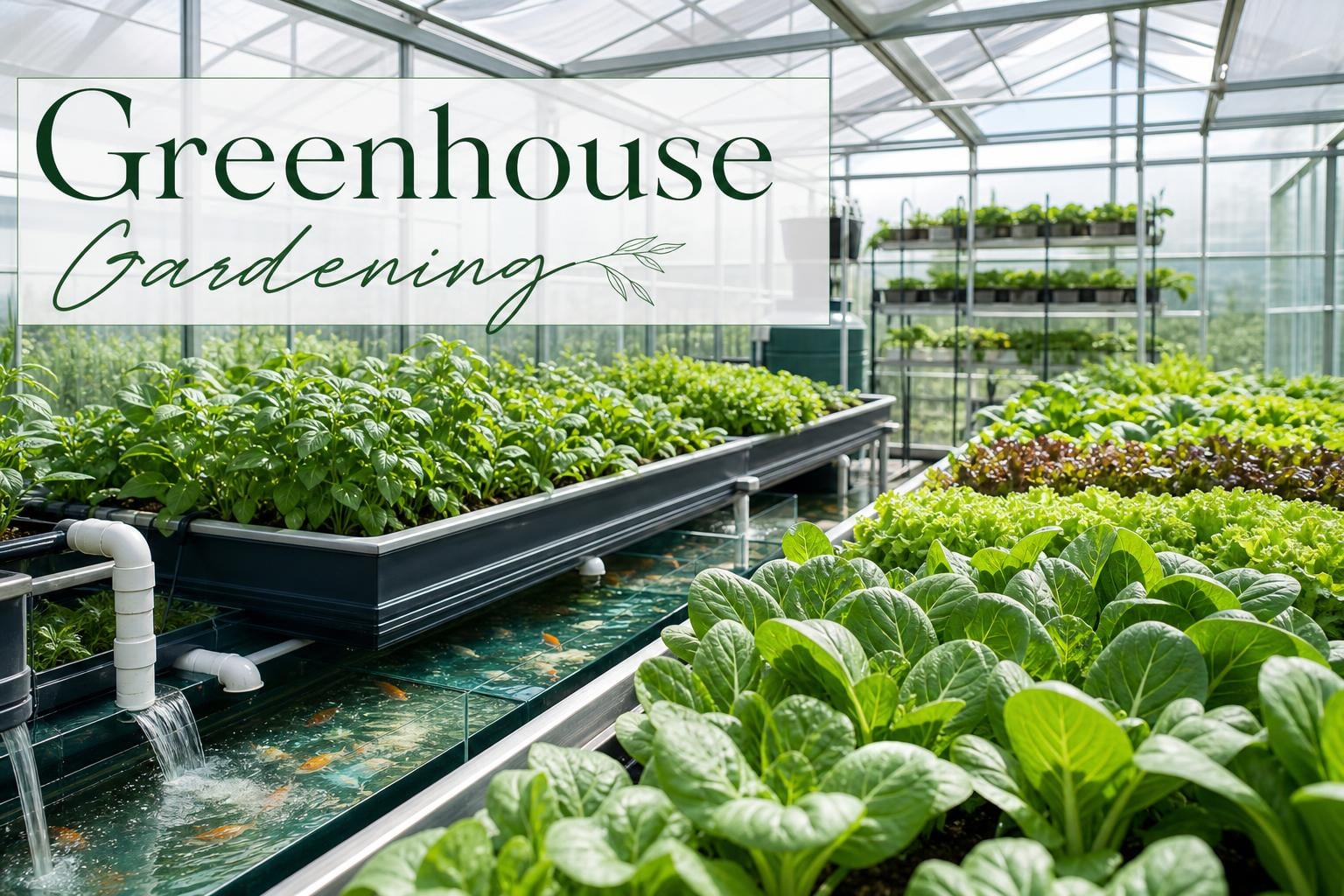
Greenhouse gardening is the practice of cultivating plants inside a transparent or translucent structure that captures sunlight, traps heat, and creates a controlled growing environment. This method lets gardeners extend their growing season by several months, protect crops from frost and pests, and produce fresh food year-round regardless of outside temperatures. Greenhouses range from simple hoop houses to sophisticated glass structures with automated climate controls.
Taking it a step further, greenhouse gardening can be combined with aquaponics — a closed-loop system where fish provide natural fertilizer for plants, and plants filter and clean the water for fish in return. This integration is one of the most efficient and sustainable approaches to food production available to home growers, homesteaders, and small-scale farmers alike. The combination creates a self-sustaining ecosystem that uses up to 90 percent less water than traditional soil gardening.
Whether you are a complete beginner looking to start your first greenhouse or an experienced gardener interested in adding an aquaponics system, this guide covers everything from selecting the right structure to managing water quality and scaling up. You will learn about different greenhouse types, climate control strategies, seasonal growing schedules, and the specific steps to build and maintain a thriving aquaponics greenhouse.
The global demand for locally grown, chemical-free produce continues to rise, and greenhouse gardening with aquaponics offers a practical response to that demand. By the end of this guide, you will have a clear roadmap for creating a productive growing space that delivers consistent harvests while conserving water and reducing environmental impact.
Before diving into the technical details, it helps to understand the core principles that make greenhouse gardening so effective. A greenhouse works by using the greenhouse effect — sunlight enters through the glazing material and is absorbed by surfaces inside, which then radiate heat back as infrared energy. The transparent walls trap this heat, keeping temperatures warmer than the outside air even during winter months.
At its simplest, greenhouse gardening means growing plants inside an enclosed structure with transparent walls and roof. This enclosure uses the sun’s energy to create a warmer, more stable environment than the outdoors provides. The result is a growing space where temperature, humidity, and light can be managed to support plant health throughout the year.
The greenhouse effect is the scientific principle behind this approach. Shortwave radiation from sunlight passes through the glazing material and warms the soil, plants, and other surfaces inside. These surfaces then release longwave infrared radiation, which cannot easily escape through the glass or plastic. The trapped heat raises the internal temperature, often by 20 to 30 degrees Fahrenheit above outside conditions.
Beyond season extension, greenhouse gardening offers several practical advantages. Plants are shielded from extreme weather, including heavy rain, strong winds, hail, and freezing temperatures. The enclosed environment also acts as a barrier against many common garden pests and diseases, reducing the need for chemical interventions. Gardeners can start seeds earlier in spring, grow heat-loving crops through summer, and continue harvesting into late fall or even winter depending on the climate.
Choosing the right greenhouse structure is one of the most important decisions you will make. The type you select determines how well your greenhouse holds heat, resists weather, and fits into your available space. Material, shape, and foundation style all play a role in how well a greenhouse performs in your specific climate.
Glass greenhouses remain the standard for durability and light transmission. Tempered or twin-wall glass provides excellent clarity, allowing up to 90 percent of sunlight to reach your plants. Glass resists scratches and degradation over time, making it a long-lasting option. The main drawbacks are higher cost and fragility — impact from hail or stray projectiles can crack or shatter panels.
Polycarbonate greenhouses have become increasingly popular for home growers. Twin-wall polycarbonate panels consist of two sheets with an air gap between them, providing good light transmission while offering better insulation than single-layer options. Polycarbonate is also much lighter than glass and far more impact-resistant, which matters in areas with severe weather. Over time, polycarbonate may yellow slightly, but most manufacturers rate their panels for 10 to 15 years of outdoor use.
Hoop houses represent a budget-friendly entry point into greenhouse gardening. These structures use a series of curved metal or plastic pipes covered with greenhouse plastic film. A basic hoop house can be built for a fraction of the cost of a glass or polycarbonate greenhouse, and the curved design sheds snow and wind efficiently. The trade-off is shorter lifespan for the covering material and less precise temperature control.
A lean-to greenhouse attaches to an existing building wall, making it ideal for spaces with limited yard area. This style uses the building’s wall as one side of the structure, reducing material costs and construction complexity. These structures benefit from the thermal mass of the adjacent wall, which helps stabilize nighttime temperatures.
Geodesic dome greenhouses use a spherical framework covered with glazing material to create an efficient growing space. The dome shape maximizes interior volume relative to surface area, which improves heat retention and air circulation. The curved panels also shed snow and wind more effectively than traditional rectangular designs. Geodesic greenhouses are particularly well-suited for colder climates and for growers who want an efficient, eye-catching structure.
For those with limited space or budget, portable greenhouses offer flexibility. These lightweight frames with polyethylene covers can be moved as needed and set up quickly. They work well for seed starting, protecting tender plants, or growing a small selection of greens and herbs through cooler months. An attached greenhouse to house provides another option for gardeners who want to integrate growing space directly with their living area for easier monitoring and maintenance.
Site selection can make or break your greenhouse experience. A poorly positioned structure will struggle with insufficient light, wind damage, or temperature extremes no matter how well it is built. Taking the time to evaluate your site before construction saves significant frustration and expense down the road.
Sun exposure ranks as the top priority. In the northern hemisphere, a south-facing orientation captures the most consistent sunlight throughout the year. Aim for a site that receives at least six hours of direct sun during winter months. Watch for shadows cast by nearby trees, buildings, or fences that could block light during critical growing periods. For indoor greenhouse options, a bright south-facing window or sunroom can substitute for a standalone structure when outdoor space is limited.
Wind protection matters more than many new growers realize. Strong winds can tear covering material from frames, cool the greenhouse rapidly, and stress plants through increased transpiration. A natural windbreak such as a dense hedge, fence, or building on the windward side provides effective shelter. If you must install a windbreak, use a permeable barrier that deflects wind rather than blocking it entirely, which can create damaging turbulence.
Accessibility deserves serious consideration. You will visit your greenhouse frequently for watering, harvesting, and maintenance tasks. A site close to your home ensures you can check on plants during extreme weather or respond quickly to equipment failures. Proximity to a water source simplifies irrigation setup and reduces the effort needed to transport water.
A solid foundation keeps your greenhouse anchored, level, and protected from moisture intrusion. Concrete block foundations provide a durable base that works well for larger structures and resists frost heave in cold climates. Wood foundations using pressure-treated lumber offer a simpler alternative for smaller setups. Inside the greenhouse, pea gravel over a weed barrier fabric creates a clean, well-drained floor that suits both traditional and aquaponic growing methods.
Managing temperature, humidity, and airflow defines successful greenhouse gardening. Even a well-built structure with excellent sun exposure will struggle without strategies for cooling hot days, warming cold nights, and maintaining proper air circulation year-round. Understanding how each climate control element works helps you build a system that stays within the optimal range for your plants.
Cooling a greenhouse in summer requires multiple approaches working together. Ridge vents along the peak of the roof allow hot air to escape naturally, since heat rises. Side vents positioned low on the walls bring in cooler outside air. Together, these create cross-ventilation that can significantly reduce internal temperature. For additional cooling, exhaust fans move air more forcefully than passive vents alone.
Shade cloth reduces the intensity of direct sunlight and lowers temperatures without sacrificing all photosynthetic light. A 40 to 50 percent shade rating works well for most summer applications, though heat-loving plants like tomatoes and peppers may tolerate 30 percent shading. Roll-up shade systems can be adjusted throughout the day, or fixed shade cloth can be installed for seasons when consistent protection is needed.
Heating strategies become critical during winter months. Thermal mass is one of the simplest and most effective heating methods. Water barrels, stone flooring, or concrete walls absorb heat during the day and release it slowly at night, smoothing out temperature swings. A 55-gallon drum of water painted black and placed in direct sunlight can provide meaningful heat retention in a small greenhouse. For detailed winter management strategies, see our comprehensive winter greenhouse management guide.
Ventilation serves purposes beyond temperature control. Moving air strengthens plant stems, reduces fungal disease pressure, and ensures even carbon dioxide distribution. Oscillating fans placed inside the greenhouse create gentle air circulation that benefits plant health. Automatic vent openers operate without electricity by using wax cylinders that expand with heat and open vents when temperatures rise, then close as the greenhouse cools.
Aquaponics combines fish farming with hydroponic plant growing in a single recirculating system. Fish produce ammonia-rich waste that beneficial bacteria convert into nitrates — a form of nitrogen plants can absorb as fertilizer. The plants remove these nutrients from the water, effectively cleaning it before it returns to the fish tank. This creates a self-sustaining loop where each component supports the others. Aquaponics integrates hydroponics greenhouse systems, creating a closed-loop growing environment that maximizes efficiency.
The greenhouse environment enhances aquaponics in several ways. The enclosed space protects fish from temperature extremes and keeps water temperatures stable within the range most species prefer. Structural glazing blocks harsh UV exposure that could stress fish or encourage algae overgrowth. The controlled setting also reduces the risk of introducing pathogens or pests that could disrupt the delicate balance of the ecosystem.
This integration aligns with sustainable farming principles. The system recycles water continuously, using roughly 90 percent less water than conventional soil-based agriculture. Fish waste replaces synthetic fertilizers, and the absence of soil eliminates most weed problems. When designed properly, an aquaponics greenhouse produces both protein and vegetables from the same footprint of space.
Not all aquaponics setups look the same, and the system type you choose affects everything from space requirements to maintenance routine to what you can grow. Five main configurations dominate small-scale and commercial greenhouse operations, each with distinct advantages and trade-offs. Understanding these differences helps you select the setup that matches your goals, available space, and budget.
Media-filled bed systems use a tank of inert growing media such as expanded clay pebbles, lava rock, or gravel inside a container called a grow bed. Water from the fish tank floods the bed periodically, delivering nutrients to plant roots, then drains back to the tank through a bell siphon. This is the most common and beginner-friendly setup because the media acts as both a physical support for plants and a biological filter for the water.
Deep water culture, or DWC, suspends plants in floating rafts with their roots hanging directly into nutrient-rich water. The rafts rest on top of a water channel or tank, keeping roots submerged without growing media. DWC systems excel at growing fast-maturing leafy greens like lettuce and basil. They require less media material than bed systems and make harvesting quick, but they depend on a separate biofilter to process fish waste since the water volume lacks media surface area for bacteria colonization.
Nutrient film technique, or NFT, channels water in a thin film past plant roots contained in narrow gutters or tubes. Roots receive constant access to nutrients and oxygen while the film of water flows by gravity from a higher tank through the channels and back. NFT works well for lightweight, fast-growing plants such as lettuces, herbs, and strawberries. The channels must be sloped correctly and kept free of clogs, and the system is less forgiving of power interruptions since roots can dry out within minutes if flow stops.
Vertical tower systems stack growing pockets in tall columns through which water cascades from top to bottom. The design maximizes vertical space, making it attractive for greenhouses with limited floor area. Tower systems can produce high yields per square foot, but they demand strong pump pressure to lift water to the top and require careful monitoring of flow rates to ensure all levels receive adequate moisture.
Hybrid systems combine two or more of the above configurations in one greenhouse. A common approach uses media-filled beds for heavier fruiting plants like tomatoes and peppers alongside DWC rafts for lettuce and herbs. This diversification spreads risk — if one system type develops a problem, the other may continue producing. Hybrid designs also allow you to match each plant type to its ideal growing method.

Constructing an aquaponics greenhouse garden involves several key decisions about structure, system design, and equipment placement. Starting with a clear plan prevents costly mistakes and ensures the final setup functions as intended. The process breaks down into selecting your greenhouse, choosing your aquaponics system type, installing plumbing and electrical components, and introducing fish and plants.
If you are considering a greenhouse structure, check out our guide to the best greenhouse kits available. A well-chosen kit provides a tested frame design with pre-cut components, which simplifies the initial construction phase. Look for kits rated for your climate zone and confirm that the dimensions accommodate the grow beds, tanks, and walkways your system requires.
For a more budget-conscious approach, a cattle panel greenhouse can serve as an effective and affordable DIY option. The curved steel panels create a strong, snow-resistant frame that can be covered with greenhouse plastic. This method has proven popular among aquaponics growers who want maximum growing space at minimum material cost.
Inside the greenhouse, plan your layout before drilling holes or running pipes. Position the fish tank at the lowest point so water can flow by gravity to grow beds or channels above. Leave adequate space between beds for access and maintenance. An aisle width of at least 24 inches gives you room to reach plants and service equipment comfortably.
Essential equipment for a basic aquaponics system includes a submersible pump sized for your total water volume and vertical lift, grow beds or channels with appropriate media, a fish tank with capacity proportional to your growing area, and an aeration system for the tank. Many beginners start with a 20 to 30 gallon fish tank and one to two grow beds, then expand as confidence grows.
Before adding fish or plants to a new aquaponics system, the water must go through a cycling process that establishes beneficial bacteria colonies. These bacteria convert toxic ammonia from fish waste into nitrites and then into nitrates that plants can use. Without this biological foundation, ammonia levels spike dangerously within days and can kill fish before the system reaches balance.
Fishless cycling is the most reliable method for new systems. Start by adding a pure ammonia source to the water until ammonia levels reach 3 to 5 parts per million. Run the pump continuously to aerate the water and distribute ammonia throughout the system. Within a few days, a white, slimy biofilm will appear on surfaces — this signals that bacteria are beginning to colonize.
Over the next two to four weeks, monitor the water daily using a freshwater test kit. You will first see ammonia decline as the first group of bacteria processes it into nitrite. Once nitrite appears, a second bacteria population develops to convert nitrite into nitrate. The system is fully cycled when ammonia drops to near zero, nitrite falls below 1 part per million, and nitrate readings reach 30 to 60 parts per million.
During cycling, maintain water temperature between 65 and 85 degrees Fahrenheit and keep pH in the 6.5 to 7.2 range. These conditions optimize bacterial activity and speed up the establishment process. Avoid the temptation to add fish before the cycle completes — the ammonia spike that follows will almost certainly harm them. Patience during this four to six week phase pays off with a stable system that supports healthy fish and vigorous plant growth.
Once the system shows consistent ammonia near zero and stable nitrate levels, you can begin introducing fish gradually. Start with a small number of fish and monitor water parameters daily for the first two weeks as the bacterial population adjusts to the new waste load. Adding too many fish at once overwhelms the biofilter and can send ammonia levels back into dangerous territory.
Selecting compatible plants and fish is one of the more enjoyable parts of setting up an aquaponics greenhouse. Both groups have specific preferences for water temperature, pH, and nutrient levels, and finding species that thrive under the same conditions creates a harmonious system. Beginners do well starting with hardy, adaptable options before moving into more specialized varieties.
Leafy greens rank as the easiest and most productive plants for aquaponics. Lettuce, kale, spinach, and Swiss chard grow quickly in the nutrient-rich water and tolerate a wide range of conditions. Herbs such as basil, mint, cilantro, and parsley also perform well and provide frequent harvests. As your system matures, you can expand into fruiting plants like tomatoes, peppers, and cucumbers, which demand more nutrients and support structures but reward you with abundant yields.
Fish selection depends partly on whether you intend to harvest them for food or keep them primarily for their waste-producing role. Tilapia is the most popular food fish for aquaponics due to its fast growth, high tolerance for varying water conditions, and efficient conversion of feed into biomass. For ornamental systems where fish harvesting is not the goal, goldfish and koi are excellent choices — they are hardy, attractive, and produce steady waste output.
Water temperature is a key factor in fish selection. Tilapia prefer water between 75 and 86 degrees Fahrenheit and may become lethargic or stop eating below 70 degrees. Goldfish tolerate much cooler temperatures and can thrive in water as cold as 50 degrees, making them a better option for unheated greenhouses in cooler climates. Trout require cold, well-oxygenated water and are suitable only for systems that can maintain temperatures below 60 degrees year-round.
Regardless of species, avoid overstocking your tank as a beginning aquaponics grower. A good guideline is to start with one inch of fish per gallon of water and adjust upward only after the system demonstrates stable water chemistry. Overloading the system with too many fish produces excess ammonia that the bacteria and plants cannot process, leading to water quality crashes and potential fish losses.
Running an aquaponics greenhouse successfully requires consistent attention to water quality, environmental conditions, and system components. Daily, weekly, and monthly tasks keep the ecosystem balanced and catch small issues before they become costly problems. Establishing a simple routine makes the workload manageable even for part-time growers.
Daily checks should include observing fish behavior — lethargic fish, gasping at the surface, or unusual swimming patterns often signal water quality issues before test kits show measurable changes. Walk through the greenhouse to check for leaks, unusual noises from pumps, and any signs of plant stress such as yellowing leaves or stunted growth. Feed fish the amount they consume within a few minutes to prevent uneaten feed from decomposing and fouling the water.
Weekly maintenance tasks include checking water levels in the fish tank and topping up as needed to compensate for evaporation and plant absorption. Test pH, ammonia, nitrite, and nitrate levels at least once a week during the first few months, then monthly once the system stabilizes. Inspect pump intakes and filters for clogs, and clean any debris from grow bed surfaces or tank walls.
Water quality is the single most important factor in aquaponics success. Fish and plants both depend on specific chemical conditions to thrive, and even small deviations from the ideal range can stress the ecosystem. Regular testing with a reliable test kit provides the data you need to make informed adjustments before problems escalate.
The four parameters to monitor most closely are ammonia, nitrite, nitrate, and pH. Ammonia should remain at or below 0.5 parts per million in a fully cycled system — any reading above 1 ppm requires immediate attention. Nitrite is equally toxic to fish and should stay below 1 ppm. Nitrate is less toxic and serves as the primary plant nutrient, with ideal levels between 30 and 60 ppm. The API Freshwater Master Test Kit is the standard tool used by serious aquaponics growers for measuring all four parameters with accuracy.
pH measures the acidity or alkalinity of your water on a scale from 0 to 14, with 7.0 being neutral. Aquaponics systems function best between 6.5 and 7.2, which supports both fish health and bacterial activity. pH tends to drift downward over time as the nitrification process produces nitric acid. Crushed limestone or calcium carbonate added to the grow beds buffers against this drop and maintains stable alkalinity.
Dissolved oxygen levels in the fish tank should stay above 5 milligrams per liter for most species. Air stones connected to air pumps continuously replenish oxygen and create water circulation that prevents dead spots where oxygen depletion could occur. Check air stones monthly for clogging and replace them when output noticeably decreases.
Seasonal planning transforms a greenhouse from a simple growing space into a year-round food production system. By timing plantings to match your greenhouse’s natural light and temperature cycles, you can maintain continuous harvests through every month of the year. A simple seasonal calendar helps you make the most of each period and avoid the common mistake of planting heat-loving crops too early or cool-season crops in the wrong season.
Spring is the season of new beginnings in the greenhouse. Start seeds for tomatoes, peppers, eggplant, and cucumbers indoors under grow lights in late winter, then transplant seedlings into the greenhouse once nighttime temperatures stay consistently above 50 degrees. Cool-season crops such as lettuce, spinach, peas, and broccoli can go directly into the greenhouse beds as soon as the structure warms above 40 degrees. This early spring planting gives you a head start on crops that will thrive through the warmer months ahead.
Summer brings peak growing conditions for heat-loving plants. Tomatoes, peppers, cucumbers, and squash produce heavily during long, sunny days. Monitor temperatures closely, since greenhouse interiors can exceed 100 degrees on hot afternoons even with vents open. Use shade cloth during the hottest weeks and run exhaust fans or open all available ventilation to keep temperatures in the 75 to 85 degree range that these plants prefer.
Fall offers a second chance for cool-season crops. As daytime temperatures moderate, plant another round of lettuce, spinach, kale, and Swiss chard for harvest through late autumn. In milder climates, these crops continue producing well into winter with minimal protection. Fall is also the time to prepare your greenhouse for cold weather — seal any gaps in covering material, inspect heating systems, and clean glazing to maximize light transmission during darker months.
The enclosed nature of a greenhouse protects plants from many outdoor pests but creates conditions that can amplify problems once an infestation or disease takes hold. Without natural predators and weather events to keep pest populations in check, a few aphids or a single fungal spore can spread quickly through a dense crop. An integrated pest management approach prevents issues before they start and minimizes the need for interventions that could harm your aquaponics fish.
Prevention begins with good cultural practices. Space plants adequately to ensure air circulation between them, which reduces humidity levels that favor fungal diseases like powdery mildew. Water at the base of plants rather than overhead to keep foliage dry. Remove any plant debris, fallen leaves, or spent fruit promptly, as these harbor pests and pathogens. Quarantine new plants for at least two weeks before introducing them to the greenhouse, inspecting them carefully for hitchhiking insects.
Beneficial insects provide natural pest control without chemical residues that could contaminate your aquaponics water. Ladybugs devour aphids, whiteflies, and mites. Predatory mites target spider mites and thrips. Lacewing larvae are voracious consumers of many common greenhouse pests. Release these beneficials early in the season before pest populations explode, and maintain habitat that keeps beneficial populations established.
When intervention becomes necessary, choose controls compatible with aquaponics. Insecticidal soap and neem oil are effective against soft-bodied insects and break down quickly without leaving harmful residues. Always test any spray on a small area of a plant first and wait 48 hours before harvesting treated produce. Avoid systemic pesticides entirely — these chemicals enter plant tissues and can end up in your fish tank through root absorption or water runoff.
Every greenhouse gardener encounters setbacks, but many common mistakes are easy to avoid with some advance planning. Recognizing the pitfalls that trip up beginners and even experienced growers helps you save time, money, and frustration as your operation matures.
Underestimating temperature extremes is the most frequent error. New growers often focus on summer growing conditions and forget that winter nights can plunge a greenhouse well below freezing without adequate protection. Install a reliable thermometer with minimum and maximum recording, and have a heating strategy in place before cold weather arrives. Similarly, summer heat can kill plants faster than cold, so plan for adequate ventilation and shade cloth before temperatures peak.
Skipping the initial cycling process is another costly mistake. The temptation to add fish immediately after setting up a new system is strong, but doing so exposes fish to lethal ammonia spikes. Commit to the full cycling process using pure ammonia, and only add fish once water tests confirm that ammonia and nitrite are at safe levels. This patience upfront builds the biological foundation your system needs to thrive long-term.
Overcomplicating the initial setup leads to frustration and equipment failures. Many beginners try to build advanced multi-stage filtration or complex plumbing networks before mastering the basics. Start with a simple media-filled bed system, learn how it responds to your habits, then add complexity as your understanding grows. Simple setups are easier to troubleshoot and more forgiving of small errors.
Neglecting to test water regularly creates blind spots that allow problems to grow undetected. Without consistent monitoring, you will not see pH drift, ammonia spikes, or nitrate depletion until plants show visible stress or fish begin dying. Establish a weekly testing routine from day one, log your results, and track trends over time. Patterns in the data often reveal issues long before symptoms appear.

Growing your aquaponics operation from a starter setup to a larger production system is an exciting milestone. Expansion requires careful planning to ensure the existing ecosystem can support increased fish stocking and plant density. Rushing into expansion before the current system has stabilized typically leads to water quality crashes and crop losses.
Before scaling up, assess whether your current system runs consistently with stable water parameters for at least three months. This stability confirms that your biofilter, pump capacity, and maintenance routine are adequate for the existing load. If you have experienced ammonia spikes, fish losses, or plant deficiencies during this period, address those issues first rather than adding more biological mass to an already stressed system.
Increasing grow bed area requires proportional increases in fish stock, pump flow rate, and biofilter capacity. A common guideline is to maintain approximately one cubic foot of grow bed media for every cubic foot of fish tank water. This ratio ensures enough bacterial surface area to process the additional waste generated by more fish. When in doubt, increase biofilter capacity more than you think you need — extra filtration capacity costs little but provides valuable buffer against fluctuations.
Fish-to-plant ratio is the core scaling formula. In a balanced system, plants consume the nitrates produced by the fish population. When you add more fish, you must add enough plant growing area to absorb the additional nitrate output. Monitoring nitrate levels guides these adjustments — consistently high nitrate signals the need for more plants, while consistently low nitrate indicates the need for more fish or increased feed.
Pump capacity must increase alongside system volume. A pump rated for a 100-gallon system will struggle to deliver adequate flow to double that volume. When upgrading, select a pump that can move your total water volume at least once per hour at the required head height. Head height refers to the vertical distance the pump must lift water from the tank to the highest grow bed, and higher elevations demand more powerful pumps.
Every aquaponics greenhouse operator faces challenges, and the difference between success and frustration often comes down to how quickly problems are identified and addressed. Common issues include imbalanced nutrient levels, pest pressure without chemical solutions, and the physical demands of maintaining a complex living system. Having a systematic approach to troubleshooting keeps small problems from becoming disasters.
Nutrient imbalances typically show up as discolored or stunted plants. Yellowing leaves with green veins often signal iron deficiency, while purple-tinged leaves point to phosphorus shortage. These deficiencies usually stem from an imbalance between fish stocking density and plant nutrient demand rather than a lack of nutrients in the system. Adjusting fish feed quantity, adding complementary fish species, or supplementing with organic chelated iron resolves most nutrient issues.
Temperature management in extreme climates demands creative solutions. In hot regions, evaporative cooling pads mounted on the intake side of exhaust fans lower temperatures effectively while adding humidity that benefits some plants. In cold climates, layering thermal mass with backup heating prevents dangerous overnight drops. Monitoring both interior and exterior temperatures with digital thermometers lets you respond to threats even when you are away from the greenhouse.

Transitioning from a hobby greenhouse to a commercial aquaponics farm represents a significant step in scale, investment, and complexity. Commercial operators produce enough volume to supply restaurants, farmers markets, or wholesale distributors on a reliable schedule. This transition requires not only technical expertise in aquaponics but also business planning, market development, and compliance with food safety regulations.
The commercial aquaponics market has expanded considerably in recent years as consumer demand for locally grown, sustainable produce continues to rise. Restaurants, grocery stores, and community-supported agriculture programs actively seek consistent suppliers of fresh greens and fish. Real-world operators report supplying multiple restaurants with significant weekly volumes, demonstrating that meaningful income is possible at this scale with the right planning and execution.
Before investing in commercial infrastructure, visit existing operations to observe how they manage production cycles, staffing, and distribution. Ask detailed questions about their startup costs, monthly expenses, and revenue per square foot. Real-world case studies provide insights that no textbook can match, and many commercial growers are willing to share their experiences with serious newcomers.
Selling aquaponics produce requires planning beyond simply growing more food. You must understand your local market, establish reliable production schedules, and meet regulatory requirements for commercial food sales. Each of these areas deserves attention well before your first harvest reaches a customer.
A solid business plan starts with identifying your target market and distribution channels. Farmers markets offer direct access to consumers and allow you to build relationships while testing different products. Restaurant supply contracts provide more consistent volume but require meeting specific quality standards and delivery schedules. Community-supported agriculture programs let you sell shares of your harvest in advance, which improves cash flow during the startup phase.
Food safety certification is essential for commercial sales to most institutional buyers. USDA organic certification for aquaponics produce is achievable and commands premium pricing, though the certification process requires detailed documentation of your inputs and practices. State and local health departments govern direct-to-consumer sales with varying requirements, so contact your local agricultural extension office early to understand what permits and inspections apply to your operation.
Understanding the financial picture of a commercial aquaponics greenhouse helps you set realistic expectations and make sound investment decisions. Startup costs vary widely depending on whether you build or buy a greenhouse, choose basic or advanced equipment, and lease or purchase land. Operating expenses include electricity for pumps and heating, fish feed, replacement parts, labor, and marketing.
Initial investment for greenhouse construction and aquaponics equipment varies by scale and material choices. A small hobby greenhouse with a basic aquaponics setup can start at a modest investment level. Commercial-scale operations with automated climate control, professional-grade plumbing, and larger growing volumes require significantly more capital. Comparing quotes from multiple suppliers and factoring in ongoing operational costs provides a more accurate picture than generic price ranges.
Revenue projections depend on what you grow, how much you produce per square foot, and the prices your local market supports. Leafy greens generally produce faster and at higher density than fruiting plants, making them an attractive entry crop for new commercial growers. Fish production adds a second revenue stream and improves the overall efficiency of the system. Tracking actual yields and costs during your first commercial season generates the data needed to refine your profitability projections.
The long-term financial outlook for aquaponics remains strong as consumer interest in sustainable, local food continues to grow. Systems that achieve stable production with efficient resource use can deliver competitive returns compared to traditional agriculture, especially in regions with high produce prices or limited local supply. However, aquaponics requires more technical expertise and monitoring than conventional farming, so factor in the value of your learning time when evaluating profitability.
Maintaining a healthy aquaponics system involves regular water quality testing for pH, ammonia, nitrite, and nitrate levels. Monitor fish behavior daily for signs of stress, maintain consistent feeding schedules, and ensure adequate aeration. Clean filters regularly, inspect pumps and plumbing for clogs, and keep the greenhouse environment within the temperature range your species prefer.
Leafy greens like lettuce, kale, spinach, and herbs are the easiest and most productive plants for aquaponics. Tomatoes, peppers, and cucumbers work well once the system matures. For fish, tilapia is the top choice for food production due to its fast growth and hardiness. Goldfish and koi make excellent ornamental options that tolerate cooler temperatures.
The most common mistakes include skipping the initial cycling process, overstocking fish before the biofilter is established, neglecting regular water testing, and scaling up too quickly. Beginners should also avoid complex hybrid systems initially — start with a simple media-filled bed setup and master it before adding complexity.
Avoid growing plants that require extreme conditions your greenhouse cannot provide. Large trees with deep root systems outgrow most greenhouse spaces. Invasive vines can quickly overtake the interior. Plants requiring very low humidity may struggle in the naturally moist greenhouse environment. In aquaponics systems specifically, avoid root vegetables like carrots and potatoes that need loose soil to form properly.
Leafy greens are the best greenhouse crops for beginners due to their fast growth cycles and high market demand. Lettuce, spinach, basil, and kale produce continuous harvests in a stable greenhouse environment. Tomatoes and peppers are the best fruiting crops for more experienced growers. In aquaponics specifically, lettuce and herbs consistently deliver the highest yields per square foot.
The 70/30 rule in greenhouse gardening refers to balancing the crop mix between high-value, fast-turnover plants and slower-growing staples. Allocate roughly 70 percent of your growing space to quick-maturing leafy greens and herbs that generate regular income, and 30 percent to longer-cycle fruiting plants like tomatoes and peppers. This balance ensures consistent cash flow while building toward larger periodic harvests.
The initial cycling process takes four to six weeks under ideal conditions. During fishless cycling, you add pure ammonia to the water and monitor daily until beneficial bacteria colonies fully establish. The system is ready for fish when ammonia reads near zero, nitrite stays below 1 ppm, and nitrate levels reach 30 to 60 ppm. Warmer water temperatures between 65 and 85 degrees Fahrenheit accelerate bacterial growth and shorten the cycling time.
Most aquaponics systems thrive at water temperatures between 65 and 85 degrees Fahrenheit. This range supports optimal bacterial activity for the nitrogen cycle and keeps most fish species comfortable. Air temperatures inside the greenhouse should generally stay between 70 and 86 degrees for plant health. Nighttime drops below 60 degrees slow bacterial processes and stress tropical fish like tilapia, so supplemental heating may be needed in cooler climates.
Greenhouse gardening with aquaponics represents one of the most rewarding combinations of technology and nature available to modern growers. The ability to produce fresh vegetables and fish year-round in a closed-loop, water-efficient system addresses both food security and environmental sustainability goals. Whether your interest is personal food production, homestead self-reliance, or commercial agriculture, the principles outlined in this guide provide a solid foundation for success.
Starting with the right greenhouse structure, establishing proper location and foundation, and selecting an aquaponics system type that matches your skill level sets the stage for a productive growing space. The cycling process, plant and fish selection, water quality management, and seasonal growing strategies covered here address the core operational needs of any aquaponics greenhouse. Climate control, pest management, and careful monitoring keep the system balanced through changing seasons.
Expanding from a small setup to larger production or commercial operations is achievable with deliberate planning. Understanding fish-to-plant ratios, pump capacity requirements, and financial considerations prepares you for the transition. The community of aquaponics growers continues to grow, offering support, shared experiences, and practical advice for every stage of your journey.
The most important step is simply to begin. Start small, observe closely, document everything, and let your system teach you. Every greenhouse and every aquaponics setup is unique, and the experience of building and running one delivers insights that no guide can fully convey. As your confidence and knowledge grow, so will your harvests.
