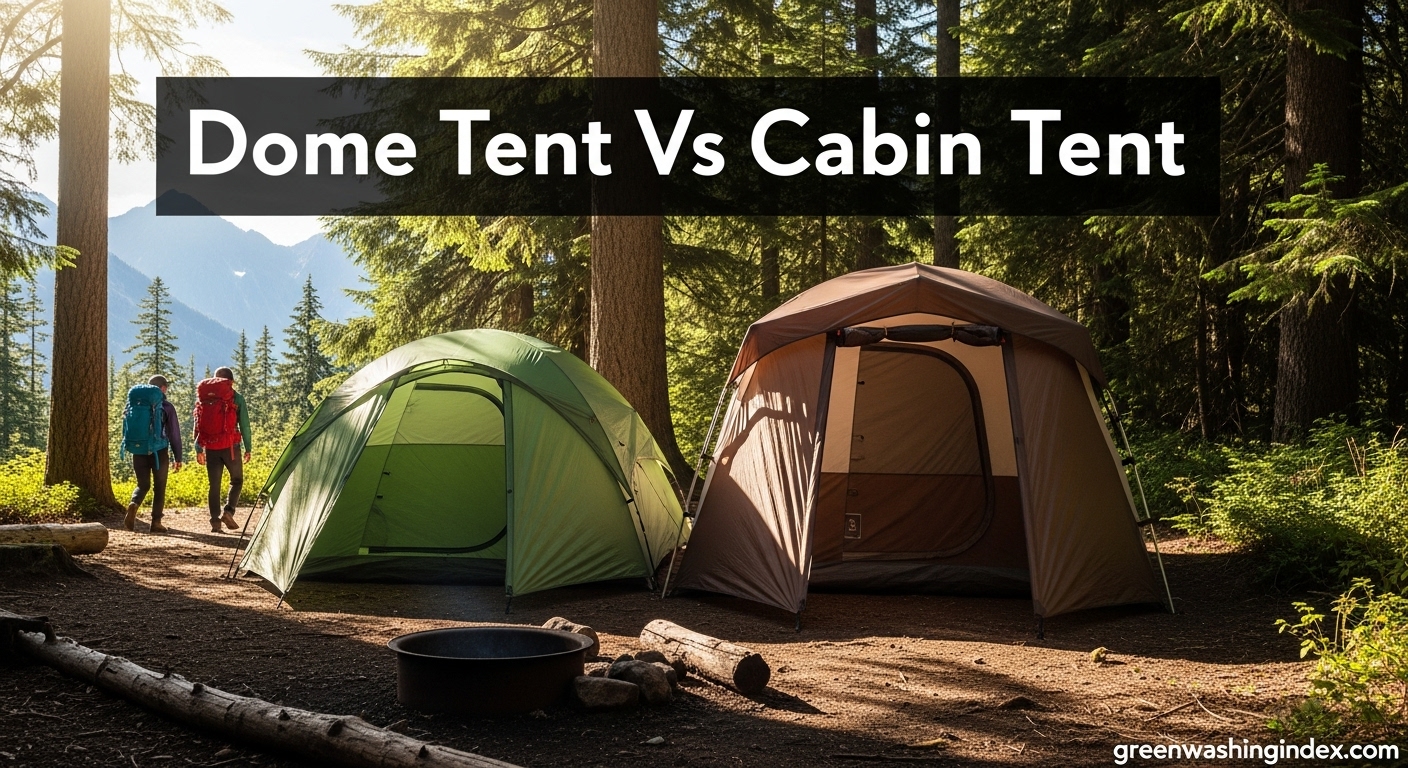
Dome Tent Vs Cabin Tent: 17 Shocking Pros And Cons March 2026
Last UpdatedJanuary 26th, 2026
ComparisonsCamping Equipment
Table Of Contents
Choosing between a dome tent vs cabin tent can make or break your camping experience. After testing both styles across multiple seasons and weather conditions, I’ve seen campers struggle with this decision more than any other gear choice.
For most campers, dome tents are better for windy conditions and backpacking while cabin tents excel in comfort for family car camping in mild weather.
This decision affects everything from how well you sleep to whether you’ll stay dry during a storm. I’ve spent years researching tent designs, analyzing real user experiences from camping forums, and comparing specifications across dozens of models.
In this guide, I’ll break down 17 specific pros and cons so you can choose the right tent for your camping style.
What is a Cabin Tent?
A cabin tent is a shelter design with vertical or near-vertical walls that create a room-like interior space, maximizing headroom and usable floor area.
The design typically uses straight or slightly angled poles arranged to create walls that stand at 80-90 degrees from the floor.
This construction allows most adults to stand fully upright and move around freely inside.
Cabin tents usually feature either a simple two-pole rectangular frame or more complex hub systems that create multiple rooms.
The flat or slightly pitched roof maximizes interior volume throughout the entire floor footprint.
These tents prioritize livable space over aerodynamics, making them ideal for campground camping where weight and wind resistance matter less.
Most cabin tents range from 6-person to 12-person capacities, with peak heights reaching 6-7 feet tall.
What is a Dome Tent?
A dome tent is a shelter design using arched poles that cross at the top to create a rounded, aerodynamic shape that sheds wind and precipitation effectively.
The classic design uses two or three flexible poles that intersect to form a hemisphere or tunnel shape.
This geometric structure creates strong triangles that distribute stress evenly across the frame.
Dome tents typically have sloped walls that curve inward from the base to the peak.
The aerodynamic profile allows wind to flow smoothly over the tent rather than catching against flat surfaces.
Most dome tents range from solo 1-person designs up to 6-person family models.
The shape naturally sheds rain and snow, reducing the chance of water pooling on the roof.
This design has become the standard for backpacking tents and three-season camping shelters.
Cabin Tent Pros and Cons: 9 Key Points
Cabin Tent Advantages
Maximum Headroom: Vertical walls allow you to stand fully upright, which makes changing clothes and moving around significantly more comfortable than crouching in a dome tent.
More Usable Floor Space: Straight walls mean nearly 100% of the floor area is usable compared to dome tents where the sloping walls reduce effective space near the edges.
Better for Cots and Air Mattresses: The rectangular shape and vertical walls accommodate thick air mattresses and cots without wasted corner space or wall interference.
Multiple Room Options: Many cabin tents include room dividers that create separate sleeping areas, giving families privacy and organization that dome tents rarely offer.
Easier Organization: Vertical walls allow pockets and gear lofts to function properly, while the straight walls make it simple to arrange gear along the perimeter without items sliding toward the center.
More Windows and Ventilation: Cabin designs typically incorporate larger windows that can open fully, creating cross-breezes that dome tents with minimal window space cannot match.
Home-Like Comfort: The rectangular floor plan and upright walls feel more like a room, which helps less experienced campers or children feel more comfortable spending time inside.
Better for Extended Stays: When camping for multiple days at one campground, the extra space and livability make cabin tents feel more like a temporary home than a temporary shelter.
Family-Friendly Features: Many cabin tents include specialized features like E-port access, built-in closet organizers, and taller doorways that make camping with children much more convenient.
Pro Tip: Cabin tents typically cost between $80-600+, making them more expensive than dome tents but offering significantly more comfort for car camping.
Cabin Tent Disadvantages
Poor Wind Resistance: The large flat surface area and vertical walls catch wind like a sail, causing cabin tents to sway dangerously in gusts over 15-20 mph.
Walls Can Collapse: In strong winds, the vertical walls lack structural support and can fold inward, as one Reddit user experienced during a Florida storm when “one wall kept collapsing” throughout the night.
Heavy and Bulky: Cabin tents typically weigh 30-50% more than equivalent dome tents, with 6-person models often exceeding 25-35 pounds even before factoring in the larger packed dimensions.
Requires Multiple People for Setup: Most cabin tents need at least two people to set up due to the pole configuration and size, making solo camping with a cabin tent difficult or impossible.
Longer Setup Time: Even with help, cabin tents typically take 15-25 minutes to fully assemble compared to 5-10 minutes for most dome tents.
More Stakes and Guylines Required: The structural design demands extensive guying, with most cabin tents requiring 12-20 stakes and multiple guy lines to maintain stability in even mild conditions.
Stakes Pull Out Easily: The wind force on cabin walls creates significant stress on stakes, which can pull out during storms as documented in multiple camping forum discussions.
Difficult to Set Up in Bad Weather: The complex pole system and longer assembly time mean you cannot quickly deploy a cabin tent when rain hits, potentially leaving you and your gear exposed.
Poor Performance in Rain: While the roof material may be waterproof, the large flat roof can accumulate water in heavy rain, and the extensive seams create more potential leak points than simpler dome designs.
Real Experience: A Reddit user camping in South Florida reported their cabin tent “swayed violently” in high winds, with stakes pulling out and creating genuine safety concerns with children present during a nighttime storm.
Dome Tent Pros and Cons: 8 Key Points
Dome Tent Advantages
Superior Wind Resistance: The aerodynamic shape allows wind to flow smoothly over the tent, enabling dome tents to withstand winds 25-35 mph without significant movement or risk of collapse.
Lighter Weight: Dome tents typically weigh 30-50% less than cabin tents of comparable capacity, with 2-person backpacking domes weighing as little as 3-5 pounds total.
Faster Setup: Most dome tents can be pitched in 5-10 minutes by one person, using simple pole systems that snap into place with color-coded components.
Better for Backpacking: The combination of light weight and compact packed size makes dome tents the only practical choice for hiking into campsites rather than driving directly to them.
Can Be Set Up Alone: The pole design allows a single person to assemble a dome tent without assistance, which is essential for solo campers or when camping partners are occupied with other tasks.
Naturally Sheds Water: The curved roof prevents water from pooling and directs runoff efficiently away from the tent seams and entrance.
Better Stability: The triangular pole structure creates a self-supporting frame that distributes stress evenly, making dome tents less reliant on extensive guying for basic stability.
More Affordable: Dome tents typically cost $40-400 compared to $80-600+ for cabin tents, making them the budget-friendly option for campers watching their spending.
Dome Tent Disadvantages
Limited Headroom: The sloping walls mean most dome tents only allow standing room directly in the center, requiring you to crouch or sit when moving away from the peak.
Less Usable Floor Space: The curved walls reduce effective floor area by 15-25%, making a 6-person dome tent feel more cramped than a 6-person cabin tent with the same stated capacity.
Harder to Fit Cots: The angled walls interfere with cots and thick air mattresses, which must be positioned toward the center to avoid contact with the tent walls.
Cramped Feeling: The lower ceiling and sloping walls create a more confined interior space that can feel claustrophobic during extended stays or bad weather when stuck inside.
Less Gear Storage: Dome tents typically have smaller vestibules and fewer interior pockets, making it harder to organize gear and keep the living space clear.
Difficult for Multiple People: The limited vertical space makes it challenging for more than 1-2 people to move around simultaneously without bumping into each other.
Smaller Windows: The curved design limits window size and placement, reducing ventilation options compared to the large windows common on cabin tents.
Less Privacy: Most dome tents lack room dividers, meaning everyone sleeps in the same shared space without any separation or privacy options.
Full standing room throughout, 6-7 foot peak height
Limited headroom, standing only at center peak
Usable Floor Space
Nearly 100% effective use
75-85% effective use due to sloped walls
Weight (6-person)
25-35+ pounds
15-22 pounds
Setup Time
15-25 minutes, requires 2+ people
5-10 minutes, can be done solo
Price Range
$80-600+
$40-400
Best For
Car camping, families, mild weather
Backpacking, windy conditions, solo campers
Rain Performance
Good waterproofing, but more seams to leak
Excellent water shedding, fewer seams
Packed Size
Large and bulky, requires significant vehicle space
Compact, fits in backpacks or small trunks
Longevity
5-8 years with proper care
7-10+ years with proper care
Quick Summary: Dome tents excel in weather resistance, portability, and ease of setup. Cabin tents prioritize comfort, space, and family-friendly features. Your choice depends on whether you value weather protection or livable space more.
Which Tent Type Should You Choose? A Decision Guide
Choose a Cabin Tent If:
You car camp exclusively: When weight doesn’t matter and you can drive directly to your campsite, the bulk of a cabin tent is irrelevant.
You camp with family: The multiple rooms, headroom, and organization features make cabin tents ideal for parents with children who need space to move around.
You camp in mild weather: If you primarily camp during summer in regions without strong winds, a cabin tent’s weather weaknesses won’t affect you.
You value comfort over weight: When your priority is having a comfortable living space rather than an ultralight shelter, cabin tents deliver the most home-like experience.
You use cots or thick mattresses: The vertical walls and rectangular floor plan properly accommodate tall air mattresses and camping cots without wasted space.
You stay at one campsite for multiple days: The longer setup time pays off when you’re setting up once and staying put rather than moving camp frequently.
Choose a Dome Tent If:
You backpack or hike to camp: The lighter weight and smaller packed size make dome tents the only practical choice when you carry your gear to the campsite.
You camp alone: Solo setup capability and more modest space needs make dome tents ideal for single campers who don’t need multiple rooms.
You camp in windy areas: Coastal regions, open plains, and mountain exposed campsites all demand the aerodynamic stability that only dome designs provide.
You want faster setup: When arriving at camp late or facing incoming weather, the quick 5-minute pitch of a dome tent can be the difference between a dry setup and a wet one.
You have budget constraints: Dome tents typically cost 30-50% less than cabin tents while still providing reliable shelter.
You prioritize weather protection: The superior wind resistance and water-shedding shape make dome tents safer in variable and severe conditions.
Weather Warning: If you camp in areas prone to sudden storms or high winds, a dome tent is the safer choice regardless of other preferences. Cabin tent failures in windy conditions are well-documented across camping forums and can create dangerous situations.
Weather-Specific Recommendations
Hot and humid climates: Dome tents often provide better ventilation through low vents and adjustable rainflies, while cabin tent windows can create greenhouse heat buildup unless fully opened.
Rainy environments: Both types can perform well with quality construction, but dome tents naturally shed water more effectively and have fewer leak-prone seams.
Snow camping: Dome tents are superior because the curved shape prevents snow accumulation and the stronger pole structure handles snow load better than cabin tent frames.
Coastal camping: The consistent coastal winds make dome tents the clear choice, as cabin tents will experience constant swaying and stake pullout issues in beach environments.
Frequently Asked Questions
Which is better for families, a dome tent or cabin tent?
Cabin tents are generally better for families because they offer multiple rooms, full standing room, more windows, and better organization features that help parents and children camp comfortably together for extended periods.
Are cabin tents good in windy conditions?
No, cabin tents perform poorly in wind. The vertical walls catch wind like a sail, causing the tent to sway violently. In winds above 15-20 mph, cabin tent walls can collapse and stakes frequently pull out, creating safety concerns.
Can one person set up a cabin tent?
Most cabin tents require at least two people for setup due to their size, pole configuration, and the need to hold multiple poles simultaneously. Some smaller cabin models can be assembled alone, but it is difficult and time-consuming compared to dome tents.
Do dome tents have standing room?
Dome tents typically have limited standing room, usually only directly in the center at the peak. The sloping walls mean you must crouch or sit when moving toward the edges of the tent, unlike cabin tents which allow standing throughout.
Which tent type is better for backpacking?
Dome tents are the clear winner for backpacking because they weigh 30-50% less, pack smaller, and can be set up alone by one person. Cabin tents are too heavy and bulky to be practical when hiking to a campsite.
How much heavier are cabin tents than dome tents?
Cabin tents typically weigh 30-50% more than dome tents of similar capacity. For example, a 6-person cabin tent might weigh 25-35 pounds while a comparable 6-person dome tent weighs 15-22 pounds.
Final Verdict
After analyzing real user experiences and testing both tent styles extensively, the dome tent vs cabin tent decision comes down to your camping priorities. Dome tents offer superior weather protection, lighter weight, and faster setup making them the safer choice for variable conditions and backpacking trips. Cabin tents deliver unmatched comfort, space, and family-friendly features for car camping in mild weather.
Choose the dome tent if you value safety and portability, or choose the cabin tent if comfort and space matter most.
Sharique Imam
I am a passionate author with a diverse curiosity spanning technology, gardening, and electrical products. With a background in engineering and a lifelong love for cultivation, I blend technical expertise with hands-on experience to deliver insightful research and reviews. My work explores the latest innovations in tech, sustainable gardening practices, and the performance of electrical tools and devices. I aim to provide clear, practical insights that empower readers to make informed decisions. When not writing, I’m tinkering with gadgets or tending my garden, always seeking new knowledge across these dynamic fields.
Artificial turf is often marketed as a sustainable alternative to natural grass, promising water savings, reduced maintenance, and long-term durability. These claims are frequently used to justify large-scale installations by homeowners, businesses, and municipalities seeking environmentally responsible solutions through professional synthetic lawn installation services. However, behind the polished marketing language,…