
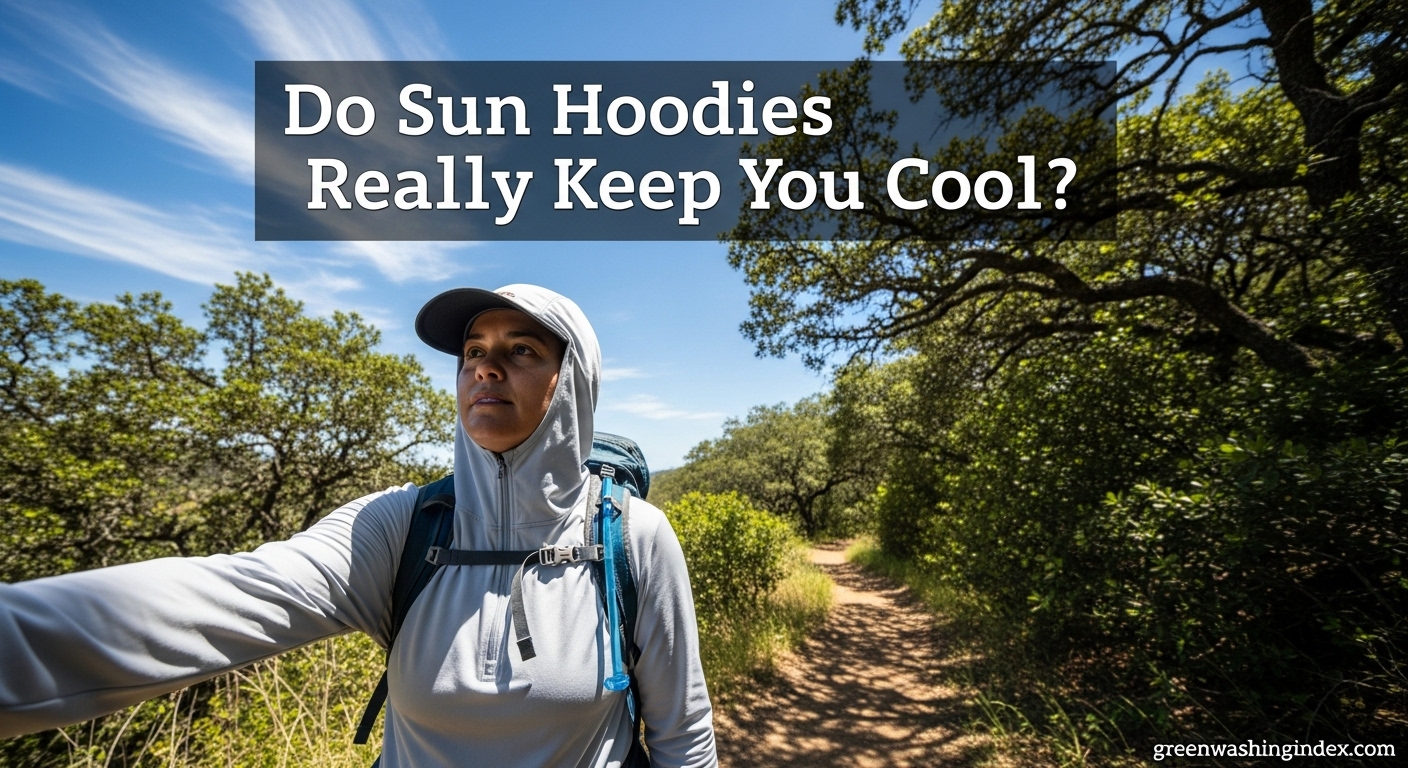
The first time someone suggested I wear a long-sleeve hoodie for hiking in 90-degree weather, I thought they were joking. Who puts on extra layers when it’s scorching outside? After years of hiking in tank tops and constantly reapplying sunscreen, I finally gave sun hoodies a try. That decision completely changed how I approach warm-weather outdoor activities.
Sun hoodies absolutely keep you cooler than bare skin in direct sunlight. The secret lies in three scientific mechanisms: shade provision that blocks UV radiation, evaporative cooling that pulls heat away from your body, and breathable weaves that allow convective airflow. Lightweight fabrics designed for sun protection work like portable shade, creating a cooler microclimate right against your skin.
I’ve tested this extensively while hiking across Arizona, Utah, and Colorado. On a 95-degree day in Sedona, I switched between wearing my lightweight polyester sun hoodie and going without it. Within minutes of taking it off, I could feel the sun beating down on my skin like a physical weight. Putting the hoodie back on brought immediate relief, like stepping into the shade of a tree.
This article explains exactly how sun hoodies work to keep you cool, backed by scientific research and real-world temperature data. I’ll also address when they don’t work, how to choose the right one, and common misconceptions that prevent people from trying this counterintuitive approach to staying cool.
Wearing a lightweight, breathable sun hoodie in hot weather keeps you cooler than exposed skin in direct sunlight. This seems backwards, but temperature measurements confirm it. When Adventure Alan tested water bags inside black versus white sun hoodies for three hours in direct sun, the black bag heated to 107.9 degrees while the white bag reached only 91.0 degrees. Both were significantly cooler than direct sun would be.
The cooling effect works through three mechanisms. First, the fabric creates shade between your skin and the sun. Second, moisture-wicking fabric spreads sweat across its surface for rapid evaporation. Third, the breathable weave allows air circulation that carries away heat. Together, these create active cooling rather than passive protection.
What matters most is fabric weight and weave. A heavy cotton hoodie will absolutely make you hotter. But purpose-built sun hoodies use ultralight materials (often 3-5 ounces total) that you can barely feel. The Outdoor Research Echo Hoodie weighs just 5.6 ounces and provides UPF 50+ protection while remaining one of the coolest options available.
Our intuition tells us that less clothing equals more cooling. If you’re hot, strip down. This makes sense in shaded conditions or when there’s a breeze. But in direct sunlight, exposed skin absorbs solar radiation directly. Each square inch of bare skin becomes a tiny heat collector.
Think about standing on a hot beach. Would you rather stand barefoot on the sand or put on sandals? The sandals create a protective layer between your feet and the heat source. Sun hoodies work the same way for your entire upper body. They’re not adding warmth, they’re blocking it from reaching you in the first place.
Forum discussions on Reddit and Mountain Project consistently show the same pattern: initial skepticism followed by conversion. One hiker on r/Ultralight wrote, “I was so skeptical about wearing a hoodie in 90-degree weather, but I stayed cooler than my hiking partner in a tank top. Never going back.” This narrative appears so frequently it’s become a community meme.
The psychological aspect matters too. A hood over your head may feel warmer psychologically, but temperature measurements show it’s actually keeping you cooler. The fabric blocks sun from reaching your neck and ears, areas that burn quickly and contribute significantly to perceived heat. Trust the thermometer, not your initial impression.
Sun hoodies don’t use magic, they use physics. Understanding how they work helps you choose the right one and use it effectively. The three cooling mechanisms work together, but each contributes independently to keeping you comfortable in hot conditions.
The most obvious benefit is also the most powerful. By creating physical shade between your skin and the sun, sun hoodies prevent solar radiation from ever reaching your body. This isn’t about blocking UV rays specifically, it’s about blocking all solar energy that would otherwise heat your skin directly.
Direct sunlight delivers approximately 1,000 watts per square meter of energy on a clear day. That’s like having a 100-watt light bulb pressed against every 4-inch square of exposed skin. No wonder you feel hot. A sun hoodie reflects or absorbs that energy before it reaches you, dramatically reducing your thermal load.
The hood design extends this protection to your neck and ears, areas that standard shirts leave exposed. These areas are particularly vulnerable to both sunburn and heat-related discomfort. Good sun hoodies have hoods designed to stay in place while allowing visibility and airflow.
UPF Rating: Ultraviolet Protection Factor measures fabric’s ability to block UV radiation. UPF 15 blocks 93.3% of UV rays, UPF 30 blocks 96.7%, and UPF 50 blocks 98%. Only fabrics rated UPF 15 or higher can legally carry a UPF rating.
This is where sun hoodies truly shine compared to other clothing. Your body naturally cools itself through sweating, but sweat needs to evaporate to remove heat. Bare skin sweating often drips off before evaporating, wasting the cooling potential.
Moisture-wicking fabric pulls sweat away from your skin and spreads it across a larger surface area. This increases evaporation rate significantly. As moisture evaporates, it draws heat away from your body, actively cooling you rather than just protecting you.
Polyester excels at this because it doesn’t absorb moisture like cotton. Instead, it transports moisture to the fabric surface where evaporation can occur. This is why synthetic sun hoodies outperform natural fibers in active cooling. Tests show polyester dries 2-3 times faster than merino wool and 4-5 times faster than plant-based fabrics like modal or tencel.
The third cooling mechanism relies on air movement through the fabric. Breathable sun hoodies have an open weave that allows air to pass through, creating convective cooling. As air moves through the fabric, it carries away heat and moisture.
This is why fabric weight matters so much. Dense UPF 50+ fabrics often sacrifice breathability for protection. Adventure Alan’s wind pass-through testing shows that lighter fabrics with UPF 15-30 allow significantly more airflow while still providing adequate protection for most users. Air permeability directly correlates with perceived coolness.
Fit also affects convective cooling. A loose fit allows air to circulate between your skin and the fabric, enhancing the cooling effect. This is why sizing up is often recommended. A form-fitting sun hoodie might look athletic, but it restricts airflow and reduces cooling effectiveness.
Movement amplifies this effect. When you’re hiking or moving, you create your own breeze. A breathable sun hoodie captures this movement and uses it for cooling. This is why sun hoodies work exceptionally well for active pursuits like hiking but less well for stationary activities.
Beyond personal experience, actual temperature measurements confirm that sun hoodies keep you cooler. Adventure Alan conducted controlled experiments with water bags placed inside different colored sun hoodies and left in direct sunlight for three hours. The results were dramatic.
| Fabric Color | Starting Temperature | Final Temperature (3 hours) | Heat Increase |
|---|---|---|---|
| Black Sun Hoodie | 63.6degF | 107.9degF | 44.3degF (70% increase) |
| White Sun Hoodie | 63.6degF | 91.0degF | 27.4degF (43% increase) |
| Bare Skin (estimated) | 98.6degF | 115degF+ | Significant overheating risk |
The black fabric absorbed 27% more heat than white fabric, but both were significantly cooler than direct sun exposure. This explains why light-colored sun hoodies are recommended for hot conditions, but why even dark options provide protection compared to bare skin.
Japan’s National Institute for Environmental Studies used thermal imaging to compare fabric colors and found white and yellow performed nearly identically as the coolest options. Surprisingly, green absorbed the most infrared radiation, making it one of the hottest choices despite appearing light.
The takeaway isn’t that black sun hoodies don’t work, they absolutely do. But if maximum cooling is your priority, choose white, yellow, or light gray. These colors reflect more solar energy and provide the most noticeable cooling effect in direct sun.
Sun hoodies aren’t magic, they work best in specific conditions. Understanding these conditions helps you choose when to wear one and when to opt for less coverage. The key factors are sunlight exposure, humidity, activity level, and temperature.
Direct sunlight with low to moderate humidity is the sweet spot for sun hoodies. When UV index is 6 or higher and humidity is below 60%, evaporative cooling works efficiently and the shade benefit is substantial. This covers most desert, mountain, and coastal environments.
Temperatures between 70 and 95 degrees Fahrenheit are ideal. Below 70, you might want additional warmth. Above 95, the ambient heat may overwhelm the cooling benefits, though sun hoodies still provide valuable UV protection. The key is that you’re actively generating some body heat and there’s solar radiation to block.
Active movement enhances cooling significantly. Hiking, climbing, cycling, or any activity that creates airflow helps evaporative cooling work more effectively. The more you move, the more breeze you create, and the better the sun hoodie performs at keeping you cool.
High humidity is the enemy of evaporative cooling. When humidity exceeds 70%, sweat doesn’t evaporate efficiently and the cooling effect diminishes. This is why sun hoodies feel less effective in tropical environments like Florida or Costa Rica’s jungle. You still get UV protection, but less cooling benefit.
Still conditions also reduce effectiveness. If you’re sitting still fishing or waiting at a belay station, you’re not creating airflow. In these situations, a sun hoodie may feel warmer than being shirtless because you’re not generating convective cooling. The solution is to size up for maximum airflow or choose a highly breathable fabric.
Shaded environments make sun hoodies less necessary. If you’re hiking in deep forest or canyon shade, UV exposure is minimal and the shade benefit doesn’t apply. In these conditions, a lighter breathable shirt might be more comfortable. However, many hikers still prefer sun hoodies for the convenience of constant coverage as light conditions change.
Temperatures above 100 degrees Fahrenheit with direct sun can overwhelm any clothing. In extreme heat, the ambient air temperature may exceed your body temperature, making evaporative cooling less effective. Sun hoodies still protect against UV but may not feel cooler than bare skin in these extreme conditions.
The fabric your sun hoodie is made from dramatically affects its cooling performance. Different materials have different properties when it comes to UV protection, breathability, moisture management, and drying time. Understanding these differences helps you choose the right option for your needs.
| Fabric Type | UV Protection | Breathability | Dry Time | Best For |
|---|---|---|---|---|
| Polyester | High | High | Fastest | Hot weather, high activity |
| Merino Wool | Medium | Very High | Slow | Multi-day trips, odor resistance |
| Nylon | High | Medium | Medium | Durability-focused uses |
| Modal/Tencel | Low-Medium | High | Slowest | Light activity, casual wear |
Polyester dominates the sun hoodie market for good reason. It provides excellent UV protection naturally, dries incredibly fast, and doesn’t retain moisture. The Outdoor Research Echo Hoodie uses pure polyester and is widely considered the coolest option available for hot weather hiking.
Polyester’s molecular structure doesn’t absorb water, which means it transports moisture to the fabric surface where evaporation can occur. This is why you feel drier in polyester than in cotton, which absorbs moisture and holds it against your skin. The faster evaporation creates more cooling.
Recycled polyester performs identically to virgin polyester while being more environmentally friendly. Many brands, including Patagonia, use 100% recycled polyester in their sun hoodies. You’re not sacrificing performance for sustainability.
Merino wool offers a different set of advantages. While it doesn’t dry as fast as polyester, it’s more breathable and naturally resists odors. For multi-day trips where you might wear the same shirt for days, merino’s antimicrobial properties make it attractive despite slower drying.
Merino can absorb up to 30% of its weight in moisture while still feeling dry to the touch. This provides cooling through evaporation even when the fabric feels damp. The tradeoff is that wet merino takes 2-3 times longer to dry than polyester, which matters in humid conditions.
Ridge Merino specializes in merino sun hoodies designed specifically for UV protection. Their wool is treated to enhance natural UV blocking while maintaining breathability. If you prioritize natural fibers and odor resistance over maximum cooling, merino is worth considering.
Nylon provides excellent UV protection and superior durability compared to polyester. It resists abrasion and snagging, making it ideal for rock climbing or bushwhacking where fabric damage is a concern. However, nylon absorbs slightly more moisture than polyester and dries more slowly.
Many sun hoodies blend nylon with polyester or spandex to combine durability with performance. Small amounts of nylon enhance fabric strength without significantly compromising cooling. Look for blends where nylon is the minority component if cooling is your priority.
Fabrics like modal, tencel, bamboo, and rayon sound appealing because they’re natural and soft. However, Adventure Alan’s testing found these fabrics performed poorly for sun hoodies. They absorb moisture like cotton and dry incredibly slowly, making them feel like wet towels once you start sweating.
One forum contributor wrote, “Bought a bamboo shirt thinking natural would be better. Soaked up sweat and never dried. Felt like wearing a wet towel.” This is a common experience. Plant-based fabrics may work for light activity or casual wear, but they’re poor choices for hot weather exertion.
UPF ratings can be confusing, and the marketing around them often misleads consumers. Higher UPF isn’t always better, and understanding what the numbers actually mean helps you make smarter choices. The difference between UPF 15 and UPF 50 is smaller than most people realize.
| UPF Rating | UV Blocked | UV Passes Through | Best Use |
|---|---|---|---|
| UPF 15 | 93.3% | 1 in 15 rays | Most hiking and travel |
| UPF 30 | 96.7% | 1 in 30 rays | High altitude, fair skin |
| UPF 50 | 98% | 1 in 50 rays | Extreme UV, skin cancer history |
Key Insight: UPF 50 blocks only 5% more UV than UPF 15, but the fabric is typically much denser and less breathable. For most users, UPF 15-30 provides the best balance of protection and cooling.
Higher UPF ratings require tighter fabric weaves, which reduce breathability. A fabric dense enough to block 98% of UV radiation also blocks significant airflow. Adventure Alan’s testing found that UPF 50+ fabrics were consistently warmer than UPF 15-30 options during active use.
For 99% of users, UPF 15-30 provides adequate protection while maintaining better breathability. The Skin Cancer Foundation recommends UPF 15+ for daily sun protection, and UPF 30+ for extended outdoor activity. Unless you have extremely fair skin, a history of skin cancer, or are at high altitude, you don’t need UPF 50+.
Expert consensus among outdoor gear testers is that prioritizing breathability over maximum UPF results in more comfort and better performance. You’re more likely to actually wear a breathable sun hoodie than to suffer in a dense UPF 50+ fabric.
Several factors can alter a fabric’s UPF rating in real-world use. Stretch is a major one, when fabric stretches, the weave opens up and UV protection decreases. This is why loose-fitting sun hoodies provide better protection than tight ones.
Moisture also reduces UPF rating. Wet fabric allows more UV radiation to pass through than dry fabric. This is why quick drying is so important, the faster your shirt dries, the less time it spends at reduced protection. Polyester’s quick-drying property contributes to its consistent UV protection.
Color affects UPF rating too. Darker colors typically have higher UPF because they absorb more UV radiation. But they also absorb more heat, making you warmer. Light colors may have slightly lower UPF ratings but provide better cooling through reflection.
The color of your sun hoodie significantly affects its cooling performance. Adventure Alan’s water bag test showed black fabric absorbed 70% more heat than white fabric over three hours. That’s a dramatic difference that you’ll absolutely feel on a hot day.
White is the coolest option, reflecting most solar energy. Yellow performs nearly as well, which surprised researchers who expected yellow to absorb more heat. Light gray and light blue also provide good cooling. The principle is simple, lighter colors reflect more, absorb less.
Dark colors including black, navy, and dark green absorb significantly more solar energy. Green is particularly problematic because it absorbs infrared radiation efficiently, even though it appears light to our eyes. Japan’s thermal imaging study found dark green was among the hottest colors tested.
For maximum cooling in hot weather, choose white or light-colored sun hoodies. If aesthetics matter more than temperature optimization, darker colors still provide UV protection and cooling compared to bare skin. Just understand that you’re sacrificing some cooling performance for style.
Time Saver: Already own a dark sun hoodie? Don’t replace it immediately. Test it first. You may find the cooling benefit over bare skin is sufficient, even if it’s not as optimal as white. Many users happily wear dark sun hoodies and report significant comfort improvement.
Sun hoodies aren’t the only way to protect yourself from UV radiation. Sunscreen, umbrellas, and regular clothing all provide protection. Understanding the tradeoffs helps you choose the right approach for different situations.
| Protection Method | UV Protection | Temperature Effect | Convenience | Best For |
|---|---|---|---|---|
| Sun Hoodie | UPF 15-50 (93-98%) | Cooler in direct sun | Apply once, done | Active outdoor use |
| Sunscreen | SPF 30-50 (96-98%) | Neutral | Reapply every 2 hours | Face, neck, hands |
| Regular Shirt | UPF 5-10 variable | Variable | Apply once, done | Shade or short durations |
| Bare Skin | None (burns in 10-30 min) | Hot in direct sun | Nothing to manage | Shade, swimming only |
These aren’t mutually exclusive, the best approach combines both. Sun hoodies cover your torso, arms, and neck with a single application that lasts all day. Sunscreen protects your face, hands, and any gaps. Using both together provides comprehensive protection without constant reapplication.
Sunscreen has advantages for areas where fabric doesn’t work well. Your face needs direct protection, and hands are constantly exposed. A good sun hoodie + sunscreen on face and hands provides full coverage with minimal hassle.
The convenience factor is huge. Forum users consistently mention freedom from sunscreen reapplication as a major benefit. One wrote, “Hated reapplying sunscreen every 2 hours. Sun hoodie = apply once in morning, done.” When you’re hiking, fishing, or working outside, not stopping every two hours makes a real difference in your day.
Your typical cotton t-shirt provides some sun protection, but it’s inconsistent and unreliable. A wet white tee drops to UPF 3, blocking less than half of UV radiation. Dry, it might reach UPF 10, still far below rated sun protection. And cotton’s moisture absorption makes it uncomfortable in heat.
Regular long-sleeve shirts work better than t-shirts but still fall short of purpose-built sun hoodies. The fabric isn’t designed for moisture management, there’s no hood for neck and ear protection, and the weave may not be optimized for breathability. You’re better off with gear designed specifically for sun protection.
In direct sunlight, a lightweight sun hoodie is cooler than bare skin. Period. This seems wrong until you try it. Your skin absorbs solar radiation directly when exposed. A sun hoodie blocks that radiation and enhances evaporative cooling. The temperature difference is noticeable and measurable.
Bare skin has the advantage in shade or high humidity. If there’s no direct sun, you’re not getting the shade benefit. If humidity is very high, evaporative cooling doesn’t work well. In these specific conditions, less coverage might be more comfortable. But for most outdoor activities in direct sun, covered is cooler.
Skepticism about sun hoodies is natural. The idea that wearing more clothing keeps you cooler contradicts our everyday experience. But several common misconceptions prevent people from trying an approach that could make their outdoor activities much more comfortable.
This is the biggest barrier for most people. And it’s true for heavy fabrics like cotton hoodies and fleece. But lightweight, breathable sun hoodies are fundamentally different. They’re designed specifically to keep you cool, not warm.
The key is fabric weight. A typical cotton hoodie weighs 12-16 ounces and feels like a warm layer. Purpose-built sun hoodies weigh 3-6 ounces and feel like a second skin. The difference in thermal properties is enormous. Compare it to the difference between a winter coat and a windbreaker, both are long layers but serve completely different purposes.
Marketing pushes UPF 50+ as the gold standard, but breathability matters more for comfort. UPF 15 still blocks 93% of UV radiation, which is substantial protection. The extra 5% from UPF 50 comes at the cost of denser fabric and reduced airflow.
For most users in most conditions, UPF 15-30 provides the best balance. You get excellent protection without sacrificing comfort. Exception, if you have extremely fair skin, a history of skin cancer, or will be at high altitude where UV is intensified, UPF 50+ may be worth the breathability tradeoff.
While this article focuses on cooling, sun hoodies provide value year-round. UV radiation doesn’t disappear in winter, and at altitude, UV exposure can be even more intense. Many users wear sun hoodies for spring skiing, high-altitude climbing, and shoulder-season hiking where sun protection matters even when temperatures are moderate.
Some sun hoodies are designed specifically for versatility. The Patagonia Capilene Cool Daily works as a base layer in cool conditions and a standalone sun shirt in warm weather. This flexibility makes it a good value for users who want one shirt for multiple seasons.
Sun hoodies don’t cover everything. Your face needs direct sunscreen application. Your hands are exposed unless you wear sun gloves. And gaps around cuffs, neck, and hem can let sun through during active movement.
The smart approach is sun hoodie plus sunscreen on exposed areas. This provides comprehensive protection without constant reapplication. Your torso, arms, and neck are covered by the hoodie. Your face and hands get sunscreen. Together, they’re more effective and convenient than sunscreen alone.
Individual factors affect how well sun hoodies work for you. Body size, metabolism, activity level, and heat tolerance all play a role. What feels cool to one person might feel warm to another. This doesn’t mean sun hoodies don’t work, it means you may need to adjust your approach.
If you run hot, prioritize maximum breathability and choose loose fits. If you run cold, you might prefer slightly more substantial fabric. The principles remain the same, but the optimal choice varies by individual. Don’t give up if one sun hoodie doesn’t work perfectly for you, try a different fabric or fit.
Your sun hoodie’s performance depends on proper care. Fabric degradation, stretching, and chemical exposure can all reduce both UPF rating and cooling effectiveness over time. Following proper care guidelines ensures your gear continues performing as intended.
Mild detergent is best. Harsh detergents, bleach, and fabric softeners can damage fabric structure and reduce UPF rating. Wash your sun hoodie in cool to warm water with gentle detergent. Avoid chlorine bleach entirely, it breaks down fibers and significantly reduces UV protection.
Line drying is preferred over machine drying. High heat can damage synthetic fibers and cause shrinkage that affects fit and airflow. If you must machine dry, use low heat and remove while slightly damp. The less heat exposure, the longer your sun hoodie maintains its performance.
Fabric softeners are particularly problematic. They coat fibers and reduce moisture-wicking ability, which directly impacts evaporative cooling. Skip the softener entirely. If your sun hoodie feels stiff, try vinegar in the rinse cycle as a natural softener alternative.
Sun hoodies don’t last forever. Signs it’s time to replace include thinning fabric, loose weave that allows light to pass through easily, stretched fit that reduces coverage, and persistent odor that won’t wash out. A simple test is to hold your sun hoodie up to bright light, if you can see through it easily, UPF protection has degraded.
Most quality sun hoodies last 2-3 seasons of regular use before performance declines. High-use scenarios like thru-hiking or daily wear may shorten this timeline. The good news is that sun hoodie technology has improved dramatically, so replacements often perform better than what you’re replacing.
Store your sun hoodie clean and dry. Moisture during storage can lead to mildew, which damages fibers and creates odors that are difficult to remove. Avoid leaving it wadded up in a stuff sack for extended periods, prolonged compression can affect fabric structure.
UV exposure during storage isn’t a concern for the fabric itself, but avoid leaving your sun hoodie in direct sun for days when not in use. Extended UV exposure can gradually degrade synthetic fibers even when not being worn.
Different activities present different challenges for sun protection and cooling. What works perfect for hiking might not be ideal for fishing or gardening. Understanding these nuances helps you choose the right approach for your specific needs.
Sun hoodies excel for hiking because you’re creating constant movement and airflow. The combination of exertion and breeze maximizes evaporative cooling. Look for lightweight options (under 6 ounces) with good hood design that stays on while moving. A chest vent helps with temperature regulation during climbs.
For backpacking, consider odor resistance if you’re traveling multi-day. Merino options smell less after days of use, while synthetics may require washing or rotation. Packability also matters, thin synthetics compress smaller than wool. Check out our guide to best men’s hiking shirts with UPF protection for specific recommendations.
Fishing presents a unique challenge because you’re often stationary or moving slowly. This reduces convective cooling, making breathability even more critical. Look for highly breathable options and consider sizing up for maximum airflow. Quick drying is essential since you’re likely to get wet.
Many fishing-specific sun hoodies include features like rod holder loops, sunglasses chamois, and thumb holes for hand coverage. These functional additions can be worth the extra cost if you fish regularly. Light colors are particularly valuable for fishing since you’re often exposed on open water with minimal shade.
Low-intensity activity with constant sun exposure describes gardening perfectly. You may not be generating enough body heat for maximum evaporative cooling, but UV protection is still essential. Choose the most breathable option available and consider rolling up sleeves briefly if you feel overheated.
For gardening, durability matters more than weight. You don’t need ultralight fabrics designed for backpacking. Mid-weight options with reinforced stitching last longer against plants, tools, and frequent washing. See our hiking clothing collection for durable options that work for gardening too.
High output and constant movement make trail running ideal for sun hoodie cooling. Look for athletic fits that don’t flap in the wind but aren’t so tight they restrict airflow. Mechanical venting with Henley buttons or mesh panels helps regulate temperature during intense efforts.
Reflective elements and safety colors add visibility for road running. Some runners prefer half-zip designs for easy on/off during temperature fluctuations. The key is finding the balance between cooling when hot and coverage when exposed.
Travel sun hoodies prioritize versatility and style over technical performance. You want something that works for hiking, sightseeing, and casual wear without looking like you’re heading to a summit. Patterns, heathered fabrics, and casual fits help sun hoodies blend into everyday environments.
Easy care matters for travel, you may not have access to ideal washing conditions. Synthetics that wash and dry easily are preferred. Wrinkle resistance is also nice when living out of a suitcase. Check travel pants with UPF protection to complete your travel sun protection system.
Yes, sun hoodies keep you cooler than bare skin in direct sunlight. They work through three mechanisms: shade provision that blocks UV radiation, evaporative cooling as sweat wicks and evaporates from fabric, and breathable weaves allowing convective airflow. The key is choosing lightweight, breathable fabric rather than heavy materials like cotton.
Long sleeve shirts made from lightweight, breathable fabric keep you cooler in direct sun by blocking UV radiation before it reaches your skin and enhancing evaporative cooling. The shade created by long sleeves prevents solar heating of your skin. However, the fabric must be specifically designed for breathability, or you’ll be warmer than going without.
Sun hoodies may feel warm psychologically but actually measure cooler than exposed skin in temperature tests. The sensation of warmth comes from having fabric on your body, but temperature measurements show sun hoodies reduce skin temperature compared to direct sun exposure. This disconnect between feeling and reality is why many people are initially skeptical before trying them.
Yes, rated sun shirts effectively block UV radiation. UPF 15 blocks 93.3% of UV rays, UPF 30 blocks 96.7%, and UPF 50 blocks 98%. These ratings are standardized and verified, unlike vague marketing claims. The cooling benefit comes from fabric design features like moisture-wicking, breathability, and quick drying, not just UV blocking.
Polyester is generally the best fabric for sun protection due to excellent UV blocking, fastest drying time, and effective moisture-wicking for evaporative cooling. Merino wool offers superior breathability and odor resistance but dries more slowly. Nylon provides durability but absorbs more moisture than polyester. Avoid plant-based fabrics like modal, tencel, and bamboo, which dry very slowly.
Wearing lightweight, breathable clothes keeps you cooler in direct sun by blocking solar radiation from reaching your skin and enhancing evaporative cooling. However, this only works with appropriate fabrics, loose fits, and in conditions where evaporative cooling is effective. In high humidity or shaded conditions, less clothing may be more comfortable.
In direct sunlight, lightweight long sleeves keep you cooler than exposed skin by blocking solar radiation and enhancing evaporative cooling. Long sleeves provide better UV protection without the need for constant sunscreen reapplication. The fabric must be breathable and moisture-wicking for this cooling effect to work.
Yes, rated sun hoodies block 93-98% of UV radiation depending on UPF rating. They provide comprehensive coverage including neck, ears, and arms that are often missed by sunscreen application. The protection is continuous without reapplication, unlike sunscreen that must be reapplied every two hours.
UPF (Ultraviolet Protection Factor) clothing is rated fabric designed to block UV radiation. UPF 15 blocks 93.3% of UV rays, UPF 30 blocks 96.7%, and UPF 50 blocks 98%. Only fabrics meeting minimum protection standards can carry UPF ratings. UPF clothing provides consistent protection without reapplication unlike sunscreen.
Hikers wear long sleeves in summer for continuous sun protection without sunscreen reapplication, cooling that’s more effective than bare skin in direct sun, insect protection, and reduced pack weight since they carry less sunscreen. The long sleeves block UV while breathable fabric enhances evaporative cooling during active hiking.
Sun hoodies genuinely keep you cooler than bare skin in direct sunlight. The combination of shade provision, evaporative cooling, and convective airflow creates a measurable temperature difference that you can feel. Temperature testing confirms what outdoor enthusiasts have experienced for years, covering up can actually cool you down when done right.
The key is choosing the right sun hoodie for your needs. Lightweight breathable fabric in UPF 15-30 provides the best balance of protection and cooling for most users. Light colors maximize cooling through reflection, while proper fit ensures adequate airflow. Avoid heavy cotton, dense UPF 50+ fabrics, and plant-based materials that sacrifice performance.
Don’t let initial skepticism prevent you from trying this approach. The pattern is nearly universal, doubt followed by conversion. Once you experience the cooling benefit of a quality sun hoodie, you’ll understand why they’ve become essential gear for hikers, fishermen, travelers, and anyone who spends time outdoors in sunny conditions.
For complete sun protection, pair your sun hoodie with sunscreen on your face and hands. Consider hiking pants with UPF protection for full-body coverage. And explore baselayers with sun protection for understanding layering systems that work across seasons and conditions.
