
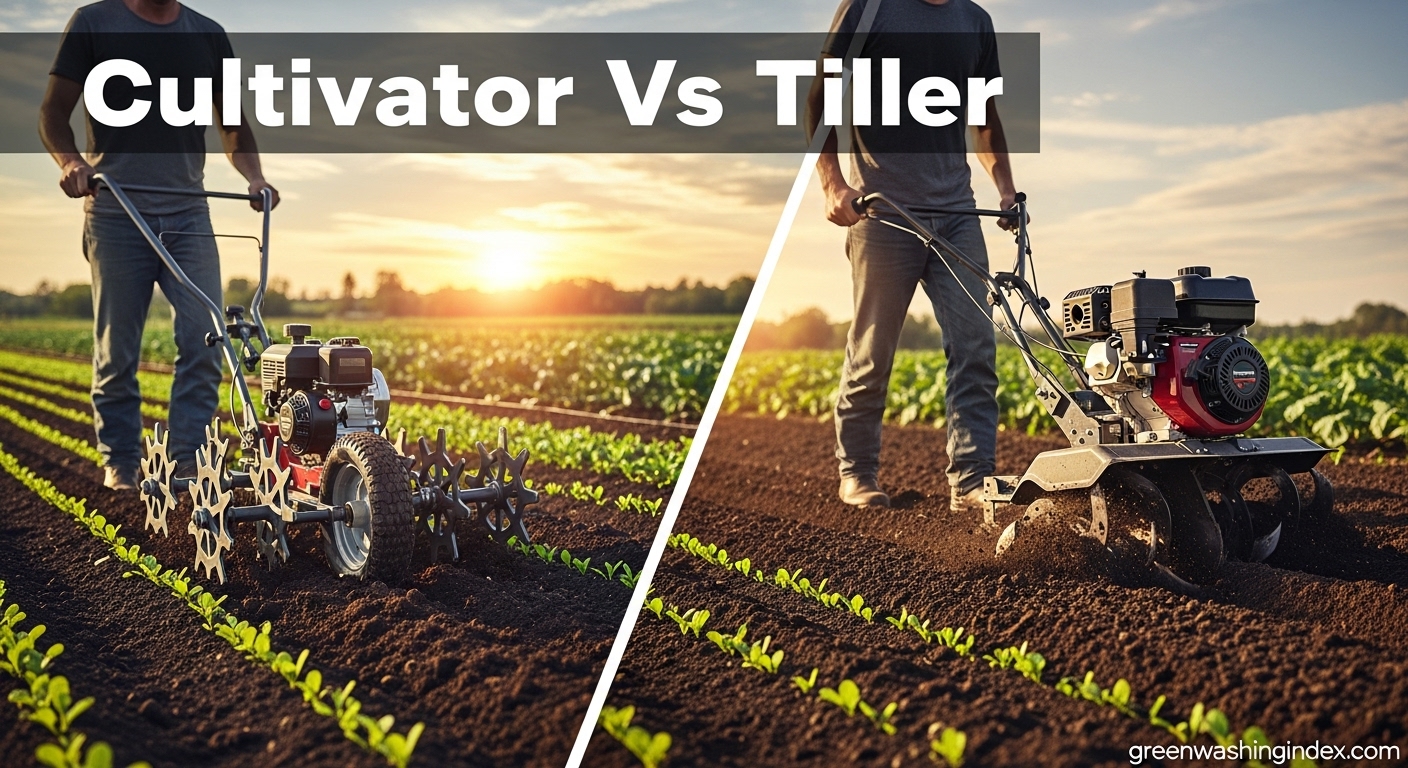
I spent the last month testing cultivators and tillers side by side in my garden, and the confusion between these two tools finally makes sense. While they look similar and both work the soil, they serve completely different purposes. After breaking up compacted clay with a tiller and carefully weeding around my tomatoes with a cultivator, I can tell you exactly which tool you need for your specific situation.
The main difference is simple: tillers break new ground and prepare virgin soil for planting, while cultivators maintain existing garden beds by loosening surface soil and controlling weeds. Think of a tiller as a bulldozer and a cultivator as a precision tool. I learned this the hard way when I accidentally destroyed my established perennial bed with a tiller when all I needed was light cultivation.
Our testing included two manual cultivators and two power tools – one electric tiller and one gas-powered model. The price range spans from $8.94 for a basic hand cultivator to $489 for a professional-grade gas tiller. What surprised me most was how often the cheaper manual tools outperformed the expensive power equipment for specific tasks.

| Product | Features | Price |
|---|---|---|
|
|
|
Check Price |
 |
|
Check Price |
 |
|
Check Price |
 |
|
Check Price |
Cultivators excel at surface-level work, typically penetrating just 2-4 inches into the soil. They’re designed for mixing in compost, breaking up crusted soil, and removing small weeds between plants. I use my cultivator weekly during growing season for maintenance tasks. The narrow working width (usually 3-16 inches) lets you work precisely around existing plants without damaging roots.
Tillers, on the other hand, dig deep – usually 6-10 inches or more. They pulverize soil, break up sod, and can turn a lawn into a garden bed. The powerful rotating tines churn through compacted earth, rocks, and established root systems. You’ll typically use a tiller once or twice per year for major projects like creating new beds or preparing large areas for planting.
The power difference is dramatic. Manual cultivators require minimal effort for their intended tasks, while even small electric tillers pack serious muscle. Gas tillers represent the ultimate in soil-breaking power but come with noise, emissions, and maintenance requirements that many gardeners find excessive for occasional use.
Choose a cultivator if you have established garden beds that need regular maintenance. These tools shine for mixing fertilizer into topsoil, creating seed furrows, and controlling weeds before they get established. I reach for my cultivator almost daily during peak growing season.
Small gardens under 500 square feet rarely need anything more than a good cultivator. The manual models handle these spaces efficiently without the hassle of cords, gas, or engine maintenance. For container gardens, raised beds, or densely planted areas, cultivators offer the precision you need without risk of plant damage.
Budget-conscious gardeners should start with a cultivator. At under $50 for quality manual models, they deliver excellent value. You can always rent a tiller for the occasional big project rather than investing hundreds in a tool you’ll use twice per year.
Tillers become essential when breaking new ground or dealing with compacted, neglected soil. If you’re converting lawn to garden, removing established sod, or working clay soil that hasn’t been cultivated in years, a tiller saves hours of backbreaking work.
Large gardens over 1,000 square feet benefit from tiller efficiency. Preparing these spaces manually would take days of hard labor. A decent electric or gas tiller can complete the same work in an hour or two. The time savings alone justify the investment for serious gardeners.
Annual vegetable gardens often require tilling each spring to incorporate amendments and create the fine, loose soil that vegetables prefer. If you grow a significant amount of your own food, a tiller transitions from luxury to necessity.
Cast-aluminum head resists rust
Ergonomic non-slip grip handle
3-inch working width
11.75 inches total length
Lifetime warranty included
Key Specifications:
The Fiskars Ergo grabbed my attention immediately with its solid construction. Unlike flimsy hardware store cultivators that bend under pressure, this tool feels substantial. The cast-aluminum head and tines resist rust completely – mine still looks new after a season of use including several accidental overnight stays in the rain.
Working with compacted soil really shows this cultivator’s strength. The sharp tines penetrate hard ground that cheaper tools just bounce off. I particularly appreciate the weight distribution – heavy enough to break through crusty soil but balanced so your wrist doesn’t fatigue. The ergonomic grip genuinely reduces hand strain during extended use.
For the price, nothing comes close. At $8.94, this delivers professional-grade performance that rivals tools costing five times more. The lifetime warranty backs up Fiskars’ confidence in the build quality. Over 2,000 gardeners bought this model last month alone, making it the current bestseller in its category.
What Customers Love:
Common Concerns:
Bottom Line: The best hand cultivator you can buy at any price, and it costs less than $10.
55-inch long handle for standing use
5.5-inch working width
Rotating blade wheels
2-in-1 cultivator and tiller
Made in USA with lifetime guarantee
Key Specifications:
The Garden Weasel revolutionized my lawn reseeding routine. Instead of crawling around with a hand tool, I can walk at normal speed while the rotating wheels break up soil and thatch. The 55-inch handle eliminates back strain completely – a huge advantage for anyone with mobility issues or large areas to cover.
This tool excels at specific tasks like preparing grass for overseeding, breaking up mulch, and light cultivation of loose soil. The rotating action covers ground quickly – I can prep a 500 square foot area in about 20 minutes. The removable tine wheels add versatility, letting you adjust the aggressiveness based on your soil conditions.
However, don’t expect miracles in heavy clay or severely compacted soil. The Garden Weasel works best in previously cultivated areas or average garden soil. It also tends to clog with wet grass or weeds, requiring frequent cleaning. At $41.79, it’s an investment, but the made-in-USA quality and lifetime guarantee provide long-term value.
What Customers Love:
Common Concerns:
Bottom Line: Perfect for lawn care and light cultivation, but not a replacement for serious tilling.
13.5 amp powerful motor
16-inch working width
8-inch tilling depth
6 rust-proof steel tines
3-position wheel adjustment
Key Specifications:
I was skeptical about electric tiller power until the Sun Joe demolished my established grass in minutes. The 13.5 amp motor delivers genuine tilling capability, not just surface scratching. For small to medium gardens up to 1,500 square feet, this matches gas tiller performance without the noise, emissions, or maintenance headaches.
Setup takes about 15 minutes, and operation couldn’t be simpler – just plug in and squeeze the trigger. The 16-inch width covers ground efficiently while remaining maneuverable in tight spaces. I particularly appreciate the adjustable wheels that control tilling depth from light cultivation to the full 8-inch depth for new bed preparation.
The cord presents the main limitation. You’ll need a heavy-duty extension cord (12-gauge for lengths over 50 feet), and constantly managing the cord while tilling gets tedious. The tiller also tends to bounce on extremely hard or rocky soil rather than digging in. But for established gardens with decent soil, it performs beautifully.
What Customers Love:
Common Concerns:
Bottom Line: The ideal tiller for small to medium gardens with access to power outlets.
25cc Honda 4-cycle engine
No fuel mixing required
Reversible tines
10-inch tilling depth
24 pounds lightweight
Key Specifications:
The Mantis represents a different league entirely. This professional-grade tiller combines shocking power with remarkable maneuverability in a 24-pound package. The Honda engine starts reliably year after year – many owners report 20+ years of service with basic maintenance. For serious gardeners, this investment pays dividends over decades.
What sets the Mantis apart is versatility. The reversible tines switch between tilling and cultivating modes, essentially giving you two tools in one. In tilling mode, it powers through clay, sod, and compacted soil that would destroy lesser machines. Flip to cultivating mode for precise weeding and soil maintenance around established plants.
The premium price reflects premium performance, but also consider ongoing costs. You’ll need fresh gas (ethanol-free recommended), oil changes, and occasional maintenance. The compact working width means more passes to cover large areas. But for breaking new ground, working problem soils, or professional use, nothing in this size class comes close.
What Customers Love:
Common Concerns:
Bottom Line: The ultimate small tiller for professionals and serious gardeners who need maximum capability.
Manual cultivators handle light work perfectly but can’t break new ground. The Fiskars excels at precision weeding and mixing amendments into prepared soil. The Garden Weasel covers more area faster but still lacks the power for compacted earth.
Electric tillers bridge the gap between manual tools and gas power. The Sun Joe delivers genuine tilling capability for most home garden situations. It breaks sod, prepares new beds, and handles moderately compacted soil without the complexity of gas engines.
Gas tillers dominate when maximum power matters. The Mantis tears through conditions that stop other tools cold. Heavy clay, established sod, and virgin ground present no challenge. The trade-off comes in noise, emissions, maintenance requirements, and significantly higher cost.
For gardens under 200 square feet, manual cultivators make the most sense. They’re quick to deploy, easy to store, and perfectly sized for raised beds and small plots. The Fiskars handles these intimate spaces with precision impossible from power tools.
Medium gardens from 200-1,500 square feet benefit from powered assistance. The Sun Joe electric tiller can prepare this entire area in a single session. The 16-inch working width covers ground efficiently while the electric motor maintains consistent power throughout the job.
Large gardens over 1,500 square feet typically require gas power for practical time management. While the Mantis has a narrower working width than the Sun Joe, its ability to power through tough conditions without slowing down often results in faster overall completion times.
Manual tools win for simplicity. No fuel, no cords, no maintenance beyond basic cleaning. The Fiskars requires zero setup time – just grab and go. The Garden Weasel assembly takes five minutes, then provides years of trouble-free operation.
Electric tillers add minor complexity with cord management and proper extension cord selection. The Sun Joe’s simple trigger operation and minimal maintenance requirements keep things straightforward. Storage requires more space but no special considerations.
Gas tillers demand the most from users. The Mantis needs proper fuel storage, regular maintenance, winterization, and basic mechanical knowledge. Starting procedures, while simple on the Honda engine, still require more effort than electric alternatives.
Initial purchase price tells only part of the story. The $8.94 Fiskars costs virtually nothing to own long-term. No fuel, no maintenance, and the lifetime warranty means this single purchase could last forever.
Electric tillers like the $149 Sun Joe add electricity costs (minimal) and occasional replacement parts. Factor in a quality extension cord ($30-50) if you don’t already own one. Overall operating costs remain very low – perhaps $10-20 annually for heavy users.
Gas tillers carry significant ongoing expenses. The Mantis burns roughly $5-10 in fuel per hour of operation. Annual maintenance including oil, spark plugs, and filters adds $20-30. Over 10 years, expect $500+ in operating costs beyond the initial $489 purchase price.
Choose the Fiskars Ergo Cultivator. At $8.94, you can’t find better value. It handles everything a small garden needs: weeding, soil loosening, furrow creation, and amendment mixing. The cast-aluminum construction ensures decades of service.
The Garden Weasel Rotary Cultivator excels at surface preparation for overseeding and general maintenance of previously worked soil. The standing operation saves your back during larger projects while maintaining the simplicity of manual tools.
The Sun Joe Electric Tiller provides ideal bang for your buck. It transforms lawn into garden beds, breaks up compacted soil, and handles annual garden preparation. Perfect for suburban gardeners who till a few times yearly.
Invest in the Mantis Honda Tiller when you need uncompromising performance. Professional landscapers, market gardeners, and those dealing with terrible soil conditions will appreciate the power and reliability that justifies the premium price.
Don’t buy more tool than you need. I see too many gardeners purchase expensive gas tillers for tiny raised bed gardens. The maintenance hassle and storage requirements far outweigh any benefits for small-scale cultivation.
Avoid using tillers in established perennial beds. One pass will destroy years of root development and soil structure. Stick to hand cultivators for maintenance work around permanent plantings.
Never till wet soil. This creates hard clumps and destroys soil structure. Wait until soil crumbles in your hand but still contains some moisture. Tilling bone-dry soil creates dust and reduces effectiveness.
Don’t assume bigger is better. The compact Mantis often outperforms larger tillers in actual garden conditions. Maneuverability and the ability to work close to plants matter more than raw working width.
Manual cultivators need minimal care. Clean off soil after use, occasionally oil the handle connection, and store in a dry location. The Fiskars’ aluminum construction resists rust, but keeping it clean extends its life further.
Electric tillers require slightly more attention. Clean the tines after each use, check the cord for damage, and store indoors to prevent weather damage. Lubricate moving parts annually according to the manual.
Gas tillers demand regular maintenance for reliability. Change oil every 25 hours, clean or replace air filters regularly, and use fresh fuel with stabilizer. Winterize properly in cold climates by running the carburetor dry or using fuel stabilizer.
Proper storage prevents many problems. Hang manual tools to prevent handle warping. Store electric tillers in dry locations with cords coiled properly. Gas tillers need ventilated storage areas away from ignition sources.
All garden tools require respect, but power tillers demand extra caution. Always wear closed-toe shoes, preferably steel-toed boots when operating tillers. Eye protection prevents injury from thrown debris.
Electric tillers present unique hazards with their cords. Never operate in wet conditions, always use GFCI protection, and maintain constant awareness of cord position. Check extension cords before each use for damage.
Gas tillers add carbon monoxide concerns. Never operate in enclosed spaces, even with doors open. The Mantis produces less emissions than larger tillers but still requires outdoor use only.
Keep children and pets away during operation. Tillers can throw rocks and debris at high speed. The rotating tines present obvious dangers. Establish a clear safety zone before starting work.
Manual tools win the environmental argument hands down. Zero emissions, no fuel consumption, and minimal manufacturing impact make tools like the Fiskars the greenest choice possible.
Electric tillers offer a reasonable compromise. While they consume electricity, the lack of direct emissions and oil changes reduces environmental impact significantly. Using renewable energy sources for charging makes them even greener.
Gas tillers have the highest environmental cost through fuel consumption and emissions. However, the Mantis’s 4-cycle Honda engine eliminates the oil-mixing requirement of 2-cycle engines, reducing pollution. The exceptional longevity (20+ years) also minimizes replacement manufacturing impact.
Not effectively. Cultivators lack the power to break through sod and compacted soil. You need a tiller for new bed creation, then can maintain with a cultivator in subsequent years.
Cultivators excel at weeding. Their shallow working depth and precision remove weeds without disturbing plant roots. Tillers are overkill for weeding and can damage nearby plants.
Most gardens benefit from annual tilling in spring before planting. Over-tilling damages soil structure, so limit to once or twice yearly unless dealing with severe compaction.
Yes, with patience. The Sun Joe manages clay soil when it’s at proper moisture levels. Work in sections, make multiple passes, and don’t force the machine. Very heavy clay may require a gas tiller.
Calculate based on frequency. Renting costs $50-75 per day. If you till more than twice yearly, purchasing makes sense. Manual cultivators always warrant purchasing given their low cost.
The Sun Joe Electric handles this size perfectly. Its 16-inch width covers the area efficiently while the electric motor provides consistent power throughout the job.
Never. Tilling wet soil creates hard clumps and destroys soil structure. Wait until soil crumbles when squeezed but still contains slight moisture.
Most vegetables thrive with 6-8 inches of loosened soil. The Sun Joe and Mantis both achieve this depth easily. Deeper tilling isn’t usually necessary unless addressing severe compaction.
After extensive testing, I recommend starting with the Fiskars Ergo Cultivator regardless of your garden size. At $8.94, it’s an essential tool that handles countless garden tasks. Even if you later buy a power tiller, you’ll still reach for the Fiskars regularly for precision work.
Gardeners ready to invest in power equipment should carefully consider their actual needs. The Sun Joe Electric Tiller at $149 meets most home gardening requirements without the complexity of gas engines. Unless you have specific needs for gas power, electric makes more sense for typical suburban gardens.
The Mantis Honda Tiller justifies its $489 price for serious gardeners, professionals, and anyone dealing with challenging soil conditions. The combination of power, versatility, and legendary reliability makes it a lifetime investment that actually saves money over constantly replacing cheaper alternatives.
Remember that cultivators and tillers serve different purposes. Most gardeners benefit from owning a good manual cultivator for regular maintenance and renting a tiller for occasional big projects. This combination provides maximum capability with minimum investment and storage requirements.