

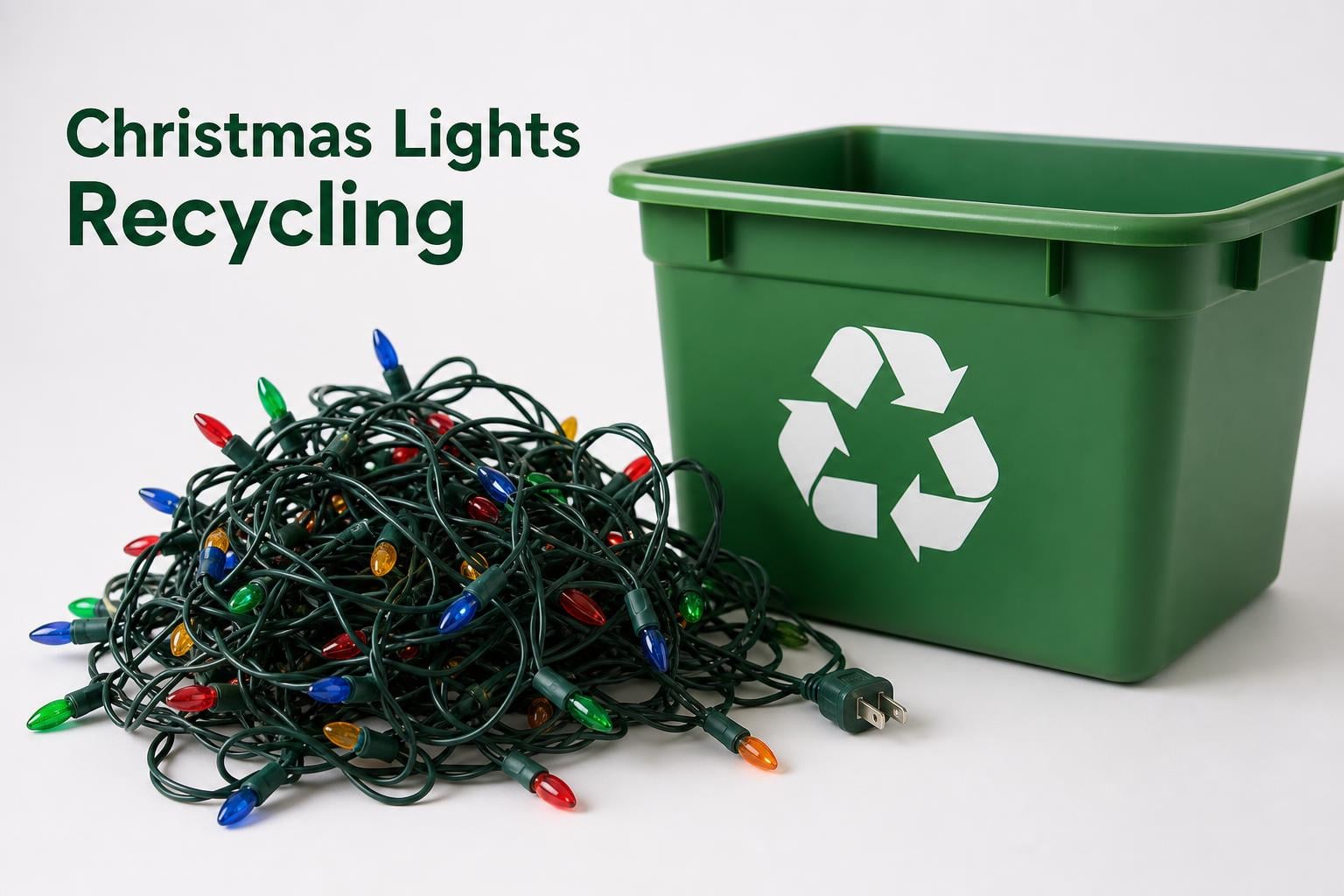
Every January, millions of Americans pack up their holiday decorations and discover that another string of lights has gone dark. In fact, an estimated 150 million sets of Christmas lights are sold each year in the United States alone, and a significant portion of those end up in landfills when they stop working. Christmas lights recycling is one of the simplest yet most overlooked ways to keep your holidays greener, and it is easier than you might think once you know the right steps.
The thing is, those tangled strings of lights are actually classified as e-waste. They contain copper wire, glass, plastic, and sometimes small electronic components that can all be recovered and repurposed. When you toss them in the garbage, you are throwing away valuable materials that recycling facilities can process into new products. Worse, the copper inside those wires does not decompose, meaning it sits in landfills indefinitely.
There is one critical rule you need to know before anything else: never put Christmas lights in your curbside recycling bin. We will explain exactly why in a moment, but this single mistake causes enormous problems at recycling centers every single year. This guide walks you through the correct Christmas lights recycling process, from preparation to finding a collection point, so you can dispose of old string lights responsibly.
Key Takeaways
If you take only one thing away from this article, let it be this: Christmas lights do not belong in your curbside recycling bin. This is the single most common mistake people make, and it causes real damage at recycling facilities. When string lights enter the standard recycling stream, they wrap around the sorting machines that separate paper, plastic, and glass.
The Onondaga County Resource Recovery Agency (OCRRA) in New York even produced a video demonstrating what happens when light strings get caught in sorting equipment. The wires tangle around rotating shafts and conveyor mechanisms, forcing workers to shut down the entire line and manually cut the lights free. This costs facilities time and money, and in some cases, the equipment needs professional repair.
The glass bulbs also pose a problem. They shatter during processing, sending shards across the sorting floor and contaminating otherwise recyclable materials like paper and cardboard. San Jose Recycles explicitly warns that the lightbulb glass breaks easily and the cord gets wrapped around processing machinery, which is why both the garbage and the curbside recycling bin are off limits.
Cuyahoga County in Ohio puts it just as bluntly: do not place holiday lights in curbside recycling. Instead, light strings, extension cords, and power supplies should go to a special recycling drop-off location. We cover exactly how to find those locations in the next section.
Now that you know what not to do, let us walk through the correct Christmas lights recycling process. The approach breaks down into two main phases: preparing your lights for recycling and finding the right collection point. Both steps matter, and skipping either one can mean your lights end up in the trash anyway.

Before dropping off your lights, take a few minutes to prepare them properly. Start by sorting through your collection. Separate any lights that still work from those that are broken or damaged. Functional string lights can be donated to thrift stores, schools, community centers, or local charities that may still get use out of them.
For lights that no longer work, remove any batteries from battery-operated sets. Batteries need to be recycled separately through a battery recycling program because they contain hazardous materials. Untangle the light strings as best you can and group them by type, keeping incandescent, LED, rope lights, and icicle lights in separate bundles if possible.
You do not need to remove individual bulbs before recycling at most facilities. Scrap metal recyclers and e-waste drop-off centers typically accept lights with bulbs still attached. However, if a specific program requests that you remove bulbs, they will let you know. When in doubt, call ahead and ask about their requirements.
Store your prepared lights in a box or bag until you are ready to drop them off. Keep them in a dry, cool place to prevent any further degradation. This small step keeps the materials in the best possible condition for recovery.
Once your lights are prepared, you have several options for where to take them. The best choice depends on where you live, the time of year, and how many lights you need to recycle. Here are the five main paths, ranked roughly from most convenient to most specialized.
Major hardware and home improvement retailers have offered seasonal Christmas lights recycling programs for years. Home Depot, Lowe’s, and Ace Hardware have all run holiday light collection events where you can bring in old strings and they handle the recycling. These programs typically run from late October through January, coinciding with the holiday shopping season.
That said, Reddit users across several communities have reported that these retailer programs can be inconsistent. Some locations stop accepting lights without warning, and participation varies by individual store. We recommend calling your local Home Depot, Lowe’s, or Ace Hardware before making a trip to confirm they are still collecting.
Ace Hardware tends to have collection bins visible near the entrance during the holiday season. Some independently owned Ace stores continue collecting year-round. Walmart has also been explored as a potential collection point, though their program availability is less consistent than the hardware chains.
If you do not have a local drop-off point, mail-in recycling is your best option. HolidayLEDs.com runs one of the most well-known Christmas lights recycling programs in the country. You simply box up your old lights, mail them to the company’s Wisconsin facility, and they process the materials responsibly.
As an incentive, HolidayLEDs sends participants a coupon for 15 percent off a purchase on their website. The coupon can be redeemed once on a single order, which makes this program especially appealing if you are upgrading to LED lights at the same time. This is a year-round option, so it works even in the middle of summer when you finally clean out that holiday storage bin.
Other mail-back programs exist through regional recyclers and electronics waste processors. Check with your local Household Hazardous Waste Program to see if they offer prepaid shipping labels for light strings and extension cords.
Here is an option many people overlook: scrap metal recyclers will accept Christmas lights. The copper wire inside the strings is the real prize. Copper is one of the most valuable recyclable metals, and scrapyards have the equipment to strip insulation and recover the metal efficiently.
According to recycling guidelines from Fort Collins, Colorado, strands of holiday lights can be recycled with scrap metal even with bulbs still attached. You can bring them to local scrap metal recyclers and drop-off locations that handle copper wire recovery. You may even walk away with a few dollars if you bring enough lights, since some scrapyards pay for copper by weight.
Reddit users on r/ZeroWaste and r/HuntsvilleAlabama note that scrapyards pay less for wire that still has insulation attached, but they will still take it. It is worth calling ahead to confirm their policy and ask whether you should strip the wire yourself first.
Many towns and counties host community recycling events, especially around Earth Day in April or during the post-holiday period in January. These events often accept Christmas lights alongside other hard-to-recycle items like electronics, batteries, and Styrofoam.
Check your local waste management website or municipal government page for event dates. Cohen Recycling in Ohio, for example, runs holiday lights recycling events across more than 40 locations and accepts lights year-round at all their recycling centers. Local county green organizations, like the one a Rochester, NY Reddit user discovered through colorfairportgreen.org, are also excellent resources.
Because Christmas lights are classified as e-waste, they are accepted at many electronic waste facilities. These centers have the specialized equipment needed to separate copper wire, glass, plastic, and electronic components. Search for e-waste disposal or electronics recycling near you and confirm they accept holiday light strings.
Some areas also accept lights through their Household Hazardous Waste Program alongside paint, batteries, and other materials that require special handling. This is particularly useful if you have extension cords and power supplies that also need recycling.
Once you drop off your lights at a recycling facility, they go through a multi-step processing system designed to recover every useful material. Understanding this process helps you see why recycling matters and why those old string lights are worth more than you might think.
The process begins with shredding. Industrial shredders chop the light strings into small pieces, which makes it easier to separate the different materials. The shredded mixture then moves through a series of sorting stages that separate glass, plastic, and metal.
Before your old lights even reach a recycling facility, there are creative ways to repurpose them at home. The glass bulbs from incandescent lights can be transformed into DIY ornaments with a bit of paint and ribbon. If you are crafty, old light strings can inspire handmade projects that double as thoughtful DIY Christmas gifts.
The copper wire, once stripped of insulation, can be used in jewelry making, sculpture, or other artistic endeavors. Reddit users on r/ZeroWaste suggest keeping working bulbs from incandescent strings as spares before recycling the rest of the strand. This extends the life of your existing lights and reduces waste even further.
Facebook community members have even repurposed old light strings as mini extension cords or dimmer attachments when the bulbs are removed but the wiring still functions. It takes some creativity, but these reuse strategies keep materials out of the waste stream entirely.
When you recycle a string of Christmas lights, several different materials are recovered and given a second life. Understanding what is inside those strings helps explain why recycling is so worthwhile.
Copper wire is by far the most valuable material. Every string of lights contains copper conductors that carry electricity through the bulbs. Copper is infinitely recyclable, meaning it can be melted down and reformed over and over without losing quality. It is also one of the most sought-after metals in the recycling industry, which is why scrap metal recyclers are happy to take your old lights.
Glass from incandescent bulbs is recovered and sorted by color. Recycled glass is used in new containers, fiberglass insulation, and even road aggregate. While LED lights contain less glass, traditional incandescent strings still contribute a meaningful amount of recoverable material.
Plastic components include the bulb sockets, wire insulation, and any plastic tubing on rope lights. These are typically made of PVC or similar polymers that can be melted and reformed into new plastic products, though the specific polymer blend affects how easily they can be recycled.
Electronic components in LED and smart lights include small circuit boards, resistors, and diodes. These are processed as e-waste through specialized electronics recycling that separates precious and semiprecious metals from the circuitry.
The short answer is yes, virtually all Christmas lights can be recycled, but some types are easier to process than others. The key is matching the right type of light to the right recycling facility.

Here is how Christmas lights recycling works for each common type of holiday lighting:
When in doubt about whether your specific type of lights can be recycled, contact your local recycling facility directly. Their capabilities vary, and a quick phone call can save you a wasted trip.
Before you send your lights off for recycling, consider whether they can be repaired instead. San Jose Recycles recommends attempting a repair first, since extending the life of your lights is the greenest option of all. A burned-out bulb does not necessarily mean the whole string is dead.
For incandescent strings, a single bad bulb can break the circuit and darken the entire strand. Replacement bulbs are inexpensive and widely available. Use a bulb tester or light keeper tool to identify the faulty bulb and swap it out. Many sets come with spare bulbs in the original packaging.
For LED strings, individual bulbs are less likely to fail, but loose connections, corroded plugs, or damaged wire sections can cause problems. Check for visible damage, tighten any loose connections, and test the fuse in the plug. If the lights truly cannot be salvaged, then recycling is the right next step.
If you are recycling old incandescent lights, this is the perfect time to consider upgrading to LED. The energy savings alone are significant: LED Christmas lights use approximately 80 percent less energy than traditional incandescent strings. That translates to real money on your electric bill during the holiday season.
LED lights also last far longer. A quality LED string can last up to 20 years with proper care, compared to the 3 to 5 year typical lifespan of incandescent bulbs. That means fewer replacements, less waste, and fewer trips to the recycling center over time.
For more ideas on making your entire holiday more sustainable, from eco-friendly decorations to energy-saving tips, check out our guide to sustainable Christmas decoration items. Small changes add up, and pairing LED lights with other green choices multiplies the impact.
Recycling is important, but the most effective way to reduce holiday waste is to avoid creating it in the first place. Before buying new lights, consider whether you actually need them. Storing lights properly between seasons, repairing minor issues, and donating working strings all extend the useful life of the products you already own.
If you are looking for broader ways to make your celebrations more eco-conscious, our living Christmas tree care tips can help you extend sustainability beyond just the lights on your tree.
Home Depot has historically offered seasonal Christmas lights recycling programs, typically running from late October through January. However, participation varies by location and some stores have discontinued the program. We recommend calling your local store to confirm they are still accepting lights before making the trip.
Lowe’s has run holiday light trade-in programs in past seasons where customers could bring in old lights and receive a discount on new LED sets. Like Home Depot, availability is seasonal and varies by store. Check with your local Lowe’s to see if they are currently accepting lights.
Many Ace Hardware locations place collection bins near the entrance during the holiday season for Christmas lights recycling. Some independently owned Ace stores accept lights year-round. Since Ace stores are independently operated, policies differ, so call ahead to your local store.
No, never put Christmas lights in your curbside recycling bin. The wires tangle in sorting machines at recycling facilities, causing equipment damage and costly shutdowns. The glass bulbs also shatter and contaminate other recyclables. Always take Christmas lights to a designated drop-off location, retailer program, or mail-in recycler instead.
If your local area does not offer Christmas lights recycling, mail-in programs like HolidayLEDs.com accept old lights year-round and even send a 15 percent coupon for future purchases. You can also check with scrap metal recyclers, who accept lights for their copper wire content, or look for seasonal community recycling events around Earth Day.
Yes, recycling Christmas lights is absolutely worth it. Each string contains valuable copper wire, glass, and plastic that can be recovered and reused. Tossing lights in the trash wastes these materials and contributes to landfill growth. Recycling also prevents the environmental damage caused by mining and manufacturing new raw materials.
Yes, broken or damaged Christmas lights should be recycled through the same channels as working ones. Broken glass and exposed wires are actually more dangerous in the trash, so proper recycling is even more important for damaged strings. Just make sure they go to a recycling program or facility, not your regular garbage bin.
It depends on the materials. Most ornaments cannot be recycled the same way as Christmas lights because they are made from mixed materials like glass, plastic, and metal combined in ways that are difficult to separate. Check each item individually against your local recycling guidelines. Many ornaments are better suited for donation or creative repurposing.
Yes, scrap metal recyclers will often pay for copper wire from old Christmas lights. The payout depends on the weight of the copper and whether the wire still has insulation attached. Insulated wire pays less, but scrapyards will still accept it. Call ahead to confirm pricing and whether they want bulbs removed first.
Christmas lights recycling is one of those small habits that adds up to a meaningful difference. By keeping string lights out of landfills and recycling bins, you recover valuable copper wire, glass, and plastic while protecting recycling facility equipment from costly tangles and contamination. The process is straightforward once you know your options: retailer programs, mail-in services like HolidayLEDs, scrap metal recyclers, community events, and e-waste drop-off centers.
Remember the golden rule: never put Christmas lights in your curbside recycling bin or garbage. Always take them to a designated collection point that handles e-waste and light strings specifically. When you pair responsible recycling with an LED upgrade, you cut your holiday energy use by up to 80 percent and enjoy lights that can last two decades.
The choices you make this holiday season matter. Whether you are recycling old incandescent strings, repairing lights that still have life left, or switching to energy-saving LEDs, every step toward sustainable holiday practices makes a difference. Christmas lights recycling is just the beginning of a greener approach to the holidays, and it is a habit worth keeping all year long.
