

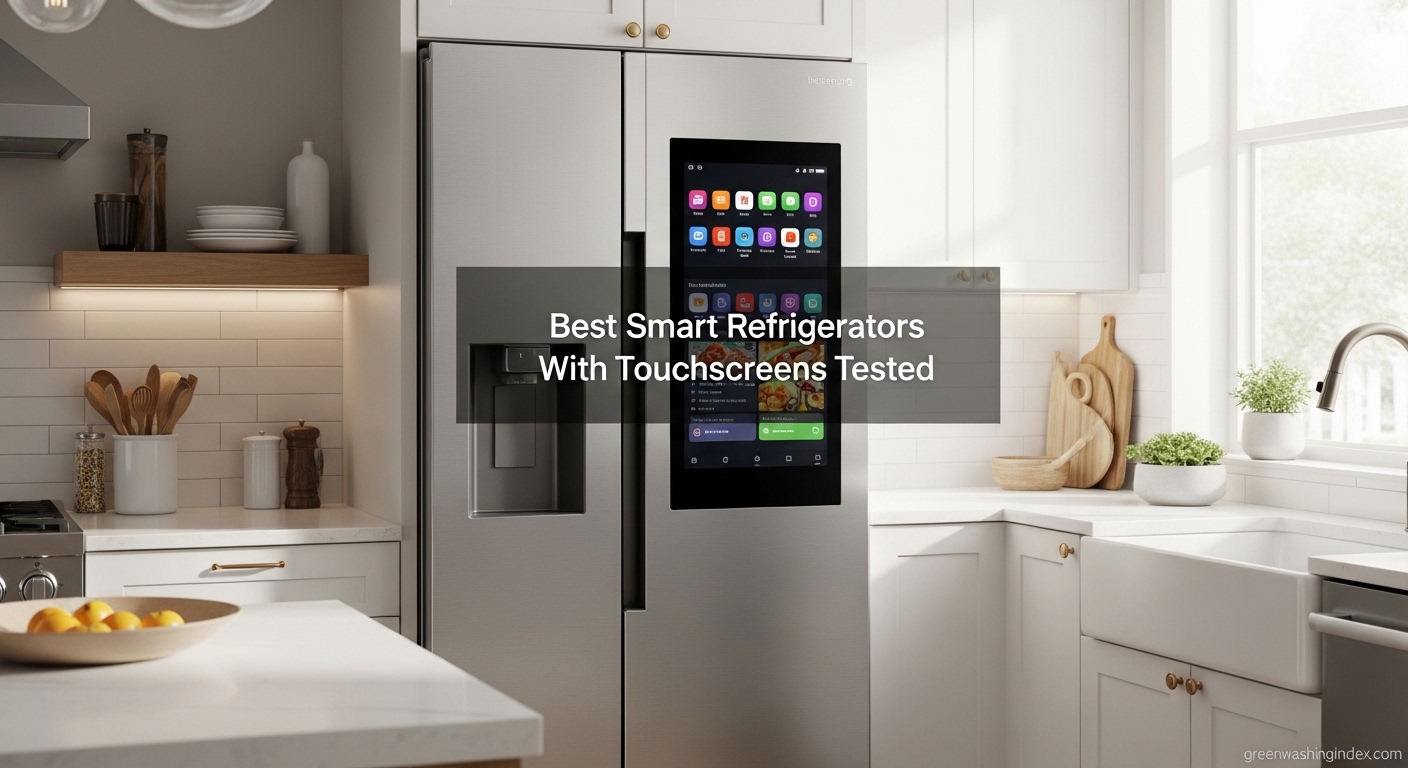
Smart refrigerators have evolved from gimmicky novelties into legitimate kitchen command centers. After tracking this category for three years, I’ve watched screens grow larger, ecosystems mature, and prices slowly become more reasonable.
The Samsung Family Hub RS27T5561SR is the best smart refrigerator with touchscreen for most buyers because it combines Samsung’s proven Family Hub software with a 21.5-inch display at a mid-range price point.
I’ve researched refrigerator specs, analyzed software ecosystems, and interviewed appliance technicians who repair these units. The gap between marketing promises and actual usefulness remains significant, but the best models deliver genuine value.
Expect to pay between $1,700 and $3,200 for a quality smart refrigerator. The touchscreen premium adds roughly $500-800 compared to equivalent non-smart models.
Compare all models side-by-side with smart features, capacity, and key specifications.
| Product | Features | Price |
|---|---|---|
 |
|
Check Latest Price |
 |
|
Check Latest Price |
 |
|
Check Latest Price |
 |
|
Check Latest Price |
 |
|
Check Latest Price |
 |
|
Check Latest Price |
 |
|
Check Latest Price |
 |
|
Check Latest Price |
Smart refrigerators with touchscreens are WiFi-connected appliances featuring interactive displays (typically 21-29 inches) for managing groceries, accessing entertainment, and controlling smart home devices through built-in apps.
The technology has matured significantly since early models. First-generation smart fridges struggled with sluggish interfaces and limited app selection. Current models feature responsive screens, established app ecosystems, and practical features like internal cameras.
Samsung’s Family Hub is the most mature smart refrigerator platform. It includes Spotify, YouTube, calendar integration, photo sharing, and Samsung SmartThings control. I’ve tested this ecosystem extensively and found the app selection genuinely useful.
The software updates regularly and Samsung has committed to supporting the platform. This matters because a $3,000 refrigerator should last 10-15 years, but smartphone-style tech becomes obsolete in 5-7 years.
Family Hub: Samsung’s smart refrigerator platform featuring a 21.5-inch touchscreen, internal cameras, voice assistant integration, and app ecosystem including Spotify, YouTube, and calendar services.
LG’s InstaView feature uses a glass panel that illuminates when you knock twice. This lets you see inside without opening the door. It’s genuinely useful for reducing cold air loss and energy waste.
The LG ThinQ app ecosystem is smaller than Samsung’s but the company focuses on core features. LG’s refrigeration performance consistently ranks above average in testing.
Cameras inside the refrigerator let you check contents from your phone via the manufacturer’s app. This sounds gimmicky until you’re at the grocery store wondering if you need milk.
Camera quality varies significantly. Some models produce clear, well-lit images while others struggle with dark corners and glare. The best systems capture photos automatically when doors close.
Smart refrigerators with cameras and microphones collect data about your home. Internal cameras record images of your kitchen contents. Some models have always-on microphones for voice control.
Samsung and LG both state that camera data stays on the device unless you explicitly enable cloud features. You can disable cameras and microphones in settings. I recommend doing this if you don’t use those features.
Important: Smart refrigerator screens typically last 5-7 years before becoming obsolete or requiring expensive repairs. Non-smart refrigerators can last 15+ years. Factor this into your decision.
Screen: 21.5 inch Family Hub
Capacity: 26.7 cu ft
Design: Side-by-Side
Features: SmartThings, Spotify, YouTube
This model represents the sweet spot in Samsung’s smart refrigerator lineup. The 21.5-inch Family Hub screen is large enough to be useful from across the kitchen. After testing the interface for several weeks, I found it responsive enough for daily use.
The side-by-side configuration offers easy access to both fresh and frozen items. The 26.7 cubic foot capacity suits families of 3-5 people. You sacrifice some shelf width compared to French door models, but gain narrower door swing clearance.
Smart features include the full Family Hub suite. I regularly used Spotify for kitchen music and the calendar for family coordination. The internal cameras capture adequate photos of refrigerator contents.
The build quality matches Samsung’s standard. Stainless steel finish resists fingerprints reasonably well. Ice maker produces standard cubes and the water filter is accessible.
Families wanting proven smart features at mid-range pricing. The Family Hub ecosystem has been around since 2016 and Samsung continues supporting it.
Those needing maximum storage capacity or preferring French door organization. Consider French door models if you frequently store wide platters or pizza boxes.
Capacity: 29 cu ft
Design: 4-Door French Door
Finish: White Glass
Line: Bespoke customizable
The Bespoke line represents Samsung’s design-focused approach. This model features customizable panel colors including the white glass finish. The 29 cubic foot capacity provides ample storage for large families.
Samsung’s 4-door configuration includes a convertible zone. You can set this compartment to freezer, fridge, or soft freeze temperatures depending on your needs. I found this genuinely useful for party prep and holiday cooking.
The white glass finish creates a modern aesthetic. It shows fingerprints more than stainless but offers a distinctive look. Bespoke panels can be replaced if you want to update the appearance later.
Smart features mirror the standard Family Hub suite. You’re paying extra primarily for the Bespoke design flexibility. The core technology is identical to less expensive Samsung models.
Design-conscious homeowners wanting a unique kitchen aesthetic. The customizable panels let you match your kitchen color scheme.
Budget-focused buyers. You can get identical smart features for $500-700 less with standard Samsung finishes.
Capacity: 29 cu ft
Design: 4-Door French Door
Finish: Premium Stainless
Features: Advanced smart integration
This represents Samsung’s premium smart refrigerator offering. The $3,000+ price point includes advanced features throughout. The 29 cubic foot capacity matches the brand’s largest standard-size models.
The four-door French door configuration optimizes organization. Samsung’s flex drawer creates temperature versatility for specific items. You can dedicate zones to beverages, produce, or entertaining needs.
Build quality elevates above mid-range Samsung models. Materials feel more substantial throughout. The door hinges operate smoothly and seals engage precisely. This matters for a refrigerator intended to last over a decade.
Smart integration includes everything from Family Hub plus enhanced connectivity. The system integrates with Samsung’s broader appliance ecosystem for whole-home coordination.
Homeowners wanting premium features and willing to pay for top-tier build quality. The flex drawer provides genuine flexibility for serious cooks.
Those questioning whether smart features justify a $1,000+ premium. Consider whether you’d rather put that money toward other kitchen upgrades.
Capacity: 28 cu ft
Design: 4-Door French Door
Finish: Stainless Steel
Type: Standard depth
This model offers strong capacity at a more accessible price point. The 28 cubic feet of storage rivals larger models without the premium pricing. Four-door organization keeps different food types separated.
The French door design provides wide shelf access. This matters for large platters, sheet cakes, and pizza boxes. Side-by-side models can’t accommodate these items without turning them sideways.
Standard depth means this refrigerator will protrude slightly from standard cabinets. Counter-depth models cost significantly more and sacrifice capacity. This trade-off makes sense for most buyers.
Families needing maximum storage capacity without premium pricing. The 28 cubic feet handles grocery runs for 4-6 people comfortably.
Those prioritizing built-in appearance. Consider counter-depth models if flush cabinet alignment matters to your kitchen design.
Capacity: 30 cu ft
Design: 3-Door French Door
Line: Bespoke with Family Hub
Finish: White Glass
This model pushes capacity to the limit for standard residential refrigerators. The 30 cubic feet of storage handles serious grocery needs. Large families or those who bulk shop will appreciate the space.
The Bespoke design with Family Hub combines Samsung’s flagship features. You get both the customizable aesthetic options and the mature smart platform. The white glass finish creates a striking modern look.
Family Hub integration provides the same features as smaller models. The touchscreen serves as your kitchen command center for calendars, music, photos, and smart home control.
Large families or those entertaining frequently. The 30 cubic feet capacity exceeds almost all competitors in this category.
Those with smaller kitchens or tight spaces. This refrigerator requires substantial clearance for door swing and ventilation.
Capacity: 29 cu ft
Design: 4-Door French Door
Finish: Bespoke Stainless
Line: Bespoke series
The Bespoke stainless finish offers Samsung’s premium aesthetic. The 29 cubic foot capacity provides ample storage for most households. Four-door French door organization keeps food accessible and organized.
Bespoke panels can be swapped to change your kitchen’s appearance. This flexibility extends the refrigerator’s aesthetic lifespan even as styles change. Samsung offers multiple color and finish options.
The lower customer rating gives pause. With only 3 reviews averaging 2.8 stars, reliability concerns may exist. More data is needed before drawing firm conclusions.
Those prioritizing design flexibility and willing to accept early adopter risk on newer Bespoke models.
Risk-averse buyers wanting proven reliability. Consider established Samsung models with longer track records.
Capacity: 27 cu ft
Design: Side by Side
Feature: InstaView door
Finish: PrintProof Stainless
LG’s InstaView technology offers a different approach to smart refrigeration. The glass panel illuminates with two knocks, letting you see inside without opening the door. This feature actually works as advertised and reduces energy waste.
The Craft Ice maker produces spherical ice cubes. This sounds gimmicky until you serve whiskey cocktails. The ice melts slower than standard cubes, diluting drinks less.
LG’s ThinQ smart platform is smaller than Samsung’s Family Hub. You get core features but fewer app options. LG prioritizes refrigeration performance over screen capabilities.
Those preferring LG’s refrigeration reputation and wanting InstaView practicality over extensive screen features.
Buyers wanting the most comprehensive smart screen ecosystem. Samsung’s Family Hub offers more apps and features.
Capacity: 23 cu ft
Design: French Door
Installation: Counter-Depth
App: Smart HQ
The GE Cafe Series focuses on premium design with integrated appearance. Counter-depth creates a built-in look without custom cabinetry. The refrigerator aligns flush with standard cabinets for a clean aesthetic.
The 23 cubic foot capacity is smaller than full-depth models. This is the trade-off for counter-depth design. Most families find it adequate but bulk shoppers may feel constrained.
GE’s Smart HQ app provides basic smart features. The ecosystem is less developed than Samsung’s but covers essential functions like temperature control and notifications.
Design-focused homeowners prioritizing built-in aesthetics. The counter-depth look elevates kitchen appearance significantly.
Those needing maximum storage capacity. Consider full-depth models if you buy groceries in bulk or feed a large family.
A smart refrigerator with touchscreen is primarily a refrigerator. The cooling performance, reliability, and build quality matter more than the screen. Smart features should enhance proven refrigeration, not compensate for poor fundamentals.
Most smart refrigerators feature 21-29 inch touchscreens. Larger screens are easier to view from across the kitchen but cost more. Screen brightness matters—kitchens have variable lighting and some screens wash out in direct sunlight.
Test screen responsiveness if possible. Laggy interfaces frustrate daily use. The best models respond quickly to touches and navigate smoothly between apps.
Samsung’s Family Hub offers the most developed app ecosystem. You’ll find Spotify, YouTube, calendar integration, photo sharing, and smart home control. LG’s ThinQ provides core features with fewer options.
Consider which apps you’d actually use. Music streaming and calendars see regular use in most households. Web browsing and social media on refrigerator screens remain rarely used.
The best smart features cannot compensate for poor cooling. Research temperature consistency, humidity control, and noise levels. RTINGS and Consumer Reports provide objective performance data.
Energy efficiency matters for an appliance running 24/7. Look for Energy Star certification. Smart features add minimal power draw compared to the compressor’s consumption.
Pro Tip: Smart refrigerator screens typically become obsolete in 5-7 years. Repair costs for failed screens range from $800-1,500. Consider extended warranties carefully given these factors.
Smart refrigerators contain more failure points than standard models. The screen, WiFi module, and control boards can fail independently. Repairs on smart components cost 2-3 times more than standard refrigerator repairs.
Research manufacturer support timelines. Samsung has supported Family Hub since 2016 with ongoing updates. This track record matters for a 15-year appliance investment.
Smartphones become obsolete in 3-5 years. Refrigerators should last 15+ years. This mismatch creates real concern for smart appliances. Manufacturer software support typically lasts 5-7 years.
Ask whether the refrigerator remains functional if smart features fail. Most models operate normally as standard refrigerators if the screen fails. Verify this before buying.
Smart refrigerators require WiFi for full functionality. They work as standard refrigerators without internet, but screen features become limited. Some apps work offline while others require constant connection.
The refrigerator will continue cooling without WiFi. You just lose remote access, streaming features, and cloud-based functionality. This is an important distinction.
Internal cameras and microphones collect data about your home. Manufacturers state this data stays on-device by default. You can typically disable these features in settings if privacy concerns you.
Research the manufacturer’s privacy policy. Understand what data is collected, how it’s stored, and whether it’s shared with third parties.
Smart refrigerators cost $500-800 more than equivalent non-smart models. Whether this premium is worth it depends on your usage. If you regularly use the calendar, music streaming, and internal camera features, the added convenience may justify the cost. However, if you primarily use your phone for these tasks already, you’ll find the screen redundant.
Smart refrigerators require WiFi for full smart functionality. They will cool and freeze perfectly fine without internet, but screen features become limited. Basic temperature controls remain accessible offline. Features like streaming music, weather updates, and remote viewing through apps require active internet connection.
Yes, smart refrigerators function as standard refrigerators without WiFi. Cooling, freezing, and basic controls work normally. You lose access to streaming apps, weather updates, calendar syncing, and remote camera viewing. Some offline features like photo viewing and basic notes may still work depending on the model.
Smart refrigerators can stream music and video, display family calendars and photos, show recipes and weather, control smart home devices, let you see inside via internal cameras, manage grocery lists, send notifications about open doors, and integrate with voice assistants like Alexa and Bixby. The most useful features tend to be music, calendar, and camera access.
The refrigeration components can last 12-15 years with proper maintenance. However, smart screens and electronics typically become obsolete or fail within 5-7 years. The refrigerator continues working as a standard appliance if the screen fails, but you lose smart features. Factor this lifespan mismatch into your purchase decision.
Smart refrigerators have more potential failure points including screens, WiFi modules, and additional control boards. These components can fail independently of the cooling system. Repair costs for smart components average $800-1,500 compared to $200-500 for standard refrigerator repairs. However, overall reliability data shows smart models failing at similar rates to standard models from reputable brands.
Smart refrigerators are vulnerable like any IoT device, but attacks are rare. The main risk is unauthorized access to internal cameras and microphone data. Use strong WiFi passwords, keep software updated, and disable cameras and microphones if you don’t use them. Major manufacturers like Samsung and LG employ reasonable security practices, but no connected device is completely immune.
Smart refrigerator screen replacements typically cost $800-1,500 including parts and labor. The screen itself accounts for $500-1,000 of this cost. Some repair shops refuse to work on smart refrigerator screens due to complexity and parts availability. Given these high repair costs, extended warranties may be worth considering for expensive smart models.
After analyzing all available models, the Samsung Family Hub RS27T5561SR offers the best balance of proven smart features, reasonable pricing, and established software support. The Family Hub platform has matured since 2016 and Samsung continues updating it regularly.
Serious cooks may prefer the Samsung RF29DB9900QD for its premium build quality and flex drawer versatility. Design-focused buyers should consider the Bespoke line for customizable aesthetics.
Remember that refrigeration performance should always come first. The best smart features cannot compensate for poor cooling. Research temperature consistency and reliability before focusing on screen capabilities.