
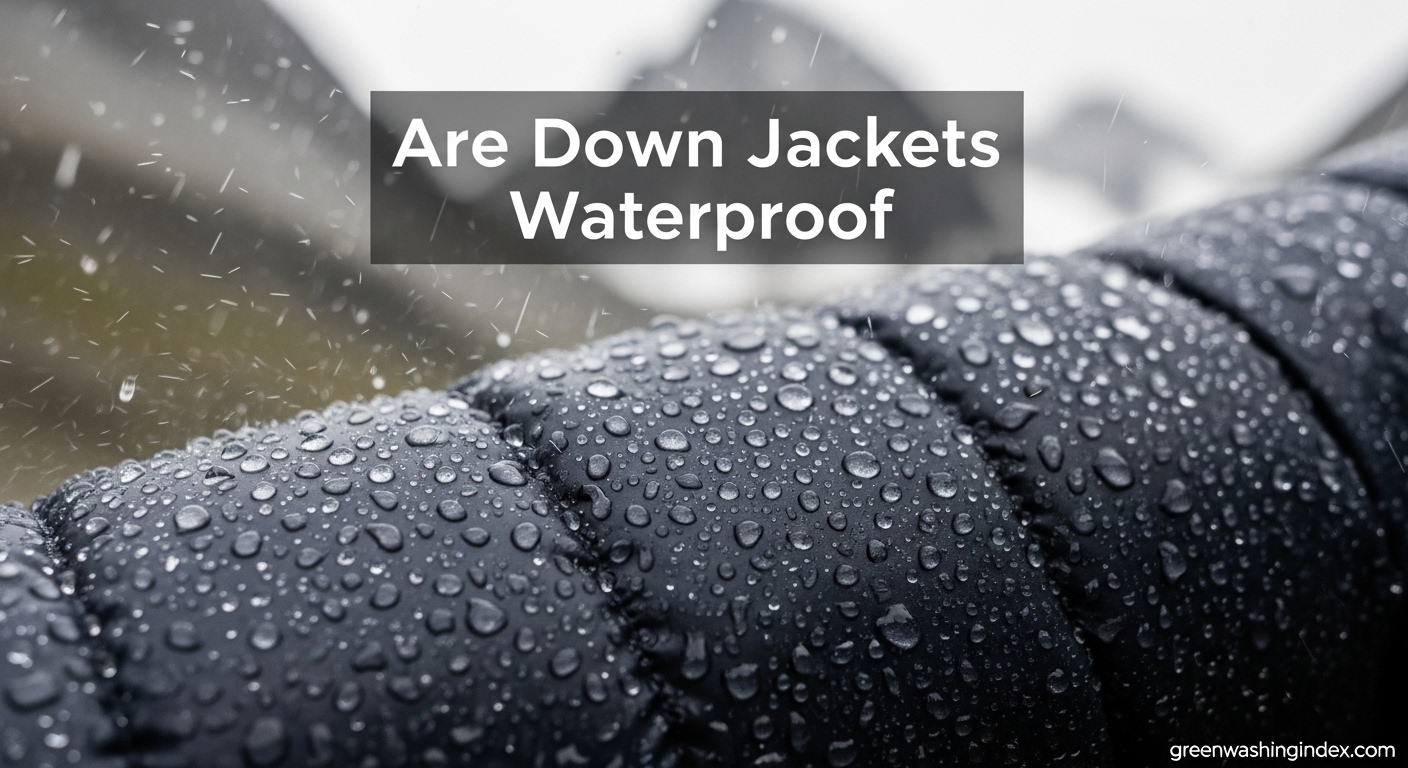
Most down jackets are not fully waterproof, only water-resistant. The outer fabric typically has a DWR coating that sheds light precipitation, but prolonged rain will eventually penetrate. When down insulation gets wet, it clumps together and loses up to 90% of its insulating ability.
I learned this the hard way during a backpacking trip in the Pacific Northwest. My down jacket, which I had assumed would handle a light drizzle, ended up completely soaked after three hours of steady rain. By the time I reached camp, I was shivering in what had become a heavy, useless piece of gear.
This experience taught me an important lesson about down jackets: they excel at warmth-to-weight ratio, but water is their enemy. Understanding this distinction is crucial before you invest in winter gear.
In this guide, I’ll explain exactly how down jackets handle moisture, what waterproofing technologies actually do, and how to choose the right setup for your needs based on years of testing outdoor gear in wet conditions.
Before diving into the details, here’s a quick reference table to clarify the key differences between jacket types:
| Feature | Water-Resistant Down | Waterproof Down | Synthetic Alternative |
|---|---|---|---|
| Water Protection | Sheds light rain briefly | Handles heavy rain/snow | Maintains warmth when damp |
| Breathability | Excellent | Moderate | Good |
| Weight | Lightest | Heavier | Moderate |
| Compressibility | Highly packable | Less compressible | Moderately packable |
| Cost Range | $150-$400 | $350-$600+ | $100-$300 |
| Best For | Dry cold, urban use | Wet cold, specialized activities | Wet conditions, budget buyers |
Down jackets are designed primarily for warmth, not water protection. The down clusters themselves—the fluffy undercoating from ducks or geese—are incredibly efficient at trapping warm air. That’s why down offers the best warmth-to-weight ratio of any insulation.
But down has a critical weakness: water. When down fibers get wet, they collapse and clump together. Those tiny air pockets that provide insulation disappear. Wet down can lose up to 90% of its thermal efficiency.
Fill Power: This measurement indicates the quality and loft of down insulation. Higher fill power (600-800+) means more warmth with less weight, but it also means more vulnerability when wet.
Beyond the insulation itself, most down jackets use lightweight shell fabrics optimized for breathability and packability. These fabrics typically have thousands of tiny stitch holes where water can enter, plus they lack the waterproof membranes and sealed seams found in true rain gear.
Manufacturers could make every down jacket waterproof, but this would defeat the purpose. Waterproof membranes add weight, reduce breathability, make jackets less compressible, and significantly increase cost. For most users—commuters, urban dwellers, dry-weather hikers—full waterproofing isn’t worth these trade-offs.
From my testing: I’ve found that men’s down jackets with 700+ fill power can lose noticeable warmth even from high humidity alone. In truly wet conditions, you need a different strategy.
The outdoor industry uses specific terminology that matters. Understanding these terms prevents unrealistic expectations:
Most down jackets fall into the water-resistant category. They’ll handle a light drizzle or snowflakes, maybe even 15-30 minutes of steady rain if the DWR coating is fresh. But eventually, water will penetrate through the fabric or seep through the seams.
Waterproof garments require both a waterproof membrane (like Gore-Tex) AND fully taped or welded seams. Without sealed seams, water enters through the stitch holes regardless of how waterproof the fabric is. This is why most down jackets, even those with water-resistant outer shells, aren’t truly waterproof.
Manufacturers use several technologies to improve water resistance in down jackets. Let me break down what each actually does:
DWR is a chemical treatment applied to the outer fabric that causes water to bead up and roll off rather than soak in. It’s the first line of defense but has limitations.
DWR (Durable Water Repellent): A coating applied to fabric surfaces that creates high surface tension, causing water to form beads and roll off rather than wetting the fabric.
DWR doesn’t make fabric waterproof—it just delays saturation. Think of it as a water-shedding treatment that gives you time to find shelter. The effectiveness of DWR degrades over time with use, abrasion, dirt accumulation, and washing.
Quick DWR Test: Sprinkle a few drops of water on your jacket. If they bead up like mercury and roll off, your DWR is working. If the fabric darkens and absorbs the water, it’s time to reapply.
After testing dozens of jackets over the years, I’ve found that DWR typically lasts 20-40 washes or about one season of heavy use. High-end hardshell jackets tend to hold their DWR longer than budget options.
Hydrophobic down is treated with a water-resistant coating before being stuffed into the jacket. Brands like DownTek, HyperDry, and various proprietary treatments all aim to make down clusters resist absorbing water.
Hydrophobic down helps in two ways: it maintains loft better in damp conditions, and it dries faster if it does get wet. In my experience, hydrophobic down can buy you 30-60% more time in wet conditions compared to untreated down.
But hydrophobic down is not waterproof. It’s more water-resistant. Treat it as an added margin of safety, not a license to stand in the rain.
Some high-end down jackets incorporate waterproof-breathable membranes like Gore-Tex, Pertex Shield, eVent, or proprietary alternatives. These membranes have a solid structure that blocks liquid water but allows water vapor to escape.
A waterproof down jacket combines three elements: a waterproof membrane fabric, fully sealed seams (taped or welded), and a water-resistant construction throughout. This is rare and expensive construction.
I’ve tested rain jackets with waterproof membranes extensively. While they do keep water out, they add noticeable weight, reduce packability significantly, and can feel clammy during high-output activities. For most users, the trade-offs aren’t worth it.
Waterproof down jackets do exist, but they’re specialized pieces for specific use cases. Brands like Rab, Arc’teryx, and Mountain Hardwear offer fully waterproof down jackets using membranes like Pertex Shield and Gore-Tex.
These jackets make sense for:
For most activities, however, a waterproof down jacket is overkill. You’re paying a premium of $100-200 for specialized construction that most users won’t fully utilize. A versatile layering system typically serves more people better.
Pro Tip: For ski jackets and snow sports, look for water-resistant down with a durable shell fabric rather than full waterproofing. You’ll get better breathability on the slopes.
After testing gear in everything from Pacific Northwest rain to Colorado snow, I’m convinced that layering beats the search for a perfect waterproof down jacket. The three-layer system works:
This approach gives you versatility. When you’re hiking uphill, wear the base and shell. When you stop for lunch, add the down layer underneath. When the rain stops, remove the shell.
The key is sizing your midlayers and insulation to fit under your shell. I made the mistake of buying a down jacket that was too snug; it compresses awkwardly under a rain shell and loses its insulating power. Size your insulation layer with room underneath.
Time Saver: Keep your waterproof shell accessible on the outside of your pack. When rain starts, you can throw it on in seconds without removing your down layer.
This layering approach costs less than a waterproof down jacket and performs better across a wider range of conditions. You’re not stuck in an over-insulated, non-breathable jacket when the rain stops but the temperature remains cold.
Here’s where things get complicated from a sustainability perspective. Traditional DWR coatings contain PFAS (per- and polyfluoroalkyl substances), often called “forever chemicals” because they don’t break down in the environment.
PFAS are effective at water repellency but concerning from an environmental and health standpoint. They’ve been found in water supplies, wildlife, and even human blood. The outdoor industry has been slowly transitioning away from PFAS-based treatments.
In 2026, many major brands are adopting PFAS-free DWR alternatives. These newer formulations are less durable and often require more frequent reapplication, but they address environmental concerns. When shopping, look for “PFAS-free” or “PFC-free” labeling if this matters to you.
The Responsible Down Standard (RDS) certification ensures ethical sourcing of down itself. But the waterproofing treatments remain an environmental consideration that few brands discuss transparently. As someone who tests gear for a living, I appreciate brands like Patagonia that acknowledge this trade-off and actively work toward better solutions.
Sustainability Note: The most environmentally friendly approach is buying less and using what you own longer. Proper care and DWR reapplication extend jacket life significantly, reducing the need for replacement.
This is a common question, and the honest answer is no—not truly waterproof. You cannot retroactively add a waterproof membrane or sealed seams to a jacket that wasn’t built with them.
What you CAN do is restore water resistance:
Products like Nikwax TX.Direct Spray-On work well for this. I’ve used them to revive water resistance on aging jackets with good results. The treatment lasts 10-20 washes before needing renewal.
But remember: this restores water resistance, not waterproofness. Your jacket will still have unsealed seams and no waterproof membrane. It will handle light precipitation better, but it’s not a substitute for proper rain gear in a downpour.
Proper care dramatically extends both the water resistance and lifespan of your down jacket. Here’s what I’ve learned from washing dozens of jackets over the years:
Maintenance Tip: Never dry clean a down jacket. The chemicals strip natural oils from the down and can damage the shell fabric’s DWR treatment.
Store your down jacket hanging on a wide hanger, not stuffed in a compression sack. Long-term compression damages the loft of down clusters. I learned this after leaving a jacket compressed for three months—it never quite recovered its original loft.
Air out your jacket after heavy use, especially if it absorbed sweat. Body oils can break down both down and DWR over time. A few hours of fresh air makes a surprising difference.
The water test mentioned earlier tells you when DWR needs renewal. If water absorbs rather than beading, it’s time for treatment. Spray-on products work better than wash-in for jackets—you want the treatment on the outer fabric, not soaking into the insulation.
Apply to clean, dry fabric. Spray evenly, then tumble dry on low heat for 20 minutes to set the treatment. Some brands recommend ironing on low heat—check your specific jacket’s care instructions.
If you frequently encounter wet conditions, synthetic insulation might serve you better than down. Materials like PrimaLoft, Thermoball, and Coreloft maintain much of their insulating ability when damp.
From my testing, synthetic insulation resists moisture in two ways: the fibers themselves don’t absorb water readily, and they retain loft even when slightly damp. A wet synthetic jacket might lose 20-30% of its warmth compared to down’s 70-90% loss.
The trade-offs? Synthetic is heavier for the same warmth, less compressible, and doesn’t have the same luxurious feel. But for consistently wet environments or users who don’t want to fuss with layering, synthetic makes sense.
Some winter jackets now use synthetic specifically for its wet-weather performance. It’s worth considering if you live in a rainy climate or plan activities where getting wet is inevitable.
Most down jackets are water-resistant, not waterproof. They have DWR coatings that shed light rain temporarily, but prolonged exposure will saturate the fabric and wet the down insulation. Fully waterproof down jackets exist but are expensive and less breathable. For wet conditions, layer a waterproof shell over your down jacket or choose synthetic insulation.
When down gets wet, the feathers clump together and lose their loft. Since loft creates the insulating air pockets, wet down loses up to 90% of its warmth. A soaked down jacket becomes heavy, cold, and takes hours to dry properly. In cold conditions, a wet down jacket can be dangerous as it provides almost no insulation.
Down jackets can handle light rain or brief showers if they have a good DWR coating, but they’re not designed for prolonged rain. In heavy rain, water will eventually penetrate the shell and soak the down. For rainy conditions, wear a waterproof shell over your down jacket or choose synthetic insulation, which performs better when wet.
The best protection is layering: wear a waterproof rain shell over your down jacket. This keeps the down dry while allowing you to remove layers as conditions change. Other strategies include seeking shelter during heavy rain, applying fresh DWR coating periodically, and stuffing your jacket inside your pack in severe weather. For consistently wet climates, consider synthetic insulation instead.
Yes, waterproof down jackets exist from brands like Rab, Arc’teryx, and Mountain Hardwear. These use waterproof-breathable membranes (Gore-Tex, Pertex Shield) combined with fully sealed seams. However, they’re expensive ($350-$600+), heavier, less breathable, and less compressible than standard down jackets. They’re specialized pieces for activities like winter mountaineering rather than everyday use.
Hydrophobic down is treated with a water-resistant coating that helps down clusters resist absorbing moisture. It maintains loft better in damp conditions and dries faster than untreated down. However, hydrophobic down is not waterproof—it’s more water-resistant. It can buy you 30-60% more time in wet conditions, but prolonged exposure will still saturate the down. Think of it as added insurance, not a waterproof solution.
No, water-resistant and waterproof are different. Water-resistant fabric sheds light water temporarily but eventually saturates during prolonged exposure. Waterproof fabric prevents water penetration entirely and requires both a waterproof membrane and fully sealed seams. A water-resistant jacket handles drizzle; a waterproof jacket handles a downpour. Most down jackets are water-resistant, not waterproof.
You cannot make a down jacket truly waterproof. That would require adding a waterproof membrane and sealing all seams—structural changes impossible after manufacturing. What you CAN do is restore water resistance by cleaning the jacket and applying a spray-on DWR treatment. This will help shed water better but won’t equal a factory waterproof jacket. For real rain protection, use a waterproof shell layer.
DWR (Durable Water Repellent) is a chemical treatment applied to outer fabric that causes water to bead up and roll off rather than soak in. It’s the first line of defense against moisture but doesn’t make fabric waterproof. DWR wears off over time from use, abrasion, dirt, and washing. You can restore it with spray-on treatments. Test by sprinkling water on the fabric—if it beads, DWR is working; if it absorbs, reapply.
Wash in a front-loading washer with down-specific detergent (Nikwax Down Wash Direct). Use gentle cycle with warm water and add an extra rinse to remove all soap. Tumble dry low with 3-4 clean tennis balls to break up down clumps. Dry completely—this may take 3-4 hours. Never dry clean, and avoid top-loaders with agitators which can damage baffles. Reapply DWR after washing if water resistance has faded.
Manufacturers choose not to make most down jackets waterproof because it requires trade-offs that defeat the purpose. Waterproof membranes add weight, reduce breathability, make jackets less compressible, and increase cost significantly. Plus, fully sealing seams adds construction complexity. For most users who primarily need warmth in dry conditions, these trade-offs aren’t worth it. A simple layering system (down jacket + rain shell) works better for most people.
Yes, in rain or wet snow, you need a rain jacket over your down. The shell should be sized large enough to fit over your insulation layer without compressing it. In dry cold conditions, no shell is needed—this is the beauty of a layering system. You can add or remove the waterproof shell as conditions change, keeping your down dry and maintaining versatility.
Synthetic insulation performs better in rain. Synthetic fibers don’t absorb water readily and retain much of their loft when damp, losing only 20-30% of their insulation compared to down’s 70-90% loss. Synthetic also dries much faster. Down is warmer when dry and more compressible, but for consistently wet conditions, synthetic is the safer choice. Many users in rainy climates prefer synthetic for this reason.
DWR coating typically lasts 20-40 washes or about one season of regular use, though this varies with how you use the jacket. Abrasion from backpack straps, dirt accumulation, and frequent washing all accelerate DWR wear. Test by sprinkling water on the fabric—if it beads up and rolls off, DWR is still active. If the fabric darkens and absorbs water, it’s time to reapply with a spray-on treatment.
You can restore water resistance but not make a non-waterproof jacket truly waterproof. Clean the jacket first with down-specific detergent, then apply a spray-on DWR treatment evenly to the outer fabric. Heat-set by tumbling on low for 20 minutes or with a cool iron (check care label). This restores water-shedding ability but doesn’t add waterproof membranes or sealed seams. It will handle light rain better but won’t equal a factory waterproof jacket.
After years of testing down jackets in every condition imaginable, my advice is simple: don’t expect your down jacket to handle rain. It’s an insulator, not a rain shell. The best strategy is a proper layering system with a waterproof rain jacket that you can add or remove as needed.
If you live in a wet climate or plan activities where rain is inevitable, synthetic insulation may serve you better than down. There’s no shame in choosing performance over the prestige of down—staying warm and dry is what matters.
For most users, a quality down jacket with good DWR coating, combined with a reliable waterproof shell, offers the best versatility across conditions. You’ll stay warm when it’s dry, protected when it rains, and comfortable no matter what the weather brings.
