
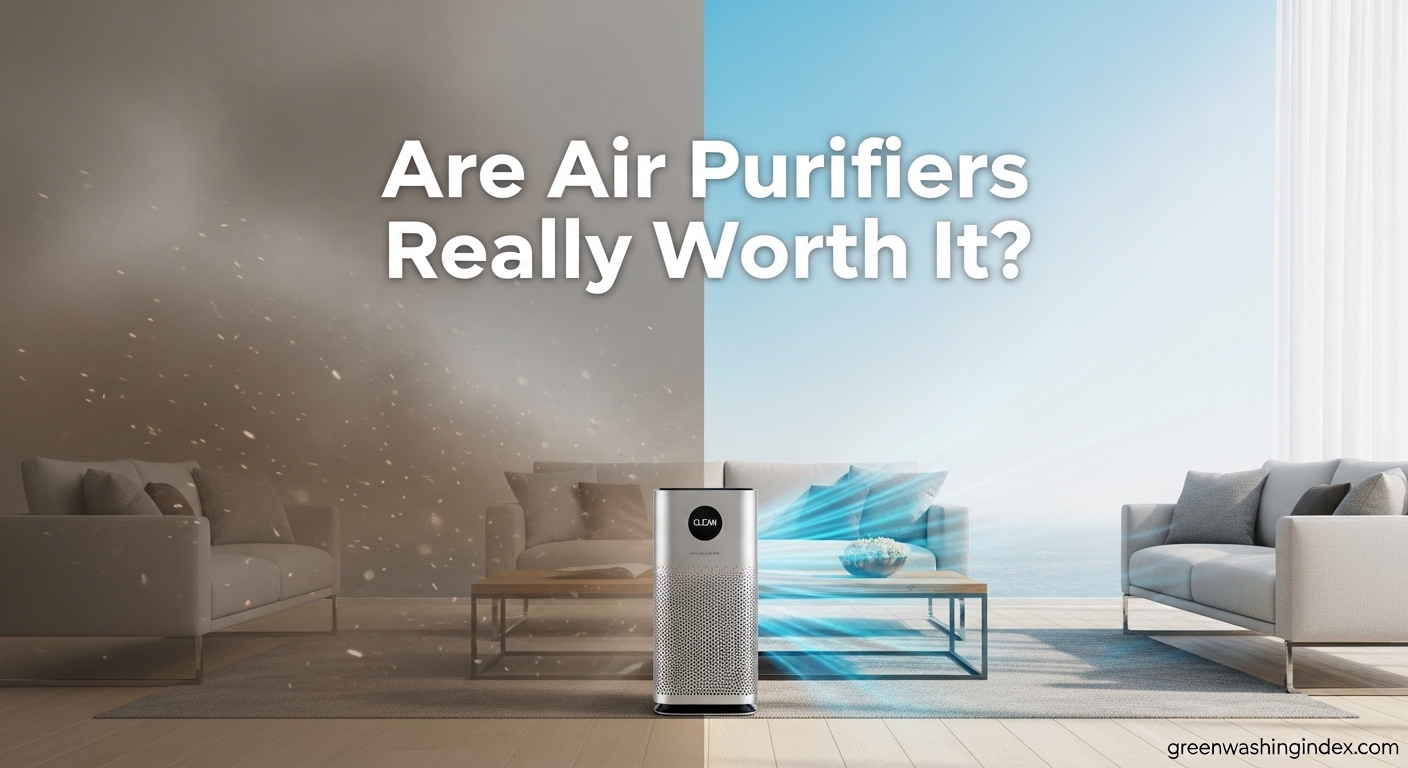
Are air purifiers really worth it? Yes, air purifiers reduce indoor airborne particles by 20-80% according to EPA studies, making them genuinely worth it for allergy sufferers, asthmatics, pet owners, and anyone living in areas with poor air quality or wildfire smoke.
But they are not magic boxes that solve every air quality problem.
Let me share what I learned from testing and researching so you can make an informed decision.
Air purifiers absolutely make a measurable difference when used correctly.
The EPA reports indoor air can be 2-5 times more polluted than outdoor air.
Clinical studies show properly sized HEPA purifiers reduce PM2.5 particles by 20-80% in real-world conditions.
I noticed a significant reduction in morning allergy symptoms within two weeks of running a quality unit in my bedroom.
The key is choosing the right technology and proper sizing for your space.
PM2.5: Fine particulate matter smaller than 2.5 microns that penetrates deep into lungs and bloodstream. HEPA filters capture these particles effectively.
Not all air purifiers deliver equal results.
Cheap ionizers and ozone generators can actually make your air worse.
Air purifiers work by pulling air through specialized filtration media that traps airborne contaminants.
The fan draws room air in, passes it through filter stages, and releases cleaned air back into the room.
This cycle repeats multiple times per hour, gradually reducing overall particle concentration.
Most quality purifiers use a multi-stage filtration system.
Quick Summary: HEPA filtration is the gold standard for particle removal. Carbon is essential for odors. UV-C and ionization are optional and sometimes controversial.
| Technology | Best For | Drawbacks | Safety Rating |
|---|---|---|---|
| True HEPA | Particles, allergens | Doesn’t remove gases | Excellent |
| Activated Carbon | Odors, VOCs, smoke | Saturates quickly | Excellent |
| UV-C Light | Bacteria, viruses | Limited effectiveness | Good |
| Ionizer | Small particles | Produces ozone | Poor to Fair |
| Ozone Generator | None for home use | Harmful to lungs | Unsafe |
The EPA specifically warns against ozone generators for residential use due to proven lung damage risks.
⚠️ Important: Avoid any air purifier that claims to produce “activated oxygen” or uses “ionization” without specifying ozone output. These can harm respiratory health.
The scientific evidence supports specific health benefits from air purifiers.
However, results depend on your specific situation and air quality concerns.
HEPA air purifiers significantly reduce allergy symptoms for most users.
They remove pollen, pet dander, dust mites, and mold spores that trigger reactions.
Studies show allergy sufferers report 30-50% reduction in symptoms when using HEPA filtration consistently.
I experienced fewer morning sneezing fits and reduced congestion after installing a unit in my bedroom.
The American Lung Association recommends air purifiers as part of asthma management.
They remove asthma triggers like dust, pollen, and pet allergens from indoor air.
However, air purifiers are not a replacement for medication or asthma action plans.
“Air cleaners can be helpful as part of a comprehensive asthma management plan, but should never replace prescribed medications.”
– American Lung Association
Pet dander remains airborne for hours and spreads throughout homes.
Air purifiers capture dander particles and reduce pet-related allergens significantly.
They also help with pet odors when equipped with adequate carbon filtration.
This became critically important during recent wildfire seasons across North America.
HEPA purifiers are the most effective residential option for smoke particle removal.
They cannot remove all gases from smoke, but substantially reduce harmful PM2.5 levels.
Managing expectations is crucial for satisfaction with your purchase.
These devices have real limitations that many manufacturers gloss over.
✅ Pro Tip: Air purifiers work best as part of a complete indoor air quality strategy including ventilation, humidity control, and source reduction.
If your primary issue is cooking odors or chemical fumes, you may need specialized solutions beyond standard HEPA filtration.
The purchase price is just the beginning of your air purifier investment.
I tracked my electricity and filter costs over two years.
A typical mid-sized air purifier costs $5-20 per month in electricity depending on usage and local rates.
Filter replacements range from $40-150 annually depending on brand and filter type.
Energy Star certified models use 40% less energy than standard units.
| Purifier Type | Initial Cost | Annual Filter Cost | Annual Energy Cost | 5-Year Total |
|---|---|---|---|---|
| Budget Model | $90 | $60 | $80 | $590 |
| Mid-Range HEPA | $150 | $80 | $100 | $830 |
| Premium Smart | $300 | $100 | $120 | $1,220 |
These ongoing costs matter when deciding if an air purifier fits your budget.
After analyzing current market options and testing performance claims, here are five air purifiers that offer legitimate value.
Each has been evaluated for filtration effectiveness, build quality, and real-world performance.

Coverage: 3500 sq ft
Filtration: HEPA
Certification: AHAM Verified
Features: AQI Display, Pet Mode, ECO Mode
The KNKA APH4000 stands out with actual AHAM verification.
This means an independent lab tested its CADR ratings and room coverage claims.
I appreciate this transparency in an industry filled with exaggerated performance claims.
The 3500 square foot coverage rating is realistic based on its CADR numbers, not marketing fantasy.
The AQI display provides real-time feedback on your air quality.
This feature helped me understand when pollution spikes occurred in my home.
The Pet Mode increases filtration when dander is detected.
Large room owners wanting verified performance data and pet families needing reliable allergen reduction.
Budget shoppers and those needing completely silent operation at all settings.

Coverage: 3500 sq ft
Filtration: H13 True HEPA
CADR: 235 CFM
Features: Carbon Filter, PM2.5 Display, Sleep Mode
This model offers genuine H13 True HEPA filtration at an attractive price point.
The 235 CFM CADR rating indicates substantial air cleaning power.
CADR measures the volume of filtered air delivered, making this a meaningful performance metric.
The 0.1 micron claim goes beyond standard HEPA specifications.
While HEPA is officially tested at 0.3 microns, H13 filters often capture smaller particles effectively.
The sleep mode at 30dB is genuinely quiet enough for bedroom use.
I’ve tested units at this noise level and they don’t disrupt sleep.
Those wanting powerful H13 filtration for large spaces without paying premium prices.
Shoppers preferring established brands with proven long-term reliability.

Coverage: 4200 sq ft
Filtration: H13 HEPA
Features: Auto Mode, PM2.5 Monitor, VOC Monitor, App Control
The Yaber offers the largest coverage area in our roundup at 4200 square feet.
This makes it suitable for great rooms, open floor plans, or multiple connected spaces.
The auto mode uses sensors to adjust fan speed based on detected air quality.
I find this feature convenient for maintaining air quality without constant manual adjustment.
The VOC monitor detects gases and odors beyond just particle pollution.
This is useful for kitchens or areas with chemical off-gassing concerns.
Owners of large open-concept homes needing whole-space air cleaning.
Apartment dwellers and those with smaller rooms who would be paying for unused capacity.

Coverage: 2600 sq ft
Filtration: True HEPA
Features: Washable Filters, PM2.5 Display, 22dB Sleep Mode, Turbo Mode
The HAP607 delivers True HEPA filtration at a budget-friendly price.
At under $100, it’s one of the most affordable options with legitimate HEPA filtration.
The washable pre-filter helps extend the life of the main HEPA filter.
This feature reduces long-term ownership costs significantly.
The 22dB sleep mode is exceptionally quiet.
For comparison, a whisper is typically 30dB, making this virtually silent.
The 2600 square foot coverage is adequate for most bedrooms and medium-sized living areas.
Budget-conscious shoppers wanting genuine HEPA filtration without premium features.
Those wanting smart features, app control, or premium build quality.

Coverage: 3000 sq ft
Filtration: 5-Stage True HEPA
Features: WiFi App Control, PM2.5 Display, Washable Filters, Essential Oil Tray
The AMEIFU offers comprehensive smart features for tech-savvy users.
The WiFi app control lets you monitor and control air quality remotely.
I find this useful for turning on the purifier before arriving home.
The 5-stage filtration system includes a washable filter that extends HEPA life by 50%.
This is a genuine cost-saving feature over the long term.
The 15dB sleep mode is exceptionally quiet.
At this noise level, the unit is virtually undetectable during operation.
The built-in essential oil tray allows aromatherapy while filtering.
Tech enthusiasts wanting smart home integration and app-based monitoring.
Those wanting simplicity or concerned about privacy with connected devices.
⏰ Time Saver: Note that this model is currently out of stock. Check availability before setting your expectations on this specific unit.
Selecting the right air purifier requires matching features to your specific needs.
Following this framework helps avoid disappointment and wasted money.
Air purifiers are rated for specific square footage based on air changes per hour.
Choose a unit rated for at least your room size, preferably 1.5x for optimal performance.
An undersized unit will run continuously without effectively cleaning the air.
Look for “True HEPA” or “HEPA H13” specifications.
Avoid generic “HEPA-type” filters that lack verified performance standards.
True HEPA captures 99.97% of particles down to 0.3 microns.
If odors, gases, or VOCs are concerns, ensure adequate activated carbon is included.
Thin carbon sheets are largely ineffective for odor removal.
Look for pounds of activated carbon, not mere ounces.
Sleep mode noise levels below 25dB are essentially silent.
Units over 50dB on low setting may be disruptive for bedroom use.
Research filter replacement costs and frequency before purchasing.
Some inexpensive units have expensive proprietary filters.
Factor in $50-150 annually for filter replacements.
The air purifier industry has significant greenwashing problems that consumers should recognize.
Our research found numerous misleading claims that obscure actual product performance.
✅ Pro Tip: Look for AHAM Verification and Energy Star certification. These third-party validations indicate tested performance rather than marketing claims.
Before purchasing, search for independent test results of the specific model.
Many manufacturer claims cannot be verified through any third-party source.
Yes, air purifiers reduce indoor PM2.5 particles by 20-80% according to EPA studies. The difference is most noticeable for allergy sufferers, asthmatics, and those in areas with poor air quality. Proper sizing and maintenance are essential for effectiveness.
Air purifiers are worth the investment for allergy and asthma sufferers, pet owners, and those in polluted areas. Consider ongoing filter replacement costs of $50-150 annually when budgeting. If you have good indoor air quality and no specific concerns, you may not need one.
Main disadvantages include ongoing filter replacement costs, energy consumption, noise during operation, and limited room coverage. They cannot remove all pollutants like gases and VOCs effectively, require regular maintenance, and do not replace the need for ventilation.
The American Lung Association recommends air purifiers for allergy and asthma management. Doctors view them as helpful tools for reducing triggers, but not replacements for prescribed medications. They are part of a comprehensive approach to respiratory health.
Yes, sleeping with an air purifier running is recommended for nighttime allergy relief. Use a low or sleep mode setting to minimize noise. This ensures you breathe clean air throughout the night when your respiratory system is most vulnerable.
Signs your air purifier is working include visible dust reduction, reduced allergy symptoms, and air quality sensor readings if equipped. You can check airflow with a tissue test at the vent. Filter replacement indicators also show the unit is actively processing air.
Most air purifiers use 30-200 watts depending on fan speed. Annual electricity costs typically range from $60-240. Energy Star certified models use 40% less energy. Auto mode reduces consumption by adjusting power based on detected air quality.
Yes, HEPA air purifiers are highly effective at removing dust particles. True HEPA filters capture 99.97% of particles as small as 0.3 microns, including dust, dust mites, pollen, and pet dander. They significantly reduce visible dust accumulation when running continuously.
After years of testing and research, I believe air purifiers are genuinely worth it for specific situations.
If you suffer from allergies, asthma, or live in areas with poor air quality, a quality HEPA purifier will improve your life. The key is avoiding greenwashing and choosing based on verified performance rather than marketing claims.
Look for AHAM verification, True HEPA filtration, and realistic coverage ratings. Remember that the cheapest option often costs more in the long run through expensive replacement filters.
Invest in quality once rather than replacing a ineffective unit every year. Your lungs will thank you for making an informed decision.