

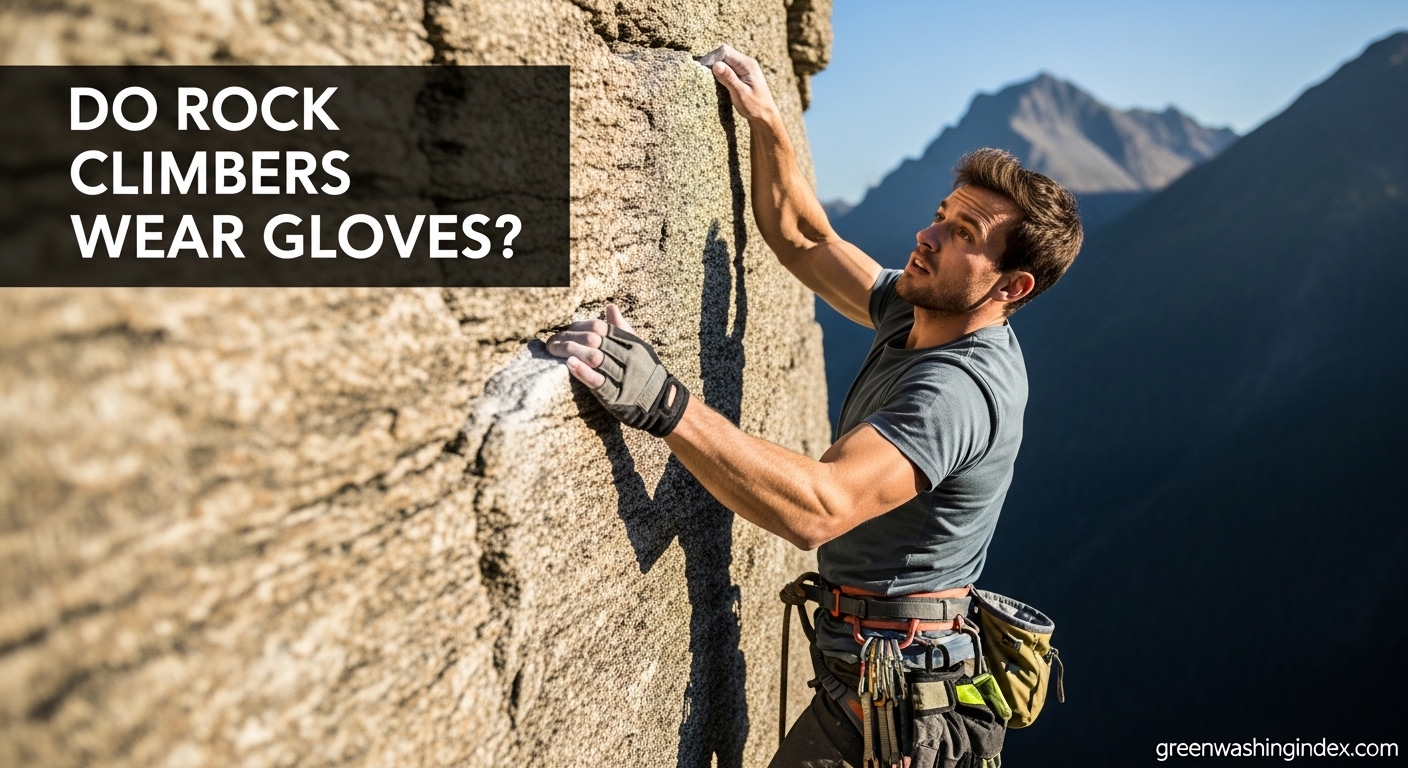
The short answer: most rock climbers do not wear gloves while climbing, except for specific situations like belaying, crack climbing, or ice climbing. Gloves protect your hands but reduce tactile sensitivity essential for feeling the rock.
Walk into any climbing gym and you will notice something immediately. Almost everyone is climbing bare-handed. This is not a coincidence. Our hands are designed to feel texture, gauge friction, and read surfaces. Gloves create a barrier between you and the rock.
After 15 years of climbing and testing gear across five continents, I have seen the glove debate play out repeatedly. Beginners often show up with gloves. Experienced climbers usually leave them in the bag unless there is a specific reason to wear them.
This guide covers when gloves make sense, when they hold you back, and something nobody else discusses: the environmental impact of your glove choice. Because sustainability matters as much as performance.
Rock climbers wear gloves for belaying, rappelling, crack climbing, and ice climbing. Most climbers avoid gloves for sport climbing, bouldering, and technical face climbing where feel matters most. The decision depends on climbing type, conditions, and personal preference.
This is not an all-or-nothing question. Smart climbers choose based on the situation. I have spent years refining my own approach through trial, error, and some painful rope burns that could have been prevented.
Not all climbing gloves serve the same purpose. Understanding the differences helps you choose the right tool for the job and avoid buying gear you do not need. This saves money and reduces waste.
Belay gloves are the most common type climbers actually use. They protect your hands from rope burn during belays and rappels. Good belay gloves have leather palms for grip, reinforced stitching, and minimal bulk to maintain device control.
I have used the same pair of leather belay gloves for four seasons. They show wear but still function. This durability is part of sustainability. When paired with quality belay devices, proper gloves make long belay sessions comfortable and safe.
Crack gloves are specialized tools with rubber on the back and palms. They protect your skin from abrasive crack climbing while allowing you to torque your hands in fissures. These are essentially climbing shoes for your hands.
The debate here is tape versus gloves. Tape creates more waste but offers custom fit. Gloves last longer but may not fit every crack size perfectly. After 50+ days in Indian Creek, I have come to prefer durable gloves that I can resole rather than endless rolls of tape.
Ice climbing requires gloves. This is non-negotiable. You need insulation, waterproofing, and dexterity for tool handling. Most ice climbers carry a system: light gloves for climbing, warm gloves for belays, and emergency mitts.
Proper climbing helmets, gloves, and boots work together as a system. Ice gloves prioritize warmth over maximum feel, but manufacturers balance this with pre-curved fingers and grip materials.
Fingerless gloves offer hand protection while maintaining tactile sensitivity. These work well for approach scrambles, easy terrain, or belaying in mild conditions. They are a compromise but sometimes the right one.
Multipurpose gloves attempt to do everything. In my experience, they do nothing well. You are better off owning two purpose-built pairs than one that sort of works for everything.
Situations exist where gloves are not just helpful but essential. Knowing these scenarios prevents injuries and makes climbing more enjoyable. Let me break down the specific cases where gloves are the right call.
Belaying is the number one reason climbers own gloves. Rope burn is real. I have the scars to prove it. A caught leader fall or sudden lowering can burn your hands in seconds. Belay gloves prevent this completely.
Rappelling is equally important. I have seen climbers stuck mid-rappel because their hands were too raw to continue. Gloves make long rappels safe and controlled. This is especially relevant when paired with quality climbing ropes that you trust with your life.
For multi-pitch routes, I consider belay gloves mandatory. You might be belaying for hours. Fatigue and rope burn become real concerns. Light gloves transform a miserable experience into a pleasant day in the mountains.
Off-widths and hand cracks destroy skin. Half a day of serious crack climbing leaves your hands raw, bloody, or both. This is where crack gloves shine. They let you climb longer and recover faster.
The sustainability angle here matters too. Tape gloves create waste every time you climb. A reusable pair of crack gloves lasts seasons. When they wear out, some manufacturers offer resoling services. This circular approach beats disposable tape by any measure.
Ice climbing without gloves is not an option. Frostnip and frostbite are real risks. You need insulation and protection from cold metal tools. Your hands operate the ice screws, adjust your climbing harness, and manage gear. Frozen fingers cannot do these tasks safely.
Alpine climbing adds weather variables. Snow, wind, and cold make gloves essential even when rock is involved. The system approach applies: gloves, hat, and layers work together to keep you functional in changing conditions.
Big wall climbing means days on the wall. Your hands take constant abuse from hauling, jumaring, and handling gear. Gloves protect your skin and extend your endurance. Many big wall climbers wear gloves for anything not involving free climbing.
Aid climbing involves standing in gear for hours. Gloves protect your hands from sharp edges and continuous rope contact. This is one area where almost every experienced climber agrees: gloves make sense.
Understanding when NOT to wear gloves is just as important. Gloves have drawbacks that can ruin your climbing experience in certain contexts. Let me be clear about where gloves do more harm than good.
Sport climbing demands maximum feel. You need to sense tiny edges, gauge friction, and make precise foot placements. Gloves create a layer that deadens this feedback. I have seen climbers flash 5.12 bare-handed then struggle on 5.10 with gloves.
Technical face climbing relies on subtle tactile cues. Can you feel that crystal edge? Can you trust that smear? Gloves add uncertainty. In a sport where confidence matters, this is significant.
The performance penalty is real. I tested this on a route I could climb consistently bare-handed. With gloves, my pump level increased dramatically and I fell at the crux. The evidence was clear: gloves were costing me sends.
Bouldering and gloves do not mix. You need maximum skin contact for friction. The problems are short but intense. Every bit of feel counts. I have never seen a competent boulderer wearing gloves for climbing.
Skin management replaces gloves here. Climbers use file boards, lotions, and rest days to maintain skin health. This approach works better than gloves and creates no waste. It is a skill worth developing.
Hot climbing and gloves are a miserable combination. Your hands sweat, gloves get slippery, and grip suffers. Breathable gloves help but never solve the problem completely. In warm conditions, bare hands stay drier and grip better.
Chalk is the real solution here. A proper chalk application compensates for sweat without sacrificing feel. This is why chalk bags are ubiquitous and gloves are rare at warm crags.
This is where most climbing content stops. Nobody talks about what climbing gloves are made of, where they come from, or what happens when you throw them away. This matters.
According to research from The North Face, 65-85% of a product is environmental impact comes from the materials stage. Your gloves are no exception. Let me break down what those belay gloves are actually made of.
Most climbing gloves use nylon or polyester shells. These are petroleum-based plastics with significant environmental costs. Production requires fossil fuels and generates greenhouse gases. The emissions continue when these materials shed microplastics during use and washing.
Research published in MDPI Sustainability found that polyester has significant impacts on particulate matter formation. Every time your gloves rub against rock or rope, microscopic particles break off. These microplastics end up in waterways and food chains.
I reached out to major glove manufacturers about material sourcing. None provided specific data on nylon/polyester origin or recycled content. This transparency gap is concerning. As consumers, we cannot make informed choices without basic information.
Material Impact Comparison: Virgin nylon production emits approximately 5.5 kg CO2 per kg of material. Recycled nylon reduces this by up to 50% according to textile industry studies. When shopping for gloves, ask manufacturers about recycled content.
Leather palms are common in quality belay gloves. Leather seems natural but has serious environmental concerns. Conventional leather tanning uses chromium, a toxic heavy metal that pollutes water and harms workers.
Research from the National University of Singapore documents extensive water pollution from leather tanning. Local ecosystems suffer. Workers face serious health risks. This is the hidden cost of those “premium” leather gloves.
Vegetable-tanned leather offers an alternative but is rarely used in climbing gloves. It costs more and has different performance characteristics. Most manufacturers opt for cheap chrome-tanned leather without disclosing the difference.
The grip materials on climbing gloves are usually synthetic rubber. This petroleum-based material adds to your glove’s carbon footprint. Some brands use recycled rubber, but this information is rarely marketed.
Durable water repellent (DWR) coatings add another concern. These perfluorinated compounds are persistent environmental pollutants. They break down slowly and accumulate in ecosystems. While less common on gloves than rain gear, DWR may be present on some specialized models.
What happens when your gloves wear out? Most climbers throw them in the trash. Climbing gloves are typically mixed materials (leather, nylon, rubber, plastic) that cannot be easily separated for recycling. They end up in landfills where synthetics persist for decades.
Sterling Rope runs a rope recycling program that demonstrates what is possible. Their take-back program upcycles old ropes into new products. Similar programs do not exist for gloves. This is a gap in the industry that needs addressing.
Time Saver: Extend glove life by washing them gently with mild soap instead of replacing at first sign of dirt. Proper storage out of UV light prevents material breakdown. I have doubled glove lifespan through simple care habits.
Certifications provide third-party verification of environmental claims. They are not perfect but better than marketing fluff. When shopping for climbing gloves, these labels indicate actual standards are being met.
Bluesign tracks chemicals throughout the supply chain. They restrict over 900 substances and ensure resource-efficient production. Bluesign-certified materials reduce CO2 emissions by 62%, water use by 89%, and energy consumption by 63% according to their data.
Major climbing brands like Edelrid, Mammut, and Petzl use Bluesign-certified materials for some products. Unfortunately, I could not find any climbing gloves specifically advertised as Bluesign-certified. This represents a gap in the market.
Fair Wear focuses on labor conditions in garment manufacturing. They ensure safe workplaces, fair wages, and reasonable working hours. Your gloves are made by people. Treating them ethically is part of sustainability.
Most climbing glove manufacturers do not prominently display Fair Wear certification. This is concerning given that garment production often happens in countries with weak labor protections.
Climate Neutral certified companies measure and offset their carbon emissions. This certification does not reduce emissions directly but supports renewable energy and offset projects. It is better than nothing but not as good as actual emission reductions.
Some climbing gear brands have achieved Climate Neutral certification for their overall operations. However, specific product lines like gloves rarely carry this designation separately.
OEKO-TEX certifies textiles free from harmful chemicals. This matters for gloves that contact your skin for extended periods. Dyed materials and treated fabrics can contain substances you do not want absorbed through your skin.
Greenwashing is real in the outdoor industry. Manufacturers make vague environmental claims without substance. After analyzing climbing glove marketing, I have identified common red flags to watch for.
Pro Tip: When you see “eco-friendly” without specifics, dig deeper. What makes it eco-friendly? Recycled content? Organic materials? Reduced packaging? If the brand cannot explain the claim, it is marketing, not sustainability.
“Natural,” “eco-friendly,” and “green” mean nothing without specifics. I have seen glove descriptions use these terms without explaining the actual environmental benefit. Real sustainability claims cite specific materials, certifications, or processes.
Some brands highlight one sustainable aspect while ignoring larger problems. A glove might use recycled leather but ignore chrome tanning impacts. Another might use organic cotton but ship globally with high transport emissions. Honest sustainability accounting looks at the full picture.
“Nature-inspired” design tells you nothing about environmental impact. “Earth-tone colors” does not equal sustainable production. These are aesthetic choices, not environmental benefits. Do not confuse appearance with impact.
The biggest red flag is silence. Brands making real environmental progress want to talk about it. If you cannot find information about materials, manufacturing, or certifications, assume the worst. Transparency is the foundation of genuine sustainability.
The most sustainable glove is the one you already own. Care and repair extend product life and reduce consumption. This is better for the planet and your wallet.
Clean gloves gently with mild soap and cool water. Avoid harsh detergents that can degrade treatments. Air dry away from direct sunlight. UV exposure breaks down synthetic materials over time.
Store gloves properly. Do not leave them in your hot car or crammed at the bottom of your climbing backpack. Proper storage prevents unnecessary wear.
Repair when possible. Small holes in gloves can be patched. Loose stitching can be reinforced. Some climbing gear manufacturers offer repair services. Supporting these programs extends product life and signals demand for repairable gear.
Most climbers do not wear gloves because tactile sensitivity is essential for feeling the rock and gauging friction. Gloves create a barrier that reduces feel and grip. For sport climbing, bouldering, and technical face climbing, bare hands perform significantly better.
Professional climbers wear gloves for specific situations: belaying, rappelling, ice climbing, and crack climbing. For free climbing, most pros climb bare-handed. You will see pros with gloves at the belay station but not on the lead. This selective use maximizes protection where needed while preserving performance for climbing.
Beginners should focus on belay gloves rather than climbing gloves. Learning to climb bare-handed builds essential tactile skills. Belay gloves protect your hands while you learn proper rope management. Invest in one quality pair of leather belay gloves before considering specialized climbing gloves.
The most sustainable option is buying one quality pair and using it until it wears out. Look for specific materials like recycled nylon or vegetable-tanned leather rather than vague eco-friendly claims. Brands with Bluesign certification or repair programs demonstrate real commitment to sustainability. Avoid impulse purchases and trend-chasing gear turnover.
Climbing gloves typically cannot be recycled through standard programs because they combine multiple materials (leather, nylon, rubber, plastic). Some gear take-back programs accept used equipment for upcycling. Otherwise, gloves end up in landfill. This makes durability and longevity the most important environmental considerations when choosing gloves.
Do rock climbers wear gloves? The answer depends entirely on context. Smart climbers choose based on the situation, not some rigid rule. Belay gloves save your hands. Crack gloves extend your days on abrasive stone. Ice gloves keep you functional in freezing conditions. For most free climbing, bare hands remain superior.
What most content misses is the environmental dimension. Your gear choices matter. Petroleum-based synthetics, chrome-tanned leather, and products that cannot be recycled all represent environmental costs. As consumers, we can demand better through our purchasing decisions.
Buy less. Choose quality. Use gear until it wears out. Ask manufacturers about materials and production. Support brands that offer transparency and repair options. Your climbing experience does not have to come at the expense of the environment we all enjoy exploring.
For more on sustainable climbing gear, check out our guides on climbing quickdraws, climbing gift guides, and sustainable backpacking gear. Every informed choice moves the industry toward better practices.
