

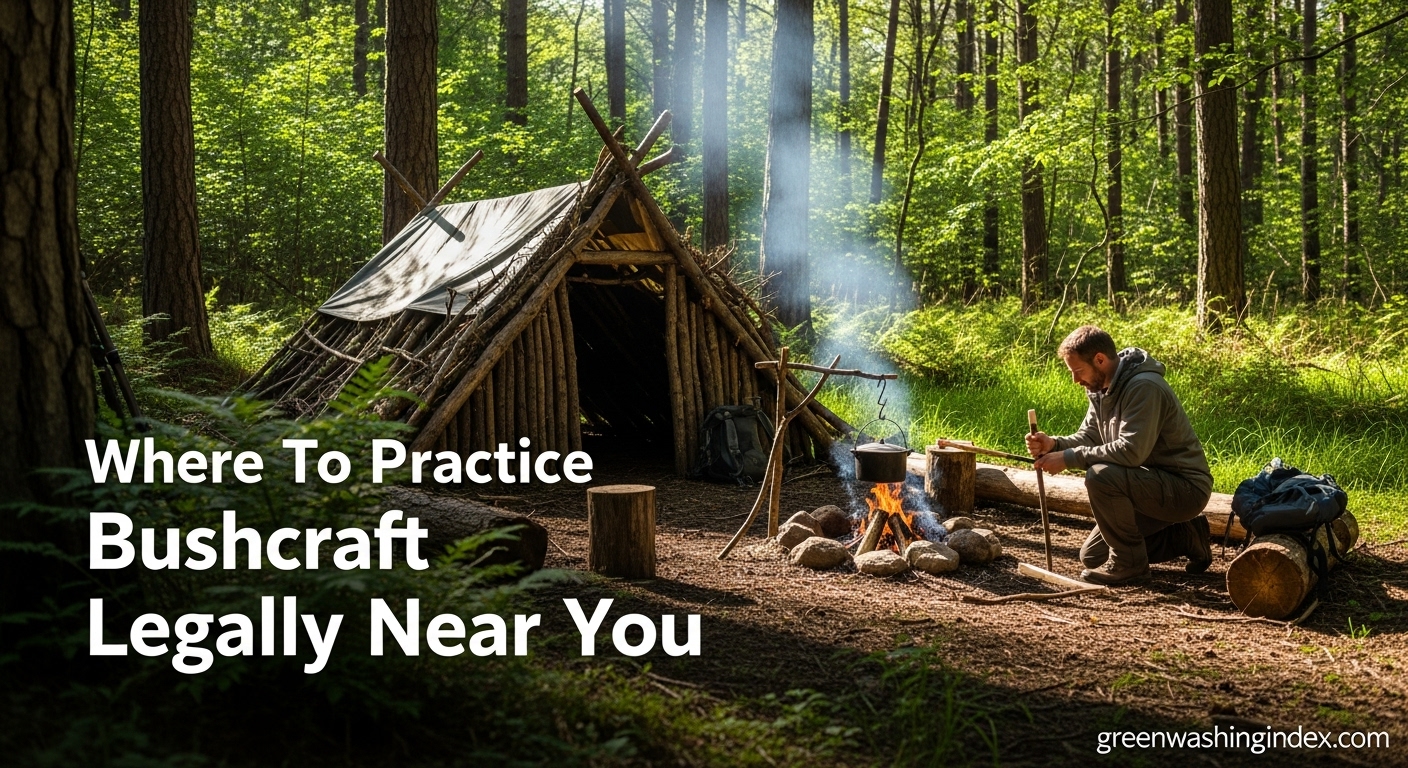
Are you looking for legal places to practice bushcraft skills?
You’re not alone. One of the biggest challenges for new bushcraft enthusiasts is finding legitimate locations to build shelters, practice fire-making, and develop wilderness skills without running afoul of the law. I’ve spent years researching and practicing across different public lands, and understanding where you can legally practice bushcraft is essential for avoiding fines and building confidence outdoors.
Where to practice bushcraft depends on understanding the different types of public land and their specific regulations. National Forests and Bureau of Land Management (BLM) lands offer the most flexibility for bushcraft practice, while State Parks vary widely in what they allow, and National Parks are generally the most restrictive.
In this guide, I’ll walk you through each type of public land, explain what bushcraft activities are permitted where, and help you find practice locations near you.
Before heading out, understanding the legal framework for bushcraft practice is crucial. Bushcraft legality is complex because regulations vary by land type, local jurisdiction, and even season. What’s perfectly legal in one National Forest might get you a ticket in another just 50 miles away.
The core issue is that bushcraft activities often intersect with camping regulations, fire restrictions, and resource protection laws. Activities like shelter building, fire-making, and wood gathering are each regulated separately. I’ve seen many beginners make the mistake of assuming general camping rules apply to everything, only to discover that building a natural shelter violates local ordinances.
Permit requirements are another critical consideration. Some wilderness areas require advance registration for backcountry camping. Others have strict quotas or seasonal restrictions. Fire bans are common during drought conditions and can change weekly. Always check current conditions before your trip.
Fines for violating land use regulations can range from warning citations to hundreds of dollars. More importantly, irresponsible practice damages the reputation of the entire bushcraft community and can lead to stricter regulations for everyone.
Not all public lands are created equal when it comes to bushcraft practice. Understanding the differences between land management types helps you choose appropriate locations for your skill level and practice goals.
| Land Type | Bushcraft Friendliness | Fire Making | Shelter Building | Wood Gathering | Stay Limit |
|---|---|---|---|---|---|
| National Forests | Best Option | Usually allowed | Generally permitted | Usually allowed | 14-16 days |
| BLM Lands | Excellent | Usually allowed | Generally permitted | Usually allowed | 14 days |
| State Forests | Good to Variable | Varies by state | Often restricted | Varies by state | Varies |
| State Parks | Limited | Designated areas only | Generally prohibited | Usually prohibited | Usually 14 days |
| National Parks | Most Restrictive | Designated areas only | Generally prohibited | Prohibited | Backcountry permit required |
| Private Land | Best (with permission) | With permission | With permission | With permission | By agreement |
National Forests are generally the best option for bushcraft practice in the United States. Managed by the U.S. Forest Service, these lands emphasize multiple-use management, which includes recreation, resource extraction, and conservation. This multiple-use mandate typically allows for primitive camping and traditional outdoor skills practice.
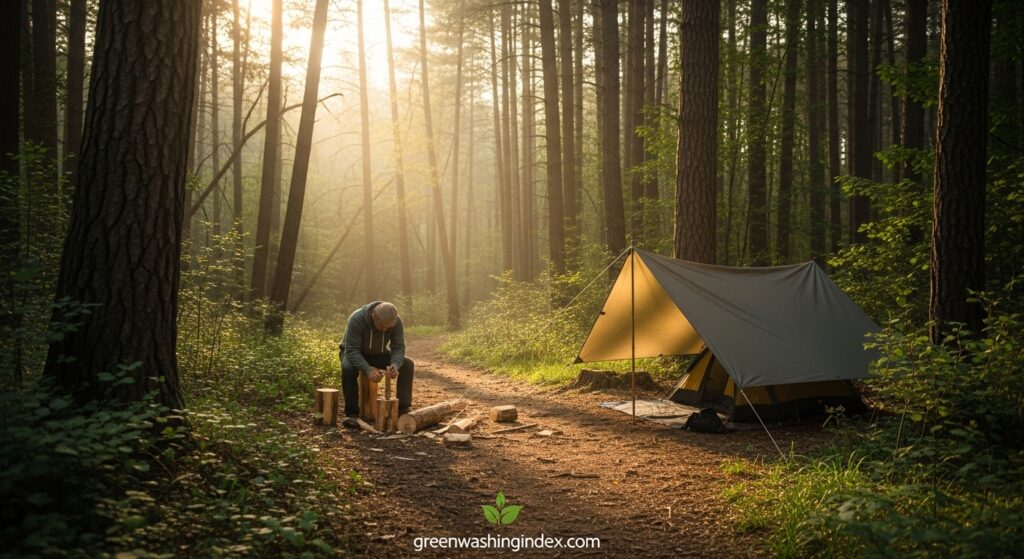
The key advantage of National Forests is dispersed camping. Dispersed camping means camping outside of designated campgrounds, often with no facilities. This is where bushcraft truly shines. You can find your own spot, practice shelter building, and work on fire skills in a semi-wilderness setting. I’ve spent dozens of weekends in National Forests practicing skills, and the freedom to choose your own campsite is invaluable.
National Forests typically allow wood gathering for personal use. This means collecting dead and down wood for fires is generally permitted. Some forests even allow limited standing deadwood harvest with proper tools. However, always check local forest rules as restrictions vary by district.
To find National Forests near you, visit the U.S. Forest Service website. Each forest has its own website with specific regulations, maps, and current conditions. I always call the local ranger district before visiting to confirm current fire restrictions and camping policies.
Remember that individual Ranger Districts within National Forests can have different rules. Always check the specific regulations for your destination before practicing bushcraft skills.
Bureau of Land Management (BLM) lands are another excellent option for bushcraft practice. BLM manages more than 245 million acres, primarily in the western United States. These lands often have fewer visitors than National Forests and more permissive camping regulations.
The flexibility of BLM lands is one of their greatest strengths. Many BLM areas allow dispersed camping with minimal restrictions. You can often camp anywhere that’s not explicitly prohibited or marked as no-camping zones. This freedom lets you find secluded spots for focused bushcraft practice without crowds.
BLM lands typically follow the 14-day camping rule. You can stay in one location for up to 14 days within any 28-day period. After 14 days, you must move at least 25 miles to a new location. This rule is designed to prevent long-term camping but works well for extended bushcraft practice sessions.
The BLM Interactive Map is an invaluable tool for locating public lands near you. This map shows BLM boundaries, recreation sites, and designated camping areas. I use it regularly to scout potential practice locations before traveling.
Popular BLM areas for bushcraft include:
BLM lands often have minimal facilities, which is perfect for bushcraft practice. You’ll need to be self-sufficient and prepared for remote conditions. Carry plenty of water, as many BLM areas lack reliable water sources.
Fire restrictions on BLM lands can be strict, especially in arid regions. Always check current fire conditions before building any fires. In some areas, you may need to use a camp stove exclusively during high-risk periods.
State Parks and State Forests offer mixed opportunities for bushcraft practice. Regulations vary significantly by state, so research is essential before planning any trips.
State Forests generally offer more bushcraft-friendly policies than State Parks. Many State Forests allow dispersed camping and primitive activities similar to National Forests. For example, State Forests in Minnesota, Wisconsin, and Michigan have excellent backcountry camping opportunities where shelter building and fire-making are permitted.
State Parks, however, tend to be more restrictive. Most State Parks require camping in designated campgrounds only. Natural shelter building is typically prohibited. Fire-making is usually limited to established fire rings or grills. Some State Parks do allow backcountry camping with permits, but these areas often have strict regulations.
Some states with particularly good State Forest systems for bushcraft include:
When visiting State Parks, focus on skills that don’t violate regulations. Fire-laying practice in designated fire rings, knot tying, plant identification, and navigation practice are all typically allowed even in more restrictive areas.
National Parks are generally the worst option for bushcraft practice. The National Park Service has a preservation-focused mandate that restricts activities that might impact natural resources. This preservation mission means most traditional bushcraft activities are prohibited.
In National Parks, camping is typically allowed only in designated campgrounds. Backcountry camping may be available with permits, but regulations are strict. Natural shelter building is universally prohibited. Wood gathering is not allowed. Fires are permitted only in designated fire rings or grills, and fire bans are common.
That said, National Parks can still be valuable for certain bushcraft skills. Navigation practice, plant identification, wildlife observation, and minimal-impact camping techniques are all excellent activities in these protected areas. The educational value of observing pristine ecosystems cannot be overstated.
If you want to practice in National Park backcountry, you’ll need to obtain permits from the National Park Service. Many parks have quota systems for backcountry camping, so plan well in advance. Focus on Leave No Trace practices and observational skills rather than construction-based activities.
Some National Parks do allow certain traditional activities in specific contexts. For example, some parks in Alaska allow more subsistence activities. Always check the specific regulations for your intended destination.
Private land with permission from the owner is actually one of the best options for serious bushcraft practice. Private land offers several advantages: consistent access, fewer regulations, and the ability to practice skills that might be restricted on public lands.
The key is building relationships with landowners. Many rural landowners are open to allowing responsible use of their property if approached respectfully. The key is demonstrating responsibility and clear communication about your intentions.
When practicing on private land, treat it with even more care than public land. The landowner’s trust is your most valuable asset. Leave the property cleaner than you found it. Report any issues you notice. Consider giving small gifts or offering help as thanks for access.
Family and friends with rural property can be excellent practice locations. Many bushcraft enthusiasts started this way, practicing skills on a relative’s farm or woodland before venturing to public lands.
Wherever you practice bushcraft, following Leave No Trace principles is non-negotiable. The Leave No Trace Center for Outdoor Ethics provides guidelines that every bushcrafter should follow. Responsible practice ensures continued access for everyone.
Shelter building requires particular attention to LNT principles. When practicing shelter building, consider using only dead and fallen materials. Avoid cutting live vegetation. After practicing, dismantle natural shelters and scatter materials to make the site appear undisturbed. This preserves both the environment and the practice opportunity for others.
Fire practice should focus on minimal-impact techniques. Use existing fire rings when possible. If you must create a new fire ring, dismantle it completely when finished, scattering the rocks and returning the site to its natural appearance. Choose fire sites carefully, avoiding areas with dry grass, overhanging branches, or organic soil.
Foraging and plant identification are important bushcraft skills. Harvest plants responsibly, taking only what you need and leaving plenty for wildlife and regeneration. Learn which plants are protected and never harvest endangered species. Consider taking photographs instead of specimens for identification practice.
National Parks are generally the most restrictive option for bushcraft practice. Natural shelter building and wood gathering are typically prohibited. Camping is limited to designated areas, and backcountry camping requires permits. Focus on skills like navigation and plant identification that don’t involve modifying the environment.
Permit requirements vary by land type. Most National Forests and BLM lands don’t require permits for short-term dispersed camping. However, some popular wilderness areas require backcountry permits. National Parks typically require permits for backcountry camping. Always check with the local land management office before your trip.
Shelter building regulations vary by land type. National Forests and BLM lands generally allow temporary shelter building for camping purposes, but permanent structures are prohibited. State parks and National Parks typically prohibit shelter building entirely. Always check local regulations and use only dead and fallen materials. Dismantle shelters before leaving.
Fire-making is generally allowed in National Forests and BLM lands unless fire restrictions are in effect. Use existing fire rings when possible. State parks typically limit fires to designated areas. National Parks allow fires only in specified locations. Always check current fire conditions before your trip, especially during drought conditions.
Wood gathering regulations vary by land type. National Forests generally allow collecting dead and down wood for personal use. BLM lands typically allow similar practices. State parks and National Parks usually prohibit wood gathering entirely. Some areas allow limited harvest of standing deadwood with specific tools. Always verify local regulations before gathering wood.
Use online mapping tools like the BLM Interactive Map and US Forest Service Visitor Maps to identify public lands near you. Contact local ranger districts to confirm regulations. Join local outdoor groups and forums like BushcraftUSA for location-specific advice. Always verify current conditions and regulations before visiting any location.
Finding legal places to practice bushcraft requires research and patience, but the rewards are worth the effort. Start with National Forests and BLM lands near you, as these typically offer the most flexibility. Contact local ranger districts to confirm regulations before your trip. Consider joining local bushcraft or outdoor groups to learn about areas others have successfully used.
Online resources can help identify potential locations. The US Forest Service Visitor Maps and Campendium are useful tools for finding dispersed camping areas. Forums like BushcraftUSA and Reddit r/Bushcraft can provide location-specific advice from experienced practitioners.
Remember that regulations can change seasonally and annually. What was allowed last year might be prohibited now. Always check current conditions before heading out. Sign up for alerts from land management agencies to stay informed about fire restrictions, trail closures, and other changes.
Practice ethically, leave no trace, and you’ll help ensure these lands remain available for bushcraft practice for years to come. The future of our sport depends on responsible use today.
