
I’ve spent countless nights in different tent styles over 15 years of camping. There’s nothing quite like the frustration of spending a weekend in a dome tent where you can’t stand up straight to change your socks.
After testing dozens of tent designs with my family, I’ve learned that the right shelter makes or breaks a camping trip. We’ve weathered sudden thunderstorms, dealt with condensation, and figured out what actually matters when you’re trying to sleep comfortably outdoors.
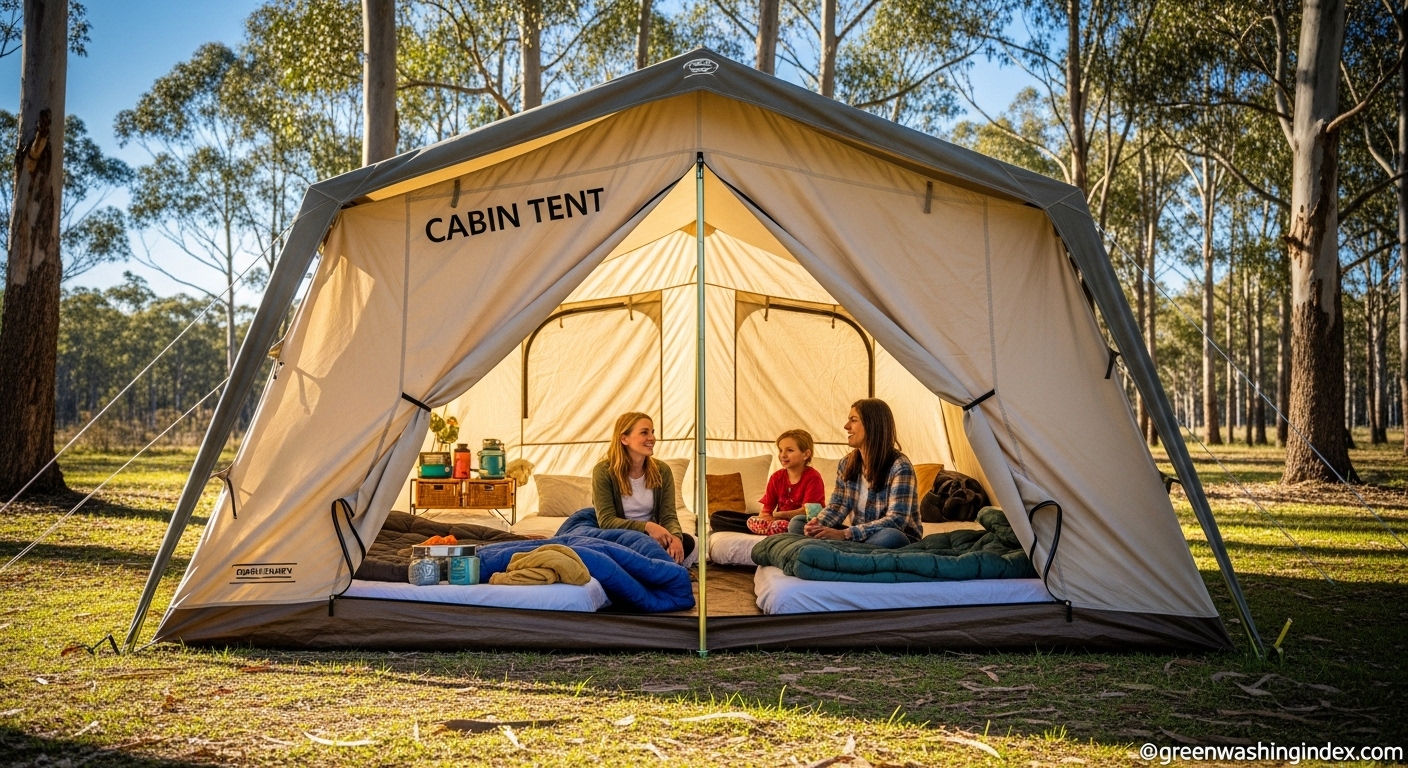
A cabin tent is a camping shelter with vertical or near-vertical side walls that extend the peak height throughout most of the interior, allowing you to stand upright and use 100% of the floor space.
Unlike dome tents that slope inward from the center, cabin tents maintain their wall height across a rectangular footprint. This design maximizes livable space and headroom, making them ideal for family camping and extended trips where comfort matters more than weight.
The cabin-style design resembles a small building structure with straight walls and a peaked roof, hence the name. Most cabin tents use a pole structure with vertical supports and roof beams rather than the flexible poles that create dome shapes.
Cabin Tent: A tent design featuring vertical side walls and high ceilings that maximize usable interior space, typically used for car camping and family camping trips.
What sets cabin tents apart is their structural design. The vertical walls aren’t just aesthetic—they fundamentally change how you experience being inside the tent.
The signature feature is the straight wall design. While dome tents slope inward from the peak, cabin walls rise vertically or near-vertically before meeting the roof structure.
This design means you can stand upright across most of the floor area. In a 6-person cabin tent, I’ve found I can walk around without hunching over at all. That same space in a dome tent would have me ducking near the edges.
The extended peak height in cabin tents typically ranges from 6 to 7 feet for standard models, with some larger family versions reaching 8 feet at the center point. This vertical clearance makes changing clothes, organizing gear, and simply moving around significantly more comfortable.
Cabin tents create substantial interior volume due to their wall structure. More air space means less condensation buildup and a more open, comfortable feel inside.
During a week-long family camping trip in Joshua Tree, we noticed our cabin tent felt significantly less stuffy than the dome tent we used previously. The vertical walls allow heat to rise higher above sleeping level, creating a more comfortable temperature gradient.
This air volume also makes cabin tents feel less claustrophobic. For anyone who gets anxious in small enclosed spaces, the open feeling of a cabin tent can make the difference between enjoying camping and dreading it.
Most cabin tents use a rectangular footprint rather than the square or circular shapes common in dome designs. This shape offers several practical advantages for layout and sleeping arrangements.
Rectangular floors make it easier to fit standard air mattresses and sleeping pads edge-to-edge. When I helped a scout troop organize their gear, we found cabin tents accommodated sleeping bags more efficiently with less wasted space between campers.
The straight edges also simplify interior organization. You can place gear along walls without dealing with curved surfaces, and room dividers in multi-room cabin tents create more usable separate spaces.
Choosing between cabin and dome designs comes down to prioritizing either space and comfort or weather resistance and portability. After using both extensively across different camping scenarios, here’s what actually matters.
| Feature | Cabin Tents | Dome Tents |
|---|---|---|
| Wall Design | Vertical or near-vertical walls | Sloping walls from center |
| Headroom | Maximum height across most of floor | Maximum height only at center |
| Usable Floor Space | 95-100% of footprint usable | 70-80% of footprint usable |
| Wind Resistance | Fair – tall profile catches wind | Excellent – aerodynamic shape |
| Setup Time | 15-25 minutes typical | 8-15 minutes typical |
| Packed Size | Larger and bulkier | More compact |
| Best For | Car camping, base camps, families | Backpacking, rough weather, quick trips |
| Sustainability Factor | Canvas options available, longer lifespan | Lighter materials, often replaceable parts |
For car camping trips where weight doesn’t matter, cabin tents deliver superior comfort. Family camping weekends, base camp setups, and any scenario where you’ll spend significant time inside makes a cabin tent the better choice.
I’ve camped with extended family groups where the cabin tent became the central gathering space during rain. Everyone could sit comfortably playing cards, which would have been impossible in a dome tent of the same rated capacity.
If you’re backpacking, camping in exposed areas with high winds, or setting up solo, dome tents offer clear advantages. Their lighter weight and more compact packed size make them practical for carrying to remote sites.
During a camping trip in Wyoming’s windy high country, our dome tent stayed stable while nearby cabin tents were struggling. The aerodynamic shape really does make a difference in challenging conditions.
The advantages of cabin tents focus squarely on livability and comfort. These features become obvious the first time you spend extended time inside one.
When our family of four upgraded to a cabin tent, the difference was immediate. Previously, getting dressed in the morning meant taking turns and hunching over. In the cabin tent, we could all move around simultaneously without bumping into each other.
The vertical walls also make organizing gear significantly easier. I can place bins along the walls and actually access them without moving everything else. For campers who like an organized living space, this structural difference matters.
Cabin tents typically incorporate large windows and sometimes mesh roof panels. This design creates excellent airflow and reduces the need for electric lighting during the day.
Our current cabin tent has windows on all four sides, which creates a cross-breeze effect that keeps condensation minimal even on humid nights. The natural light also makes the interior feel less like a cave and more like a temporary home.
Cabin tents aren’t perfect for every situation. Understanding these limitations helps you make an informed decision and avoid frustrating experiences.
The wind resistance problem is real. I’ve watched cabin tents struggle in 15-20 mph winds that dome tents handled easily. The vertical wall surface area acts like a sail, catching gusts that would flow over a more aerodynamic shape.
However, proper site selection and staking mitigates much of this issue. When setting up in potentially windy conditions, I always position the tent’s shorter end toward prevailing winds and use all guy line points. Quality stakes and thorough guying out can make a significant difference in stability.
Most family cabin tents weigh between 20 and 40 pounds. That’s not an issue when car camping, but it completely rules out backpacking use. The packed size is equally substantial—most cabin tents occupy a significant portion of a trunk or SUV cargo area.
For our family trips, the cabin tent takes about one-third of our available cargo space. We’ve learned to pack more efficiently around it, but it’s definitely a consideration for smaller vehicles or longer trips requiring more gear.
Setting up a cabin tent typically takes 15-25 minutes, compared to 8-15 minutes for many dome designs. The additional poles and more complex structure require more time and effort, especially for solo campers.
After dozens of setups, I can now manage our 8-person cabin tent in about 12 minutes. But the first time took nearly 30 minutes and involved some frustration. Practice helps significantly, and instant cabin designs with pre-attached poles can reduce setup time to under 5 minutes.
One of the most common sources of frustration with cabin tents is capacity ratings. Manufacturers tend to be optimistic about how many people can comfortably sleep in their tents.
| Rated Capacity | Realistic Capacity | Recommended Use |
|---|---|---|
| 4-Person | 2-3 adults or family with 1-2 small children | Small family trips, couples with gear |
| 6-Person | 3-4 adults or family with 2-3 children | Standard family camping |
| 8-Person | 4-5 adults or family with 3-4 children | Larger families or groups needing extra space |
| 10-Person | 5-6 adults or family with 4-5 children | Multi-family trips, base camp luxury |
| 12+ Person | 6-8 adults or larger family groups | Extended family gatherings, group camping |
The discrepancy between rated and realistic capacity comes from manufacturer testing standards that assume close sleeping arrangements with minimal gear. For real-world comfort with air mattresses, clothing storage, and actual living space, you should typically plan for 50-60% of the rated capacity.
When our family of four uses a “6-person” cabin tent, we have adequate space for two queen air mattresses plus some room for gear. A 4-person tent would have worked technically but would have felt cramped for a week-long trip.
⏰ Pro Tip: When shopping for a cabin tent, ignore the person rating and focus on floor dimensions. Measure your air mattresses or sleeping pads and compare against actual floor measurements rather than capacity claims.
Selecting the right cabin tent involves balancing several factors against your specific camping needs. I’ve learned through experience that the “best” tent depends entirely on how and where you camp.
Polyester cabin tents dominate the market due to lower cost and lighter weight. Modern polyester tents with proper waterproof coatings handle rain well and dry quickly when wet. However, durability varies significantly between budget and premium options.
Canvas cabin tents represent the traditional approach but have seen renewed interest recently. A quality canvas tent can last 10-20 years with proper care, compared to 3-7 years for polyester. The material breathes better, reducing condensation, and offers superior durability.
The trade-off is weight and price. Canvas tents weigh significantly more and cost two to three times as much as equivalent polyester models. But for frequent campers who value longevity, the investment can pay off over time.
The pole structure determines both setup difficulty and long-term durability. Steel poles offer maximum strength but add substantial weight. Fiberglass poles represent a middle ground—lighter than steel but more prone to breaking over time.
Aluminum poles provide the best strength-to-weight ratio but are less common in cabin tents due to cost. When evaluating pole quality, look for shock-corded designs that stay connected during setup and generous diameter ratings for strength.
After experiencing a pole failure during a stormy trip, I now prioritize tents with quality pole sleeves and sturdy elbow connectors. These components often fail before the poles themselves and can make or break the tent’s longevity.
Not all cabin tents handle weather equally. The rainfly coverage makes a significant difference—full-coverage flies that extend close to the ground offer much better rain protection than partial designs that leave upper walls exposed.
For serious camping, I recommend sealed seams on both the rainfly and floor. Many budget tents come with factory-sealed critical seams, but re-sealing annually with quality seam sealer provides additional insurance against leaks.
The bathtub floor design—where the floor material extends up the walls several inches before attaching—prevents water from seeping in during heavy rain. This feature is essential for any camping that might encounter wet conditions.
Instant cabin tents with pre-attached poles can dramatically reduce setup time. These designs fold out like an umbrella and often set up in under 5 minutes. The convenience is fantastic for quick trips or when arriving at camp after dark.
However, the pre-attached poles create trade-offs. Instant tents are bulkier when packed and can be more challenging to repair if poles break. Traditional designs take longer to set up but pack more compactly and offer easier field repairs.
For families who camp frequently, I’ve found the instant design convenience outweighs the drawbacks. But for occasional campers or those prioritizing packability, traditional pole systems make more sense.
Beyond basic capacity, consider how you’ll use the interior space. Tents with room dividers create privacy for changing clothes and can help manage light sleepers who go to bed earlier.
Multiple doors are another feature worth considering. Our current cabin tent has two doors, which means nobody has to crawl over others when nature calls at night. This seemingly small feature dramatically improves the camping experience for families.
Check the peak height location as well. Some designs maximize center height but have limited headroom near walls. Others extend the peak height across a larger portion of the floor. For actual usability throughout the tent, the latter design offers better functionality.
The environmental impact of tent manufacturing receives surprisingly little attention in outdoor gear discussions. As someone who has worn through multiple tents over the years, I’ve become increasingly conscious of the sustainability implications.
Polyester tents are essentially petroleum products. The manufacturing process generates significant carbon emissions, and end-of-life recycling options remain limited. Most polyester tents eventually end up in landfills where they persist for decades.
Canvas tents, while heavier and more expensive, offer a more sustainable story. Natural canvas materials biodegrade at end of life, and quality canvas products often last 2-3 times longer than synthetic alternatives. That extended lifespan alone can offset the higher initial environmental cost of production.
Some newer tent companies are experimenting with recycled polyester materials and more sustainable manufacturing processes. These options represent a promising direction for reducing the environmental footprint of camping gear.
The most sustainable tent is the one that lasts the longest. A well-made canvas cabin tent that provides 15 years of service has a far lower annual environmental impact than three polyester tents that wear out after five years each.
When evaluating durability, look for reinforced stress points, quality pole construction, and repairable designs. Tents with replaceable pole sections and repairable fabrics can be maintained rather than replaced when minor damage occurs.
Proper maintenance dramatically extends tent life regardless of material. Always store tents clean and dry—mildew weakens fabrics beyond repair. UV exposure causes the most damage over time, so limiting sun exposure when not in use helps longevity.
Learning basic repairs makes a significant difference. Patch kits can fix small tears, and pole splints can temporarily repair bent sections. Many manufacturers offer repair services or replacement parts, which can add years to a tent’s useful life rather than replacing it entirely.
When a tent finally reaches the end of its life, consider disposal options beyond the landfill. Some outdoor retailers offer take-back programs for old gear. Local outdoor organizations sometimes accept usable tents for youth programs.
Creative repurposing offers another option. Old tent fabric makes excellent ground cloths, rain flies for gear, or material for DIY projects. The rainfly from our first cabin tent now serves as a cover for our firewood stack.
Cabin tents feature vertical or near-vertical side walls that maximize headroom and usable floor space, high ceilings (typically 6-8 feet), rectangular floor plans, large windows for ventilation, and often include room dividers for privacy.
Cabin tents have vertical walls creating maximum headroom and usable floor space, while dome tents have sloping walls from a central peak. Cabin tents offer superior livability but poorer wind resistance, while dome tents excel in harsh weather and pack more compactly.
Cabin tents have fair to poor wind resistance due to their tall profile and vertical walls that catch wind like a sail. They’re best suited for mild weather conditions and sheltered campsites. For windy environments, dome tents offer significantly better performance.
Yes, one person can set up most cabin tents alone, though it takes longer and requires more effort. Instant cabin tents with pre-attached poles are easiest for solo setup. Traditional cabin tents may require 15-25 minutes for one person versus 8-15 minutes with two people.
Traditional cabin tents typically take 15-25 minutes to set up with two people. Instant cabin designs with pre-attached poles can reduce this to 3-5 minutes. Setup time increases with tent size and decreases with practice and familiarity with the specific design.
Canvas cabin tents offer superior durability (10-20 years vs 3-7 years), better breathability, and improved sustainability but cost 2-3 times more and weigh significantly more. Polyester tents are lighter, more affordable, and dry faster but have shorter lifespans and greater environmental impact.
After testing cabin tents extensively across diverse camping scenarios, I’ve found they excel when comfort and livability matter more than weight or weather resistance. For family car camping, base camp setups, and anyone who values being able to stand upright indoors, cabin tents deliver the best experience.
If you camp primarily in fair weather, have vehicle access to your campsite, and prioritize interior space, a cabin tent is likely your best option. The vertical walls and high ceilings transform camping from roughing it to glamping-adjacent comfort.
For backpackers, frequent wilderness campers, or those who camp in exposed windy areas, dome tents remain the practical choice. But for the majority of family campers who visit established campgrounds during summer months, the cabin tent’s advantages far outweigh its limitations.
For more information on best camping gear essentials and to find tent deals throughout the year, explore our comprehensive camping guides.
