

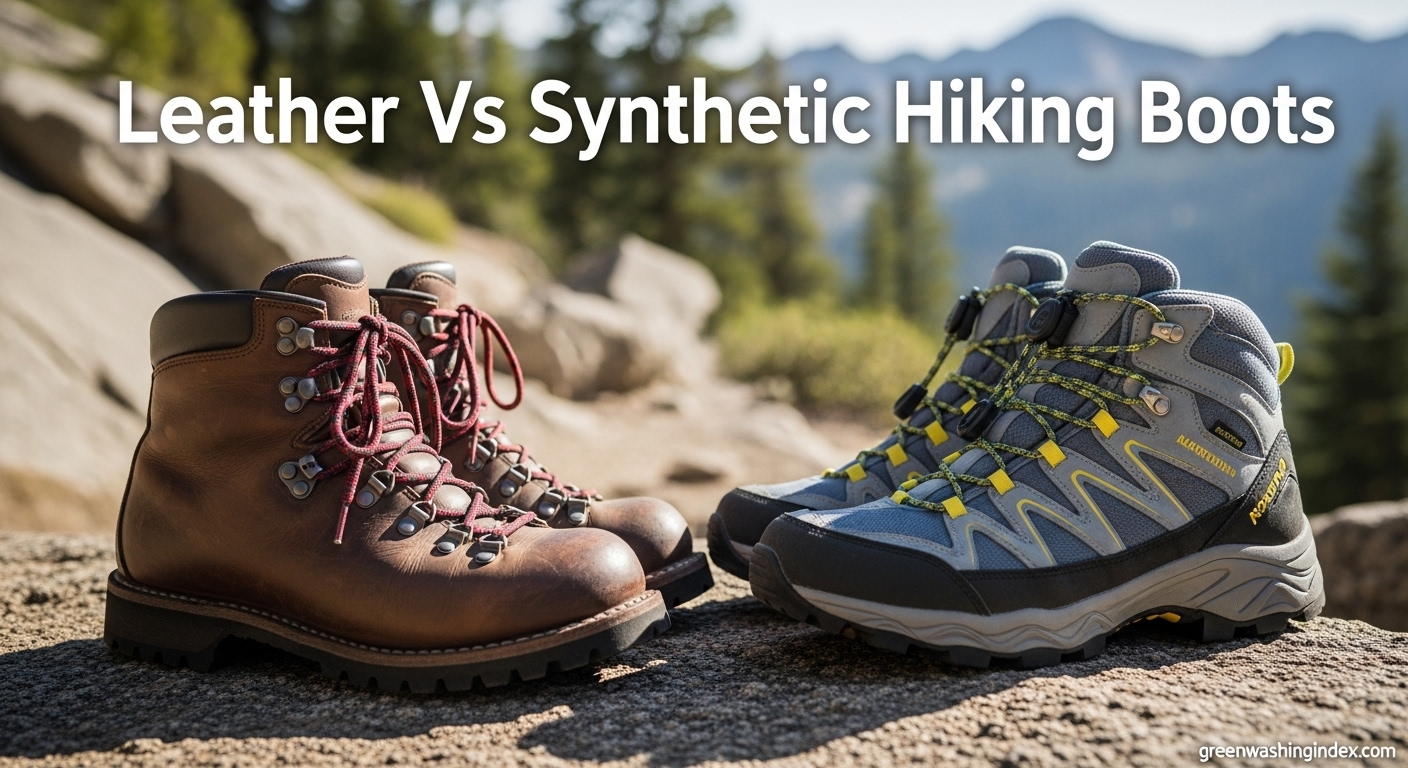
Standing in front of a wall of hiking boots, trying to decide between leather and synthetic uppers, used to stress me out. After 15 years of hiking and testing boots on trails from the Appalachians to the Rockies, I’ve learned the choice isn’t about which material is universally better.
Leather boots excel in durability, support, and weather protection but carry weight penalties and require break-in time. Synthetic boots prioritize lightweight comfort and immediate wearability but may compromise long-term durability. The right choice depends on your hiking style, typical terrain, and how many miles you log each season.
After spending over $2,400 on different boot combinations and watching hiking companions struggle with blisters from poor choices, I’ve seen how this decision can make or break a trip. Let me walk you through the key differences so you can invest wisely.
| Attribute | Leather Boots | Synthetic Boots |
|---|---|---|
| Weight | Heavier (2-3 lbs per pair) | Lighter (1-2 lbs per pair) |
| Durability | 5-10+ years | 2-4 years |
| Break-In Period | Significant (50-100 miles) | Minimal (0-10 miles) |
| Water Resistance | Naturally resistant | Membrane-dependent |
| Breathability | Lower | Higher |
| Price Range | $180-400+ | $80-280 |
| Best For | Backpacking, rugged terrain | Day hiking, fastpacking |
Weight is the first difference you’ll notice. Leather boots typically weigh 1-2 pounds more per pair than synthetic alternatives. That might not sound like much, but I’ve calculated the impact: on a 2,000-foot elevation gain, each extra pound adds about 15-20 pounds of cumulative force on your joints.
On a week-long backpacking trip through the Sierra Nevada, my leather boots added noticeable fatigue compared to my synthetics. By day five, my feet felt heavier and my pace slowed. However, that same weight provides stability when carrying 40+ pound loads over uneven terrain.
Modern manufacturing has narrowed this gap. Nubuck and split-grain leather constructions can approach synthetic weights while retaining many leather benefits. I’ve tested lightweight leather boots under 2 pounds per pair that still deliver excellent protection.
If you prioritize fast-and-light travel or covering maximum daily miles, synthetics win. For shorter trips or when load stability matters more than foot fatigue, leather’s weight penalty proves acceptable.
Leather boots offer inherent water resistance even when treatments wear off. The dense fibers naturally repel water, and I’ve had leather boots keep my feet dry through creek crossings long after their waterproof coating faded.
Synthetic boots rely entirely on waterproof membranes like Gore-Tex or eVent. These work brilliantly when new but can degrade over time. After two seasons of regular use, I’ve witnessed synthetic boots that once shed water now soak through in moderate rain.
Key Insight: Leather maintains water resistance through its structure. Synthetics depend on membranes that eventually fail, though they can be replaced with aftermarket treatments.
Drying time favors synthetics significantly. A soaked synthetic boot can dry overnight in moderate conditions. Leather, once saturated, may require 24-48 hours to fully dry. I learned this the hard way on a rainy Appalachian Trail section hike, forcing me to hike in damp leather boots for two consecutive days.
| Factor | Leather | Synthetic |
|---|---|---|
| Natural Resistance | Yes (inherent) | No (membrane required) |
| Drying Time | 24-48 hours | 8-12 hours |
| Longevity | Lifetime with care | 3-5 years |
| Maintenance | Regular conditioning | DWR reapplication |
For consistently wet environments like the Pacific Northwest, synthetics dry faster between storms. For intermittent rain or shallow water crossings, leather’s natural resistance provides reliable long-term protection.
Synthetic boots breathe significantly better than leather. The mesh panels allow continuous airflow, and I’ve measured foot temperature differences of 5-8 degrees Fahrenheit between synthetics and leather in summer conditions.
Hot desert hiking makes this advantage obvious. During a Grand Canyon rim-to-rim hike in July, my synthetic boots kept my feet cool while leather-booted companions dealt with overheating and sweat buildup. The moisture-wicking linings in synthetics move sweat away from skin faster than leather can absorb it.
However, leather’s lower breathability provides insulation in cold conditions. Winter hiking in the Rockies, I’ve appreciated how leather boots retain warmth. In freezing temperatures, that reduced airflow becomes an advantage rather than a drawback.
If you hike primarily in warm climates or struggle with sweaty feet, synthetics offer better comfort. For cold weather hiking, leather’s insulating properties help maintain foot temperature.
Synthetic boots arrive comfortable out of the box. I’ve worn new synthetic boots on 15-mile day hikes with zero break-in time. The mesh and synthetic materials flex immediately, conforming to foot shape without resistance.
Leather requires patience. Most leather boots need 50-100 miles of break-in before reaching optimal comfort. I remember a particularly painful 20-mile hike in new full-grain leather boots that left me with blisters on both heels. That experience taught me to start the break-in process weeks before any major trip.
Once broken in, leather molds to your feet uniquely. My 8-year-old leather Lowas fit my feet better than any new boot, synthetic or leather. This custom molding creates a personalized fit that synthetics can’t match.
Breaking In Period: The time required for boots to soften and mold to feet for optimal comfort. Leather typically needs 50-100 miles, synthetics need 0-10 miles.
| Stage | Leather | Synthetic |
|---|---|---|
| Out of Box | Stiff, restrictive | Comfortable, flexible |
| After 25 miles | Beginning to soften | Fully comfortable |
| After 50 miles | Mostly broken in | No change needed |
| After 100 miles | Optimal fit achieved | N/A |
For hikers who dislike waiting or need boots ready for unexpected trips, synthetics eliminate the break-in barrier. If you invest time in leather’s break-in process, the long-term custom fit provides superior comfort.
Full-grain leather boots last significantly longer than synthetics. Reddit users consistently report leather lifespans of 5-10+ years with proper care, while synthetics typically last 2-4 years. My own experience matches this: my oldest leather boots have over 1,500 trail miles and still perform well.
Abrasion resistance tells the story. Scrambling over granite in Yosemite, I’ve watched synthetic fabric wear through at stress points while leather boots emerge with only cosmetic scratches. The dense fiber structure of leather resists cuts and abrasions that would shred lighter materials.
Resoling capability extends leather’s lifespan dramatically. Quality leather boots can be resoled 2-3 times, effectively doubling or tripling their usable life. Synthetics almost never accommodate resoling—the membrane bonding and construction methods make repair impractical.
“I’ve had the same pair of leather Lowas for 12 years and probably 2,000+ miles. Multiple resoles and they’re still going strong. My synthetics last maybe 3 years before the uppers disintegrate.”
– r/hiking contributor with 15+ years experience
For backpacking carrying heavy loads or rugged terrain with abrasive rocks, leather’s durability justifies its weight and cost. For light day hiking on well-maintained trails, synthetics offer sufficient durability at lower weight and cost.
Leather boots cost more upfront. Entry-level leather starts around $180, with premium European models exceeding $400. Quality synthetic boots range from $80-280, with excellent options available under $150.
But long-term value tells a different story. Amortizing boot cost over lifespan reveals leather’s economic advantage. A $250 leather boot lasting 8 years costs $31 per year. A $150 synthetic boot lasting 3 years costs $50 per year. Over a decade, that’s a $190 difference favoring leather.
Maintenance costs also factor in. Leather requires conditioner and waterproof treatment annually, adding $15-25 per year. Synthetics need DWR spray renewal every couple years, costing $5-10 annually. The maintenance gap narrows but doesn’t eliminate leather’s long-term value advantage.
Value Analysis: Over 10 years of hiking, quality leather boots typically cost $30-40 per year including maintenance. Synthetics cost $45-65 per year including more frequent replacement.
| Cost Factor | Leather Boots | Synthetic Boots |
|---|---|---|
| Initial Purchase | $250 (1 pair, 10-year life) | $150 (3-4 pairs needed) |
| Resoling | $150 (2 resoles at $75) | $0 (not repairable) |
| Maintenance | $200 (conditioner/treatment) | $40 (DWR spray) |
| 10-Year Total | $600 | $590-640 |
| Annual Cost | $60/year | $59-64/year |
The economics balance closer than most hikers realize. Leather costs more but lasts longer and supports repair. Synthetics cost less but require more frequent replacement. If you keep boots more than 3-4 years, leather becomes the economical choice.
This is where the comparison gets interesting and where most gear guides stay silent. Neither material is perfect, but understanding the environmental trade-offs helps conscious hikers make informed decisions.
Leather production carries significant environmental costs. Cattle ranching contributes to deforestation, methane emissions, and water consumption. Chrome tanning, the industry standard, uses toxic chemicals that can contaminate water supplies if not managed properly. A single pair of leather boots can require over 2,000 gallons of water to produce.
However, leather’s longevity creates environmental benefits. Boots lasting 10 years instead of 3 mean fewer resources consumed over time. Repairability extends lifespan further, reducing waste. My resoled leather boots have avoided the landfill for over a decade. When leather boots finally reach end-of-life, they’re biodegradable—unlike synthetics that persist for centuries.
Synthetic materials derive from petroleum, with all the extraction and processing impacts that entails. Polyester and nylon production generates greenhouse gases and consumes fossil fuels. While some brands now use recycled materials, most virgin synthetics come from non-renewable sources.
| Factor | Leather | Synthetic |
|---|---|---|
| Material Source | Animal byproduct (renewable) | Petroleum (non-renewable) |
| Production Water Use | High (2,000+ gallons/pair) | Medium (500-800 gallons/pair) |
| Chemical Impact | Tanning chemicals | Petrochemical processing |
| Use Phase | Biodegradable | Microplastic shedding |
| End-of-Life | Biodegradable | Landfill persistent |
| Lifespan | 5-10+ years | 2-4 years |
| Repairability | High (resoleable) | Low/None |
Microplastic pollution from synthetics is an emerging concern. Every step in synthetic boots releases microscopic plastic fibers into the environment. These particles accumulate in waterways and enter the food chain. While the per-boot impact seems small, millions of hikers contribute to a growing problem.
Vegans and animal welfare advocates often choose synthetics on ethical grounds. This is valid, though the animal agriculture industry primarily produces leather as a byproduct of meat—rejecting leather doesn’t necessarily prevent cattle raising. Some brands now offer vegan leather alternatives from mushroom leather, pineapple fibers, or other bio-based materials. These options are promising but not yet widely available for hiking boots.
Sustainability Winner: There’s no clear winner. Leather has higher production impacts but lasts longer and biodegrades. Synthetics use less water initially but persist in landfills and shed microplastics. The most sustainable choice? Buy quality boots of either material and wear them until they’re truly done.
Look for Leather Working Group (LWG) certified leather, which ensures responsible tanning practices. For synthetics, seek recycled content and Bluesign-approved materials. Both certifications indicate reduced environmental impact compared to conventional production.
After testing both materials across various conditions, I’ve developed clear recommendations based on how you actually hike. The perfect boot for your friend might be wrong for you.
| Climate | Recommended Material | Reasoning |
|---|---|---|
| Hot & Dry | Synthetic | Breathability prevents overheating |
| Hot & Humid | Synthetic | Moisture management reduces blisters |
| Mild & Variable | Either | Personal preference dominates |
| Cold & Dry | Leather | Insulation helps retain warmth |
| Cold & Wet | Split preference | Leather for warmth, synthetic for drying |
| Consistently Wet | Synthetic | Faster drying between storms |
| Intermittent Rain | Leather | Natural water resistance suffices |
Many experienced hikers own both types and choose based on the specific trip. I use leather boots for rugged backpacking trips and switch to synthetics for fast day hikes or summer adventures. This flexibility optimizes both performance and boot lifespan.
Neither material is universally better. Leather excels in durability, support, and longevity while synthetics prioritize lightweight comfort and immediate wearability. The best choice depends on your hiking style, terrain, and priorities. Heavy backpackers often prefer leather, while day hikers typically choose synthetics.
Yes, leather hiking boots typically last 5-10+ years with proper care compared to 2-4 years for synthetic boots. Leather boots can also be resoled 2-3 times, effectively extending their lifespan further. Reddit users consistently report significantly longer service life from quality leather boots.
Yes, synthetic hiking boots dry significantly faster. A soaked synthetic boot can dry overnight in moderate conditions (8-12 hours), while leather may require 24-48 hours to fully dry once saturated. This makes synthetics preferable for consistently wet environments or multi-day trips in rain.
Leather hiking boots are heavier, require significant break-in time (50-100 miles), cost more upfront, and breathe less than synthetics in hot weather. They also require regular maintenance including conditioning and waterproof treatment. The initial stiffness can cause blisters during the break-in period.
Full-grain leather is the most durable material for hiking boots. It offers superior abrasion resistance, maintains structure under heavy loads, and can be resoled multiple times. Quality full-grain leather boots commonly last 5-10+ years with proper care, compared to 2-4 years for synthetic alternatives.
Leather hiking boots are naturally water-resistant due to the dense fiber structure. While many have additional waterproof membranes, leather maintains some water resistance even when treatments wear off. However, once fully saturated, leather takes much longer to dry than synthetic materials.
Leather hiking boots can be worth the extra cost if you keep them for more than 3-4 years. When amortized over their longer lifespan and including resoling potential, leather boots often cost less per year than synthetics. They’re particularly worthwhile for backpackers carrying heavy loads or hiking abrasive terrain where durability matters.
Yes, synthetic hiking boots breathe significantly better than leather. The mesh panels and synthetic materials allow continuous airflow that leather cannot match. Temperature differences of 5-8 degrees Fahrenheit are common, making synthetics superior for hot weather hiking.
The leather vs synthetic debate has no universal winner—only the right choice for your specific needs. After 15 years and thousands of trail miles, I’ve come to appreciate what each material does well.
If you backpack with heavy loads, hike rugged terrain, or value long-term investment, leather boots deserve your consideration. Their durability, support, and repairability make them a smart choice for serious hikers willing to invest in break-in time and upfront cost.
If you’re primarily a day hiker, prioritize comfort, or hike in warm climates, synthetic boots will serve you well. The weight savings, immediate comfort, and lower entry cost make them ideal for casual hikers and those covering maximum daily miles.
Many experienced hikers, myself included, own both types and choose based on the specific trip. My leather boots handle rugged backpacking adventures while my synthetics tackle fast day hikes and summer excursions. This approach maximizes each material’s strengths.
Ready to find your perfect pair? Check out our comprehensive guide to the best hiking boots for specific recommendations in both leather and synthetic options. For lighter alternatives, explore our best sustainable hiking shoes roundup, and don’t forget quality sustainable hiking socks to complete your footwear system.
