

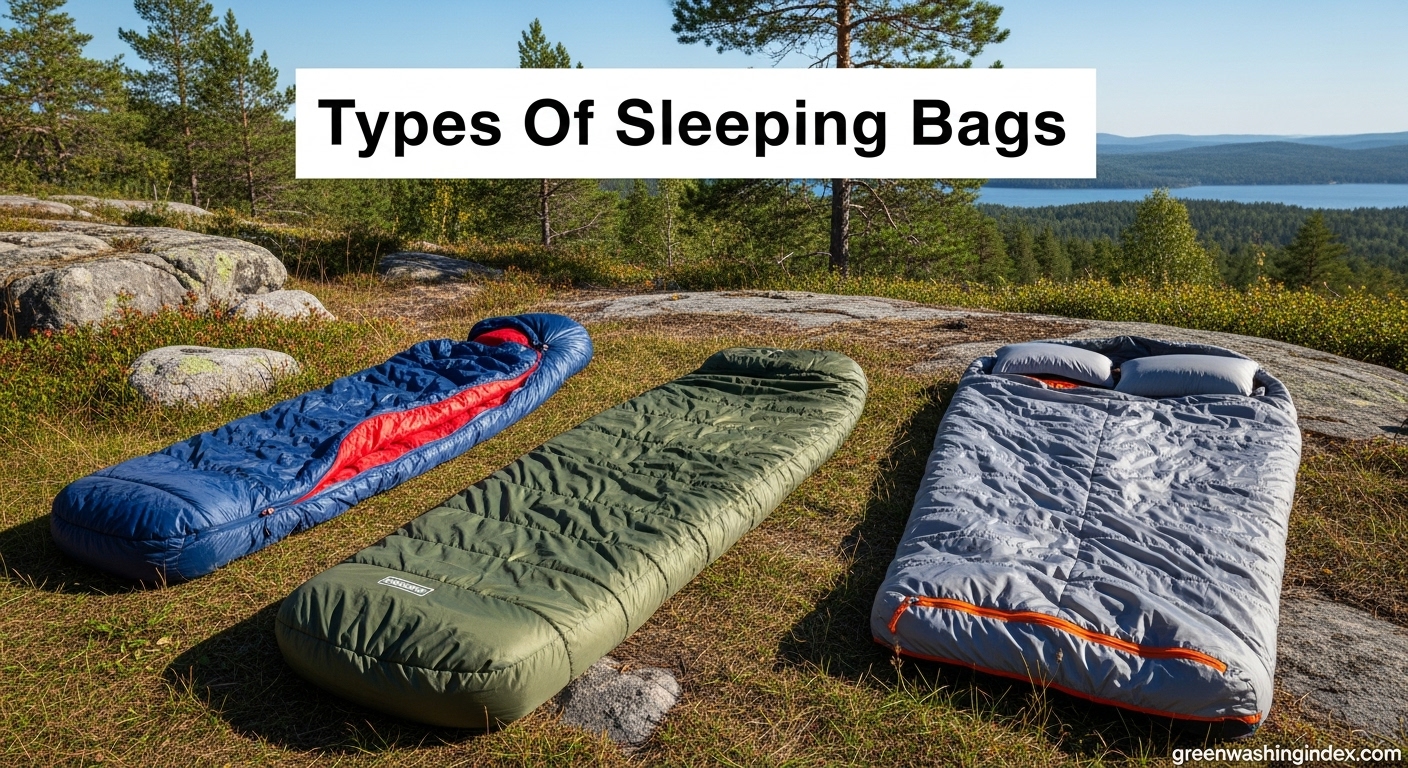
After spending 15 years camping across different climates and testing dozens of sleeping bags, I’ve learned that choosing the right type isn’t just about warmth.
The wrong sleeping bag shape can leave you tossing all night, restricted and uncomfortable even in mild weather. Your sleeping style, body type, and camping conditions all matter.
The main types of sleeping bags include:
I’ll walk you through each type, their ideal uses, and how to choose the right one for your camping adventures.
Sleeping bags are just one part of your complete camping gear essentials. Understanding the full picture helps you make smarter choices.
| Type | Warmth | Weight | Roominess | Best For |
|---|---|---|---|---|
| Mummy | Highest | Lightest | Lowest | Cold weather, backpacking |
| Rectangular | Lowest | Heaviest | Highest | Warm weather, car camping |
| Semi-Rectangular | Medium-High | Medium | Medium | All-around camping |
| Double | Variable | Heaviest | Highest | Couples, car camping |
| Quilt | High | Lightest | N/A | Ultralight backpacking |
Mummy bags are tapered from shoulders to feet, with a contoured hood that wraps around your head. This design minimizes dead air space and maximizes heat retention.
I’ve used mummy bags for winter camping in the Rockies and backpacking trips in the Pacific Northwest. The tapered shape means less volume to heat, so your body warms the bag faster.
Key Feature: The hood design can make a 10-degree difference in warmth. Pull it tight around your face, leaving only your nose exposed.
Pros of mummy bags:
Cons of mummy bags:
Rectangular bags maintain the same width from top to bottom, like a traditional blanket. Most can zip together with another matching bag and fully unzip for use as a blanket.
These remind me of summer camp days. Simple, roomy, and perfect for mild nights where warmth isn’t the primary concern.
Pros of rectangular bags:
Cons of rectangular bags:
Also called barrel bags or modified mummy bags, semi-rectangular bags taper slightly from shoulders to hips but remain roomier than full mummy shapes.
This is my go-to recommendation for most campers. You get much of the warmth efficiency of a mummy bag with enough room to sleep on your side or stomach without feeling restricted.
Pros of semi-rectangular bags:
Cons of semi-rectangular bags:
Double sleeping bags are designed to sleep two people. They’re essentially extra-wide rectangular bags, often with two zippers for separate access.
My wife and I used a double bag for car camping. It’s cozy, but sharing body heat has pros and cons. One person’s movement affects the other, and you can’t escape the other’s body temperature.
Pros of double bags:
Cons of double bags:
Children’s sleeping bags are scaled-down versions of adult bags with appropriate length and temperature ratings for kids.
When my daughter started camping at age 6, a kid-sized bag made all the difference. Adult bags have too much dead air space for a small body, making it hard for kids to stay warm.
Features to look for in kids’ bags:
Quilts are essentially sleeping bags without the back insulation. They’re designed to be used with a sleeping pad, which provides insulation from beneath.
After switching to a quilt for three-season backpacking, I’ll never go back. Quilts are lighter, less restrictive, and eliminate the worst part of mummy bags – the claustrophobic hood.
Check out my guide to the best backpacking sleeping bags for both traditional bags and quilt options.
Pros of quilts:
Cons of quilts:
Sleeping bag temperature ratings indicate the lowest temperature at which a bag will keep an average sleeper warm.
Ratings follow EN/ISO standards and typically show two numbers: Comfort rating (temperature a cold sleeper will be comfortable) and Lower Limit rating (temperature a warm sleeper can handle).
EN 13537 / ISO 23537: European and international standards that provide standardized temperature testing. A bag rated to 20F comfort means the average woman will be comfortable at 20F, while the lower limit might be 10F for an average man.
Choose a bag rated 10-15F lower than the coldest expected temperature. For example, if you expect 30F nights, get a 15-20F bag. This buffer accounts for variations in metabolism, hydration, and fatigue.
I’ve camped with people who are comfortable in shorts at 50F and others who need a 20F bag at the same temperature. Know which type you are.
Cold sleepers: Women typically sleep colder than men. If you often wear extra layers or use extra blankets at home, you’re a cold sleeper. Choose bags based on the comfort rating, not lower limit.
Warm sleepers: If you kick off covers at home and rarely feel cold, you can use the lower limit rating as your guide. You’ll be comfortable in colder temperatures than the comfort rating suggests.
Down insulation comes from goose or duck undercoating. Synthetic insulation uses polyester fibers engineered to mimic down’s loft and heat-trapping ability.
| Factor | Down | Synthetic |
|---|---|---|
| Warmth-to-Weight | Best | Good |
| Compressibility | Best | Fair |
| Performance When Wet | Poor | Good |
| Durability | 10+ years | 3-5 years |
| Cost | Higher | Lower |
| Allergy Concerns | Yes (rare) | None |
Down is measured by fill power – the volume one ounce of down occupies. Higher fill power (600-800+) means better insulation with less weight.
My 800-fill down mummy bag packs to the size of a grapefruit but keeps me warm at 15F. The compressibility is unbeatable for backpacking where every cubic inch matters.
Choose down for: backpacking, dry cold climates, weight-conscious trips, and long-term investment (quality down lasts 10+ years with proper care).
Synthetic insulation continues to insulate when wet and dries quickly. It’s also hypoallergenic and typically more affordable.
For canoe trips in humid conditions or damp spring camping, I choose synthetic. Getting soaked in a down bag miles from civilization is no joke – synthetic provides insurance.
Choose synthetic for: damp environments, car camping where weight matters less, budget-conscious purchases, and anyone with down allergies.
Fill power measures down’s loft – essentially its fluffiness and insulating quality. One ounce of 600-fill down occupies 600 cubic inches. One ounce of 800-fill occupies 800 cubic inches.
Higher fill power means:
For most campers, 600-650 fill power offers good performance at reasonable cost. Serious backpackers might choose 700-800+ fill for maximum compressibility.
A quality sleeping pad is just as important as your bag’s insulation. The pad prevents ground from sucking heat away through the bottom of your bag.
To choose the right sleeping bag size, follow these steps:
Quick Summary: The bag should fit snugly without being constricting. Too large creates cold air pockets your body must heat. Too small compresses insulation, creating cold spots.
Shoulder girth is the circumference around the bag’s widest point at shoulder height. Typical measurements:
At 6’1 with broad shoulders, I need at least 64 inches of shoulder girth in any mummy bag. Less than that and I feel trapped.
Hip girth matters most for side sleepers. Women’s bags are designed with wider hips in mind – typically 2-4 inches more hip room than men’s bags of the same length.
Most bags come in regular and long sizes. Long versions add 6-8 inches of length and often slightly more shoulder room.
For plus-size campers, look for wide or expanded versions. Some brands offer “wide” mummy bags with up to 68 inches of shoulder girth while maintaining the tapered shape’s benefits.
If you’re between sizes, size up. A slightly larger bag with proper loft is warmer than a too-small bag with compressed insulation.
Summer bags are rated above 35F and often use lightweight materials. They’re ideal for camping in warm weather when overheating is a bigger concern than freezing.
For summer camping, I often use camping blankets instead of bags. They’re versatile, easy to layer, and prevent that sweaty, trapped feeling on hot nights.
Look for:
Three-season bags (15-35F rating) handle spring, summer, and fall camping for most regions. This is the most versatile category and what most campers need.
My three-season bag gets 80% of my use. It’s manageable on cool summer nights and handles shoulder season camping with proper layering.
Look for:
Winter bags are rated below 15F and include features specifically for cold weather camping. The best options are mummy-shaped with high-quality down insulation.
For winter camping in 2026, I use a 0F mummy bag with full draft collar and hood baffles. The features that seem excessive in mild weather become essential when temperatures drop below freezing.
Look for:
The hood is the most important warmth feature. Up to 30% of body heat is lost through your head. A well-designed hood with a drawcord lets you seal in warmth.
Draft collars are insulated tubes around the neck opening that prevent heat from escaping when you move. Premium winter bags include them – they’re worth every degree of warmth they preserve.
Full-length zippers let you ventilate on hot nights or use the bag as a quilt. Half-length zippers save weight but limit ventilation options.
Two-way zippers (can zip from top or bottom) are my favorite feature. They let you ventilate your feet without fully opening the bag – perfect for temperature regulation.
Zipper baffles (insulated tubes behind the zipper) prevent heat loss through the zipper teeth. Essential on cold-weather bags.
Internal stash pockets keep essentials like phones, headlamps, or glasses secure and warm. I keep my phone in an internal pocket – cold kills batteries faster than you’d think.
Some bags include pillow pockets that let you stuff clothes inside to create a built-in pillow. Clever design, though I still prefer a dedicated camping pillow for comfort.
The footbox shape affects comfort. Some bags have vaulted footboxes that give feet more room. Others have zippered vents for temperature regulation.
As a side sleeper who often rotates to my stomach, I prefer a roomy footbox. Compressed feet get cold faster than any other body part.
Ripstop nylon is the standard shell material – durable and lightweight. Many bags add DWR (durable water repellent) coating to shed dew and condensation.
Lining materials range from slick polyester (easy to slide in/out) to soft brushed cotton (cozier but heavier and moisture-absorbent).
For backpacking, choose lightweight ripstop. For car camping where weight matters less, soft linings add comfort.
Look for the Responsible Down Standard (RDS) certification. This ensures down comes from ducks and geese treated humanely, without force-feeding or live-plucking.
Most reputable brands now use RDS-certified down. The certification gives you confidence that your insulation didn’t cause unnecessary animal suffering.
Some manufacturers now offer fully recyclable synthetic bags. At end-of-life, these bags can be returned to the manufacturer for recycling rather than entering landfills.
This matters – synthetic insulation is essentially plastic. A bag that lasts 5 years then sits in a landfill for 500 creates long-term environmental impact.
True down allergies are rare but do exist. More commonly, people are sensitive to dust mites that can accumulate in down products over time.
If you experience allergy symptoms with down bags, high-quality synthetic insulation provides comparable warmth without allergic reaction. Modern synthetic materials perform much better than the crunchy polyester of decades past.
A well-maintained down bag can last 10-15 years. Synthetic bags typically last 3-5 years before losing significant loft and warmth.
This lifespan difference affects long-term cost and environmental impact. A down bag that costs twice as much but lasts three times longer is both economically and environmentally superior.
Follow these steps for proper cleaning:
I wash my bags once per season or after a particularly dirty trip. More frequent washing accelerates wear – spot clean when possible.
Never store your sleeping bag compressed. Long-term compression crushes insulation and permanently reduces loft.
Store bags loose in a large cotton sack or pillowcase. Hang them in a closet if possible. The goal is to let the insulation fully loft and recover between trips.
Compression sacks are for travel only. Remove your bag from compression as soon as you return home.
Use a camping blanket or liner inside your bag. This keeps body oils away from insulation and reduces washing frequency.
Avoid eating in your bag – crumbs attract wildlife and create mess. Keep your bag dry at all costs – moisture degrades insulation performance.
With proper care, a quality bag provides years of comfortable nights outdoors. Your sleeping bag is an investment in outdoor experiences – protect it accordingly.
The main types of sleeping bags include mummy bags (tapered shape with hood for maximum warmth), rectangular bags (roomy traditional shape that can unzip as a blanket), semi-rectangular or barrel bags (balance of warmth and roominess), double sleeping bags (extra-wide for two people), kid-sized bags (smaller versions for children), and backpacking quilts (ultralight alternatives without bottom insulation). Each type is optimized for different camping conditions and sleeping preferences.
Mummy bags are tapered from shoulders to feet with a contoured hood, designed for maximum warmth and heat retention. They’re lightweight, compressible, and ideal for cold weather and backpacking. Rectangular bags maintain the same width throughout, offering more room to move and the ability to unzip fully as a blanket, but sacrifice warmth efficiency. Mummy bags are best for cold conditions and weight-conscious backpackers, while rectangular bags excel in warm weather and car camping where comfort is prioritized over weight.
For winter camping, mummy-shaped sleeping bags with high-quality down insulation (600-800 fill power) and temperature ratings of 0F to 10F are best. The tapered mummy shape minimizes air space for maximum heat retention, while down provides the best warmth-to-weight ratio. Look for features like draft tubes, draft collars, hood baffles, and water-resistant shells to handle winter moisture and condensation. Avoid rectangular bags for winter use – the extra air space makes it impossible to stay warm in extreme conditions.
Sleeping bag temperature ratings indicate the lowest temperature at which a bag will keep you warm. Ratings follow EN/ISO standards and typically show two numbers: Comfort rating (temperature a cold sleeper will be comfortable) and Lower Limit rating (temperature a warm sleeper can handle). Choose a bag rated 10-15F lower than the coldest expected temperature for safety. For example, for 30F nights, choose a 15-20F bag. Women should use the comfort rating, men can use the lower limit as a reference.
To choose the right sleeping bag size: 1) Measure your height accurately while barefoot, 2) Select a bag 2-6 inches longer than your height, 3) Check shoulder girth – typically 60-64 inches for men, 56-60 inches for women, 4) Consider hip girth for side sleepers – women’s bags accommodate wider hips, 5) Try before buying if possible. The bag should fit snugly without being constricting. Too large creates cold air pockets your body must heat, too small compresses insulation and creates cold spots.
Down sleeping bags are lighter, more compressible, more durable (10+ years), and perform better in cold dry conditions, but lose warmth when wet and cost more. Synthetic bags are heavier, bulkier, continue insulating when wet, dry faster, are more affordable, and non-allergenic, but have shorter lifespans (3-5 years). Choose down for backpacking and dry cold conditions where weight matters. Choose synthetic for damp environments, car camping where weight matters less, budget-conscious purchases, or if you have down allergies.
A semi-rectangular sleeping bag (also called barrel or modified mummy) combines features of both rectangular and mummy bags. It has a tapered shape for better heat retention than rectangular bags, but more roominess than full mummy bags. The design typically offers 60-64 inches of shoulder girth with moderate taper toward the feet. Semi-rectangular bags are ideal for campers who want a balance between warmth and comfort, side sleepers who need extra shoulder and hip room, or those who feel claustrophobic in tight mummy bags.
A sleeping bag should fit snugly without being constricting. You should have 2-6 inches of length beyond your height to prevent feet from compressing insulation at the bottom. Shoulder girth should allow you to move your arms and roll over without feeling restricted. For side sleepers, hip girth matters most – you should be able to bend your knees comfortably without compressing the bag around your hips. A properly fitting bag minimizes dead air space while allowing natural sleeping position movement.
Choosing the right sleeping bag type comes down to three factors: where you camp, how you sleep, and your budget.
For backpackers and cold-weather campers, mummy bags with high-fill down remain the gold standard. The warmth-to-weight advantage is simply unmatched.
For family campers and car camping enthusiasts, semi-rectangular bags offer the best balance. You’ll sleep comfortably without feeling trapped.
For summer camping and warm climates, rectangular bags or even camping blankets provide the versatility to regulate temperature on hot nights.
After testing dozens of bags across multiple seasons, my recommendation is this: buy for your typical conditions but size up one step for versatility. A 20F bag serves better across three seasons than a 35F bag that leaves you wishing for more warmth on unexpectedly cold nights.
Pair your sleeping bag with quality camping gear including a proper sleeping pad, and you’ll sleep comfortably wherever your adventures take you.
Invest in quality insulation, care for it properly, and your sleeping bag will provide years of restful nights under the stars. Comfort outdoors begins with a good night’s sleep.
