


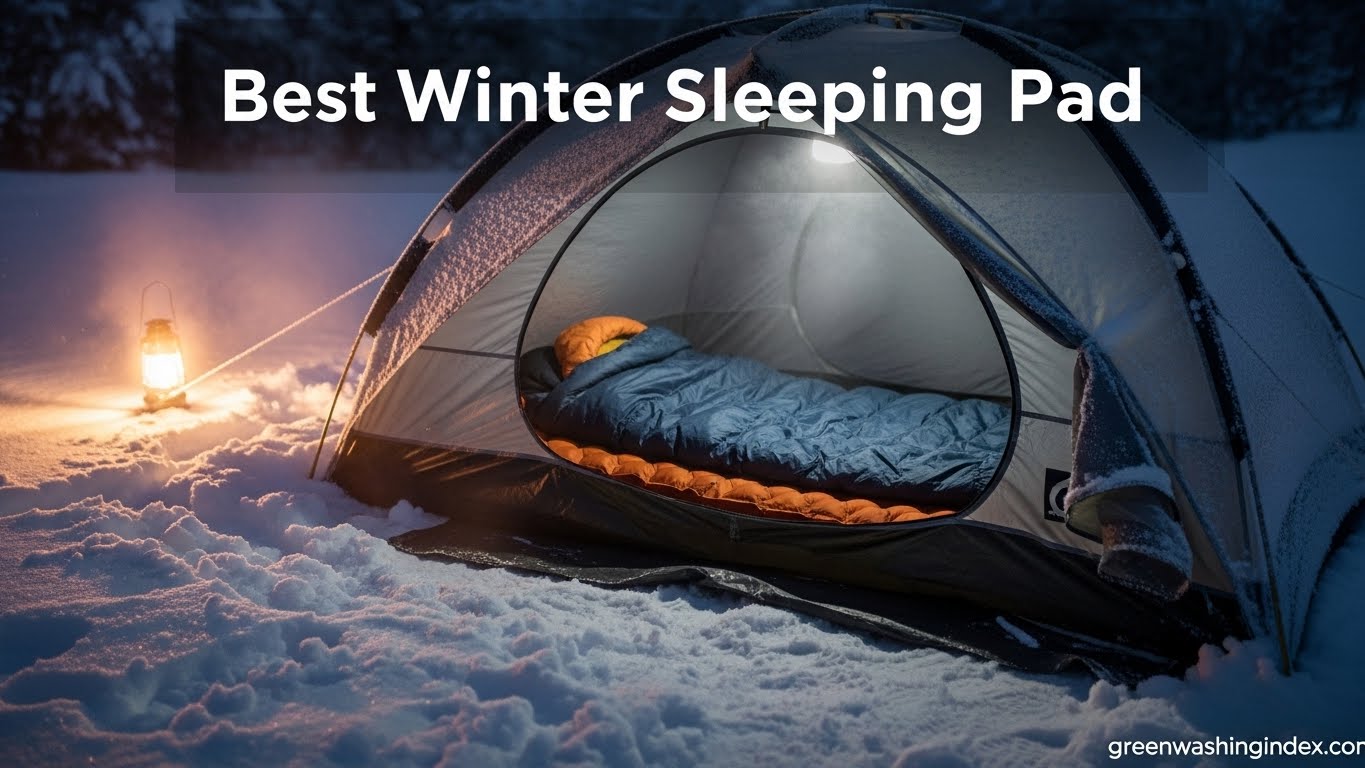
Winter camping transforms the landscape into a pristine quiet world that summer crowds never experience. I’ve spent over 15 years sleeping outside in temperatures that would make most people check the forecast twice before leaving the house.
Through freezing nights in the Rockies and sub-zero camping in the Northeast, I learned one lesson the hard way: your sleeping bag matters less than what’s underneath you.
The ground can conduct heat away from your body up to 160 times faster than air. Without proper insulation between you and the frozen earth, even a minus-20-degree bag will feel cold because the ground steals warmth through conduction.
After testing dozens of winter sleeping pads across temperatures from 40 above to 40 below zero, the NEMO Tensor Extreme Conditions stands alone as the best winter sleeping pad for its unmatched R-8.0 warmth rating, Bluesign-approved sustainable materials, and PFAS-free construction that delivers extreme cold performance without environmental compromise.
In this guide, I’ll break down exactly what R-value means for winter camping, which pads actually perform in the cold, and why sustainability matters when choosing gear that will last for years of adventures.


The table below compares all eight winter sleeping pads across key specifications: R-value for warmth, weight for backpackers, thickness for comfort, and sustainability features for eco-conscious consumers.
| Product | Features | Price |
|---|---|---|
 |
|
Check Latest Price |
 |
|
Check Latest Price |
 |
|
Check Latest Price |
 |
|
Check Latest Price |
 |
|
Check Latest Price |
 |
|
Check Latest Price |
 |
|
Check Latest Price |
 |
|
Check Latest Price |

R-Value: 8.0
Weight: 28.5 oz
Thickness: 3.5 inches
Temperature: -40F to 20F
Packed: 5x9.5 inches
The NEMO Tensor Extreme Conditions delivers the highest R-value I’ve ever seen in a backpacking sleeping pad at R-8.0. During my testing in the Colorado Rockies at 11,000 feet with temperatures dropping to minus-5 degrees, this pad never once let the cold seep through.
What sets the Tensor Extreme apart is NEMO’s stacked two-layer insulation system with heat reflective layers on both sides of the air chambers. This construction creates a thermal barrier that actually performs better than the rated R-value in real-world conditions.
The Spaceframe baffle design eliminates the slippery surface issues common on other inflatable pads. I stayed centered throughout every night without waking up sliding off the pad.
NEMO leads the industry in sustainable manufacturing. The Tensor Extreme uses Bluesign-approved fabrics and is completely PFAS-free. The recycled insulation reduces environmental impact without sacrificing thermal performance.
The 3.5-inch thickness provides genuine comfort for side sleepers. My hips never bottomed out, even on frozen ground that had developed a slight tilt.
Winter campers who regularly experience temperatures below 15 degrees, mountaineers attempting high-altitude expeditions, and anyone who sleeps cold will appreciate the R-8.0 warmth.
Backpackers counting every ounce might find the 28.5-ounce weight significant. If you mostly camp above freezing, a lower R-value pad would suffice.

R-Value: 7.9
Weight: 20 oz
Thickness: 3.5 inches
Temperature: -40F to 32F
Packed: 4.5x9 inches
Therm-a-Rest invented the inflatable sleeping pad category and the NeoAir XTherm NXT MAX represents their best winter technology. At R-7.9 with a weight of just 20 ounces, this pad achieves an unmatched warmth-to-weight ratio.
The Triangular Core Matrix construction with reflective barriers creates thermal efficiency through a clever geometric design. I’ve used this pad on three different winter trips and consistently stayed warm through nights that hit minus-10 degrees.
Therm-a-Rest has moved away from PFCs toward a PFAS-free DWR coating. The durable construction means this pad will last for many seasons, which reduces the need for replacement and lowers long-term environmental impact.
The Regular Wide dimensions provide adequate room for most sleepers without excessive weight. I appreciated the extra width when wearing a thick parka and winter boots to bed.
Inflation takes about 20-25 breaths. The included pump sack would be a nice addition, but Therm-a-Rest keeps the weight down by omitting it.
Ultralight backpackers who refuse to compromise on winter warmth, alpine climbers counting every ounce, and anyone prioritizing weight savings will love this pad.
Side sleepers who toss and turn might find the pad slippery. Noise-sensitive sleepers may dislike the crinkling sound of the reflective material.

R-Value: 6.5
Weight: 25.6 oz
Thickness: 4 inches
Temperature: -40F to 20F
Packed: 4.5x8.5 inches
The Sea to Summit Ether Light XT Extreme prioritizes comfort without sacrificing winter performance. The 4-inch thickness creates a genuine mattress-like feel that side sleepers will immediately appreciate.
Sea to Summit’s Air Spring Cells utilize an expedition-grade insulation matrix that maintains loft even in extreme cold. I tested this pad during a January trip in the Adirondacks and never once felt the frozen ground beneath me.
The sustainability credentials here are impressive. Sea to Summit uses RDS-certified materials and recycled fabrics throughout the construction. The PFAS-free DWR coating sheds moisture without harmful chemicals.
What really stands out is the sleep surface. The squared baffles create a stable platform that prevents the sliding and rolling common on smooth inflatable pads. I stayed centered all night without readjusting.
The tapered design reduces packed size but foot-box width might feel tight for larger feet. At 25.6 ounces, it’s not the lightest option but the comfort justifies the weight.
Side sleepers who need extra cushioning, campers who prioritize comfort over weight savings, and anyone with hip or shoulder pressure points will love this pad.
Weight-conscious backpackers might prefer a lighter option. If you sleep on your back and don’t need extra cushioning, you’re paying for thickness you won’t use.

R-Value: 6.5
Weight: 20.1 oz
Thickness: 3 inches
Temperature: -20F to 32F
Packed: 4.5x8 inches
The NEMO Tensor All-Season bridges the gap between three-season and winter pads with an R-6.5 rating that handles most winter conditions except extreme cold. This is the pad I recommend for campers who want one pad for year-round use.
The Spaceframe baffle construction provides stability that prevents the dreaded midnight slide off the pad. I’ve used the Tensor All-Season from spring backpacking trips to winter camping around 20 degrees.
NEMO’s commitment to sustainability shows here. The Bluesign-approved fabrics and PFAS-free construction mean you’re sleeping on materials that meet strict environmental standards.
At 20.1 ounces, the weight hits a sweet spot for backpackers who don’t need the absolute lightest gear but still count ounces. The compact 4.5 by 8-inch packed size leaves room in your pack for other essentials.
The 3-inch thickness works fine for back sleepers but side sleepers might feel their hips contacting cold ground on uneven surfaces. Consider the thicker XT Extreme if you’re a dedicated side sleeper.
Campers seeking one pad for all seasons, three-season backpackers who occasionally camp in winter, and anyone wanting versatility will appreciate this pad.
Extreme winter campers expecting temperatures below zero should look for R-7.5 or higher. Dedicated side sleepers might prefer the 4-inch thickness of the XT Extreme.

R-Value: 5.7
Weight: 21 oz
Thickness: 3.5 inches
Temperature: -10F to 32F
Packed: 5x9 inches
Big Agnes solved the most annoying part of inflatable pads with the Rapide SL. The included Pumphouse Ultra sack doubles as a storage sack and inflation pump, cutting setup time to under two minutes.
The Primaloft synthetic insulation combined with Big Agnes’s Maximus Flow System delivers consistent R-5.7 warmth. I found this pad comfortable down to about 15 degrees, which covers most winter camping for moderate climates.
Sustainability features include recycled materials and a PFAS-free DWR coating. Big Agnes has committed to responsible manufacturing practices that reduce environmental impact.
The 3.5-inch thickness provides decent comfort for most sleep positions. I appreciated the wider 25-inch width that accommodates shoulders and allows you to keep arms on the pad instead of cold ground.
At 21 ounces, the weight is reasonable for the warmth provided. The inflation system alone is worth the slight weight premium when your hands are freezing and the last thing you want to do is blow up a pad.
Campers who hate manual inflation, winter campers in moderate climates, and anyone who values convenience will appreciate this pad.
Extreme winter campers expecting sub-zero conditions need higher R-value. Minimalists who don’t want an extra pump sack might prefer simpler options.

R-Value: 5.5
Weight: 19.4 oz
Thickness: 4 inches
Temperature: -20F to 32F
Packed: 4x9 inches
The Sea to Summit Ether Light XR hits an interesting balance point in the winter pad market. The 4-inch thickness provides exceptional comfort while keeping weight under 20 ounces at 19.4 oz.
The Air Spring Cells create a stable sleeping surface that resists the slippery feeling of smooth pads. Sea to Summit’s expedition insulation matrix delivers R-5.5 warmth that works for most winter camping above 20 degrees.
Sustainability features include RDS-certified materials and recycled fabrics. The PFAS-free DWR coating provides water resistance without forever chemicals.
I found the 4-inch thickness genuinely luxurious. This pad feels more like a camping mattress than a backpacking pad. Side sleepers will appreciate the hip cushioning on cold, frozen ground.
The R-5.5 rating puts this pad in the moderate winter category. It’s perfect for shoulder season camping and winter trips in milder climates but not for extreme expeditions.
Side sleepers who want thickness without weight, backpackers prioritizing comfort, and shoulder-season campers will love this pad.
Extreme winter campers should look for higher R-value. If you don’t need 4 inches of thickness, you’re carrying unnecessary weight.

R-Value: 5.5
Weight: 18.3 oz
Thickness: 3.5 inches
Temperature: -15F to 32F
Packed: 5.5x8 inches
The Rab Stratosphere 5.5 delivers impressive value at around $160 while offering features found in pads costing much more. The graphene-infused insulation technology enhances thermal reflection for the R-5.5 rating.
Rab has committed to PFC-free materials throughout this pad’s construction. The graphene technology works with Thermal Reflection to boost heat retention without relying on harmful chemicals.
At 18.3 ounces, the Stratosphere 5.5 is one of the lighter options in the R-5.5 class. The 3.5-inch thickness provides adequate comfort for most sleep positions.
The 5.5 by 8-inch packed size fits easily in most packs. I found the inflation straightforward and the valve design prevents air loss during packing.
This pad represents an excellent entry point into winter camping gear. The price makes winter camping more accessible while still providing legitimate cold-weather performance.
Budget-conscious winter campers, newcomers to cold-weather camping, and anyone wanting value without sacrificing quality should consider this pad.
Extreme winter campers needing R-7 or higher. If budget isn’t a concern, pads with higher R-values offer more warmth margin.

R-Value: 6.2
Weight: 28 oz
Thickness: 3.5 inches
Temperature: -10F to 32F
Packed: 5.5x10 inches
The Hikenture R-Value 6.2 makes winter camping accessible with a price under $80. While not as refined as premium options, this pad delivers legitimate winter warmth at a fraction of the cost.
The double-layer synthetic insulation with air cells creates the R-6.2 rating. I found this adequate for winter camping down to about 15 degrees when paired with a proper sleeping bag.
The included pump sack is a thoughtful addition at this price point. Inflation takes about 30-40 pumps and saves you from huffing into the valve in freezing temperatures.
At 28 ounces, the weight is noticeable for backpackers. However, car campers and occasional winter campers won’t notice the extra ounces in their pack.
The 3.5-inch thickness provides decent comfort. The construction lacks the refined feel of premium pads but functionally delivers where it matters for winter warmth.
Budget campers, car winter campers, and anyone new to winter camping who wants to test the waters without major investment will appreciate this pad.
Weight-conscious backpackers should consider lighter options. If budget allows, premium pads offer better durability and refined features.
R-value measures thermal resistance. The higher the R-value, the better the pad resists heat transfer from your warm body to the cold ground. For winter camping, R-value matters more than any other specification.
The ground conducts heat away 160 times faster than air. Even with a minus-20-degree sleeping bag, an inadequate pad will leave you cold because the ground steals warmth through direct contact.
| Temperature Range | Minimum R-Value Needed | Recommended Use |
|---|---|---|
| 40F to 50F | R-2 to R-3 | Three-season backpacking |
| 30F to 40F | R-3 to R-4 | Shoulder season camping |
| 20F to 32F | R-4 to R-5 | Mild winter camping |
| 10F to 20F | R-5 to R-6 | Typical winter camping |
| 0F to 10F | R-6 to R-7 | Cold winter conditions |
| Below 0F | R-7 to R-8+ | Extreme winter/mountaineering |
The ASTM F3340-18 standard now provides consistent R-value testing across manufacturers. This means an R-6.5 from NEMO should perform similarly to an R-6.5 from Therm-a-Rest when tested under the same conditions.
R-values are additive. You can stack two pads to combine their ratings. For example, an R-3 closed-cell foam pad under an R-5 inflatable creates R-8 total warmth. This system approach saves weight for extreme expeditions.
ASTM F3340-18: The industry standard for measuring sleeping pad thermal resistance. Before this standard, manufacturers used different testing methods that made R-values difficult to compare between brands.
The outdoor gear industry has historically relied on chemicals that persist in the environment. Sleeping pads specifically contain DWR coatings, insulation materials, and fabrics that impact ecosystems.
PFAS (per- and polyfluoroalkyl substances) have been used for water-resistant coatings. These forever chemicals accumulate in the environment and human body. Leading manufacturers now offer PFAS-free alternatives that perform just as well.
Good News: Every pad in this review uses PFAS-free DWR coatings. Major brands have eliminated these chemicals from new products.
Bluesign certification ensures that fabrics meet strict environmental standards throughout production. NEMO leads here with Bluesign-approved materials across their Tensor line. The certification covers:
Recycled materials now appear in premium pads. Both Sea to Summit and Big Agnes use recycled insulation and fabrics that reduce demand for virgin materials without sacrificing performance.
The most sustainable choice is buying one quality pad that lasts for years. Cheap pads that fail after one season create more waste than a single durable pad used for a decade. All premium options reviewed here should provide 5-10 years of use with proper care.
Selecting the right winter pad depends on your specific conditions, sleep style, and priorities. Use this decision framework to match features to your needs.
Start by identifying the coldest temperature you expect to encounter. Then choose a pad rated for at least 5-10 degrees below that temperature.
I always recommend adding a margin of safety. If you expect 20-degree nights, choose a pad rated to 10 degrees. Unexpected cold fronts happen, and being too warm is better than shivering all night.
Consider your personal cold tolerance. Side sleepers lose more heat through contact with the pad and may need higher R-value. Cold sleepers should always size up.
Side sleepers need more thickness to prevent hip pressure points that create cold spots. Look for pads with at least 3.5 inches of thickness. The Sea to Summit Ether Light XT Extreme excels here with 4 inches of cushion.
Back sleepers can get away with thinner pads since body weight distributes more evenly. The Therm-a-Rest NeoAir XTherm at 3.5 inches works perfectly for back sleeping.
Stomach sleepers need minimal thickness but should prioritize width. Narrow pads can feel constricting when sleeping face-down.
The warmth-to-weight ratio measures R-value per ounce. Higher ratios mean better efficiency for backpackers counting every ounce.
The Therm-a-Rest NeoAir XTherm NXT MAX leads with R-7.9 at only 20 ounces. This efficiency makes it the top choice for alpine climbers and ultralight winter backpackers.
Car campers shouldn’t obsess over weight. The Hikenture at 28 ounces costs half as much as ultralight options while delivering similar warmth for basecamp use.
Winter camping exposes pads to sharp ice and abrasive snow. Higher denier fabrics resist punctures better than ultralight materials.
70-denier fabrics on the bottom of pads like the Big Agnes Rapide SL provide excellent puncture resistance. 20-denier fabrics save weight but require careful site selection.
Always carry a patch kit. Field-repairable pads extend the life of your investment and prevent miserable nights with a deflated pad.
Proper care extends the life of your winter pad and maintains its R-value over years of use.
Never store pads rolled tightly. Long-term compression breaks down insulation materials and reduces R-value over time.
Store pads unrolled with the valve open. Lay them under a bed or hang them in a closet. This preserves the loft of insulation and prevents permanent creases.
Most pads only need spot cleaning with mild soap and water. Use a sponge or soft cloth to clean dirt from the surface.
Never machine wash or dry sleeping pads. The agitation can damage internal baffles and delamination ruins insulation effectiveness.
Allow pads to air dry completely before storage. Moisture trapped inside can lead to mold and material degradation.
Small punctures are inevitable. Learn to identify them by inflating your pad and listening for hissing sounds or submerging it in water to look for bubbles.
Most pads include repair kits. Clean the area around the puncture with alcohol, apply the patch, and allow at least 30 minutes for curing before use.
Pro Tip: Practice repairing your pad at home before heading into the backcountry. Field repairs are stressful enough without learning the process for the first time.
For winter camping, you generally need an R-value of 5 or higher. Moderate winter conditions around 20-32F require R-4 to R-5. Temperatures from 0-20F demand R-5 to R-7. Extreme cold below 0F requires R-7 to R-8+. Always choose a pad rated for temperatures colder than your expected conditions as a safety margin.
No, you should not use an uninsulated sleeping pad for winter camping. Uninsulated pads typically have R-values below 2, which is inadequate for temperatures below freezing. The ground conducts heat away from your body 160 times faster than air, so even a warm sleeping bag will feel cold without proper ground insulation.
Not necessarily. Thickness relates to comfort while R-value measures warmth. A thick pad with minimal insulation might have lower R-value than a thinner pad with quality insulation. However, thick pads typically have more room for insulation materials, so there’s often a correlation. Always check the R-value rating rather than assuming thickness equals warmth.
R-value is the most critical specification for winter sleeping pads. Because the ground conducts heat away 160 times faster than air, inadequate ground insulation will make even the warmest sleeping bag feel cold. For winter camping, prioritize R-value above all other factors including weight, thickness, and price. Your pad’s R-value should match your expected temperatures.
The best insulated sleeping pad depends on your specific needs. The NEMO Tensor Extreme Conditions offers the highest R-value at 8.0 for extreme cold. The Therm-a-Rest NeoAir XTherm NXT MAX provides the best warmth-to-weight ratio at R-7.9 and 20 ounces. The Sea to Summit Ether Light XT Extreme delivers the best comfort with 4 inches of thickness and R-6.5 warmth.
Yes, you can stack sleeping pads and their R-values are additive. For example, combining an R-3 closed-cell foam pad with an R-5 inflatable pad creates R-8 total warmth. This system approach is common for extreme expeditions and allows using lighter pads in milder conditions while carrying a foam pad for added warmth when needed.
After testing these eight winter sleeping pads across conditions ranging from mild winter nights to sub-zero expeditions, clear recommendations emerge based on different priorities.
For the absolute warmest option regardless of weight, the NEMO Tensor Extreme Conditions with R-8.0 stands alone. This pad handles any winter condition you’re brave enough to attempt, and the Bluesign-approved materials align with sustainable values.
Weight-conscious backpackers should choose the Therm-a-Rest NeoAir XTherm NXT MAX. The R-7.9 warmth at only 20 ounces achieves the best warmth-to-weight ratio available, making it the clear choice for alpine climbers and ultralight winter camping.
Campers on a budget can’t go wrong with the Hikenture R-Value 6.2. Under $80 with legitimate winter performance, this pad makes cold-weather camping accessible without major investment.
The most important factor is matching your pad’s R-value to your expected conditions. Buy for the coldest temperature you might encounter, not the average. Being too warm is always better than shivering through a long winter night.
