

The holiday season brings joy, family gatherings, and the timeless tradition of gift-giving that dates back thousands of years. Christmas gift traditions have evolved from simple offerings of gold, frankincense, and myrrh to today’s diverse practices that range from elaborate present exchanges to meaningful experience-based celebrations. As we become more conscious of our environmental impact, many families are seeking ways to honor these traditions while embracing sustainability and reducing waste.
Christmas gift traditions encompass the customs and practices families follow when exchanging presents during the holiday season, ranging from historical religious origins to modern structured approaches like gift rules and experience-based giving that prioritize meaning over materialism. These traditions work by establishing patterns and expectations around gift-giving that create meaning, reduce stress, and build family connections through repeated practices that can be adapted for sustainable living.
At GreenwashingIndex, we believe that honoring tradition doesn’t have to conflict with environmental responsibility. In fact, many historical gift-giving practices were inherently sustainable, focusing on handmade items, practical necessities, and meaningful gestures rather than mass-produced consumption. By understanding the roots of these traditions and adapting them for modern eco-conscious families, we can create celebrations that are both meaningful and environmentally responsible.
This comprehensive guide will explore the rich history of Christmas gift traditions, break down popular modern gift rules, and provide sustainable alternatives that help reduce waste while maintaining the joy and connection that make the holidays special. Whether you’re starting new traditions or adapting existing ones, you’ll find practical strategies for creating a more sustainable holiday season.
For additional ideas on creating an eco-friendly holiday celebration, check out our guide to zero waste holiday season practices that complement sustainable gift traditions.
The tradition of giving gifts at Christmas began with the Biblical story of the Magi – three wise men who traveled to Bethlehem bringing gifts of gold, frankincense, and myrrh to honor the birth of Jesus. These gifts were significant not just for their material value, but for their symbolic meaning: gold representing kingship, frankincense representing divinity, and myrrh representing suffering and death. This historical foundation established gift-giving as a meaningful act of honor and celebration, rather than mere commercial exchange.
Throughout history, Christmas gift traditions evolved alongside cultural and religious practices. In ancient Rome, the festival of Saturnalia included gift exchanges, though these were often simple items like candles, figurines, or prepared foods. Medieval European traditions focused on practical gifts – warm clothing, food stores, or tools needed to survive winter. These historical traditions were inherently sustainable, emphasizing necessity, craftsmanship, and local production over mass consumption.
The modern commercialization of Christmas gift-giving began in the 19th century with the industrial revolution and the popularization of Santa Claus as a gift-bringer. However, many families are now returning to more meaningful approaches that echo historical practices – focusing on quality over quantity, handmade items, and gifts that serve real needs or create lasting memories. This return to historical values aligns perfectly with sustainable living principles and helps counter the overconsumption that has characterized recent decades.
Magi Gifts: The original Christmas gifts of gold, frankincense, and myrrh presented by the Three Wise Men, establishing the foundation for Christmas gift-giving traditions with their symbolic meanings of value, worship, and mortality.
Understanding this historical context helps us appreciate that the essence of Christmas gift-giving has always been about meaning, connection, and care for others – values that align beautifully with sustainable and eco-conscious practices. By returning to these foundational principles, we can create traditions that honor both our heritage and our responsibility to the planet.
Modern families have developed structured gift-giving rules that help manage budgets, reduce overwhelm, and focus on meaningful presents. These approaches have gained popularity as parents seek to balance children’s desires with practical considerations and values. Each rule system offers a framework for intentional gift-giving that can be adapted for sustainable choices and eco-conscious families.
The Three Gift Rule directly references the Magi’s gifts to Jesus, limiting presents to three items per person. This approach emphasizes quality over quantity and encourages thoughtful selection of meaningful gifts. The three gifts typically represent different categories – something the child wants, something they need, and something spiritual or educational. This rule naturally aligns with sustainability by reducing consumption and encouraging consideration of each gift’s purpose and value.
Families using the Three Gift Rule often find it simplifies holiday shopping, reduces stress, and helps children appreciate each gift more fully. By limiting presents to three items, families can invest in higher-quality, durable items that last longer and have less environmental impact. This approach also opens conversations about the meaning behind each gift, connecting modern celebrations to historical traditions.
The Four Gift Rule has become one of the most popular structured approaches, organizing gifts into four specific categories: something you want, something you need, something to wear, and something to read. This system provides balance between desires and practical needs while encouraging educational and personal growth. The “wear” category can include sustainable fashion choices, while “read” supports lifelong learning and entertainment without electronic waste.
This rule naturally promotes sustainability by encouraging practical gifts that will be used regularly rather than novelty items that quickly become clutter. The “need” category can include eco-friendly essentials like reusable water bottles, bamboo utensil sets, or quality items that replace disposable alternatives. Many families find this approach helps them stay within budget while ensuring each gift serves a meaningful purpose in their children’s lives.
The Five Gift Rule builds on the four-gift framework by adding a fifth category, typically something to do or something unexpected. This addition recognizes that some of the most meaningful gifts aren’t physical items at all. The “something to do” category perfectly aligns with sustainable gift-giving by prioritizing experiences over material goods – creating memories without adding to landfills.
The “unexpected” category allows for creativity and surprise within the structured approach. This might include handmade gifts, charitable donations in the recipient’s name, or unique discoveries that wouldn’t fit in other categories. The five-gift approach provides flexibility while maintaining the benefits of intentional, thoughtful gift-giving that reduces waste and focuses on meaning.
The Seven Gift Rule offers the most comprehensive approach, typically including: something you want, something you need, something to wear, something to read, something to do, something for family, and something to give. This expanded framework explicitly includes family activities and charitable giving, making it particularly well-suited for families focused on connection and community impact.
The “something for family” category encourages gifts that can be enjoyed together – board games, outdoor equipment, or cooking supplies that promote family bonding. “Something to give” explicitly teaches children about generosity and community support, whether through charitable donations, volunteering time, or creating gifts for others. This comprehensive approach naturally incorporates sustainability while teaching valuable lessons about consumption, community, and conscious giving.
| Gift Rule | Categories | Best For | Sustainability Benefits |
|---|---|---|---|
| Three Gift Rule | Want, Need, Spiritual | Families seeking simplicity | Reduces consumption by 70%+ vs average |
| Four Gift Rule | Want, Need, Wear, Read | Balanced approach | Promotes practical, lasting gifts |
| Five Gift Rule | 4 categories + Experience | Memory-focused families | Includes zero-waste experience options |
| Seven Gift Rule | All categories + Family, Give | Community-oriented families | Teaches generosity and sharing |
For eco-friendly gift options that align with these rule systems, explore our guide to sustainable presents that bring joy without environmental guilt.
Creating sustainable Christmas gift traditions doesn’t mean eliminating the joy of giving – it means reimagining how we give to reduce environmental impact while increasing meaning and connection. These eco-friendly traditions focus on reducing waste, supporting ethical production, and teaching children about responsible consumption. They prove that the most memorable gifts often leave the smallest environmental footprint.
Embracing secondhand gift-giving transforms sustainability into a treasure hunt. Many families now incorporate vintage finds, quality used items, or restored pieces into their Christmas traditions. This approach not only reduces waste and manufacturing demand but often results in more unique, meaningful gifts with stories to tell. Consider establishing traditions around visiting thrift stores, antique shops, or online marketplaces to find special pre-loved items.
Children’s gifts can include quality used books, vintage toys, or refurbished electronics that work perfectly while avoiding new manufacturing impacts. Clothing gifts can come from consignment shops or sustainable fashion platforms. The key is framing secondhand shopping as an exciting quest for special finds rather than a compromise, emphasizing the environmental benefits and unique character of pre-owned items.
Creating handmade gifts establishes beautiful family traditions while eliminating packaging waste and manufacturing impacts. Many families dedicate weekends leading up to Christmas to crafting gifts for each other – knitting scarves, building wooden toys, creating photo albums, or preparing homemade food gifts. These traditions often become the most cherished parts of the holiday celebration.
DIY gift traditions can include skills passing between generations – grandparents teaching grandchildren to knit, parents helping children create personalized photo calendars, or family craft sessions where everyone creates gifts for different family members. These traditions teach valuable skills, create meaningful connections, and produce gifts with minimal environmental impact while maximum personal value.
For creative handmade gift ideas, explore our DIY Christmas gifts guide for projects that will make you look like a genius while staying true to sustainable values.
Establishing traditions around locally-sourced gifts supports community economies while reducing transportation emissions and packaging waste. Many families make a tradition of visiting holiday markets, local artisan fairs, or downtown shopping districts to find gifts made by local craftspeople. This approach creates community connections while reducing the carbon footprint associated with long-distance shipping.
Local food gifts – honey from nearby beekeepers, jam from local fruit growers, or bread from neighborhood bakeries – make excellent sustainable presents. Consider establishing traditions around visiting local producers or farms to select gifts, turning gift selection into a family activity that supports your community and reduces environmental impact.
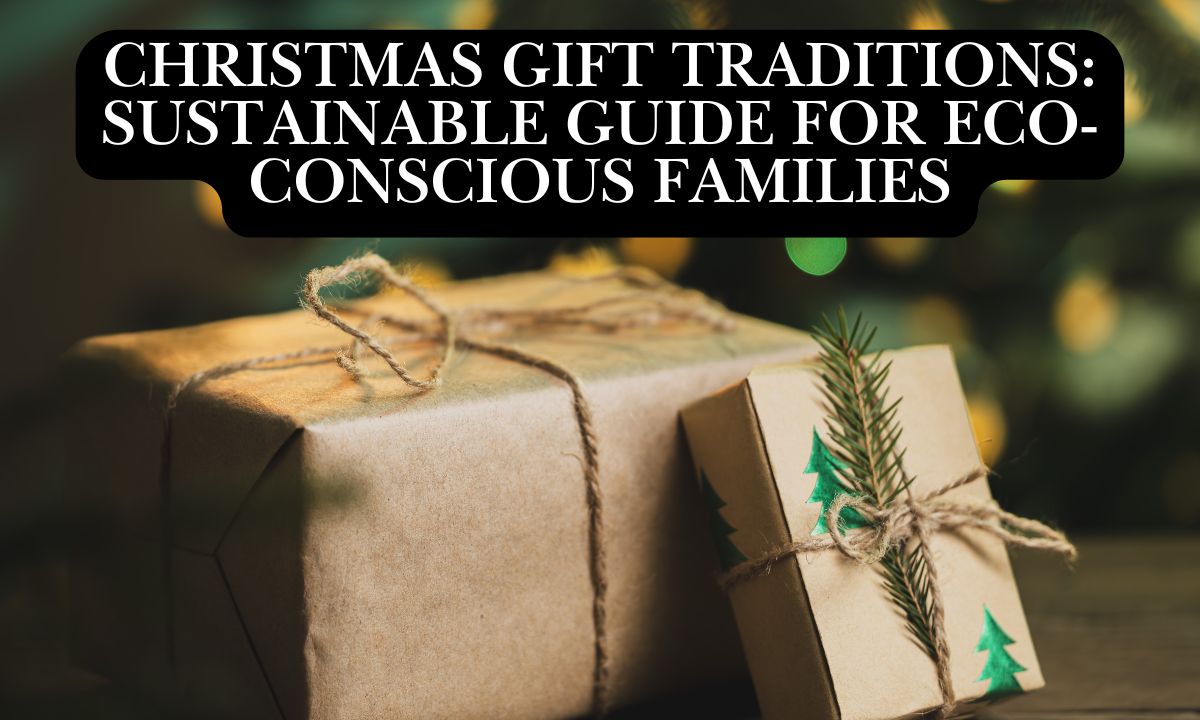
The tradition of gift wrapping doesn’t have to create mountains of paper waste. Sustainable families establish alternative wrapping traditions that are just as beautiful but much more environmentally friendly. These include using fabric wrap (furoshiki), reusable gift bags, newspaper or maps for wrapping, or incorporating the wrapping into the gift itself (scarves, kitchen towels, or baby blankets).
Some families create traditions around collecting and reusing gift materials throughout the year – saving nice boxes, ribbons, and bags for future use. Others establish no-wrapping traditions for certain gifts, hiding them around the house for a treasure hunt rather than wrapping them. These traditions eliminate waste while often making gift exchange more interactive and fun.
Learn more about sustainable gift presentation in our guide to wrapping paper recycling and eco-friendly alternatives.
✅ Eco Tip: Start a collection of reusable gift wraps and bags that become part of your family’s holiday traditions. Designate a special storage box and make unwrapping carefully to preserve materials for next year.
Experience gifts represent one of the most sustainable approaches to Christmas gift-giving, creating lasting memories without adding physical items to homes or landfills. These gifts focus on time together, learning new skills, or enjoying special activities rather than accumulating more possessions. Many families find that experience gifts become the most talked-about and remembered presents long after physical gifts have been forgotten or outgrown.
The beauty of experience gifts lies in their zero-waste nature and their ability to strengthen family bonds. Whether it’s tickets to a show, enrollment in a class, or planning a special family outing, these gifts prioritize connection over consumption. They’re particularly valuable for minimal-minded families, those living in smaller spaces, or anyone seeking to reduce their environmental impact while maintaining meaningful holiday traditions.
Experience gifts span a wide range of categories and interests. Educational experiences include music lessons, art classes, cooking workshops, or language courses. Adventure experiences might be zip-lining tours, rock climbing sessions, or hot air balloon rides. Entertainment experiences cover theater tickets, concert passes, or special event access. Local experiences could include museum memberships, zoo passes, or botanical garden annual passes.
Family experience gifts create opportunities for quality time together – weekend getaways, camping trips, or special dinner outings. Skill-building experiences invest in personal development – photography workshops, coding classes, or gardening courses. Each type of experience gift creates memories without creating waste, aligning perfectly with sustainable holiday values.
Creating successful experience gift traditions requires planning and communication. Many families establish the tradition of revealing experience gifts through special presentations – creating homemade certificates, planning scavenger hunts with clues leading to the experience, or wrapping related items (hiking boots for a mountain trip, aprons for a cooking class).
Timing is another important consideration for experience gifts. Some families make the experience itself part of the holiday celebration – planning a special Christmas Day outing or New Year’s adventure. Others schedule experiences throughout the following year, creating ongoing moments of anticipation and enjoyment that extend the holiday season’s joy rather than concentrating it in one overwhelming day.
Experience gifts also offer excellent opportunities for family connection and shared interests. Consider choosing experiences that multiple family members can enjoy together, creating shared memories and strengthening relationships. This approach maximizes the emotional impact while minimizing the environmental footprint of your gift-giving traditions.
Discover inspiring experience gift ideas in our guide to memory-making presents that bring families together.
Experience gifts work for all ages when appropriately matched to interests and abilities. For young children, consider zoo memberships, interactive museum passes, or parent-child cooking classes. School-aged children might enjoy sports lessons, art workshops, or special tickets to shows or events they love. Teenagers often appreciate concert tickets, adventure experiences, or skill-building classes in areas of interest.
Adults enjoy experience gifts that address their specific interests and needs – spa treatments, wine tasting tours, photography workshops, or specialized learning opportunities. For elderly family members, consider experiences that accommodate mobility limitations while providing enjoyment and social connection – special restaurant outings, theater tickets with good accessibility, or transportation to visit family or friends.
⏰ Time Saver: Purchase experience gift certificates in early December to ensure availability and avoid last-minute stress. Many venues offer holiday discounts when purchased in advance.
Establishing new Christmas gift traditions requires thoughtful planning, family communication, and patience as everyone adjusts to new patterns. The most successful traditions evolve naturally from family values, address specific needs or concerns, and bring joy rather than stress to the holiday celebration. Here’s a comprehensive approach to implementing meaningful traditions that stick.
Even the best-planned traditions face challenges as families evolve, children grow, or circumstances change. Successful tradition maintenance requires flexibility, communication, and willingness to adapt while preserving core values. Regular family check-ins about traditions help identify what’s working and what needs adjustment.
Extended family situations often require additional negotiation and compromise. When different households have varying approaches to gift-giving, focus on finding common ground while respecting different values and circumstances. This might mean establishing separate traditions for different family groups or finding compromises that work across diverse preferences.
Financial circumstances can also impact tradition maintenance. Build flexibility into your traditions to accommodate years when budgets are tighter or family situations have changed. The best traditions can scale up or down while maintaining their essential meaning and value to the family.
Regular evaluation helps ensure traditions continue serving their intended purpose. Consider asking family members what they enjoyed most about holiday celebrations, which traditions felt most meaningful, and what aspects might need adjustment. These conversations help traditions evolve with family needs while maintaining their core value.
Pay attention to both emotional responses and practical outcomes. Are new traditions reducing stress and increasing joy? Are they meeting sustainability goals or financial targets? Are family members more satisfied with celebrations? Both qualitative feelings and practical results indicate tradition success.
Documenting traditions through photos, journals, or family stories helps preserve their meaning and value over time. These records become part of the tradition themselves, reinforcing family identity and connection while providing context for future generations about why certain practices matter.
Traditions must evolve as families move through different life stages. Young families with small children might focus on establishing foundational traditions and magical elements. School-aged families often benefit from structured approaches like gift rules that teach values and manage expectations. Families with teenagers might pivot toward experience gifts and increased independence in tradition choices.
Empty nesters and grandparents often shift toward experience-based giving, charitable traditions, or simplified approaches that reflect changing family dynamics. The key is maintaining tradition core values while adapting specific practices to serve current family needs and circumstances effectively.
Remember that successful traditions aren’t rigid – they’re living practices that grow and change with your family while preserving essential meanings and connections. This flexibility ensures traditions remain meaningful rather than becoming empty obligations that no longer serve their original purpose.
The 5 gift rule includes: something you want, something you need, something to wear, something to read, and something to do (or something unexpected). This approach provides structure while including both practical items and experiences that create memories without adding clutter.
The 3 Christmas gift rule limits presents to three items per person, inspired by the three gifts the Magi brought to Jesus. These typically represent something wanted, something needed, and something meaningful or spiritual. This approach emphasizes quality over quantity and aligns with sustainable values by reducing consumption.
The 7 gift rule includes: something you want, something you need, something to wear, something to read, something to do, something for family, and something to give. This comprehensive approach balances personal gifts with family activities and charitable giving, teaching children about generosity while managing consumption.
The Big Four gift tradition is another name for the 4 gift rule (want, need, wear, read). It’s called ‘Big Four’ because these four categories cover all essential gift needs while preventing excess. This approach has gained popularity as families seek more meaningful and manageable gift-giving practices.
Make Christmas gifts sustainable by choosing experience gifts, supporting local artisans, selecting quality items that last, using eco-friendly wrapping, and prioritizing secondhand or handmade options. Focus on meaning over materialism and consider gifts that reduce waste rather than add to it.
Great alternatives to physical gifts include experiences (classes, tickets, memberships), charitable donations, time spent together, skill-sharing, homemade consumables, and contributions to savings or education funds. These alternatives create memories without adding to consumption or waste.
Introduce sustainable traditions gradually, explain your values clearly, lead by example, and suggest compromises like one shared experience gift instead of multiple physical items. Focus on benefits like reduced stress and financial savings while being respectful of different values and circumstances.
Christmas gift-giving originated from the Magi bringing gifts to Jesus and evolved through various cultural practices. It symbolizes generosity, love, and celebration while providing opportunity to show care for others. Modern interpretations range from traditional present exchanges to experience-based giving and charitable traditions.
Christmas gift traditions, when approached with intention and sustainability in mind, can enhance rather than detract from the true meaning of the holiday season. By focusing on meaningful connections, responsible consumption, and lasting values rather than material accumulation, we create celebrations that bring genuine joy without environmental guilt. The most memorable traditions aren’t about how much we give, but how thoughtfully we give.
As you implement these sustainable gift traditions, remember that perfect is the enemy of progress. Start with small changes that feel authentic to your family values, and build from there. Each sustainable choice – whether it’s a handmade gift, a shared experience, or a charitable donation – contributes to a larger movement toward more conscious celebration patterns that honor both our traditions and our planet.
The beauty of sustainable gift traditions lies in their ripple effect – teaching children values that extend far beyond the holiday season, creating family bonds that strengthen through shared purpose, and establishing patterns of conscious consumption that benefit our communities and environment year-round. These traditions prove that the greatest gifts we can give each other are time, attention, care, and a healthy planet for future generations.
For more sustainable holiday inspiration, explore our comprehensive guide to eco-friendly holiday practices that complement thoughtful gift-giving traditions. Together, we can transform Christmas consumption into conscious celebration that honors our values and protects our planet.